


Key Takeaways
Quitting porn is easy when you kill the illusion before the habit
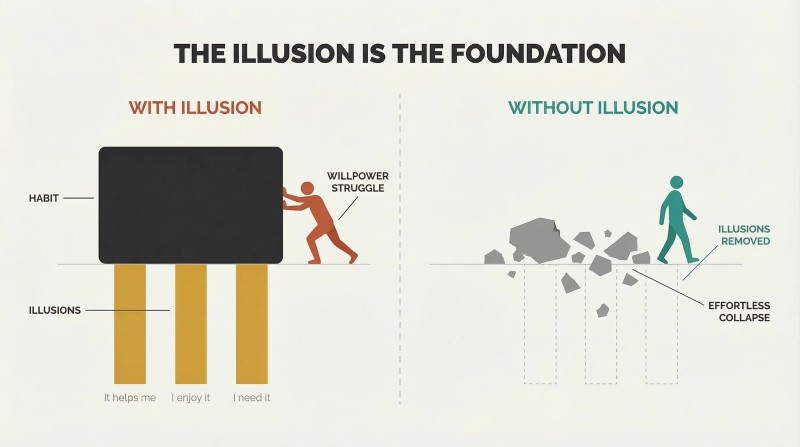
EasyPeasy adapts Allen Carr's famous EasyWay smoking cessation method for pornography. Its radical claim: quitting isn't hard — the only thing making it feel hard is the belief you're sacrificing something real. The method dismantles every reason you think you use porn before you stop. Once these illusions collapse, there's nothing to resist.
The book asks three foundation questions:
1. What is porn actually doing for me?
2. Am I genuinely enjoying it?
3. Do I really need to go through life sabotaging my brain?
When answered honestly, the answers are: nothing, no, and no. Allen Carr's clinics claim over ninety-five percent success rates using this cognitive approach. The method requires no willpower, no shock treatment, and instructs you to keep using porn while reading until the illusions are fully dismantled.
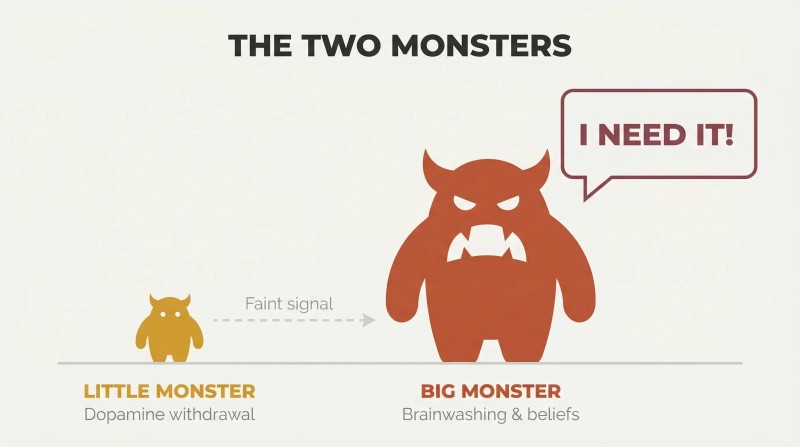
Two monsters keep you trapped — a tiny physical one and a giant mental one
The little monster is dopamine withdrawal — a barely perceptible empty, restless feeling like mild hunger. It's so faint that users routinely go days on business trips without noticing. The big monster is the brainwashing: accumulated beliefs that porn relaxes you, relieves boredom, aids concentration, or provides genuine pleasure. The big monster misinterprets the little monster's faint signals as "I need porn."
To quit easily, kill both simultaneously. Starve the little monster by stopping — it dies within roughly three weeks. Dismantle the big monster's illusions first, which is the book's actual work. Most quit attempts fail because they only fight the little monster with willpower while the big monster whispers that something precious has been lost.
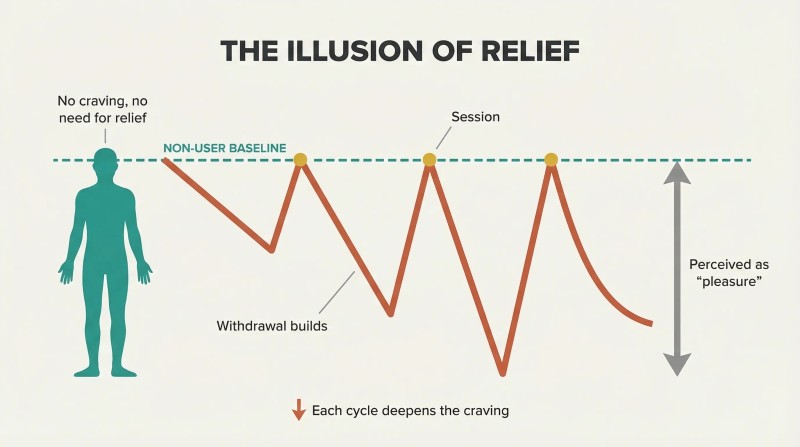
Porn creates the emptiness it claims to relieve
Non-users don't feel deprived. They don't panic without WiFi, don't feel something missing at bedtime, don't experience the restless craving users mistake for sexual desire. The "pleasure" of a session is merely temporary relief of withdrawal the previous session created. The book compares this to a neighbor's alarm ringing all day — when it stops, you feel wonderful peace, but that's not real peace. It's just the ending of an aggravation you wouldn't have had without the alarm.
Another vivid analogy: imagine a free ointment that makes a cold sore vanish instantly, but secretly causes it to grow larger and return faster. You become completely dependent on the ointment. Once you discover the ointment causes the sore, stopping isn't hard — it's a relief.
Fear is the only lock on the trap — and porn forged it
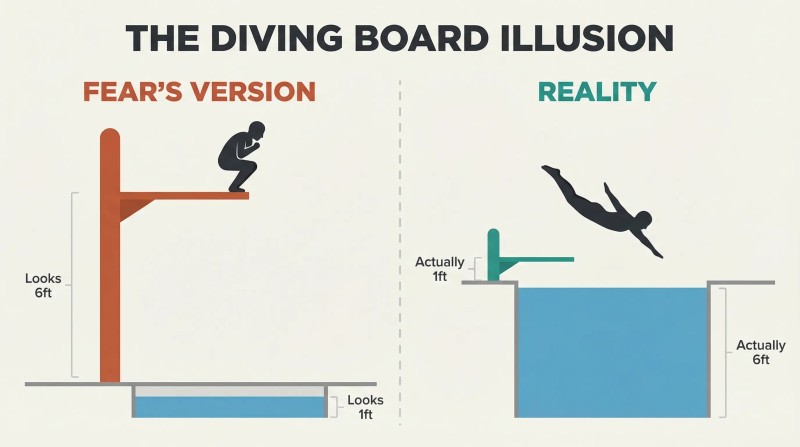
Every excuse to keep using is fear-based. Fear you can't handle stress without porn. Fear social events will be unbearable. Fear that "once an addict, always an addict." But here's the twist: these fears are caused by porn, not relieved by it. The book frames the user's internal tug-of-war as fear on both sides — one side fears health consequences, the other fears life without the crutch. Non-users experience neither.
The diving board analogy captures it perfectly. The board is one foot high but appears six feet; the water is six feet deep but looks one foot. The launch is the scariest part. Once you jump, you wonder what you were afraid of. The panic is about a dependency that doesn't actually exist outside the brainwashing.
Willpower turns porn into forbidden fruit, guaranteeing failure
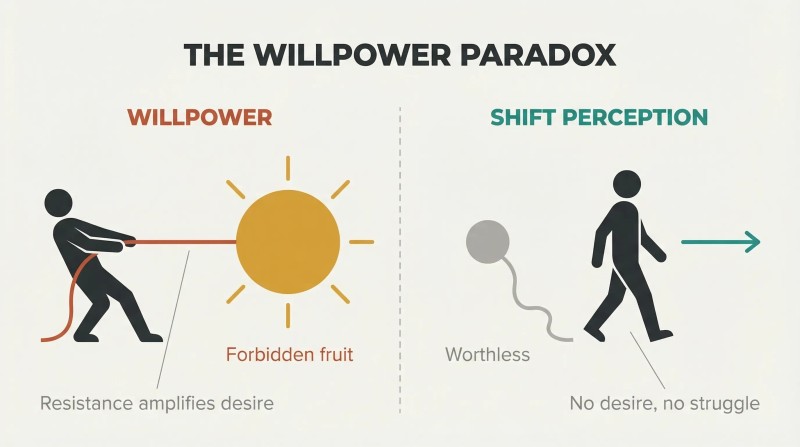
The willpower method creates a self-defeating paradox. Telling yourself "I must not watch porn" frames porn as something desirable you're heroically denying yourself. This sense of sacrifice makes every skipped session feel more precious. The resulting deprivation creates stress — which is exactly when users reach for their "crutch." The book notes how willpower quitters often apologize to partners in advance: "I'll be irritable for weeks, bear with me" — setting themselves up for failure before they start.
EasyPeasy eliminates this by ensuring you see porn as worthless before you stop. You don't resist something you genuinely don't want. It's the difference between being locked out of a restaurant you love versus walking past one that serves food you find disgusting.
Cutting down is crueler than quitting cold turkey
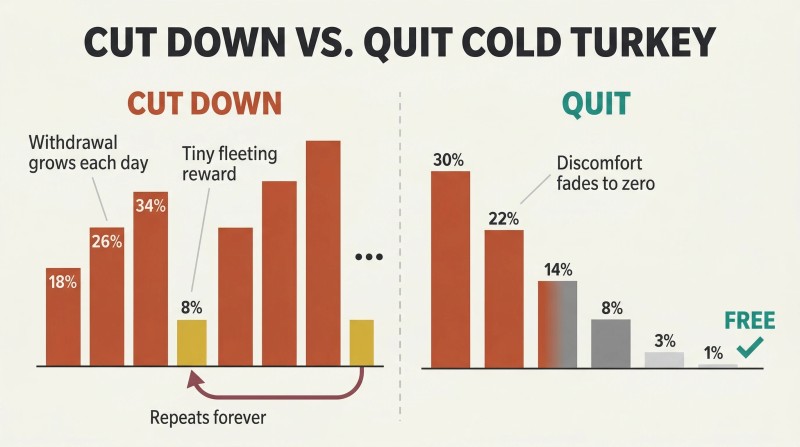
Porn diets amplify the illusion of pleasure. When restricting to once every four days, you spend three days in withdrawal, making the fourth day's session feel incredibly precious. The book describes an ex-marine whose hands shook by his scheduled session time, who spent hours "shopping" for the perfect clip worth the four-day wait, then edged to make it last. Twenty-three hours of suffering to make the twenty-fourth feel like paradise.
The book presents three stark options:
1. Cut down forever — requiring permanent willpower (impossible)
2. Keep escalating until it destroys you
3. Simply quit
Cutting down also reinforces the brainwashing that porn is valuable, convincing you the most precious thing on earth is the next session you're denying yourself.
'Just one peek' is how the trap starts, resets, and holds you
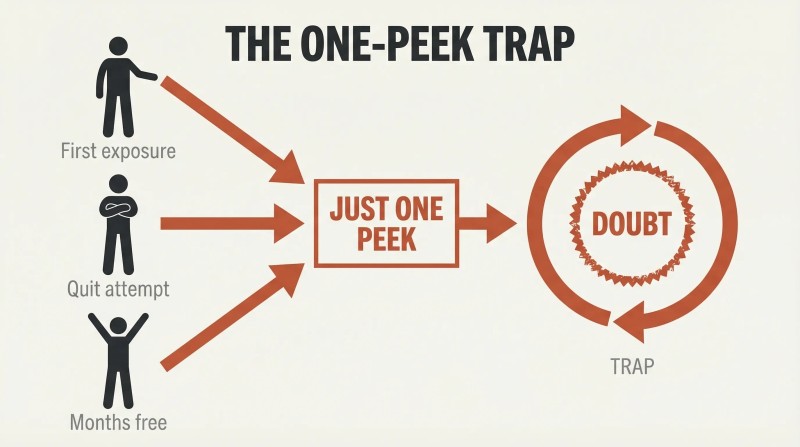
One peek plays three devastating roles. It's how you first got hooked as a teenager — curiosity, experimentation, then the slide. It's how most quit attempts collapse around day three or four, when users peek "just to prove they're over it," grease the dormant neural water slides with fresh dopamine, and revive the little monster. And it's how ex-users who've been free for months fall back in, thinking "I can handle just one."
The book compares porn to a mousetrap without cheese — only poison. With EasyPeasy, you see the poison, so there's nothing to resist. But taking a peek after quitting re-introduces doubt. And doubt — not dopamine — is the actual enemy. There is no such thing as a casual, isolated peek.
Porn claims to cure four opposite problems — it causes all three
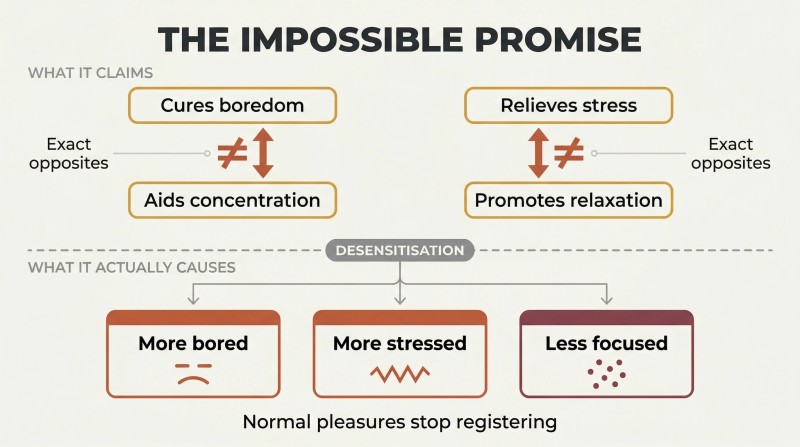
Notice the logical impossibility. Users claim porn helps with boredom and concentration — exact opposites. They claim it relieves stress and promotes relaxation — also opposites. No substance can simultaneously do all four. What actually happens: repeated dopamine flooding triggers desensitisation, where the brain trims receptors to cope with the surges. Normal pleasures — conversation, exercise, meals — no longer register properly, leaving you more bored, more stressed, and less able to concentrate.
The book describes a man in advertising who had attractive dates available anytime but lost interest because porn was easier — no restaurant spending, no risk of rejection. A single dad refused to let his six-year-old share his bed after a scary movie so he could edge for hours. These aren't people being helped by a relaxation tool.
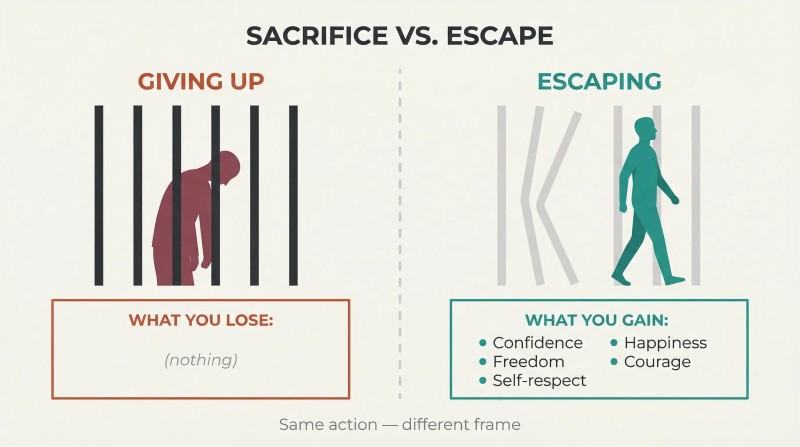
Replace 'giving up porn' with 'escaping a prison'
Language shapes the entire quitting experience. The phrase "giving up" implies sacrifice, as if porn were something valuable being surrendered. The book insists on reframing: you're stopping, quitting, or escaping. To drive this home, the chapter titled "Advantages of Being a Porn User" contains a completely blank page. There are literally zero advantages to list.
The greatest gains from quitting aren't physical — they're psychological: the return of confidence, freedom from sinister black shadows of self-loathing, and the end of a double life. Non-users enjoy health, energy, peace of mind, courage, self-respect, happiness, and freedom. Users forfeit every one of these. Once you genuinely see nothing is being sacrificed, quitting shifts from dread to celebration.
Make your final session a conscious farewell — see the trap clearly
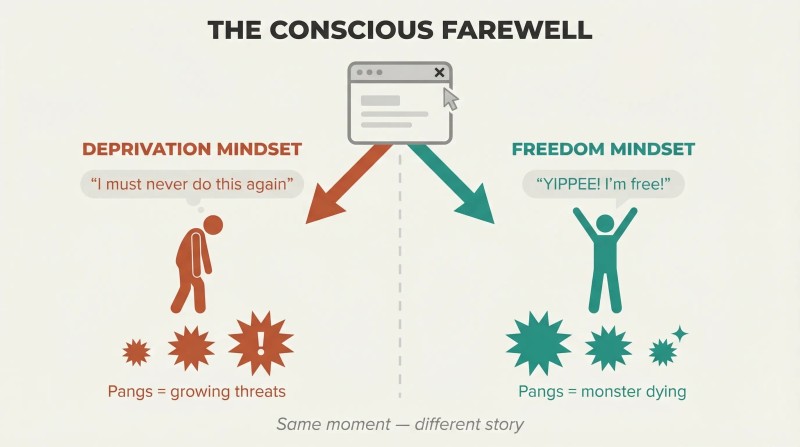
The book prescribes a specific closing ritual. Before your last session, confirm two things: certainty of success and a feeling of excitement, not doom. Then browse your usual sites consciously — notice the desperate shock tactics, the amateurish thumbnails, the compulsive fast-forwarding — and ask yourself where the pleasure actually is. When you close the browser, don't think "I must never do this again." Think "I'm free."
For the next three weeks, whenever a pang surfaces, respond: "YIPPEE! I'm a non-user!" Don't wait for a magical 'moment of revelation' — you became a non-user the instant you closed that final window. The pangs are the little monster dying, and each one is a victory, not a threat. Never doubt the decision, never take "just one peek," and pity users instead of envying them.
Analysis
EasyPeasy occupies a fascinating niche: an open-source, community-maintained adaptation of Allen Carr's 1985 smoking cessation framework applied to internet pornography — a behavioral addiction that didn't exist when Carr wrote his original. The transplant works surprisingly well because Carr's core insight was never really about nicotine; it was about the cognitive architecture of addiction itself. The 'two monsters' model maps onto dual-process theories in psychology: the automatic, habitual system (little monster) versus the narrative belief system (big monster ). The book's argument that beliefs matter more than biochemistry finds support in research showing expectancy effects in addiction often exceed pharmacological ones.
What distinguishes EasyPeasy from conventional recovery approaches — 12-step programs, NoFap streaks, accountability partnerships — is its rejection of the battle metaphor entirely. Where most frameworks treat quitting as warfare requiring discipline, EasyPeasy argues the war metaphor itself is the disease. By framing abstinence as deprivation, conventional methods manufacture the very craving they claim to treat. This is genuinely insightful and aligns with acceptance-based behavioral therapies that outperform suppression-based ones.
The book's weaknesses mirror its rhetorical strengths. Its absolute certainty — 'zero advantages,' 'ridiculously easy' — makes for powerful persuasion but poor clinical nuance. Comorbid trauma, OCD, depression, and deeply entrenched compulsive behaviors likely require more than cognitive reframing. The text conflates all pornography use with addiction without acknowledging that problematic and non-problematic use exist on a spectrum — a distinction modern sexology considers essential. The neuroscience, while directionally valid regarding dopamine desensitization and DeltaFosB, is simplified to the point of occasional inaccuracy.
Still, for its intended audience — people who recognize their use as compulsive and want to stop — the method's psychological elegance is remarkable. It's applied philosophy at its most practical: if you genuinely believe something has zero value, resisting it requires zero effort. The open-source model ensures accessibility, and the community-driven iterations reflect a form of distributed expertise rarely seen in addiction literature.
Review Summary
The Easy Peasy Way to Quit Porn receives mixed reviews. Many praise its effectiveness in helping break porn addiction through mindset shifts rather than willpower. Readers appreciate the book's insights into porn industry brainwashing and its unique approach. However, some criticize its repetitive writing, lack of scientific evidence, and oversimplification of addiction. The book's core method involves reframing porn use as undesirable rather than pleasurable. While some found it life-changing, others felt it lacked substance or created unrealistic expectations about quitting porn easily.
People Also Read


Glossary
Little Monster
Subtle physical dopamine cravingThe barely perceptible physical withdrawal symptom from pornography use—an empty, restless feeling similar to mild hunger. So subtle most users never identify it as withdrawal, instead interpreting it as stress, boredom, or sexual desire. The little monster dies within approximately three weeks of stopping porn. It sends signals that the big monster misinterprets as a need for pornography.
Big Monster
Mental brainwashing about porn's valueThe collection of false beliefs, societal conditioning, and self-reinforcing rationalizations that convince a user porn provides genuine pleasure, stress relief, concentration, or relaxation. The big monster interprets the little monster's faint withdrawal signals and creates the illusion that porn is a necessary reward or crutch. EasyPeasy's primary work is dismantling the big monster before the user stops.
PMO
Porn, masturbation, orgasm cycleAcronym for the self-reinforcing behavioral loop of watching pornography, masturbating to it, and orgasming. Widely used in online recovery communities like NoFap. EasyPeasy treats PMO as a single addictive cycle rather than three separate behaviors, arguing that porn hijacks the masturbation and orgasm components into a dopamine-flooding chain reaction.
Online harem
User's collection of porn sitesThe book's term for the pornography websites a user frequents, emphasizing that internet porn provides the illusion of unlimited sexual partners. The metaphor highlights the supernormal nature of accessing more potential 'mates' in fifteen minutes than ancestors encountered in several lifetimes, exploiting the brain's Coolidge effect.
Water slide
Greased neural pathways to relapseA metaphor for the neural pathways strengthened by the brain chemical DeltaFosB each time porn is consumed. Each session 'greases' the slide, making it faster and easier to ride down next time a trigger or cue appears. The water slide explains how a single stressor or cue can rapidly lead to a full relapse. These pathways fade when deprived of reinforcement.
Red line
Self-imposed porn content boundaryA user's personal boundary separating 'acceptable' porn from material they consider too extreme, shocking, or disturbing. The book argues this line inevitably shifts as tolerance builds through desensitisation, with users gradually escalating to genres they previously found repulsive. The dance around the red line—staying close but not crossing—becomes its own source of dopamine-fueled arousal.
Willpower method
Quitting through disciplined resistanceThe conventional approach to quitting porn that relies on resisting cravings through self-denial, discipline, or structured abstinence (including streak-counting and porn diets). EasyPeasy argues this method fails because framing quitting as sacrifice makes porn seem more precious, creating the misery and deprivation feelings it attributes to withdrawal, and ultimately leading to relapse.
Moment of revelation
Sudden realization of complete freedomA breakthrough experience, typically occurring within the first three weeks after quitting, where the ex-user suddenly realizes they are genuinely free and have no desire for porn. Often triggered by successfully handling a stressful or social situation without thinking of porn. The book warns against actively waiting for this moment, as anticipation creates anxiety and doubt that can delay or prevent it.
FAQ
What's "The Easy Peasy Way to Quit Porn" about?
- Overview: "The Easy Peasy Way to Quit Porn" by Hackauthor² is a guide adapted from Allen Carr’s method for quitting smoking, aimed at helping individuals stop using pornography.
- Methodology: It presents a method that is instantaneous, requires no willpower, and is designed to be painless and permanent.
- Focus: The book emphasizes understanding the nature of porn addiction and the brainwashing that keeps individuals trapped.
- Goal: The ultimate goal is to help readers achieve freedom from porn addiction without feeling deprived or sacrificing pleasure.
Why should I read "The Easy Peasy Way to Quit Porn"?
- Effective Method: The book offers a unique approach that has been effective for many, promising an easy and enjoyable way to quit porn.
- Comprehensive Understanding: It provides insights into the psychological and neurological aspects of porn addiction, helping readers understand the root causes.
- Practical Advice: The book includes practical steps and affirmations to support the quitting process.
- Community Support: It encourages joining communities for additional support and feedback, enhancing the quitting journey.
What are the key takeaways of "The Easy Peasy Way to Quit Porn"?
- Addiction is a Trap: Porn addiction is a subtle and sinister trap that creates a false sense of pleasure and necessity.
- Brainwashing: The book highlights the role of societal and self-imposed brainwashing in maintaining the addiction.
- No Sacrifice Needed: Quitting porn is not about giving up pleasure but about gaining freedom and improving well-being.
- Positive Mindset: Maintaining a positive mindset and understanding the true nature of addiction are crucial for success.
How does the "Easy Method" work in "The Easy Peasy Way to Quit Porn"?
- Instantaneous and Painless: The method is designed to be immediate and without withdrawal pangs, focusing on changing the mindset.
- No Willpower Required: It emphasizes that willpower is not needed, as the method removes the desire for porn.
- Understanding Addiction: By understanding the nature of addiction and brainwashing, individuals can break free from the cycle.
- Permanent Solution: The method aims to provide a permanent solution, ensuring individuals do not return to porn use.
What is the "Sinister Trap" mentioned in "The Easy Peasy Way to Quit Porn"?
- Nature of the Trap: The "Sinister Trap" refers to the deceptive nature of porn addiction, which lures individuals into a cycle of dependency.
- Initial Curiosity: It often starts with curiosity and the belief that one can stop anytime, but quickly becomes a habit.
- False Pleasure: The trap creates an illusion of pleasure and necessity, making it difficult to quit.
- Breaking Free: Understanding this trap is essential to breaking free and achieving lasting freedom from addiction.
What role does "Brainwashing" play in porn addiction according to "The Easy Peasy Way to Quit Porn"?
- Societal Influence: Brainwashing involves societal messages that normalize porn use and create misconceptions about its harmlessness.
- Self-Justification: Individuals often rationalize their addiction, believing they derive pleasure or relief from porn.
- Fear of Quitting: Brainwashing instills fear of quitting, making individuals believe they will be deprived or unable to cope without porn.
- Overcoming Brainwashing: The book emphasizes the need to dismantle these beliefs to successfully quit porn.
What are the "Withdrawal Pangs" discussed in "The Easy Peasy Way to Quit Porn"?
- Nature of Pangs: Withdrawal pangs are described as mild, empty feelings similar to hunger, not physical pain.
- Psychological Aspect: They are primarily psychological, stemming from the belief that one is missing out on pleasure.
- Temporary and Manageable: With the right mindset, these pangs are temporary and can be easily managed.
- Sign of Progress: Recognizing and overcoming these pangs is a sign of progress towards freedom from addiction.
What does "The Easy Peasy Way to Quit Porn" say about "Cutting Down"?
- Ineffectiveness of Cutting Down: The book argues that cutting down is ineffective and prolongs the addiction.
- Creates Illusion of Control: It creates a false sense of control and makes porn seem more precious.
- Increases Withdrawal Pangs: Cutting down increases withdrawal pangs and makes quitting more difficult.
- Complete Abstinence: The book advocates for complete abstinence as the only effective way to quit.
What are the "Advantages of Being a Porn User" according to "The Easy Peasy Way to Quit Porn"?
- No Real Advantages: The book humorously presents a blank page to illustrate that there are no advantages to being a porn user.
- Illusion of Benefits: Any perceived benefits are illusions created by addiction and brainwashing.
- Focus on Disadvantages: The book emphasizes the numerous disadvantages, including health risks and loss of time and energy.
- Encouragement to Quit: This section serves to encourage readers to quit by highlighting the lack of genuine benefits.
What are the best quotes from "The Easy Peasy Way to Quit Porn" and what do they mean?
- "The only thing that prevents us from quitting is FEAR!" - This quote highlights that fear, not the addiction itself, is the main barrier to quitting.
- "Porn doesn’t fill a void, it creates one!" - This emphasizes that porn addiction creates a false sense of need, rather than fulfilling any real need.
- "YIPPEE! I’M A NON-USER!" - A mantra to celebrate freedom from addiction and reinforce a positive mindset.
- "There’s nothing to give up, only marvellous positive gains to achieve." - This underscores the book's message that quitting porn is about gaining freedom and well-being, not losing pleasure.
How does "The Easy Peasy Way to Quit Porn" address "Social Habits"?
- Social Influence: The book discusses how social habits and peer pressure can reinforce porn addiction.
- Changing Perceptions: It encourages changing perceptions and recognizing the negative impact of porn on social interactions.
- Supportive Communities: Joining supportive communities can help individuals break free from social habits that promote porn use.
- Focus on Real Connections: Emphasizing real-life connections and relationships is key to overcoming social habits related to porn.
What is the "Moment of Revelation" in "The Easy Peasy Way to Quit Porn"?
- Definition: The "Moment of Revelation" is the point when an individual fully realizes they no longer need or desire porn.
- Timing: It typically occurs within three weeks of quitting, but can happen sooner.
- Significance: This moment signifies the end of brainwashing and the beginning of true freedom from addiction.
- Permanence: It marks a permanent shift in mindset, where the individual no longer envies porn users and fully embraces their new life.
Download PDF
Download EPUB
.epub digital book format is ideal for reading ebooks on phones, tablets, and e-readers.








































