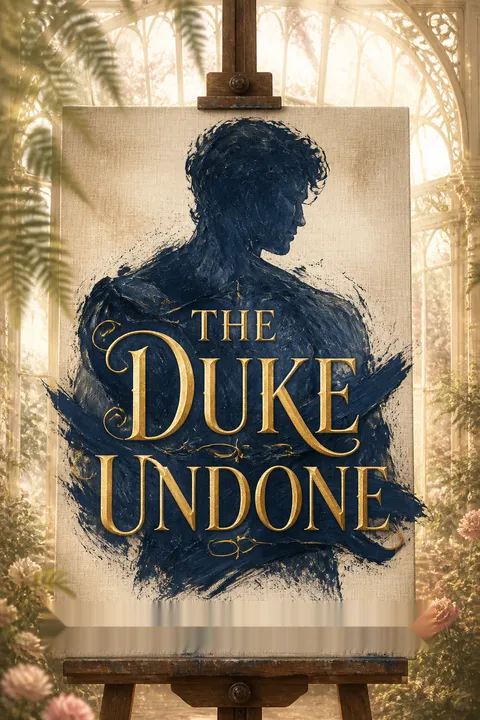

Plot Summary
Moonlit Alley Awakening
Lucy Coover, a struggling art student in Victorian London, stumbles upon a naked, unconscious man in a Shoreditch alley at dawn. Her artist's eye is captivated by his beauty, and she sketches him from memory, unwittingly setting in motion a chain of events that will upend both their lives. The man, Anthony, Duke of Weston, is not dead but dead drunk, and Lucy's act of compassion—covering him and ensuring his safety—sparks a connection neither understands. This moment, charged with vulnerability and curiosity, becomes the seed of obsession and inspiration for Lucy, who is desperate to break into the male-dominated art world. The city's grit and grandeur, the tension between propriety and desire, and the collision of two worlds—aristocracy and poverty—are all set in motion by this fateful meeting.
Scandal on Canvas
Months later, Anthony is confronted with a scandal: a painting of his nude likeness, rendered with intimate detail, has surfaced in society. Lucy, under the pseudonym L. Coover, has sold the painting to a wealthy woman, never imagining it would be recognized. The painting's exposure threatens Anthony's reputation and inheritance, as any whiff of scandal could extend the legal control his late father's will holds over him. For Lucy, the sale was a desperate act to support her family, but it now endangers her place at the Royal Academy and her dreams. Their worlds collide as Anthony seeks out the mysterious artist, and Lucy scrambles to protect her secret, setting the stage for a battle of wits, pride, and vulnerability.
Bargains and Blackmail
Anthony tracks Lucy to the Royal Academy, discovering her true identity. Their confrontation is fraught with tension—he accuses her of exploiting him, while she defends her artistic vision and necessity. Both are desperate: Anthony to protect his future and find his missing sister, Lucy to avoid ruin and eviction. They strike a precarious bargain—Lucy will surrender all sketches of him and keep silent about their connection, while Anthony will not expose her deception. Yet, the power dynamic is unstable, complicated by mutual attraction and the threat of blackmail. Their uneasy truce is tested by the city's gossip, the Academy's politics, and their own growing fascination with each other.
The Artist's Dilemma
Lucy's life is a balancing act between her artistic ambitions and the grinding realities of poverty. She toils in her aunt's dress shop, supports her family, and fights for recognition in a world that dismisses women artists. The threat of eviction looms as corrupt officials target her home for demolition. Meanwhile, Anthony is trapped by his late father's will, which withholds his inheritance unless he avoids scandal and vice. Both are haunted by family legacies—Lucy by her parents' sacrifices, Anthony by his brother's death and his sister's disappearance. Their encounters become charged with longing and frustration, as each sees in the other both a path to salvation and a dangerous distraction from their goals.
Eviction and Desperation
Lucy's world is upended when her family's home and shop are condemned by corrupt city officials, threatening to cast them into the streets. The eviction is a symptom of broader social injustice, as the poor are swept aside for profit. Desperate, Lucy turns to Anthony, hoping his influence can save her home. But Anthony is mired in his own struggles—his inheritance is still out of reach, and his every move is watched by his late father's trustee, Yardley. The stakes for both are raised: Lucy's art and family security, Anthony's freedom and ability to help his missing sister. Their alliance, born of necessity, deepens as they confront the city's corruption and their own vulnerabilities.
Bargaining with a Duke
Lucy storms Anthony's mansion, demanding his help to stop the eviction. Their confrontation is electric—each wielding threats, secrets, and emotional leverage. Anthony, wary of further scandal, is reluctant to intervene, but Lucy's determination and the memory of their shared night in the alley unsettle him. They negotiate a new arrangement: Lucy will help Anthony search for his sister in the city's underbelly, and Anthony will use his influence to challenge the corrupt officials targeting Lucy's home. Their partnership is fraught with mistrust, simmering attraction, and the ever-present risk of exposure. The balance of power shifts as they begin to see each other's wounds and strengths.
Lessons in Exposure
As Anthony and Lucy's partnership deepens, so does their intimacy. In the privacy of Anthony's glasshouse, they share art lessons that become lessons in vulnerability and desire. Lucy, who has only ever drawn from memory and imagination, is invited to paint in the light-filled sanctuary, while Anthony, who has always hidden behind masks, is challenged to reveal himself—literally and figuratively. Their physical and emotional boundaries blur, culminating in a passionate encounter that leaves both changed. Yet, the outside world intrudes: Anthony's inheritance remains in jeopardy, Lucy's submission to the Academy is at risk, and the threat of scandal looms ever larger.
Glasshouse Confessions
In the sanctuary of the glasshouse, Anthony and Lucy confess their deepest wounds—his family's history of madness, addiction, and loss; her fears of repeating her parents' mistakes and losing herself in love. Anthony reveals the constraints of his father's will and the pain of his sister's disappearance. Lucy shares the burdens of poverty, ambition, and the fear that love will consume her as it did her mother. Their confessions forge a bond of trust, but also expose the fragility of their connection. The glasshouse becomes a crucible where art, love, and pain are transformed, but the outside world's demands threaten to shatter their fragile peace.
Temptation and Betrayal
As Anthony's thirtieth birthday approaches—the day he is to inherit—old temptations resurface. The pressure of Yardley's surveillance, the threat of scandal, and the unresolved pain of his family drive Anthony to the brink of self-destruction. Lucy, meanwhile, faces betrayal from within her own circle, as her art and reputation are threatened by gossip and institutional sexism. Their relationship is tested by jealousy, pride, and the ever-present specter of loss. When Anthony's inheritance is snatched away by a new codicil requiring a "proper" marriage, both are forced to confront the limits of their power and the cost of their choices.
The Price of Inheritance
Anthony's inheritance is withheld by a final twist: his father's will now requires him to marry a woman of "unimpeachable character," approved by Yardley and the family's circle. Lavinia, Yardley's daughter, is the chosen bride. Anthony is trapped—his freedom, fortune, and ability to help Lucy and his sister are all at stake. Lucy, devastated by the loss of her home and the apparent end of their relationship, is forced to choose between self-preservation and love. Both are ensnared by the machinations of Yardley, whose own secrets and betrayals come to light, revealing the rot at the heart of Anthony's family legacy.
Asylum Secrets Revealed
Lucy, refusing to give up on Anthony or his missing sister, uncovers the truth: Effie, Anthony's sister, has been wrongfully committed to an asylum by Yardley's machinations. With the help of friends, Lucy orchestrates a daring rescue, risking her own safety and reputation. The ordeal exposes the cruelty of Victorian mental health practices and the vulnerability of women to institutional abuse. Anthony, galvanized by Lucy's courage, confronts Yardley and the corrupt system that has ensnared his family. The rescue of Effie becomes a turning point, forcing Anthony to claim his agency and Lucy to trust in her own strength.
Family, Forgery, and Forgiveness
The aftermath of Effie's rescue brings long-buried family secrets to light. Anthony confronts Yardley, uncovering a web of forgery, betrayal, and manipulation that stretches back to his mother's tragic fate. The revelation that Yardley was both lover and betrayer, architect of Anthony's family's ruin, is devastating. Yet, in the crucible of truth, Anthony finds the strength to forgive himself and break free from the patterns of the past. Lucy, too, must reckon with her own family's legacy, learning to trust in love without losing herself. Together, they begin to imagine a future built on honesty, resilience, and mutual respect.
The Artist's Triumph
Lucy's painting—her nude of Anthony, transformed into myth—wins acclaim at the Royal Academy's Summer Exhibition, marking her arrival as an artist of note. The scandal that once threatened to destroy them becomes a badge of courage and authenticity. Anthony, having exposed Yardley's crimes and reclaimed his inheritance, is finally free to choose his own path. Effie is restored to her family, and the wounds of the past begin to heal. Lucy and Anthony, having weathered betrayal, loss, and the judgment of society, stand together as equals—artist and muse, lovers and partners—ready to build a life on their own terms.
A New Beginning
In the aftermath of struggle and triumph, Lucy and Anthony look to the future. Their marriage is not a fairy tale, but a partnership forged in adversity and mutual respect. Lucy's art flourishes, supported by Anthony's unwavering belief in her talent. Anthony, freed from the shadows of his family's past, embraces his role as a reformer and advocate. Together, they create a home that is a sanctuary for creativity, love, and healing. The glasshouse, once a place of secrets and longing, becomes a symbol of their shared life—a space where light, color, and hope can grow. Their story ends not with perfect happiness, but with the hard-won promise of a life lived fully, bravely, and together.
Analysis
A modern romance of art, agency, and social justiceThe Duke Undone is a historical romance that transcends its genre, offering a nuanced exploration of power, vulnerability, and the transformative potential of art and love. At its core, the novel interrogates the ways individuals—especially women—are constrained by class, gender, and family legacy, and how they fight to claim their own voices and destinies. Lucy's journey from outsider to acclaimed artist is both a personal triumph and a commentary on the barriers faced by women in the arts. Anthony's arc, from haunted heir to self-possessed partner, is a study in the struggle to break free from toxic inheritance and claim agency. The novel's use of art as both plot device and metaphor underscores the importance of creativity, self-expression, and the courage to see and be seen. The glasshouse, with its interplay of light and shadow, becomes a symbol of the possibility of growth, healing, and new beginnings. Ultimately, The Duke Undone is a story about the power of love—not as rescue or possession, but as a partnership rooted in honesty, respect, and shared purpose. Its lessons resonate for modern readers: that true intimacy requires vulnerability, that justice demands courage, and that the act of creation—whether in art or in life—is always an act of hope.
Review Summary
The Duke Undone receives mixed reviews with an average 3.62 rating. Readers praise Joanna Lowell's unique writing style, complex characters, and handling of darker themes like alcoholism, PTSD, and asylum abuse. Many loved Lucy as a strong artist heroine but found Anthony disappointing as a passive, flawed hero. The novel's ambitious scope—covering Victorian art, housing reform, and colonialism—impressed some but overwhelmed others. Critics note jarring tonal shifts between humor and darkness, plus historically inaccurate elements. The romance divided readers; some found it breathless, others unconvincing. Mary Jane Wells' narration received universal acclaim.
Characters
Lucy Coover
Lucy is a fiercely talented, ambitious young woman determined to break into the male-dominated art world of Victorian London. Raised in poverty, she supports her family by working in her aunt's dress shop while pursuing her studies at the Royal Academy. Lucy is driven by a hunger for beauty, truth, and independence, but is haunted by the sacrifices of her parents and the fear of repeating her mother's mistakes—losing herself in love. Her encounter with Anthony, the Duke of Weston, becomes both her greatest inspiration and her greatest risk. Lucy's journey is one of self-discovery, as she learns to balance ambition with vulnerability, and to claim her place as both artist and beloved.
Anthony, Duke of Weston
Anthony is a war-scarred, emotionally wounded duke trapped by the constraints of his late father's will and the expectations of society. Plagued by guilt over his brother's death and his sister's disappearance, he struggles with addiction and self-doubt. His chance encounter with Lucy awakens a longing for connection and meaning, but also threatens to unravel the fragile control he maintains over his life. Anthony's arc is one of painful growth—confronting family secrets, reclaiming his inheritance, and learning to love without domination or self-destruction. His relationship with Lucy challenges him to become a partner, not a savior, and to build a future rooted in honesty and mutual respect.
Robert Yardley
Yardley is the late Duke's trusted friend, executor, and the legal guardian of Anthony's inheritance. Outwardly genial and paternal, he is in fact a master manipulator, driven by envy, ambition, and unresolved passion for Anthony's mother. Yardley's machinations—ranging from financial fraud to the wrongful commitment of Effie—are the engine of much of the novel's conflict. His psychological complexity lies in his ability to justify his actions as protective, even loving, while inflicting profound harm. Yardley's downfall is both a reckoning for his crimes and a tragic exposure of the ways love, when twisted by resentment and power, can become destructive.
Effie (Euphemia) Philby
Effie is Anthony's beloved younger sister, whose disappearance haunts him throughout the novel. Her fate—wrongfully committed to an asylum by Yardley's schemes—mirrors the family's history of female suffering and silencing. Effie is spirited, creative, and resilient, but deeply scarred by betrayal and institutional abuse. Her rescue and restoration to the family are both a personal and symbolic victory, representing the possibility of healing and the importance of solidarity among women. Effie's arc underscores the novel's critique of Victorian attitudes toward female autonomy and mental health.
Aunt Marian Stirling
Lucy's great-aunt and surrogate mother, Marian is a former theatrical costumer whose shop is both a haven and a battleground. She embodies the strength, wit, and resourcefulness of working-class women, supporting Lucy's ambitions while warning her against the dangers of love and dependence. Marian's own history of heartbreak and survival provides a counterpoint to Lucy's journey, offering both caution and encouragement. Her unwavering support and sharp humor ground the novel's emotional stakes.
Kate Holroyd
Kate is Lucy's closest friend and fellow art student, a wealthy heiress with a rebellious spirit and a passion for women's rights. She is bold, outspoken, and fiercely loyal, often pushing Lucy to take risks and challenge the status quo. Kate's own struggles with gender expectations and her advocacy for equal education at the Academy highlight the novel's themes of sisterhood and solidarity. Her friendship with Lucy is a source of strength and comic relief, as well as a model for healthy, supportive relationships.
Lavinia Yardley
Lavinia is Yardley's daughter and Anthony's intended bride, chosen by the terms of the will. She is beautiful, privileged, and initially shallow, but her arc reveals unexpected depth and vulnerability. Lavinia's entanglement in her father's schemes and her eventual rejection of the engagement reflect the limited agency of women in her class, as well as the collateral damage wrought by patriarchal control. Her final act of self-assertion is both a personal liberation and a subtle critique of the marriage market.
Augustus Burgess
A celebrated artist and teacher at the Royal Academy, Burgess is both a mentor and a mirror for Lucy. He represents the possibilities and limitations of artistic success in Victorian society, as well as the complexities of male-female collaboration. Burgess's own history with Effie and his role in the art world's politics add layers of intrigue and commentary on the nature of genius, reputation, and influence.
Mrs. Forbes
A wealthy, bored society woman, Mrs. Forbes commissions the painting that sets the plot in motion. Her desire for a daring, sensual artwork reflects the hidden appetites and hypocrisies of the upper class. Mrs. Forbes is both a comic figure and a symbol of the ways women's desires are policed and commodified. Her role as patron, and the subsequent scandal, expose the precariousness of women's agency in both art and society.
Humphreys
Anthony's valet, Humphreys, is a former soldier whose loyalty and resourcefulness make him an indispensable ally. He provides comic relief, practical support, and a link to Anthony's past in the army. Humphreys's presence underscores the importance of chosen family and the bonds forged in adversity.
Plot Devices
Dual Worlds Colliding
The novel's central device is the collision of two worlds: the impoverished, ambitious world of Lucy and the privileged, haunted world of Anthony. Their relationship is a microcosm of Victorian society's tensions—between class, gender, art, and power. The painting of Anthony's nude body becomes a literal and symbolic site of conflict, desire, and transformation. The glasshouse, as a recurring setting, serves as both sanctuary and crucible, where secrets are revealed and new selves are forged.
Scandal and Inheritance
Anthony's inheritance is governed by a series of legal conditions designed to control his behavior and choices. The threat of scandal—whether through Lucy's painting, Anthony's drinking, or Effie's disappearance—serves as both a plot engine and a commentary on the ways reputation and power are policed. The will's shifting requirements (sobriety, marriage, approval) create escalating stakes and force the characters to confront their own values and desires.
Art as Revelation and Resistance
Lucy's art is not merely a backdrop but a driving force in the narrative. Her painting of Anthony is both an act of rebellion and a declaration of desire, challenging the boundaries of propriety and the male gaze. The process of creation—sketching, painting, exhibiting—mirrors the characters' journeys toward self-knowledge and agency. The Summer Exhibition, with its promise of recognition and risk of rejection, becomes a crucible for Lucy's ambitions and the couple's future.
Family Secrets and Psychological Inheritance
The novel is structured around the gradual revelation of family secrets—Anthony's mother's fate, Yardley's betrayals, Effie's imprisonment. These secrets are foreshadowed through dreams, rumors, and the characters' psychological wounds. The cycles of addiction, madness, and betrayal are both personal and systemic, reflecting the broader social forces that shape the characters' lives. The resolution of these secrets is both a reckoning and a liberation, allowing for forgiveness and new beginnings.
Feminist Solidarity and Social Critique
Lucy's journey is supported by a network of women—Kate, Aunt Marian, Effie, and her fellow students—whose solidarity and activism challenge the constraints of their era. The petitions for equal education, the rescue from the asylum, and the formation of the Sisterhood are all plot devices that foreground the novel's feminist themes. The critique of Victorian mental health practices, marriage laws, and artistic gatekeeping is woven into the personal stories, making the characters' struggles both individual and collective.
Duke Undone Series
Download PDF
Download EPUB
.epub digital book format is ideal for reading ebooks on phones, tablets, and e-readers.








































