
Plot Summary
Interrogation of Faith
Sistra Petra Ignatius demands Nezha declare the Hesperian Maker as the true god, but Nezha refuses, clinging to his own experience of divinity as chaos—unfathomable, irrational, and terrifying. The daily ritual is not about truth but about Petra's need for certainty, her fear masked as faith. Nezha, battered and broken, cannot concede this last piece of himself, even as he's surrendered everything else. The gods he's known are not rational, not singular, but a swirling pantheon of indifference and power. Petra's insistence is a battle of dogma versus lived experience, and Nezha's refusal is both an act of defiance and a final assertion of self. The pain of this resistance is endless, but it is the only thing that keeps him from drowning in submission.
Pain Without End
Nezha's relationship with pain has changed; it no longer signals death, only endless suffering. His body heals, always, no matter how viciously it's torn apart, trapping him in a cycle of agony and recovery. This immortality, once a gift, is now a torment, as he realizes he will always return to endure more. The pain is not just physical but existential, a reminder of his inability to escape his fate or the expectations placed upon him. The repetition of Petra's question—"Who is the true god?"—becomes a symbol of his unending torment, both spiritual and corporeal. Nezha's endurance is not strength but a sentence, and he longs for an end that will never come, forced to live through every wound and every loss.
Defeat in the Ring
In a brutal sparring match, Nezha expects to win easily, but Rin overpowers him, pinning him to the ground and beating him relentlessly. The pain is shocking, more intense than his usual quick-healing wounds. Rin's persistence is not cruelty but calculated survival—she ensures he stays down. For Nezha, the defeat is humiliating and frightening; for the first time, he feels truly vulnerable, even wishing for death. Yet, paradoxically, this brush with mortality makes him feel more alive than ever. The match is stopped, but the emotional impact lingers. Nezha is left reeling, his confidence shaken, and his perception of Rin transformed—she is not just an opponent but a force of nature, capable of ending him.
Orders from Home
After returning from a harrowing war camp, Nezha's father, Vaisra, immediately tasks him with retrieving an old classmate from Ankhiluun. The reunion is cold and businesslike, with no room for affection. The mission is delicate: Moag has found the Speerly—Rin. Nezha is excited at the prospect of seeing her alive, certain she has survived against all odds. The assignment is not just a political maneuver but a personal quest, as Nezha anticipates the shock and emotion of their meeting. The war's aftermath hangs heavy, with rumors and uncertainty swirling. Nezha's sense of duty is complicated by his feelings for Rin, and the journey to Ankhiluun becomes a turning point in both his personal and political life.
Reunion in Ankhiluun
Nezha orchestrates a dramatic encounter, feigning aggression to draw Rin out. She is stunned to see him alive, having believed him dead. Their exchange is charged with disbelief, relief, and old rivalries. Nezha's initial impulse is to tease, masking his deeper emotions. Rin's reaction is volatile, oscillating between anger and shock. The reunion is not a simple reconciliation but a collision of past traumas and unresolved tensions. Both are changed by war and loss, and their dynamic is fraught with unspoken history. The moment is a microcosm of their relationship—intense, unpredictable, and laced with both affection and antagonism. The encounter sets the stage for the ideological and emotional battles to come.
Ideals in Conflict
Nezha and Rin debate the future of their nation, with Nezha advocating for democracy and Rin dismissing it as naïve. Nezha's belief in reform and decentralization clashes with Rin's deep-seated mistrust of power and human nature. Their argument is not just political but personal, reflecting their fundamental differences: Nezha is bound by duty and legacy, while Rin is fiercely independent, beholden to no one. The conversation exposes the limits of Nezha's idealism and the depth of Rin's cynicism. Neither can fully convince the other, and the exchange underscores the impossibility of true understanding between them. Their visions for the future are mutually exclusive, foreshadowing the inevitable conflict that will define their relationship and the fate of their world.
House of Yin's Grief
The death of Yin Jinzha devastates the House of Yin. Nezha's mother is consumed by grief, unable to acknowledge him, haunted by the suspicion that he is not truly her son. Vaisra, aged by sorrow, is distant and broken. Nezha's attempt to offer comfort is rebuffed, and the unspoken truth lingers: he is the wrong son to have survived. The family's pain is compounded by political turmoil and the looming threat of the Empress, Su Daji. Nezha's vow to avenge his family is met with skepticism—his father doubts his strength. The scene is heavy with regret, resentment, and the weight of expectations. Nezha is left alone, burdened by loss and the knowledge that he can never truly belong, even to his own family.
Love and Impossibility
Nezha grapples with his feelings for Rin, recognizing that their love is impossible. Everything about her—her freedom, her recklessness, her power—is at odds with the world he is trying to build. He admires her resilience and courage, but knows there is no place for her in the Republic's future. The conflict between duty and desire is agonizing; Nezha loves Rin deeply, but their paths are irreconcilable. In his nightmares, he sees her dying in his arms, a vision that haunts him. He confesses his love, but not the full truth—that he may be the one to end her. The emotional intensity of this chapter underscores the tragedy of their relationship, defined by longing, fear, and the inevitability of betrayal.
The Fire Returns
Rin revels in her regained control over fire, displaying her abilities with newfound confidence. Nezha is both awed and alarmed by her power, recognizing its potential to disrupt the fragile balance of their world. The return of her shamanic abilities is a turning point, making her both a symbol of hope and a threat to the Hesperians and the Republic. Rin's relationship with her power is complex—she is exhilarated by it, but also marked as an outsider. Nezha's fear for her safety is mingled with admiration, and he struggles to reconcile his feelings with the political realities they face. The fire becomes a metaphor for Rin herself: beautiful, uncontrollable, and ultimately incompatible with the order Nezha seeks.
The Shamanic Dilemma
Nezha reveals the Hesperians' plan to ban all shamanic activity, demanding that Rin and others renounce their powers or face destruction. The ultimatum is stark: cooperate and survive, or resist and be hunted. Rin's response is defiant—she refuses to give up her fire, even in the face of mortal danger. Nezha's heart breaks as he realizes she cannot, and will not, conform. The conversation is a test, and Rin fails in the eyes of the new regime. The dilemma is not just political but existential, forcing both characters to confront the limits of compromise. The chapter crystallizes the central conflict: the world cannot accommodate both the old magic and the new order, and a reckoning is inevitable.
The Choice of Sides
Nezha and Rin are forced to acknowledge that their visions for the future are mutually exclusive. They are bound by forces beyond their control—history, duty, and the expectations of others. The possibility of neutrality or coexistence is an illusion; they must choose sides, even if it means destroying each other. Nezha's love for Rin is rendered meaningless by the demands of the world they inhabit. The chapter is suffused with a sense of fatalism and tragedy, as both characters realize that their destinies are set. The inevitability of conflict overshadows any hope for reconciliation, and the emotional stakes are raised to their highest point. The stage is set for the final, devastating confrontation.
Betrayal by Necessity
The tension between love and duty reaches its breaking point as Nezha steels himself to harm Rin. He searches for her wounds, preparing to strike where she is most vulnerable. Rin, trusting or perhaps resigned, does not resist. The act is both intimate and violent, a culmination of their complicated relationship. Nezha's resolve is fragile, threatened by the possibility that Rin might say something to change his mind. The betrayal is not born of malice but of necessity—Nezha is trapped by circumstances and expectations. The moment is charged with regret and sorrow, as both characters sense the end approaching. The betrayal is both personal and political, a microcosm of the larger war tearing their world apart.
The Weight of Command
The burdens of command are taking their toll on Nezha. He is physically and mentally depleted, struggling to meet the demands of war, politics, and family. His attention wavers, and recovery from injuries is slow. The pressure to succeed is immense, and failure feels imminent. News arrives that Rin has been located, and Nezha must act quickly. The urgency of the situation leaves no room for hesitation or self-doubt. The chapter captures the relentless pace and crushing responsibility of leadership, as well as the personal cost. Nezha's exhaustion is both a symptom and a symbol of the larger conflict—he is stretched to the breaking point, with no relief in sight.
Mobilization for War
With Rin's location revealed, Nezha orders his forces to mobilize. The confrontation that will decide the fate of the Republic is at hand. The journey to the battlefield is swift, but the emotional weight is immense. Nezha is haunted by memories of Rin, their shared history, and the knowledge that only one of them can survive. The mobilization is not just a military maneuver but a personal reckoning. The stakes are total—victory or annihilation, love or duty. The chapter is suffused with anticipation and dread, as Nezha prepares to face the only person who has ever truly mattered to him. The war is no longer abstract; it is embodied in the coming clash between two irreconcilable forces.
The Final Confrontation
The long, bloody conflict between Nezha and Rin reaches its climax. Their personal and political struggles are inseparable, each representing a different vision for the future. The confrontation is both epic and intimate, charged with the weight of history, love, and betrayal. Nezha knows what is expected of him—he must kill Rin to secure the Republic's future. Yet, even as he prepares for battle, he is tormented by doubt and longing. The final encounter is a test of will, faith, and identity. The outcome will shape not only their lives but the fate of their world. In the end, the only certainty is loss—of innocence, of love, and of the possibility of peace.
Analysis
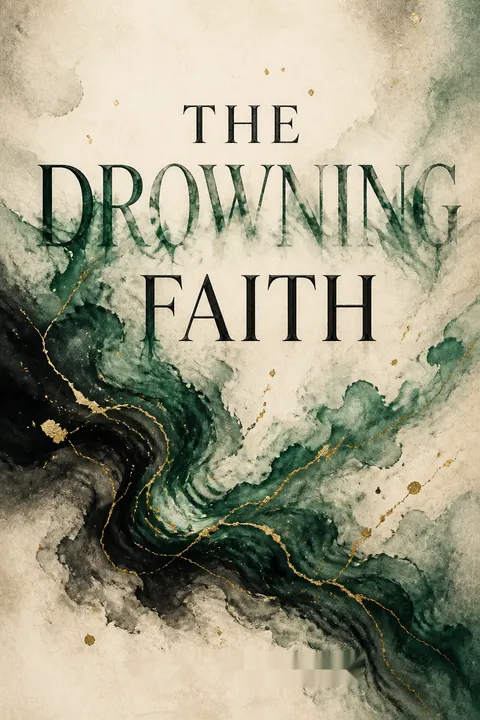
R.F. Kuang's "The Drowning Faith" is a searing exploration of the collision between faith, power, and identity in a world on the brink of transformation. Through the intertwined fates of Nezha and Rin, the novella interrogates the limits of reason, the dangers of dogma, and the costs of loyalty. The story's emotional core lies in the impossibility of reconciliation—between old and new, love and duty, chaos and order. Kuang's narrative is both intimate and epic, using personal relationships to illuminate broader societal conflicts. The psychological depth of the characters, especially Nezha's torment and Rin's defiance, invites readers to question the nature of belief and the price of survival. In a modern context, the book resonates as a meditation on the perils of absolutism, the necessity of empathy, and the enduring struggle to find meaning in a fractured world. The ultimate lesson is one of tragic inevitability: that some divides cannot be bridged, and that the pursuit of truth and justice often demands unbearable sacrifice.
Review Summary
Readers overwhelmingly praise The Drowning Faith as an emotionally powerful and heartbreaking short story that provides deeper insight into Nezha's character. Many express being deeply moved and devastated by the brief 15-page narrative. Reviewers appreciate Kuang's skillful writing and ability to elicit strong emotions in such a short work. The story is seen as enhancing the main trilogy, particularly Nezha and Rin's complex relationship. Readers recommend it as essential reading between the second and third books of The Poppy War series.
Characters
Nezha
Nezha is a prince, soldier, and reluctant shaman, defined by his struggle between duty and desire. Raised in the shadow of his family's expectations, he is haunted by loss and the suspicion that he is not truly himself. His immortality is both a gift and a curse, trapping him in cycles of pain and responsibility. Nezha's love for Rin is deep and genuine, but ultimately doomed by the demands of war and politics. He is intelligent, principled, and idealistic, yet forced into acts of betrayal by necessity. Nezha's psychological complexity lies in his constant negotiation between personal longing and public obligation, making him a tragic figure—always striving, never at peace, and ultimately defined by the choices he cannot avoid.
Rin
Rin is a Speerly shaman whose power over fire marks her as both savior and threat. She is fiercely independent, driven by trauma and a relentless will to survive. Rin's cynicism about power and authority is rooted in her experiences of betrayal and loss. She is impulsive, brave, and often reckless, refusing to be bound by anyone's expectations. Her relationship with Nezha is fraught with tension, affection, and rivalry. Rin's refusal to renounce her shamanic abilities places her in direct opposition to the new order, making her a symbol of resistance and chaos. Psychologically, she is both empowered and isolated by her gifts, unable to find peace in a world that fears and misunderstands her.
Vaisra
Vaisra, Nezha's father, is a powerful political leader whose ambitions for the Republic are matched only by his personal losses. The deaths of his sons have aged and embittered him, leaving him emotionally distant and focused on the survival of his legacy. Vaisra's relationship with Nezha is strained, marked by high expectations and disappointment. He is pragmatic, willing to make hard choices for the sake of the nation, even at the expense of his family. Vaisra's grief is palpable, and his inability to connect with Nezha underscores the generational and ideological divides at the heart of the story. He embodies the cost of leadership and the sacrifices demanded by power.
Sistra Petra Ignatius
Petra is a Hesperian scientist and religious zealot, tasked with enforcing the faith of the Maker. Her insistence on Nezha's submission is driven by fear and the need for certainty, revealing the limits of her rationalism. Petra's role is both antagonist and mirror, exposing the dangers of dogma masquerading as reason. She is relentless in her pursuit of conformity, unable to tolerate ambiguity or dissent. Petra's psychological rigidity makes her a formidable adversary, but also a tragic figure—trapped by her own need to believe. Her interactions with Nezha highlight the broader conflict between faith, science, and the unknowable forces that shape their world.
Lady Saikhara
Lady Saikhara, Nezha's mother, is consumed by the loss of her sons, retreating into madness and religious solace. Her love for Nezha is strained, tainted by suspicion and grief. She is largely absent from the political machinations of the story, but her emotional state reflects the broader trauma of war and loss. Lady Saikhara's withdrawal underscores Nezha's isolation and the breakdown of familial bonds. Her reliance on Petra and the Hesperian faith is both a coping mechanism and a symbol of the family's fragmentation. Psychologically, she is a figure of sorrow, embodying the personal costs of the larger conflict.
Su Daji
Su Daji is the antagonist whose actions have devastated the House of Yin and plunged the nation into chaos. She is a figure of power, cunning, and cruelty, representing the old order that Nezha and the Republic seek to overthrow. Daji's presence looms over the story, motivating Nezha's quest for vengeance and shaping the political landscape. Her ruthlessness is matched by her ability to inspire fear and loyalty. Psychologically, Daji is a survivor, willing to do whatever it takes to maintain her grip on power. She is both a personal and political enemy, embodying the forces that Nezha must confront and ultimately destroy.
Moag
Moag is a key figure in orchestrating the reunion between Nezha and Rin. Her ability to locate the Speerly and navigate the complexities of the postwar world makes her an important, if peripheral, character. Moag's actions set in motion the events that bring Nezha and Rin back into each other's orbit. She is pragmatic, shrewd, and adaptable, operating in the shadows of larger powers. Moag's role is less about personal development and more about facilitating the plot, but her presence is crucial in bridging the gaps between characters and advancing the story's central conflicts.
Kitay
Kitay, though not directly present in the main events, is a significant figure in the emotional lives of Nezha and Rin. His absence is felt as a source of pain and longing, representing the friendships and alliances shattered by war. Kitay's fate is a reminder of the costs of conflict and the fragility of human connections. Psychologically, he serves as a touchstone for both Nezha and Rin, embodying the possibility of understanding and the tragedy of its loss. Kitay's memory haunts the characters, influencing their choices and deepening the sense of isolation that pervades the story.
The Dragon
The Dragon is both a literal and metaphorical presence in Nezha's life, representing the chaotic, unknowable forces that shape the world. It is a source of power, pain, and identity, binding Nezha to a destiny he cannot escape. The Dragon's influence is both empowering and destructive, mirroring the dual nature of divinity in the story. Psychologically, the Dragon is a manifestation of Nezha's inner turmoil, his struggle to reconcile his humanity with the demands of power. It is a constant reminder of the limits of reason and the dangers of hubris.
The Hesperians
The Hesperians are a collective force representing foreign intervention, technological advancement, and religious dogma. Their presence in the story is both a catalyst for change and a source of conflict, as they seek to impose their values on a resistant society. The Hesperians' insistence on rationality and order clashes with the chaotic reality of shamanic power. Psychologically, they embody the dangers of cultural imperialism and the limits of understanding. Their interactions with Nezha and Rin highlight the complexities of collaboration, resistance, and the search for meaning in a world on the brink of transformation.
Plot Devices
Duality of Faith and Reason
The story is structured around the tension between faith and reason, embodied in the interactions between Nezha and Petra, and between the Hesperians and the shamanic traditions. This duality is explored through repeated interrogations, debates, and personal crises, highlighting the limits of both rationalism and belief. The narrative uses foreshadowing—such as Nezha's refusal to submit and Rin's defiance—to build toward the inevitable clash between old and new orders. The structure alternates between intimate character moments and broader political developments, creating a sense of inevitability and tragedy. The use of mythic symbols, like the Dragon, reinforces the theme of chaos versus order, while the personal relationships between characters serve as microcosms of the larger societal conflicts.
Cycles of Betrayal and Loyalty
The story is propelled by cycles of betrayal and loyalty, both within families and between allies. Nezha's relationship with Rin is defined by shifting allegiances, moments of intimacy followed by acts of violence. The narrative structure mirrors these cycles, with repeated confrontations and reconciliations that ultimately lead to a final, irreversible break. The motif of betrayal is not limited to individuals but extends to institutions and ideologies, as characters are forced to choose between competing loyalties. The use of foreshadowing—such as Nezha's nightmares and vows—heightens the sense of impending tragedy, making each act of betrayal feel both inevitable and devastating.
The Burden of Destiny
The plot is driven by the sense that characters are bound by forces beyond their control—family legacy, political necessity, and the demands of power. The narrative uses repetition and parallelism to emphasize the inescapability of destiny, with characters reenacting the same conflicts across generations. The structure of the story, moving inexorably toward confrontation, reinforces the theme of fatalism. The use of internal monologue and psychological detail deepens the sense of entrapment, as characters struggle to assert agency in a world that offers few real choices. The burden of destiny is both a source of strength and a cause of suffering, shaping every decision and relationship.
The Poppy War Series


About the Author



Download PDF
Download EPUB
.epub digital book format is ideal for reading ebooks on phones, tablets, and e-readers.








































