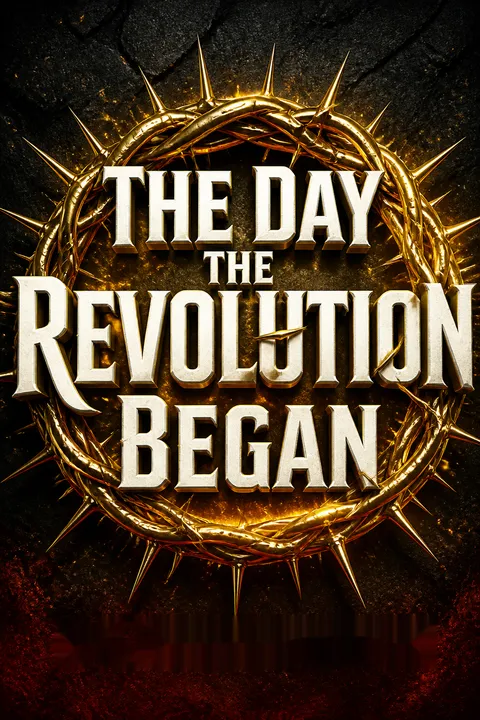

Key Takeaways
1. The Cross: A World-Changing Revolution, Not Just Personal Salvation.
As Jesus’s followers looked back on that day in the light of what happened soon afterward, they came up with the shocking, scandalous, nonsensical claim that his death had launched a revolution.
Distorted views. Many Christians today, and consequently many outside the church, misunderstand the cross, reducing it to a private transaction about "God saving me from my 'sin' so I can 'go to heaven'." This narrow interpretation, often rooted in Platonic and moralistic frameworks, significantly distorts the early Christian message, making it seem less dangerous and explosive than it truly was. The early church saw Jesus's crucifixion as a pivotal moment not just in human history, but in the entire story of God and the world, inaugurating a profound revolution.
Beyond personal needs. While personal forgiveness and future salvation are vital, they are contained within a much larger, more dangerous narrative. The early Christian writers, like Paul and John, used expressions of delight and gratitude focusing on Jesus's death, but these were never meant to be isolated from the cosmic implications. The cross made all the difference to the world, not just for individuals escaping it.
Revolutionary impact. The sheer fact of Jesus's crucifixion and the symbol of the cross still carry enormous power, even for skeptics. This enduring impact, often beyond articulate explanation, points to a deeper, pre-articulate truth that grips people. Understanding the full, New Testament vision of what happened when Jesus died is crucial for believers to participate in this ongoing revolution, restoring humanity to its vocation in God's purposes for the world.
2. The Human Problem: Idolatry and Abdicated Vocation, Not Just Moral Failure.
The human problem is not so much “sin” seen as the breaking of moral codes—though that, to be sure, is part of it, just as the headaches and blurry vision really were part of the medical problem—but rather idolatry and the distortion of genuine humanness it produces.
Beyond "works contract." Traditional "works contract" theology posits that humans failed a moral code, incurring death, and Jesus perfectly obeyed and paid the penalty. This view, however, misdiagnoses the core human plight. The Bible presents a "covenant of vocation," where humans are called to be "image-bearers" – reflecting God's wise stewardship into the world and creation's praises back to Him.
Idolatry's root. The primary human failure is not merely breaking moral laws, but idolatry: giving worship and allegiance to forces within creation itself. This abdication of our divine vocation hands over rightful human authority to non-divine powers, leading to slavery and ultimately death. Sin, therefore, is a symptom of this deeper disease, a failure of responsibility that distorts genuine humanness.
Consequences, not arbitrary punishment. Death is not an arbitrary punishment for moral shortcomings, but the intrinsic result of idolatry and sin. When humans fail in their image-bearing role, the "powers" seize control, thwarting God's creative plan. The cross addresses this profound problem, not just surface-level misbehavior, by breaking the power of idols and restoring humanity's intended role.
3. Israel's Story: The Biblical Framework for Understanding Jesus's Death.
Only when we give full early Christian weight to the phrase “in accordance with the Bible” will we discover the full early Christian meaning of the phrase “for our sins.”
Unfinished narrative. Israel's scriptures tell a single, great story that is strangely inconclusive, pointing towards an ending it hasn't yet found. This narrative, from Adam's expulsion to Israel's repeated exiles, highlights a pattern of vocational failure and the longing for a definitive divine intervention. The "exile" was not just a historical event but a metaphor for a living death, a consequence of Israel's idolatry and sin.
Adam and Israel. The story of Adam and Eve in Eden parallels Israel's story in the promised land: both exchanged life for death due to rejecting the Creator's call. Israel's exile, seen as a corporate national death, was understood by prophets like Isaiah, Jeremiah, and Ezekiel as the direct result of their idolatry and sin. Therefore, any true "return from exile" would necessitate a "forgiveness of sins."
New Exodus, new life. The early Christians, particularly Paul, understood Jesus's death as the long-awaited fulfillment of this entire narrative. It was the "new Exodus," freeing Israel (and through them, the world) from the slavery of sin and the powers it unleashed. This re-reading of scripture, centered on Jesus, provided the framework for understanding "for our sins" as a cosmic, world-changing event, not just a personal one.
4. Jesus's Passover: The New Exodus and Forgiveness of Sins.
I therefore regard it as a fixed point in understanding Jesus’s death that Jesus himself understood what was about to happen to him in connection with Israel’s ancient Passover tradition and that this was linked directly to his beliefs about the launch of God’s kingdom.
Deliberate timing. Jesus deliberately chose Passover for his final, symbolic confrontation with Jerusalem's authorities, signaling a dramatic, story-laden climax to his public career. Passover, a festival celebrating liberation from slavery and the coming of God's kingdom, became the interpretive lens for his impending death. His actions in the Temple, seen as a symbolic prediction of its destruction, further underscored his intention to establish something new.
The Last Supper's meaning. At the Last Supper, Jesus transformed the traditional Passover meal, redirecting its focus from the past Exodus to his imminent death. His words over the bread and wine, particularly "This cup... is the new covenant, in my blood which is shed for you," explicitly linked his death to the "new covenant" promised by Jeremiah (31:31-34) and the "forgiveness of sins." This new Passover would achieve its freedom-bringing victory by undoing exile through sin's forgiveness.
Redemptive suffering. Jesus's understanding of his death as a "new Exodus" and "forgiveness of sins" was rooted in his reinterpretation of Israel's scriptures, especially passages like Isaiah 53. He saw his vocation as taking upon himself the suffering that would otherwise fall upon his people, bearing the consequences of their sins. This representative substitution, driven by profound compassion, was the means by which the ultimate victory over dark powers would be won.
5. The Cross as Victory: Defeating the Powers of Sin and Death.
God stripped the rulers and authorities of their armor, and displayed them contemptuously to public view, celebrating his triumph over them in him.
Cosmic triumph. Paul consistently presents Jesus's death as a decisive victory over the "rulers and authorities" – both visible human powers and the invisible dark forces behind them. This triumph, though appearing as weakness and shame to the world, was God's ultimate act of power. The crucifixion, far from being a defeat, was the moment these powers were stripped, shamed, and defeated.
Forgiveness breaks power. The victory over these powers is inextricably linked to the "forgiveness of sins." Idols and human rulers gain power because idolatrous humans abdicate their God-given authority by sinning. When sins are forgiven through the cross, the idols lose their power base, and their tyrannical grip on humanity and the world is broken.
New reality. This victory means that the "present evil age" has been condemned, and the "age to come" inaugurated. The cross is not just a past event but the means by which a new reality has been established, where the power of sin and death is defeated. This enables the Gentile mission, as people are freed from their former enslavement to idols and called to allegiance to Jesus as Lord.
6. God's Covenant Faithfulness: The True Meaning of "Righteousness."
God’s covenant justice comes into operation through the faithfulness of Jesus the Messiah, for the benefit of all who have faith.
"Righteousness" redefined. In Romans 3:21-26, Paul's central theme is dikaiosynē theou, "God's righteousness." This is not primarily God's moral uprightness or a status He imputes to believers, but rather His unwavering faithfulness to His covenant promises and purposes. This covenant, made with Abraham, aimed to bless the entire world through Israel.
Covenant and cult. Paul frames this passage within the context of Israel's covenantal vocation and cultic failure. Human idolatry (Romans 1:18-23) led to sin and a falling short of God's glory (3:23). God's response, in Jesus, is to restore true worship and establish a new meeting place, the hilastērion (mercy seat), where He cleanses His people from defilement, enabling reconciliation.
Israel's fulfillment. Despite Israel's faithlessness, God's covenant justice is displayed through the faithfulness of Jesus the Messiah. Jesus, as Israel's representative, fulfills the vocation Israel could not. His death, therefore, is the means by which God remains true to His promises, dealing with sin and idolatry to create a single, worldwide family of forgiven, worshipping people.
7. Jesus's Death: God Condemned Sin, Not His Son.
The Messiah did not know sin, but God made him to be sin on our behalf, so that in him we might embody God’s faithfulness to the covenant.
Condemning Sin, not Jesus. In Romans 8:3-4, Paul makes a crucial distinction: "God sent his own son in the likeness of sinful flesh, and as a sin-offering; and, right there in the flesh, he condemned Sin." This means God punished Sin itself—the personified power of evil and idolatry—in Jesus's flesh, not Jesus as an innocent victim. Jesus's suffering was real, but theologically, the wrath was directed at the enslaving power of Sin.
Penal and substitutionary, but different. This is indeed penal (punishment on Sin) and substitutionary (Jesus's death means those "in him" are not condemned). However, this "penal substitution" operates within the "covenant of vocation," not a "works contract." It's about God's love and faithfulness, not an angry deity demanding blood. Jesus, as Israel's representative, bore the accumulated weight of Sin, exhausting its power.
Restoring vocation. The result is not merely escaping hell, but freedom for humanity's true vocation: to live as God-reflecting, image-bearing beings, the "royal priesthood." By condemning Sin, God liberates humans to fulfill the law's righteous demands through the Spirit, leading to the glorification of God's children and the ultimate new creation.
8. Cruciform Mission: Implementing Victory Through Suffering Love.
The victory was indeed won, the revolution was indeed launched, through the suffering of Jesus; it is now implemented, put into effective operation, by the suffering of his people.
Implementing victory. The cross launched a revolution, but the victory won through Jesus's suffering is implemented through the suffering of his followers. This "cruciform mission" means that the church's task is to unlock prison doors, announce amnesty, and bring healing and hope to the world, not through worldly power, but through the same self-giving love demonstrated on the cross.
Suffering as means. Paul's life and ministry exemplify this: his weaknesses, insults, and persecutions are not signs of failure but the very means by which Christ's power is perfected (2 Corinthians 4:7-12, 6:4-10, 12:9-10). The suffering of Jesus's followers brings the victory of the cross into fresh reality, generating new outflows of that victory. This is why "the blood of the martyrs is the seed of the church."
Confident and humble. This mission is both confident (because the victory is already won) and humble (because it operates through suffering). It avoids triumphalism and escapism, instead calling believers to active participation in God's new creation work. The church's mission is organically linked to the cross, demanding a holistic approach that integrates personal evangelism with justice and beauty.
9. Forgiveness: The New Reality Unleashed by the Cross.
Forgiveness is the new reality. It is the power of the revolution.
Beyond private transaction. Forgiveness, as announced by the risen Jesus, is not merely a private transaction or a sign of weakness. It is a new reality, the very fabric of the new creation launched on Easter morning. To repent and receive forgiveness is to turn from defeated idols and join the celebration of Jesus's victory, entering a new mode of existence.
Resurrection and forgiveness. Resurrection and forgiveness are intrinsically linked, both being hallmarks of the new creation. Just as resurrection signifies death's defeat, forgiveness signifies sin's defeat. Experiencing forgiveness means not allowing past wrongs to twist one's life out of shape, but embracing healing and new life.
Power of love. This new reality unleashes a different kind of power: the power of love. In cultures where revenge is paramount, acts of radical forgiveness, like those seen in Charleston or the Amish community, appear incredible because they manifest a world coming to birth, a world where love, not retribution, has the final say.
10. Freedom from Idolatry: The Cross Unmasks Worldly Powers.
The victory of the cross needs to be announced over that usurped power, so that the millions whose lives have been squashed out of shape can once again have hope—real hope, not simply the “hope” of arriving in an increasingly unwelcoming northern Europe.
Idols dethroned. The cross achieved freedom for the world to give allegiance to its Creator. Before Jesus, nations were enslaved by dark, unforgiving systems and idols. The cross broke this power, enabling the Gentile mission and calling all peoples to turn from their follies to the living God. This is the "secret" of Paul's mission: the powers that held nations captive were defeated.
Confronting modern idols. Today, the church must discern and confront contemporary idolatries:
- Mammon (Money): The worship of wealth leads to vast inequality and exploitation. The cross calls for generosity and justice, challenging systems that squash the poor.
- Aphrodite (Sex): The idolization of sexual desire leads to exploitation and moral chaos. The cross reaffirms a robust sexual ethic rooted in self-giving love and holiness.
- Mars (Power/War): The worship of military might and force leads to endless conflict and human disaster. The cross redefines power as self-giving love, calling for peacemaking and resistance to violence.
Prophetic vocation. Christians are called to speak truth to power, advocating for the powerless and demonstrating a different way of being human. This involves not just private morality, but active engagement in society, challenging corrupt systems and working for signs of God's kingdom in human lives and institutions. The victory of the cross is real, and the Spirit's power enables its implementation, even through suffering.
Review Summary
Reviews for The Day the Revolution Began are largely positive, averaging 4.3 out of 5. Readers praise Wright's fresh, historically grounded perspective on the crucifixion, particularly his challenge to penal substitutionary atonement and the reductive "ticket to heaven" gospel. Many appreciate his ability to make complex theology accessible. Common criticisms include excessive repetition, wordiness, and occasional lack of clarity on the precise "how" of atonement. The final chapters on practical Christian vocation receive consistent praise across reviewers.
People Also Read


About the Author
Other books by N.T. Wright




Download PDF
Download EPUB
.epub digital book format is ideal for reading ebooks on phones, tablets, and e-readers.








































