
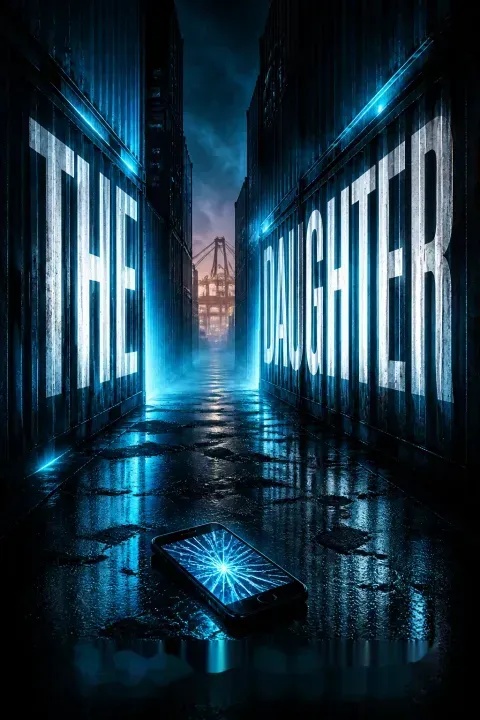


Plot Summary
The Empty Room
Lauren Wingfield1 arrives at Queen Anne's University to collect her 19-year-old daughter Evie2 for Christmas break, after ten weeks apart. At room 3F8 in New Orchard Hall, a hungover young man named Sam answers and has never heard of Evie.2 Deputy head of security Craig Farley8 pulls up her student record: Evie2 voluntarily withdrew from her law degree on November 6, over a month ago, with the designation NCP (no contact with parents).
Professor Laura Gray confirms the university believed Evie2 had returned to the family home in Reading. Evie2's phone number is disconnected and her texts bounce back undelivered. The police dismiss Lauren1's missing person report because at 18, Evie2 is an adult legally entitled to vanish.
This opening establishes the nightmare every parent fears: discovering your child has been absent for weeks and no one noticed. The university's bureaucratic indifference and the police's legal handcuffs expose a systemic blind spot. Institutions treat young adults as fully autonomous while ignoring their profound vulnerabilities. Lauren's shock is compounded by the revelation that Evie actively listed 'no contact with parents,' a detail that reframes the disappearance as potentially deliberate rejection rather than tragedy, deepening the mystery and emotional wound simultaneously.
The Instagram Deception
Scrolling through Evie2's Instagram, Lauren1 discovers a picture from Welcome Week posted on November 23, six weeks after it was taken. The same outfit, earrings, and makeup appear in both images, proving Evie2 curated old content to maintain the illusion of student life.
Meanwhile, Lauren1 confronts Tyler Maxwell,12 Evie2's ex-boyfriend, who reveals Evie2 broke up with him months earlier, not the other way around. She became distant and secretive. Searching Evie2's bedroom, Lauren1 and her young son Lucas3 find a postcard with a handwritten line of poetry signed with a single S,5 and discover Evie2's passport and savings are gone.
The Instagram revelation crystallizes the central betrayal: Evie's disappearance was premeditated and actively concealed. The faked posts are a performance of normalcy staged for an audience of one, her mother. This calculating behavior conflicts with Lauren's image of her impulsive daughter. The postcard introduces the mysterious 'S' who will prove to be the architect of Evie's undoing. Lucas, still a child himself, becomes an essential investigative partner, his digital-native instincts complementing Lauren's professional fraud-detection skills.
The Last Campus Footage
Farley8 shows Lauren1 CCTV footage from October 23, the last day Evie2's student ID was used. Evie2 walks purposefully with a loaded rucksack while a stocky man with a blond topknot9 chases after her, grabbing her arm. They argue before she shakes him off and climbs into an Excalibur taxi.
Farley8 returns Evie2's abandoned belongings from storage, including winter clothes and law textbooks she left behind. He secretly slips Lauren1 a phone number: the emergency contact Evie2 listed instead of her mother. A woman6 answers when Lauren1 calls but hangs up immediately, asking only who is calling and where she is located.
The CCTV footage is the first objective evidence of Evie's departure, transforming her from an absence into a person with a trajectory. The unidentified pursuer introduces the possibility of coercion or threat. Farley's quiet act of rule-breaking, slipping Lauren the phone number, demonstrates how institutional loyalty can bend toward human decency. The emergency contact's evasiveness raises the chilling possibility that someone has been managing Evie's disappearance from the beginning, positioning themselves as gatekeeper between mother and daughter.
The Stalker's Confession
Using Farley8's tip about an ice hockey fan, Lauren1 and Lucas3 locate Colton Ryczek,10 an American PhD student, in the campus library. Colton10 admits he served as Evie2's guide at an open day and pursued her intensely during her first term. When Evie2 began skipping classes and vanishing from campus twice weekly, Colton10 followed her on his dirt bike.
The taxi always delivered her to The Royal Pearl, one of London's most exclusive hotels where rooms start at nearly 900 pounds a night. Colton10's possessive, entitled demeanor disturbs Lauren,1 but his information provides the first concrete lead: Evie2 was being taken somewhere far beyond her means.
Colton embodies a dark mirror of Scott Lawler: both are men who refuse to accept boundaries, but Colton is pathetically obvious where Scott is sophisticated. His stalking inadvertently serves the investigation. The Royal Pearl represents a world of wealth Evie could never access alone, confirming she was being financed and controlled. The campus setting reveals how easily a young woman can slip through institutional cracks when no one feels responsible for noticing her absence.
The Royal Pearl Bluff
At The Royal Pearl Hotel in Kensington, Lauren1 poses as a mother seeking a lost heirloom. Lucas3 remembers Evie2 practicing a different surname in her notebooks: Hicks,4 their father's name. The receptionist finds a booking under Evie Hicks,2 checked in with a man named S. Lawler.5
When staff refuse to share more, Lucas3 collapses on the marble lobby floor mimicking anaphylactic shock from the hotel's complimentary mints. While employees panic and summon first aid, Lauren1 photographs the guest record screen, capturing Lawler5's listed address at 220 Belvue Road, Northolt, and his date of birth making him 26 years old.
This scene marks Lucas's transformation from passive sibling to active participant in the investigation, his quick thinking proving essential. The used surname is the first hint that Evie knows more about her father than Lauren ever revealed. The hotel's pristine luxury contrasts sharply with the sordid reality of the transactions occurring within its walls. Lauren's willingness to deceive and manipulate reflects her evolution from rule-follower to someone who will break any boundary to find her child.
Flame and the Broken Earring
The Belvue Road address proves to be a mail-forwarding service for over 27,000 companies, but Farley8 traces S. Lawler5 to Piranha Solutions Ltd at 99 Ludlow Avenue, an East End nightclub called Flame. During setup hours, Lauren1 and Lucas3 encounter Brandon Roper,9 a heavily tattooed man who intimidates Lucas3 by snatching his glasses and bellowing in his face.
Lauren1 seizes Roper9's earlobe and twists hard, tearing out his diamond-studded earring and drawing blood. Roper9 threatens her but suggests she return when the club opens. The encounter leaves Lauren1's hand bleeding and Lucas3 shaken but defiant.
The Belvue Road dead end demonstrates how criminals layer their operations behind legitimate business facades. Lauren's violent response to Roper's bullying of her son is instinctual, maternal, and crosses a line she cannot uncross. It also provides the pretext the NCA will later use to arrest her. The company name 'Piranha Solutions' is foreshadowing that will not pay off until the warehouse confrontation, when Scott brandishes actual piranha solution as a torture device.
Arrested by the NCA
The next morning, DS Parry7 and DC Garcia arrest Lauren1 at her hotel for the assault on Roper.9 During hours of questioning at Bethnal Green police station, Lauren1 realizes they are not ordinary police: they are from the National Crime Agency, using Roper9's complaint as a pretext to interrogate her about Scott Lawler5's network.
The detectives ask if she recognizes the names Nicola Lawler6 or Eric Caruso. They release her under investigation with a warning. Lucas,3 meanwhile, has spent his custody time purchasing a dark web phone tracking service called FoneFinder, obtaining GPS coordinates for the emergency contact number6 that point to a warehouse in Silvertown.
The arrest scene introduces a layer of institutional complexity. Law enforcement is not incompetent but constrained: the NCA is running a long-term operation that Lauren's amateur investigation threatens to compromise. Her fraudulent background gives her the insight to recognize Parry and Garcia as something other than they pretend to be. Lucas's dark web venture shows how desperation and technical fluency can combine in dangerous ways, but also how a twelve-year-old's rule-following instincts can erode when family is at stake.
A Mother's Parallel Grief
Through Facebook comments on posts about Evie,2 a woman named Ruth Greenall6 contacts Lauren,1 claiming her 20-year-old daughter Cassie11 also disappeared after moving to London. They meet at Primrose Hill, where Ruth6 describes an eerily similar pattern: Cassie11 quit her new job, her phone was cut off, and her banking stopped after a visit to The Royal Pearl Hotel.
Ruth6 found train tickets in Cassie11's room for Shelford Cross, a Sussex village with no apparent purpose. The two mothers decide to investigate together. Using Lucas3's FoneFinder coordinates, they drive to a derelict warehouse in Silvertown.
Ruth's appearance offers Lauren something she desperately needs: validation that she is not paranoid or hysterical, but confronting a genuine pattern. The parallel stories suggest an organized operation rather than an isolated predator. Ruth's maternal desperation seems authentic, mirroring Lauren's own. The train tickets to Shelford Cross are a planted clue that will later prove devastating in its double meaning: it both confirms the location and reveals the betrayal. The scene at Primrose Hill, with its panoramic view of London, frames the city itself as a labyrinth concealing predators.
The Piranha Solution
Lauren1 and Ruth6 break into the Silvertown warehouse and discover dozens of identical iPhones, each showing stacks of missed calls. They also find piles of foreign currency, a pistol, and pallets of contraband cigarettes. Before they can escape, men in skeleton-print balaclavas ambush them. Scott Lawler,5 strikingly handsome with cold eyes, unmasks himself.
He brandishes a glass tube of flesh-dissolving acid he calls piranha solution and casually recites Lauren1's mother's address in Newbury. Then Lucas3 appears, clutching the gun from the office, and Declan Hicks4 emerges from the shadows behind him, revealing himself as Lauren1's long-lost former partner.
The warehouse functions as a cabinet of horrors: the identical phones suggesting dozens of victims, the currency and contraband revealing the scale of the operation, the acid demonstrating Scott's theatrical cruelty. His knowledge of Lauren's mother's address proves his surveillance capabilities. The simultaneous appearance of Lucas with a gun and Declan from the shadows creates a crisis within a crisis. Declan's return, after being presumed dead for over a decade, reshapes the entire narrative, transforming a stranger-danger story into a reckoning with family history and buried lies.
My Father the Prisoner
At Declan4's small Peckham house, Lauren1 confesses to Lucas3 that his father was never dead: he served over a decade for manslaughter. Declan4 then explains the Lawler connection. Years ago, he refused to provide a false alibi for Robert Lawler, convicted of a double murder. Lawler's men tried to kill Declan;4 he killed one attacker in self-defense.
Scott Lawler5 targeted Evie2 as revenge, arranging for her to discover Declan4 was alive, then grooming her with romance and gifts. Evie2 visited Declan4 at his ex-offender charity twice, the last time edgy and uneasy as a blue Maserati waited outside. Lucas3 is furious at the lies.
This is the novel's emotional fulcrum. The revelation reframes the entire narrative: Evie's disappearance was not random but targeted, a long-planned vengeance against her father. Declan's moral choice, refusing to lie for a murderer, set in motion a chain of consequences that reached across decades to endanger his children. The scene also crystallizes the book's central theme about protective lies. Lauren thought she was shielding her children from their father's shameful past; instead, that lie became the vulnerability Scott exploited, offering Evie the 'truth' as a weapon against her mother.
Eyes on the Horizon
Evie2 leaves a desperate voicemail apologizing and saying she will keep her eyes on the horizon, a phrase Lauren1 taught her to combat childhood seasickness. She mentions Cassie11 by name, confirming the girls are together. Moments later, Lucas3 vanishes from Declan4's back garden while Ruth6 is supposedly watching him.
Ruth6 is found injured in the alley. A stranger calls: Lucas3 has been taken, and Lauren1 must mislead the NCA by feeding them a false story that Evie2 will arrive at St Pancras on the 3pm Eurostar from Paris the next day. Lauren1 complies, delivering the fabricated tip to DS Parry7 at an NCA building in Vauxhall.
The voicemail is a masterclass in covert communication under duress. Evie encodes her travel route in a childhood memory only her mother would decode, demonstrating resourcefulness even in captivity. The kidnapping of Lucas raises the stakes to their maximum, forcing Lauren into ethical compromise: she must actively mislead law enforcement to save her son. Her choice prioritizes family over civic duty, a decision the narrative frames as morally justified. The seasickness code also foreshadows the ferry crossing, a mode of transport that is slower and lower-profile than the glamorous Eurostar diversion.
The Shelford Cross Trap
Analyzing the voicemail, Lauren1 deduces Evie2 means a ferry crossing, likely Newhaven from Dieppe, a small port close to London. Ruth6 produces Cassie11's train tickets to Shelford Cross, a village three miles from Newhaven, confirming the deduction. At the ferry terminal, Declan4 uses brass knuckles to incapacitate the two men waiting to collect the girls.
Evie2 and Cassie11 emerge with heavy rucksacks. But white vans immediately swarm the car park. Ruth6 drops her disguise and reveals herself as Nicola Lawler,6 Scott5's mother and the true mastermind. Everyone is zip-tied and driven to a Shelford Cross farmhouse, the fentanyl unloaded onto the kitchen table.
The Shelford Cross confirmation is a perfect deception: a real clue embedded within a false alliance. Nicola's betrayal recasts every prior interaction. Her maternal performance was method acting, her grief a manipulation, her dog Milo a prop. The ferry port ambush demonstrates how thoroughly the Lawlers anticipated the investigation's trajectory. Declan's brief triumph in disabling the pickup men only heightens the devastation of the reversal. The farmhouse, isolated in the Sussex countryside, represents the end of the line, a place designed for finality where laws do not apply and bodies can disappear.
The Fentanyl Reckoning
Six shrink-wrapped bricks of blue fentanyl pills are displayed on the farmhouse table. Scott5 announces he will test the drug's purity by forcing Lauren1 and Cassie11 to swallow pills, then pour piranha solution over Declan4's face as revenge for his father's imprisonment.
He boasts about seducing Evie,2 secretly filming their encounters at The Royal Pearl, and using the hidden camera footage to blackmail her into becoming a drug courier. Nicola6 watches approvingly. Evie2 is dragged away to be shown Lucas3 is alive. A henchman places pills in the captives' palms. Scott5 dons rubber gloves and a surgical mask, uncapping the acid.
This is the novel's nadir, where the threat moves from theoretical to imminent. Scott's monologue reveals the full architecture of his predation: the staged 'accidental' meeting with the dog, the love-bombing, the isolation, the hidden cameras, the blackmail. Every detail was calculated to strip Evie of agency. The fentanyl pills represent an ironic justice, the poison she was forced to carry now weaponized against her family. Scott's theatrical preparation of the acid, his casual cruelty, demonstrates a sadism that has become routine. The scene also clarifies Nicola's role as the operation's strategic brain.
Evie Takes Back Control
Evie2 appears in the kitchen doorway holding Declan4's pistol, Lucas3 behind her. During the van ride, she had discovered the weapon her father concealed. When Brandon Roper9 advances, she shoots him in the kneecap, then forces him to swallow a fentanyl pill. At gunpoint, she makes Scott5 and Nicola6 each take a pill as well.
While the three begin succumbing to overdose, Evie,2 Lauren,1 Cassie,11 and Lucas3 haul the battered Declan4 into a Mercedes. Evie2 fires shots into the farmhouse windows and disables the other vehicles' tires before speeding down the gravel drive to safety. Lauren1 calls DS Parry7 with the location.
Evie's transformation from victim to avenger is the novel's cathartic climax. The gun, which passed from the warehouse to Declan to the van, becomes an instrument of reversal. Evie's calm precision in shooting Roper and forcing the pills mirrors the cold control Scott previously exercised over her. This is not mindless revenge but strategic retaliation: she uses their own poison against them while ensuring escape. The scene subverts the damsel-in-distress trope by making the imperiled daughter the agent of her family's salvation. Her competence with the weapon also subtly echoes her father's hardened past.
The Crooked Billet Reunion
Ten days later, Lauren,1 Evie,2 Lucas,3 and Lauren1's mother meet Declan4 at a pub near Egham, halfway between their homes. The NCA raid on the farmhouse yielded the largest fentanyl seizure in UK history. Scott,5 Nicola,6 and Roper9 were resuscitated by paramedics and await trial on drug trafficking, kidnapping, and assault charges.
Evie2 has withdrawn from law to apply to a drama college in Manchester. The compromising hidden camera footage will be destroyed and Evie2 will not face prosecution. Lucas3 is tentatively getting to know the father4 he thought was dead, bonding over Marvel movies. The family plans for a new year together.
The pub setting, a neutral halfway point, symbolizes the tentative nature of reconciliation. The family is not restored to some idealized past but moving toward a new configuration. Declan's presence at the table represents possibility rather than resolution. Evie's shift from law to drama is a reclamation of self: she will no longer perform roles imposed by others. The destruction of the blackmail footage is a legal and emotional exorcism. The novel ends not with certainty but with openness, the crooked billet (a bent branch) suggesting that things can grow in unexpected directions when given space and light.
Analysis
The Daughter operates as both a propulsive missing-person thriller and a meditation on the unintended consequences of protective lies. Its central insight is uncomfortable: the deceptions parents tell to shield their children can become the vulnerabilities that predators exploit. Lauren1's decision to tell Evie2 and Lucas3 their father was dead, rather than imprisoned, was meant to spare them shame and danger. Instead, it created an information vacuum that Scott Lawler5 filled with his own 'truth,' weaponizing Lauren1's lie to position himself as Evie2's liberator rather than her captor.
The novel maps the architecture of coercive control with forensic precision. Scott5's grooming follows a recognizable pattern, the accidental meeting via the dog Lulu, the love-bombing with gifts and experiences far beyond Evie2's means, the gradual isolation from friends like Millie and boyfriends like Tyler,12 and finally the hidden camera footage that transforms intimacy into blackmail. Each step is designed to make the victim feel complicit, to convince her that she chose this path and therefore cannot ask for help. Evie2's journey from infatuation to terror illustrates how intelligence offers no immunity to manipulation when the predator understands exactly which emotional needs remain unmet.
At the structural level, the novel is built on doubling. Two missing daughters, Evie2 and Cassie.11 Two mothers, Lauren1 and the false Ruth.6 Two fathers, Declan4 the protective and Robert Lawler the vengeful. Two forms of poison: the fentanyl that kills users and the acid that dissolves flesh. These parallels create a moral symmetry that culminates in the farmhouse, where the trafficked drugs become the instrument of the traffickers' own near-death.
The book also examines institutional failure. The university's bureaucracy notices nothing. The police dismiss a missing adult as legally irrelevant. Only individuals who break rules, Farley8 slipping Lauren1 a phone number, Declan4 concealing a weapon, Lucas3 accessing the dark web, make progress possible. The novel suggests that systems designed for the average case are catastrophically ill-suited to the exceptional one, and that justice depends on people willing to transgress.
Evie2's final act, taking up her father (Declan4 )'s gun and forcing the pills on her captors, represents a complex moral resolution. She does not become them; she uses their own tools to stop them without killing. The epilogue at The Crooked Billet pub offers not restoration but reconfiguration. The family is not what it was. It is something new, shaped by trauma but not defined by it, the crooked branch that continues to grow.
Review Summary
The Daughter receives mostly positive reviews (4.03/5), praised for its fast-paced, gripping narrative about a mother searching for her missing university-aged daughter. Readers appreciate the dual POV structure, compelling characters, and numerous twists. The audiobook narration by Louise Brealey earns acclaim. However, some criticisms emerge: the plot becomes increasingly implausible toward the end, involving gangs and criminal underworld elements that stretch believability. Several reviewers note the strong opening loses momentum in the middle. Despite mixed feelings about the ending, most find it an addictive, unputdownable thriller exploring every parent's nightmare.
People Also Read

Characters
Lauren Wingfield
Determined mother and fraud investigatorA single mother in her late thirties who works for the DVSA counter-fraud unit. She had Evie2 at 19 after dropping out of university and raised both children alone following their father4's disappearance. Resourceful and fiercely protective, her investigative instincts drive the search for Evie2. She carries guilt over the strict boundaries she imposed on her headstrong daughter and the lie she told both children: that their father4 was dead. Her arc moves from rule-enforcing parent to someone willing to break any boundary to save her family, eventually confronting the ways her own fears and deceptions may have pushed Evie2 away.
Evie Wingfield
Missing daughter turned survivorLauren1's 19-year-old daughter, bright, impulsive, and strong-willed. She has a secret passion for acting that she suppressed to pursue the law degree her mother wanted. Romantic and trusting to a fault, she is vulnerable to sophisticated manipulation by someone like Scott Lawler5. She has a history of testing boundaries, including running away to festivals and lying about sleepovers. Her journey from naive teenager captivated by an older man's attention to a young woman capable of extraordinary courage when her family is threatened forms the novel's emotional core. She uses skills her captors never anticipated: her ability to perform, to think under pressure, and to encode a message only her mother1 would understand.
Lucas Wingfield
Tech-savvy younger brotherLauren1's 12-year-old son, a rule-follower and chronic worrier who is clever with technology and deeply loyal to his family. Unlike his rebellious sister (Evie2), he has always sought to avoid conflict. The search for Evie2 forces him to grow up quickly: he hacks into the dark web, fakes medical emergencies, and eventually picks up a loaded gun. He is devastated to learn his father4 is alive after years of believing he was dead. His relationship with Declan4 begins tentatively, built on shared interests rather than instant connection. His quick thinking repeatedly proves essential to the investigation.
Declan Hicks
Estranged father with a violent pastThe father of Evie2 and Lucas3, and Lauren1's former partner from her university days. He spent over a decade in prison for manslaughter after killing a man sent to attack him on orders from Robert Lawler. Quiet, physically imposing, and carrying deep guilt, he now works at a charity helping ex-offenders. He stayed away from his children for years, believing they were better off without him, until Evie2 unexpectedly appeared at his workplace. His refusal to provide a false alibi years ago set in motion the revenge that would eventually target his daughter2. His return offers the possibility of redemption through truth rather than concealment.
Scott Lawler
Charismatic drug trafficker and predatorA stunningly handsome man in his mid-20s who funds a luxury lifestyle through his family's criminal empire. He grooms young women using his chocolate Labrador Lulu to stage 'accidental' meetings, then deploys gifts, declarations of love, and hidden camera footage to turn them into drug couriers. His primary motivation is revenge against Declan Hicks4, whose refusal to provide an alibi sent Scott's father to prison for a double murder. He is charming, intelligent, and utterly without conscience, viewing the young women he exploits as both commodities and instruments of vengeance.
Nicola Lawler
False ally and criminal matriarchScott Lawler5's mother and the operational strategist behind the family drug network. She poses as 'Ruth Greenall,' a grieving mother searching for her missing daughter Cassie11, to infiltrate Lauren1's investigation and redirect it away from her son. Her performance is meticulous: she deploys a real dog, a fake driver's license, and a convincing emotional narrative. In truth, she is cold, calculating, and far more dangerous than her polished maternal appearance suggests. Her manipulation of Lauren1 represents the story's most intimate betrayal, exploiting the shared language of maternal desperation.
DS Parry
NCA detective running a stingA detective sergeant with the National Crime Agency investigating the Lawler family's fentanyl importation operation. She is professional, weary, and a mother herself, which creates a complicated empathy with Lauren1 even as she uses her as an asset. She arrests Lauren1 for the Roper9 assault as part of maintaining her cover within the broader investigation. Her operation at St Pancras, based on Lauren1's deliberate misinformation, fails, but she ultimately trusts Lauren1's final call and coordinates the farmhouse raid.
Craig Farley
Helpful university security chiefThe deputy head of security at Queen Anne's University. A kind, fatherly man with a teenage daughter of his own, he goes beyond his official duties to help Lauren1, providing CCTV footage, student records, and crucial clues about Colton10 and the Lawler5 connection. He is constrained by the university's public affairs team, represented by Bryony McKenzie, who prioritizes reputation management over student welfare. His quiet acts of rule-breaking demonstrate the power of individual conscience within impersonal institutions.
Brandon Roper
Brutal enforcer and lieutenantScott Lawler5's second-in-command, handling enforcement and intimidation. A heavily tattooed, physically imposing man with a diamond-studded tooth who delivers the blackmail ultimatum to Evie2 at The Royal Pearl. His bullying of Lucas3 in the nightclub, snatching the boy's glasses, triggers Lauren1's violent response and provides the pretext for her arrest. He is ultimately shot in the knee by Evie2 during the farmhouse standoff and forced to ingest his own fentanyl supply.
Colton Ryczek
Obsessive stalker and unwitting informantAn American PhD student at Queen Anne's who developed an obsessive attachment to Evie2 after serving as her campus tour guide. He followed her movements, confronted her, and stalked her both on campus and in London. His possessive behavior and steroid-enhanced physique make him an unsettling presence, but his surveillance provides the crucial lead to The Royal Pearl. He represents a less sophisticated version of the predation Evie2 would encounter with Scott Lawler5.
Cassie Greenall
Fellow victim and drug courierA 20-year-old woman groomed by Scott Lawler5 using the identical dog-walking ruse. She was coerced into quitting her job and becoming a drug courier alongside Evie2. She is presented initially as the missing daughter of 'Ruth6,' but is in fact a genuine victim being exploited by the woman posing as her mother6. Her presence confirms the systematic nature of the Lawlers' operation and provides Evie2 with an ally during their final ordeal.
Tyler Maxwell
Evie's former boyfriendA tall, athletic supermarket worker who dated Evie2 through sixth form. Lauren1 initially believes he broke up with Evie2 before university, but he reveals the reverse: Evie2 ended the relationship months earlier, becoming distant and secretive in ways that foreshadowed her later disappearance. His information helps Lauren1 understand that Evie2's withdrawal from her old life began long before she left for university.
Plot Devices
Fentanyl Pills
Lethal drug smuggled by coerced couriersSynthetic opioid 50 times more potent than heroin, manufactured as blue pills stamped with 'M.' The Lawler operation, run by Scott Lawler5 and his mother Nicola6, imports it from France via young female couriers who carry it in rucksacks across ferry routes. One kilogram can kill 500,000 people. The drug represents the deadly commodity around which the entire criminal enterprise revolves, turning romantic manipulation into a supply chain for mass-market poison. At the farmhouse, Scott5 attempts to use the pills to test their purity on his captives, and Evie2 turns them back on their traffickers.
Piranha Solution
Acid-based torture threat and company nameA mixture of concentrated sulphuric acid and hydrogen peroxide that dissolves organic matter violently. Scott Lawler5 uses it as his signature terror weapon, threatening to pour it over victims' faces. The company name 'Piranha Solutions Ltd' is a double entendre referencing both this acid and the predatory nature of the business. Scott5 carries a stoppered glass tube of the clear liquid and recites its horrible effects with clinical precision: dissolving skin, fat, eyelids, and bone. The threat against Lauren1's mother demonstrates how the terror extends beyond immediate victims to their families.
Hidden Camera Blackmail Footage
Coercive leverage to force cooperationScott Lawler5 secretly filmed his sexual encounters with Evie2 at The Royal Pearl Hotel using hidden cameras. Brandon Roper9 later played the footage on the hotel room television, demonstrating the extent of Scott5's surveillance and the completeness of Evie2's entrapment. The threat of releasing the video to Evie2's entire contact list, including family, friends, and employers, was used to coerce her into becoming a drug courier. The footage's existence also represents the ultimate violation of trust: intimacy weaponized. After the Lawlers' arrest, DS Parry7 confirms the footage will be destroyed, allowing Evie2 to escape permanent digital exposure.
The Postcard
Early clue to Scott's identityA New Yorker magazine cover postcard depicting a couple kissing at a subway entrance, found tucked inside a book in Evie2's bedroom. The reverse bears a single handwritten line from Elizabeth Barrett Browning's sonnet: 'Let me count the ways...' signed with a flourishing capital 'S5.' The postcard is the first material evidence that Evie2 was involved with someone before she left for university. It symbolizes the romantic, literary quality of Scott Lawler5's initial approach and serves as an early breadcrumb that only makes sense once his full name is discovered. The absence of a stamp or address suggests it was hand-delivered or enclosed in an envelope.
FoneFinder Dark Web Tracker
Illegal phone tracking that locates the warehouseA dark web service Lucas3 purchases for 199 pounds using Lauren1's credit card while detained at the police station. Despite appearing to be a scam, it eventually delivers GPS coordinates showing the location of the mystery emergency contact's6 phone at hourly intervals. The data demonstrates the phone is stationary at a warehouse in Silvertown, east London, directly leading Lauren1 and Nicola6 to the Lawler operation. The service uses end-to-end encrypted, self-deleting messages via an app called Enigma. Lucas3's willingness to engage with the dark web represents his loss of innocence and the lengths to which the family is driven.

Download PDF
Download EPUB
.epub digital book format is ideal for reading ebooks on phones, tablets, and e-readers.








































