


Plot Summary
The Rainstorm Abduction
Kazimir Blackrose, the Dark Lord,1 discovers the Heirloom of Dominion requires a marriage to a descendant of the First Hero. After dismissing a list of unsuitable nobles, his spy Vex3 suggests Lady Arabella Evenfall,2 an accident-prone healer whose father8 neglects her. Kazimir1 summons a thunderstorm and ambushes Arabella's2 carriage in the Whispering Wood.
She fights back, blasting one attacker with inverted healing magic, but Kazimir1 overpowers her resistance with shadow compulsion. He opens a portal and drags her through to Skyspire Citadel, releasing her maid Agnes to spread the tale. Arabella2 arrives in the war room drenched, furious, and already planning her next move.
This inciting abduction inverts the rescue trope: the villain takes agency, but the heroine immediately weaponizes her magic. Kazimir's theatrical storm and cloak reveal a man who treats villainy as performance, masking deeper needs. Arabella's fight prefigures her refusal to be passive, establishing the central power struggle that will evolve from antagonism to partnership over the course of the story.
Knifepoint Negotiations
Still dripping rain, Arabella2 and Kazimir1 crash land on his desk and tumble to the floor, where she seizes his dagger and presses it to his throat while his staff gawks from the doorway. Kazimir,1 amused rather than threatened, easily reverses their positions. Instead of caging her, he agrees to negotiate.
Arabella2 demands freedom within the fortress, full magical training beyond the healing her father8 permitted, total honesty about his plans, and a strict no-sex condition. Kazimir1 accepts but insists she walk to the altar willingly and wait until after the wedding to learn his secrets. He sets wards on her chambers and leaves her with a sense that she has won a tenuous victory.
This scene establishes the transactional foundation of their relationship before emotion complicates it. Arabella leverages her only asset—her bloodline—to carve out autonomy in captivity. Kazimir's willingness to bargain reveals a pragmatic respect for her nerve that will later become genuine admiration. The no-sex clause becomes the central tension of the book, transforming a forced marriage into a contest of wills.
Bone Rings and Cold Vows
In a hall filled with fae, vampires, and shadow wraiths, a dark cleric marries them using rings forged from Kazimir's1 bone and Arabella's2 hair. They drink from the Cup of Dominion — a volcanic goblet — and exchange a kiss that sends unexpected heat through both of them. The next day, they perform the activation ritual.
Arabella2 places the golden circlet on Kazimir's1 head as he recites the incantation. Ley lines flicker at the edge of his consciousness, then vanish. The Heirloom remains cold, inert. Ten years of scheming collapse into furious silence. Kazimir1 storms out, leaving Arabella2 alone with Griffin4 and the feeling that something crucial is missing.
The ceremonial kiss, meant for show, punctures the emotional distance they are maintaining. The failed activation is the story's first major setback, proving that ancient magic cannot be tricked with half-measures—foreshadowing that genuine partnership, not coercion, will be required. Kazimir's rage masks a fear that his entire identity as a conqueror is built on a flawed premise, while Arabella begins to sense her role is more than a passive key.
The Mirror's Dirty Secret
After hurling priceless objects against the wall, Kazimir1 interrogates his enchanted mirror. It reveals that the Heirloom demands the marriage be consummated — a bond of body as well as word. His promise to Arabella2 of no forced intimacy now stands in direct opposition to his lifelong ambition. Vex,3 Griffin,4 Sims,6 and Thorne5 witness his humiliation as he admits he must seduce his own wife.
Meanwhile, Arabella2 tells Griffin4 the tale of the Hero's Garden, an old story her mother told about the First Hero transforming the Shadow King with roses and compassion, not swords. The contrast between the two legends — one of domination, one of transformation — plants a seed that will grow throughout the novel.
The consummation requirement transforms the romance from political arrangement into a loaded game of consent and manipulation. Kazimir, a man who conquers everything, must now win something that cannot be taken by force. Arabella's forgotten lore offers an alternate path: the Heirloom may respond to a different kind of power altogether. The dramatic irony is delicious: the villain's ultimate weapon requires him to become something he has never been—worthy of genuine desire.
War Room Devastation
After weeks of tension and withheld truth, Arabella2 storms into the war room and confronts Kazimir1 about the hidden consummation requirement. The argument blazes into raw passion. They crash together on the obsidian table, all restraint abandoned.
Their combined magic — golden healing light and violet shadow — amplifies exponentially, shattering windows, toppling bookcases, and cracking the stone walls. When it ends, they hear the Heirloom's first chime of activation. But amid the debris, Kazimir1 notices a hairline fracture in the circlet. The crown that required their union to wake has been damaged by the very act that awakened it.
This is the physical consummation of both their emotional arc and the story's central tension. Their magics merging is a visual metaphor for their bond—volatile, world-altering, and now demonstrably dangerous. The crack in the artifact introduces immediate consequences: passion cannot simply solve problems; it creates new ones. It sets up the central conflict of the second half: how to wield power together without destroying everything around them, including each other.
The Price of Restraint
Griffin4 confirms the Heirloom's fracture worsens with each intimate encounter. He prescribes abstinence — a single catastrophic surge could unravel ley lines across the Western Realms. Forced together by a magical entanglement that causes physical pain when they separate, they exist in a state of constant, maddening proximity without release.
Their training sessions become charged with suppressed hunger. An attempt at a 'controlled experiment' in the library triggers an earthquake. Kazimir's1 runes flare uncontrollably, causing visions of a consuming darkness. Arabella2 discovers she can channel his pain through their bond, but the strain frays both their tempers and their control.
Forbidden desire amplifies emotion; every glance becomes electric. The magical entanglement literalizes emotional dependence—they literally hurt when apart. This forced restraint externalizes their internal struggle: they are learning to navigate genuine intimacy, not just lust. The visions Kazimir experiences hint at a deeper, older force stirring within him, planting a seed for the final revelation about his true nature as the Shadow King reborn.
A Poisoned Man's Truth
Lord Perris, a former suitor whom Arabella2 once set on fire, staggers into Arvoryn Pass dying of poison. Brought before Kazimir1 and Arabella,2 he begs for healing in exchange for information. He confesses that King Auremar hired him to funnel gold to bandits raiding the border villages, all to destabilize the region.
He also overheard the king plotting something regarding Arabella's2 bloodline. When Perris finishes, Arabella2 withdraws her glowing hand and watches the poison complete its work. She leaves the room without looking back. Kazimir1 observes her with a new, fierce admiration — his wife has embraced the darkness he always sensed in her.
Arabella's decision to let Perris die is her moral turning point. The healer who was forced to mend wounds for her father's political gain now chooses who deserves her gift. It is not cruelty but reclaimed agency. This moment darkens her, yet empowers her. Kazimir's silent respect reinforces his growing appreciation for her ruthlessness. The revelation of Auremar's schemes deepens the external threat, but Arabella's internal transformation is the true hinge of the chapter.
The Guild's Betrayal
The Hero's Guild invades Skyspire Citadel using enchanted tokens that bypass the wards. In the chaos, Sims6 — Kazimir's1 meticulous strategist — is killed defending a corridor. Arabella2 finds Kazimir1 convulsing on the floor, his runes glowing white-hot as some ancient presence sears through his mind.
Through their entanglement, she absorbs some of his agony and helps him stagger toward the eastern tower where the Heirloom is kept. Vex3 and Thorne5 fight a desperate rearguard action. As the tower begins to collapse around her, Arabella2 decides to perform the Lifeweave Ritual alone — the one magic that can fully repair the artifact, but which might cost her life.
The invasion is the catastrophic payoff of multiple threads: the spy's betrayal, the king's desperation, the artifact's instability. Sims' death is the first true loss of a named ally, raising stakes dramatically. Kazimir's collapse reveals that the runes carved into his bones are not just a power source but a prison for something far older. Arabella's choice to act alone while he is incapacitated inverts the traditional rescue narrative—she becomes the protector, not the protected.
Lifeweave at the Abyss
In the crumbling tower chamber, Arabella2 draws the runes from memory, slicing her palm to activate the circle. She recites archaic syllables as golden light flares around the Heirloom. The ritual demands her life force; she feels her very soul pouring into the crown, stitching the fracture closed.
Exhausted and barely conscious, she places the now-whole Heirloom on her head moments before the floor gives way. Below, Kazimir1 screams through their bond as he senses her presence flicker. He hurls himself at the rubble, shadows tearing through stone, driven by a fear he has never before allowed himself to feel — the terror of losing her.
Arabella's sacrificial act redefines her relationship to the artifact and to Kazimir. She once resented the Heirloom as the cause of her captivity; now she risks her life to save it because it represents their shared future. The crown on her head is a visual claim to power—hers, not just his. The tower's collapse is a literal descent into darkness from which she will emerge reborn, fully embracing her role as Lady Blackrose.
Nyx Finds Her
As Kazimir1 despairs in the wreckage, he spots Nyx11 circling a remote isle of rock beyond the lightning bridges. He forces open a portal with the last dregs of his magic and staggers through to find Arabella2 huddled beneath a dead tree, the Heirloom still resting on her brow.
They collide in a desperate embrace — he scolds her recklessness, she mocks his panic. Stranded until dawn with Nyx11 providing shelter, they talk through the night about fears and feelings they have never voiced. When they finally make love under the cold stars, the Heirloom radiates a steady, healed light. The world holds its breath. Nothing breaks.
Isolated on a literal island in the sky, removed from citadel and court, they are forced into emotional honesty. The absence of magical catastrophe during their intimacy signals the Heirloom's acceptance of their bond as genuine rather than transactional. This is the story's emotional climax: they choose each other not as captor and captive, not as political allies, but as two people who have found in the other a home they never expected. The word 'love' remains unspoken, but the silence says it louder than any declaration.
The Widower's Confession
After extracting from Sir Darian Lightbringer that the Guild used internal access tokens, Kazimir1 and Arabella2 ride to Arvoryn Manor. They find Viscountess Morana7 fled and her husband Edmund9 alone, playing the grieving widower. Arabella's2 truth-sense burns at his performance. Under Kazimir's1 shadow pressure, Edmund9 cracks.
He confesses he was the spy — jealous of Kazimir's1 affair with Morana7 and resentful of his own impotence, he provided the Guild with the tokens that enabled the invasion. Arabella2 does not hesitate. She channels death magic through her palm, stops his heart, and watches him crumple. Kazimir1 looks at her with raw, hungry pride.
Arabella's execution of Edmund is her final ascension as Lady Blackrose. She no longer waits for Kazimir to dispense justice; she becomes its agent. Her motive—revenge for Sims, a man she once dismissed as just another villain's minion—proves she has adopted Skyspire as her home and its people as her own. Kazimir's reaction cements their new dynamic: they are equals in ruthlessness, co-rulers in both bed and battlefield. The old hesitations about her 'heroic' nature are finally, permanently laid to rest.
Stolen from the Manor
A cryptic message from the Alchemist reveals that King Auremar has dispatched killers to silence Lord Evenfall.8 Despite their still-aching magical entanglement, Kazimir1 and Arabella2 portal to Evenfall Estate, fight through five assassins, and drag her father8 from his study.
Kazimir's1 shadow warriors tear through the attackers while Arabella2 deflects a thrown dagger with a shield of golden light. Evenfall,8 blustering and terrified, is bound and thrown into a carriage. In the dungeon of Skyspire, he awaits his daughter's judgment. Arabella's2 only demand is the truth — every last lie he ever told her.
The rescue is not about filial love; it is about claiming the right to decide her father's fate. By imprisoning him in her domain, Arabella reverses their lifelong power dynamic. The cooperative combat showcases how synchronized she and Kazimir have become—anticipating each other's moves, shielding each other's vulnerabilities. The Alchemist's 'gift' introduces an unpaid debt, a dangling thread promising future complications with the Syndicate.
Chains of Blood and Memory
In the dungeons, Arabella2 confronts her father.8 Kazimir's1 shadows and her own inverted healing magic — ready to crush his lungs — coax out the truth. Evenfall8 admits that King Auremar has been siphoning power from the Shadow King, an ancient entity sealed beneath the Golden Rose Fields, not transformed by love as the legends claim.
Arabella's2 mother discovered the suppression runes on her daughter and died breaking through protective spells to save her. The memory of that night was then erased from Arabella's2 mind. Every story she cherished about the First Hero was a sanitized lie built upon a prison of blood.
This revelation recontextualizes the entire mythology of the world. The fairy tale Arabella clung to—about compassion redeeming darkness—was propaganda hiding a brutal containment spell. Her mother's sacrifice adds tragic depth: she died not from illness but from a desperate act of maternal love. The Shadow King is not a myth but an imminent threat, and the connection between his ancient power and Kazimir's runes has been hinted at all along. This is the lore pivot that transforms the series from romance into something larger.
The Ritual's Dark Tide
With the Heirloom healed and the spy dead, Kazimir1 and Arabella2 prepare the final activation ritual in a hidden antechamber. She wears her training leathers; he has shed his coat, runes pulsing. As they channel their combined magic, the crown flares with gold and shadow intertwined. The ley lines become visible beneath them, a living map of the world waiting to be commanded.
But Arabella2 senses a wrongness — a whisper at the edge of the Heirloom's song, a pressure building behind Kazimir's1 eyes. Before either can react, the ritual seizes them both, and Kazimir's1 consciousness is wrenched into a vision of an obsidian plain and a figure holding a golden rose.
This is the threshold between success and revelation. The visual of ley lines as a map beneath their feet symbolizes the godlike power they are about to seize. Arabella's unease is the intuitive warning of a healer sensing disease before symptoms appear. The ritual's grip on them both suggests that the Heirloom is not a tool but a key—and the door it opens leads somewhere far darker than either anticipated.
The Shadow King Awakens
Inside the vision, Kazimir1 stands on a cracked obsidian plane and sees himself as the Shadow King, a vast consuming void faced by the First Hero, Soriven, and his golden rose. He feels the agony of being sealed by blood magic, then fragmented across millennia. He witnesses his mother carving runes into his child body — not just to grant power, but to crack the ancient prison.
The Shadow King's consciousness surges within him, snarling hatred for Soriven's descendant Arabella.2 Kazimir,1 clinging to the one truth that is his own, rejects the voice with a word he never thought he would feel: love. The vision fades; when he opens his eyes, he remembers nothing.
This is the definitive twist of the narrative: the villain protagonist is literally the ancient evil of prophecy, reborn into a man who has chosen love over annihilation. His mother's abuse is recontextualized as a ritual, his ambition as a homing instinct. The fact that he forgets the vision is both merciful and tragic—the Shadow King is dormant, not defeated. The irony is exquisite: he finally has the power he always sought, but the cost may be the self who did the seeking.
A Victory Shadowed
Kazimir1 stands, disoriented but triumphant. The Heirloom pulses with perfect union of gold and shadow, and through it they can feel every ley line in the Western Realms. They could reroute rivers, starve armies, reshape kingdoms. Arabella2 watches him warily, sensing he does not recall the entity that surfaced during the ritual.
She chooses silence — protection or postponement, she is not sure. They emerge to inform Vex,3 Griffin,4 and Thorne5 of their victory. As they walk through the damaged corridors, their merged shadow on the wall flickers, wings unfurling for a heartbeat before collapsing. Kazimir1 does not notice. The Shadow King stirs, patient and unseen.
The ending is classic victory-with-a-sting. The Heirloom is won; the world lies open to conquest. But the real battle—against the darkness within Kazimir—has just begun. Arabella's choice to keep silent is morally ambiguous: is she protecting him from a truth that might destroy him, or delaying an inevitable reckoning? The final image of the misshapen shadow is a warning: the Shadow King is not gone, merely waiting. The series is redefined: what began as a dark romance has become a story about whether love can truly defeat a monster, or only give it a more human face.
Analysis
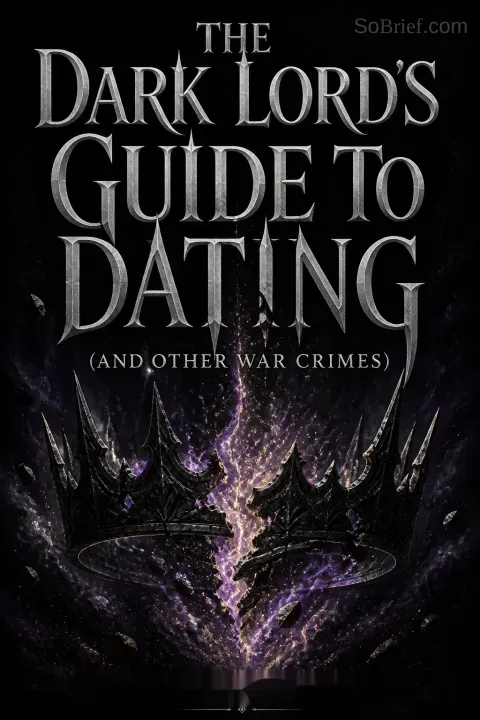
" The Dark Lord's1 Guide to Dating (and Other War Crimes)" is a subversive romance that uses its villainous premise to explore themes of agency, consent, and the nature of evil. The central question is not whether a monster can be loved, but whether love can coexist with monstrosity without erasing it. Kazimir Blackrose1 is a willing villain — he kidnaps, kills, conquers — and the story never asks us to excuse him. Instead, it asks us to watch him choose, repeatedly, to respect the one woman whose cooperation he needs most. Arabella's2 journey from suppressed healer to Dark Lady is equally complex: her embrace of lethal magic and cold justice is not corruption but liberation, a reclaiming of the power her father8 tried to strangle. The book argues that true partnership means equality in darkness as well as light — that a queen does not redeem a king by making him good, but by matching his ferocity with her own.
The magic system serves as an extended metaphor for intimacy. The Heirloom demands a genuine bond; their magic amplifies when they are honest and in sync, and causes destruction when they are divided or deceptive. The runes carved into Kazimir's1 bones symbolize childhood trauma weaponized, a pain that can be channeled but never healed. Arabella's2 truth-sense — her inability to be lied to — forces a level of emotional honesty that most romances only pretend to have.
Structurally, the novel balances episodic dark comedy (golf with eyeballs, aphrodisiac mishaps) with genuine pathos (memory erasure, a mother's sacrifice). The late-stage revelation that Kazimir1 is the reincarnation of the Shadow King — the ancient evil sealed by Arabella's2 own ancestor — introduces a philosophical paradox: is he a villain by choice or by destiny? By having him forget the vision, the book ends on a note of suspended hope. The war for power is won; the war for his soul has only begun.
People Also Read


Characters
Kazimir Blackrose
The Dark Lord, kidnapped groomThe feared warlord of Skyspire Citadel, known as the Terror of the Western Realms. He has conquered territories, killed his own father, and built an empire on dread. Magic runes carved into his bones as a child grant him dominion over shadows and compulsion. Beneath the theatrical villainy—storm-summoning, monologuing, golf with eyeballs—lies a man shaped by trauma who has never allowed himself vulnerability. His decade-long obsession with the Heirloom of Dominion masks a deeper hunger for control in a life where he had none. He is intelligent, possessive, and unexpectedly capable of tenderness, though he would rather destroy a room than admit it.
Arabella Evenfall (Blackrose)
Healer turned Dark LadyThe only daughter of Lord Evenfall8, descended from the legendary First Hero. She possesses potent healing magic and a truth-sense that detects lies. Her father8 suppressed her power with runes and imprisonment, seeking to keep her manageable for political sale. She coped by cultivating a reputation for chaos—singeing suitors, spreading ghost rumors—and by secretly studying forbidden magic. Her abduction by Kazimir1 becomes, paradoxically, the moment of her liberation, as she finally gains the freedom and training she was denied. She evolves from defiant prisoner to co-ruler, embracing darkness without losing her moral compass.
Vex
Steward and spymasterKazimir's1 most trusted advisor, a woman who moves like a shadow and speaks hard truths with dry amusement. She manages intelligence networks, keeps the citadel running, and is one of the few people who can push back against Kazimir1 without fear of execution. Her silver eyes occasionally shift to match his storm-gray, hinting at a deeper connection or similar nature. She is pragmatic, deeply loyal, and serves as a subtle moral compass, offering Arabella2 advice about the man she serves.
Griffin
Chief enchanter and inventorA gangly, perpetually frazzled enchanter whose creations include the citadel's lightning bridges, self-adjusting maps, and carnivorous black roses. His experiments frequently malfunction with explosive results, and he lacks social grace, but his enthusiasm for magical innovation is genuine. He provides comic relief while also delivering crucial technical breakthroughs, including the stabilization matrix for the Heirloom. His tragic relationship with his familiars—most of which meet unfortunate ends—is a running joke.
Thorne
Security chief and enforcerA massive warrior built like a fortress, he commands Kazimir's1 guards with blunt efficiency and even blunter speech. He is the muscle of the operation, handling interrogations, executions, and battlefield command. Despite his intimidating appearance, he cares about the citadel's community. His grief over Sims'6 death and his methodical hunting of the Guild invaders reveal a depth beyond brawn. He grunts more than he talks, but his few words carry weight.
Sims
Strategist and logisticianKazimir's1 meticulous strategist, a thin man with a perpetually pessimistic expression who manages the realm's logistics, budgets, and political correspondence. He delivers grim news with a deadpan tone that borders on dark humor. He is the foil to Griffin's4 chaos and Kazimir's1 drama, grounding the villainous operation in practical reality. His death during the Hero's Guild invasion becomes a catalyst for Arabella's2 most ruthless act of vengeance.
Viscountess Morana
Ambitious rival and ex-loverThe ruler of Arvoryn Pass, a woman who wields seduction and daggers with equal skill. She was once Kazimir's1 lover—a relationship of political convenience—and resents Arabella's2 position as his wife. She is cunning enough to play both sides, aiding the king's schemes while maintaining outward loyalty to Skyspire. Her rivalry with Arabella2 is a mix of jealousy and political calculation, making her a persistent thorn in the protagonists' side.
Lord Atticus Evenfall
Abusive father and political schemerArabella's2 father, a desperate noble who sold his daughter to King Auremar and suppressed her magic to keep her docile. He locked her in a tower and erased her memories when she defied him. His primary motivation is restoring his house's fortunes, and he views everyone—including his wife and daughter—as currency. The revelation of his full betrayal, including his role in his wife's death, cements him as one of the book's true villains, arguably worse than the Dark Lord1 himself.
Edmund
The spy hiding in plain sightMorana's7 timid husband, overlooked by everyone as a pathetic cuckold. In truth, he resented his wife's affairs and his own powerlessness so deeply that he betrayed Skyspire, providing the Hero's Guild with the tokens that enabled their invasion. His confession and execution by Arabella2 mark the resolution of the spy subplot.
Lady Zaraiah
Syndicate spymaster and ex-loverA member of the Shadow Syndicate who holds the Chair of Whispers. She had a past relationship with Kazimir1, and her lingering resentment toward Arabella2 manifests in barbed comments and attempts to destabilize the new marriage. She represents the political danger of Kazimir's1 past alliances.
Nyx
Arabella's shadow dragon companionA juvenile shadow dragon gifted to Arabella2 by Kazimir1 as a wedding present. She bonds fiercely with Arabella2 through a telepathic connection, growing rapidly from a small creature to a formidable winged beast. She provides companionship, transportation, and the occasional comic mishap (including eating Griffin's4 familiar). Her role in locating Arabella2 after the tower collapse is crucial.
Plot Devices
The Heirloom of Dominion
Ancient circlet controlling ley linesA golden crown forged by the First Hero, Soriven, to contain the power of the Shadow King. It requires a marriage bond with a descendant of the First Hero and a wielder of dominion magic to activate. Once active, it grants control over the world's ley lines, allowing the bearer to reshape landscapes, cripple kingdoms, and command immense magical energy. The artifact is sentient to some degree, responding to the emotional and physical bond between its wielders. Its fracture and eventual repair form the central plot engine of the book.
The Lifeweave Ritual
Sacrificial magic for artifact repairAn ancient healing ritual that mends magical artifacts by channeling the caster's own life force into the object. The caster draws a circle of runes and recites archaic incantations, linking their soul to the artifact. The cost is extreme: previous practitioners have died, been drained of magic permanently, or fallen into centuries-long comas. Arabella's2 successful use of the ritual—first partially to stabilize the Heirloom, then fully to repair it—demonstrates her immense power and willingness to sacrifice for the cause she has adopted as her own.
Suppression Runes
Blood-bound magical inhibitorsRunes carved into the structure of Evenfall Manor, designed specifically to suppress the magic of those with the First Hero's bloodline. They were layered over years, growing stronger as Arabella's2 power grew. Her father8 used them to keep her manageable, and they indirectly caused her mother's death when she broke through them to protect her daughter. The discovery of these runes by Kazimir1 during a reconnaissance mission is a turning point in understanding the extent of Evenfall's8 abuse.
The Magical Entanglement
Forced proximity bond causing painA side effect of the first stabilization enchantment Griffin4 cast on the Heirloom. Kazimir1 and Arabella's2 magical signatures become forcibly intertwined, causing physical agony when they are separated by more than a few feet. The bond lasts for several days, forcing them into constant close proximity. While intended as a temporary inconvenience, it deepens their emotional intimacy by removing the option of running from each other and forces them to find creative ways to manage their desires without triggering another magical catastrophe.
Shadow Warriors
Summoned constructs of dark magicCreatures of pure shadow that Kazimir1 can summon from the runes carved into his bones. They take the form of wolves, humanoid soldiers, or formless tendrils. They serve as scouts, guards, and enforcers, and their number and strength depend on Kazimir's1 magical reserves. In Solandris, the golden rose magic weakens them. They are a visual representation of his power and also a constant drain on his energy, contributing to his eventual collapse during the Guild invasion.
Download PDF
Download EPUB
.epub digital book format is ideal for reading ebooks on phones, tablets, and e-readers.








































