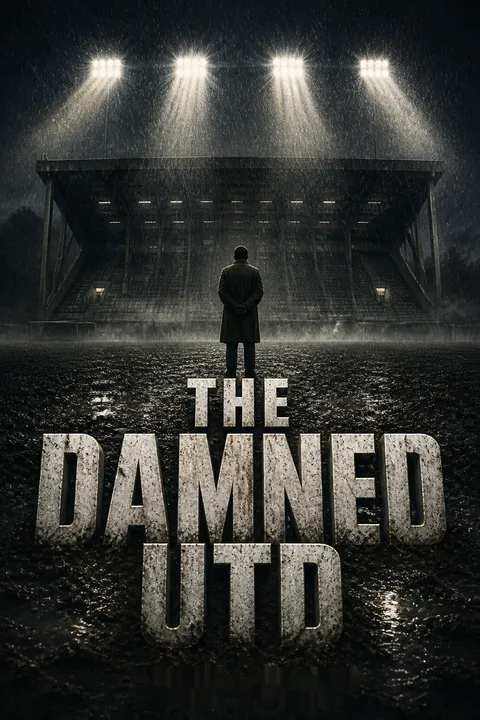

Plot Summary
Arrival at Elland Road
Brian Clough arrives at Leeds United as its new manager, greeted not with celebration, but with suspicion, contempt, and the ghostly presence of his predecessor, Don Revie. The club that has won everything is a cold monument, mistrustful of outsiders. The staff, the players, and even the building itself seem steeped in Revie's influence. Clough's first encounters with club officials and players bristle with barely concealed animosity: he's viewed as an invader, not a savior. Even the mundane—offices, desks, secretaries—are reminders of Revie's era. The sense of foreboding and battle lines drawn shapes every interaction, from the chilly greetings of coaches and board members to the team's silent resistance. The stage is set for conflict, his presence a curse and a test for both him and the club.
Broken Knees, Broken Dreams
The story rewinds to Brian Clough's playing days, culminating in the catastrophic knee injury that destroys his career and, in many ways, his life's sense of purpose. Broken on the pitch, Clough endures soul-crushing months of physical and emotional torment, dreams of glory turned to nightmares of powerlessness. He loses not just the roar of the crowd, but the adoration and validation that fueled his existence. Even personal tragedies, such as his wife's miscarriage, blend with professional despair until revenge, not fulfillment, becomes his guiding star. This pain and sense of unfinished business are the covert engine of his later success and his relentless, divisive personality.
Peter Taylor: Right Hand
At his lowest, Clough seeks out Peter Taylor, who becomes much more than an assistant—he is Clough's missing half, his stabilizer, his conscience. Taylor believes in him when no one else will, giving Clough the courage to start again in management. Their bond, forged as much from mutual respect as from necessity, becomes the lifeblood of their future successes. Taylor's strengths—talent spotting, emotional intelligence, patience—blend perfectly with Clough's passion and arrogance. Yet this deep partnership is always haunted by warnings of its inevitable tragic rupture, as every gift of trust in Clough's world carries a curse of eventual loss.
Hartlepools: Baptism by Fire
Taking on Hartlepools United, a club on its knees, Clough and Taylor face derelict facilities, poverty, and low expectations. They roll up their sleeves both literally and metaphorically—painting stands, begging for kit, even driving the team bus. Their methods—dictatorship for Clough, cajoling for Taylor—drag Hartlepools up from perpetual bottom-dwellers to mid-table respectability. Yet, the experience scars Clough with a lifetime's contempt for football directors and reminds him that victory in football is political as much as athletic—a lesson that sours and defines all his later relationships with boards and bosses.
The Derby County Revolution
Clough and Taylor arrive at Derby County full of ambition. In a failing club with a slumbering fan base, they cut ruthlessly—axing staff and players, demolishing old traditions, and raising standards. Taylor finds gems in unlikely places while Clough crushes complacency with discipline bordering on cruelty. Their revolution is as much psychological as tactical: they instill hunger, professionalism, and an obsession with "doing it right." After years of struggle and false dawns, Derby soars, culminating in a meteoric rise through the divisions—a journey fueled by Clough's unyielding will and Taylor's shrewd judgments.
Haunted by Don Revie
Don Revie—his achievements and persona—becomes a spectral rival haunting all of Clough's post-playing years. The Leeds-Revie machine is everything Clough admires and detests: powerful, disciplined, and—he is convinced—dirty and cynical. The two meet often on the pitch, Clough's Derby forever underdog to Revie's regimented champions, and every loss stokes Clough's hatred and desire for revenge. Revie's influence lingers even after he leaves Leeds; his methods and mythos are suffocating, poisoning the club and the man who comes after. Clough's crusade is as much against a culture as a coach.
Becoming Champions
At last, Clough and Taylor reach the pinnacle with Derby—first Division champions, invited to the elite European Cup. The triumph is both glorious and isolating; Clough distrusts the board, who in turn resent his brash independence and media profile. His public attacks on authority figures, especially over Leeds and Revie, fuel a culture clash that internal success cannot mask. Even among his own, promises fray and wounds deepen. The joy of victory is clouded by the fear of losing control—over the board, the squad, and the narrative of Derby's ascent.
The Loneliness of Winning
Clough's public triumph ushers in unexpected isolation. His devotion to the job costs him friendships, undermines his family life, and triggers a spiral of self-doubt and alcohol-fueled introspection. Sunday mornings in empty stadiums stand as stark metaphors for the vacuum at success's heart: no crowds, just the echoes of battles won and relationships lost. Clough's relentless pursuit of excellence becomes both addiction and curse—the more he wins, the more he fears irrelevance and obsolescence. His inability to "bring it home" destroys his marriage, alienates his children, and lays the foundation for his eventual undoing.
Leeds United: The Poisoned Chalice
When Revie leaves Leeds for the England job, Clough is offered the hottest seat in English football. From day one, he is perceived as an alien usurper, undermined by the board, rejected by the senior players who remain fiercely loyal to the departed Don. His attempts to impose his own standards—discipline, honesty, fair play—collide violently with a team steeped in routines, rituals, and a siege mentality. Clough's brutal candor, seen as genius at Hartlepools and Derby, is met with mutinous silence and mockery at Leeds; every day deepens the impasse.
Unforgiven Players
Clough's efforts to reform Leeds United's winning but despised "dirty" style run aground on the rock of player resistance. The likes of Bremner, Giles, and Hunter reject his authority, scorning both his public reputation and private overtures. Clough, unable to win hearts and disdaining compromise, isolates himself and his handful of new signings. His legendary man-management backfires: instead of inspiring loyalty, his attacks draw deeper battle lines. The "Leeds family" closes ranks, while the board vacillates, wary of his media firestorms and the club's slump in form. Rumors, secret meetings, and sabotage circulate.
The Longest Forty-Four Days
Clough's reign at Leeds becomes infamous for its brevity and chaos. From the destruction of Revie's old desk to public wars of words with staff and press, every day is marked by tension, defeat, and self-doubt. Unable to halt Leeds' on-pitch decline or mend fractures off it, Clough is undermined by open player revolt and boardroom intrigues. Haunted by the ghosts of past victories and the curse of a club set on devouring invaders, he is finally called to a climactic "clear the air" inquest with the players—an ambush that seals his fate.
Collapse and Exile
The board sacks Clough after just forty-four days, a merciless coda to his doomed conquest. He is left not just without a job, but bereft of purpose, his legend of omnipotence shattered. Exiled from the top of the English game, Clough drifts through offers, controversy, and reflection, his partnership with Taylor fracturing under the weight of mutual distrust and unrealized ambition. Punditry and third-division obscurity in Brighton offer only humiliation. The football world looks on with fascination and schadenfreude as the "genius" is damned—by enemies, by fate, by his own myth.
The End of Old Magic
In the aftermath, both Clough and Leeds struggle to find new footing. The club that expelled its savior fails to break the Revie curse, pitching into mediocrity and internal feuding. Clough, stripped of his talismanic aura, is forced to confront the limits of charisma, the emptiness of revenge, and the tragedy of burned bridges. Recurring themes—of cunning, curses, and destiny—play out in daily routines and late-night misery. Loyalty turns to superstition; revolution hardens into nostalgia. The curtain falls on an era where magic could triumph—a world that never forgives excess or vulnerability.
Reckonings and Regrets
Clough's greatest pain is the loss of Taylor—his shadow, partner, and mirror—whose departure makes Clough confront every scar in his career. Regret for betrayals and missed chances war with pride in shared triumphs. The chapter evokes the final reckonings: with former players, with his family, with football itself. Personal griefs—the deaths of loved ones, the collapse of marriages and friendships—mirror the professional ones. The cumulative weight of battles fought and wounds suffered leave Clough battered but not bowed, a symbol and a warning of all football's electric highs and devastating tolls.
Final Resignations
The final phase is one of surrender—of roles, dreams, and the myth of the all-conquering manager. Clough's resignation at Derby and sacking at Leeds mark the end of his attempt to bend football to his will. Recognition dawns: no genius can overcome a system that devours its own. Yet, even in defeat, Clough's legend grows; his sacking becomes football's greatest cautionary tale. Leeds United, haunted by their betrayal, never win the hearts of the public. Clough, for all the bitterness, is eventually embraced as both the hero and villain England's national game deserved.
Showdown with The Don
The notorious TV confrontation between Clough and Revie encapsulates their rivalry: mutual accusations, unhealed wounds, and conflicting legacies. For the only time, they speak directly, peeling back layers of myth to reveal deep admiration, irreconcilable differences, and the impossible challenge of inheriting greatness. The players, fans, and media watch, hungry for a verdict, but none comes: both men are products and prisoners of their times, as committed to their own truths as to the clubs they loved and cursed. Every question is met with its opposite—the show ends with more uncertainty than solution.
The Damned Legacy
The final reckoning is not of points or trophies, but of spirit and story. Derby and Leeds struggle after their break with Clough; football itself changes, moving from old magic to cold administration. Clough's legend, instead of shrinking with distance, expands: he becomes a symbol of football's lost possibilities, the charismatic rebel doomed by his own nature and the system he sought to change. Lessons abound—in the costs of success, the hazards of leadership, and the poisonous allure of both revenge and nostalgia. The Damned United endures as both cautionary tale and dark fairy story.
Analysis
David Peace's The Damned Utd is a searing modern myth—not just about football, but about leadership, hubris, and the fatal tango between change and tradition. Through the doomed odyssey of Brian Clough's forty-four days at Leeds United, Peace draws a Shakespearean tragedy where gifted individuals are nonetheless destroyed by the very brilliance and wounds that make them unique. The structure, blending present-tense, second-person narration with relentless repetition and motifs of curse and ritual, immerses the reader in the agonizing cycles of ambition, victory, and exile. The lesson is starkly modern: institutions, no matter how successful, can neither stomach nor bless revolution; the price of genius is isolation, and every triumph contains the seeds of its own undoing. Peace's critique stretches beyond football to the very heart of Englishness—nostalgic, divided, simmering with resentment and longing for vanished magic. In the end, The Damned Utd offers no fairytale redemption, only the bitter wisdom that true change is always met with resistance, and only those willing to be damned dare to lead.
Review Summary
The Damned Utd receives widespread praise for David Peace's hypnotic, rhythmically repetitive prose style and deeply immersive character study of Brian Clough. Readers highlight the dual timeline structure, weaving between Clough's 44 days at Leeds United and his earlier success at Derby County, as particularly effective. Many describe the book as transcending football, appealing even to non-fans. Some criticism exists around excessive repetition and inaccuracies that led to legal action. The film adaptation is frequently mentioned favourably, though most agree the novel offers a far richer psychological portrait.
People Also Read

Characters
Brian Clough
Brian Clough is the driving force and tragic anti-hero of the novel. Once a prolific striker, his playing career is destroyed by injury, seeding a lifelong need for validation and vengeance. As a manager, Clough is visionary and ruthless, oscillating between inspirational confidence and corrosive self-doubt. He despises football's hierarchies but cannot live without its battles, and his greatest strengths—honesty, wit, fearlessness—are also his undoing in toxic club cultures. Clough's psychological core is paradox: desperate for love, he courts enmity; seeking revolution, he becomes trapped by old ghosts. His inability to compromise ultimately leads not only to professional disaster but to a profound personal reckoning.
Peter Taylor
Taylor is simultaneously Clough's emotional anchor, tactical sounding board, and the only man who can manage his tempestuous moods. An astute judge of footballing ability, Taylor is the operational master to Clough's frontman. Their relationship is one of deep, flawed codependence—marked by loyalty, but continually threatened by Clough's pride and Taylor's need for appreciation. Taylor's eventual absence leaves an emotional and professional vacuum that Clough cannot fill, laying bare his own limitations and forcing recognition of the value of trust and humility in leadership.
Don Revie
Revie, Leeds United's legendary manager, is both Clough's nemesis and shadow-self. Crafting Leeds into a fiercely competitive, often cynically disciplined machine, Revie embodies all that Clough both envies and despises: loyalty, siege mentality, reliance on superstition and dossiers. His legacy lingers as a standard too high and a culture too insular for Clough to penetrate or redirect. The psychological duel between the two—competing philosophies, personalities, and ambitions—haunts every chapter and symbolizes the broader battles of English football's soul.
Billy Bremner
Leeds' captain under Revie, Bremner epitomizes the belligerent, proud, and embattled culture of the club. Fiercely protective of his teammates, he is utterly loyal to Revie and openly hostile to Clough's methods. He symbolizes the deep rift between Clough and the team, driving much of the player mutiny. Bremner's development—from guarded contempt to open rebellion against Clough—serves as the thermometer of the squad's mood and the embodiment of entrenched tradition unwilling to bow to outside change.
John Giles
Giles represents the cerebral heart of the Leeds team—respected by all, adept in both technical mastery and politics. He is Bruce to Clough's Joker: subtle, conversational, able to stand up to managerial will with sharp but contained resistance. Giles is tempted by outside offers, is simultaneously a voice of opposition and professionalism, and his own ambitions repeatedly intersect Clough's trajectory. His psychoanalytical bent—always reading the power plays—makes him both dangerous and indispensable.
Norman Hunter
As Leeds' notorious hard man, Hunter remains openly scornful of Clough, regarding his authority with open mockery and challenging his reforms with stoic defiance. He internalizes the team's code: us-versus-them ferocity, contempt for outsiders, and pride in their notorious reputation. Hunter's unwillingness to bend serves as both warning and challenge to Clough, reinforcing the futility of trying to change a club unwilling to change itself.
Derby County Board (Longson, Kirkland, etc.)
The Derby board represents the inertia and power politics at the heart of English football's administration—ambitious for their own status, deeply suspicious of Clough's public persona and radical methods. Their psychoanalysis reveals a mixture of envy, wounded pride, and terror at the loss of control. Their eventual sacking of Clough, and refusal to reconcile, illustrates the destructive dance between visionary leadership and institutional fear.
Leeds United Board (Manny Cussins, Sam Bolton, others)
The board is a study in risk aversion and tragic indecision. They see themselves as stewards of legacy, yet their inability to support or confront Clough's regime dooms his tenure and deepens club divides. Their hesitancy to break with the Revie era and the ensuing player revolt underlines their power as kingmakers—fatally, they lack the courage to see through the revolution they nominally endorse.
Jimmy Gordon
Gordon is a professional survivor, present in both Derby and Leeds, and uniquely understands Clough's character and its cost. He alternates between loyalty and cold realism, often providing the only voice of emotional grounding in the chaos. His grudging affection and measured distance teach Clough the difference between loyalty and servility.
The Leeds First-Team Players (Hunter, Clarke, Lorimer, etc.)
The collective—Clough's true antagonist—embodies the power of entrenched groupthink. Loyal to Revie but jaded by years of cynicism, they collectively represent the wall no outsider can breach. Their conduct—ranging from sullen resistance to outright mutiny—reveals the psychological cost of success built on siege mentality: greatness breeds both glory and refusal to evolve. Their eventual role in Clough's downfall brands them as both victims and perpetrators of football's unforgiving cycle.
Plot Devices
Dual Timeline Narrative
The novel alternates between Clough's fateful forty-four days at Leeds and flashbacks to his ascent from broken ex-player to Derby champion. This dual structure provides emotional and thematic resonance: each failure at Leeds is tethered to a past conquest, amplifying the tragedy, irony, and sense of preordained fate. The reader feels the inevitability of decline even at the peaks of success, and horror at how quickly triumph turns to ruin.
Second-Person Internal Monologue
The "you" and present-tense narration plummet readers into Clough's mind, amplifying both the mythic grandeur and panic of his experience. We are forcibly aware of every insecurity, grudge, and rationalization, making his rise and destruction harrowingly intimate. Refrains, crude language, and cycling thoughts—echoing football's repetition—convey both genius and madness, the curses of ambition and doubt.
Ritual and Superstition
Both Don Revie's and Clough's eras are replete with rituals—lucky suits, training routines, player traditions—serving as symbols of order but also of curses and psychological entrapment. The motif of curses, particularly from the "Cunning Man," underlines the fatalism at the heart of the narrative: every gift is accompanied by loss, every triumph by doom.
Football as Civil War / English Fairy Story
The events at Leeds and Derby are a parable of English identity: divided hearts, civil war, fear of the new, and nostalgia for lost certainty. The book explicitly frames itself as a dark fairy tale about masculine folly, the impossibility of rebirth, and the tragic costs of hero worship. Football is both salvation and Purgatory.
Foreshadowing and Self-Fulfilling Prophecies
Warnings from board members, staff, and spectral presences (Taylor, Ord, Revie) create a sense of dread and inevitability—Clough is as much victim as architect. Refrains of "gift, then loss," and overt magical curses, force the reader to anticipate, then helplessly witness, the collapse. Every act of rebellion seals his fate; every moment of doubt fulfills the prophecy.
Repetition and Echo
The structure is littered with repeating phrases, images, and structural callbacks: broken watches, lost children, derelict grounds, burned routines. Wins and losses echo through seasons and clubs. The echoing dialogue with ghosts—with Taylor, Revie, even Clough's former self—reinforces the sense that history never ends, only repeats with different costumes.
Download PDF
Download EPUB
.epub digital book format is ideal for reading ebooks on phones, tablets, and e-readers.








































