
Plot Summary
Shadows in the Alley
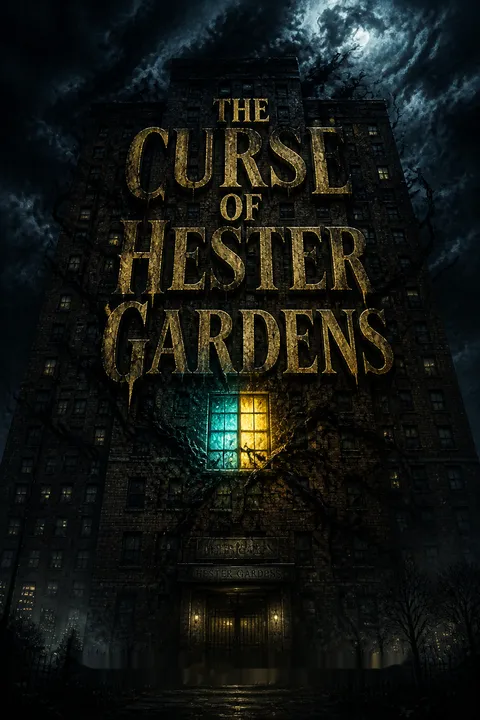
Nona McKinley, a devoted mother in Hester Gardens, struggles to protect her three sons—Kendall, Marcus, and Lance—from the violence and poverty that haunt their public housing complex. On her wedding anniversary, she witnesses her husband Vance brutally beat a young man, NaDarius, in an alley, revealing the darkness lurking within her family. This act, born of desperation and survival, plants the seed of a curse that will shadow Nona's life. The alley, a place of secrets and violence, becomes the site where love, guilt, and terror intertwine, setting the stage for the generational trauma that will unfold.
North-Facing Windows
Fourteen years later, Nona's life is marked by loss—her eldest son Kendall has been killed, her husband is in prison, and her remaining sons are growing up in the same haunted environment. Their north-facing unit is said to be cursed, never touched by sunlight, and filled with restless spirits. On the morning of Marcus's graduation, Nona is plagued by a sense of foreboding and a mysterious, menacing presence in her home. The supernatural blends with the real as Nona's anxieties manifest in flickering lights, phantom voices, and the ever-present threat of violence, both from within and without.
Graduation and Ghosts
Marcus's high school graduation is a bittersweet milestone, shadowed by the absence of Kendall and the weight of Nona's grief. Marcus delivers a powerful speech about survival, responsibility, and the systemic forces that keep their community oppressed. The ceremony is interrupted by strange occurrences—a storm, a mysterious figure, and Marcus's own haunted demeanor. The family's joy is undercut by the sense that the past is not finished with them, and that the ghosts of Hester Gardens—literal and figurative—are not easily laid to rest.
The Hester Boys' Pact
Lance, the youngest, seeks belonging among the Hester Boys, a local gang led by Peter, whose own life is marked by instability and violence. The boys share stories of hauntings and curses, revealing the deep-seated fear and superstition that permeate their world. The blue ball, a symbol of the ghost Little Lonnie, rolls through the alley, blurring the line between myth and reality. The pact among the boys is both a shield and a trap, offering camaraderie but also drawing them deeper into cycles of violence and retribution.
Haunted by the Past
At Marcus's graduation party, tensions erupt between Marcus and Peter, exposing old resentments and the unresolved trauma of Kendall's death. Nona's relationship with Pastor Davis grows more intimate, offering comfort but also complicating her sense of guilt and loyalty. The party, meant to celebrate hope and achievement, becomes a battleground for old and new grievances. The supernatural intrudes again, as Nona and others experience visions, voices, and inexplicable events, all pointing to a curse that refuses to be ignored.
The Curse Awakens
As summer unfolds, the curse intensifies. Nona, Lance, and others experience increasingly vivid hauntings—shadows in the hallway, voices in the night, and the stench of death. Marcus's behavior grows erratic; he is consumed by anger, secrecy, and a sense of impending doom. The family's attempts to seek help—from faith, from friends, from folk rituals—only deepen their sense of isolation. The curse, rooted in past violence and betrayal, begins to claim new victims, and the boundaries between the living and the dead blur.
Fistfights and Family Secrets
Marcus and Lance are drawn into a brutal fight with Peter and the Hester Boys, a conflict fueled by old wounds and new provocations. The fight is more than physical—it is a manifestation of the curse, as Marcus seems possessed by a force beyond himself. Nona's efforts to uncover the truth are met with lies, denial, and fear. The family's secrets—about Vance, about Kendall's death, about the watch that changes hands—threaten to destroy what little trust remains. The curse feeds on these secrets, growing stronger with each act of violence and betrayal.
The Watch and the Wound
The gold watch, once Kendall's prized possession, becomes a talisman of guilt and retribution. Its reappearance signals the return of old grievances and the escalation of the curse. Marcus's obsession with justice and revenge intensifies, and he is drawn toward a path of destruction. Nona, desperate to protect her sons, seeks answers from the women around her—Mother Lincoln, Mable, Vega—each of whom carries her own burdens and beliefs about curses, faith, and survival. The wound left by NaDarius's death festers, infecting the entire community.
Possession and Protection
The curse takes on a life of its own, possessing Marcus and others, driving them to acts they cannot control. Nona turns to folk magic and spiritual cleansing, enlisting Mable and Vega in a desperate ritual at the lake. The attempt to conjure protective spirits backfires, unleashing even darker forces. The line between victim and perpetrator blurs, as Nona herself is nearly overtaken by the curse's rage. The community reels from a series of deaths—Solomon, Donnell, Cedrick—each one a blow to the fragile hope that remains.
The Lake's Dark Bargain
Nona learns that the curse's roots lie not only in her family's actions but in the history of the land itself—stolen from Black families, soaked in blood and betrayal. The lake, site of love and violence, becomes the setting for a failed exorcism and the revelation of NaDarius's unquiet spirit. Nona's confrontation with Vance in prison forces her to face the full truth of her complicity and the impossibility of easy redemption. The curse demands a price, and Nona must decide how far she will go to save what remains of her family.
Massacre at Midnight
In a night of horror, Marcus, possessed by the curse and driven by grief and rage, kills the Hester Boys and then himself. The massacre is both a personal and communal tragedy, exposing the failures of family, faith, and society to protect the vulnerable. The community is left reeling, searching for answers and scapegoats. Nona, shattered by the loss of another son, is forced to confront the limits of her love and the depth of her guilt. The curse, it seems, is unbreakable, feeding on the pain and loss that define Hester Gardens.
Grief's Unending Grip
The funerals, the media frenzy, and the community's mourning reveal the layers of trauma that have accumulated over generations. Nona's relationship with Pastor Davis unravels as secrets come to light. The mothers of the dead—Nona, Mother Lincoln, Beth—form a silent sisterhood of suffering. The curse is not just supernatural but systemic, rooted in poverty, racism, and neglect. Nona's attempts to find peace are thwarted by the realization that the past cannot be undone, and that the dead are never truly at rest.
Mothers and Monsters
The story widens to include the perspectives of other mothers—Vega, Mable, Beth—each grappling with their own losses and curses. The line between mother and monster blurs, as love becomes both a shield and a weapon. The community's rituals—funerals, prayers, conjurings—are acts of resistance and survival, but also reminders of the limits of faith and hope. The curse is revealed to be collective, a legacy of stolen land, broken families, and unhealed wounds. The mothers, in their grief and resilience, become the true heart of Hester Gardens.
Breaking the Curse
Nona, determined not to lose her last son, confronts the curse head-on. With the help of Beth and the memory of NaDarius, she brings his body home, offering peace to his restless spirit. The act is both an exorcism and an act of atonement, breaking the cycle of vengeance that has claimed so many lives. The community begins to heal, slowly and imperfectly, as the truth is acknowledged and the dead are honored. Nona's journey from guilt to acceptance is mirrored by the community's own struggle to move forward.
Only Ahead
Nona and Lance prepare to leave Hester Gardens, carrying with them the scars of loss but also the possibility of renewal. The curse, though never fully vanquished, is weakened by acts of love, truth, and solidarity. The story ends with a sense of hard-won hope—Nona, having faced her demons, is determined to look only ahead, refusing to let the past dictate her future. The legacy of Hester Gardens is one of suffering and survival, but also of the enduring power of a mother's love.
Analysis
A modern gothic of generational trauma and systemic violenceThe Curse of Hester Gardens is a powerful meditation on the ways in which personal and collective histories of violence, poverty, and racism become inescapable hauntings—curses that shape the lives of individuals and communities. Through the lens of supernatural horror, the novel explores the psychological toll of loss, guilt, and survival, particularly for Black mothers and sons in America's neglected spaces. The curse is both literal and metaphorical, representing the intergenerational transmission of trauma and the failures of family, faith, and society to offer true protection or redemption. The story's emotional arc is one of hope, despair, and hard-won resilience, culminating in Nona's determination to break the cycle for her last remaining son. The novel's lessons are urgent and clear: healing requires truth-telling, solidarity, and the courage to confront both personal and systemic demons. In the end, the only way forward is to look "only ahead," carrying the memory of the lost but refusing to let the past dictate the future.
Review Summary
The Curse of Hester Gardens earns widespread praise for its powerful blend of supernatural horror and social realism, exploring poverty, gun violence, and generational trauma in a Michigan housing project. Reviewers consistently highlight Tamika Thompson's layered, emotional writing and the compelling mother-protagonist, Nona. Many note the audiobook narration as exceptional. Some criticize pacing issues, unnecessary scenes, and an uneven final act. A few readers felt the marketing as horror created mismatched expectations, as social commentary dominates. Overall, most consider it an important, devastating debut that lingers long after reading.
People Also Read



Characters
Nona McKinley
Nona is the emotional core of the novel—a mother whose love for her sons is both her strength and her undoing. Her life is shaped by loss: the violent death of her eldest, Kendall; the imprisonment of her husband, Vance; and the constant threat of violence in Hester Gardens. Nona's psychological journey is one of guilt, grief, and resilience. She is fiercely protective, yet her efforts to shield her family often lead to unintended consequences. Her relationships—with her sons, with Pastor Davis, with the women of her community—reveal her longing for connection and redemption. Nona's development is marked by her struggle to confront the curse she believes she has unleashed, her willingness to seek help from both faith and folk magic, and her ultimate acceptance of her own complicity and humanity.
Marcus McKinley
Marcus is Nona's middle child, a bright and ambitious young man whose future seems full of promise. Named after Marcus Garvey, he is a symbol of hope for his family and community. Yet Marcus is deeply scarred by the loss of his brother and the weight of expectation. His psychological arc is one of increasing alienation, anger, and possession—both by his own trauma and by the supernatural curse that haunts his family. Marcus's descent into violence is both a personal tragedy and a commentary on the systemic forces that destroy young Black men. His relationship with Nona is fraught with love, resentment, and misunderstanding, and his ultimate fate is a devastating indictment of the world that failed him.
Lance McKinley
Lance is the youngest McKinley son, often overlooked and underestimated. His search for belonging leads him into the orbit of the Hester Boys, exposing him to danger and temptation. Lance's psychological journey is one of confusion, fear, and gradual awakening. He is both a victim and a potential perpetrator, shaped by the violence around him but also by the love and expectations of his family. Lance's relationship with Marcus is central—he idolizes his brother but is also terrified by the changes he sees. In the end, Lance becomes the inheritor of both the family's trauma and its hope, forced to navigate a world where survival is never guaranteed.
Vance McKinley
Vance is both a loving husband and a perpetrator of violence, embodying the contradictions of survival in a hostile world. His decision to beat NaDarius in the alley sets the curse in motion, and his subsequent imprisonment leaves Nona and the boys vulnerable. Vance's psychological complexity lies in his ability to justify his actions as necessary for his family's survival, even as they destroy the very people he loves. His relationship with Nona is marked by love, betrayal, and mutual dependence. Vance's legacy is both the curse and the possibility of redemption, as he ultimately helps Nona bring peace to NaDarius's spirit.
Kendall McKinley
Kendall's death is the original trauma that haunts the McKinley family. In life, he was a protector and role model for his brothers, embodying the hope and promise of youth. In death, he becomes a symbol of all that is lost to violence and neglect. Kendall's presence lingers as a ghostly figure, both comforting and unsettling. His memory shapes the actions and emotions of Nona, Marcus, and Lance, serving as a reminder of what is at stake and what has been sacrificed.
Peter Lincoln
Peter is both a victim and a perpetrator, shaped by a life of instability, poverty, and violence. As leader of the Hester Boys, he is both feared and pitied. His relationship with Nona is complex—once a surrogate son, later a source of pain and suspicion. Peter's psychological arc is one of longing for love and belonging, but also of envy and rage. His fate is intertwined with the curse, and his death is both a relief and a tragedy for those who knew him.
Mother Lincoln
Mother Lincoln is a pillar of the community, providing care and support to Nona and many others. Her love for Peter is unconditional, yet she is ultimately powerless to save him from the forces that destroy so many young men in Hester Gardens. Mother Lincoln's faith is both a comfort and a limitation, as she struggles to reconcile her beliefs with the realities of loss and violence. Her relationship with Nona is one of mutual dependence and unspoken understanding, marked by both solidarity and tension.
Mable Cleveland
Mable is a formidable presence in Hester Gardens, known for her toughness, her guns, and her knowledge of folk magic. She is both a protector and a source of fear, embodying the survival strategies of Black women in hostile environments. Mable's relationship with Nona is fraught with rivalry and respect, and her willingness to help with the curse is both an act of solidarity and a risk. Mable's own losses—her son Donnell, her dreams—mirror Nona's, and her wisdom is hard-won.
Vega Lawson
Vega is the community's skeptic, refusing to rely on faith or superstition. Her losses—her son Solomon, her own dreams—have made her both bitter and resilient. Vega's relationship with Nona is one of tough love, offering hard truths and practical advice. She is a reminder that survival sometimes requires letting go of hope, but also that solidarity among women is a source of strength.
Pastor Timothy Davis
Pastor Davis is both a source of comfort and a symbol of the community's contradictions. His relationship with Nona is intimate and complicated, offering both solace and betrayal. Pastor's own secrets—his financial dealings, his complicity in the spread of violence—mirror the larger failures of faith and leadership in Hester Gardens. His psychological arc is one of ambition, guilt, and eventual exposure, forcing Nona to confront the limits of trust and redemption.
Plot Devices
Generational Curse and Haunting
The central plot device is the generational curse unleashed by Vance's act of violence, which manifests as both supernatural haunting and psychological trauma. The curse is not limited to one family but infects the entire community, symbolizing the intergenerational effects of poverty, racism, and violence. The haunting is experienced through visions, voices, and physical manifestations—shadows, smells, and possessions—blurring the line between the real and the supernatural. This device allows the novel to explore the ways in which trauma is inherited, denied, and ultimately confronted.
Shifting Perspectives and Polyphony
The narrative structure weaves together the perspectives of Nona, her sons, and other key characters, creating a tapestry of voices that reflect the complexity of life in Hester Gardens. This polyphonic approach allows for a deep exploration of individual and communal suffering, as well as the ways in which stories are told, silenced, and reclaimed. The shifting perspectives also serve to build suspense, reveal secrets, and challenge the reader's assumptions about guilt, innocence, and agency.
Symbolism and Motifs
The novel employs recurring symbols—the gold watch, the blue ball, the north-facing windows, the overflowing dumpsters—to evoke themes of loss, memory, and entrapment. These motifs serve as plot devices that connect characters across time and space, linking personal tragedies to larger social and historical forces. The supernatural elements—ghosts, possessions, conjurings—are both literal and metaphorical, representing the inescapable grip of the past.
Foreshadowing and Nonlinear Revelation
The narrative is rich with foreshadowing—ominous dreams, repeated anniversaries, and the cyclical nature of violence. The story unfolds in a nonlinear fashion, with flashbacks, memories, and revelations that gradually expose the truth behind the curse and the characters' actions. This structure heightens suspense and allows for a deep psychological exploration of denial, guilt, and the search for redemption.
Social Realism and Gothic Horror
The novel fuses social realism—depicting the realities of poverty, systemic racism, and urban violence—with elements of gothic horror. The haunted house, the restless spirits, and the sense of inescapable doom are used to dramatize the psychological and social forces that shape the characters' lives. This blending of genres allows the story to operate on multiple levels, offering both a chilling ghost story and a searing critique of American society.
Download PDF
Download EPUB
.epub digital book format is ideal for reading ebooks on phones, tablets, and e-readers.








































