
Plot Summary
Rain, Reluctance, and Return
Xiomara, a young woman estranged from her extended Dominican family, returns to her late grandfather's decaying Yonkers home for the reading of his will. The rain outside mirrors her dread, as she steels herself to face relatives who tormented her mother, Josefina, with rumors and cruelty. Her father, Papi, offers to accompany her, but Xiomara insists on going alone, determined to shield him from the family's toxicity. The house, once grand, is now run-down, echoing the family's decline. Memories of childhood betrayals and her mother's pain haunt Xiomara as she crosses the threshold, greeted by Naomi, the home aide and daughter of the late housekeeper Julia. The reunion is awkward, shadowed by guilt and unresolved grief, setting the stage for a tense, stormy night.
Family Tensions Unveiled
Inside, Xiomara is swept into a web of family dysfunction. Her aunts Aury and Marisa, uncle Rafael, and cousins each bring their own baggage—resentments, secrets, and rivalries. Naomi, once a childhood friend, is now distant, shaped by her own losses. The family's wealth, built by Papi Ramon's business and philanthropy, has not bought them peace. Instead, it's bred entitlement and bitterness. As relatives arrive, their interactions are laced with passive aggression, gossip, and subtle power plays. Xiomara's memories of happier times in the house are tainted by the knowledge of how her mother was treated. The atmosphere is thick with unspoken accusations and the sense that everyone is waiting for something to break.
The Will's Dark Warning
The family gathers for the will reading, expecting inheritance and closure. Instead, the new lawyer, Mark, delivers a shocking message: Papi Ramon claims one among them is a demon—el bacà—bound by a bloodline bargain. They have twelve hours to find and destroy the demon, or all will be damned. The will is cryptic, referencing hidden clues and the need to "take the first step." The family is stunned, some dismissing it as senility, others unnerved by the specificity and the supernatural threat. The storm outside intensifies, trapping them together. The will's final line, "XO," is a personal sign-off to Xiomara, signaling she is the intended recipient of the warning—and the responsibility.
Confess or Be Exposed
As the family reels from the will, a mysterious letter appears: "Confess your sins, or I will confess for you." The envelope is dry despite the rain, and security footage yields no answers. Tensions spike as scandals begin surfacing online—embezzlement, sexual assault, and business fraud. Each revelation is tailored to a family member's secret, fueling suspicion and fear. The family debates whether the demon is literal or metaphorical, but the threat feels real as their reputations unravel. Attempts to search for clues devolve into arguments and blame. Xiomara, increasingly isolated, senses something supernatural at play, especially as her own memories and those of her relatives seem unreliable and fragmented.
Old Wounds, New Scars
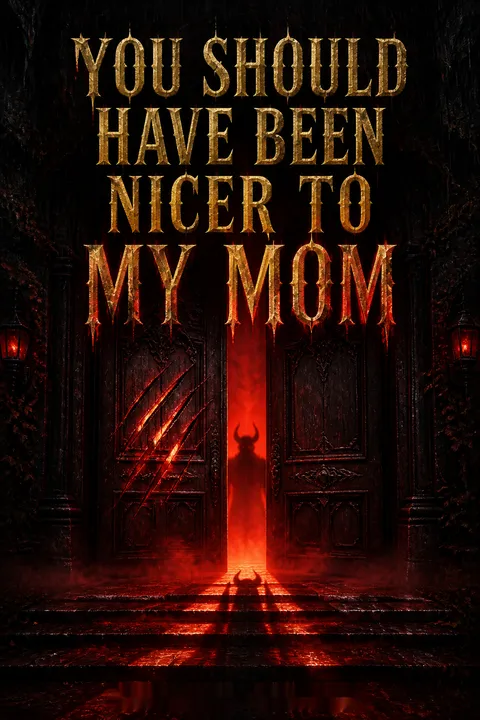
Xiomara discovers a mysterious scar on her neck she cannot remember getting, and her attempts to recall childhood events are met with confusion and contradiction. The house itself feels haunted—strange noises, claw marks on doors, and a pervasive sense of being watched. As she searches for answers, she uncovers hidden objects: a Bible with a missing page, old watches, and eventually, cassette tapes labeled for each of Papi Ramon's children. The tapes, however, are distorted, with crucial information about the demon's identity censored. The family's collective memory is unreliable, suggesting the demon's influence extends to their very sense of self and history.
The Demon Among Us
Physical attacks begin: Henry is mauled by an unseen force, Aury is clawed and left unconscious, and the house is marked by supernatural violence. Each victim had tried to take something belonging to Papi Ramon, echoing the will's warning about property and protection. The family's fear turns to paranoia, with accusations flying—especially toward Naomi, whose Haitian heritage and outsider status make her a convenient scapegoat. The legend of el bacà, a Haitian spirit, is twisted into justification for a witch hunt. Xiomara, desperate to protect Naomi and herself, races to piece together the clues before the demon claims another victim.
Scandals and Sancocho
As the storm rages, the family's scandals continue to surface: Henry's crimes, Manuel's hypocrisy, Aury's fraudulent business, Wanda's hit-and-run, and Marisa's financial schemes. The pressure cooker environment leads to explosive confrontations, physical fights, and shifting alliances. Attempts at confession and reconciliation fail, as old wounds are reopened and new betrayals come to light. The family's inability to unite or trust one another leaves them vulnerable to both human and supernatural threats. Xiomara's sense of isolation deepens, but she finds a fragile ally in Naomi, whose own pain and anger simmer beneath the surface.
Searching for Hidden Truths
Xiomara and Naomi work together to find the missing cassette tapes and a player to listen to them. Each tape contains Papi Ramon's confessions about his children, their flaws, and his suspicions about the demon. The tapes are incomplete, with the demon's name always distorted. As they search, more attacks occur, and the family's numbers dwindle. The tapes reveal that Papi Ramon made a deal with el bacà for wealth and protection, but the price was a soul from his bloodline. The clues point to a cycle of bargains, betrayals, and supernatural manipulation that has haunted the family for generations.
Tapes, Lies, and Memories
Listening to the tapes, Xiomara learns that her mother's death was not a simple accident but the result of a chain of negligence, malice, and possibly supernatural interference. Each sibling played a part—Aury stole Josefina's painkillers, Marisa refused to drive her, Rafael tampered with her car, and Manuel's cruelty isolated her. The demon's influence is evident in the family's fractured memories and self-destructive choices. Xiomara is forced to confront the possibility that her family, knowingly or not, sacrificed her mother to maintain their own prosperity. The tapes also reveal that Naomi is Papi Ramon's secret daughter, making her both family and outsider.
Attacks in the Night
As midnight approaches, the violence intensifies. Wanda is killed, shot by Aury in a case of mistaken identity. Marcus, Xiomara's ex, arrives to help but is killed by the demon. The family turns on Xiomara, blaming her for the chaos, while Naomi seizes the gun and takes control. The house becomes a battleground of accusations, grief, and desperation. The demon, now revealed to be masquerading as the lawyer Mark, manipulates events to force a final reckoning. The supernatural and the familial are now inseparable, as the true cost of the bloodline bargain comes due.
Naomi's Revelation
Naomi reveals herself as Papi Ramon's illegitimate daughter, the product of his affair with Julia. Her mother's murder, covered up as a break-in, was orchestrated by the family to hide the scandal. Naomi's anger and pain, long ignored, now fuel her demand for justice. She exposes the family's crimes, forces confessions, and holds them at gunpoint. The demon's bargain is laid bare: one soul must be claimed to settle the debt. Naomi, offered the chance to claim the family's wealth and protection, must choose between perpetuating the cycle or breaking it. The family, shattered by loss and betrayal, faces its final test.
The Demon Revealed
The demon, el bacà, reveals itself fully, taking the form of Mark and asserting its claim on the family. It explains the terms of the bargain: Papi Ramon traded his soul for prosperity, and the debt must be paid by a descendant. The demon's manipulations—distorted memories, censored tapes, escalating violence—were all part of the game. The family's sins, both personal and collective, have brought them to this moment. Xiomara and Naomi are given a choice: who will pay the price? The demon's power is absolute, but the final decision rests with the family.
Bargains and Bloodlines
With time running out, Xiomara and Naomi confront the legacy of their family's bargains. Naomi, offered the chance to inherit everything in exchange for her soul, hesitates. Xiomara, exhausted and broken, offers herself instead, hoping to end the cycle of violence and protect Naomi. The family, paralyzed by fear and guilt, is forced to witness the consequences of their actions. The demon delights in their suffering, savoring the fulfillment of the bargain. In the end, it is not just a question of who will die, but of what kind of legacy will be left behind.
The Final Choice
In a final act of agency, Xiomara turns the gun not on herself or Naomi, but on her surviving relatives, declaring, "You should have been nicer to my mom." Her choice is both vengeance and liberation, breaking the demon's hold by refusing to play by its rules. The family's destruction is complete, but so is the cycle of abuse and betrayal. The storm outside finally breaks, and Xiomara, the sole survivor, is left to reckon with the cost of survival and the meaning of justice. The demon's bargain is fulfilled, but at a price no one could have foreseen.
Aftermath and Reckoning
In the aftermath, the Abreu family's scandals and deaths become national news. Xiomara is cleared of wrongdoing by Naomi's testimony, but the legacy of trauma, loss, and supernatural horror lingers. The family's reputation is destroyed, their wealth scattered, and their secrets exposed. Xiomara is left to grapple with survivor's guilt, the truth about her mother's death, and the knowledge that justice is never simple. The story ends with a reflection on the cycles of violence, the dangers of unchecked power, and the need to confront the demons—literal and figurative—that haunt families and communities.
Analysis
Vincent Tirado's You Should Have Been Nicer to My Mom is a searing, genre-bending exploration of family, trauma, and the supernatural costs of generational bargains. By fusing a locked-room mystery with horror and social commentary, Tirado exposes the ways in which families—especially those marked by migration, colorism, and class—perpetuate cycles of harm, secrecy, and denial. The demon el bacà is both literal and symbolic: a supernatural force that manipulates memory and fate, and a metaphor for the legacies of violence, betrayal, and anti-Blackness that haunt the Abreus. The novel interrogates the price of prosperity, the dangers of scapegoating outsiders, and the corrosive effects of unacknowledged guilt. Through Xiomara and Naomi, Tirado offers a nuanced meditation on agency, justice, and the possibility (or impossibility) of breaking free from inherited curses. The final act of defiance—Xiomara's refusal to play by the demon's rules—suggests that true liberation requires both reckoning and radical empathy, even when justice is messy and incomplete. The novel's lessons resonate far beyond its supernatural trappings, challenging readers to confront the demons within their own histories and communities.
Characters
Xiomara Castillo
Xiomara is the protagonist, a young woman marked by grief, alienation, and a fierce loyalty to her late mother, Josefina. Her relationship with her extended family is fraught; she resents their cruelty and hypocrisy, especially toward her mother. Xiomara is introspective, observant, and deeply affected by trauma—her own and her family's. She is also autistic, which shapes her sensitivity to change and social dynamics. Throughout the story, Xiomara evolves from a passive outsider to an active seeker of truth, driven by a need for justice and closure. Her journey is one of self-discovery, as she confronts both supernatural and familial demons, ultimately choosing agency over victimhood.
Naomi
Naomi, the daughter of the murdered housekeeper Julia, is both insider and outsider—raised alongside the Abreus but never truly accepted. Her relationship with Xiomara is complicated by guilt, distance, and shared trauma. Naomi is revealed to be Papi Ramon's illegitimate daughter, making her both family and a symbol of the family's hidden sins. She is intelligent, resourceful, and driven by a deep sense of injustice over her mother's death and her own marginalization. Naomi's arc is one of empowerment and vengeance; she exposes the family's crimes, forces confessions, and ultimately must choose whether to perpetuate or break the cycle of violence.
Papi Ramon
Papi Ramon is the deceased patriarch whose legacy drives the plot. A self-made man, he built the family's wealth but at a terrible cost: a bargain with the demon el bacà. His love for his children is complicated by favoritism, secrets, and a willingness to sacrifice others for the family's prosperity. In death, he attempts to atone by warning Xiomara and leaving clues to break the curse. His tapes reveal a man wracked by guilt, aware of his failings but unable to fully protect those he loves. Papi Ramon embodies the dangers of unchecked ambition and the generational consequences of moral compromise.
Aury
Aury is one of Xiomara's aunts, a successful businesswoman whose public persona masks deep insecurity and addiction. She is manipulative, quick to deflect blame, and skilled at lying—traits that both protect and isolate her. Aury's relationship with her siblings is competitive and fraught, especially with Marisa. Her addiction and involvement in family scandals make her both a victim and perpetrator of harm. Aury's arc is one of exposure; her secrets are revealed, and her attempts to control the narrative ultimately fail, leaving her vulnerable to both human and supernatural judgment.
Marisa
Marisa, another aunt, is obsessed with image and external validation. Her history of failed relationships, financial schemes, and emotional volatility make her a source of both comic relief and genuine pathos. Marisa is quick to blame others and slow to accept responsibility, but her pain is real—she feels overlooked and unloved, especially compared to Josefina. Her complicity in family tragedies is revealed through the tapes, and her inability to change or confess leads to her downfall. Marisa represents the destructive power of denial and the longing for acceptance.
Manuel
Manuel, the eldest uncle, is a pastor whose public piety masks deep hypocrisy. He is judgmental, controlling, and emotionally distant, especially toward his children. Manuel's complicity in covering up family crimes and his willingness to sacrifice others for reputation make him a central antagonist. His relationship with his children, especially Wanda and Henry, is marked by disappointment and unmet expectations. Manuel's arc is one of unraveling authority; as his secrets are exposed, he loses control and is forced to confront the consequences of his actions.
Rafael
Rafael is the youngest uncle, often playing the role of mediator in family disputes. He is more empathetic than his siblings but ultimately complicit in their crimes, especially regarding Julia's death and Josefina's accident. Rafael's desire to keep the peace leads him to cover up wrongdoing rather than confront it. His relationship with Xiomara is ambivalent—he offers comfort but withholds the truth. Rafael's arc is one of tragic weakness; his inability to act decisively contributes to the family's downfall.
Yaritza
Yaritza is Xiomara's cousin, a social media-obsessed instigator who delights in drama and scandal. Her flippant attitude masks insecurity and a desire for attention. Yaritza's actions—spreading rumors, exposing secrets, and fueling suspicion—accelerate the family's unraveling. She is both a victim of the family's dysfunction and an agent of its destruction. Yaritza's arc is one of complicity; her refusal to take responsibility for her actions mirrors the family's broader failures.
Henry
Henry, Manuel's son, is spoiled, superficial, and ultimately revealed to be a predator. His crimes are the first to surface, setting off the chain of confessions and violence. Henry's entitlement and lack of remorse make him a symbol of the family's moral decay. His injury at the hands of the demon is both punishment and consequence, stripping him of his power and exposing his vulnerability.
Wanda
Wanda, Manuel's daughter, is deeply religious and desperate for approval. Her involvement in a hit-and-run and subsequent cover-up reveal the limits of her piety. Wanda's death is a turning point, exposing the family's willingness to sacrifice even the innocent to protect themselves. Her arc is one of tragic innocence corrupted by the family's legacy.
Plot Devices
The Will as a Curse
The will is not just a legal document but a curse, setting the family on a deadly countdown to uncover the demon among them. It functions as both a literal and metaphorical device, forcing confessions, exposing secrets, and driving the plot's escalating tension. The will's cryptic instructions and personal sign-off to Xiomara make her both detective and potential victim, while the supernatural threat blurs the line between family dysfunction and horror.
Distorted Memory and Unreliable Narration
The demon's power to alter memories and perceptions creates an atmosphere of paranoia and uncertainty. Characters doubt their own recollections, and crucial information is censored or forgotten. This device heightens suspense, complicates the search for truth, and reflects the psychological impact of trauma and generational secrets. It also allows the narrative to explore the ways families rewrite their own histories to avoid accountability.
Cassette Tapes and Hidden Clues
The hidden cassette tapes, each labeled for a family member, serve as both literal evidence and symbolic confessions. They reveal Papi Ramon's regrets, suspicions, and the family's complicity in past tragedies. The tapes are distorted by the demon, making the search for truth a race against time and supernatural interference. This device grounds the supernatural in tangible objects, linking the past to the present and forcing characters to confront uncomfortable realities.
Supernatural Attacks and Foreshadowing
The demon's attacks—claw marks, violence, and spectral presence—are both foreshadowed and explained by the will and family legends. Each attack is linked to a violation of property or trust, reinforcing the theme of bargains and consequences. The escalating violence serves as both punishment and revelation, narrowing the suspects and raising the stakes as the deadline approaches.
Locked-Room Mystery Structure
The storm outside functions as a classic locked-room device, trapping the family together and preventing outside intervention. This intensifies the claustrophobia, forces confrontations, and ensures that the resolution must come from within. The structure heightens suspense and mirrors the inescapability of generational trauma and inherited guilt.
Download PDF
Download EPUB
.epub digital book format is ideal for reading ebooks on phones, tablets, and e-readers.








































