
Plot Summary
Amnesia in the Kyrt Fields
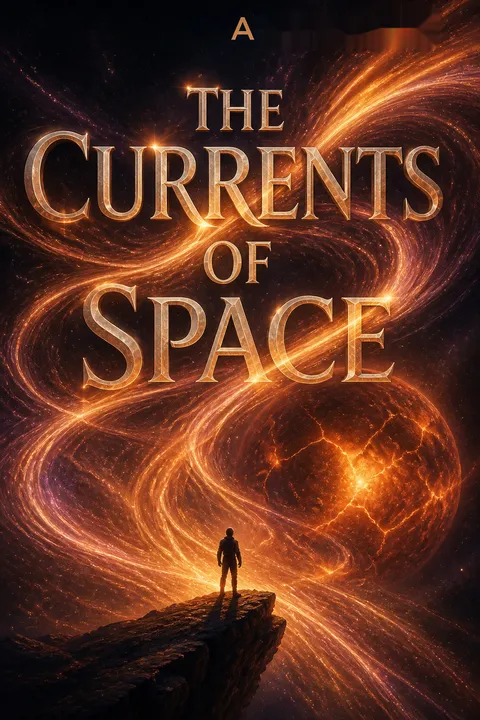
A man known only as Rik is found in the kyrt fields of Florina, his mind shattered and his past erased. He is taken in by Valona March, a strong, lonely millworker who cares for him as he learns to speak and function again. The world around them is sharply divided: Florina's natives toil in poverty, producing the precious kyrt fiber for their overlords from the planet Sark. Rik's only clue to his past is a sudden, haunting memory: he once "analyzed Nothing." This cryptic phrase, and his growing sense of unease, set the stage for a journey that will shake the foundations of both worlds.
Valona's Devotion and Fears
Valona March, called "Big Lona," is fiercely protective of Rik, who is as helpless as a child when she finds him. She is haunted by the fear that as Rik's mind heals, he will leave her behind. Her own life has been marked by loneliness and ridicule, but caring for Rik gives her purpose. When Rik begins to remember fragments of his past, Valona is torn between wanting him to recover and dreading the loss of the only person who has ever depended on her. Their bond is deep, but the world's dangers and Rik's mysterious past threaten to tear them apart.
Townman Terens' Secret Burden
Myrlyn Terens, the Townman of Rik and Valona's village, is a Florinian with unusual education and ambition. He helps Valona care for Rik, but his motives are complex. Terens is secretly aware that Rik is not an ordinary amnesiac; he suspects a connection to the mysterious disappearance of a Spatio-analyst—a scientist who studies the currents of interstellar space. Terens' own past is marked by resentment toward the Sarkite overlords and a desire to see Florina free. He becomes a key player, torn between self-preservation, rebellion, and the hope that Rik's memories might hold the key to Florina's future.
The Library and Lost Identity
Terens takes Rik to the Upper City's library, risking exposure to the Sarkite authorities. There, Rik's memories are triggered by an encyclopedia entry on Spatio-analysis, revealing that he was once a Spatio-analyst—one who "analyzes Nothing," the interstellar void. Their search for more information arouses suspicion, and they are forced to flee after a violent confrontation with a patroller. The episode cements Rik's sense of a lost, important past and draws the attention of powerful forces on both Florina and Sark.
Rik's Memories Awaken
Rik's mind, long dormant, begins to heal rapidly. He recalls his job as a Spatio-analyst and a terrible warning: Florina is in grave danger. The memory is incomplete, but the urgency is real. As Rik and his protectors become fugitives, pursued by patrollers and political agents, the stakes rise. Rik's knowledge is coveted by many—Sarkite rulers, Trantorian diplomats, and Florinian rebels—each with their own agenda. The truth locked in Rik's mind could save or doom an entire world.
The Baker's Hidden Resistance
Matt Khorov, known as the Baker, is a burly, charismatic figure in Florina's underground. He shelters Rik, Valona, and Terens, revealing a network of resistance against Sarkite rule. The Baker's motives are ambiguous—he is both a patriot and a Trantorian agent. When the group is betrayed and the Baker is killed by a disguised Terens, the lines between friend and foe blur. The fugitives are forced to flee again, this time as stowaways on a ship bound for Sark, carrying with them the secret of Florina's impending doom.
Junz and the Galactic Bureaucracy
Dr. Selim Junz, a Spatio-analyst from the planet Libair, has spent a year searching for the missing analyst—Rik. Frustrated by the indifference and obstruction of Sarkite and Trantorian authorities, Junz is driven by a sense of kinship with the oppressed and a commitment to truth. His investigation uncovers layers of political intrigue, genetic manipulation, and the exploitation of Florina. Junz's persistence brings him to the heart of the crisis, where science, politics, and personal loyalty collide.
Trantor's Shadow Over Sark
Trantor, the burgeoning Galactic Empire, watches Sark and Florina with interest. Ambassador Ludigan Abel maneuvers behind the scenes, balancing the desire for peace with the realities of power. Trantor's agents infiltrate Sark's government, seeking leverage over the kyrt monopoly and the fate of Florina. The struggle between local rulers and imperial ambitions plays out in espionage, diplomacy, and the manipulation of information. The missing Spatio-analyst becomes a pawn in a much larger game.
The Squires' Paranoia
The five Great Squires of Sark, each ruling a continent, are united only by their greed and fear. When they receive anonymous threats about Florina's destruction, suspicion and paranoia run rampant. Fife, the most powerful Squire, orchestrates a coup to seize control, accusing one of his peers—X—of treason and blackmail. The Squires' inability to trust each other mirrors the instability of their rule. Their fate becomes entwined with the secret Rik carries, as the threat to Florina becomes impossible to ignore.
Flight, Betrayal, and Murder
As Rik and Valona flee through the city, pursued by patrollers and political agents, Terens kills a patroller and assumes his identity, then murders a Sarkite to escape detection. The fugitives' journey is marked by violence, betrayal, and moral ambiguity. Terens' actions, once driven by patriotism, become increasingly desperate. The group's flight culminates in their accidental boarding of a ship carrying Samia of Fife, the Squire's daughter, setting the stage for a final confrontation on Sark.
Stowaways to Sark
Rik and Valona, disguised as offworlders, hide aboard the ship Endeavor. Samia, curious and compassionate, befriends them and becomes fascinated by Rik's story. Captain Racety, wary of danger, keeps them under guard. As Rik's memories return, he reveals that he is from Earth, the legendary home of humanity, and that Florina faces destruction from its own sun. The ship's arrival on Sark brings all the players—rebels, rulers, and rescuers—into a final, dangerous convergence.
Samia's Curiosity and Compassion
Samia of Fife, intelligent and independent, is drawn to Rik's plight. Her compassion leads her to defy her father and the authorities, seeking the truth behind the mystery. Her actions, both naïve and courageous, complicate the political situation and expose her to personal risk. Samia's relationship with Rik and Valona humanizes the conflict, bridging the gap between oppressor and oppressed. Her choices will have lasting consequences for herself and her world.
The Squire of Fife's Gambit
Fife, the dominant Squire, seizes control of Sark, using the crisis as a pretext to end continental autonomy and establish himself as dictator. He orchestrates a public trial to unmask X, the traitor who threatened the kyrt monopoly. Fife's pride and cunning are matched by his physical deformity—a symbol of the moral rot at the heart of Sark's rule. The trial becomes a stage for revelations, accusations, and the final unmasking of the psycho-prober.
The Unmasking of X
Under pressure, Terens confesses to being the psycho-prober who erased Rik's mind. His actions, born of desperation and a desire to free Florina, have unintended consequences. The revelation shocks all present, exposing the vulnerability of Sark's system and the tragic cost of resistance. Terens' confession is both an act of courage and an admission of failure. The truth about Rik's warning is finally revealed, but the path to salvation is uncertain.
The Truth of the Nova
With Terens' confession and Rik's recovered memories, Junz reconstructs the scientific truth: Florina's sun is about to go nova, doomed by a rare carbon current in space. The kyrt monopoly, the foundation of Sark's power, is a byproduct of this impending disaster. The Squires and Trantor's representatives debate evacuation, but economic interests and political fears threaten to override the needs of Florina's people. The fate of millions hangs in the balance as science confronts power.
The Evacuation of Florina
The truth cannot be suppressed. As the scientific community races to confirm the nova theory, the evacuation of Florina begins. The kyrt monopoly collapses as the secret of its production is revealed to be linked to the pre-nova state of Florina's sun. Trantor, Sark, and the I.S.B. coordinate a massive resettlement effort, but hardship and loss are inevitable. The world that was once the jewel of the Galaxy is emptied, its people scattered among the stars.
Exile, Home, and Hope
In the aftermath, Rik and Valona, now free from their pasts, choose to build a new life together. Rik, no longer haunted by anxiety, returns to Earth, the legendary cradle of humanity. Valona, once a lonely peasant, becomes an Earthwoman by choice and love. Terens, the failed rebel, remains on Florina as its last inhabitant, unable to abandon his home. The story ends with a sense of loss, but also of hope: the Galaxy moves forward, and the victors are not the powerful, but the people.
Analysis
Isaac Asimov's The Currents of Space is a masterful blend of science fiction, political allegory, and psychological drama. At its core, the novel explores the dynamics of power, oppression, and resistance in a galaxy where the fate of millions hinges on the actions of a few. The story's central metaphor—the currents of space that shape the destinies of worlds—mirrors the invisible forces of history, economics, and human ambition. Through the intertwined journeys of Rik, Valona, and Terens, Asimov examines the costs of knowledge, the burdens of leadership, and the complexities of identity. The novel's depiction of amnesia and recovery serves as both a narrative engine and a meditation on the nature of memory and selfhood. The political intrigue among the Squires, the machinations of Trantor, and the struggles of the Florinian rebels reflect real-world themes of colonialism, class, and the ethics of power. Ultimately, The Currents of Space is a story of exile and homecoming, loss and hope, in which the true victors are not the rulers or the rebels, but the ordinary people who survive and adapt. Asimov's vision is both cautionary and optimistic, reminding us that the currents of history can be navigated, but never fully controlled.
Review Summary
The Currents of Space receives an overall rating of 3.85/5 from 21,747 reviews. Readers praise Asimov's prescient social commentary on racism, colonialism, and class exploitation, noting its surprising relevance despite being published in 1952. The novel follows an amnesiac protagonist on planet Florina, which produces kyrt, a valuable commodity controlled by the ruling Sarkites. Many appreciate the mystery-thriller elements and complex political intrigue, though some criticize flat characterization and tedious pacing. Reviewers commend Asimov's treatment of female characters and racial themes. The book connects to the Foundation universe, showing Trantor's expanding empire, and remains engaging despite occasional dated elements.
Characters
Rik
Rik is the central figure, a man whose mind has been erased by a psychic probe, leaving him helpless and childlike. As his memories return, he is revealed to be a Spatio-analyst—an expert in the study of interstellar matter—who discovered that Florina's sun is about to go nova. Rik's journey is one of self-discovery, trauma, and redemption. His scientific knowledge is both a blessing and a curse, making him the target of political intrigue and personal danger. Psychologically, Rik embodies the struggle for identity and the burden of knowledge. His relationships with Valona and Terens are marked by gratitude, dependence, and, ultimately, forgiveness.
Valona March
Valona is a strong, compassionate Florinian woman who rescues Rik and cares for him as he recovers. Her life has been shaped by loneliness and social exclusion, but Rik's dependence gives her purpose. Valona's love is selfless, yet tinged with fear of abandonment. She is fiercely loyal, willing to risk everything to protect Rik. Her journey is one of personal growth, as she moves from passive caretaker to active participant in the struggle for Florina's future. Valona's psychological depth lies in her capacity for empathy and her quiet strength.
Myrlyn Terens
Terens is a Florinian Townman—an educated native who serves as a local administrator under Sarkite rule. Outwardly loyal, he secretly despises the Squires and dreams of Florinian freedom. Terens orchestrates much of the plot, from sheltering Rik to manipulating events behind the scenes. His decision to psycho-probe Rik, intended as a means of control, becomes his greatest regret. Terens is driven by a mix of patriotism, ambition, and guilt. His psychological complexity is revealed in his willingness to sacrifice himself for a cause, even as he recognizes the limits of his own power.
Dr. Selim Junz
Junz is a Spatio-analyst from Libair, distinguished by his dark skin and outsider status. He is driven by a sense of justice and kinship with the oppressed. Junz's investigation into Rik's disappearance uncovers layers of political and scientific intrigue. He is persistent, rational, and compassionate, often serving as the moral center of the story. Junz's psychological motivation stems from his own experience of exclusion and his belief in the unity of humanity. His actions are guided by both scientific curiosity and ethical responsibility.
Samia of Fife
Samia is the daughter of the Squire of Fife, intelligent, independent, and compassionate. Her fascination with kyrt and the lives of Florinians leads her to defy social norms and authority. Samia's empathy for Rik and Valona humanizes the conflict, and her actions inadvertently influence the course of events. She is psychologically complex, balancing privilege with a genuine desire to understand and help others. Samia's journey is one of self-discovery, as she confronts the realities of power, prejudice, and personal risk.
Squire of Fife
Fife is the most powerful of Sark's Great Squires, physically imposing but crippled by deformity. He is cunning, proud, and determined to maintain his dominance. Fife orchestrates political coups, manipulates his peers, and seeks to control the kyrt monopoly at any cost. His psychological profile is marked by insecurity, ambition, and a willingness to use any means to achieve his ends. Fife's interactions with his daughter, rivals, and subordinates reveal both his strengths and his vulnerabilities.
Matt Khorov (The Baker)
The Baker is a charismatic figure in Florina's underground resistance, sheltering fugitives and opposing Sarkite rule. His dual role as a patriot and a Trantorian agent reflects the complexities of rebellion under occupation. The Baker's death at the hands of Terens marks a turning point, symbolizing the blurred lines between friend and foe. Psychologically, he is driven by a mix of idealism, pragmatism, and a willingness to sacrifice for the cause.
Ludigan Abel
Abel represents the interests of Trantor, the emerging Galactic Empire. He is calm, calculating, and committed to peace, but not above using force or blackmail when necessary. Abel's psychological depth lies in his understanding of power and his ability to balance idealism with realpolitik. He serves as a foil to the more emotional Junz, embodying the complexities of leadership in a turbulent galaxy.
Captain Racety
Captain Racety commands the ship that carries Samia, Rik, and Valona to Sark. He is wary, disciplined, and loyal to authority. Racety's interactions with Samia and the fugitives reflect the tensions between duty and compassion. Psychologically, he is a man caught between conflicting loyalties, striving to maintain order in a world of chaos.
X (The Psycho-prober)
X is the mysterious figure who erases Rik's mind and sets the plot in motion. Ultimately revealed as Terens, X represents the dangers of unchecked ambition and the tragic consequences of rebellion gone awry. Psychologically, X is a study in guilt, self-justification, and the limits of power. His actions force all the characters to confront the costs of their choices.
Plot Devices
Amnesia and the Search for Identity
The central plot device is Rik's amnesia, caused by a psychic probe. This device serves both as a mystery—what happened to Rik, and why?—and as a means of gradually revealing the story's central threat. Rik's journey to recover his identity mirrors the larger quest for truth and justice. The amnesia also allows for dramatic irony, as the reader learns the stakes alongside the protagonist.
Political Intrigue and Power Struggles
The narrative is driven by the complex interplay of political forces: the Squires of Sark, the Trantorian Empire, Florinian rebels, and the I.S.B. Each faction has its own agenda, and alliances shift as new information comes to light. The use of anonymous threats, secret meetings, and public trials heightens the tension and underscores the fragility of power.
Science as Revelation and Threat
The scientific discovery at the heart of the story—the impending nova of Florina's sun—serves as both a plot catalyst and a metaphor for change. The gradual revelation of the nova theory, through Rik's memories and Junz's analysis, drives the action and forces the characters to confront uncomfortable truths. Science is both a tool of liberation and a source of existential danger.
Foreshadowing and Parallelism
The narrative structure employs foreshadowing, with early hints of danger and betrayal paying off in later revelations. The parallel journeys of Rik, Valona, and Terens reflect broader themes of exile, loss, and the search for belonging. The use of mirrored events—such as the repeated motif of flight and the unmasking of hidden identities—reinforces the story's emotional arc.
Trimensic Personification and Narrative Perspective
The use of trimensic personification (three-dimensional telepresence) allows for dramatic confrontations and the blurring of reality and appearance. This device underscores the themes of deception, performance, and the difficulty of discerning truth in a world of shifting loyalties. The narrative perspective shifts between characters, providing insight into their motivations and deepening the psychological complexity of the story.
Galactic Empire Series

About the Author
Other books by Isaac Asimov

Download PDF
Download EPUB
.epub digital book format is ideal for reading ebooks on phones, tablets, and e-readers.








































