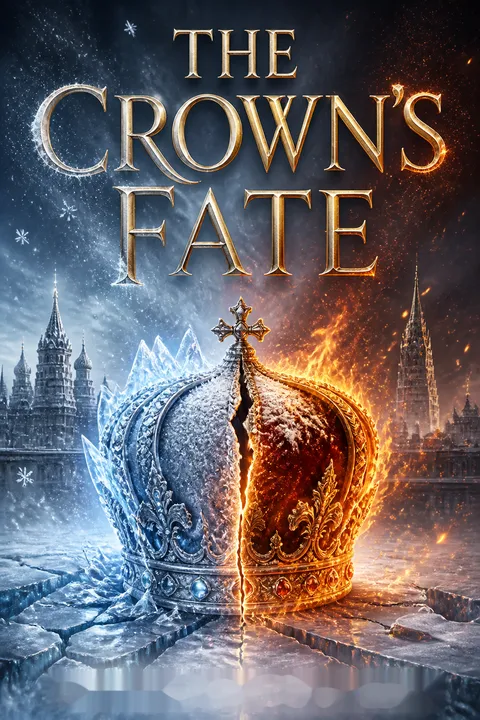

Plot Summary
Shadows and Sacrifice
The story opens in the aftermath of the deadly Crown's Game, with Vika Andreyeva now the Imperial Enchanter, haunted by the loss of Nikolai, her rival and soulmate. She is sent on imperial errands, her magic both a gift and a burden, and she struggles with the emptiness left by Nikolai's absence. Meanwhile, Pasha, the tsesarevich, drowns in guilt and vodka, tormented by his role in the Game's tragic end. The city is tense, rumors of rebellion swirl, and Vika's magic falters unexpectedly, hinting at a disturbance in Russia's magical current. Both Vika and Pasha are adrift, their relationships fractured, and the empire's future uncertain. The emotional weight of grief, regret, and duty sets the stage for a story where love and power are inextricably entwined.
The Cuff's Binding
Vika's new role as Imperial Enchanter is not the freedom she imagined. A magical cuff appears on her wrist, binding her to the tsardom and burning her whenever she resists an order from Pasha or Yuliana. The cuff is both a symbol of her achievement and a shackle, stripping her of agency. Pasha, wracked with remorse, tries to apologize, but Vika's pain and anger are raw. The magical bond enforces obedience, making her a tool of the crown rather than a partner. This forced servitude deepens the rift between Vika and Pasha, and Vika's sense of self is threatened. The cost of power is revealed: to serve the empire, she must sacrifice her autonomy, and the emotional toll is profound.
Ghosts of the Steppe
Nikolai, neither dead nor alive, is trapped in a magical dreamscape of the Kazakh steppe, a shadow of his former self. He is tormented by memories of Vika and Pasha, unsure if he is loved or merely pitied. His mother, Aizhana, a revenant with her own dark agenda, urges him to seize the throne, feeding him energy tainted by death. Nikolai's struggle is both physical and existential: he siphons energy from dream visitors and illusions, desperate to regain substance, but recoils from the dishonor. The steppe becomes a purgatory of longing and resentment, where love, ambition, and betrayal churn. The psychological tension between hope and despair, and the question of what makes a person whole, drive Nikolai's arc.
Broken Oaths, Broken Hearts
Vika seeks out Renata, Nikolai's loyal friend, hoping for insight into his fate. Through tea leaf readings and confessions, the tangled web of love and loyalty is revealed: Vika, Nikolai, and Pasha are bound by affection and betrayal, each wounded by the Game's outcome. Renata's prophecy warns of another deadly conflict, and jealousy and regret simmer beneath the surface. Meanwhile, Pasha grapples with his inadequacy as heir, pressured by Yuliana and the threat of revolution. The city's unrest mirrors the characters' inner turmoil, as old friendships fracture and new alliances are forged in the crucible of grief and ambition.
The Return of Nikolai
With the help of Aizhana's dark energy and Renata's devotion, Nikolai regains enough strength to escape the dream and return to reality as a shadow. His return is marked by bitterness and a chilling ambition: he claims his right to the throne, confronting Pasha and Vika in a midnight showdown. The confrontation unleashes chaos—Nikolai animates the statue of Peter the Great to incite rebellion, exposing magic to the city and shattering the fragile peace. Vika is forced to fight against him, torn between love and duty. The city descends into hysteria, and the existence of magic is no longer a secret. The stage is set for a battle not just for the crown, but for the soul of Russia.
A Mother's Dark Gift
Aizhana, driven by twisted maternal love, gives Nikolai her own energy—tainted by murder and vengeance—to make him strong enough to challenge Pasha. Her actions are both nurturing and destructive, fueling Nikolai's ambition while infecting him with darkness. The psychological complexity of Aizhana's love—selfish, violent, and sacrificial—mirrors the broader theme of power's corrupting influence. As Nikolai's strength grows, so does his capacity for cruelty, and the line between victim and villain blurs. The mother-son relationship becomes a crucible for exploring the costs of love, legacy, and the hunger for power.
Tea Leaves and Prophecies
Renata, now imbued with magical energy, discovers she can manipulate tea leaves and perhaps fate itself. She and Vika attempt to alter the grim prophecy that foretells death and conflict, hoping to avert tragedy. Their efforts are fraught with uncertainty—can destiny be changed, or are they merely pawns in a larger game? The motif of tea leaves becomes a symbol for the tension between determinism and free will. Meanwhile, the city's fear of magic grows, and Vika's attempts to reassure the populace are met with suspicion and violence. The struggle to change fate, both personal and political, becomes central to the narrative.
The City Turns
The exposure of magic unleashes chaos in Saint Petersburg. Witch hunts, riots, and hysteria sweep the city, as fear turns neighbor against neighbor. Vika becomes a scapegoat, hunted for her powers, while Nikolai's magical rampages deepen the crisis. The Decembrist movement, a real historical conspiracy, gains momentum, plotting to overthrow the tsardom and install a constitutional monarchy—or Nikolai as tsar. The city's descent into madness reflects the characters' own unraveling, as love, loyalty, and ambition collide. The boundaries between hero and villain, order and chaos, blur in the crucible of revolution.
The Decembrist Plot
The Decembrists, led by disaffected nobles and soldiers, plot to block Pasha's coronation and seize power. Nikolai becomes their figurehead, promising reform and wielding his magic as a weapon. Ilya, Pasha's trusted guard, is revealed as a traitor, torn between loyalty and ideology. Yuliana and Pasha scramble to counter the threat, but the city is a powder keg. The narrative tightens as alliances shift, betrayals are revealed, and the machinery of revolution grinds into motion. The psychological stakes are heightened: every character must choose a side, and the cost of indecision is death.
The Battle for Allegiance
On the day of the coup, the Decembrists' forces gather in Peter's Square, but their numbers are fewer than expected. Pasha's loyalists, bolstered by Yuliana's ruthless strategy and Vika's restored magic, surround the rebels. The battle erupts in chaos: Vika conjures a blizzard, Nikolai animates toy soldiers and shadows, and the square becomes a surreal battlefield of magic and blood. The cost is catastrophic—thousands die, the Neva becomes a graveyard, and the city is left scarred. In the midst of the carnage, Vika is gravely wounded, losing her hand to a cannonball. The price of power is paid in blood and loss.
Avalanche and Aftermath
As the battle ends, Vika lies dying, her magical cuff severed. Nikolai, finally free of his mother's darkness, refuses to save her with tainted energy. Instead, he forges her a new hand from the enchanted bronze of Peter the Great's statue, blending magic and humanity. The act is both penance and love, and as Vika recovers, she helps Nikolai reclaim his true self. The cycle of vengeance is broken, and forgiveness becomes possible. The survivors—Vika, Nikolai, Pasha, and Yuliana—must reckon with the consequences of their choices and the possibility of redemption.
The Price of Power
In the aftermath, the central quartet confronts their past betrayals and seeks forgiveness. Vika and Nikolai, now restored, acknowledge their love and the necessity of letting go of ambition and revenge. Pasha, finally secure in his legitimacy, chooses compassion over retribution, sparing the Decembrists and promising reform. Yuliana, ever pragmatic, supports her brother's vision. The psychological wounds begin to heal, and the possibility of a new, more just Russia emerges. The lesson is clear: true power lies not in domination, but in mercy and unity.
Forgiveness and Restoration
With the city recovering, Vika and Nikolai are reinstated as Imperial Enchanters, now working together for the good of the empire. Their partnership, forged in suffering and love, becomes a symbol of hope and renewal. The coronation of Pasha as tsar is a moment of triumph, not just for him, but for all who have survived and grown. The magical spectacle at the ceremony signals a new era, where magic and humanity coexist. The narrative closes with the promise that the future is unwritten, and that fate, once thought immutable, can be shaped by courage, love, and forgiveness.
Coronation of the Future
The story concludes with Pasha's coronation in Moscow, flanked by Vika and Nikolai as Imperial Enchanters. The empire is poised for transformation: old wounds are healing, and the possibility of a better future glimmers. Vika's new bronze hand, a fusion of magic and technology, symbolizes the union of past and future, nature and artifice. The characters have learned that destiny is not fixed, and that the greatest magic is the ability to choose, to forgive, and to hope. The final image is one of unity, possibility, and the enduring power of love.
Analysis
Evelyn Skye's The Crown's Fate is a lush, emotionally charged exploration of power, love, and the struggle for agency in a world where magic and politics are inseparable. At its heart, the novel interrogates the cost of ambition and the redemptive potential of forgiveness. Through the intertwined fates of Vika, Nikolai, and Pasha, Skye examines how trauma, grief, and longing can warp even the noblest intentions, and how the bonds of love—romantic, familial, and platonic—can both wound and heal. The magical elements serve as metaphors for psychological states: the cuff's burn is the pain of forced loyalty; the shadow is the loss of self; the enchanted hand is the possibility of transformation. The narrative's cyclical structure, with its echoes of past betrayals and repeated choices, underscores the difficulty of breaking free from history's grip. Yet, the story ultimately affirms that fate is not immutable: through courage, self-knowledge, and compassion, the characters reclaim their agency and shape a new future. The lesson is clear and resonant for modern readers: true greatness lies not in domination, but in the willingness to forgive, to change, and to hope.
Review Summary
Reviews for The Crown's Fate are mixed, averaging 3.66/5. Many readers felt the sequel didn't live up to its predecessor, citing repetitive plot, loss of character depth, and a rushed, overly tidy ending. Common criticisms include an unnecessary love triangle, Nikolai's jarring character shift, and a lack of the original's enchanting magic. Positive reviews praised the darker tone, rich Imperial Russian setting, and exciting plot twists. Several readers suggested the series would have been stronger as a standalone novel.
People Also Read
Characters
Vika Andreyeva
Vika is the Imperial Enchanter, a prodigy whose magic is as wild as her spirit. Raised in the woods, she is both deeply connected to nature and fiercely independent. Her journey is one of longing—for love, for freedom, for purpose. The magical cuff that binds her to the tsardom is both a mark of achievement and a shackle, forcing her to confront the cost of power. Vika's relationships with Pasha and Nikolai are fraught with love, betrayal, and regret. Psychologically, she is torn between duty and desire, struggling to reconcile her compassion with the violence her role demands. Her arc is one of self-discovery: learning that true strength lies not in magic alone, but in forgiveness, agency, and the courage to shape her own fate.
Nikolai Karimov
Nikolai is a study in contrasts: orphan and prince, shadow and substance, lover and rival. His journey from the steppe to the heart of the empire is marked by longing for belonging and recognition. Trapped between life and death after the Game, he is resurrected by his mother's tainted energy, which fuels his ambition but corrupts his soul. His relationship with Vika is central—she is both his mirror and his salvation. Psychologically, Nikolai is driven by a need for acceptance, but his mother's influence warps his desires into vengeance. Ultimately, love and forgiveness allow him to reclaim his true self, choosing unity over power. His arc is a meditation on the dangers of unchecked ambition and the redemptive power of connection.
Pavel "Pasha" Romanov
Pasha is the tsesarevich, thrust into leadership by tragedy. He is charming and empathetic, but plagued by self-doubt and haunted by his role in the Game's deadly outcome. His relationship with Vika is tinged with unrequited love, while his bond with Nikolai is shattered by betrayal. Pasha's psychological journey is one of maturation: learning to accept responsibility, to forgive himself and others, and to lead with compassion rather than fear. His arc culminates in the choice to spare his enemies and reform the empire, embodying the lesson that true power lies in mercy and understanding.
Yuliana Romanova
Yuliana, Pasha's sister, is the power behind the throne, wielding political acumen and ruthlessness. She is both a stabilizing force and a source of tension, pushing Pasha to be strong while making hard choices herself. Her relationship with her brother is complex—protective, sometimes domineering, but ultimately loving. Psychologically, Yuliana is driven by loyalty to family and country, but her pragmatism can verge on coldness. She represents the necessity of hard decisions in leadership, but learns to temper her severity with empathy as the story unfolds.
Aizhana Karimova
Aizhana is Nikolai's mother, a revenant whose love is both nurturing and destructive. Her willingness to kill and to give her own tainted energy to Nikolai is a dark mirror of parental sacrifice. Psychologically, she is driven by loss, vengeance, and a desperate need to matter to her son. Her actions catalyze much of the story's conflict, and her death is both a release and a warning about the dangers of love warped by pain and ambition.
Renata Galygina
Renata is a servant and friend to Nikolai, whose devotion is unwavering. Gifted with the ability to read and, eventually, manipulate tea leaves, she becomes a symbol of hope and the possibility of changing fate. Psychologically, Renata is defined by love and humility, but her arc reveals hidden strength and agency. Her willingness to sacrifice for Nikolai, and her role in attempting to alter destiny, highlight the theme that even the seemingly powerless can shape the future.
Sergei Andreyev
Though deceased, Sergei's influence pervades the story. He raised Vika with love and wisdom, instilling in her a sense of right and wrong that guides her choices. Psychologically, Sergei represents the lost innocence and the enduring power of memory. His teachings anchor Vika, reminding her—and the reader—that compassion and integrity are the true sources of strength.
Major General Volkonsky
Volkonsky is a key figure in the Decembrist movement, embodying the hope for reform and the dangers of revolution. His loyalty to his men and his cause is unwavering, but he is ultimately outmaneuvered by the complexities of power and magic. Psychologically, he is driven by a sense of justice, but his inability to adapt leads to tragedy.
Ilya Koshkin
Ilya is Pasha's guard and a secret Decembrist, embodying the theme of divided allegiance. He is skilled at tracking and subterfuge, but his internal conflict between duty and ideology mirrors the broader civil strife. Psychologically, Ilya is motivated by a desire for equality and recognition, but his choices have dire consequences for those he serves.
Ludmila Fanina
Ludmila is Vika's surrogate mother and the owner of Cinderella Bakery. She provides comfort, counsel, and cookies, grounding Vika in moments of crisis. Psychologically, Ludmila represents the enduring power of kindness and the importance of chosen family. Her presence is a reminder that love and warmth can survive even in the darkest times.
Plot Devices
Duality and the Binding of Opposites
The narrative is structured around the dualities of love and hate, freedom and servitude, life and death. Vika and Nikolai are literal and figurative opposites—sun and moon, nature and artifice, compassion and ambition—bound by magic and fate. The magical cuff, the scar of the Game, and the invisible string between them are recurring symbols of connection and conflict. The story uses these dualities to explore the psychological tension between agency and destiny, and the possibility of reconciliation.
Foreshadowing and Prophecy
Prophecies, both literal (tea leaves) and metaphorical (dreams, omens), foreshadow the coming tragedy and the possibility of change. The motif of reading and manipulating fate recurs, raising questions about free will. The narrative structure is cyclical: past betrayals echo in present choices, and the characters' attempts to escape destiny often bring it closer.
Magical Realism and Surreal Battle
The story weaves real historical events (the Decembrist revolt) with fantastical elements—animated statues, magical storms, enchanted dolls—to heighten the stakes and externalize the characters' psychological battles. The surreal nature of the magical confrontations mirrors the internal struggles of the protagonists, making the emotional arc as vivid as the physical one.
Redemption and the Power of Forgiveness
The climax and resolution hinge on the characters' ability to forgive themselves and each other. The restoration of Nikolai's humanity, the healing of Vika, and Pasha's choice to spare his enemies are all acts of mercy that break the cycle of vengeance. The narrative structure moves from division to unity, from destruction to healing, emphasizing the lesson that true power lies in compassion.
The Crown's Game Series
Download PDF
Download EPUB
.epub digital book format is ideal for reading ebooks on phones, tablets, and e-readers.








































