
Plot Summary
Fated Return to Ruin
Rooke, a witch of the Ravenswyrd, returns to the Southern Lands after centuries away, compelled by a fate she cannot escape. Her homeland is ravaged—villages are barren, the land is dying, and witches are hunted or corrupted. She is fated to unite with Prince Soren, heir to the Unseelie throne, but is met with suspicion, scorn, and the trauma of her people's massacre. The Fates' call is relentless, and Rooke's journey home is marked by loss, the weight of destiny, and the knowledge that her return may be the last hope for a kingdom on the brink of collapse.
Savage Prince's Dilemma
Prince Soren, known as the Savage Prince, is a battle-hardened leader haunted by a thousand years of waiting for his fated mate. The Southern Lands are beset by war, famine, and a curse that kills every high-fae child. Soren's patience is tested when his mate is revealed to be a witch—his people's greatest enemy. Torn between duty and revulsion, Soren must decide whether to accept the Fates' will and claim his throne, or reject the union and risk the destruction of his kingdom.
Chains, Scorn, and Survival
Rooke is captured, chained, and paraded as a trophy through a court that despises her. She is thrown into a dungeon, her healing skills and knowledge ignored, and is forced to survive on her wits and the magic she secretly cycles into the dying earth. Despite the cruelty, she remains unbroken, her resolve steeled by the memory of her lost coven and the knowledge that her fate is tied to the land's survival.
The Curse and the Child
The Southern Lands' curse is absolute—no high-fae child survives. But when Princess Airlie goes into labor, Rooke is called upon to save her and the unborn prince. Defying centuries of hatred, Rooke uses her magic to shield the child from the curse, breaking it in a harrowing act of healing. The birth of a living high-fae heir is a miracle, shattering despair and proving that the Fates' path, though cruel, may yet offer hope.
The Witch's Healing Hands
Rooke's healing of Airlie and Roan earns her a grudging place in the castle, but suspicion lingers. She tends to the wounded, cultivates a garden of lost herbs, and quietly fortifies the land. The Goblin King, recognizing her as the last Ravenswyrd Mother, offers aid and respect, deepening the rift between Soren's court and their prejudices. Rooke's presence becomes both a balm and a threat, her power undeniable but her loyalty questioned at every turn.
The Goblin King's Bargain
With famine looming, Soren is forced to negotiate with the Goblin King for food and safe passage. The Goblin King's respect for Rooke secures the alliance, but his gifts and warnings sow further distrust among the high fae. The kingdom's survival now depends on fragile bargains, and Rooke's role as both healer and political linchpin becomes ever more precarious.
The Ravenswyrd's Legacy
To save Roan's life, Rooke leads Soren and his men into the Ravenswyrd Forest, her ancestral home. The forest, alive with old magic and mourning, demands sacrifice and truth. Rooke's past is laid bare—the massacre of her coven, her sister's death, and the betrayal that shaped her. The journey is a reckoning for all, as the high fae confront the cost of their arrogance and the depth of the land's pain.
The Autumn Rite's Sacrifice
With the curse broken but the land still dying, Rooke and Tyton perform the autumn equinox rite, pouring their magic into the earth to begin its healing. The act is draining, leaving them vulnerable, but it marks a turning point. The high fae witness the true cost of neglect and the power of sacrifice, and Rooke's role as the land's caretaker is finally acknowledged, if not fully trusted.
Siege at Yregar
Kharl, the High Witch and architect of the war, leads a massive assault on Yregar. The castle's defenses are tested as waves of witches, both mindless and powerful, breach the walls. Soren, Roan, and their allies fight desperately, but it is Rooke's magic—her shield, her scepter, and her mastery of both sword and spell—that turns the tide. The battle is brutal, the cost high, and the future uncertain.
The Shield and the Scepter
Rooke unleashes the full force of her magic, creating a shield that protects Yregar and wielding her mother's scepter to decimate Kharl's forces. She faces Kharl's generals in single combat, her skill and fury unmatched. The land itself responds to her, accepting sacrifices and beginning to heal. The high fae, once her captors, now look on in awe as she fulfills the Fates' promise and becomes the kingdom's savior.
Kharl's Fate Unfolds
Kharl flees, his armies shattered, but the prophecy of his death at a Ravenswyrd's hand is now inescapable. Rooke's vengeance is not yet complete, but the balance of power has shifted. The high fae must reckon with the truth of their history, the cost of their pride, and the necessity of unity with those they once scorned.
Aftermath and Reckoning
The battle won, Yregar is left in ruins, its people traumatized but alive. Rooke tends to the wounded, prays for the dead, and begins the slow work of restoration. Soren, humbled and changed, must face the consequences of his choices and the reality of his fate. The kingdom stands at a crossroads—old wounds must be healed, new alliances forged, and the promise of spring must be earned through continued sacrifice.
The Path to the Throne
With the curse broken and the land beginning to heal, Soren prepares for his coronation and the marriage that will seal the Fates' design. The Unseelie Court is divided, the Goblin King's allegiance uncertain, and the threat of Kharl's return still looms. Rooke's consent is required, and the path to unity is fraught with old grudges and new responsibilities.
The Price of Power
Rooke and Soren must confront the true meaning of power—not domination, but stewardship; not vengeance, but healing. The land's renewal demands ongoing sacrifice, and the wounds of the past cannot be ignored. Both must learn to trust, to forgive, and to accept the burdens the Fates have placed upon them, or risk repeating the cycle of destruction.
The Promise of Spring
As winter approaches, the first signs of life return to the land. The people of Yregar, high fae and low, begin to hope for a future beyond war and famine. Rooke, once an outcast, is now the kingdom's hope. Soren, once a savage, is now a king in waiting. Together, they stand on the threshold of a new era—one that will demand everything they have, but may finally bring peace, healing, and the promise of spring.
Analysis
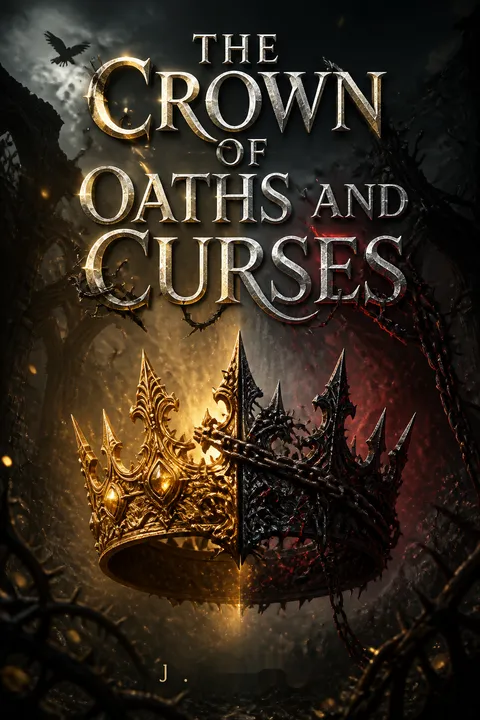
J. Bree's The Crown of Oaths and Curses is an epic fantasy that interrogates the cost of pride, the necessity of unity, and the redemptive power of sacrifice. At its heart, the novel is a meditation on fate—how it binds, wounds, and ultimately offers the possibility of healing. Through the dual perspectives of Rooke and Soren, Bree explores the psychological scars of trauma, the corrosive effects of prejudice, and the slow, painful work of reconciliation. The land's decay is both literal and symbolic, mirroring the characters' emotional wounds and the kingdom's fractured social fabric. The narrative's use of prophecy, magic, and political intrigue provides both momentum and depth, with each plot device reinforcing the central themes of agency, responsibility, and the price of renewal. In a modern context, the novel resonates as a call to confront inherited injustice, to value stewardship over domination, and to recognize that true power lies not in conquest, but in the willingness to bleed for a future that includes everyone. The cliffhanger ending underscores the ongoing nature of this struggle—healing is not a single act, but a continual process of sacrifice, forgiveness, and hope.
Review Summary
People Also Read


Characters
Rooke (Mother of Ravenswyrd)
Rooke is the last Mother of the Ravenswyrd Coven, a witch marked by loss, trauma, and an unbreakable will. Her family and coven were massacred by Kharl's forces, and she spent centuries in exile, fighting in the Northern Lands and learning the true cost of fate. Rooke is both healer and warrior, her magic tied to the land's health and her own sense of purpose. She is fiercely loyal to those she loves, but slow to trust, scarred by betrayal and prejudice. Her journey is one of reluctant leadership, as she is forced to become the savior of a people who once hunted her. Her relationship with Soren is fraught—equal parts animosity, longing, and destiny. Rooke's arc is one of transformation: from outcast to queen, from vengeance to healing, and from despair to hope.
Prince Soren Celestial (Savage Prince)
Soren is the heir to the Unseelie throne, a prince forged in war and haunted by a millennium of waiting for his fated mate. Known as the Savage Prince for his prowess and brutality, he is both protector and destroyer, shaped by loss, duty, and the curse that has decimated his people. Soren's psyche is a battleground—torn between hatred for witches and the undeniable pull of fate toward Rooke. His journey is one of humility, as he learns the limits of power, the necessity of trust, and the true meaning of leadership. Soren's development is marked by his struggle to accept Rooke, to atone for his people's sins, and to become the king his kingdom desperately needs.
Princess Airlie Celestial Snowsong
Airlie is Soren's cousin and Roan's wife, a high-fae princess whose strength lies in her resilience and compassion. She endures the curse's cruelty, losing a child and risking everything to try again. Airlie's faith in Rooke is pivotal—she is the first to see the witch's true worth and to advocate for unity. As a new mother, she embodies hope and the possibility of healing. Her relationship with Roan is a model of partnership, and her arc is one of transformation from victim to advocate, from grief to joy.
Roan Snowsong
Roan is Soren's closest friend and Airlie's husband, a prince of the Outlands and a bridge between the high fae and the lower fae. He is pragmatic, loyal, and deeply principled, often serving as the voice of reason in the midst of chaos. Roan's journey is one of survival and adaptation, as he navigates the demands of war, fatherhood, and shifting allegiances. His unwavering support for Soren and Airlie is a stabilizing force, and his willingness to trust Rooke marks a turning point in the kingdom's fate.
Tauron Celestial
Tauron is Soren's cousin and Tyton's brother, a warrior whose loyalty is matched only by his suspicion of witches. He is haunted by his own fate, which he believes promises only pain and loss. Tauron's arc is one of gradual acceptance, as he witnesses Rooke's sacrifices and begins to question the prejudices that have defined his life. His protectiveness of his family is both his strength and his weakness, and his journey is one of learning to let go of hate.
Tyton Celestial
Tyton is Tauron's brother, a high fae with a rare connection to magic and the land. He is tormented by the voices of the forest and the suffering of the earth, making him both vulnerable and uniquely valuable. Tyton's relationship with Rooke is complex—he is the first to sense her true power and to participate in the rites that begin the land's healing. His arc is one of self-acceptance and the harnessing of his gifts for the greater good.
Reed Snowheart
Reed is a soldier loyal to Roan and the Outlands, initially wary of Rooke but gradually won over by her actions and integrity. He serves as a bridge between the high fae and the lower fae, and his willingness to learn and adapt is emblematic of the kingdom's potential for change. Reed's arc is one of growth, as he moves from suspicion to respect, and from obedience to independent judgment.
The Goblin King (Briarfrost)
The Goblin King is a powerful and enigmatic figure, respected by his people and feared by the high fae. He recognizes Rooke as the last Ravenswyrd Mother and offers her sanctuary and aid, forging a crucial alliance. His motivations are pragmatic but not without honor, and his respect for tradition and the land's balance makes him a vital counterpoint to the high fae's arrogance. His role is that of a kingmaker, his support tipping the scales in the kingdom's favor.
Kharl Balzog (High Witch)
Kharl is the mastermind behind the war, the curse, and the corruption of the witches. He is a figure of immense power and cunning, driven by hatred and a desire to rewrite fate itself. Kharl's psyche is twisted by ambition and the trauma of his own past, and his manipulation of others is both his strength and his undoing. His arc is one of hubris—believing himself above the Fates, only to be brought low by the very destiny he sought to escape.
Princess Sari Celestial
Sari is the regent's daughter, raised in privilege and ignorance but not without empathy. Her journey is one of awakening, as she witnesses the kingdom's suffering and begins to question her father's rule. Sari's relationship with Rooke and the other women of the court hints at the possibility of a new generation unburdened by old hatreds. Her arc is one of potential—her choices may shape the future of the Southern Lands.
Plot Devices
Fate and Prophecy
The narrative is structured around the inescapable decrees of the Fates, with both Rooke and Soren bound by prophecies that dictate their union and the kingdom's salvation. The tension between free will and destiny is a constant undercurrent, with characters struggling to accept, resist, or reinterpret the paths laid before them. The breaking and fulfillment of fate serve as both plot engine and thematic core, with the consequences of defiance (the curse, the war, the Ureen) providing stakes and foreshadowing.
Dual Perspectives and Internal Conflict
The story alternates between Rooke and Soren's perspectives, allowing for deep psychological exploration and the gradual unraveling of prejudice, trauma, and longing. Their internal conflicts—Rooke's grief and mistrust, Soren's pride and self-loathing—mirror the external conflicts of war and political intrigue. This duality is reinforced by the structure of the narrative, with each character's arc serving as both foil and complement to the other.
Magic as Metaphor and Mechanism
Magic in the novel is both a literal force and a metaphor for connection, sacrifice, and healing. The land's decay mirrors the characters' emotional wounds, and the restoration of magic is tied to acts of selflessness, ritual, and reconciliation. The use of shields, scepters, and rites provides both spectacle and symbolic weight, with each act of magic carrying consequences for the individual and the collective.
Political Intrigue and Social Hierarchy
The Unseelie Court's laws, traditions, and rivalries create a backdrop of intrigue and danger. The tension between high fae, witches, goblins, and lower fae is explored through alliances, betrayals, and shifting loyalties. The regent's machinations, the Goblin King's bargains, and the court's resistance to change all serve as obstacles to unity and healing, with the personal stakes of the main characters reflecting the broader social struggles.
Sacrifice and Redemption
Acts of sacrifice—whether magical, emotional, or physical—are central to the plot's progression. Rooke's willingness to bleed for the land, Airlie's risk in childbirth, and Soren's surrender to fate all serve as catalysts for transformation. Redemption is hard-won, requiring the characters to confront their own failings and the sins of their ancestors. The theme of sacrifice is reinforced through foreshadowing (the cost of breaking fate, the need for blood to heal the land) and the cyclical structure of the rites and seasons.
The Mortal Fates Series
About the Author
Other books by J. Bree




Download PDF
Download EPUB
.epub digital book format is ideal for reading ebooks on phones, tablets, and e-readers.








































