


Plot Summary
Prologue
Ten years before the story proper, under a blood moon, thirteen-year-old Ayleth1 creeps through Stonehaven's halls to her sister Rhea6's room on the night before Rhea6's Ascension ceremony. Rhea,6 calm and beautiful where Ayleth1 is awkward and anxious, draws a knife and carves a simple triangle rune into both their palms below the ring finger.
The three crossed lines drift apart and come back together, Rhea6 explains, just like the two of them: sisters who will always find their way back to each other, no matter how distant they become. Ayleth1 clings to the promise, but even as she echoes the word sisters like a spell, a deep premonition whispers that something is coming, something no magic can hold back.
This prologue establishes the emotional core of the entire book: Ayleth's desperate, almost worshipful love for Rhea and her conviction that she is the lesser sister. The triangle rune functions as both a literal magical bond and a psychological symbol of Ayleth's inability to see herself as whole without Rhea. Rhea's calm authority versus Ayleth's insecurity foreshadows the dynamic that will haunt Ayleth after Rhea's death, when Mother and the coven constantly measure her against her sister's ghost. The blood moon, described as a welling puncture wound, introduces the book's gothic sensibility and hints at the wound Ayleth herself will become: something ruptured, bleeding, and dangerously open to forces from beyond the Veil.
The Failed Ascension
On the night of her Ascension, Ayleth1 stands before the coven fire in her white shift, the knife trembling in her hand. As the witches sing and the blood moon glares overhead, she sees a figure form in the flames: Rhea,6 her dead sister.
Without hesitating, Ayleth1 plunges both hands into the fire and grips Rhea6's smoke-like fingers. She pulls, feeling color rush into Rhea6's skin. Lightning fractures the sky and strikes the fire. Ayleth1 is hurled backward. Rhea6 vanishes.
When Ayleth1 looks at her palms, she finds two new triangle marks burned into her flesh, mirroring the rune Rhea6 once carved. The other Heirs whisper of Malum. Mother5 slaps Ayleth1 across the face and drags her away, insisting the apparition was a dark force using her memories. That night, Ayleth1 flees toward the White City.
This scene is the book's true inciting incident, collapsing Ayleth's grief, guilt, and desperate love into a single catastrophic act. Her willingness to plunge her hands into fire without feeling pain reveals someone so consumed by loss that self-preservation has ceased to matter. The community's immediate interpretation, that any contact beyond the Veil must be Malum, exposes how rigid coven orthodoxy has become: even a sister's love is suspect if it transgresses boundaries. Mother's slap is the definitive rupture in their relationship, the moment Cassandra chooses the coven's judgment over her daughter's experience. The two new marks symbolize that Ayleth is now doubly bound: to Rhea and to whatever came through with her.
Mother's Cold Scrying
Cornelius, Mathilde9's crow, guides Ayleth1 through forests and over mountain ranges toward the White City. Days into the journey, Mother5's silver-eyed raven intercepts her, demanding she scry immediately. Ayleth1 kneels beside a stream, cuts her palm, and speaks the summoning spell.
Mother5's face forms in the water, furious. She orders Ayleth1 to return, insisting her power will manifest after a proper Ascension. Ayleth1 asks the question she has carried for seven years: if she were any other witch, would Mother5 even care that she left?
Mother5 dodges. Ayleth1 makes a final demand: say you want me home for me, not for my position, and I will come back. Mother5 responds only that Ayleth1 is a descendant of Millicent. Ayleth1 severs the connection, murmuring that soon she will not be Mother5's problem anymore.
The scrying crystallizes the book's central relational tragedy: Cassandra loves Ayleth but can only express that love through the language of duty, lineage, and position. Ayleth, in turn, interprets this as rejection of her very self. The scene is a negotiation that both parties are doomed to lose because they speak incompatible emotional languages. Ayleth's demand for unconditional love is reasonable but strategically naive; Cassandra's inability to provide it is heartbreaking but psychologically consistent with a woman who lost her own mother to the war and her eldest daughter to iron poisoning. The stream, a liminal space between them, carries blood and words but cannot bridge the deeper chasm of mutual incomprehension.
The Serpent in the Sanctum
Ayleth1 enters the White City Sanctum as an Order Sister, seeking food and shelter before infiltrating the palace. A Sanctress assigns her to a shared chamber. When Ayleth1 steps inside, the young woman changing the bed linens turns, and cobalt-blue eyes meet hers. The scent of juniper floods the room.
It is Jacquetta,2 the witch who left Ayleth1 in the forest clearing after Rhea6's death. Jacquetta2's face drains of color, then hardens. She clutches her laundry and pushes past Ayleth1 without speaking.
That night, Ayleth1 catches Jacquetta2 scrying in the courtyard with another witch, speaking of pressures from her mother and a mission she insists on completing alone. Jacquetta2 discovers Ayleth1 eavesdropping and presses a knife to her ribs, calling her just like Cassandra.5 Ayleth1 fires back that at least she is loyal to the witches who matter.
Jacquetta's reappearance inside the very institution she once rejected (the Order, its uniforms, its false goddess) signals how thoroughly the war has forced witches into impossible contortions. Both women are performing identities they despise. Their confrontation is exquisitely painful because neither can afford to show the vulnerability they both feel: Ayleth's knife-twist about loyalty masks her devastation at being abandoned, while Jacquetta's coldness conceals whatever drove her to the Sanctum in the first place. The juniper scent, a sensory ghost of their shared past, operates as an involuntary confession that their bodies remember what their words refuse to acknowledge.
The Statue's Fall
During vespers, as Ignatius4 preaches about Meira's Light, Jacquetta2 works a spell from across the chantry. The massive stone effigy of the false goddess begins to tremble, cracks racing up its base. Ayleth1 realizes the statue is about to crush the High Priest.4
Without thinking, she sprints forward and tackles Ignatius4 aside. The statue smashes into the altar exactly where he stood. Chaos erupts. Eunice, a fellow Sister, shouts that Ayleth1 saved his life. Ignatius,4 his amber eyes glittering, clasps her arm and declares she must attend the palace pageant.
Against her will, Ayleth1 becomes a celebrated heroine. Jacquetta2 later hisses that Ayleth1 has ruined her chance to strike at the Order, but Ayleth1 retorts that Jacquetta2 would have been caught and burned. Both are now bound for the White Palace together.
Ayleth's instinctive rescue of the man who hunts her kind is the first major irony in a book built on them. She is hailed as a vessel of Meira's Light by the very institution that would burn her. The scene dramatizes how survival under oppression forces complicity: Ayleth cannot let Jacquetta kill Ignatius because the fallout would expose them both, yet her intervention strengthens the Order's grip. Jacquetta's recklessness and Ayleth's pragmatism clash here, establishing their dynamic as opposing responses to powerlessness. The statue, Meira herself, nearly killing her own priest is a dark joke the novel plays straight: the Order's symbols are already turning against it.
The Dwarf in the Crypt
Now serving as Queen Sybil7's maidens, Ayleth1 and Jacquetta2 navigate the gilded cage of the White Court. Ayleth1 meets Blodwyn,8 the neglected twelve-year-old princess whose menagerie of creatures and knowledge of secret passages proves invaluable.
In the library, a small figure with kaleidoscope-colored eyes has been tracking Ayleth:1 Roland,10 a Dwarf branded with a Guild Mark that marks him as the king's3 property. He agrees to help locate the Bloodstones after Ayleth1 claims she is Millicent's descendant.
Using his enchanted keys, Roland10 leads her through walls into the royal crypt. They discover the stones were indeed set into the swords of King Reginald and his sons, but each setting is empty. Prince Tiergan's body has melted to foul black sludge. Something with clicking claws chases them out.
Roland's introduction expands the novel's political critique beyond witches to all magical beings. The Guild Mark, a brand that turns Dwarves into property, parallels the burning of witches: both are technologies of erasure disguised as divine mandate. Ayleth's lie about being a true Heir reveals how she has internalized the coven's hierarchy even as she resents it; she can only ask for help by claiming a status she does not possess. The melted prince's body is the first concrete evidence that Malum is not just thinning the Veil but actively consuming the mortal world, and the clicking claws confirm that whatever hunts Ayleth has been here long before her arrival.
The Nevenwolf's Eye
Sir Weston13's ludicrous hunt strands Ayleth1 in the forest. The king3 gives her a gold-fletched arrow. A man pursues her, forcing her up a tree, where she witnesses Jacquetta2 drawing an un-blunted arrow on the king.3 Ayleth1 hurls a rock to disrupt the shot.
After the royals leave, Jacquetta2 confronts her. Their argument detonates: Ayleth1 accuses Jacquetta2 of abandoning her after Rhea6's death. Jacquetta2 reveals she did go to the clearing that night, but someone wearing Ayleth1's face sent her away. Ayleth1 realizes it was Mother,5 using glamour magic.
Before they can process this, a Nevenwolf, a creature of Malum with raven-black fur and crimson eyes, attacks. It ignores Jacquetta2 and stalks only Ayleth.1 She charges with the blunted arrow, and her triangle marks burn as she drives it through the beast's eye. It melts.
This sequence is the book's structural midpoint, delivering two seismic revelations simultaneously. The truth about Mother's glamour rewrites seven years of Ayleth's self-narrative: she was not rejected by Jacquetta but robbed of her by Cassandra's manipulation. Yet the relief is immediately undercut by the Nevenwolf's appearance, which confirms that Malum is specifically hunting Ayleth. The beast ignoring Jacquetta proves Ayleth's deepest fear: she is the lure, the breach point. Rhea's marks burning during the kill suggests that even in death, Rhea is protecting her sister through the runic bond, a haunting and ambiguous grace.
The Banquet's Poisoned Crown
At the menagerie-themed banquet, a crown set with what appear to be real Bloodstones is displayed. Ayleth,1 desperate, watches a cloaked figure steal it during the chaos after Marion11's arrest. The countess11 collapses screaming, a runed comb tangled in her hair. Ignatius4 declares it witchcraft and has Marion11 dragged to the dungeon. King Callen,3 wearing a Nevenwolf mask with ruby eyes, forces Ayleth1 to dance.
He circles her like prey, asking what hold she has on him. Ayleth,1 terrified, whispers she is no one. A servant drops a wine bottle, breaking the spell. That night, Ayleth1 finds Jacquetta2 in the courtyard and, amid their argument, almost kisses her. A scream interrupts them. Marion11's downfall has begun, and Ayleth1 knows she is next.
Marion's arrest demonstrates the court's cannibalistic nature: the same people who envied and feared her yesterday condemn her today with equal fervor. The runed comb is a planted piece of evidence that proves someone at court understands witchcraft well enough to weaponize it, though Ayleth does not yet know who. The king's dance with Ayleth, his body pressing hers while wearing the mask of the very creature stalking her, externalizes their connection through Malum. His question, what hold she has on him, unconsciously names the tether between them that Ayleth has felt since their first meeting. She is no one, she answers, and in that moment she believes it: a vessel for forces she cannot control.
The Hedge Maze Gambit
The king3 summons Ayleth1 to the hedge maze center, where a Dwarvian fountain depicts Braxos's two possible lives: peasant or king. Callen3 explains that his father taught him to master every twist of the maze until he could trap his brothers instead of being trapped.
Court, he says, is the same. He produces the gold-fletched arrow Ayleth1 used to kill the Nevenwolf, its shaft blackened with tar. He believes Meira guided her hand. He does not know she is a witch; he thinks she is a vessel of divine Light.
Gripping her throat, he demands her complete loyalty, promising to make the world spin around her. Ayleth1 refuses. Alone afterward, she sees her reflection in the frozen fountain shift into something feral and smiling. She beats the ice until her hands bleed.
The hedge maze is a masterful piece of spatial psychology: its twisting paths literalize the court's labyrinthine power dynamics, where every choice leads either to a trap or a throne. Callen's childhood story reveals him as a product of cruelty who learned to reproduce it, yet his genuine belief that Ayleth is divinely sent complicates him beyond simple villainy. He is, tragically, reaching for something like salvation through her. Ayleth's feral reflection is the book's first unmediated glimpse of what Malum is cultivating within her: not just a possession but a transformation. She is becoming something that frightens her as much as it attracts her.
The Queen's Final Breath
Queen Sybil,7 visibly dying from thornapple poisoning, speaks in fragments about ravens, blood in snow, and a sister she once had. She tries to show Ayleth1 something hidden, rifling through drawers, but a low growl fills the chamber. The temperature plummets.
Shadows slither from corners as clicking claws approach. Ayleth1 grabs the queen's7 shoulders, desperately calling on Rhea6's marks to protect her. Instead, the darkness swarms. Shadows dive into Sybil7's mouth, lifting her body, squeezing until she goes limp. Black liquid seeps from her lips.
Her eyes, solid obsidian, stare at nothing. Ayleth,1 who was touching the queen when Malum struck, believes she channeled the killing force. She flees to Jacquetta,2 consumed by the certainty that whatever lives inside her murdered the only mortal who showed her genuine kindness.
Queen Sybil's death is the book's darkest psychological turn because it convinces Ayleth that her very touch is lethal. The queen's cryptic references to ravens, blood, and snow form a puzzle that will only be solved later, but in the moment they read as the ravings of a poisoned mind. The shadow attack physically enacts what Ayleth has feared since her Ascension: that Malum is not just following her but acting through her. Her desperate plea to Rhea fails because, as Mathilde will later explain, intent matters in magic. Sybil's death is not Ayleth's doing, but she will carry the guilt until she learns otherwise.
Confession in Moonlight
Ayleth1 collapses in their bedchamber, confessing everything: she is not gifted, never made a vow, reached beyond the Veil for Rhea6 and let Malum enter her. She killed the queen.7 She is broken and cursed. Jacquetta2 listens, then offers her own confession. She knew, deep down, that it was not Ayleth1 who met her in the clearing seven years ago.
She sensed the glamour but walked away anyway, because she was terrified of how fiercely she wanted Ayleth.1 She has been a coward. Ayleth1 asks if Jacquetta2's feelings have passed. They have not. The two witches kiss, then make love, the years of separation burning away in the dark. For the first time since Rhea6 died, Ayleth1 does not feel alone. She feels chosen.
This is the emotional climax of the book's central relationship, and it works because both confessions involve equal vulnerability. Ayleth exposes her deepest shame (powerlessness, contamination by Malum) while Jacquetta exposes hers (cowardice, self-protective cruelty). The symmetry of their admissions dissolves the adversarial dynamic they have maintained since the Sanctum. Jacquetta's revelation that she sensed the glamour is particularly devastating because it means her abandonment was not a mistake but a choice rooted in fear, not indifference. Yet Ayleth, who has spent seven years believing she was unlovable, receives this truth as strangely liberating: Jacquetta did love her. The choice to love again anyway is the book's most hopeful moment.
The Note Left Behind
Ayleth1 scries with Mother,5 who unexpectedly agrees to gather the Heirs and permit Nerissa's coven to meet. Mother5 tells Ayleth1 she is her heart, a phrase Ayleth1 has not heard since childhood. But on the morning of Queen Sybil7's funeral, Jacquetta2 vanishes.
Ayleth1 finds a note on her bed: two words. I'm sorry. Guards storm the suite. Ignatius4 presents a letter sent to the king,3 written in Jacquetta2's hand, accusing Ayleth1 of witchcraft. A grimoire is discovered among Ayleth1's belongings.
The king's3 gray eyes hold none of their former desire, only cold, betrayed fury. Ayleth1 is dragged to the dungeon. In the darkness, she pieces together the truth: Jacquetta2 seduced her, earned her trust, and used her to gain leverage over the Heirs. Everything between them was a weapon.
Jacquetta's betrayal is the book's most brutal turn because it weaponizes the very intimacy the previous chapter built. The note, only two words, echoes the silence Jacquetta left in the clearing years ago: an inadequate apology for an unfathomable wound. Ayleth's realization in the dungeon is not just anger but a systematic dismantling of every tender moment she shared with Jacquetta, reinterpreting each kiss, each confession, as calculated manipulation. Yet the reader, like Ayleth, is left with an uncomfortable question: if Jacquetta's feelings were entirely fabricated, why did she confess her cowardice? The ambiguity is the wound's edge, and it festers through Ayleth's imprisonment.
Home in Ashes
Roland,10 summoned by Nettle,14 rescues Ayleth1 from the dungeon after three days. She rides hard for Stonehaven, expecting to find battle or ruin. Instead, the Sanctum stands empty. Mother5 ordered the coven to destroy what they could not carry and abandon the site.
Only Mathilde9 remains, dying slowly. Over the days that follow, Mathilde9 shares her own history: she was once a coven witch who fell in love with a mortal man. When her coven refused to accept him, she left, choosing love over position. She became Wayward.
She insists Ayleth1 is not broken, that intent matters in magic, and that choice itself is a kind of power. Mathilde9 dies peacefully. Ayleth1 buries her beneath vines of midnight flower. Then Jacquetta2 rides through the gates, alone. Ayleth1 puts a knife to her throat.
Mathilde functions as the anti-Mother: where Cassandra demanded Ayleth conform to receive love, Mathilde offers acceptance without conditions. Her story reframes Waywardness not as rejection of community but as a positive choice to prioritize love over institutional belonging. The lesson that intent matters in magic plants a seed Ayleth will only fully understand later: she reached for Rhea out of love, not hunger for power, and that distinction matters. Mother's abandonment of Stonehaven is the final, definitive proof that the coven's hierarchy values bloodlines over people; they did not even wait for Ayleth to return. The abandoned Sanctum becomes a tomb for Ayleth's old self.
Jacquetta's Second Confession
Jacquetta2 does not flinch from the blade. She explains that Nerissa wanted Ayleth1 as leverage to force the Heirs' cooperation. Jacquetta2 only learned this after their scrying. She stayed near the palace, ensuring Ayleth1 was safe, and planned to free her.
But Cassandra5 abandoned Stonehaven, the Heirs scattered, and the plan collapsed. Jacquetta2 came back for Ayleth.1 When Ayleth1 demands to know if Jacquetta2 loves her, Jacquetta2 pauses. She calls herself a coward. She mounts her horse and rides away, not looking back.
Alone, Ayleth1 makes a decision: she will return to the White Palace, find the Bloodstones, and shatter them. Let Malum flood the realm. Let Mother5 and Jacquetta2 and every witch who rejected her watch their world crumble. The darkness inside her thrums in agreement.
Jacquetta's second departure is in some ways crueler than her betrayal because it occurs in full knowledge and daylight. She admits she loves Ayleth but cannot choose her over duty to her coven and mother. The parallel to Cassandra is devastating: both women Ayleth has loved most have prioritized institutional loyalty over her. This is the breaking point that transforms Ayleth's grief into rage and her passivity into agency. Her decision to destroy the Bloodstones is not just vengeance but a philosophical rejection of everything the covens represent: hierarchy, exclusion, the hoarding of power. If love cannot save her, destruction will have to suffice. The darkness inside her, once a source of terror, now feels like an ally.
Ignatius Unmasked
Joan12 helps Ayleth1 re-enter the palace. In the queen's7 ransacked chambers, Ayleth1 uncovers hidden pages: Dwarvian records tracking the Bloodstones, a map circling Ignatius4's rooms, and ancient illustrations of Ignatius4 spanning centuries. Before she can flee, Ignatius4 captures her.
She wakes in his underground lair, a workshop of dark grimoires, pinned animals, and mirrors. Marion11 is there, her eyes silvered and vacant, bound to a mirror with her heart trapped behind glass. Ignatius4 reveals the truth: he is a centuries-old witch shunned by the covens.
He orchestrated the Night of Flames, stole the Bloodstones, created the Eye rune to siphon all witches' power across the realm, and has been feeding off that stolen magic ever since. The war, the edict, the burnings, all of it was engineered by him.
Ignatius's unmasking recontextualizes the entire history of the Covens' War as a single witch's revenge plot. The Eye of Meira, the symbol under which countless witches have been murdered, is literally a rune designed to drain their power into his Bloodstones. This revelation transforms the book's political critique from diffuse systemic oppression to identifiable villainy while preserving the systemic dimension: the covens' rigid hierarchy and exclusion of Wayward witches created the resentments Ignatius exploited. Marion's fate, her heart locked in a mirror while her body performs obedient labor, is a grim preview of what Ayleth will later do to the king, establishing a chilling continuity between villain and protagonist.
It Must Be Undone
Ignatius4 offers Ayleth1 a pact. He summons Rhea6 from beyond the Veil through a mirror, using the Bloodstones as anchor. Together, Ayleth1 and Rhea6 could bind their magic to the stones, fueling the Veil eternally and keeping Rhea6 in the living world. Ayleth1 is tempted.
She has wanted her sister back for seven years. But Rhea6's hand seizes Ayleth1's wrist. Her hollow eyes focus. Her voice echoes inside Ayleth1's skull: It must be undone. She looks pointedly at the Bloodstones. Ayleth1 understands.
Rhea6 does not want to be anchored; she wants the cycle broken. Ayleth1 lifts a heavy pestle and smashes the Bloodstones. The Veil shatters. Malum rushes into her as a chosen power, not a possession. Ignatius4 withers to a husk. Ayleth1 commands the Nevenwolf to tear out his heart.
Rhea's final intervention reinterprets everything. It must be undone refers not to Rhea's death but to the entire system the Bloodstones uphold: the Veil, the covens' hierarchy, the separation of magic into sanctioned and forbidden. Rhea, who in life was the perfect Second, reveals in death that she wanted liberation, not restoration. Ayleth's choice to smash the stones rather than use them is her definitive break from seeking external validation. Malum flooding into her not as possession but as chosen power completes her transformation arc: where she once suppressed and feared her darkness, she now embraces it as a source of agency. Ignatius's instant decay proves that stolen immortality is no match for authentic, chosen power.
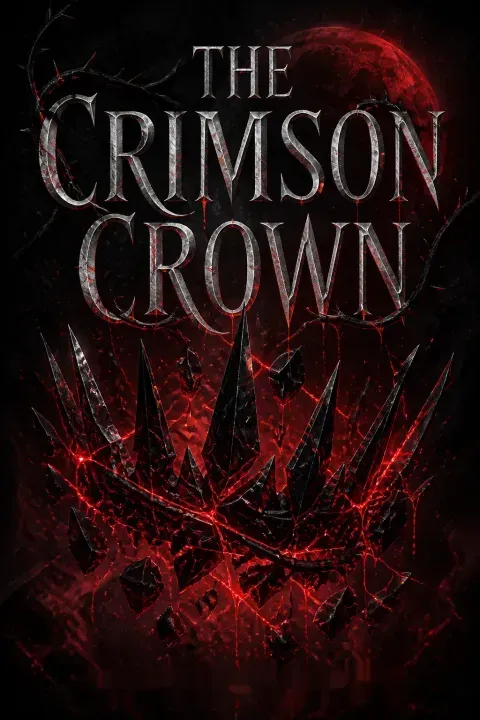
The Crimson Crown
Shadows answer Ayleth1's call. She summons wraiths of the women Callen3 used and discarded: Marion,11 Sybil,7 and countless others. They circle him as he stumbles through the lair. When Ayleth1 steps from the darkness, Callen3 falls to his knees, begging, offering anything. She demands his heart. With Mother5's runed knife, she carves into his chest while he still lives, extracting the beating organ.
She feeds it to the mirror, trapping him behind glass as an eternal slave, just as Mother5 did with her raven. The Bloodstone shards are knit by shadows into a crown that settles on her brow, dripping crimson like freshly shed blood. Ayleth1 faces the mirror, her reflection now a queen wreathed in darkness, and speaks the words that seal her reign.
The final scene is a dark inversion of the Snow White fairy tale: the queen asks the mirror who is fairest, but this queen has earned her crown through violence rather than vanity. Ayleth's use of Mother's knife to perform the heart extraction is a grim homecoming: she has become the witch Cassandra always feared she would be, but on her own terms. Binding Callen to the mirror mirrors Mother's raven but transfigures the act from desperate survival to deliberate conquest. The Bloodstone crown, assembled by shadows, symbolizes that Ayleth's power derives not from the Ancients' legacy but from the force they sought to contain. She is not an Heir. She is something new. The reign of the Witch Queen has begun.
Analysis
The Crimson Crown operates as a dark fairy tale told from the witch's perspective, systematically inverting the Snow White mythos to expose the violence beneath its romantic surface. Ayleth1 begins the novel defined by lack: lack of power, lack of worth, lack of love. Her journey is not the traditional hero's ascent to deserved glory but a descent into acknowledged darkness that paradoxically becomes her liberation. The book argues, with considerable psychological sophistication, that the covens' rigid hierarchy of Heirs, Seconds, and Bloodstones is not meaningfully different from the Order's Eye rune: both are systems of extraction that demand conformity and punish deviation. When Ayleth1 shatters the Bloodstones, she is not destroying order but exposing that the order was already corrupt, already failing, already built on stolen power.
Review Summary
The Crimson Crown is a dark, sapphic reimagining of Snow White's Evil Queen. Readers praised the atmospheric worldbuilding, complex characters, and satisfying ending. Many found the pacing slow and repetitive, with a lackluster romance. The villain's transformation felt rushed for some. Despite mixed opinions on execution, most appreciated the unique take on the fairy tale and Walter's writing style. Fans of the author's previous work and those who enjoy queer fantasy retellings found it compelling, while others felt it dragged and could have been shorter.
Characters
Ayleth
Witch Queen ascendantThe youngest daughter of Cassandra5, High Witch of Stonehaven, and descendant of the Ancient Millicent. Ayleth has spent her life in the shadow of her perfect older sister Rhea6, whose death during a Hunt raid shattered her. She possesses no measurable magical gift, a secret that shames her deeply. Her defining drive is the desperate belief that she is not enough: not talented enough, not brave enough, not worthy of love. This void makes her vulnerable to both manipulation and transformation. Throughout the story, she evolves from a guilt-ridden young woman fleeing her failed Ascension into a figure of terrifying agency who chooses darkness not as a curse but as a crown. Her emotional arc traces the path from seeking external validation (from Mother5, from Rhea6, from Jacquetta2) to claiming sovereignty over her own identity and power.
Jacquetta
Lover and betrayerA witch from a coven that rejected the Ancients' hierarchy and the Bloodstones. She and her mother Nerissa came to Stonehaven when Jacquetta was sixteen, fleeing a Hunt raid. Jacquetta was Ayleth1's first love and the only witch who never compared her to Rhea6 or cared about her lack of magical talent. After Rhea6's death and the coven's fracture, Jacquetta left Stonehaven, and a glamour crafted by Cassandra5 convinced her that Ayleth1 had chosen duty over love. She arrives at the White Palace with her own mission to assassinate the king3 and end the war on her coven's terms. Fiercely independent yet emotionally guarded, she vacillates between cold pragmatism and deep, terrified love for Ayleth1. Her central conflict is between loyalty to her mother's cause and her feelings for the one witch she has never been able to forget.
King Callen
Predatory White KingThe reigning monarch of Riven, a third son who never expected to inherit the throne. Callen learned survival in a brutal court by mastering the arts of manipulation and control, as he once mastered the hedge maze to trap his cruel older brothers. He is drawn to Ayleth1 with an intensity he believes is divine, seeing in her a vessel of Meira's Light destined to stand beside him. His attraction is entangled with the Malum that dwells within her, creating a fate-line connection between them. He consumes people: his mistresses, his wife7, his courtiers. He uses them until they are hollow, then discards them. His genuine belief in his own righteousness makes him more dangerous than a simple tyrant; he truly thinks he is the realm's savior.
Ignatius
Immortal false priestThe High Priest of the Order of Meira is, in truth, a centuries-old witch who was rejected by the covens and has spent ages exacting revenge. He orchestrated the Night of Flames that ignited the Covens' War, stole the five Bloodstones, and created the Eye rune, a symbol worn by millions, that secretly siphons witches' magic to feed his own power. He wears the face of a middle-aged man through stolen glamour magic, but beneath it he is ancient and withered. His underground lair beneath the White Palace is filled with dark grimoires and mirrors containing the hearts of those he has bound as slaves. He sees in Ayleth1 a potential partner, another witch rejected by the coven fire, and offers her everything she thought she wanted.
Mother Cassandra
High Witch of StonehavenAyleth1's mother and Millicent's Heir. Cassandra is a brilliant Caster whose illusion magic saved Stonehaven from the Hunt by making them believe the coven was already destroyed. After Rhea6's death, she became cold and demanding, measuring Ayleth1 against her dead sister at every turn. She cannot express love outside the language of duty, lineage, and position. Her decision to use a glamour to drive Jacquetta2 away from Ayleth1 was an act of protective cruelty that shattered her daughter's heart. Despite everything, she genuinely loves Ayleth1, but that love is so entangled with her identity as Heir that she cannot offer it unconditionally. When forced to choose between the other Heirs and Ayleth1, she makes a surprising decision.
Rhea
The dead sisterAyleth1's older sister, the perfect Second and Heir who died from iron poisoning during the Hunt's raid on Stonehaven. Rhea was everything Ayleth1 is not: talented, beautiful, poised, and certain of her place in the coven. She carved the triangle rune into both their palms on the night before her Ascension, promising they would always find their way back to each other. In death, she appears to Ayleth1 in the coven fire and later through mirrors, always speaking the cryptic phrase it must be undone. Her true meaning becomes clear only at the climax: she wanted the entire system of Bloodstones and hierarchy dismantled, not restored. She protects Ayleth1 from beyond the Veil through the runic bond.
Queen Sybil
The caged queenThe queen of Riven, a foreign-born royal who came to the White Palace as a young bride and has spent decades navigating its viperous politics. Unlike her husband3, she is kind, perceptive, and quietly subversive. Her chambers are decorated with tapestries of warrior queens rather than Order iconography. She has been secretly investigating the Bloodstones, the High Priest4's unnatural longevity, and the true history of the war. Her relationship with the king3 is cold and performative; her real devotion is to her daughter Blodwyn8. She dies from thornapple poisoning and Malum's attack, but the papers she hid behind a tapestry become the key to Ayleth1's final discoveries.
Blodwyn
The feral princessThe twelve-year-old daughter of King Callen3 and Queen Sybil7. Neglected by her father3, who wanted sons, and doted on by the mother7 who is slowly being poisoned, Blodwyn has carved out a kingdom of her own within her menagerie. She trains her pets to make messes, explores the palace's secret passages, and speaks with startling directness. Her bond with Ayleth1 is one of the few genuine relationships in the book; she sees Ayleth1 as a fellow outsider who does not treat her as a pawn. Her knowledge of the hidden passages proves crucial to the plot. She represents the possibility of a different kind of ruler, one raised among animals and books rather than court intrigue.
Mathilde
Wayward mentorA blind, elderly Wayward witch who arrives at Stonehaven just before Ayleth1's Ascension. She never bound herself to a coven because she chose to leave her original coven for love of a mortal man. Her magic is untethered to any Ancient's affiliation, yet she is powerful in her own right, reading fates through a string of teeth. She is accompanied by Cornelius, a crow she never bound as a familiar by choice. She becomes Ayleth1's unexpected mentor, teaching her that choice itself is magic, that intent matters more than ritual, and that being Wayward is not a lack but a different kind of freedom. Her death and burial mark Ayleth1's final severance from her old life.
Roland
Enslaved Dwarf allyA Dwarf from the northern Mines, now branded with a Guild Mark that marks him as the king's3 property. He specializes in enchanted mirrors. Resentful of witches for their historical indifference to Dwarvian suffering, he initially refuses to help Ayleth1 but is persuaded by her claim to be Millicent's descendant. His enchanted keys can summon doors through solid walls, allowing passage through a magical void between spaces. He is gruff, sarcastic, and perpetually annoyed by the danger Ayleth1 brings, yet he rescues her twice: once from the crypt and once from the dungeon. His loyalty, once given, is absolute.
Marion
Framed courtierThe king's3 longtime mistress, a countess whose beauty and cunning have kept her at the apex of court power for years. She treats Ayleth1 as a threat from the moment they meet, using her social position to humiliate and undermine the new maiden. She names her dog Fitz, a deliberate slight against the queen7. Her arrest for witchcraft, framed by a runed comb planted in her hair, reveals the court's cannibalistic nature: the same nobles who courted her favor yesterday condemn her today. Her fate, bound to Ignatius4's mirror with silvered eyes and a trapped heart, becomes a grim warning of what the powerful do to those who fall.
Joan
Loyal court friendA young woman of the queen's7 household with Dwarvian ancestry in her family line. Because of this heritage, other courtiers treat her as an outsider despite her noble birth. She has hidden depths: she knows how to pick locks, find contraband, and navigate the palace's secret spaces. She becomes a genuine friend to both Ayleth1 and Jacquetta2, refusing to betray them even after learning Ayleth1 is a witch. Her own love for Lady Anora, kept secret because same-sex relationships are now dangerously close to coven associations, mirrors the closet of magical identity that Ayleth1 and Jacquetta2 inhabit. She agrees to help Ayleth1's final mission despite the mortal danger.
Sir Weston
Lord of MisruleThe king's3 closest companion and the court's master of revels. He devises the games, pageants, and hunts that entertain the nobility, treating everything from jousting to the Nevenwolf hunt as elaborate sport. He understands court as a game of Castles, warning Ayleth1 to learn the stakes and the hidden bets. His loyalty to Callen3 is genuine, but his moral compass is blunted by years of proximity to absolute power. He is charming, dangerous, and perceptive in ways that make him unpredictable.
Nettle
Unbound familiar catA dark calico cat Ayleth1 rescued as a kitten from the forest and refused to bind with magic, wanting her companionship to be a choice rather than a compulsion. Nettle is fiercely independent, often disappearing for days, but always returns at critical moments. She attacks Ayleth1's enemies with strategic precision, shredding linens and stealing food. She follows Ayleth1 from Stonehaven to the White City and ultimately to the palace, her presence a constant thread of loyalty. Her refusal to be controlled mirrors Ayleth1's own resistance to the covens' expectations, making her both a companion and a symbol.
Plot Devices
The Bloodstones
Veil anchors and power sourcesFive living vessels forged from the blood of the Five Ancients during the original ritual that created the Veil, the barrier between realms holding Malum at bay. Each stone is a roughhewn red oval flecked with green and black, containing the latent magic of its respective Ancient. The Heirs traditionally gather yearly to renew the stones' power. Stolen by Ignatius4 during the Night of Flames, they were set into royal swords and later pried out and incorporated into his Eye pendant. They can anchor spirits from beyond the Veil, which is why Ayleth1 believes she needs them to bring Rhea6 back. Their destruction at the climax shatters the Veil entirely, releasing Malum into the realm and severing the covens' connection to the Spirits.
The Triangle Rune
Sisterly bond across deathA simple rune of three crossed lines forming a triangle, carved by Rhea6 into both her palm and Ayleth1's on the night before Rhea6's Ascension. Unlike standard runes taught in the covens, this one works through the shared bloodline and emotional bond between the sisters. After Ayleth1 reaches for Rhea6 in the coven fire, two additional triangles appear on her palms, matching Rhea6's original mark. The runes serve as a conduit for Rhea6's protective magic from beyond the Veil, burning hot when Ayleth1 faces the Nevenwolf. They also function as a psychological anchor for Ayleth1, a physical reminder of her sister's promise that they will always find their way back to each other. Ignatius4 identifies the rune as a rare bond that rivals the magic of the Ancients themselves.
Malum
Dark force beyond the VeilThe malevolent force kept at bay by the Veil since the Age of the Covens. Before the Veil, Malum spawned shadow creatures like Nevenwolves, caused blights and plagues, and could drive entire populations mad. When Ayleth1 reaches beyond the Veil to grasp Rhea6, something of Malum enters her, settling behind her left ribs like a second heartbeat. It manifests as shadows, growls, clicking claws, and an invisible tether connecting her to the king3. As the Veil thins, more Malum seeps through. When Ayleth1 finally shatters the Bloodstones, she surrenders to Malum entirely, but instead of being consumed, she bonds with it, gaining command over shadows and Nevenwolves. The dark force transforms from a curse into her chosen power.
The Eye Rune
Siphons witches' collective powerA rune invented by Ignatius4, disguised as the holy symbol of the Order of Meira. Far from a mere emblem of faith, the Eye absorbs latent magical energy from any witch who sees it or stands near it, funneling that power back to Ignatius4 through the Bloodstones in his pendant. Because the Eye has been spread throughout Riven on Sanctums, homes, jewelry, and uniforms during the Longest Night, it has been slowly bleeding the covens dry for decades. This is why Ayleth1's power never manifested and why Jacquetta2's magic was muffled at the palace. The rune represents the book's central critique of institutional power: what appears as religious devotion is actually a technology of extraction.
Witch's Mirrors
Heart prisons and surveillanceEnchanted mirrors that require a living heart to function as their core. Mother Cassandra5 bound a raven's heart to her mirror, creating a silver-eyed bird that acts as her spy. Ignatius4 bound Marion11 and countless others to his mirrors, trapping their hearts behind glass while their bodies perform obedient labor with vacant silver eyes. At the climax, Ayleth1 carves out King Callen3's heart and feeds it to the mirror in Ignatius4's lair, binding him as an eternal slave trapped behind glass, forced to watch as she dismantles his realm. The mirrors serve as a recurring motif of control, surveillance, and the theft of agency, culminating in Ayleth1's transformation from the observed to the observer, the trapped to the trapper.
Download PDF
Download EPUB
.epub digital book format is ideal for reading ebooks on phones, tablets, and e-readers.








































