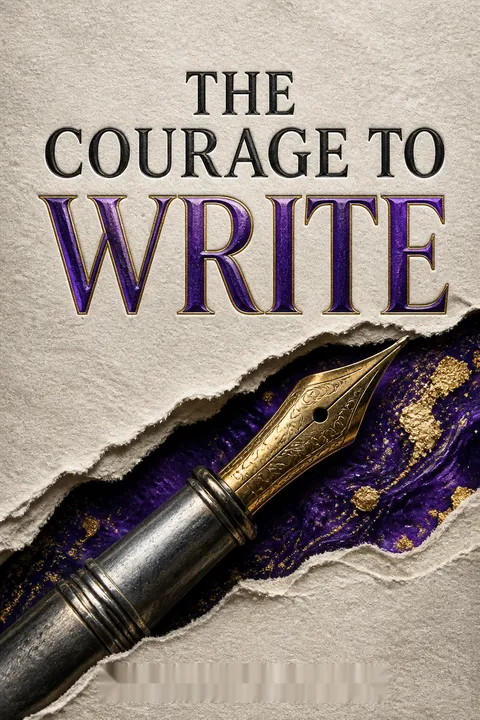

Key Takeaways
1. Anxiety is an Inherent Part of Writing
If you’re not scared, you’re not writing.
Universal experience. Anxiety is not a sign of weakness but an integral and necessary component of the writing process, felt by authors at every level. Rather than viewing it as a block, Ralph Keyes argues that anxiety can be harnessed to produce honest and disciplined work. This feeling is so pervasive that even E. B. White, known for his graceful prose, admitted to worrying over every word and rewriting pieces twenty times or more.
Disguised fears. This anxiety often manifests in various disguises, such as stomach trouble, irritability, or restlessness, making it difficult for writers to recognize its true nature. Many aspiring writers mistakenly believe their inability to write stems from a lack of skill or talent, when in reality, it's often unacknowledged fear. The book highlights that writing problems are rarely solved by technique alone; finding the nerve to say what one truly wants is paramount.
A natural habitat. For writers, a state of anxiety is their natural habitat, a constant companion from the first word to the last. It's a signal that they are taking their work seriously, pushing boundaries, and daring to do their best. Embracing this nervousness can keep writers alert, force them to focus, and drive them to work longer hours, transforming a potential impediment into a powerful source of momentum.
2. Courage is Mastery of Fear, Not Its Absence
Courage is resistance to fear, mastery of fear—not absence of fear.
Beyond fearlessness. True courage in writing isn't about being fearless, but about the capacity to perform properly even when terrified. Working writers are not those who have eliminated their anxiety; they are the ones who continue to write despite racing hearts and churning stomachs, mailing manuscripts with trembling fingers. This distinction is crucial for understanding how writers transcend their fears.
Moving ahead despite despair. Existential philosophers concur that courage means the capacity to move ahead in spite of despair, a sentiment that deeply resonates with the writing experience. Trying to deny, avoid, or eradicate the fear of writing is both impossible and undesirable, as anxiety is an inevitable and necessary part of the creative process. It's the internal struggle that fuels the external act.
Fear fuels excitement. The paradox of writing is that it is both frightening and exhilarating, with one unable to exist without the other. Writers, much like kids on skateboards, understand that fear fuels excitement, converting anxiety into enthusiasm and an unparalleled source of energy. This positive anxiety, when acknowledged and channeled, becomes a secret weapon, sharpening the mind and opening pores of perception.
3. Writers Navigate Predictable "Courage Points"
The list of writing anxieties is a long one. Think of them as courage points.
Sequential challenges. From the initial spark of an idea to the final publication, writers encounter a series of predictable "courage points" that test their resolve. These include the challenge of identifying a worthwhile project, the "page fright" of a blank sheet, the mixture of pride and panic when examining a newly published work, and the fear of ridicule from known individuals.
Initial self-doubt. The most basic fear is simply not being up to the task, wondering if one can "pull it off" or fill the page with more than gibberish. Even prolific authors like Anthony Burgess constantly feared their work wasn't good enough. This initial presumption of calling oneself a "writer" can feel daunting, leading many to delay or avoid the commitment altogether.
Post-submission funk. After mailing a manuscript, writers often experience a "postpartum funk," a deep-blue melancholy replacing anticipated elation. This period is plagued by alarming questions: Will strangers care for the literary offspring? Will it be loved or abused? This emotional trough is a normal, inevitable part of the process, requiring strategies like starting a new project or engaging in physical labor to cope.
4. The Deepest Fear is Personal Exposure
A person who publishes a book willfully appears before the populace with his pants down.
Vulnerability amplified. The act of publishing exposes writers to intense scrutiny, not just from anonymous readers but from family, friends, and colleagues. This "naked feeling" stems from the fear that readers will see right through them, discovering their innermost thoughts, flaws, or even suspecting them of faking it. John Kenneth Galbraith admitted he never wrote without thinking, "You'll be found out."
Jeopardizing relationships. Emotionally candid writing, while essential for quality, can jeopardize important personal relationships. Writers face a "literary-human bind": wanting to be open yet fearing to wound or betray those they care about. This often leads to self-censorship, producing "pallid results" that lack authenticity, as writers overprotect themselves and others.
The "censor in chief." The most potent inhibitors are specific individuals whose opinions matter most—the "censor in chief." This could be a spouse, parent, friend, or admired colleague. Their imagined disapproval can paralyze a writer, making them feel like a scowling Torquemada scrutinizing every word. Neutralizing this fear, or at least understanding its source, is a critical step toward writing freely.
5. Honest Writing Demands Inner Confrontation
Everyone has talent. What is rare is the courage to follow that talent to the dark place where it leads.
Unlocking the secret self. To write well, authors must unlock the "inner safe" where secrets are tightly held, risking their contents creeping onto the page. This exposure of one's "secret life" takes immense courage, as few are willing to let their deepest, most interesting thoughts be seen by others. This internal exploration is what Melville called "diving" deep inside.
Confronting painful truths. Writing often forces a confrontation with painful personal truths, not just revealing them to others but to oneself. Jonellen Heckler, for instance, had to reconcile her fear that writing about an extramarital affair was tantamount to having one. This journey into "dark places" is more important than psychological safety, as compelling writing emerges from strong, often uncomfortable, feelings.
The devil in the inkstand. Writers frequently find their words taking on a life of their own, diverging from their conscious intentions, as if "the devil himself gets into my inkstand." This partnership between the conscious and unconscious mind is vital, but the prospect of the uncontrolled unconscious can be disturbing. Overcoming this fear means allowing the "gremlin" to beckon, leading to authentic, powerful prose that resonates deeply.
6. Writers Employ Ingenious Tactics to Manage Fear
Find tricks to keep yourself going. Anything you can do to trick yourself out of panicking, do it.
Rituals and routines. Faced with the daunting task of writing, authors develop a myriad of idiosyncratic work habits and rituals to buck up their nerve. These range from dressing in specific attire (or none at all) to sharpening pencils, lighting candles, or even immersing feet in cold water. These seemingly odd behaviors are not mere eccentricities but ceremonial ways to confront danger's demons and create a conducive mental state.
Totems and tools. Writing implements often become totems, imbued with psychological significance that helps placate the gods of anxiety. Whether it's a specific fountain pen, an old manual typewriter, or a computer, writers develop passionate attachments to their tools. These tools provide comfort, reduce petty anxieties, and foster a sense of control, allowing writers to focus on the words rather than the fear of indelibility.
Draft dodging and procrastination. Many writers engage in "draft dodging" or "quality staring-out-the-window time" before actually putting words on paper. This procrastination, while seemingly counterproductive, can be a form of "waiting for the muse" or a strategic delay to head off full-scale panic. Tactics like "vomit-outs" or writing "any sort of rubbish" in a first draft help kick-start the literary engine without the pressure of perfection.
7. Fear Can Be Harnessed for Focus and Detail
Fear is your best friend.
Transforming anxiety. Far from being a hindrance, anxiety can be an invaluable part of the writing process, transforming into heightened alertness, observation, and even wit. Joan Didion, who described herself as "catatonically shy," made her anxiety into an art form, her writing conveying a powerful "sense of fright" that captivated readers. This "controlled panic" lifts her prose off the page.
Concentrated minds. Fear concentrates the mind wonderfully, much like stage fright for actors or pre-game nerves for athletes. This intense focus allows writers to pay meticulous attention to detail, a crucial element for vivid prose. Anxious writers are less prone to mental drift, observing the world around them with a specificity that can be compared to a schizophrenic's obsession with life's ephemera.
Flashbulb memories. The neurochemical response to fear creates "flashbulb memories," fixing even minute details of anxious settings in our minds. This heightened perception, born from danger, provides a rich source of material for writers. Bad days, moments of crisis, or unsettling experiences often yield the most lucid and compelling narratives, as the language becomes spare, direct, and unadorned.
8. Seeking Support is a Vital Courage Booster
The most important aspect of that class was that I felt I belonged somewhere.
Shared journey. While writing is often a solitary endeavor, seeking help from others—through workshops, conferences, or ongoing groups—can be a powerful courage booster. These gatherings provide a safe haven, a "hired sympathy" where aspiring writers can practice their craft, receive feedback, and realize they are not alone in their fears and struggles. Anne Sexton and Maxine Kumin's productive friendship, born from a workshop, exemplifies this.
Critique and camaraderie. Effective writing groups offer a balance of candid feedback and genuine support. Members can "try out a new poem on trained and thoughtful ears," receiving critiques that help refine their work before facing broader publication. This camaraderie, forged in shared danger, helps writers cope with the isolation and self-doubt inherent in their profession, fostering a sense of belonging and mutual encouragement.
Learning to listen. The process of sharing work and receiving feedback teaches writers to listen, to discern useful criticism from unhelpful comments, and to develop a thicker skin. While some writers, like Vladimir Nabokov, view circulating drafts as "passing around samples of sputum," others, like Amy Tan, found it invaluable for getting "real reader's response" and shaping their narratives. This systematic approach to feedback can significantly improve a manuscript.
9. Embrace the Journey: No Regrets in Daring
Regrets are usually greater for risks avoided than for those taken—even ones taken and lost.
The writer's ecstasy. Despite the inherent anxieties and challenges, writers rarely regret their chosen path. The "ecstasy" of writing, the "high of getting a paragraph to finally work," is a profound reward for the risks taken. This euphoric state, often described with sexual imagery, is a result of natural opiates like endorphins that flood the body under stress, inducing intense concentration and a feeling of "flow."
Beyond fear of looking foolish. The most universally feared risk is looking foolish, often more so than physical danger. Writers, by putting their work into the public sphere, risk making "clowns out of themselves every day." This daring profession, however, offers a unique satisfaction. Once one has "climbed that mountain" of writing, other pursuits feel less significant, fostering a lifelong engagement with challenge.
A life of extremes. Writing for a living means embracing financial insecurity and daily uncertainty, which, from an insider's perspective, can be exhilarating rather than paralyzing. This "life of extremes" keeps writers alert and engaged, preventing a "safe, monotonous dotage." The absence of a traditional boss or fixed hours means constant self-motivation, turning apprehension into a focused drive to produce.
10. Persistence and Will Outweigh Raw Talent
Talent is extremely common. What is rare is the willingness to endure the life of a writer.
The Branwell Brontë syndrome. The literary world is filled with individuals like Branwell Brontë, who possessed immense talent but lacked the will to publish, dying with their great novel unwritten. In contrast, his sisters, Charlotte, Emily, and Anne, though perhaps not more gifted, succeeded because they "actually wrote, mailed their writing, and got it published." This highlights that determination often trumps raw ability.
Maniacal determination. Successful writers are often characterized more by their pluck and persistence than by innate genius. Figures like Ken Kesey, described as "maniacally determined," or Anne Sexton, who remailed rejected poems up to fifteen times a year, exemplify this. Editors often prefer reliable writers who can consistently deliver publishable material, even if not always brilliant, over erratic geniuses.
Beyond brilliance. The hard truth for many talented aspiring writers is that brilliance and erudition are often secondary to a high tolerance for boredom and an exaggerated fear of stopping. The real terror for a working writer is not the critic's pounce, but the prospect of a "real job with a real boss and real hours." This apprehension, rather than pure inspiration, often drives them to their desks, proving that success is within reach for those willing to endure the journey.
Review Summary
Reviews of The Courage to Write are generally positive, averaging 4.02/5. Many readers appreciate Keyes's use of anecdotes from well-known writers to normalize the fear and anxiety surrounding writing, finding comfort in knowing they aren't alone. Some find it deeply inspiring, while others feel it validates fears without providing enough practical strategies to overcome them. Critics note it leans more toward inspiration than instruction, and that some content feels dated. Overall, most writers find it a worthwhile, honest companion for navigating the emotional challenges of writing.
People Also Read

Download PDF
Download EPUB
.epub digital book format is ideal for reading ebooks on phones, tablets, and e-readers.








































