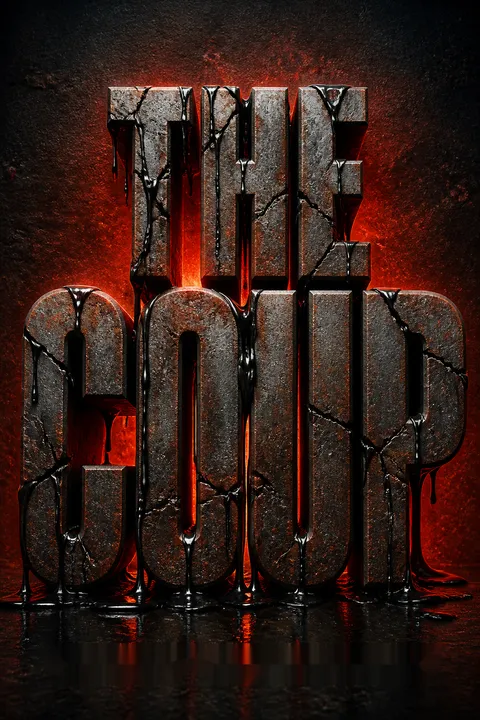

Key Takeaways
1. The 1953 Coup: A Defining Fault Line in US-Iran Relations
These twenty-eight months form a defining fault line not only for Iranian history but also in the country’s relations with both Britain and the United States.
Root of Hostility. The 1953 coup, orchestrated by the CIA and British Secret Intelligence Service (MI6), fundamentally reshaped modern U.S.-Iranian relations, laying the groundwork for the autocratic rule of Muhammad Reza Shah Pahlavi and fueling decades of mutual animosity. This event is seen by many Iranians as a betrayal, transforming the U.S. from a perceived "honest broker" into a "world-devouring arrogant Satan." The coup's aftermath directly contributed to the humiliating 1979–80 hostage crisis and continues to influence contemporary geopolitical tensions, including disputes over Iran's nuclear ambitions.
Challenging Narratives. The conventional Western narrative often attributes the failure of negotiations to Mossadeq's "intransigence" or "psychological makeup." However, this adaptation argues that compromise was unattainable because the core issue was not merely profit-sharing but the fundamental question of who would control Iran's vast oil industry. The book challenges the notion that Britain negotiated in good faith or that the U.S. acted as a neutral mediator, instead positioning the coup within the broader conflict between imperialism and nationalism.
Beyond the Cold War. While often framed as a Cold War imperative to prevent Iran from falling to communism, the book contends that the primary concern for both the U.S. and the UK was the dangerous precedent oil nationalization could set globally. The fear was that if Iran succeeded, other resource-rich nations, from Indonesia to South America, would follow suit, threatening Western control over vital raw materials and global markets. This economic and geopolitical calculation, rather than an immediate communist threat, drove the decision to overthrow Mossadeq.
2. AIOC's Exploitation Fueled Deep Anti-British Sentiment
The specific grievances against the company cannot be separated from the general animosity toward the British Empire.
Colonial Legacy. The Anglo-Iranian Oil Company (AIOC), formed from the 1901 D'Arcy Concession, became a symbol of British imperial exploitation, deeply resented by the Iranian populace. Despite its immense profits and strategic importance to the British Empire—providing substantial revenue and fuel for the Royal Navy—AIOC's practices in Iran were widely seen as unjust. This included:
- Meager royalties (e.g., £13.5 million to Iran vs. £22.8 million in British taxes in 1949).
- Opaque accounting and refusal to adopt 50/50 profit-sharing deals common elsewhere.
- Discriminatory labor practices, poor housing for Iranian workers, and limited promotion opportunities for nationals.
- Extensive political meddling, influencing local appointments and tribal chiefs.
Deep-Seated Distrust. Anti-British sentiment had simmered for decades, rooted in Iran's history as a pawn in the "Great Game" between Russia and Britain. Events like the 1907 Anglo-Russian Agreement partitioning Iran, the 1919 Anglo-Persian Agreement (which would have made Iran a vassal state), and the perceived manipulation of Reza Shah's 1933 oil concession fueled a pervasive "paranoid style" in Iranian politics, where a "hidden British hand" was suspected behind most national misfortunes.
Labor Unrest. The AIOC's exploitative labor conditions frequently erupted into massive strikes, notably in 1929 and 1946, often coordinated by the underground Communist (Tudeh) Party. These strikes, met with military force and mass arrests, highlighted the deep-seated grievances and the company's intransigence. A British labor attaché even admitted that workers viewed the Tudeh as their "defenders," and that the company's "diehards" failed to appreciate the daily problems of workers, contributing to the volatile atmosphere that eventually led to calls for nationalization.
3. Mossadeq: The Uncompromising Icon of Iranian Nationalism
For all Iranians—admirers and deprecators—he [Mossadeq] was the lodestone, the magnetic field, the lightning rod that lay both chronologically and intellectually at the center of Iranian politics of the twentieth century.
Patrician Patriot. Muhammad Mossadeq, a scion of an old aristocratic family with deep ties to the Qajar dynasty, emerged as the embodiment of Iranian nationalism. Despite his privileged background, he cultivated a reputation as an incorruptible, outspoken constitutionalist who championed national sovereignty. His political career, marked by opposition to Reza Shah's authoritarianism and the 1919 Anglo-Iranian Agreement, positioned him as a credible voice against foreign domination.
"Negative Equilibrium." Mossadeq's core foreign policy, "negative equilibrium," advocated strict neutrality and non-alignment, arguing that Iran should avoid granting concessions to any foreign power to prevent a repeat of past partitions. This stance was a direct response to the historical manipulation by both British and Russian empires. He believed that true independence meant sovereign control over national resources, free from external influence.
Champion of Nationalization. Mossadeq's unwavering commitment to oil nationalization resonated deeply with the Iranian public, who saw it as a symbol of true independence and dignity. His ability to articulate these aspirations, coupled with his perceived honesty and willingness to challenge powerful foreign interests, earned him immense popular support across social strata. He was often compared to figures like Gandhi and Nasser, trailblazers in the post-World War II anti-colonial movement.
4. "Control," Not Just Profits, Drove the Oil Crisis
For Iran, nationalization meant national sovereignty, and national sovereignty meant control over the exploration, extraction, and exportation of oil.
Zero-Sum Struggle. The heart of the Anglo-Iranian oil crisis was a zero-sum struggle over "control." For Mossadeq, nationalization was meaningless without Iran's sovereign control over all aspects of the oil industry—exploration, production, extraction, and exportation. For Britain and the AIOC, relinquishing this control was unacceptable, as it threatened their global influence over oil markets and set a dangerous precedent for other concessions worldwide.
Beyond Compensation. While the British publicly offered "fair compensation" and accepted the "principle of nationalization," their private documents consistently reveal an insistence on maintaining "effective control of operations in British hands." Their definition of "fair compensation" was often "astronomical," designed to be impossible for Iran to pay, thereby forcing continued British management. This fundamental disagreement over the meaning of nationalization made genuine compromise impossible.
Global Repercussions. The U.S. shared Britain's concern that successful nationalization in Iran would trigger similar demands in other oil-producing nations, jeopardizing American oil interests in the Persian Gulf and Venezuela. This fear transformed the U.S. from a supposed "honest broker" into a de facto ally of Britain, committed to preventing Iran from gaining true control over its oil. The crisis was not just about Iranian oil, but about maintaining the global system of Western control over raw materials.
5. Western Powers Publicly Accepted Nationalization, Privately Sought Control
The problem was how to pay “lip service to the notion” of nationalization while “keeping effective power of this asset in our hands.”
Deceptive Diplomacy. Both the British and American governments adopted a strategy of publicly accepting the "principle of nationalization" while secretly working to ensure that actual "control" of the oil industry remained out of Iranian hands. This was evident in their negotiations, where proposals were designed to create a "façade" or "cloak" of nationalization, but delegate executive management and operational control to foreign entities.
Harriman and Stokes Missions. The U.S. Harriman mission and the UK Stokes mission, presented as efforts to find a "compromise," ultimately failed because they adhered to this deceptive strategy. Harriman aimed to "educate" Mossadeq on the complexities of the oil business, while Stokes offered an "operating organization" that would effectively revive AIOC control under a new name. Mossadeq, however, saw through these proposals, insisting that they merely "disguised" a new concession.
"No Agreement Better Than a Bad One." British Prime Minister Churchill and Foreign Secretary Eden, upon taking office, explicitly rejected any deal that would genuinely cede control to Iran, stating it was "far better to have no agreement than to have a bad one." This hardline stance, coupled with economic sanctions and a propaganda campaign demonizing Mossadeq, revealed their true objective: to wait out Mossadeq's government and replace him with a more compliant leader who would restore Western control.
6. The July Uprising: Mossadeq's Zenith and the Coup's Catalyst
The old system has always been, with certain variations, that the small ruling class in fact nominates successive Prime Ministers with the throne acting more or less as umpire. Since yesterday I doubt whether this pattern can ever be repeated.
Constitutional Crisis. Mossadeq's demand for control over the War Ministry, challenging the Shah's traditional authority over the military, triggered a constitutional crisis in July 1952. His resignation speech, appealing directly to the nation to choose between him and the Shah, ignited widespread public outrage. This move bypassed both the Shah and the Majles, demonstrating Mossadeq's growing reliance on popular support.
Mass Mobilization. The subsequent "July Uprising" (Siyeh-e Tir) saw unprecedented mass protests and general strikes across Iran, with the National Front, bazaar guilds, and, crucially, the Tudeh Party uniting in support of Mossadeq. The scale of the demonstrations, including the toppling of royal statues and clashes with security forces, forced the Shah to capitulate. This event marked a significant shift in power dynamics, demonstrating the potency of popular will against the monarchy.
Double Victory. Mossadeq's return to power was a double victory: he regained the premiership with control over the War Ministry, and the International Court of Justice at The Hague simultaneously ruled in Iran's favor, denying jurisdiction over the oil dispute. This triumph solidified his position as a national hero and empowered him to implement sweeping reforms, including curtailing royal prerogatives and dissolving the Senate. For the British and Americans, this popular victory signaled that Mossadeq could not be removed by constitutional means, making a coup the only viable option.
7. The "Communist Threat" as a Pretext, Not the Primary Motive
We need to stress to the Americans that the danger of communism increases the longer Musaddiq remains in power.
Propaganda Tool. While publicly citing the "communist threat" as a primary justification for intervention, internal British and American documents reveal that policymakers privately viewed the Tudeh Party as more of a "bogeyman" than an imminent danger. The communist threat was a convenient and effective propaganda tool, especially during the Cold War, to garner public and international support for actions against Mossadeq.
Realistic Assessments. CIA and MI6 intelligence reports often provided a more nuanced and realistic assessment of the Tudeh's capabilities. They knew the party, though having a significant following, was:
- Not armed or preparing for an armed uprising.
- Primarily focused on bolstering Mossadeq and forming a united front.
- Lacking instrumental positions within the military, which had been largely purged of leftists.
- Incapable of seizing power, with the Iranian military deemed capable of handling any such attempt.
Neutralism, Not Communism. The true concern for Western powers was not an immediate communist takeover, but Mossadeq's policy of "neutralism" and his success in nationalizing oil. This threatened Western economic interests and geopolitical dominance, particularly the stability of oil concessions across the Middle East. The "communist threat" served as a powerful narrative to mask these underlying imperial and economic motivations.
8. A Covert Operation: MI6 and CIA's Coordinated Destabilization
The preceding material represents a Western-type plan offered for execution by Orientals.
"AJAX" Unveiled. The joint CIA-MI6 operation, code-named "AJAX," was meticulously planned from late 1952, with final approval from Eisenhower and Churchill in July 1953. The plan had two main components:
- Psychological Warfare: Led by Donald Wilber, this involved "white" (true, attributable) and "black" (untrue, misleading) propaganda to destabilize the government. This included forging documents to link Mossadeq to the Tudeh, exaggerating communist strength, and planting negative stories in Western and Iranian media.
- Military Coup: Designed to provide a "quasi-legal cover" through the Shah, executed by loyal military officers and street gangs.
Assets and Networks. Both intelligence agencies leveraged extensive networks:
- British: Experienced Iran experts, a military network (e.g., Col. Hassan Akhavi), the Rashidian brothers' civilian network (funneling money to clerics, journalists, politicians), and contacts with influential figures like Sayyed Ziya.
- American: The embassy compound (crucial after British embassy closure), Point IV program (a cover for agents), military missions (contact with officers), CIA experts (Wilber, Cottam), and local operatives (the "Boscoe Brothers" funding street gangs and newspapers).
Targeting Opposition. The destabilization efforts included funneling money to Mossadeq's political opponents, such as Baqai, Makki, and Ayatollah Kashani, who increasingly attacked Mossadeq for his "dictatorial" tendencies and economic policies. A particularly egregious act was the MI6-backed kidnapping and murder of General Mahmoud Afshartous, Mossadeq's police chief, designed to demonstrate the government's inability to maintain order.
9. Mossadeq's Fatal Miscalculation: Trusting the System and Banning Protests
That call, turning the army loose on the most powerful street support he had, was Mossadegh’s fatal mistake.
Failed First Attempt. The initial coup attempt on August 15, 1953, failed due to a Tudeh Party tip-off, allowing Mossadeq to arrest key conspirators, including Colonel Naseri. The Shah fled to Baghdad, and spontaneous mass celebrations erupted, with crowds toppling royal statues and demanding a republic. This moment represented Mossadeq's peak popularity and the apparent collapse of the royalist forces.
Henderson's Ultimatum. Loy Henderson, the U.S. ambassador, returned to Tehran and delivered a crucial ultimatum to Mossadeq. He expressed "sorrow" for the recent events but vehemently protested the "abysmal failure of law enforcement" to protect American lives amidst the anti-American demonstrations. Henderson threatened to evacuate all Americans and questioned Mossadeq's legitimacy, implying that the U.S. might withdraw recognition if order was not restored.
The Fatal Order. Mossadeq, seeking to appease the U.S. and avoid further bloodshed, made the critical decision to ban all street demonstrations and ordered the army to clear the streets. This move, intended to restore order, inadvertently removed his most powerful popular support from the streets, creating a vacuum that the coup plotters exploited. The Tudeh and National Front, adhering to Mossadeq's order, stayed home, leaving the streets open for royalist gangs.
The "Counterfeit Revolt." On August 19, royalist gangs, led by figures like Tayeb Haj Rezayi and funded by the CIA, marched from southern Tehran, ransacking pro-government offices and shouting pro-Shah slogans. Simultaneously, tanks, under the command of coup plotters who had infiltrated the military, moved into strategic positions. Mossadeq's house was besieged, and after a two-hour firefight, he and his remaining loyalists were captured. The Shah returned, welcomed by the coup leaders, and the "popular uprising" narrative was immediately propagated by Western media.
10. The Coup's Bitter Legacy: Denationalized Oil, Crushed Opposition, and a Delegitimized Monarchy
The coup left a deep imprint on the country—not only on its polity and economy but also on its popular culture and what some would call mentality.
Oil Denationalized. The coup swiftly led to the denationalization of Iran's oil industry. In 1954, the Shah signed a 50/50 profit-sharing agreement with a new Consortium, effectively restoring Western control. While Iran retained "ownership rights," the Consortium, dominated by British Petroleum (40%) and Royal Dutch Shell (14%), maintained "effective control and management" for 25 years. This outcome reversed Mossadeq's core achievement and tied Iran's economy back to Western interests.
Crushing Dissent. The post-coup regime systematically dismantled the secular opposition. National Front leaders, including Mossadeq, faced military tribunals; Mossadeq received a three-year prison sentence and internal exile. Hussein Fatemi, Mossadeq's foreign minister, was executed for his outspoken criticism of the Shah. The Tudeh Party faced even harsher repression, with thousands arrested, tortured, and executed, and its military organization uncovered with CIA assistance. The creation of SAVAK in 1957, with U.S., British, and Israeli help, solidified the regime's repressive apparatus.
Monarchy Delegitimized. The Shah's reliance on foreign intervention to regain power fatally undermined the legitimacy of the monarchy. Despite his efforts to project an image of independence, he was widely perceived as a "Western stooge." His subsequent policies—joining CENTO, granting immunity to U.S. military advisors, spending billions on Western arms, and aligning with the U.S. in regional conflicts—reinforced this perception. This deep-seated delegitimization ultimately contributed to the monarchy's collapse in the 1979 Islamic Revolution, where the military, once its pillar, also lost its legitimacy.
11. The Enduring Paranoid Style: A Deep-Seated Distrust of Foreign Influence
Politically conscious citizens—irrespective of ideology—were now more than ever before convinced that real power lay in “hidden hands” and that the figures visible on the national stage were mere “marionettes” controlled by “foreign strings.”
Deepening Suspicion. The 1953 coup profoundly intensified Iran's "paranoid style" of politics, a pervasive belief that foreign powers manipulate internal affairs. The U.S., previously seen as a potential ally, became the primary target of this suspicion, replacing Britain as the perceived orchestrator of "hidden hands" and "foreign plots." This cultural shift permeated political discourse, with terms like "conspiracy," "spy," and "foreign agent" becoming commonplace.
Shaping Collective Memory. The coup's narrative, where a popular, nationalist leader was overthrown by foreign intrigue, became a foundational myth for subsequent generations. This collective memory fueled the 1979 Islamic Revolution, with Khomeini's followers explicitly invoking 1953 to justify the seizure of the U.S. embassy. The specter of a repeat coup continues to haunt U.S.-Iranian relations, influencing Iran's nuclear program stance and its reaction to internal dissent.
Conspiracy as Explanation. For many Iranians, the coup provided a template for understanding complex political events, leading to elaborate conspiracy theories across the political spectrum. Royalists, for instance, later claimed the British and Americans orchestrated the 1979 revolution. The Islamic Republic, in turn, blamed foreign powers for everything from the decline of Islamic civilization to contemporary political unrest, demonstrating how the legacy of 1953 continues to shape Iran's worldview and its interactions with the West.
Review Summary
The Coup by Ervand Abrahamian examines Iran's 1953 coup through newly declassified documents, challenging conventional narratives. Reviewers praise its meticulous documentation showing that Britain and America prioritized controlling oil resources over preventing communism. The book presents Mossadegh as flexible rather than stubborn, reveals how Western powers rejected genuine negotiations, and traces the coup's lasting impacts: denationalization of oil, destruction of secular opposition, delegitimization of the monarchy, and deepened conspiracy thinking in Iranian politics. Readers find it essential for understanding modern Iran-US relations, though some note its pro-Mossadegh bias and dense detail with unfamiliar names.
People Also Read
About the Author
Other books by Ervand Abrahamian
Download PDF
Download EPUB
.epub digital book format is ideal for reading ebooks on phones, tablets, and e-readers.








































