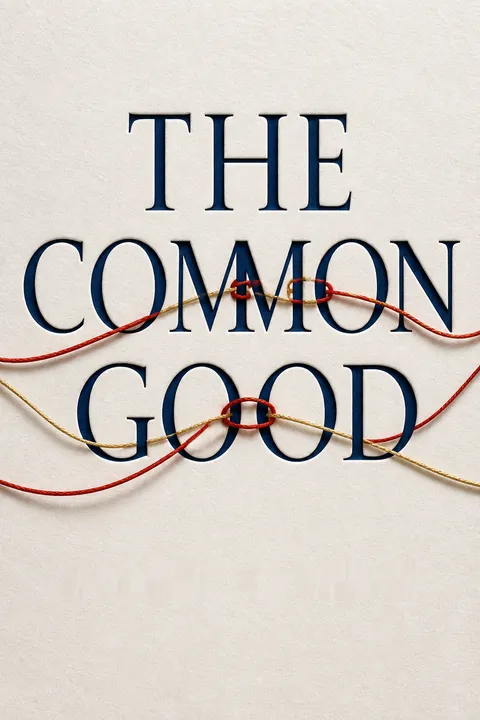

Key Takeaways
1. The Common Good: A Lost American Ideal
What we have lost, I think, is a sense of our connectedness to each other and to our ideals—the America that John F. Kennedy asked that we contribute to.
A profound shift. America has drifted from a collective spirit, exemplified by John F. Kennedy's call to service, towards an era of self-aggrandizement. This shift, beginning in the late 1970s, moved the national conversation from "we're all in it together" to "you're on your own," fostering cynicism and distrust in fundamental institutions. The author, reflecting on a half-century of change, observes a deterioration in civic life despite individual kindness and generosity.
Symptoms of decline. The rise of figures like Donald Trump, while not the cause, is a stark symptom of this underlying decay. His presidency, fueled by widespread anxieties and distrust, forces a re-examination of what truly connects Americans. The core question now is whether a common good still binds the nation, or if shared ideals have been replaced by tribal divisions and demagoguery.
Reclaiming ideals. The book aims to provoke a discussion about the common good America once shared, what led to its decline, and how it might be restored. It emphasizes that the nation's identity is rooted in shared ideals and mutual obligations, not in race, religion, or origin. This foundational discussion is crucial for a better functioning society, even if it means civilly debating differing views.
2. Selfishness: The Archetype of Exploitation
In all these ways, Martin Shkreli defies what might be called “the common good.”
Unbridled self-interest. Martin Shkreli, the "Pharma Bro," serves as a stark illustration of someone who operates with utter disregard for the common good. His actions, such as raising the price of a life-saving drug by over 5,000%, were driven by a singular focus on maximizing personal profit, coupled with a blatant contempt for public outcry and legal norms. He believed that in a capitalist society, his investors expected 100% of the profit curve, justifying any legal means to achieve it.
A pattern of behavior. Shkreli's story extends beyond drug pricing to defrauding investors and mocking legal processes, revealing a consistent pattern of prioritizing personal gain above all else. His belief that norms don't apply to him and his unapologetic stance highlight a dangerous mindset. The author provocatively asks how different Shkreli's behavior is from other prominent figures in American life today, suggesting a broader societal issue.
Beyond legality. The problem isn't just about breaking laws, but about defying the spirit of mutual obligation and decency. Shkreli's actions, though often technically legal, exposed a profound lack of concern for the well-being of others. This archetype of selfishness, where winning at all costs is the only metric, stands in direct opposition to the very concept of a common good.
3. Shared Values: The Foundation of Society
The common good consists of our shared values about what we owe one another as citizens who are bound together in the same society—the norms we voluntarily abide by, and the ideals we seek to achieve.
Beyond individual good. The common good is not a tyrannical concept, as Ayn Rand and Robert Nozick argued, but an essential framework for a functioning society. It represents the collective understanding of mutual obligations and shared ideals that prevent society from devolving into a "jungle" of self-interest. Without voluntary adherence to basic principles of right and wrong, daily life would be insufferable, requiring constant vigilance against exploitation.
Pillars of civility. Key elements of the common good include:
- Respect for the rule of law: Adhering to both the letter and spirit of laws.
- Democratic institutions: Upholding processes for civil disagreement.
- Truth: A shared reality for informed deliberation.
- Civic trust: The belief that most others will also act for the common good.
Patriotism redefined. True patriotism is not xenophobic nationalism, but a love of country rooted in shared ideals and mutual obligations, extending compassion beyond borders. It embraces inclusion, political equality, and equal opportunity, demanding that citizens contribute to the well-being of all, rather than just their own. This commitment to ideals, passed down through generations, forms America's core identity and its "constitutional faith."
4. Eroding Trust: The "Broken Window" Effect
The common good is a pool of trust built up over generations, a trust that most other people share the same basic ideals I’ve just discussed.
Exploiting the system. The common good, viewed as a "pool of trust," is vulnerable to exploitation by those seeking selfish gain. When individuals are the first to break unwritten rules—like a thief in a town where doors are unlocked—they gain an advantage. This initial exploitation forces everyone else to adapt, leading to more complex laws, increased security, and a general erosion of trust.
Competitive decay. If exploitation goes unchecked, competitive forces can accelerate the decline of standards. For example:
- One pharmaceutical company price-gouging can pressure others to follow suit.
- CEOs receiving excessive pay packages can normalize such behavior across industries.
- Politicians using fake information can legitimize similar tactics for future campaigns.
Defining deviancy down. This process, akin to James Q. Wilson's "broken window" theory, normalizes previously unacceptable conduct. The costs of norm-breaking are shifted to society as a whole, leading to increased cynicism and distrust in institutions. The author provides a timeline of scandals from the mid-1960s onward, illustrating this escalating breakdown of public morality and the "whatever it takes" ethos.
5. Politics: The "Whatever-It-Takes-to-Win" Mentality
What was particularly chilling about Nixon’s behavior was his disdain for the common good and total obsession with himself.
Nixon's legacy. The Watergate scandal marked a turning point, revealing President Nixon's "lust for political power" and utter disregard for ethical and legal boundaries. His actions, including spying on opponents, obstructing justice, and claiming "if the president does it, that means it is not illegal," deeply shook public trust. The subsequent pardon by Gerald Ford, while intended to heal, further fueled public outrage over a lack of accountability.
Escalating partisanship. This "whatever-it-takes-to-win" ethos intensified with the Robert Bork Supreme Court nomination in 1987, where personal vilification and scorched-earth tactics replaced respectful deliberation. This set a precedent for future political battles, leading to:
- Newt Gingrich's confrontational House leadership: Replacing compromise with brinkmanship and government shutdowns.
- Obama's executive actions: Circumventing Republican obstruction, further polarizing policy.
- Trump's divisive rhetoric: Using racial resentment and baseless claims to consolidate power, undermining democratic norms.
Sacrificing institutions. Step by step, the integrity of America's system of government has been sacrificed for short-term political success. This cumulative cost to trustworthiness has been incalculable, leaving democratic institutions weakened and public faith in politics severely diminished. The focus shifted from serving the common good to simply winning, regardless of the damage inflicted on the political process itself.
6. Business: Maximizing Profits at All Costs
The new rule was: Do whatever it takes to make huge profits.
From statesmen to butchers. Corporate America underwent a radical transformation starting in the 1980s, moving from "stakeholder capitalism" (balancing interests of employees, communities, customers, and shareholders) to an obsessive focus on "shareholder value maximization." Corporate raiders like Michael Milken, using junk bonds, targeted companies that could deliver higher returns by:
- Fighting unions and cutting worker pay.
- Automating jobs and moving production abroad.
- Abandoning local communities.
The "Neutron Jack" era. CEOs like Jack Welch of GE, dubbed "Neutron Jack" for slashing American jobs while boosting stock value, became admired for their ruthless efficiency. This shift led to soaring CEO pay, linked directly to share prices, and a disregard for the broader societal impact of corporate decisions. The author argues that this "efficiency" primarily benefited a few at the top, while most Americans faced stagnant wages and economic insecurity.
Exploiting public goods. The profit-maximization imperative seeped into sectors traditionally focused on the common good, such as healthcare. For-profit insurers cherry-picked healthy patients, forcing non-profits like Blue Cross to convert, leading to a system that avoids the sick. Wall Street's transformation into megabanks, unconstrained by regulation, led to reckless gambling with other people's money, culminating in the 2008 financial crisis and taxpayer bailouts, with no accountability for executives.
7. The Rigged Economy: Money's Corrupting Influence
We got money pouring into politics in order to change the rules of the game in favor of big corporations and the wealthy, so they could rake in even more.
Powell's call to arms. The third major breakdown began with Lewis Powell's 1971 memo, urging businesses to aggressively mobilize political power against perceived threats from consumer and environmental groups. This unleashed a torrent of corporate money into politics, transforming Washington into a lobbying battleground. The number of corporate lobbyists and Political Action Committees (PACs) exploded, dwarfing labor union spending.
A Faustian bargain. Both political parties, including Democrats under Tony Coelho, became dependent on corporate and Wall Street campaign contributions. This dependence meant politicians often prioritized the interests of their wealthy donors over the common good, as seen in the defeat of Bill Clinton's healthcare plan due to corporate opposition. The Supreme Court's decisions equating money with free speech further exacerbated this influence.
Altering the rules. This influx of money systematically rigged the economy:
- Deregulation: Repealing Depression-era banking restrictions, leading to the 2008 financial crisis.
- Intellectual property: Enlarging patents and copyrights, increasing prices for consumers.
- Antitrust laws: Relaxing enforcement, leading to market concentration and higher prices.
- Contract laws: Shifting grievances to corporate-selected arbitrators.
- Tax laws: Creating loopholes and reducing rates for the wealthy.
- Bankruptcy laws: Loosening for corporations, tightening for homeowners and students.
The result is a vicious cycle where accumulated wealth buys more political power, which in turn further rigs the market, redistributing wealth upward and leaving most Americans behind.
8. Catastrophic Consequences: A Nation Divided and Distrustful
Much of the public no longer believes that the major institutions of America are working for the many; they are vessels for the few.
Economic devastation. The cumulative effect of these breakdowns has been catastrophic for most Americans. Since the 1980s, the typical American household's net worth has declined, while the richest 0.1% now own almost as much wealth as the bottom 90%. Wages have stagnated, economic insecurity has risen, and the middle class is shrinking. This economic disparity is exacerbated by discrimination and has led to rising death rates among less educated Americans.
Erosion of trust. Public trust in nearly all major American institutions has plummeted:
- Government: From over 60% trust in 1963 to 16% today.
- Corporations, banks, financial institutions: From "great deal of confidence" to one in ten.
- Nonprofits, media, scientific community: Similar declines.
Social fragmentation. This widespread distrust fuels a sense that the system is rigged, leading to a "social Darwinism" where the struggling are blamed for their own misfortunes. Economic stresses magnify bigotry, making people susceptible to demagogues who sow division. The shift from mutual obligations to private deals means people increasingly cluster by income, creating exclusive communities and schools, further segregating society and undermining the very idea of a shared public life.
9. Leadership as Trusteeship: Rebuilding Public Trust
Leaders must see that part of their responsibility is to rebuild public trust in the institutions they oversee.
Redefining success. Restoring the common good requires leaders to embrace "trusteeship"—acting as stewards of the unwritten rules and ideals that constitute public trust. This means rejecting the "whatever it takes to win" mentality and understanding that political victories or corporate profits achieved by undermining trust are ultimately net losses for society. Leaders must prioritize strengthening institutions over short-term gains.
Moral courage. Examples like Senators John McCain and Jeff Flake, who publicly condemned extreme partisanship and the erosion of democratic norms, demonstrate this vital leadership. McCain's defense of Obama's character and Flake's critique of Republicans' failure to challenge Trump's divisiveness highlight the importance of prioritizing institutional integrity over partisan victory. Similarly, former Senator Jim Webb's objection to executive overreach underscored the need to respect constitutional processes.
Beyond ethics. Trusteeship extends beyond mere ethics (avoiding legal troubles) to the core purpose of leadership. Presidents, CEOs, and heads of nonprofits have a moral duty to uphold and protect the systems they oversee. This includes:
- Presidents: Upholding the Constitution, respecting the judiciary and press, uniting rather than dividing.
- CEOs: Reinstating stakeholder capitalism, advocating for fair economic rules, and supporting public financing of campaigns.
Leaders must use their influence to advance the common good, not just personal or organizational wealth and power, and be judged by the legacy of trust they leave behind.
10. Honor and Shame: Realigning Moral Compass
Societies traditionally enforce the common good through honor and shame—honoring those who make exemplary contributions to it and shaming those who exploit it for personal gain.
Misplaced values. Modern America has lost its way in applying honor and shame. We often celebrate notoriety, celebrity, or wealth without scrutinizing its origins, while shaming those who merely fail to conform. This debases the concept of honor, as seen when institutions bestow awards on wealthy donors like Michael Milken or Alfred Taubman, despite their histories of fraud or price-fixing, effectively signaling that wealth trumps public morality.
Reclaiming moral judgment. To revive the common good, society must appropriately use honor and shame. This means:
- Honoring true virtue: Recognizing whistle-blowers (Cheryl Eckard, Eileen Foster), courageous public servants (Antonio Taguba, Daniel Fried, John Mindermann, Paul Magallanes), first responders, and dedicated teachers or social workers.
- Shaming exploitation: Publicly condemning those who undermine public trust for personal gain, like Martin Shkreli or John Stumpf.
Consequences and accountability. Shaming must be followed by meaningful consequences, including legislation and criminal prosecutions, especially against individual wrongdoers. The lack of accountability for executives in the 2008 financial crisis, for instance, eroded public trust. Distinguishing between private morality (personal choices) and public morality (actions in positions of power) is crucial, as abuses of power, like sexual harassment by the powerful, are deeply shameful and must not be overlooked.
11. Resurrecting Truth: The Imperative for Democracy
Without a shared truth, democratic deliberation is impossible.
Truth under siege. The "whatever it takes" mentality has severely undermined public truth, a cornerstone of the common good. Scientists, researchers, journalists, and academics, traditionally tasked with discovering and reporting truth, have faced pressures to prioritize profit, appease funders, or cater to partisan narratives. This created fertile ground for "truthiness" and "fake news," further exacerbated by foreign interference.
Trump's assault on truth. Donald Trump's presidency intensified this crisis with ubiquitous lies, relentless attacks on journalists as "enemies of the people," and disparagement of government researchers and scientists whose findings contradicted his agenda. His administration actively suppressed unfavorable data and created commissions to find evidence for baseless claims, directly imperiling democracy by eroding the public's ability to discern fact from fiction.
Collective responsibility. Restoring truth requires:
- Vigilance against lying: Publicly condemning lies from politicians and leaders.
- Media reform: News outlets must prioritize accuracy over profit, implement strict ethical codes, and separate facts from opinion.
- Academic integrity: Universities and think tanks must reject funding that compromises research independence and disclose all funding sources.
- Individual action: Citizens must actively seek reliable sources, critically assess information, and break out of self-generated information bubbles.
- Protecting privacy: Laws are needed to prevent data-mining firms from exploiting personal biases with tailored "news" and ads.
12. Civic Education: Cultivating Responsible Citizens
A republican form of government, without intelligence in the people…must be, on a vast scale, what a mad-house, without superintendent or keepers, would be on a small one.
Beyond vocational training. Education in America has become narrowly focused on private investment for career success, neglecting its original purpose as a public good essential for democracy. The founding fathers, like Benjamin Franklin and Thomas Jefferson, understood that an educated populace, imbued with "civic virtue," was necessary to "keep" the republic and prevent despotism. Horace Mann championed public schools to educate all children "in common," fostering habits of citizenship.
A renewed curriculum. Restoring the common good demands a renewed commitment to civic education that teaches:
- Political literacy: Understanding the Constitution, rule of law, and democratic institutions.
- Justice and equality: Grasping equal political rights and economic opportunity.
- Critical thinking: Differentiating truth from falsehood, assessing information, and applying logic.
- Tolerance and global responsibility: Learning about diverse beliefs and America's role in the world.
- Civic virtue: Understanding the moral imperative to act for the common good over selfish gain.
Learning by doing. Classroom learning must be complemented by practical experience. Two years of required public service (military, Peace Corps, AmeriCorps, or other community work) would instill a sense of obligation, connect young people across diverse backgrounds, and foster "habits of the heart." This would remind all citizens, especially the affluent, of the shared responsibilities and costs of maintaining a functioning society.
Review Summary
The Common Good by Robert Reich examines how America's commitment to shared values has eroded since the 1970s. Reviewers appreciate Reich's analysis of declining civic trust through "whatever it takes" politics and business practices, from Watergate to corporate scandals. Most find the book timely and thought-provoking, praising Reich's balanced criticism of both parties and his call for renewed leadership, truth, and civic education. Some critics argue the book lacks concrete solutions, feels too surface-level, or romanticizes the post-WWII era. Overall, readers view it as an important, accessible examination of societal fragmentation and the need to restore collective responsibility.
People Also Read






About the Author
Download PDF
Download EPUB
.epub digital book format is ideal for reading ebooks on phones, tablets, and e-readers.








































