
Plot Summary
Murder in the Margins
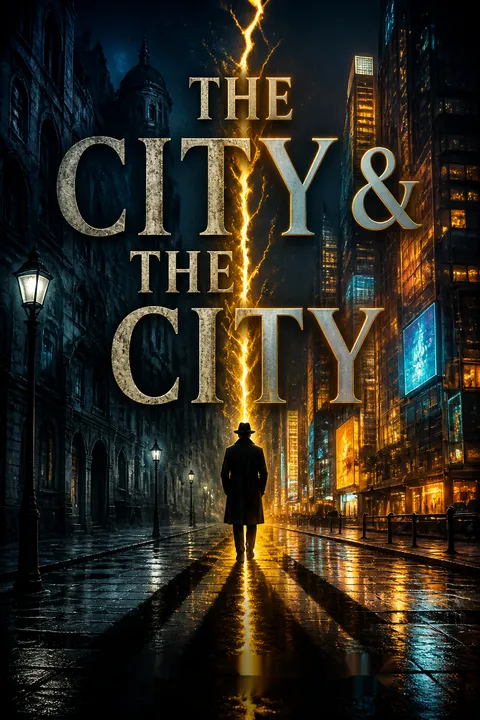
Inspector Tyador Borlú, a weary detective in the city of Besźel, is called to a grim crime scene: a young woman's body, battered and dumped in a derelict estate. The investigation begins in the shadow of the city's poverty and its peculiar laws, where citizens must "unsee" the overlapping city of Ul Qoma that shares the same physical space. The dead woman's identity is unknown, her presence in this marginal zone a puzzle. Borlú's instincts tell him this is no ordinary murder, and the city's invisible boundaries—social, legal, and metaphysical—press in on the investigation from the start.
Cities Overlapping, Worlds Apart
Besźel and Ul Qoma are twin cities, existing in the same space but separated by strict cultural and legal boundaries. Citizens are trained from childhood to "unsee" the other city, and any breach of this separation is a grave crime. Borlú's investigation is complicated by these rules, as witnesses and evidence slip between the cracks of perception. The city's architecture, language, and even weather are divided, and the murder forces Borlú to navigate not just the streets, but the invisible lines that define reality for its inhabitants.
The Unseen Divide
As Borlú and his colleagues dig deeper, they confront the practical and psychological challenges of policing a city where half of what exists must be ignored. The investigation is hampered by the need to avoid "breach"—the illegal act of acknowledging or interacting with the other city. The dead woman, dubbed "Fulana Detail," seems to have crossed these boundaries, and Borlú's pursuit of her identity brings him dangerously close to the forbidden spaces between Besźel and Ul Qoma.
Fulana Detail Unmasked
A breakthrough comes when a mysterious caller from Ul Qoma identifies the victim as Mahalia Geary, an American PhD student obsessed with the cities' histories and the myth of a third, hidden city—Orciny. Mahalia's research and activism have made her enemies among nationalists and unificationists alike. As Borlú uncovers her connections to radical groups and academic circles, he realizes her murder is entangled with political and metaphysical dangers that threaten the fragile peace between the cities.
Breach and the Forbidden
The concept of "Breach"—the act of crossing or acknowledging the other city—is policed by a mysterious, omnipotent force known only as Breach. When evidence suggests Mahalia's murder may involve breach, Borlú must petition the Oversight Committee to invoke Breach's intervention. The committee's political infighting and reluctance to cede authority reveal the deep anxieties both cities harbor about their own sovereignty and the terrifying power of Breach.
The Unificationist Trail
Borlú's investigation leads him into the world of unificationists—those who dream of merging Besźel and Ul Qoma into a single city. He discovers Mahalia's involvement with these groups, but also her growing obsession with Orciny, the legendary third city said to exist in the interstices. Interviews with activists and academics reveal a web of paranoia, betrayal, and fear, as Mahalia's quest for truth has made her a target for multiple factions.
The Third City's Shadow
The legend of Orciny haunts the investigation. Some believe it is a fairy tale, others a secret power manipulating events from the shadows. Mahalia's notes and the testimony of her friends suggest she believed she had made contact with Orciny, and that she was being used as a courier for its agents. The boundaries between reality and delusion blur, and Borlú is forced to confront the possibility that the greatest threat to the cities may be something unseen by all.
Mahalia's Secret
Delving into Mahalia's academic work, Borlú uncovers her method for smuggling Precursor artefacts—ancient objects of mysterious power—out of Ul Qoma and into Besźel, using the crosshatched zones as drop points. Her disillusionment with Orciny and her decision to stop cooperating mark her for death. The investigation reveals that her murder was orchestrated not by mythical powers, but by those exploiting the myth for profit and control.
The Chamber of Commerce
The trail leads to the highest levels of both cities' governments and their business partners. The Chamber of Commerce, politicians, and foreign corporations are implicated in the smuggling operation. The murder is revealed as a cover-up, designed to protect those benefiting from the trade in artefacts and the perpetuation of the cities' divided reality. The true enemy is not Orciny, but the cynical manipulation of belief and law.
Breach Invoked, Breach Denied
When Borlú finally presents his case to the Oversight Committee, political maneuvering prevents Breach from being invoked. The murder investigation is handed over to Ul Qoma, and Borlú is forced to cross the border as a consultant. The denial of Breach's intervention exposes the limits of law and the dangers of unchecked power. As riots and insurrections break out, the cities teeter on the brink of collapse.
Crossing Into Ul Qoma
In Ul Qoma, Borlú must adapt to new rules, new dangers, and new allies. He partners with Senior Detective Dhatt, navigating the complexities of Ul Qoman society and the lingering threat of Breach. The investigation deepens as more disappearances and attacks occur, all linked to Mahalia's circle and the secrets she uncovered. The sense of being watched intensifies, and Borlú realizes he is now a target himself.
Archaeology and Conspiracy
The focus shifts to the Bol Ye'an archaeological site, where Mahalia and her colleagues worked. The theft of artefacts, the involvement of security guards, and the disappearance of Yolanda Rodriguez—Mahalia's best friend—point to a conspiracy that spans both cities. The myth of Orciny is used as a smokescreen for smuggling and murder, and the true nature of the threat begins to emerge.
The Disappearance of Yolanda
Yolanda, terrified and in hiding, becomes the key to unraveling the case. Her testimony reveals how Mahalia was manipulated by those pretending to be Orciny, and how the myth was weaponized to control and eliminate threats. As Borlú and Dhatt work to protect her, they are drawn into a deadly game of cat and mouse, pursued by both human and possibly inhuman forces.
The Bomb and the Scholar
An attempted bombing at the dig site and the targeting of David Bowden—the scholar whose book inspired Mahalia—signal a new level of danger. The conspirators are desperate to silence anyone who knows the truth about the artefact smuggling and the fabrication of Orciny. The investigation becomes a battle for survival, as Borlú and his allies are hunted across both cities.
The Riot and the Reveal
A coordinated uprising by unificationists plunges the cities into chaos. Breach is forced to intervene on an unprecedented scale, locking down both cities and exposing the fragility of their separation. Amid the turmoil, Borlú realizes the riots are a diversion, orchestrated to allow the true criminals to escape justice. The final pieces of the puzzle fall into place.
The Truth of Orciny
The investigation culminates in the exposure of the real conspiracy: Orciny does not exist, except as a story used by the powerful to manipulate and profit. Mahalia was killed because she discovered the truth and threatened to reveal it. The artefact smuggling ring, involving politicians, businessmen, and academics, is dismantled. The myth of Orciny is revealed as both a weapon and a shield, protecting those who benefit from the cities' division.
The Final Pursuit
In a tense confrontation at Copula Hall, Borlú faces David Bowden, the architect of the Orciny myth and Mahalia's killer. Bowden, caught between cities and laws, is finally apprehended—not by the police, but by Breach itself. The boundaries between cities, laws, and realities are tested to their limits, and Borlú must choose where he belongs.
Breach's Judgment
Taken by Breach, Borlú is judged not just for his actions, but for his understanding of the cities' true nature. He is offered a choice: punishment or transformation. The experience of Breach is both terrifying and enlightening, revealing the hidden mechanisms that sustain the cities' separation and the cost of maintaining order.
A New Avatar
Borlú emerges from Breach changed, no longer a citizen of either city but an avatar of the force that polices their boundaries. His old life is gone, and he must now live in the interstice, enforcing the laws that keep Besźel and Ul Qoma apart. The story ends with Borlú accepting his new role, a guardian of the invisible lines that define reality, forever walking between the city and the city.
Analysis
China Miéville's The City & the City is a masterful exploration of borders—physical, psychological, and political. Through the ingenious device of two cities occupying the same space, Miéville interrogates the ways in which societies construct and enforce divisions, and the costs of maintaining them. The novel's central mystery is less about the murder itself than about the mechanisms of power, belief, and perception that shape reality. The myth of Orciny serves as a cautionary tale about the dangers of unchecked narrative and the ease with which truth can be manipulated for personal or political gain. The omnipresent threat of Breach embodies the ultimate authority, enforcing not just law but the very boundaries of thought and identity. Borlú's transformation from detective to avatar of Breach is both a personal tragedy and a commentary on the impossibility of true justice in a world defined by artificial separations. The novel's lessons are deeply relevant to our own world: the lines we draw—between nations, cultures, and selves—are both necessary and perilous, and the greatest threats often come not from the outside, but from the stories we tell ourselves.
Review Summary
Reviews for The City & The City are largely positive, averaging 3.9/5. Readers consistently praise Miéville's extraordinary premise—two cities occupying the same geographical space, separated only by conditioned perception—calling it imaginative, thought-provoking, and rich with sociopolitical allegory. Many compare the work to Kafka and Orwell. Critics note the mystery plot can feel conventional and secondary to the world-building, and some readers find the prose difficult or inaccessible. The cities themselves are frequently described as the true protagonists, with the detective narrative serving primarily as a vehicle for exploring themes of identity, borders, and willful blindness.
People Also Read
Characters
Tyador Borlú
Inspector Tyador Borlú is the protagonist, a seasoned detective in Besźel's Extreme Crime Squad. He is defined by his dogged pursuit of justice and his deep ambivalence about the city's invisible boundaries. Borlú's psychological complexity is rooted in his ability to question the rules others accept, making him both an effective investigator and a dangerous outlier. His relationships—with colleagues like Corwi, with the dead Mahalia, and with his own city—are marked by empathy, skepticism, and a growing sense of alienation. Over the course of the story, Borlú is transformed by his exposure to the realities of Breach and the myth of Orciny, ultimately becoming an avatar of Breach himself, forever exiled from ordinary life.
Lizbyet Corwi
Corwi is Borlú's trusted subordinate, a street-smart and resourceful constable. She provides both practical support and emotional grounding for Borlú, often serving as his conscience and reality check. Corwi's resilience and adaptability allow her to navigate the complexities of Besźel's society, and her loyalty to Borlú is unwavering, even as the investigation grows more dangerous. She represents the best of the city's police force: tough, compassionate, and unafraid to challenge authority when necessary.
Mahalia Geary
Mahalia is the murdered woman whose death sets the plot in motion. An American PhD student obsessed with the histories and myths of Besźel and Ul Qoma, she is both brilliant and reckless. Her pursuit of the truth about Orciny leads her into dangerous territory, making her a pawn in larger conspiracies. Mahalia's psychological profile is marked by idealism, curiosity, and a tragic inability to recognize the dangers she faces. Her death is both a personal tragedy and a symbol of the costs of seeking forbidden knowledge.
Qussim Dhatt
Senior Detective Dhatt is Borlú's counterpart in Ul Qoma, a pragmatic and sometimes abrasive investigator. He is initially suspicious of Borlú but becomes a crucial partner as the case unfolds. Dhatt's loyalty to his city and his own sense of justice are tested by the complexities of the investigation and the threat of Breach. His psychological journey parallels Borlú's, as both men are forced to confront the limits of their authority and the ambiguities of truth.
David Bowden
Bowden is the author of the banned book "Between the City and the City," which inspires Mahalia's obsession with Orciny. Once a respected academic, he is now a marginal figure, embittered by his fall from grace. Bowden's psychological profile is marked by narcissism, resentment, and a desperate need for validation. His manipulation of Mahalia and his role in her death reveal the dangers of unchecked intellectual ambition and the seductive power of myth.
Ashil (Breach Avatar)
Ashil is a senior avatar of Breach, the mysterious force that polices the boundaries between Besźel and Ul Qoma. He is calm, implacable, and almost inhuman in his detachment. Ashil's role is to enforce the rules that keep the cities apart, and his psychological makeup is shaped by a profound sense of duty and the burden of absolute authority. He becomes Borlú's mentor and guide in the final stages of the story, representing both the terror and necessity of Breach.
Yolanda Rodriguez
Yolanda is Mahalia's best friend and a fellow student at the Bol Ye'an dig. Her disappearance and eventual murder highlight the dangers faced by those who come too close to the truth. Yolanda's psychological arc is one of growing fear and isolation, as she realizes she is caught in forces beyond her understanding. Her fate underscores the story's themes of vulnerability and the cost of knowledge.
Mikhel Buric
Buric is a Social Democrat and member of the Chamber of Commerce, ultimately revealed as a key figure in the conspiracy behind Mahalia's murder. He is a master of political maneuvering, using his position to exploit the cities' divisions for personal gain. Buric's psychological profile is marked by cynicism, ambition, and a willingness to sacrifice others for his own interests.
Aikam Tsueh
Aikam is a young security guard at the Bol Ye'an dig, devoted to Yolanda and unwittingly drawn into the conspiracy. His loyalty and naivety make him both a valuable ally and a vulnerable target. Aikam's psychological journey is one of disillusionment, as he realizes the limits of his ability to protect those he cares about.
The True Citizens / Unificationists
These groups represent the political and psychological extremes of the cities: the True Citizens are ultranationalists determined to preserve Besźel's identity, while the unificationists seek to erase the boundary between the cities. Both are manipulated by more powerful actors, and their actions serve as catalysts for the story's climactic violence. Their psychological profiles are marked by zealotry, paranoia, and a willingness to use violence to achieve their goals.
Plot Devices
Dual-City Structure
The most striking device is the setting itself: two cities occupying the same space, separated by law, culture, and perception. This structure is both literal and metaphorical, shaping every aspect of the plot and the characters' psychology. The narrative uses this device to explore themes of identity, division, and the power of belief. The rules of "unseeing" and the threat of Breach create constant tension and drive the story's conflicts.
Breach as Omnipotent Force
Breach functions as both a plot device and a symbol of ultimate authority. Its interventions are unpredictable and terrifying, and its presence shapes the behavior of every character. The fear of Breach is used to foreshadow key events and to heighten the stakes of the investigation. The eventual revelation of Breach's true nature and its recruitment of Borlú serve as the story's final twist.
Myth of Orciny
The myth of a third city, Orciny, is used to misdirect both characters and readers. It serves as a metaphor for the dangers of unchecked belief and the manipulation of history. The gradual exposure of Orciny as a fabrication—used by conspirators to control and exploit—provides the story's central mystery and its ultimate resolution.
Political Intrigue and Bureaucratic Obstruction
The investigation is repeatedly stymied by political maneuvering, bureaucratic inertia, and the self-interest of those in power. The Oversight Committee's refusal to invoke Breach, the manipulation of evidence, and the use of riots as a diversion all serve to illustrate the fragility of justice in a divided society.
Psychological Realism and Unreliable Perception
The narrative constantly plays with the idea of perception—what is seen, what is unseen, and what is believed. Characters' psychological states are shaped by the demands of "unseeing," and the story uses unreliable narration and shifting perspectives to keep readers off balance. The ultimate revelation that the greatest dangers are those created by belief and manipulation, not by supernatural forces, is foreshadowed throughout.
About the Author
Other books by China Miéville
Download PDF
Download EPUB
.epub digital book format is ideal for reading ebooks on phones, tablets, and e-readers.








































