
Plot Summary
Disappearance in the Night
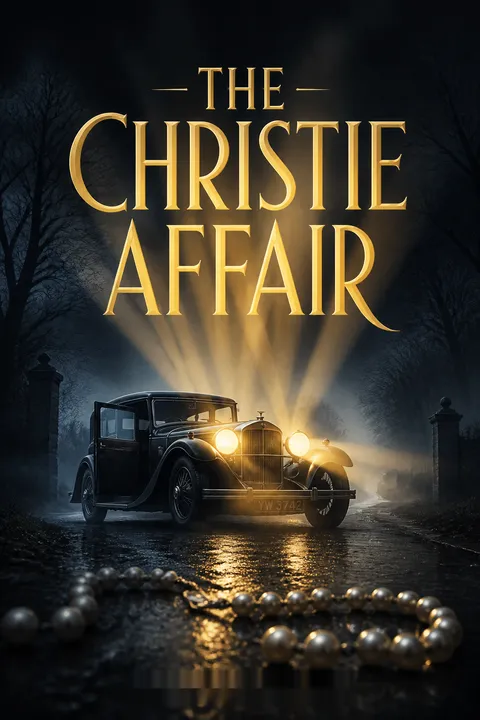
On a cold December night in 1926, Agatha Christie disappears from her home, Styles, after a devastating confrontation with her husband, Archie, who confesses his love for his mistress, Nan O'Dea. The world is thrown into turmoil as Agatha's car is found abandoned, sparking a nationwide search. Archie, wracked with guilt and confusion, becomes the center of suspicion, while the press and police descend upon the Christies' lives. Agatha's absence is not just a personal crisis but a public spectacle, as her fame as a novelist amplifies the mystery. The stage is set for a story that will unravel secrets, betrayals, and the hidden wounds of war and womanhood.
Mistress and Wife Collide
Nan O'Dea, Archie's mistress, is both an outsider and an intimate in the Christie household. She lunches with Agatha, who, despite her pain, confronts Nan with dignity, asking her to leave Archie if she does not truly love him. Nan, haunted by her own past and driven by a secret mission, is torn between guilt and ambition. The emotional triangle is fraught with tension, as Agatha's heartbreak is juxtaposed with Nan's calculated resolve. Their interactions are layered with unspoken truths, class differences, and the shared experience of being women in a world that often denies them agency. The collision of their lives sets in motion a chain of events that will change them both.
Ireland's Lost Daughters
Nan's journey from London to rural Ireland as a young woman is marked by love, loss, and exile. She falls for Finbarr Mahoney, a joyful Irish boy, and dreams of a future together. But the Great War and the influenza pandemic shatter those dreams. Pregnant and abandoned, Nan is sent to a convent in Ireland, where unwed mothers are hidden away, their babies often taken from them. The convent is a place of forced labor, cruelty, and stolen futures. Nan's child, Genevieve, is taken from her and adopted by an English family. This trauma becomes the driving force behind Nan's actions, fueling her determination to reclaim her daughter at any cost.
The Last Night at Styles
The night before Agatha's disappearance is a crucible of emotion. Archie, coldly resolved to leave, spends one final night with Agatha, blurring the lines between love and abandonment. Agatha, desperate to save her marriage, is blindsided by Archie's announcement the next morning. The household is tense, with servants and child caught in the crossfire. Agatha's sense of self is shattered, and she is left to confront the void left by her husband's departure. The events of this night echo throughout the story, shaping the choices and destinies of all involved.
The Convent's Dark Secrets
The convent at Sunday's Corner is a microcosm of institutional cruelty. Nan and other girls endure backbreaking labor, emotional abuse, and the constant threat of having their children taken. The nuns, especially Sister Mary Clare, oscillate between kindness and complicity. Father Joseph, the priest, is a predator, exploiting the girls' vulnerability. Friendships form among the girls—Bess, Fiona, Susanna—offering fleeting comfort. The loss of children, the betrayal by those meant to protect, and the struggle to retain hope in the face of relentless oppression define this chapter. Nan's escape is both a physical and spiritual act of defiance.
War, Love, and Loss
The Great War casts a long shadow over all the characters. Finbarr returns from the trenches changed, his joy dimmed by trauma. Nan's family is fractured by loss—her sister Colleen's death, her father's emotional withdrawal. The war's aftermath is a landscape of grief, missed opportunities, and altered identities. Letters between Nan and Finbarr are lifelines, but the world they once knew is gone. The war's legacy is not just in the dead, but in the living who must navigate a changed world, carrying invisible wounds.
The Hunt for Agatha
As Agatha's disappearance becomes headline news, the search intensifies. Police, press, and even famous authors like Conan Doyle and Dorothy Sayers become involved. Archie is scrutinized, his affair with Nan coming to light. Inspector Frank Chilton, a war-scarred detective, is dispatched to Yorkshire, where he unwittingly becomes entangled in the web of secrets surrounding Agatha and Nan. The search is as much about uncovering hidden truths as it is about finding a missing woman. The public spectacle masks private agonies and the unresolved traumas of the past.
Ghosts of the Past
Nan's memories of Ireland, the convent, and her lost child are ever-present. She is not alone in her haunting—Agatha mourns her mother, Archie is tormented by regret, and Chilton is pursued by the ghosts of war. The past is not a distant country but a living force, shaping actions and relationships. The narrative weaves together personal and collective histories, showing how the unresolved pain of the past can drive people to desperate acts. The search for Agatha becomes a search for meaning, closure, and redemption.
Harrogate's Hidden Refuge
Agatha, aided by Finbarr, finds refuge in a borrowed house in Harrogate, living under an assumed name. Nan, staying at a nearby hotel, is drawn into a circle of women with their own secrets and sorrows. Inspector Chilton, searching for Agatha, encounters both women, sensing their connection but unable to unravel it fully. The hotel becomes a stage for intrigue, romance, and revenge, as past and present collide. The hidden refuge is both a sanctuary and a crucible, where truths are revealed and destinies decided.
Reunion and Revenge
Finbarr and Nan are reunited, their love rekindled but shadowed by loss. Agatha and Chilton find unexpected solace in each other's arms. Meanwhile, Nan and her friend Bess plot revenge against those who wronged them in the convent. The murder of Sister Mary Clare (now Mrs Marston) and Father Joseph is both an act of justice and a reckoning with the past. The lines between victim and perpetrator blur, as the women seize agency in a world that has denied them power. The consequences of revenge ripple outward, touching all who are connected by the web of secrets.
The Timeless Manor
The borrowed manor house in Yorkshire becomes a haven for Agatha, Nan, Finbarr, and Chilton. For a brief, magical span, they live outside time and consequence—dancing, laughing, and loving as if the world cannot touch them. The manor is a place of healing, confession, and connection, where old wounds are aired and new bonds formed. Yet the outside world cannot be held at bay forever. The manor's spell is fragile, and the return to reality is inevitable. Still, the memory of this time becomes a touchstone for all who experienced it.
Truths and Confessions
In the intimacy of the manor, secrets are confessed. Nan reveals her belief that Agatha's daughter, Teddy, is her own lost child, Genevieve. Agatha, in a moment of compassion or perhaps guilt, confirms Nan's claim, though the truth remains ambiguous. Finbarr pleads with Nan to leave with him, but her devotion to her child keeps her tethered. The confessions are acts of both liberation and entrapment, freeing the characters from some burdens while binding them to others. The lines between truth and self-deception blur, as each character seeks a version of reality they can live with.
Justice for the Forgotten
The murders of Sister Mary Clare and Father Joseph are revealed as acts of vengeance by Nan and Bess, avenging the countless girls abused and betrayed by the convent system. Inspector Chilton, moved by empathy and love, chooses not to pursue justice in the conventional sense, recognizing the deeper justice served. The narrative acknowledges the countless women whose stories were erased, whose suffering went unpunished. The personal becomes political, as the characters' actions stand in for the justice denied to so many. The story honors the resilience and rage of the forgotten.
The Return and Amnesia
Agatha is discovered at last, her disappearance ending in a carefully orchestrated return. She claims amnesia, refusing to explain her absence or the truths she has learned. The world is eager for answers, but Agatha's silence protects not only herself but also Nan and the secrets they share. Archie is relieved but changed, his marriage to Agatha irreparably altered. The public spectacle fades, but the private consequences endure. Agatha's refusal to speak becomes an act of resistance, a way to control her own narrative in a world eager to define her.
Mothers and Daughters Reunited
Nan, now married to Archie, becomes stepmother to Teddy, the child she believes is her own. The reunion is fraught with longing, guilt, and the impossibility of reclaiming lost time. Nan's love for Teddy is fierce and protective, shaped by the trauma of loss and the determination to never let her go again. The story acknowledges the complexities of motherhood, the wounds that never fully heal, and the ways in which love can both redeem and haunt. The reunion is both a triumph and a tragedy, a testament to the enduring bonds between mothers and daughters.
Endings and New Beginnings
The story concludes with the characters moving forward—Agatha divorces Archie and finds new love, Nan builds a life with Teddy, Finbarr returns to Ireland, and Chilton finds peace by the sea. The wounds of the past remain, but the possibility of healing and happiness endures. The Timeless Manor becomes a symbol of what was lost and what was possible—a place outside time where love, justice, and connection flourished, if only for a moment. The narrative closes on a note of hope, honoring the resilience of those who survive and the memory of those who were lost.
Analysis
A modern reckoning with trauma, agency, and the silenced stories of womenThe Christie Affair is more than a reimagining of Agatha Christie's famous disappearance; it is a meditation on the hidden histories of women, the legacies of institutional abuse, and the enduring power of love and vengeance. Through its layered narrative and complex characters, the novel interrogates the ways in which women's lives are shaped—and often shattered—by forces beyond their control: war, patriarchy, the church, and the law. Yet it also celebrates the resilience, ingenuity, and solidarity of women who refuse to be erased. The story's ambiguous truths and unresolved questions reflect the realities of trauma and survival, where closure is elusive and justice is often self-made. By centering the voices of the marginalized and the wounded, The Christie Affair offers both a critique of historical injustice and a testament to the possibility of healing, connection, and new beginnings. It is a story about the costs of silence, the necessity of storytelling, and the hope that even in the aftermath of loss, love and agency can endure.
Review Summary
Reviews for The Christie Affair are mixed, averaging 3.71/5. Many praise the creative premise—fictionalizing Agatha Christie's mysterious 11-day disappearance through the perspective of her husband's mistress, Nan O'Dea. Readers appreciate the well-drawn characters, Christie-esque mystery elements, and emotional depth of Nan's backstory. However, common criticisms include insufficient focus on Agatha herself, confusing point-of-view shifts, timeline complexity, and implausible plot coincidences. Some found the Christie name misleading given Nan's dominance in the narrative, while others felt the two storylines competed rather than complemented each other.
People Also Read









Characters
Nan O'Dea
Nan O'Dea is the novel's central voice and emotional core. Born into poverty in London, she is marked by early loss and the trauma of her sister's death. Her love affair with Finbarr in Ireland is shattered by war, disease, and the cruelty of the convent system, which steals her child and her innocence. Nan's psychological landscape is shaped by grief, rage, and a relentless drive to reclaim her daughter, Genevieve. Her relationship with Archie is both calculated and desperate—a means to an end, yet not without genuine feeling. Nan's journey is one of survival, agency, and ultimately, vengeance, as she orchestrates justice for herself and countless other women wronged by society. Her development is a testament to resilience, complexity, and the enduring power of maternal love.
Agatha Christie
Agatha is both the famous author and a deeply vulnerable woman. Her marriage to Archie is the foundation of her identity, and its collapse leaves her unmoored. Agatha's disappearance is both a cry for help and an act of self-preservation, allowing her to step outside the roles imposed upon her. She is compassionate, imaginative, and surprisingly pragmatic, forming unexpected bonds with Nan and Chilton. Agatha's refusal to explain her absence is an assertion of control in a world eager to consume her story. Her arc is one of loss, reinvention, and the quiet assertion of selfhood against the demands of fame and patriarchy.
Archie Christie
Archie is a man of his time—privileged, self-assured, and emotionally limited. His affair with Nan is both a symptom and a cause of his dissatisfaction. Archie's inability to empathize with the women in his life leads to devastation, yet he is not a villain so much as a product of his upbringing and the era's expectations. His relationship with Agatha is marked by both genuine affection and profound misunderstanding. Archie's arc is one of regret and impotence, as he loses control over the narrative of his own life.
Finbarr Mahoney
Finbarr is Nan's first love, a symbol of innocence and hope before the world's brutality intervenes. The war transforms him, stripping away his lightness and leaving him haunted. His reunion with Nan is bittersweet, marked by longing and the impossibility of reclaiming the past. Finbarr's love for Nan and their lost child is unwavering, but he is ultimately powerless to change their fate. His character embodies the enduring scars of war and the tragedy of dreams deferred.
Inspector Frank Chilton
Chilton is a man marked by the trauma of the trenches, carrying both physical and emotional wounds. His assignment to find Agatha becomes a journey of self-discovery and healing. Chilton's empathy and integrity set him apart from other men in the story. His romance with Agatha is a quiet, redemptive thread, offering both characters a glimpse of happiness outside the constraints of their pasts. Chilton's development is one of recovery, hope, and the embrace of possibility.
Bess
Bess is Nan's closest ally in the convent, enduring abuse and the loss of her child. Her journey to America is marked by both hope and the lingering pain of trauma. Bess's participation in the murder of Sister Mary Clare and Father Joseph is an act of justice for herself and others. Her character represents the countless women whose suffering went unacknowledged, and her friendship with Nan is a source of strength and solidarity.
Sister Mary Clare / Mrs Marston
Sister Mary Clare is both a source of comfort and a perpetrator of harm in the convent. Her complicity in the system that destroys girls' lives is masked by moments of kindness. Her later reinvention as Mrs Marston and subsequent murder by Nan and Bess is both a personal reckoning and a metaphor for the reckoning owed to all who enabled such cruelty. Her character embodies the complexities of guilt, denial, and the consequences of institutional power.
Father Joseph / Mr Marston
Father Joseph is the embodiment of the church's hypocrisy and the abuse of power. His exploitation of vulnerable girls is a central trauma in the story. His murder is an act of retribution, a symbolic justice for the many who suffered at his hands. His character is a reminder of the dangers of unchecked authority and the long shadow of institutional abuse.
Teddy (Genevieve)
Teddy is the child at the heart of the story's emotional conflict. Believed by Nan to be her lost daughter, she is raised by Agatha and Archie, loved fiercely by both women. Teddy's presence is a source of both joy and pain, a living reminder of what was stolen and what endures. Her character is less developed as an individual and more as a symbol of the bonds between mothers and daughters, and the costs of secrets and survival.
Honoria
Honoria is the steady presence in the Christie household, caring for Teddy and supporting Agatha through crisis. Her loyalty is both a comfort and a constraint, as she navigates the shifting allegiances and secrets of those she serves. Honoria's perspective offers a glimpse into the lives of those who support and sustain others, often at the expense of their own needs.
Plot Devices
Dual Timelines and Interwoven Narratives
The novel employs a dual timeline structure, weaving together Nan's past in Ireland and the convent with the present-day mystery of Agatha's disappearance. This interlacing of narratives allows for deep psychological exploration, revealing how past traumas inform present actions. The structure creates suspense, as revelations in one timeline cast new light on events in the other. The convergence of the two narratives in Harrogate is both a plot climax and an emotional reckoning, demonstrating the inescapable influence of history on the present.
Unreliable Narration and Withheld Truths
The story is told primarily from Nan's perspective, but her reliability is constantly in question. Her motives, memories, and even her confessions are colored by trauma, longing, and self-justification. Agatha's refusal to explain her disappearance, claiming amnesia, is another layer of narrative ambiguity. The use of unreliable narration invites readers to question the nature of truth, the limits of memory, and the ways in which people construct stories to survive. The ambiguity surrounding Teddy's parentage and the true nature of justice is central to the novel's emotional impact.
Symbolism and Motifs
The novel is rich in symbolism—the Timeless Manor as a utopian refuge, the convent as a prison, the lost child as both wound and hope. Objects like the Claddagh ring, the whittled dog, and the typewriter serve as anchors for memory and identity. Motifs of disappearance, motherhood, and the search for justice recur throughout, reinforcing the story's themes and emotional resonance.
Revenge and Justice
The murders of Sister Mary Clare and Father Joseph are not just acts of personal revenge but stand-ins for the justice denied to generations of women. The narrative structure withholds the full truth of these acts until late in the story, creating suspense and inviting readers to grapple with the morality of vengeance. The plot device of revenge is used to interrogate the failures of institutional justice and the necessity of personal agency.
Foreshadowing and Irony
The novel is laced with foreshadowing—Nan's early references to murder, Agatha's fascination with crime, the recurring motif of lost and found. Irony abounds, as characters seek control over their destinies only to be thwarted by circumstance, history, and the actions of others. The use of foreshadowing and irony deepens the emotional complexity and underscores the unpredictability of life.
Download PDF
Download EPUB
.epub digital book format is ideal for reading ebooks on phones, tablets, and e-readers.








































