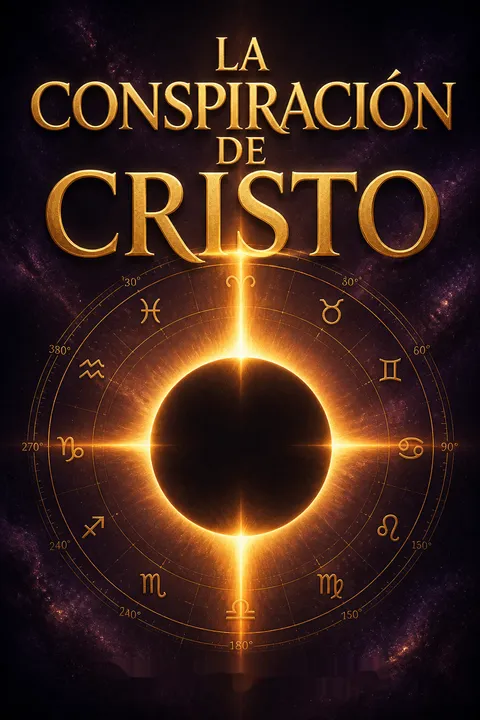

Key Takeaways
1. Jesus Christ is a mythological composite, not a historical figure
Whether considered as the God made human, or as man made divine, this character never existed as a person.
Myth over history. The core thesis of this work is that Jesus of Nazareth never existed as a flesh-and-blood human being. Instead, he is a literary and mythological construct, a composite character woven together from the threads of much older deities, solar myths, and philosophical concepts. The historical "savior" is an artificial creation designed to literalize ancient spiritual allegories.
Lack of evidence. Despite the widespread belief in his historicity, there is an absolute vacuum of contemporary, non-biblical evidence. Dozens of highly literate historians, philosophers, and writers living in the first century—such as Philo of Alexandria—never wrote a single word about Jesus or his spectacular miracles.
- No contemporary secular records exist for his birth, miracles, or execution.
- The Gospels are anonymous, highly contradictory, and written decades after the alleged events.
- His character was designed to fulfill "prophecies" that were actually misreadings of older myths.
A fabricated biography. The details of Jesus's life were retroactively constructed using Old Testament scriptures as a blueprint. By taking poetic passages and mistranslating them as historical predictions, the creators of Christianity built a narrative that appeared divinely ordained but was actually plagiarized.
2. The Gospel narrative is an allegorical representation of astrotheology
The Son of God Is the Sun of God
Celestial drama. The life of Jesus is not a historical biography but an allegorical representation of the sun's annual journey through the heavens. Ancient peoples practiced astrotheology, personifying the sun, moon, and stars to pass down vital astronomical knowledge through memorable stories. Jesus is the personified sun, navigating the celestial sphere.
Solar milestones. The key events of the Gospel narrative align perfectly with solar phenomena. For example, the winter solstice on December 21 marks the sun's lowest point, where it "dies" for three days before "resurrecting" on December 25 as the days begin to lengthen.
- The Virgin birth represents the constellation of Virgo rising on the eastern horizon at midnight on December 25.
- The "Three Kings" represent the three stars in the belt of Orion, which point to the star Sirius (the Star in the East) to locate the rising sun.
- The crucifixion represents the sun crossing the celestial equator at the vernal equinox (Easter), triumphing over darkness.
The light of the world. Jesus's characteristics are entirely solar. He is the "light of the world," wears a "crown of thorns" (the sun's corona or rays), walks on water (reflection), and is "crucified" on the cross of the equinoxes.
3. Christianity heavily plagiarized older pagan savior myths
There is not a conception associated with Christ that is not common to some or all of the Savior cults of antiquity.
Pagan prototypes. Long before the Christian era, the ancient world worshipped numerous "sons of God" who shared nearly identical life stories with Jesus. Deities like Horus, Krishna, Mithra, Dionysus, and Attis were also said to be born of virgins on December 25, perform miracles, die on a tree or cross, and rise from the dead.
- Horus of Egypt was born of the virgin Isis-Meri, baptized at age 30, and raised El-Azar-us (Lazarus) from the dead.
- Mithra of Persia was born in a cave on December 25, had 12 disciples, and offered a eucharist of bread and wine.
- Dionysus of Greece turned water into wine, rode an ass in a triumphal procession, and was resurrected.
The Devil's work. Early Church fathers like Justin Martyr were fully aware of these embarrassing parallels. Unable to deny them, they claimed that the devil had anticipated the coming of Christ and maliciously planted these identical stories in pagan minds centuries beforehand to confuse believers.
Universal mythos. Rather than being unique, Christianity is a syncretic compilation of these older faiths. The myths of Egypt, India, Persia, and Greece were melted down and recast into a Jewish mold to create the ultimate composite savior.
4. The early Church was built on a foundation of forgery and "pious fraud"
The Christian Fathers deemed it a pious act to employ deception and fraud.
Systematic deception. The historical foundation of Christianity is built upon a massive, centuries-long campaign of forgery, interpolation, and "pious fraud." Early Church leaders routinely fabricated scriptures, altered the writings of pagan historians, and backdated documents to create the illusion of historical continuity and apostolic authority.
- Interpolating passages into the works of historians like Josephus (the Testimonium Flavianum) and Tacitus.
- Forging entire epistles and gospels in the names of the apostles (pseudepigraphy).
- Actively destroying Gnostic and pagan texts that exposed the allegorical and solar origins of the faith.
Censorship and destruction. To protect their fabricated history, the Church engaged in a ruthless campaign of active censorship. They burned pagan libraries—most notably the great library of Alexandria—and made the possession of non-canonical or critical texts a capital offense, plunging Europe into the intellectual darkness of the Middle Ages.
The business of faith. The Church fathers believed that lying for the advancement of the faith was entirely acceptable. This "benign deceit" was used to establish a monopoly on salvation, ensuring immense political power and financial wealth for the ecclesiastical hierarchy.
5. The historical Jesus is an onion without a core
Scholars’ efforts to eliminate paganism from the Gospels in order to find a historical Jesus have proved as hopeless as searching for a core in an onion.
The euhemerist fallacy. Many modern scholars attempt to rescue a "historical Jesus" by stripping away the miracles and supernatural elements, leaving behind a simple Jewish teacher or political rebel. However, this "euhemerist" approach fails because once the mythological and pagan elements are removed, there is absolutely nothing left.
- The ethical teachings are plagiarized from older Jewish, Buddhist, and Greek philosophical texts.
- The biographical details are borrowed from the solar myths of Horus, Mithra, and Dionysus.
- The political and historical context is a clumsy, error-ridden patchwork of details lifted from Josephus.
A hollow figure. A Jesus stripped of his virgin birth, miracles, resurrection, and cosmic authority would have been an insignificant, obscure figure who could never have inspired a global religion. The "historical Jesus" of modern scholarship is merely a projection of the scholars' own values and biases.
No historical footprint. The search for the "real" Jesus is futile because the character was never real. He is a literary ghost, a shadow cast by the ancient sun-gods onto the pages of forged Roman-era manuscripts.
6. The twelve disciples represent the twelve signs of the zodiac
The number of the twelve apostles, which formed the retinue of Jesus during his mission, is that of the signs, and of the secondary genii, the tutelary gods of the Zodiacal signs which the sun passes through in his annual revolution.
Zodiacal retinue. The twelve disciples of Jesus are not historical individuals but personifications of the twelve signs of the zodiac. As the sun (Jesus) travels through the heavens, it must pass through these twelve "houses" or constellations, which act as its companions and helpers.
- The "sons of thunder" (James and John) represent the Gemini twins, Castor and Pollux.
- Matthew the scribe represents Thoth-Matiu, the Egyptian scribe of the gods.
- Thomas the twin represents the doubt of the winter solstice, when the sun's rebirth is uncertain.
Astrological roles. The specific characteristics and actions of the disciples in the Gospels reflect their astrological counterparts. For example, Peter represents the rock of Aries or the gatekeeper Janus, while Judas represents Scorpio, the "backbiter" that betrays the sun as it enters the dark winter months.
The twelve hours. In addition to the zodiac, the twelve disciples represent the twelve hours of daylight. As the sun's light fades, the disciples "sleep" or abandon him, leaving the solar hero to face the darkness of the night alone.
7. Precession of the equinoxes dictates the shifting symbols of the divine
The Messiah who manifested in this sign was foreordained to come as Ichthys the fisherman, or, doctrinally, the fisher of men.
Precessional ages. The ancient astronomer-priests possessed a highly sophisticated understanding of the precession of the equinoxes—the 25,800-year cycle in which the sun's position at the spring equinox slowly moves backward through the zodiac. This cosmic clock dictated the shifting symbols of the divine across different historical epochs.
- The Age of Taurus (the Bull) was characterized by the worship of the Golden Calf.
- The Age of Aries (the Ram) was ushered in by Moses and the Passover lamb.
- The Age of Pisces (the Fish) was represented by Jesus, the fish-god.
From Bull to Fish. The transition of these precessional ages explains the changing religious iconography of the Bible. When the equinox moved from Aries to Pisces, the "Lamb of God" was superseded by the "Fisher of Men," and the fish became the primary symbol of the new faith.
The next age. The Gospels even contain a coded reference to the next precessional age, Aquarius. When Jesus tells his disciples to follow "a man carrying a pitcher of water" into the house he enters, he is instructing them to prepare for the transition into the Age of the Water-Bearer.
8. Rome consolidated the solar myths into a state religion for political control
The Romanized Jesus, in fact, was designed to castigate the Jews and, as noted, to give the Romans authority over them.
Imperial consolidation. The creation of orthodox Christianity was a political project engineered by the Roman Empire to unify its highly diverse and rebellious populations under a single, state-controlled religion. Emperor Constantine used the Council of Nicea in 325 CE to merge the popular solar cults of the empire into one "universal" (Catholic) church.
- The Vatican was built directly upon the sacred hill of the Mithraic pope (Pater Patrum).
- The Roman sun-god Sol Invictus had his birthday on December 25, which became Christmas.
- The Roman god Janus, keeper of the keys, was transformed into St. Peter.
Subjugation of the masses. By historicizing the solar myth into a Jewish man who preached submission to Roman authority ("render unto Caesar"), the empire created a powerful tool for social control. The new religion taught the masses to accept their earthly suffering and obey their masters in exchange for an imaginary reward in heaven.
A bastard paganism. Christianity did not conquer paganism; it became it. The Roman Church simply baptized the old pagan gods as "saints," turned the temples into churches, and rebranded the ancient solar rituals as Christian sacraments.
9. The suppression of ancient cosmic wisdom plunged the Western world into the Dark Ages
The result of the Church’s encounter with the sun-cults of antiquity was nothing less than the dethronement of Helios.
The loss of gnosis. The transition from Gnostic, allegorical Christianity to literal, orthodox dogma represented a catastrophic loss of human knowledge. The Gnostics understood that the Gospel story was a spiritual and astronomical allegory, but the literalist Church branded this "gnosis" as heresy and systematically eradicated it.
- The demonization of nature, the earth, and the feminine principle (the Goddess).
- The rise of extreme religious intolerance, leading to the Crusades, the Inquisition, and holy wars.
- The disconnection of humanity from the natural cycles of the cosmos and the earth.
The Dark Ages. By enforcing blind faith (pistis) and outlawing scientific inquiry, the Church plunged Europe into a thousand-year intellectual slumber. The destruction of ancient libraries, the prohibition of reading unapproved books, and the persecution of freethinkers decimated the scientific and philosophical achievements of the classical world.
A call to awakening. To heal the rift between humanity and nature, we must expose the Christ conspiracy and reclaim the ancient cosmic wisdom. By recognizing the solar and astrological roots of our religions, we can move past sectarian division and enter a new age of enlightenment.
Review Summary
The Christ Conspiracy receives mixed reviews. Critics praise its comprehensive research on religious origins but question source credibility and historical accuracy. Supporters find it eye-opening, challenging traditional beliefs about Christianity's origins. Detractors argue it misrepresents sources and makes unfounded claims. Some reviewers appreciate the book's alternative perspective on religion, while others dismiss it as poorly documented and misleading. The book's controversial stance on Jesus' historicity and Christianity's pagan roots sparks debate among readers, with ratings ranging from 1 to 5 stars.
People Also Read

Download PDF
Download EPUB
.epub digital book format is ideal for reading ebooks on phones, tablets, and e-readers.








































