
Key Takeaways
1. Genetic Enhancement's Core Problem: The Drive to Mastery
The deeper danger is that they represent a kind of hyperagency, a Promethean aspiration to remake nature, including human nature, to serve our purposes and satisfy our desires.
Beyond familiar concerns. While safety and autonomy are often cited, the fundamental unease with genetic engineering and enhancement goes deeper. It's not merely about potential harm or restricting a child's future choices, but about a profound shift in our relationship with nature itself. This shift is characterized by an overwhelming desire to control and perfect, rather than to accept and appreciate.
Examples of this drive:
- Deaf parents seeking a deaf child: A deliberate choice of identity over perceived disability.
- High-SAT egg donors: Parents "ordering up" specific genetic traits for their offspring.
- Commercial pet cloning: Treating life as a customizable product with a money-back guarantee.
Blurring the lines. What begins as an effort to treat disease quickly morphs into an ambition for improvement. Whether it's enhancing muscles, memory, height, or selecting sex, the underlying impulse is to move "beyond health" and make ourselves "better than well." This relentless pursuit of perfection, driven by human will, challenges our understanding of what it means to be human.
2. The Athletic Ideal: Honoring Natural Gifts Over Engineered Perfection
The real problem with genetically altered athletes is that they corrupt athletic competition as a human activity that honors the cultivation and display of natural talents.
Effort vs. Gift. We admire athletes for their effort and striving, but also for the grace and effortlessness with which they display natural gifts. Performance-enhancing drugs or genetic alterations corrupt this ideal by shifting admiration from the athlete's inherent talent and cultivated skill to the intervention itself. The achievement becomes less "theirs" and more that of their "pharmacist" or genetic engineer.
Integrity of the game. The ethical question isn't just about fairness or safety, but about the telos (purpose) of the sport. While running shoes enhance performance without corrupting the race, riding a subway to the finish line or fighting with folding chairs makes a mockery of the skills the sport is meant to test. Similarly, "altitude houses" or mega-calorie diets, though not drugs, raise similar ethical questions if they override natural athletic excellence for a mere spectacle.
Beyond sports. This principle extends to other fields, like music. Musicians using beta-blockers to calm nerves or opera houses using sound amplification systems raise similar debates: Do these technologies remove impediments to true talent, or do they fundamentally alter and degrade the art form by de-emphasizing virtues like equanimity or vocal projection? The concern is that technologically enhanced versions of practices often displace and diminish the appreciation for unadulterated human talents.
3. Parenting as a School for Humility: Accepting Children as Gifts
To appreciate children as gifts is to accept them as they come, not as objects of our design, or products of our will, or instruments of our ambition.
Openness to the unbidden. Parenthood, more than any other human relationship, teaches humility and an "openness to the unbidden." This means accepting children with their unpredictable qualities, rather than viewing them as projects to be designed or products of our will. This disposition is crucial not just for families, but for fostering a wider societal capacity to live with the unexpected and resist the impulse to control everything.
Healing vs. designing. While parents have an obligation to heal sick children, this differs fundamentally from enhancing healthy ones. Medical treatment aims to restore natural functions, not to engage in a "boundless bid for mastery." To view health as merely an "instrumental resource" to be maximized, as some bioethicists suggest, blurs this vital distinction and risks turning children into objects of parental ambition.
Unconditional love. The deepest moral objection to enhancement in parenting lies in the disposition it expresses: a drive to master the mystery of birth. This attitude can disfigure the parent-child relationship, replacing unconditional love with a conditional acceptance based on desired traits. While parents must cultivate their children's talents, this "transforming love" must be balanced by "accepting love" that affirms the child's being, rather than badgering them toward an idealized perfection.
4. Hyperparenting Mirrors the Ethical Concerns of Genetic Enhancement
The hyperparenting familiar in our time represents an anxious excess of mastery and dominion that misses the sense of life as gift.
Low-tech, high-pressure. The intense, managed child-rearing practices prevalent today, often called "hyperparenting," share a disturbing similarity with the spirit of genetic enhancement. Parents go to extreme lengths to ensure their children's success, from planning tennis careers before birth to hiring college admissions consultants who "guide lives." This reflects an "anxious excess of mastery" that treats children as projects to be optimized.
Examples of hyperparenting:
- Youth sports: Overuse injuries from early specialization and year-round training, parental intrusiveness on sidelines.
- Academic pressure: Expensive SAT prep courses, "diagnosis-shopping" for learning disabilities to gain extra test time, coaching preschoolers for admissions tests.
- College involvement: Parents writing applications, badgering admissions offices, even staying in dorm rooms.
The Ritalin dilemma. The skyrocketing use of Ritalin and other stimulants, not just for ADHD but for healthy children seeking a competitive edge, highlights this drive for performance and perfection. Unlike the "recreational" drugs of past generations, these are "a bid for compliance, a way of answering a competitive society's demand to improve our performance and perfect our nature." This demand is the deepest source of moral trouble, whether achieved through low-tech or high-tech means.
5. The New Eugenics: Designing Children as Products, Not Gifts
What, after all, is the moral difference between designing children according to an explicit eugenic purpose and designing children according to the dictates of the market?
Beyond coercion. The "old eugenics" of the 20th century, with its forced sterilizations and state-imposed genetic improvement, is rightly condemned. However, the "new eugenics" – often framed as "liberal" or "free-market" – presents a similar moral challenge, even without coercion. The ambition to deliberately design the genetic characteristics of future generations, whether by state decree or consumer choice, remains problematic.
Market-driven design. Examples like the $50,000 offer for a "premium" egg donor or sperm banks advertising specific traits (tall, brown eyes, blond hair, dimples) illustrate how consumer preferences can drive eugenic outcomes. The argument that "if our customers wanted high-school dropouts, we would give them high-school dropouts" reveals a commodification of human traits, turning children into products of design rather than gifts.
Liberal eugenics' flaw. Even proponents of "liberal eugenics," who advocate non-coercive enhancements that respect a child's autonomy, miss a crucial point. They argue that if an enhanced capacity is "all-purpose" (e.g., higher IQ), it doesn't bias a child's future. However, this perspective can lead to a parental obligation to enhance, blurring the line between permissible choice and societal pressure, and ultimately still treating children as objects to be optimized rather than accepted.
6. Genetic Mastery Erodes Humility, Expands Responsibility, and Undermines Solidarity
If the genetic revolution erodes our appreciation for the gifted character of human powers and achievements, it will transform three key features of our moral landscape-humility, responsibility, and solidarity.
Loss of humility. In a world where genetic self-improvement is common, the myth of the "self-made man" becomes a reality. The awareness that our talents are gifts, not wholly our own doing, fosters humility. If we become masters of our genetic endowments, it becomes harder to see our talents as something for which we are indebted, leading to hubris and a diminished capacity to appreciate the "unbidden."
Explosion of responsibility. Paradoxically, genetic mastery doesn't erode responsibility but expands it to daunting proportions. Parents become responsible for choosing the "right" traits for their children, and athletes are blamed for not acquiring performance-enhancing advantages. This burden of choice, exemplified by the judgment faced by parents of children with genetic disabilities after prenatal testing, shifts domains once governed by fate into arenas of individual moral accountability.
Diminished solidarity. A lively sense of the contingency of our gifts—the understanding that success is partly due to the "genetic lottery"—underpins social solidarity. It reminds the successful that they are not solely responsible for their bounty and have an obligation to share it. If genetic engineering replaces chance with choice, the successful may increasingly view themselves as self-made, leading to a harder, less forgiving meritocracy where the less fortunate are seen as "unfit" for "eugenic repair," eroding our common fate.
7. Appreciating Life as a Gift: A Moral Stance Against Unfettered Control
It threatens to banish our appreciation of life as a gift, and to leave us with nothing to affirm or behold outside our own will.
Beyond religious dogma. The concept of "giftedness" doesn't necessarily require a religious framework. We speak of an athlete's or musician's "gift" to acknowledge that their talent is an endowment beyond their sole doing, whether from nature, fortune, or God. Similarly, the "sanctity of life" or "nature" can be understood secularly as something not merely at our disposal, but worthy of reverence and respect, commanding a higher mode of valuation than mere utility.
A habit of mind. The argument against enhancement is not purely consequentialist, weighing costs against benefits. Instead, it addresses a "habit of mind and way of being"—a pervasive orientation towards mastery and control that risks diminishing fundamental human goods. These goods include unconditional love in parenting, the celebration of natural talents in art and sport, humility in the face of privilege, and the institutions of social solidarity.
True freedom. The allure of human freedom unfettered by the given is intoxicating, but ultimately flawed. Changing our nature to fit the world, rather than critically reflecting on and improving the world itself, is a profound form of disempowerment. Instead of using genetic powers to "straighten the crooked timber of humanity," we should strive to create social and political arrangements that are more hospitable to the inherent gifts and limitations of imperfect human beings.
8. The Healing Imperative: Distinguishing Therapy from Enhancement
Medicine intervenes in nature, but because it is constrained by the goal of restoring normal human functioning, it does not represent an unbridled act of hubris or bid for dominion.
Not everything given is good. The ethic of giftedness does not imply passive acceptance of all natural conditions. Diseases like smallpox, malaria, diabetes, and Parkinson's are not "gifts" and should be eradicated or cured. Medicine's purpose is to repair and restore, allowing natural capacities to flourish, which is distinct from the boundless ambition of enhancement.
Stem cell research for healing. Embryonic stem cell research (ESCR) offers hope for curing debilitating diseases by using undifferentiated cells from early embryos. This pursuit of healing aligns with the ethic of giftedness, as it seeks to mend the "given world" rather than redesign it for perfection. The moral challenge arises from the destruction of the embryo, which requires careful consideration of its moral status.
The "clones and spares" fallacy. The political compromise of allowing ESCR on "spare" embryos from fertility treatments but banning it on "cloned" embryos created for research is inconsistent. If creating and destroying embryos for research is wrong, then creating and discarding excess embryos in IVF is equally problematic. Both practices involve the creation and sacrifice of nascent human life, and the moral arguments for or against them should stand or fall together.
9. The Moral Status of the Embryo: Potential Life, Not a Person
To regard an embryo as a mere thing misses its significance as potential human life.
Beyond binary thinking. The argument that an embryo is a "person" from conception, and thus inviolable, is unpersuasive. While every person was once an embryo, an acorn is not an oak tree; an embryo is potential human life, not an actual human being. The "sorites paradox" (difficulty in defining a precise moment of personhood) does not mean there's no difference between a blastocyst and a baby.
Inconsistent implications. Even those who claim embryos are persons often hesitate to embrace the full implications of this view. For example, the "Don't Fund, Don't Ban" policy for ESCR is morally inconsistent with the idea that embryo destruction is "murder." Similarly, few proponents would save a tray of twenty frozen embryos over a five-year-old girl in a fire, or campaign against the widespread natural loss of embryos in early pregnancy as an "epidemic of infanticide."
Respect, not personhood. While an embryo is not a person, it is also not a "mere thing." It holds significance as potential human life and warrants a certain respect, similar to how we respect a great work of art or an ancient sequoia—not as persons, but as wonders worthy of appreciation. This nuanced view allows for ESCR for weighty purposes like curing disease, while still condemning wanton destruction or use for trivial ends like cosmetics.
10. Beyond Re-engineering: Creating a More Hospitable World
Rather than employ our new genetic powers to straighten "the crooked timber of humanity," we should do what we can to create social and political arrangements more hospitable to the gifts and limitations of imperfect human beings.
The flawed vision of freedom. The idea that human freedom is "unfettered by the given" and that we can become "masters of our nature" is a seductive but ultimately flawed vision. This "project of mastery" risks diminishing our appreciation of life as a gift and leaves us with nothing to affirm or behold outside our own will. True freedom involves a "persisting negotiation with the given," not its complete subjugation.
Social and political improvement. Instead of focusing our biotechnological ingenuity on re-engineering human nature for success in a competitive society, we should direct our efforts towards creating a more just and compassionate world. This means building social and political structures that accommodate and celebrate the diverse gifts and inherent limitations of all human beings, rather than demanding their genetic perfection.
Ethical safeguards. To navigate the genomic age responsibly, we need robust ethical regulations. For ESCR, this includes banning human reproductive cloning, setting limits on embryo growth in labs, licensing fertility clinics, restricting the commodification of eggs and sperm, and establishing stem cell banks. Such measures can prevent exploitation and abuse, ensuring that biomedical advances serve health and human flourishing without eroding our moral sensibilities.
Review Summary
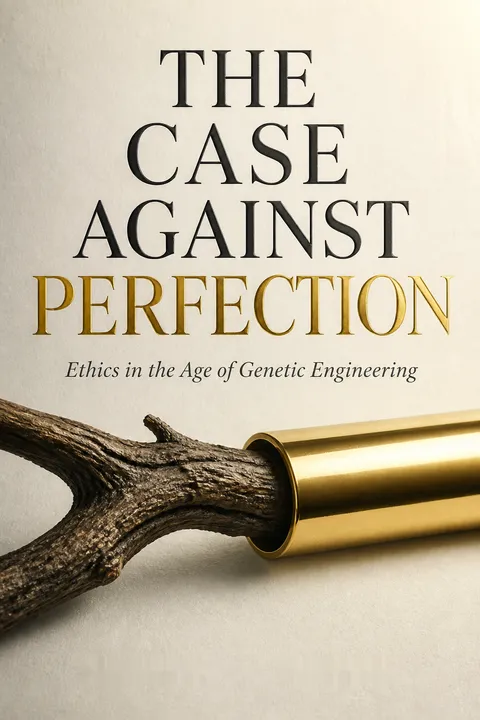
Reviews of The Case Against Perfection are largely positive, averaging 3.83/5. Readers appreciate Sandel's thought-provoking ethical questions around genetic engineering, designer babies, eugenics, and human enhancement. Many praise his use of real-world examples and balanced presentation of multiple perspectives. The book is noted for being concise yet intellectually stimulating. Some critics find his arguments against enhancement reactionary or insufficiently developed, while others value how it challenges assumptions about meritocracy, parental responsibility, and human identity. The film Gattaca is frequently mentioned as a fitting companion piece.
People Also Read





About the Author

Download PDF
Download EPUB
.epub digital book format is ideal for reading ebooks on phones, tablets, and e-readers.








































