
Key Takeaways
1. The Age of Agony: Surgery Before Anesthesia and Antiseptics
In the 1840s, operative surgery was a filthy business fraught with hidden dangers.
Brutal reality. Before the mid-19th century, surgery was a terrifying last resort, often more deadly than the disease itself. Operating theaters were public spectacles, packed with curious onlookers, where surgeons, wearing blood-encrusted aprons, rarely washed their hands or instruments. The pervasive "good old hospital stink" was accepted as a natural part of the healing process, not a sinister sign of infection.
Unimaginable pain. Patients endured excruciating agony, often restrained by assistants, as surgeons worked with brutal speed. Robert Liston, London's renowned "fastest knife," could amputate a leg in under thirty seconds, sometimes accidentally removing other body parts in the process. The trauma of witnessing such procedures often caused medical students to flee, highlighting the profound psychological toll of pre-anesthetic surgery.
A turning point. The introduction of ether in 1846, famously demonstrated by Liston, marked the end of the "age of agony" by eliminating pain. However, this newfound confidence led surgeons to undertake more invasive procedures, inadvertently worsening surgical outcomes as infection rates soared. Pain was conquered, but a greater, unseen enemy remained.
2. Lister's Formative Years: Microscope, Quakerism, and Early Doubts
The very first time he looked down the barrel of a microscope, Lister marveled at the intricate world that had previously been hidden from his sight.
Early influences. Joseph Lister's Quaker upbringing instilled in him a deep sense of purpose and a scientific curiosity, fostered by his father, Joseph Jackson Lister, a renowned microscopist. Denied frivolous pastimes, young Lister found delight in dissecting animals and meticulously sketching anatomical structures, developing an observational acuity that would define his career. His father's groundbreaking achromatic lens also taught him to trust the microscope's revelations, a tool many medical professionals still viewed with suspicion.
Personal trials. Lister's path was not without personal struggle. A severe bout of smallpox and a subsequent mental collapse led him to question his vocation, contemplating a life in the Quaker ministry. His father, however, urged him to continue his medical studies, believing he could serve God by helping the sick. This period of introspection ultimately strengthened his resolve and commitment to healing.
Unconventional education. Unlike many peers who rushed into medical degrees, Lister first completed an arts degree, which he later credited for his ability to connect scientific theories to medical practice. His early microscopic investigations, such as those on the human iris and muscle tissue, were considered esoteric by many, yet they laid the groundwork for his later groundbreaking work on inflammation and infection.
3. Hospitalism: The Unseen Killer in Houses of Death
Operating theaters were gateways to death.
Deadly environments. Victorian hospitals, despite some improvements, were often overcrowded, unsanitary "Houses of Death" where mortality rates were three to five times higher than at home. Patients, particularly the poor, languished in filth, with little ventilation or access to clean water, making them breeding grounds for virulent infections. Lister's own wards in Glasgow, despite being in a new surgical wing, were adjacent to an overflowing graveyard, contributing to the pervasive unhealthiness.
The "Big Four." Hospitals were plagued by four major infections, collectively known as "hospitalism":
- Erysipelas: Acute skin infection (St. Anthony's Fire)
- Hospital gangrene: Flesh-eating ulcers
- Septicemia: Blood poisoning
- Pyemia: Pus-filled abscesses
These conditions were considered inevitable, leading to high rates of death and amputation, and frustrating surgeons like Lister who sought to understand their arbitrary spread.
Miasma vs. Contagion. The medical community was divided on the cause of disease. Anti-contagionists believed in "miasma"—poisonous vapors from filth—while contagionists posited person-to-person transmission. Lister initially leaned towards miasma but grew increasingly frustrated as improved hygiene alone failed to curb infections. He questioned why simple fractures, where the skin remained unbroken, healed cleanly, while open wounds, even trivial ones, often proved fatal.
4. Pasteur's Revelation: Unlocking the Germ Theory of Putrefaction
Never will the doctrine of spontaneous generation recover from the mortal blow of this simple experiment.
A chemist's problem. Lister's breakthrough came after his colleague, Thomas Anderson, introduced him to the work of French chemist Louis Pasteur. Pasteur's research, initially focused on why wine and beer turned sour, challenged the prevailing belief that fermentation and putrefaction were purely chemical processes or arose from "spontaneous generation." He demonstrated that specific microorganisms, or "germs," were responsible.
Life begets life. Through ingenious experiments with swan-neck flasks, Pasteur proved that microbes were not spontaneously generated but were carried through the air on dust particles. This fundamental principle—that only life begets life—was a "mortal blow" to old doctrines and provided the scientific foundation Lister needed to understand wound infection. Pasteur's work suggested that if these airborne microbes could be excluded or destroyed, putrefaction could be prevented.
Connecting the dots. Pasteur, though not a physician, recognized the immense implications of his findings for infectious diseases, lamenting his lack of medical knowledge. Lister, however, immediately grasped the connection between Pasteur's "world of the infinitely small" and the putrid infections plaguing his hospital wards. He realized that the "poison" in the air was not miasma, but living, microscopic organisms, and the key was to destroy them in the wound itself.
5. The Antiseptic Principle: Lister's Carbolic Acid System
When I read Pasteur’s article, I said to myself: just as we can destroy lice on the nit-filled head of a child by applying a poison that causes no lesion to the scalp, so I believe that we can apply to a patient’s wounds toxic products that will destroy the bacteria without harming the soft parts of this tissue.
The search for an antiseptic. Inspired by Pasteur, Lister sought a substance that could kill germs without harming human tissue. He learned that carbolic acid (phenol), a coal tar derivative, was used in Carlisle to neutralize sewage odors and kill parasites. This led him to experiment with it, initially with mixed results, as he refined his application methods.
Compound fractures: The ideal test. Lister strategically focused his early trials on compound fractures—injuries where bone lacerated the skin, leading to high infection rates and frequent amputations. This ethical choice meant that if carbolic acid failed, amputation, an already likely outcome, could still save the patient's life. His first success was with 11-year-old James Greenlees, whose severely broken leg, contaminated with dirt, healed without suppuration after meticulous carbolic acid treatment.
Evolving methods. Lister's system was dynamic, constantly refined through experimentation:
- Dressings: Initially used carbolic-soaked putty and tin caps, later evolving to gauze and jaconet to allow drainage while maintaining antiseptic contact.
- Ligatures: Replaced traditional silk ligatures (which provided a path for infection) with carbolic-soaked catgut, which could be absorbed by the body, eliminating the need for external threads.
- Carbolic spray: Introduced to sterilize the air around the patient during operations and dressing changes, based on John Tyndall's demonstrations of airborne dust particles.
6. A Storm of Opposition: Battling Skepticism and Misunderstanding
New opinions are always suspected, and usually opposed, without any other reason but because they are not already common.
Initial resistance. Despite publishing his findings in The Lancet in 1867, Lister faced fierce opposition. Critics, including prominent figures like James Y. Simpson (discoverer of chloroform), accused him of plagiarism, claiming his methods were merely a rehash of earlier Continental practices. Simpson, a proponent of "acupressure" to prevent bleeding, saw Lister's work as a direct threat to his own innovations.
Misunderstanding the principle. Many surgeons struggled to grasp the core of Lister's "antiseptic principle"—that putrefaction was caused by invisible germs and could be prevented by destroying them. They viewed his methods as overly complicated, "meddlesome," or simply another "antiseptic mode of dressing" among many. Some even mocked the idea of "germs," refusing to believe in unseen enemies.
Practical challenges and flawed trials. Lister's system required meticulous precision, which clashed with the prevailing surgical culture that valued speed over exactitude. Surgeons often applied his methods shoddily or half-heartedly, leading to poor results that fueled skepticism. Critics also pointed to misleading hospital statistics, failing to differentiate Lister's successful outcomes from the general, still high, mortality rates in hospitals where his methods were not consistently applied.
7. Royal Endorsement and Global Spread: The Queen's Abscess and American Tour
Truth from his lips prevailed with double sway, And fools, who came to scoff, remained to pray.
The Queen's intervention. A pivotal moment came in 1871 when Lister was called to Balmoral Castle to treat Queen Victoria's life-threatening armpit abscess. Despite her initial reluctance and semi-alert state during the procedure, Lister's meticulous antiseptic approach, including the use of his carbolic spray and an improvised rubber drain, saved her life. This royal endorsement significantly bolstered faith in his methods, making it harder for critics to dismiss them.
Transatlantic skepticism. Five years later, Lister embarked on a challenging tour of America, invited to the International Medical Congress in Philadelphia by Samuel D. Gross, a prominent surgeon who hoped to discredit him. Lister faced immediate hostility, with speakers denouncing his germ theory and methods. Gross famously declared, "Little, if any faith, is placed by any enlightened or experienced surgeon on this side of the Atlantic in the so-called treatment of Professor Lister."
Conversions and disciples. Undeterred, Lister lectured across the continent, demonstrating his techniques. His dedication and the visible success of his methods gradually won over key figures, including William Van Buren and, crucially, Henry Jacob Bigelow, who had previously banned antisepsis at Massachusetts General Hospital. Bigelow's conversion led to the institutional adoption of carbolic acid, marking a turning point for American surgery and creating a growing cadre of "Listerians" who would spread his gospel.
8. The Enduring Legacy: From Butchery to Modern Surgical Science
You have changed Surgery … from being a hazardous lottery into a safe and soundly-based science.
A scientific revolution. Lister's work, rooted in Pasteur's germ theory, transformed surgery from a "hazardous lottery" into a "safe and soundly-based science." He merged medicine and science, shifting the focus from treating symptoms to preventing infection, and from speed to meticulous precision. This paradigm shift opened up new frontiers, allowing surgeons to delve deeper into the living body without the near-certainty of fatal postoperative infection.
Widespread adoption and accolades. Though initially met with resistance, Lister's antiseptic system eventually gained global acceptance, particularly in Germany and later in Britain and America. He received numerous honors, including knighthood, a baronetcy, and a peerage (Lord Lister of Lyme Regis). His work inspired a new generation of hygiene products, most famously Listerine, and led to the founding of Johnson & Johnson, which mass-produced sterile surgical dressings.
The evolution to asepsis. As understanding of microbiology advanced, the medical community gradually transitioned from antisepsis (germ-killing) to asepsis (germ-free practices), which involved sterilizing everything in the patient's vicinity. While Lister initially resisted this shift, believing antisepsis was more practical for operations outside hospitals, his foundational work laid the groundwork for modern sterile surgical techniques. His legacy is not just in saving countless lives, but in establishing the scientific rigor and meticulousness that define contemporary surgery.
Review Summary
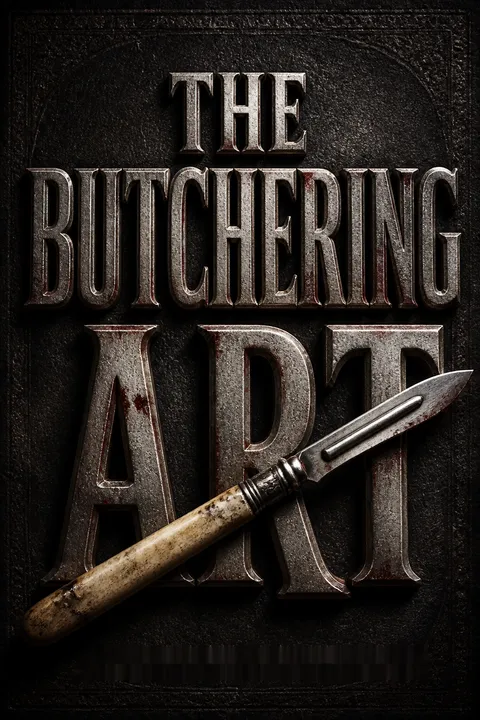
The Butchering Art chronicles surgeon Joseph Lister's revolutionary transformation of Victorian medicine through antiseptic practices. Readers praise Fitzharris's well-researched, engaging narrative about 19th-century surgical horrors—bloody operations without anesthesia, unwashed instruments, filthy hospitals where infection killed most patients. Lister, inspired by Pasteur's germ theory, introduced carbolic acid and sterile techniques despite fierce resistance from colleagues. Reviews highlight the book's atmospheric, often gruesome descriptions that vividly recreate Victorian medical practices. Most find it fascinating and accessible, though some note biographical portions drag. Readers appreciate learning how one determined physician saved countless lives by proving microorganisms caused infections, fundamentally changing surgical practice worldwide.
People Also Read

Download PDF
Download EPUB
.epub digital book format is ideal for reading ebooks on phones, tablets, and e-readers.








































