
Plot Summary
Aftermath of a Burning Field
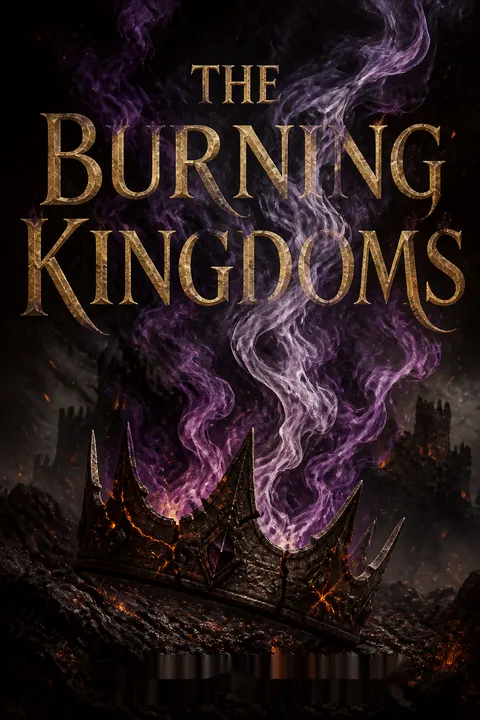
The story opens in the smoldering aftermath of a battle in Northern Pitoria. Young Prince Harold, now heir to Brigant after his sister Catherine killed their brother Boris, walks among the corpses, savoring his sudden elevation. The Pitorians have won, but Harold is undaunted, intoxicated by the demon smoke that grants him unnatural strength. He dreams of leading a boy army, surpassing his brother's legacy, and sends a chilling message to Catherine, promising vengeance. The field is a graveyard, but for Harold, it is a beginning—a place where ambition and cruelty take root, and the seeds of a new, more terrifying war are sown.
Queen in the Mud
Catherine, now Queen of Pitoria, wakes to the misery of a rain-soaked army camp. Her husband, King Tzsayn, is gravely ill, his leg infected and mind haunted by torture. The camp is plagued by disease and filth, and Catherine must make hard decisions—move the camp, care for her soldiers, and manage a kingdom nearly bankrupt from war. She is haunted by the necessity of killing her brother Boris, but feels no regret, only resolve to end her father's reign of terror. As she tours the camp, she is reminded that war is not only fought on battlefields but in the endless, grinding labor of leadership.
Wounds, Fever, and Waiting
Ambrose, Catherine's loyal bodyguard and secret love, lies wounded in the infirmary, surrounded by men dying of fever. He aches for news of Catherine, tormented by rumors and the impossibility of their love. Tanya, Catherine's maid, brings him food and a warning: Catherine cannot be seen with him, for her reputation and the stability of the realm depend on appearances. Ambrose is torn between his desire for Catherine and his duty as a soldier. He is reminded that loyalty and sacrifice are demanded again and again, and that love must sometimes be set aside for the greater good.
Heirs and Inheritance
Edyon, newly recognized as Prince of Abask and heir to Calidor, navigates the treacherous politics of his father Thelonius's court. His legitimacy is a fragile fiction, resented by the lords, and his loyalty is questioned because of his Pitorian heritage. Edyon tries to warn Calidor of the threat posed by Brigant's boy army and the demon smoke, but is met with skepticism and political maneuvering. A demonstration of the smoke's power impresses some, but not all. Edyon's struggle is not only for acceptance but for the soul of a country that fears both its enemies and its allies.
Exile and Betrayal
March, banished from Calidor for his role in an assassination plot, crosses into Brigant, alone and starving. He is haunted by his betrayal of Edyon, the boy he loves, and by the destruction of his Abask people. March survives by theft and cunning, eventually joining the infamous boy army. He befriends Sam, a runaway, and together they seek a place among the brutal, smoke-fueled brigades. March's journey is one of self-loathing and longing, as he tries to find redemption and a way to help Edyon, even as he is swept up in the violence of war.
Boy Army Rising
The boy army, led by charismatic and ruthless boys like Rashford, is trained and transformed by the demon smoke. March and Sam endure brutal initiation rites and relentless drills, learning that their power is fleeting—when they "man up," the smoke will no longer work, and they will be discarded. The army is a family for the lost and the desperate, but it is also a machine of destruction, fueled by the ambitions of Harold and the cruelty of King Aloysius. The boys are both victims and perpetrators, caught in a system that values strength and obedience above all.
Demon World's Secrets
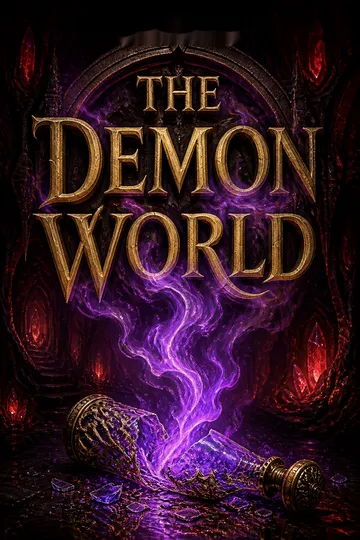
Tash, a young demon hunter, is trapped in the suffocating darkness of the demon world, encased in stone by the very beings she once hunted. She survives by recalling memories of her friend Gravell and by discovering a strange power within herself—a wisp of demon smoke that allows her to tunnel through stone. As she escapes, she realizes the demon world is changing: the demons are retreating, the tunnels are closing, and the smoke is building to something catastrophic. Tash's journey is one of survival, transformation, and a growing sense that the fate of the world above is tied to the mysteries below.
Alliances and Hesitations
Catherine desperately seeks an alliance with Calidor, but is met with empty gestures and self-serving advice. The Calidorians, fearful of losing their independence, send only token support—two old men and a handful of small ships. Catherine is furious but must accept what little help she can get. Meanwhile, Edyon's warnings about the boy army are dismissed, and political intrigue festers. Thelonius's court is rife with suspicion, and Edyon uncovers a plot against his father. The failure of true alliance leaves both kingdoms vulnerable as the Brigantine threat grows.
The Price of Smoke
The demon smoke, once a source of miraculous strength and healing, reveals its dark side. Catherine discovers it no longer works for her—she is too old, or perhaps too changed. The boy army is addicted to it, but their power is temporary, and their fate is grim. The Brigantines farm the smoke relentlessly, but the supply is finite, and the process is destroying the demon world. The smoke is both a weapon and a curse, binding its users to a cycle of violence and dependency. Its true cost is measured in lives, innocence, and the unraveling of the natural order.
Coronations and Crowns
Edyon is crowned Prince of Abask in a lavish ceremony, but the event is marred by mishaps and the ever-present tension of court politics. Thelonius's trust in his son is tested by rumors and the machinations of the lords. Meanwhile, Catherine and Tzsayn's marriage is formalized, a union born of necessity but deepened by mutual respect and affection. Both rulers must navigate the expectations of their people, the demands of war, and the complexities of their own hearts. The trappings of power are heavy, and the line between performance and reality is thin.
The Wall Breached
Harold leads the boy army in a daring assault on Calidor's great wall, using ingenious metal bridges and the superhuman abilities granted by the smoke. The Calidorians are caught off guard, and the boys swarm over the defenses, slaughtering soldiers and civilians alike. The fall of the wall is swift and brutal, a testament to the terrifying new warfare unleashed by Brigant. March, now deep within the boy army, witnesses the horror and resolves to do what he can to protect Edyon, even as the world around him descends into chaos.
The Fall of Calia
The boy army storms Calia Castle, overwhelming its defenders and unleashing carnage on the city. Edyon flees through secret tunnels but is eventually captured and imprisoned, awaiting execution. March, torn between loyalty and love, plots to kill Harold and save Edyon, but is betrayed by Sam and the Gold Brigade. Rashford and other boys, disillusioned by Harold's cruelty, join March in a desperate, failed coup. The city is a charnel house, and hope seems lost as Edyon and March are led to their deaths.
The Demon World Collapses
Tash, Ambrose, and the Demon Troop infiltrate the demon world, guided by Tash's newfound powers and the enigmatic demon Twist. They destroy the Brigantine smoke store, unleashing a torrent of purple smoke that begins to turn white and deadly. Frost, an Abask girl who has aided the Brigantines, reveals that the demon world is ending—the smoke will soon become a lethal force, burning all who possess it. The Demon Troop escapes just in time, as the tunnels collapse and the last of the demons return to the core, sacrificing themselves to create a new world elsewhere.
White Smoke, White Death
As the demon world collapses, the smoke in the human world turns white and deadly. Bottles explode, and boys who have inhaled the smoke are consumed by fire from within. Harold, Sam, and the boy army perish in agony, their power turned against them. In Calia, Edyon and March narrowly escape execution as the chaos erupts, saving each other and the few survivors. In Pitoria, Catherine and Ambrose use the last of the smoke to destroy Aloysius and Noyes, as the Brigantine army is engulfed by the white cloud. The era of demon smoke ends in flames and death.
The End of Kings
With the deaths of Aloysius and Thelonius, the old order collapses. Catherine claims the throne of Brigant, uniting it with Pitoria, while Edyon becomes the reluctant ruler of Calidor. Both must contend with the scars of war, the loss of loved ones, and the challenge of rebuilding shattered nations. The survivors—March, Rashford, Tash, Ambrose—find new roles in a world forever changed. The age of kings and smoke is over, and a new era begins, shaped by those who endured.
Lovers and Survivors
In the aftermath, Edyon and March are reunited, their love tempered by suffering and loss. Catherine and Tzsayn rule together, forging a partnership of equals. Ambrose, though his heart aches for Catherine, finds purpose in restoring his family's lands. Tash, now Lady of the Northern Plateau, returns to the wilds with Geratan, haunted by memories but free at last. The survivors gather to honor the dead and celebrate the fragile peace they have won, knowing that the future is uncertain but theirs to shape.
New Orders, New Worlds
The kingdoms of Brigant, Pitoria, and Calidor are transformed. Catherine and Tzsayn explore new forms of government, inspired by Illast's elected officials. Edyon considers relinquishing his title, offering March the land of Abask as a gesture of love and restitution. The demon world is gone, but its legacy endures in the lessons learned and the bonds forged. The survivors look to the future, determined to build a world where justice, kindness, and freedom matter more than power and fear. The story ends with hope—a world remade not by smoke or swords, but by the choices of those who remain.
Analysis
A modern epic of power, trauma, and transformationThe Burning Kingdoms is a sweeping conclusion to Sally Green's trilogy, blending fantasy, political intrigue, and psychological realism. At its heart, the novel interrogates the nature of power—who wields it, who suffers for it, and how it can be remade. The demon smoke, both gift and curse, is a potent metaphor for the allure and danger of unchecked ambition, addiction, and the exploitation of the young by the old. The story's multiple perspectives invite empathy for even the most flawed characters, revealing the deep wounds left by violence and the longing for connection that persists despite it. The collapse of the demon world and the self-destruction of the boy army serve as both literal and symbolic endings to an era defined by brutality. Yet, the novel is ultimately hopeful: survivors choose love over vengeance, justice over retribution, and the possibility of a new world over the ruins of the old. The lesson is clear—cycles of violence can be broken, but only by those willing to face the truth, accept change, and build something better from the ashes.
Review Summary
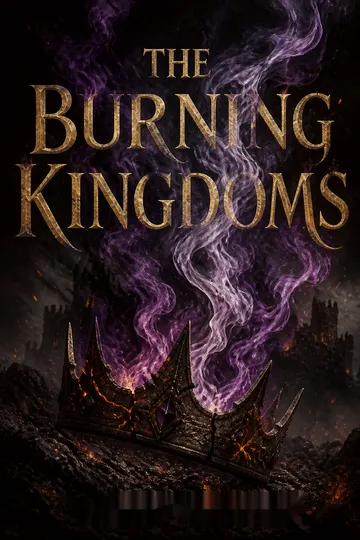
The Burning Kingdoms receives mixed reviews, with an average of 3.84 stars. Readers appreciate the engaging characters, particularly Catherine, Tzsayn, and Tash, and the world-building. Many praise the political intrigue and fast pacing. However, common criticisms include a rushed, anticlimactic ending with convenient plot resolutions, underdeveloped storylines for some characters like Tash and Ambrose, and the demons disappearing too easily. Some felt the final battle lacked stakes and character deaths. Despite disappointment with the conclusion, most readers found the trilogy entertaining and satisfying overall, recommending it for YA fantasy fans.
People Also Read
Characters
Catherine
Catherine is the daughter of King Aloysius of Brigant, raised in a world of cruelty and manipulation. Forced into a political marriage with Tzsayn, she becomes Queen of Pitoria and, through necessity, a killer—murdering her brother Boris to save herself and her people. Catherine's journey is one of transformation: from pawn to ruler, from victim to agent of change. She is haunted by the violence she has committed but refuses to be defined by it, striving to end the cycle of violence that shaped her family. Her relationships—with Tzsayn, Ambrose, and Tanya—reveal her longing for love, justice, and a better world. Catherine's greatest strength is her ability to adapt, to lead with both compassion and resolve, and to choose truth over comfort, even when it costs her dearly.
Ambrose
Ambrose is the son of a disgraced Brigantine noble, exiled for his family's supposed treason. He becomes Catherine's bodyguard and confidant, risking everything for her safety and happiness. Ambrose is defined by loyalty—to Catherine, to his lost siblings, and to the ideals of justice and honor. His love for Catherine is deep but ultimately unrequited, forcing him to find meaning beyond personal desire. Ambrose's journey through injury, despair, and the horrors of war is marked by resilience and self-sacrifice. He leads the Demon Troop into the heart of danger, confronting both external enemies and his own inner demons. In the end, Ambrose finds a measure of peace in reclaiming his family's lands and accepting his place in a world that has changed beyond recognition.
Edyon
Edyon is the illegitimate son of Thelonius, Prince of Calidor, raised in obscurity and marked by a compulsion to steal. His sudden elevation to heir is fraught with insecurity, as he struggles to prove his worth to a suspicious court and a distant father. Edyon's journey is one of self-acceptance and courage: he risks everything to warn of the boy army's threat, uncovers a plot against his father, and survives the fall of Calia. His love for March is a source of both pain and strength, grounding him in a world of shifting loyalties. Edyon's greatest challenge is to reconcile his past with his future, to lead without losing himself, and to build a new order where he—and others like him—can finally belong.
March
March is an Abask, a people destroyed by Brigant and betrayed by Calidor. Once a servant to Thelonius, he becomes a pawn in political schemes, ultimately banished for his role in an assassination attempt. March's journey is one of guilt and longing: he betrays Edyon, the boy he loves, but cannot escape the need to make amends. Joining the boy army, March is both participant and witness to its horrors, struggling to retain his humanity. His relationship with Edyon is the emotional heart of his story—a love marked by regret, forgiveness, and the hope of a better future. March's final act, the attempt to kill Harold and save Edyon, is both a reckoning and a release, allowing him to reclaim agency and, at last, a sense of home.
Harold
Harold is the youngest son of Aloysius, thrust into the role of heir after Catherine kills Boris. Small, cunning, and cruel, Harold is intoxicated by the power of demon smoke and the adulation of the boy army. He is both a victim of his father's brutality and a willing perpetuator of it, delighting in violence and spectacle. Harold's psychological complexity lies in his insecurity and need for validation, which he seeks through domination and cruelty. His rise is meteoric, but his fall is inevitable—consumed by the very power he sought to wield. Harold's story is a cautionary tale of unchecked ambition and the dangers of making monsters out of children.
Tzsayn
Tzsayn, King of Pitoria, is a man marked by physical and emotional scars. Tortured by Aloysius, he emerges as a ruler committed to justice and peace. His marriage to Catherine, initially a political necessity, becomes a genuine partnership, grounded in mutual respect and shared vision. Tzsayn's struggle with illness and disability is met with dignity and determination, and his willingness to embrace new ideas—such as more democratic governance—marks him as a progressive leader. Tzsayn's greatest strength is his humility and his ability to inspire loyalty, not through fear, but through kindness and integrity.
Rashford
Rashford leads the Bull Brigade, earning the admiration and loyalty of his boys through skill and fairness. He is both a product and a critic of the boy army system, recognizing its brutality but unable to escape it. Rashford's relationship with March is one of wary respect, and his eventual participation in the failed coup against Harold marks his transition from loyal soldier to reluctant rebel. Rashford's fate is emblematic of the countless young lives consumed by war—brave, capable, and ultimately expendable.
Tash
Tash is a young demon hunter whose ordeal in the demon world transforms her. Trapped and nearly broken, she discovers a unique power to tunnel through stone, a gift from the very beings she once hunted. Tash's journey is one of self-discovery and reconciliation: she learns to see the demons as more than monsters and becomes instrumental in ending the cycle of exploitation. Her friendship with Geratan and her memories of Gravell ground her, while her actions shape the fate of both worlds. Tash embodies resilience, adaptability, and the possibility of redemption.
Frost
Frost is an Abask girl who survives by aiding the Brigantines in their exploitation of the demon world. Gifted with the ability to read thoughts, she is both a victim and a perpetrator, navigating a world that offers her little mercy. Frost's motivations are complex—she seeks freedom, security, and perhaps revenge. Her interactions with Tash and Ambrose reveal a character shaped by trauma, capable of both cruelty and insight. Frost's ultimate fate is ambiguous, a reminder that survival often comes at the cost of innocence.
Aloysius
Aloysius is the ruthless king of Brigant, whose ambition and cruelty set the events of the trilogy in motion. He is a master manipulator, willing to sacrifice anyone—including his own children—for power. Aloysius's psychological makeup is defined by paranoia, pride, and a profound inability to love. His downfall is both personal and political, as he is consumed by the very forces he unleashed. Aloysius represents the dangers of absolute power and the necessity of its end.
Plot Devices
Multiple Perspectives and Interwoven Narratives
The novel employs a rotating cast of point-of-view characters—Catherine, Ambrose, Edyon, March, Tash, and others—each with distinct voices, motivations, and arcs. This structure allows the reader to experience the war and its consequences from multiple angles: the ruler, the exile, the lover, the victim, the survivor. The interwoven narratives create a tapestry of interconnected fates, where choices ripple outward and no one is untouched by the conflict. The shifting perspectives also serve to humanize even the antagonists, revealing the psychological costs of violence and the longing for connection beneath the surface of power struggles.
Demon Smoke as Symbol and Catalyst
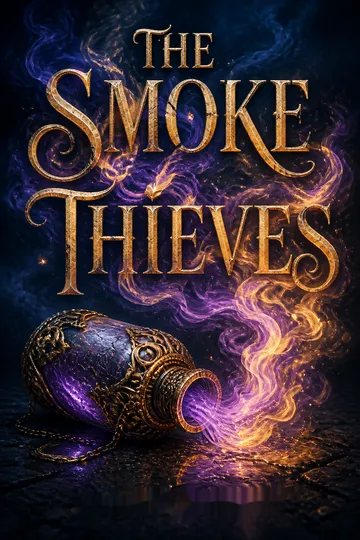
The purple demon smoke is the central plot device, granting superhuman abilities to the young but ultimately dooming them. It is both a literal weapon and a metaphor for the corrupting influence of power, addiction, and the exploitation of the vulnerable. The smoke's transformation into a deadly white cloud mirrors the collapse of the old order and the self-destructive nature of unchecked ambition. Its connection to the demon world underscores the theme of unintended consequences—what is taken without understanding will eventually turn on its takers.
Foreshadowing and Cyclical Violence
The narrative is rich with foreshadowing—songs, prophecies, and the memories of past wars all hint at the dangers ahead. The cycle of violence, betrayal, and revenge is a constant undercurrent, embodied in the relationships between parents and children, rulers and subjects, lovers and enemies. The story's structure, with its echoes of earlier events and the eventual breaking of the cycle through acts of mercy, love, and self-sacrifice, reinforces the idea that history will repeat until individuals choose a different path.
Political Intrigue and the Limits of Power
The struggle for power is not only fought on battlefields but in council chambers, bedrooms, and secret tunnels. Legitimacy is shown to be a fragile construct, dependent on perception, performance, and the willingness to bend the truth. The failure of alliances—between Pitoria and Calidor, between rulers and their people—exposes the dangers of mistrust and the necessity of cooperation. The ultimate victory is not won by force alone, but by those who can adapt, forgive, and imagine a new order.
The Smoke Thieves Series
About the Author
Other books by Sally Green





Download PDF
Download EPUB
.epub digital book format is ideal for reading ebooks on phones, tablets, and e-readers.








































