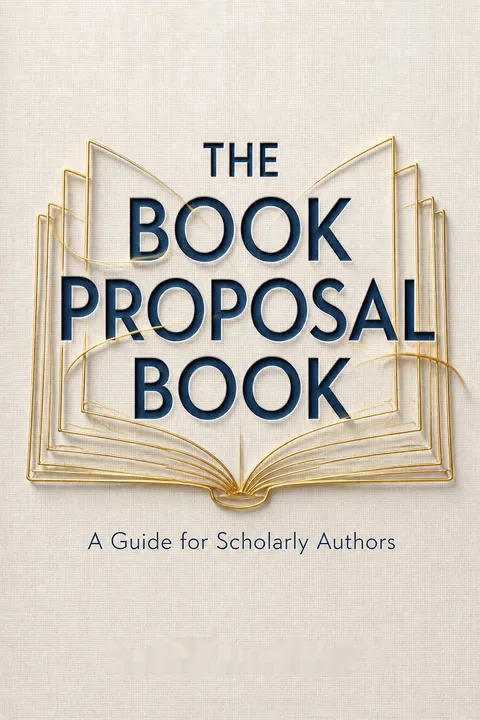

Key Takeaways
1. Understand the Publishing Ecosystem: Fit is Paramount
The first step in creating a successful proposal package is understanding how that package will pass through the hands of the preliminary readers who will participate in the decision as to whether your “book proj ect” will one day become your book.
Preliminary readers. Your book proposal will first be evaluated by a series of preliminary readers, including acquisitions editors, series editors, expert peer reviewers, and the publisher's internal staff and editorial board. Each of these readers assesses your project through a specific lens, but all are looking for a compelling reason to invest in your book. Understanding their perspectives is crucial for tailoring your pitch.
The acquisitions process. This journey begins with initial contact with an editor, potentially leading to a request for a full proposal. If promising, the project moves to peer review, where expert scholars evaluate your materials. Positive reviews can lead to internal committee and editorial board approval, culminating in a contract offer. Editors act as your advocates, guiding your project through these stages.
Importance of fit. A key factor in securing a contract is how well your manuscript "fits" with the publisher's existing list and marketing capabilities. Editors prioritize projects that align with their subject areas and for which they can envision a clear path to reaching readers. Researching and targeting presses known for publishing similar books significantly increases your chances of success.
2. Your Proposal is a Sales Pitch, Not a Dissertation
An author who understands the power of a strong proposal in the publishing pro cess is an author with more power over the fate of their book.
Beyond academic rigor. While intellectual rigor is assumed, scholarly publishers primarily seek two things: a substantial intellectual contribution and the potential to attract a sizable readership. Your proposal must inspire confidence that your book is a worthwhile investment, capable of engaging hundreds or thousands of readers. This means moving beyond merely "filling a gap in the literature."
Focus on impact and appeal. Instead of defensively proving your research's rigor, articulate your original argument and its real-world stakes. Editors want to know why your findings matter and who will care enough to read (and purchase) your book. A compelling topic, unique qualities, and clear significance are more persuasive than exhaustive literature reviews.
Write for an engaged reader. Frame your work for an intelligent person who is genuinely interested in your topic, not just a dissertation committee. This approach fosters more natural, lively writing that demonstrates your ability to connect with a broader audience. Your proposal is your chance to show that your book will be a powerful, readable contribution.
3. Craft a Compelling Core Argument: Thesis and One-Liner
A strong argument can push a field in new directions, thus making a clear intellectual contribution and burnishing the press’s overall reputation in that area.
The heart of your book. Your book's thesis is the core argument that drives every element of the manuscript. It's not just a claim, but an explanation of a phenomenon that expands readers' understanding and advances your field. A compelling thesis theorizes relationships, inviting agreement or disagreement, and leaves readers with a memorable "big idea."
Expanding readership. A capacious, explanatory thesis offers readers scope for identification, allowing them to see how your discoveries might apply to their own interests. This broader contribution transcends your specific research site, making your book useful to a wider scholarly audience and ensuring its longevity beyond fleeting trends. It also provides a clear narrative purpose for your entire manuscript.
Distill your message. To effectively communicate your argument, condense it into a one-paragraph summary for your project description and a single, attention-grabbing "one-liner" for marketing. These concise statements should capture what makes your book important and interesting, serving as hooks for editors, booksellers, and potential readers. Practice articulating your one-liner until it's second nature.
4. Define Your Audience Realistically and Strategically
A book with a small, but well- conceived audience can be easier to sell, and may even sell more copies, than one where no prospective reader is quite sure whether the book is for them or not.
Beyond "general readers." Publishers need a clearly defined audience to effectively market and distribute your book. Avoid vague terms like "general educated reader"; instead, be specific about who your book is for. Your vision for your book's readership must be compatible with your publisher's ability to reach them through established channels.
Four key audience types:
- Other scholars: Those in your specific research areas, including advanced graduate students.
- Students: Undergraduates and graduate students in specific courses (e.g., introductory, upper-level).
- Practitioners: Activists, policymakers, journalists, or public educators with a practical need for your scholarship.
- General readers: Individuals united by an interest in a specific topic (e.g., birds and wildlife, technology's role in society).
Evidence of reach. Use an author questionnaire to identify your existing reach, listing conferences, invited talks, media appearances, organizations, and publications where your work has gained interest. This demonstrates your capacity to connect with your target audiences. Prioritize one or two core audiences to help marketing efforts, and be realistic about crossover potential.
5. Leverage Comparable Titles to Showcase Market Viability
When a publisher asks about “competing” or “comparable” works, what they mean is “books that sold to the same types of people and in similar numbers as the one you are hoping to publish.”
Audience and market, not just literature. The "comps" section is crucial for publishers to gauge your book's sales potential and target readership. Unlike a literature review, it focuses on recently published books from comparable publishers that appeal to similar audiences. This helps editors understand how to position your book in the marketplace.
Highlighting distinction and complementarity. For each comparable title, provide the author, publisher, year, and a brief description. Then, explain what makes your book unique and appealing as an alternative or complement. Focus on aspects like your topic, approach, research sites, methods, or writing style. Avoid criticizing other books; instead, show how your book fills a market space.
Strategic selection. Choose 3-8 comps, primarily from university presses if you're targeting one. Include at least one recent, well-received book from your target press to demonstrate familiarity with their list and reinforce fit. This section helps marketing and sales teams understand how to price, print, and catalog your book, making it a sensible investment.
6. Structure Your Book for Clarity and Narrative Impact
The chapter summaries are your chance to show in more detail exactly what the structure of the manuscript will be and how the component parts will work together to build the overall thesis.
The project description: a holistic overview. This centerpiece of your prospectus should hook the reader, state your book's big takeaway, elaborate on its core argument and conclusions, explain what's at stake, discuss its scholarly contribution, detail your evidence and methods, outline the general arc, and identify your target audience. It's your opportunity to show that your project has everything an editor seeks.
Chapter summaries: building the argument. Each chapter summary should present a mini-argument that explicitly supports the book's overarching thesis. Avoid merely describing topics or findings; instead, state what each chapter argues and its specific takeaway. Detail the evidence, research sites, objects, and methods used in each chapter, and explain its relationship to the overall arc of the book.
Exposing the through-line. Use transitional language between chapter summaries to demonstrate how each chapter builds on the previous one, propelling readers through the story of your research. A clear through-line ensures coherence and shows that you understand the greater significance of your work. This thoughtful organization will impress acquisitions editors and enhance reader engagement.
7. Titles are Marketing Tools: Make Them Clear and Engaging
Your book’s title is actually “first and foremost a marketing tool” that lets potential readers know your book is for them.
Beyond cleverness. Your book's title is a critical marketing tool that should immediately convey its topic, purpose, and style. Avoid cryptic or overly clever titles that might confuse potential readers or hinder search engine optimization (SEO). A clear, descriptive title is preferable to an obscure one, especially in a proposal.
Subtitles for clarity. If your main title is creative, use a subtitle to provide descriptive information, filling in details about the book's scope and contribution. However, avoid packing too much information into the subtitle, as this can make it hard to recall or find online. The goal is to grab attention and make readers want to learn more.
Chapter titles as a roadmap. Chapter titles also serve as metadata and a roadmap for readers. Craft them to reveal the chapter's argument and how it fits into the book's larger thesis. Incorporate keywords and verbs to make them engaging and informative. A well-titled table of contents reinforces coherence and compels readers to explore further.
8. Cultivate a Confident and Accessible Authorial Voice
Editors look for authors who write with strong, distinctive voices that readers will want to connect with.
Be "good company." Your writing style in the proposal should convey your unique voice, making the implicit case that your book will be distinctive and engaging. Editors seek authors who are "good company" for the duration of the book, demonstrating clarity, confidence, and an ability to connect with readers.
Avoid common pitfalls:
- Overusing disciplinary jargon: Define specialized terms or ensure their meaning is clear from context. Aim for plain language to reach broader audiences.
- Dwelling on other scholarship: Briefly acknowledge influences, but keep the focus on your project and your original contribution.
- Excessive direct quotation: Synthesize ideas elegantly into your own words to demonstrate mastery.
- Passive voice: Use active voice to make strong claims and reveal actors, agency, and power.
- Hedgy language: Avoid words that weaken your authority or suggest uncertainty.
Own your authority. If you recognize these stylistic issues, it may indicate a lack of confidence in your scholarly voice. Practice reading your proposal aloud to identify areas that sound inauthentic or overly academic. Embrace your expertise and write with the conviction that your argument is worth sharing.
9. Showcase Your Author Platform and Credentials
If you have a rec ord of presenting at conferences, publishing in journals and other venues, winning awards, and other wise being active in the acad emy in a way that gets your name and your research expertise out there, that all contributes to your ability to attract readers.
Beyond the PhD. Your qualifications for writing a scholarly book extend beyond your advanced degree. Publishers look for academic credentials like research experience, previous publications, and relevant teaching/research posts. These establish your expertise and authority on your topic.
Building your author platform. This refers to your ability to generate interest and sales for your book based on your personal brand. It includes:
- Academic recognition: Conference presentations, journal publications, awards, and active participation in scholarly communities.
- Public engagement: Social media presence, widely read blogs, public talks, media appearances, and being quoted as an expert by journalists.
- Networking: Connections with colleagues, co-panelists, and scholars who respect your work.
Tailor your CV and bio. Your author biography and a truncated CV should highlight accomplishments most relevant to this specific book and your ability to promote it. Make your research discoverable online by updating your websites and social media profiles with keywords and descriptions of your in-progress manuscript.
10. Master the Submission and Peer Review Process
Your editor is there to help you, so don’t be afraid to ask what you think might be a silly question or to be forthcoming about your needs and your goals for your book.
Initial connection. When reaching out to editors, aim for a human connection. Start with an informal email requesting a brief meeting or call, concisely summarizing your project. Be transparent about simultaneous submissions, but always tailor your proposal to each publisher's specific requirements.
Navigating peer review. If your project proceeds to peer review, celebrate this significant hurdle cleared. Understand that reviewers' reports are not final decisions but recommendations. Your response to these reports is a "revision plan," demonstrating your capacity to strengthen the manuscript, not a rebuttal. Focus on addressing major themes and providing concrete, realistic solutions.
Offers and contracts. An offer signifies the publisher's genuine interest. Read the contract carefully, understanding every clause. While scholarly publishing offers limited financial negotiation, you can discuss royalties, design input, or marketing aspects important to you. Prioritize the press and editor who best support your vision, and don't hesitate to ask questions.
11. Proactive Promotion is Essential, Starting Early
Your goals for your book prob ably involve some readers somewhere actually reading it, and readers can’t read it if they don’t know about it.
Beyond writing. Finishing your manuscript is just one step; getting it into readers' hands requires proactive promotion. Start early by creating a "Book Promotion" document to collect ideas for endorsements, cover copy, keywords, target audiences, course adoption features, media contacts, and awards.
The author questionnaire. This comprehensive form, often tedious, is your chance to provide the marketing department with all the information they need. Transfer material from your proposal, generate various length summaries, and list influential figures for blurbs. Your input is invaluable for crafting effective marketing copy and identifying promotional angles.
Collaborate with your publicist. Once assigned, work closely with your publicist to coordinate efforts. This includes:
- Creating promotional materials: Flyers, discount codes, and announcements for your networks.
- Media outreach: Pitching op-eds, essays, or interviews to relevant publications, podcasts, and news outlets.
- Events and awards: Arranging book talks, conference appearances, and submitting your book for relevant awards.
Don't be shy about advocating for your book; you are its biggest champion.
People Also Read





Download PDF
Download EPUB
.epub digital book format is ideal for reading ebooks on phones, tablets, and e-readers.








































