
Plot Summary
The Bound Abbot's Curse
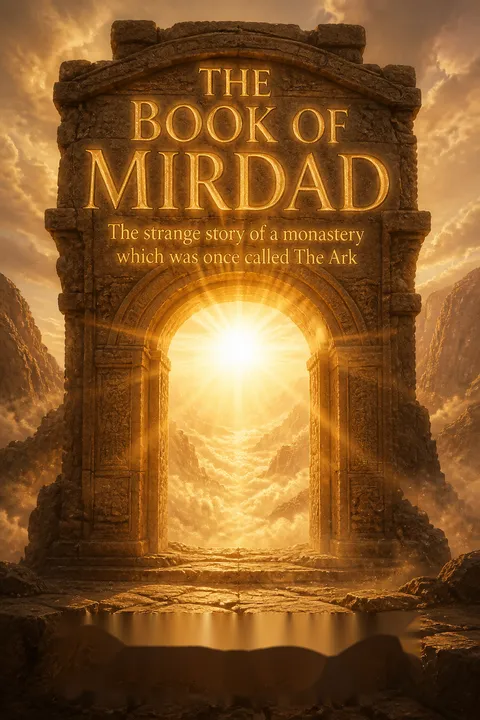
On the desolate Altar Peak, the ruins of a monastery called the Ark stand as a testament to ancient faith and human frailty. Legend tells of Noah's descendants building the Ark as a sanctuary for nine chosen men, echoing the original Ark's passengers. But when a proud abbot, Shamadam, denies entry to a mysterious stranger, tradition is broken. The stranger, accepted only as a servant, brings a curse: the abbot is struck dumb and bound to the grounds, doomed to wander in silence. The Ark, once a beacon of faith, becomes corrupted by wealth and pride, its spiritual purpose lost. The tale haunts the narrator, who is compelled to seek the truth behind the legend and the fate of the bound abbot.
Ascent Through Flint Slope
Driven by restless longing, the narrator chooses the perilous Flint Slope to reach the Ark, ignoring warnings of certain doom. The climb is brutal, stripping him of provisions, clothing, and pride. Along the way, he encounters enigmatic figures—a goatherd, a maiden, an old couple—each stripping him further, physically and spiritually, through riddles and deprivation. The journey becomes a crucible, demanding the surrender of all possessions and self-conceptions. At the brink of exhaustion and death, the narrator falls into the Black Pit, echoing the legend's theme: "Die to live, or live to die." The ordeal is a symbolic death, preparing him for rebirth.
Keeper of the Sacred Book
Awakening on the summit, the narrator is tended by Shamadam, now able to speak. Shamadam recounts his long penance, awaiting the arrival of one who would come naked, staffless, and provisionless—the sign of the true messenger. He reveals the story of Mirdad, the mysterious servant who transformed the Ark, and the abbot's own downfall through pride and resistance. Shamadam's confession is one of deep regret and recognition of Mirdad's spiritual authority. He entrusts the narrator with the Book of Mirdad, the record of the Master's teachings, before vanishing, his penance fulfilled. The narrator is left with the sacred text and a sense of awe at the mystery he has inherited.
Mirdad Breaks His Silence
Within the Ark, Mirdad, silent for seven years, finally speaks. His words are transformative, challenging the companions to look beyond the veils of perception and the seals of language. He teaches that the "I" is the creative word, the source of all division and suffering, and that true understanding comes from unveiling the self. Mirdad's presence unsettles the established order, especially Shamadam, whose authority is undermined by the Master's spiritual insight. The companions are drawn to Mirdad's wisdom, sensing the birth of a new era within the Ark, even as old patterns of pride and resistance persist.
The Creative Word Unveiled
Mirdad expounds on the nature of the creative word, "I," as both the source of creation and the root of division. He teaches that man's suffering arises from identifying with the swaddling-bands of flesh, time, and space, rather than the divine essence within. The misuse of "I" leads to conflict, judgment, and separation, while its true understanding brings unity and peace. Mirdad urges the companions to seek the perfect balance—the holy trinity of consciousness, word, and understanding—mirroring the divine. The lesson is both liberating and unsettling, challenging each to confront their own illusions.
The Law of Love
Mirdad declares that love is the law of God, the sap of life that unites all things. He warns against partiality, judgment, and the repression of love, which breeds hatred and suffering. True love is all-embracing, dissolving the boundaries between self and other, friend and foe. The companions are called to examine their own hearts, to heal estrangements, and to recognize that all enmity is self-enmity. Through a hymn and parable, Mirdad reveals that only by loving all can one truly love oneself and approach the divine. The teaching is both a balm and a challenge, demanding the surrender of all lesser loves.
Shadows, Duality, and the Self
Mirdad addresses the companions' confusion and conflict, revealing that all judgment and suffering arise from the illusion of duality. Man, a god in swaddling-bands, is trapped by the senses and the divided "I." The world's pain is the reflection of inner division, and the path to freedom lies in understanding and unifying the self. Mirdad warns against the pride of authority, the delusion of mastery, and the futility of external power. Only by embracing the unity of all things, and dissolving the boundaries of self, can one attain peace. The companions are left to wrestle with their own shadows.
The Coming Flood Foretold
In nocturnal conversations, Mirdad hints at a coming flood—not of water, but of fire and blood, a crisis of the spirit. He warns that humanity is entangled in nets of its own making, and that only those who are ready, strong, and luminous will survive the deluge. The flood is both a personal and collective trial, a metaphor for the upheaval required to birth a new consciousness. Mirdad calls the companions to prepare, to become beacons for the world, and to embrace the weak, the hungry, and the blind as their own. The prophecy is both a warning and a call to transformation.
Judgment, Understanding, and Freedom
Mirdad rejects the notion of judgment, teaching that only holy understanding can heal the world. Judgment is the fruit of ignorance and division, while understanding arises from unity. Each day is a judgment day, as every thought, word, and deed bears its own fruit. Mirdad urges the companions to refrain from judging others, to accept the law of oneness, and to recognize that all suffering is self-imposed. The path to freedom lies in lifting condemnation, embracing love, and seeking understanding above all. The teaching challenges the companions to relinquish the comfort of judgment for the risk of compassion.
The Overcomer's Path
Mirdad introduces the concept of the Overcomer—the one who transcends the bonds of flesh, time, and duality to realize unity with the divine. He speaks of celibacy, not as mere abstinence, but as the mastery of self and the overcoming of all attachments. The Overcomer is beyond gender, beyond blood ties, and beyond the compulsions of nature. Mirdad's own role is to guide the companions to this state, promising that he will not leave them until they have become unified and self-mastered. The path is arduous, demanding the shedding of all illusions and the embrace of holy understanding.
The Fall of Shamadam
Shamadam, the abbot, resists Mirdad's teachings, clinging to authority, wealth, and tradition. He attempts to expel Mirdad, to bribe the companions, and to maintain control through fear and manipulation. Yet, as Mirdad's influence grows, Shamadam's power wanes. The Ark is stripped of its riches, debts are forgiven, and the community is transformed. In the end, Shamadam's resistance leads to his own undoing—he is left isolated, trembling, and bereft of true faith. Mirdad's return from captivity and the miraculous events that follow mark the final collapse of Shamadam's authority and the triumph of the spirit.
The Day of the Vine
The Day of the Vine, once a celebration of abundance and gratitude, has become a marketplace of greed and self-indulgence. Mirdad disappears on the eve of the festival, casting a shadow over the festivities. When he reappears, he returns all gifts, forgives all debts, and calls the people to a higher understanding. The crowd is moved, but many are more interested in material gain than spiritual truth. The event marks a turning point, as the Ark is relieved of its dead weight and the companions are challenged to embrace a new way of being.
The Living Lamp Revealed
During the Day of the Ark, a messenger from the prince of Bethar brings not a jeweled lamp, but a message: the true lamp is Mirdad himself, the living light. The crowd is awed, and Mirdad addresses them, warning of the coming flood and calling them to inner transformation. He teaches that each person is both the flood and the ark, and that only by mastering the passions and unifying the self can one survive. The ritual sacrifices and external rites are revealed as empty without inner change. Mirdad's message is both a rebuke and an invitation to awaken.
The New Ark Launched
Mirdad proclaims the launching of a new Ark—not of wood and pitch, but of holy understanding. He calls all who yearn to overcome themselves to board this Ark, to break free from the cycles of duality, and to become beacons for the world. The companions, now transformed by their trials, are ready to guide others. Mirdad's teachings have become the foundation of a new community, one based on love, understanding, and unity. The old order has passed away, and a new era begins, marked by the promise of freedom and the overcoming of all limitations.
The Great Nostalgia
Mirdad speaks of the Great Nostalgia—the deep, unquenchable longing for the divine, for unity, for the summit beyond all summits. This nostalgia is both a burden and a promise, driving the seeker through suffering and exile toward the ultimate home. Through parable and dream, Mirdad reveals that only faith, born of imagination, can carry one across the barren lands and up the rugged mountain to the summit of understanding. The companions are encouraged to embrace their longing, to trust the process, and to recognize that the journey itself is the path to freedom.
The Shedding of Fig Leaves
Mirdad reinterprets the story of the Fall, teaching that sin is not disobedience, but the covering of ignorance with fig leaves—aprons of shame, pride, and illusion. Humanity's journey is one of shedding these coverings, of moving from duality and shame to naked understanding and unity with God. All arts, laws, and conventions are seen as fig leaves, perpetuating the illusion of separation. The time of denuding is at hand, and Mirdad calls the companions to courageously face themselves, to shed all illusions, and to stand unashamed before the divine.
The Mother Ovum and Unity
Mirdad introduces the metaphor of the Mother Ovum, describing the universe as a series of nested eggs, each containing the divine essence in varying stages of unfolding. All beings are part of this cosmic ovum, striving to break free from the shells of time and space. The Overcomer is the one who pierces the final shell, merging with the infinite. Mirdad urges the companions to recognize their place in this grand unfolding, to work with the Holy Spirit within, and to seek release from all confinements. The teaching is both cosmic and intimate, revealing the unity of all existence.
Sparks on the Godward Path
In his final teachings, Mirdad offers a series of sparks—concise, practical insights for those on the path to overcoming. He counsels patience, humility, forgiveness, and the avoidance of disputes. Truth needs no proof; all things are significant; and the journey requires both ascent and descent. The companions are reminded to be guides for others, to endure disappointment, and to seek no reward but the labor itself. The ultimate goal is the perfect balance, the creative word, and the peace of holy understanding. With these sparks, Mirdad prepares his followers for the challenges ahead and the fulfillment of their destiny.
Analysis
The Book of Mirdad stands as a profound spiritual allegory, blending elements of myth, parable, and philosophical discourse to explore the journey from division to unity, ignorance to understanding. At its heart, the book is a meditation on the nature of the self, the creative power of the word, and the necessity of overcoming all forms of duality—within and without. Mirdad's teachings challenge the reader to look beyond external authority, ritual, and tradition, urging a radical embrace of love, understanding, and self-mastery. The narrative's structure—layered, dialogic, and symbolic—mirrors the inner journey it describes, inviting readers to shed their own "fig leaves" of illusion and stand naked before the truth. In a modern context, the book's message is both timeless and urgent: true transformation begins within, and only by unifying the divided self can one hope to heal the world. The Ark, once a symbol of refuge, becomes a metaphor for the soul's journey through suffering, loss, and rebirth, culminating in the launch of a new era of freedom and understanding. The Book of Mirdad remains a lighthouse for all who yearn to overcome, offering not easy answers, but the promise of liberation through the hard-won peace of holy understanding.
Review Summary
The Book of Mirdad receives predominantly five-star reviews, praised as a masterpiece of spiritual and mystical literature. Readers describe it as a profound, transformative work exploring love, existence, self-discovery, and the divine through poetic, philosophical language. Many recommend reading it slowly and multiple times to absorb its deep meanings. The allegorical narrative follows Mirdad, who teaches nine monks about unity, consciousness, and transcendence. Some find it challenging or overly verbose, comparing it to Gibran's "The Prophet." Osho called it unparalleled in expressing the inexpressible. Critics note its Sufi-mystical themes and demand for contemplative reading.
People Also Read





Characters
Mirdad
Mirdad is the enigmatic servant who becomes the spiritual Master of the Ark. His presence is transformative, dissolving old hierarchies and awakening the companions to higher truths. Mirdad's teachings center on unity, love, and the overcoming of duality. He is both gentle and uncompromising, guiding others through parable, paradox, and direct challenge. Psychologically, Mirdad represents the awakened self, the Overcomer who has transcended the bonds of flesh, time, and ego. His relationship with the companions is that of teacher, healer, and redeemer, leading them from ignorance to understanding. Mirdad's journey is one of self-emptying, culminating in the launching of the new Ark and the promise of universal liberation.
Shamadam
Shamadam is the abbot of the Ark, initially the embodiment of authority, tradition, and pride. His refusal to admit Mirdad as a companion sets the stage for his downfall. Throughout the narrative, Shamadam resists Mirdad's teachings, clinging to power, wealth, and the letter of the law. His psychological struggle is one of fear, envy, and eventual despair, as he is forced to confront his own impotence and isolation. Shamadam's journey is a cautionary tale of the dangers of spiritual pride and the futility of external authority. In the end, he is left trembling and bereft, a symbol of the self that refuses to surrender.
Naronda
Naronda is the narrator and chronicler of Mirdad's teachings, the youngest and most devoted of the companions. His role is that of witness, memory, and bridge between the Master and the world. Psychologically, Naronda represents the earnest seeker, open to transformation and willing to endure hardship for the sake of truth. His relationship with Mirdad is one of deep trust and receptivity, and he serves as the conduit through which the Master's wisdom is preserved and shared. Naronda's journey is one of gradual awakening, culminating in his acceptance of the sacred trust and his role as lighthouse for future generations.
Micayon
Micayon is one of the senior companions, known for his insistence on logic and judgment. He is both skeptical and sincere, struggling to reconcile reason with the demands of faith. His psychological arc is marked by the Great Nostalgia—a deep longing for the summit of understanding—and the eventual surrender of logic to the higher knowledge of faith. Micayon's relationship with Mirdad is one of challenge and eventual acceptance, as he learns to trust the unseen and embrace the path of the Overcomer.
Zamora
Zamora is a companion marked by loss and longing, haunted by the memory of a lost love. His journey is one of healing, as Mirdad helps him to transmute personal grief into universal compassion. Zamora's struggle with celibacy and attachment reflects the broader theme of overcoming the bonds of flesh and desire. Through Mirdad's guidance, he learns to channel his yearning into the pursuit of unity and self-mastery, becoming an exemplar of the Overcomer's path.
Bennoon
Bennoon serves as the skeptic among the companions, often questioning Mirdad's logic and teachings. His role is to articulate the doubts and fears that arise on the spiritual path, providing a counterpoint to the more receptive members. Psychologically, Bennoon represents the part of the self that clings to certainty and resists transformation. Through repeated challenges and the witnessing of miracles, he is gradually drawn into the circle of faith, though not without struggle.
Abimar
Abimar is a companion who values order, tradition, and practical wisdom. He is often caught between the old ways and the new teachings, seeking to reconcile the demands of the world with the call of the spirit. Abimar's journey is one of gradual opening, as he learns to trust Mirdad's guidance and embrace the path of understanding. His relationship with the other companions is marked by both conflict and camaraderie, reflecting the challenges of communal transformation.
Micaster
Micaster is attuned to the subtleties of the spirit, often moved by beauty, music, and the promise of higher realities. He is receptive to Mirdad's teachings, yet struggles with the demands of the path. Psychologically, Micaster represents the part of the self that is drawn to the transcendent, yet must contend with the limitations of the flesh. His journey is one of aspiration, faith, and the gradual realization of the Overcomer's destiny.
Himbal
Himbal's story is marked by personal loss—the death of his father—and the struggle to find meaning in suffering. Through Mirdad's teachings, he learns to see beyond the illusions of time and space, to accept the cycles of life and death, and to embrace the unity of all existence. Himbal's journey is one of healing, acceptance, and the gradual awakening to the deeper truths of the spirit.
Rustodion
Rustodion is a tenant of the Ark, burdened by debt and misfortune. His encounter with Mirdad becomes a turning point, as the Master forgives his debt and restores his dignity. Rustodion's story serves as a parable of grace, compassion, and the futility of worldly measures of worth. He represents the suffering masses, and his redemption is a sign of the new order inaugurated by Mirdad.
Plot Devices
Allegory and Parable
The Book of Mirdad is structured as an extended allegory, with the Ark, the flood, and the companions serving as symbols for the human soul, the trials of life, and the path to enlightenment. Parables and riddles are used throughout to convey deeper truths, challenging the reader to look beyond the literal and embrace the symbolic. This device allows the narrative to operate on multiple levels, inviting personal interpretation and engagement.
Narrative Framing and Embedded Text
The narrative is framed by the journey of the unnamed narrator, who receives the Book of Mirdad from Shamadam. Within this frame, Naronda's account of Mirdad's teachings forms the core of the text. This layering of perspectives creates a sense of mystery, authority, and continuity, linking the personal quest of the narrator to the universal quest for truth.
Foreshadowing and Prophecy
Throughout the narrative, Mirdad foreshadows a coming flood—a crisis of spirit and society. Prophecies and warnings create a sense of urgency and inevitability, driving the companions (and the reader) to prepare for transformation. The use of prophecy also serves to link the personal and collective, suggesting that inner change is inseparable from outer events.
Dialogue and Disputation
Much of the book unfolds through dialogue, with companions questioning, challenging, and debating Mirdad's teachings. This Socratic method allows for the exploration of doubt, resistance, and gradual understanding. The interplay of voices creates a dynamic narrative, reflecting the inner dialogue of the seeker and the communal nature of spiritual growth.
Symbolism of Ritual and Festival
The rituals of the Ark—the Day of the Vine, the Day of the Ark, the lighting of the lamp—serve as symbolic enactments of the themes of the book. Mirdad's subversion of these rituals reveals the emptiness of external forms without inner transformation. The festivals become moments of crisis and revelation, marking the transition from the old order to the new.
Download PDF
Download EPUB
.epub digital book format is ideal for reading ebooks on phones, tablets, and e-readers.








































