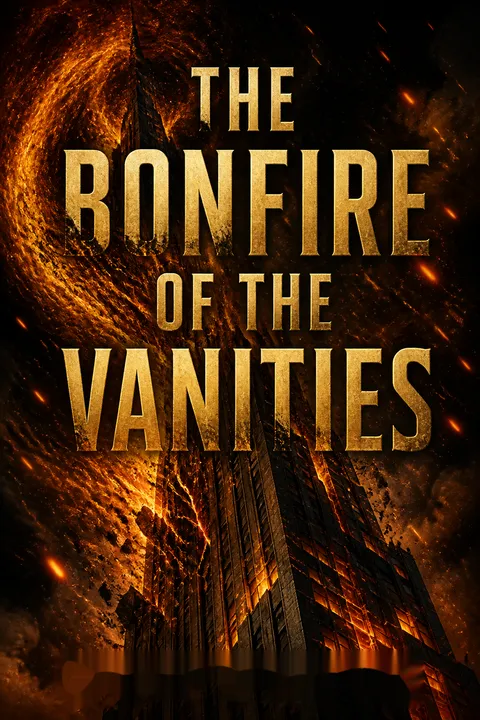

Plot Summary
City of Endless Masks
The novel opens with a panoramic view of 1980s New York, a city teeming with ambition, anxiety, and division. The city is a stage where everyone wears a mask—politicians, financiers, activists, and the press—each playing their part in a relentless, competitive drama. The city's energy is intoxicating but also dangerous, as the boundaries between classes, races, and neighborhoods are sharply drawn. The narrative introduces the city as a living, breathing organism, where the powerful insulate themselves from the chaos below, and the powerless struggle to survive. The tone is both satirical and foreboding, hinting at the coming collision between these worlds.
Master of the Universe Unleashed
Sherman McCoy, a successful bond trader and self-styled "Master of the Universe," is introduced in his Park Avenue apartment. He is wealthy, privileged, and restless, juggling a high-powered career, a socialite wife, and a passionate affair with the Southern belle Maria Ruskin. Sherman's confidence masks deep insecurities and a growing sense of alienation from his family and the world around him. His life is a careful performance, but cracks are beginning to show. The chapter sets up Sherman's psychological fragility and the precariousness of his status, foreshadowing the disaster that will soon upend his world.
The Bronx Labyrinth
Sherman and Maria, after a clandestine evening, take a fateful wrong turn off the Triborough Bridge and find themselves lost in the South Bronx. The alien landscape is a stark contrast to their insulated Manhattan lives. In a moment of panic, they encounter two Black youths on a dark ramp. A confrontation ensues, and Maria, behind the wheel, accidentally strikes one of the boys as they flee. The incident is shrouded in confusion and fear, but the couple's decision to keep silent sets the stage for a moral and legal nightmare. The city's divisions—racial, economic, and psychological—are laid bare in this harrowing episode.
The Crash on Bruckner
The aftermath of the hit-and-run unfolds. Henry Lamb, the injured boy, is taken to the hospital but receives inadequate care and soon falls into a coma. His mother, Annie Lamb, is left desperate and powerless. Meanwhile, Sherman and Maria are consumed by guilt and paranoia, debating whether to confess or conceal their involvement. The press, led by the opportunistic British journalist Peter Fallow, seizes on the story, transforming it into a citywide sensation. The incident becomes a symbol of racial injustice and class conflict, and the machinery of the law and media begins to grind inexorably toward Sherman.
The Press Smells Blood
Peter Fallow, a washed-up reporter, finds new purpose in sensationalizing the Lamb case. His articles stoke public anger and political opportunism, painting Sherman as the embodiment of white privilege and indifference. Reverend Bacon, a charismatic Harlem activist, uses the case to rally the Black community and challenge the city's power structure. The story becomes a battleground for competing narratives, with facts twisted and motives obscured. Sherman's life is invaded by reporters, protesters, and the relentless gaze of the public, as his private shame becomes a public spectacle.
The Power Structure Reacts
The city's institutions—police, prosecutors, politicians—scramble to respond to the growing crisis. District Attorney Abe Weiss, facing re-election and accusations of racial bias, is determined to make an example of Sherman. The legal process is revealed as a theater of ambition, cynicism, and calculation. Allies vanish, and old friends turn cold as Sherman becomes a liability. The city's elite, once his peers, now shun him. The chapter exposes the self-interest and hypocrisy at the heart of the city's power structure, as justice becomes a tool for political survival.
The Witnesses and the Web
The investigation intensifies as detectives Martin and Goldberg pursue leads, and the DA's office pressures witnesses to testify. Roland Auburn, a petty criminal, emerges as a key witness, his testimony shaped by plea bargains and self-interest. Maria, terrified and isolated, is coerced into cooperating with the prosecution. Sherman's attempts to defend himself are hampered by legal machinations, media distortions, and his own moral confusion. The web of lies and half-truths grows ever more tangled, and the possibility of justice recedes as the case becomes a contest of narratives.
The Grand Jury's Game
The grand jury proceedings are a spectacle of performance and manipulation. Kramer, the ambitious assistant DA, orchestrates the testimony to secure an indictment, while Sherman's defense scrambles to counter the prosecution's narrative. Maria's testimony, shaped by fear and pressure, seals Sherman's fate. The process is revealed as a game, with the outcome determined less by truth than by the needs of the system and the ambitions of its players. The chapter captures the Kafkaesque absurdity and cruelty of the legal process, as Sherman is swept toward trial.
The Fall of Sherman McCoy
Sherman is arrested, handcuffed, and paraded before the press and the jeering public. His life unravels as he is abandoned by friends, colleagues, and even his wife. The media's relentless coverage turns him into a symbol of everything wrong with the city, and the legal system grinds him down with humiliating efficiency. Sherman's sense of self dissolves as he is stripped of dignity, wealth, and hope. The chapter is a portrait of psychological and social collapse, as the "Master of the Universe" is reduced to a desperate, broken man.
The Mob and the Media
The trial becomes a circus, with demonstrators, television crews, and opportunists of every stripe converging on the courthouse. Reverend Bacon and his followers keep the pressure on, demanding justice for Henry Lamb and vengeance against Sherman. The city's divisions are on full display, as the case becomes a proxy for deeper conflicts over race, class, and power. The media's appetite for scandal is insatiable, and the truth is lost amid the noise. Sherman is both a villain and a victim, trapped in a drama he can no longer control.
The Law's Hungry Machine
The legal process is revealed as a machine that consumes everyone in its path—defendants, witnesses, lawyers, and even judges. Kramer, once idealistic, is swept up in the pursuit of victory and recognition. Killian, Sherman's lawyer, navigates the system with cynicism and skill, but even he is powerless against its momentum. The grand jury's indictment is a foregone conclusion, and the trial is a ritual of punishment and expiation. The chapter is a meditation on the impersonal, voracious nature of the law, and the impossibility of true justice in a city so divided.
The Price of Survival
As the case drags on, Sherman loses everything—his career, his fortune, his family, and his reputation. Maria, under pressure, betrays him in court. Judy, his wife, leaves with their daughter. The city moves on, indifferent to his suffering. Sherman is left to confront the emptiness at the heart of his life and the futility of his ambitions. The chapter is a reckoning with the cost of survival in a world where loyalty, love, and integrity are sacrificed to self-interest and fear.
The Final Reckoning
In the aftermath, Sherman is a ruined man, living in obscurity and poverty, awaiting trial for manslaughter after Henry Lamb's death. The city has already forgotten him, moving on to new scandals and sensations. The legal system, the media, and the public have all taken their pound of flesh. There is no catharsis, no redemption—only the grim endurance of a man who has lost everything but his name. The novel ends as it began, with the city's masks firmly in place, and the cycle of ambition, envy, and destruction ready to begin anew.
Analysis
Tom Wolfe's The Bonfire of the Vanities is a scathing, exuberant portrait of New York City at the height of the 1980s, a time of greed, ambition, and deep social division. The novel is both a satire and a tragedy, exposing the moral bankruptcy of the city's elite and the corrosive effects of media sensationalism, political opportunism, and institutional self-interest. Wolfe's characters are both archetypes and individuals, their fates shaped by the city's relentless pressures and their own flaws. The novel's central lesson is the fragility of status, the emptiness of ambition, and the impossibility of justice in a world where truth is constructed by those in power. The story is a cautionary tale about the dangers of self-delusion, the hunger for recognition, and the cost of survival in a society where everyone wears a mask. In the end, there is no redemption—only endurance, as the cycle of ambition, envy, and destruction begins anew. Wolfe's vision is both merciless and compassionate, capturing the absurdity and pathos of modern urban life with unmatched energy and insight.
Review Summary
The Bonfire of the Vanities is a satirical novel set in 1980s New York, exploring themes of race, class, and corruption. Readers praise Wolfe's vivid prose and memorable characters, particularly Sherman McCoy, a wealthy bond trader whose life unravels after a hit-and-run incident. The book's portrayal of racial tensions, media manipulation, and the justice system remains relevant today. While some find it overly long or dated, many consider it a masterful critique of American society, comparing it to works by Dickens and other great social novelists.
People Also Read




Characters
Sherman McCoy
Sherman is the novel's tragic antihero, a bond trader at the top of New York's financial world. He is intelligent, ambitious, and self-assured, but beneath the surface lies deep insecurity and a desperate need for validation. His affair with Maria Ruskin and the fateful accident in the Bronx expose the fragility of his status and the emptiness of his values. As the legal and social machinery turns against him, Sherman is stripped of his illusions, his wealth, and his dignity. His psychological journey is one of humiliation, loss, and reluctant self-awareness, as he is forced to confront the consequences of his actions and the hollowness of his life.
Maria Ruskin
Maria is Sherman's lover, a Southern beauty married to a much older, wealthy man. She is charming, passionate, and reckless, drawn to danger and excitement. Her relationship with Sherman is both an escape and a power play. When the scandal erupts, Maria is torn between loyalty and self-preservation. Under pressure from the law and the media, she ultimately betrays Sherman to save herself. Maria embodies the novel's themes of desire, duplicity, and the survival instinct, her actions shaped by fear and the ruthless logic of self-interest.
Peter Fallow
Fallow is a British journalist whose career is in decline until he seizes on the Lamb case as his ticket to fame. He is witty, self-deprecating, and deeply cynical, driven by a hunger for recognition and a willingness to exploit others' misfortune. Fallow's reporting shapes the public narrative, fueling outrage and political maneuvering. Despite his flaws, he is a keen observer of the city's hypocrisies and absurdities. Over the course of the novel, Fallow's fortunes rise as Sherman's fall, a darkly comic inversion of the American dream.
Larry Kramer
Kramer is the assistant district attorney assigned to the Lamb case. He is intelligent and idealistic, but also deeply ambitious and eager for recognition. As the case becomes a media sensation, Kramer is swept up in the pursuit of victory and public approval. He manipulates witnesses, bends the truth, and becomes increasingly ruthless in his quest for success. Kramer's psychological journey is one of moral compromise and self-justification, as he convinces himself that he is serving justice even as he becomes part of the system's machinery.
Abe Weiss
Weiss is the Bronx District Attorney, a man whose career depends on public perception and political maneuvering. He is shrewd, manipulative, and deeply insecure, constantly seeking approval from the media and the city's power brokers. Weiss's handling of the Lamb case is driven by the need to appear tough on crime and responsive to the Black community. He is a master of appearances, willing to sacrifice individuals for the sake of his own survival. Weiss embodies the novel's critique of institutional self-interest and the corruption of justice by politics.
Reverend Bacon
Bacon is a Harlem activist and preacher who seizes on the Lamb case as an opportunity to challenge the city's power structure and advance his own influence. He is eloquent, persuasive, and deeply cynical, using the language of justice and equality to manipulate public opinion and pressure the authorities. Bacon is both a genuine leader and a self-serving opportunist, his activism shaped by a keen understanding of the media and the city's racial dynamics. He is a symbol of both the hope and the danger of populist politics.
Roland Auburn
Roland is a petty criminal from the Bronx who becomes a key witness in the case against Sherman. His testimony is shaped by self-interest, plea bargains, and the pressures of the legal system. Roland is both a victim and a player, navigating the city's dangers with cunning and resilience. His shifting loyalties and ambiguous motives reflect the novel's themes of truth, survival, and the moral ambiguity of the urban jungle.
Judy McCoy
Judy is Sherman's wife, a socialite and aspiring decorator. She is intelligent, ambitious, and deeply invested in her family's status. The scandal shatters her world, exposing the fragility of her marriage and the emptiness of her social ambitions. Judy's response is a mixture of anger, grief, and self-preservation. She ultimately leaves Sherman, taking their daughter and seeking refuge in her own family. Judy's journey is one of disillusionment and loss, as she confronts the limits of loyalty and the cost of survival.
Thomas Killian
Killian is Sherman's criminal defense lawyer, a streetwise Irishman who knows how to navigate the city's legal labyrinth. He is tough, pragmatic, and unflappable, willing to bend the rules and exploit every advantage for his client. Killian's loyalty is to the game itself, and his relationship with Sherman is both professional and transactional. He is a survivor in a world where justice is a matter of strategy and luck.
Ed Quigley
Quigley is Killian's investigator, a former cop with a talent for finding information and getting results. He is tough, resourceful, and unafraid to bend the rules. Quigley's methods are often questionable, but his loyalty to Killian and his clients is unwavering. He represents the novel's theme of survival by any means necessary, and his presence is a reminder of the city's underlying violence and unpredictability.
Plot Devices
The City as Character
The novel uses New York City itself as a central character, its neighborhoods, institutions, and social hierarchies shaping the lives and destinies of the characters. The city's divisions—between rich and poor, Black and white, insiders and outsiders—are both the backdrop and the engine of the plot. The city's energy, chaos, and relentless competition create the conditions for the novel's central conflict and its tragic resolution.
Media Frenzy and Public Perception
The media is a constant presence, shaping public opinion, fueling outrage, and driving the actions of the characters. The press's hunger for sensation and scandal turns private tragedy into public spectacle, distorting the truth and making justice impossible. The novel uses headlines, news reports, and the perspective of journalists like Fallow to show how reality is constructed and manipulated in the public eye.
Legal and Political Machinations
The legal system is depicted as a theater of ambition, self-interest, and manipulation. Grand jury proceedings, plea bargains, and courtroom drama are all revealed as performances, with outcomes determined by the needs of the system and the ambitions of its players. The law is a machine that consumes individuals, indifferent to truth or justice. Political considerations—elections, public opinion, and the need for scapegoats—shape every decision.
Foreshadowing and Irony
The novel is rich in foreshadowing, with early hints of Sherman's fragility and the city's dangers setting the stage for his downfall. Irony pervades the narrative, as characters' ambitions and illusions are systematically dismantled by forces beyond their control. The novel's structure, with its shifting perspectives and interlocking storylines, creates a sense of inevitability and tragic absurdity.
Social Satire and Symbolism
The novel is a biting satire of 1980s New York, skewering the pretensions, hypocrisies, and vanities of its elite. Symbols—masks, mirrors, the city's architecture—underscore the themes of performance, self-delusion, and the emptiness of status. The characters' struggles for recognition, love, and survival are both tragic and absurd, reflecting the novel's darkly comic vision of urban life.
Download PDF
Download EPUB
.epub digital book format is ideal for reading ebooks on phones, tablets, and e-readers.








































