
Plot Summary
Prologue: The Eye in Snow
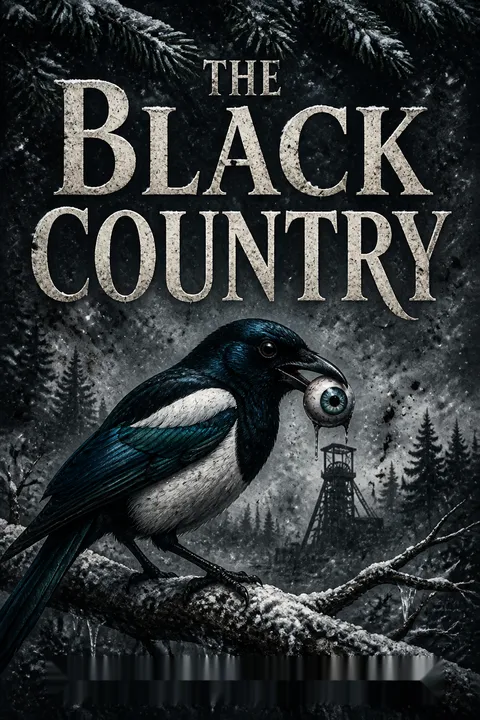
Young Hilde Rose, climbing a tree in the snowy Black Country, finds what she thinks is an unusual egg. Upon closer inspection, she realizes it is a human eyeball, staring back at her. Terrified, she falls from the tree, setting off a chain of events that will draw the attention of Scotland Yard to the isolated, superstitious mining village of Blackhampton. The prologue establishes the eerie, claustrophobic atmosphere and the sense that something is deeply wrong beneath the surface of this community.
Arrival in Blackhampton
Inspector Walter Day and Sergeant Nevil Hammersmith arrive from London, greeted by Constable Grimes and the ever-present ash and snow of the mining village. The detectives are outsiders, both in culture and in their skepticism of local superstitions. They learn of the missing Price family—father, stepmother, and young son Oliver—and sense the villagers' reluctance to accept outside help. The landscape, scarred by mining, mirrors the instability and secrets of the people who live there.
The Missing Price Family
Day and Hammersmith press Grimes for details. The Price family's disappearance is muddled by conflicting stories from the remaining children and the housekeeper. The stepmother, Hester, is not beloved, and the children's loyalties are divided. The detectives sense that the villagers have already resigned themselves to the worst, and that the search is as much for bodies as for survivors. The Price children, Anna, Peter, and Virginia, become central to the investigation, their evasiveness hinting at deeper secrets.
Village Secrets and Superstitions
The detectives are introduced to the insular world of Blackhampton, where mining has shaped not only the land but the people's beliefs. Houses sink into the earth, and the villagers cling to omens and rhymes—especially the legend of Rawhead and Bloody Bones, a monster said to steal children. The tension between progress and tradition, and between outsiders and locals, is palpable. The detectives' rational methods clash with the villagers' fatalism and fear.
The Inn and Its Inhabitants
At the inn, Day and Hammersmith meet a cross-section of Blackhampton: the innkeeper Bennett Rose, the vicar Brothwood and his wife, the schoolteacher Jessica Perkins, the visiting ornithologist Calvin Campbell, and the Price children. Each has their own perspective on the missing family and the village's troubles. The inn becomes a stage for suspicion, alliances, and the slow unraveling of the community's secrets.
The Gathering at the Hearth
The detectives are formally introduced to the villagers, each of whom reveals a piece of the puzzle—sometimes intentionally, sometimes not. The vicar's wife, Mrs. Brothwood, slips Day a cryptic note: "She is under the floor. He means no harm. Please." The note hints at hidden truths and the possibility that not all is as it seems with the missing family. The villagers' fear of the unknown is palpable, and the detectives realize they must navigate not only a mystery but a web of superstition and silence.
Omens and the Owl
An owl flies into the inn, causing panic among the villagers, who see it as a harbinger of death. The owl lands on Hammersmith's chair, and the children solemnly declare that he is doomed. The detectives are bemused, but the incident underscores the power of superstition in Blackhampton. The villagers' belief in omens shapes their actions and perceptions, making the detectives' task even more difficult.
Hilde's Eyeball Discovery
Hilde Rose, the girl who found the eyeball, presents it to the detectives. The shriveled, blue eye is the first concrete evidence of violence. The detectives question Hilde and the Price children, trying to untangle the complex family dynamics. The children's evasiveness and the villagers' protectiveness of their own suggest that the truth is being carefully guarded.
Children's Games, Children's Fears
The Price children, under Jessica's care, dare each other to invoke Rawhead and Bloody Bones at an abandoned pit. The legend, meant to frighten children, takes on new meaning as the children's fear and guilt surface. Jessica senses that the children know more than they admit, and that the village's monsters may be all too real.
Poisoned Hospitality
Day and Hammersmith are served a meal at the inn that Hammersmith suspects is drugged. They realize someone wants them out of the way—perhaps to protect a secret, or simply out of fear. The detectives' vulnerability is heightened, and they resolve to press on with their investigation, even as the villagers close ranks.
Into the Woods
The detectives, joined by Campbell and Grimes, organize a search of the woods for the missing family. The landscape is treacherous, riddled with old mine shafts and covered in snow. The searchers are haunted by the possibility that the missing are already dead, and by the sense that something—or someone—is watching them.
Night in the Forest
The searchers split up, and Day finds himself lost in the woods, stalked by a mysterious figure with a mutilated face—the American. The legend of Rawhead and Bloody Bones seems to come alive. Meanwhile, Hammersmith and Grimes discover a bloodstained child's dress, suggesting another victim. The forest becomes a place of both literal and psychological danger.
Siblings in the Dark
Peter and Anna Price, alone at night, discuss their missing family and the events leading up to the disappearance. Their conversation is laced with fear, denial, and hints of complicity. The children's perspective reveals the emotional toll of the mystery and the ways in which trauma is processed and hidden.
Lost and Hunted
The American, a scarred Civil War veteran, is revealed to be hunting Campbell, driven by a vendetta dating back to Andersonville prison. His presence adds a new layer of danger, as he is willing to kill anyone who gets in his way. The detectives are unaware of the true threat lurking in the woods.
Blood on the Dress
The bloodstained dress found in the woods is examined by Dr. Kingsley, who determines it belonged to a small girl and was splattered with animal blood—possibly a pig's. The evidence is ambiguous, deepening the mystery. The detectives struggle to connect the clues, as the village's sickness spreads and more people fall ill.
The American Arrives
The American infiltrates the village, taking up residence in the abandoned schoolhouse. He observes the villagers and the detectives, waiting for his chance to strike. His presence is a constant, unseen threat, and his vendetta against Campbell threatens to spill over into the wider community.
The Bird and the Brand
Day rescues a baby magpie in the woods, a small act of kindness that stands in stark contrast to the violence around him. The bird becomes a symbol of hope and vulnerability, echoing the plight of the Price children. Meanwhile, the American prepares his rifle, marking his territory with violence.
The Searchers Return
The searchers regroup at the inn, exhausted and shaken. The evidence points to a crime of passion or desperation, but the identity of the killer remains elusive. The villagers' illness worsens, and the detectives realize that time is running out—not only for the missing family, but for the entire village.
The Schoolhouse Intruder
The American's occupation of the schoolhouse is discovered, but he remains one step ahead of the detectives. His presence is felt but not seen, and the threat he poses becomes more immediate as he prepares to confront Campbell.
Locked Doors, Hidden Motives
Day discovers that Campbell has locked the detectives in their rooms at night, raising questions about his motives. The villagers' fear and suspicion reach a fever pitch, and the detectives struggle to maintain control of the investigation as the community unravels.
Campbell's Disappearance
Day receives a telegram revealing Campbell's criminal past—a murder committed for love, and years spent in prison. Campbell's connection to Hester Price and his obsession with finding Oliver are brought into focus. The detectives must decide whether he is a suspect or a victim.
The Storm Descends
A blizzard isolates Blackhampton, cutting off escape and communication. The village is beset by tremors as the undermined ground begins to collapse. The detectives, villagers, and children are trapped together, forced to confront the truth as the world literally falls apart around them.
The Doctor Arrives
Dr. Kingsley arrives from London, bringing modern forensic methods to bear on the case. He quickly identifies typhoid as the cause of the village's sickness, tracing it to contamination of the well—possibly by a body. The villagers' reliance on superstition is challenged by the doctor's rational explanations.
Family Fractures
The detectives question the Price children and housekeeper, uncovering a web of resentment, jealousy, and neglect. The children's stories are inconsistent, and their behavior suggests they are hiding something terrible. The family's dysfunction is mirrored by the village's own fractures.
Grimes's Last Clue
Constable Grimes, searching for more evidence in the woods, is killed by the American's sniper rifle. His death is a turning point, signaling that the threat is not only internal but also external. The detectives are now truly alone, with no local ally.
The Sniper's Whistle
The American's use of the Whitworth rifle—a weapon that whistles before it kills—adds a chilling dimension to the violence. The villagers are unaware of the true nature of the threat, attributing deaths to superstition and legend rather than to a human killer.
Claire's Farewell
Day's pregnant wife, Claire, visits Blackhampton, bringing a moment of warmth and humanity. Her departure underscores the personal risks the detectives face, and the urgency of solving the case before tragedy strikes closer to home.
The Train Departs
As the storm worsens, the possibility of escape dwindles. The train is delayed, and the villagers are trapped with their secrets and their sickness. The detectives realize that the only way out is through the truth.
Hammersmith's Decline
Hammersmith succumbs to the village's sickness, his body and mind weakened by exposure, poison, and trauma. His vulnerability mirrors that of the children and the village itself, and his determination to see the case through becomes a test of will.
The Price Children Speak
The detectives press the Price children for answers, but their stories are evasive and contradictory. The youngest, Virginia, is disturbingly precocious and manipulative. The children's innocence is called into question, and the detectives begin to suspect that the real monster may not be a legend after all.
The Church of the Sick
The village church is converted into a makeshift hospital as the sickness spreads. The vicar and his wife struggle to care for the afflicted, and the detectives search for clues among the dying. The church's history as an inn and its hidden priest hole become central to the unfolding mystery.
The Sinking Village
Tremors shake the village, and buildings begin to collapse into the tunnels below. The physical instability of Blackhampton mirrors the moral and emotional instability of its people. The detectives race against time to solve the case before the village is swallowed whole.
The Pig in the Woods
Campbell leads Day and Dr. Denby to a mutilated pig in the woods, killed in a manner that suggests a child's hand. The connection between the pig and the bloodstained dress becomes clear, and the detectives realize that the violence may have begun with an act of practice or imitation.
The Plague Spreads
Dr. Kingsley confirms that the sickness is typhoid, spread by contaminated water. The villagers' refusal to accept scientific explanations is challenged by the mounting death toll. The detectives must navigate not only a murder investigation but a public health crisis.
The Church's Secret
Day discovers the priest hole beneath the church, where Hester Price has been hiding. The vicar's complicity and the community's willingness to protect their own, even at the expense of justice, are laid bare. The detectives confront the limits of their authority in a place ruled by tradition and fear.
The Well's Depths
Day descends into the village well, risking his life to recover the body of Oliver Price. The discovery confirms the worst fears and sets off a chain of confessions, accusations, and violence. The well, both literal and symbolic, is the heart of the village's sickness.
The Truth Unravels
As the bodies are found and the evidence mounts, the villagers turn on each other. Hester and Sutton Price's tragic history is revealed, and the children's role in Oliver's death comes to light. The American's vendetta against Campbell ends in violence, and the detectives are left to pick up the pieces.
The Final Tremor
The village is rocked by a final, devastating tremor. The inn collapses, killing Bennett Rose and nearly trapping the survivors. The physical destruction mirrors the emotional and moral reckoning that has taken place. The survivors are forced to confront the consequences of their actions.
The Aftermath
The detectives, children, and remaining villagers gather the dead and prepare to leave Blackhampton. The train finally arrives, offering a way out. Day and Hammersmith reflect on the nature of evil, the limits of justice, and the possibility of redemption. The magpie, now thriving, is a small symbol of hope amid the ruins.
Analysis
A meditation on trauma, community, and the persistence of evilThe Black Country is more than a historical mystery; it is a study of how violence, neglect, and superstition shape individuals and communities. The village of Blackhampton, undermined by generations of mining, is a powerful metaphor for the ways in which secrets and trauma erode the foundations of society. The story interrogates the limits of rationality and the dangers of unexamined tradition, showing how belief in monsters—whether supernatural or human—can both protect and destroy. The children at the heart of the mystery are both victims and perpetrators, their innocence corrupted by the failures of the adults around them. The detectives, outsiders in every sense, are forced to confront not only the mystery of the missing family but the deeper mystery of human nature itself. In the end, justice is imperfect, and redemption is uncertain, but the possibility of healing—embodied in the rescued magpie and the survivors' tentative steps toward the future—remains. The Black Country is a haunting exploration of the darkness beneath the surface, and the fragile hope that persists even in the bleakest of landscapes.
Review Summary
Reviews for The Black Country are mixed, averaging 3.74/5. Praise focuses on the atmospheric Victorian setting, compelling characters like Day, Hammersmith, and Henry, and the creepy coal-mining village backdrop. Critics frequently cite overplotting as the main flaw — too many subplots, red herrings, and coincidences crammed into the narrative. Several reviewers note unresolved storylines, particularly regarding Constable Grimes. Most agree it falls short of its predecessor, The Yard, though fans of the series generally find it an enjoyable, if flawed, continuation.
Characters
Inspector Walter Day
Day is a young, earnest detective from London, newly married and soon to be a father. His outsider status in Blackhampton allows him to see through the village's superstitions, but also makes him a target of suspicion. Day's strength lies in his empathy and his ability to listen, both to what is said and unsaid. He is haunted by the possibility of failing those who depend on him—his wife, his unborn child, and the vulnerable children of Blackhampton. Over the course of the story, Day is forced to confront the limits of rationality and the persistence of evil, both human and supernatural.
Sergeant Nevil Hammersmith
Hammersmith is Day's loyal sergeant, a man shaped by a childhood spent in the mines and by trauma both physical and psychological. He is fiercely moral, intolerant of injustice, and often at odds with the villagers' acceptance of suffering. Hammersmith's body is battered by illness, poison, and violence, but his will is unbreakable. His empathy for the children and his determination to see the case through, even at great personal cost, make him both a hero and a tragic figure. His relationship with Day is one of mutual respect and deep, unspoken affection.
Calvin Campbell
Campbell is a giant of a man, both physically and emotionally scarred by his experiences as a British soldier in the American Civil War and as a prisoner at Andersonville. His vendetta with the American is rooted in trauma and loss, and his love for Hester Price is both redemptive and destructive. Campbell is an outsider in Blackhampton, drawn to the village by the hope of reunion and the need to atone for past violence. His presence destabilizes the community, and his actions—both protective and violent—are driven by a complex mix of guilt, love, and the desire for peace.
Hester Price
Hester is the second wife of Sutton Price, mother to Oliver, and former nanny to the other Price children. Her beauty and vulnerability make her both a victim and a source of jealousy and resentment. Hester's love for Campbell and her inability to love her stepchildren set the stage for tragedy. Her disappearance and eventual death are the fulcrum around which the village's secrets turn. Hester is both a victim of circumstance and an agent of her own fate, her choices shaped by love, fear, and desperation.
Sutton Price
Sutton is the night watchman at the mine, father to the Price children, and husband to both Mathilda and Hester. His inability to love or protect his family, his violence, and his eventual suicide are the culmination of years of repression and guilt. Sutton is both a perpetrator and a victim, shaped by the harsh realities of mining life and the expectations of masculinity. His confession and death are both an admission of guilt and a final, futile attempt at redemption.
Anna Price
Anna is the eldest Price daughter, intelligent, practical, and fiercely protective of her siblings. She is both a victim and a participant in the events that lead to Oliver's death. Anna's emotional arc is one of denial, guilt, and eventual confession. Her relationship with Peter is central to her survival, and her interactions with the adults reveal the ways in which children are both shaped by and resistant to the traumas of their environment.
Peter Price
Peter is Anna's brother, sensitive and imaginative, but also deeply affected by the loss of his family and the violence he has witnessed. His complicity in hiding Oliver's body is both an act of self-preservation and a desperate attempt to protect his remaining family. Peter's journey is one of loss, guilt, and the hope for forgiveness.
Virginia Price
Virginia, the youngest Price child, is revealed to be the killer of Oliver, her half-brother. Her precocious intelligence and lack of empathy make her both a victim of neglect and a perpetrator of violence. Virginia's actions are the product of a toxic environment, and her confession is both shocking and inevitable. She embodies the theme of corrupted innocence and the dangers of unacknowledged trauma.
Bennett Rose
Rose is the heart of the village, both its caretaker and its enforcer. His attempts to protect the detectives by drugging them, his belief in omens, and his eventual death in the collapse of the inn make him a tragic figure. Rose represents the village's resistance to change and its reliance on tradition, even in the face of disaster.
The American (Grey Eyes)
The American is a former Confederate prison guard, mutilated by Campbell and driven by a decades-long vendetta. His presence in Blackhampton is both literal and symbolic—a force of violence and retribution that cannot be contained by the village's traditions. His death at the hands of Peter Price is both an act of justice and a perpetuation of the cycle of violence.
Plot Devices
Intertwined Setting and Psychology
Blackhampton's landscape—sinking houses, collapsing tunnels, and ever-present ash—serves as a metaphor for the community's secrets and the psychological instability of its inhabitants. The setting is not just a backdrop but an active participant in the story, shaping and reflecting the characters' fears, desires, and actions.
Superstition vs. Rationality
The villagers' reliance on superstition—embodied in the legend of Rawhead and Bloody Bones, the owl omen, and the bleeding corpse—both obscures and reveals the truth. The detectives' rational methods are constantly challenged by the power of belief, and the resolution of the mystery requires a synthesis of both approaches.
Child Perspective and Unreliable Narration
The Price children's evasiveness, half-truths, and games are both a defense mechanism and a source of clues. Their perspective is unreliable, shaped by trauma and the need to survive. The gradual revelation of Virginia's guilt is achieved through subtle foreshadowing and the slow peeling away of layers of denial.
The Outsider's Gaze
Day, Hammersmith, Campbell, and the American are all outsiders, each bringing their own perspective and agenda to Blackhampton. Their presence forces the village to confront its secrets, but also exposes the limits of justice and the dangers of intrusion.
Foreshadowing and Symbolism
The magpie, the eye, the pig, and the collapsing village are all symbols that foreshadow the story's revelations. The magpie, in particular, serves as a symbol of innocence, survival, and the possibility of renewal amid destruction.
Nonlinear Structure and Interludes
The interludes set in Andersonville prison and Campbell's past provide crucial context for the present-day events, illuminating the roots of trauma, violence, and the desire for redemption. The nonlinear structure allows for a gradual unfolding of secrets and a deepening of psychological complexity.
Scotland Yard's Murder Squad Series
Download PDF
Download EPUB
.epub digital book format is ideal for reading ebooks on phones, tablets, and e-readers.








































