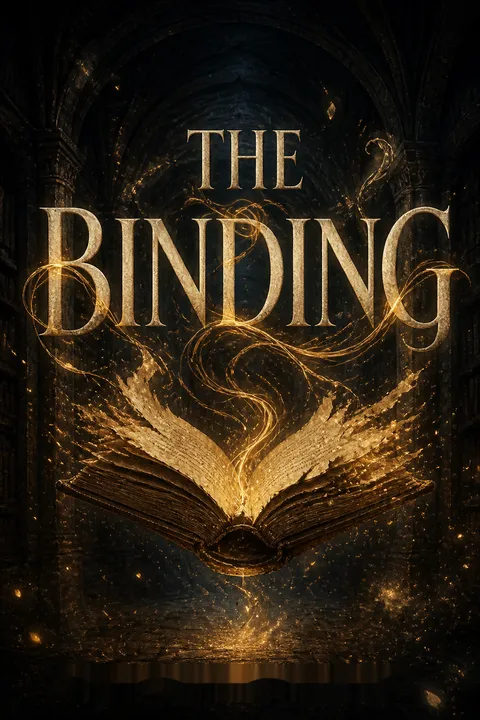

Plot Summary
Shadows Over the Wheat
Emmett Farmer, once strong and healthy, is now frail after a mysterious illness that left his mind and body shattered. His family, struggling to keep the farm running, is haunted by superstitions and fear of books and binders. When a letter arrives, Emmett learns he's been chosen as an apprentice to a binder—a craft his parents despise and fear. The family's tense, desperate conversation reveals their hope that sending Emmett away will bring peace, but also their shame and confusion about the world of books. Emmett, feeling rejected and lost, is forced to leave home, carrying with him a sense of failure and a deep, unspoken fear of what lies ahead.
The Binder's Apprentice
Emmett is delivered to Seredith, the enigmatic binder, whose home on the marshes is both strange and oddly familiar. He faints upon arrival, overwhelmed by a sense of déjà vu and the oppressive atmosphere. As he recovers, Seredith introduces him to the workshop, a place that feels right in his bones. She is stern but not unkind, and Emmett senses a hidden depth to the craft. The house is filled with silence and secrets, and Emmett's days become a rhythm of chores and learning. The locked doors and Seredith's warnings hint at something powerful and dangerous beneath the surface, and Emmett's own illness seems tied to the mysteries of the bindery.
Vaults and Nightmares
Emmett's recovery is slow, haunted by nightmares and a strange compulsion toward the locked vault. He learns the basics of bookbinding, but never sees a finished book. One day, a young man named Lucian Darnay arrives, desperate and haunted, seeking a binding. Their encounter is charged with unspoken recognition and fear. Lucian's presence triggers a relapse in Emmett, who falls into a feverish state. As Seredith tends to him, Emmett senses that the craft of binding is more than just making books—it is about taking memories, and the cost is profound. The vault below the workshop calls to him, filled with secrets he cannot yet face.
The Price of Forgetting
As winter deepens, Emmett witnesses the aftermath of a binding: a woman, Milly, arrives in madness and leaves eerily calm, her pain erased but her self hollowed out. The process is shrouded in secrecy, and Emmett is both repelled and fascinated. He begins to understand that books are not stories, but people's memories, locked away for safety—or for profit. The villagers' fear of binders is rooted in the power to erase, to unmake a person's past. Emmett's own nightmares sharpen, and he becomes obsessed with the locked room and the vault, sensing that his own story is entangled with the craft's darkest truths.
Secrets in the Cellar
After a violent attack on the bindery by villagers, Emmett finds the vault door ajar and descends into the cellar. There, he discovers the tools and materials of true binding, and a book adorned with a mother-of-pearl skeleton—a child's memory, bound in horror. Seredith confronts him, and the truth spills out: binding is the removal of memories, not souls, and the books are the repositories of unbearable pain. Emmett is horrified, but Seredith insists it is a sacred trust, a way to help those who cannot live with their past. The revelation shakes Emmett's sense of self and purpose, and he must decide whether to accept or reject the path laid before him.
The Binding's True Nature
As Seredith falls ill, Emmett is left to care for her and the bindery. He struggles with the morality of binding, the loneliness of winter, and the weight of secrets. When Seredith dies, her estranged son, de Havilland, arrives to claim the bindery and its vault. Emmett is forced to leave the only place he has begun to feel at home. The bindery's legacy is threatened by de Havilland's ambition and greed, and Emmett's own memories—fragmented and feverish—hint at a personal connection to the vault's contents. The true cost of binding, for both binder and bound, becomes painfully clear.
Winter's Isolation
Emmett is taken to de Havilland's workshop in Castleford, a place of industrial efficiency and moral decay. Here, binding is a business, and books are traded and sold. Emmett is set to work among craftsmen who view the process with cynicism, and he witnesses the exploitation of the poor, who sell their memories for survival. The city's binders are powerful, but their art is hollow, stripped of Seredith's reverence. Emmett's sense of self erodes further, and he is haunted by the presence of Lucian Darnay, whose own story is bound up with Emmett's in ways neither fully understands.
The Arrival of De Havilland
De Havilland's arrival brings a new level of manipulation and control. He is both a master binder and a ruthless businessman, willing to break laws and exploit the vulnerable. Emmett is forced to perform a binding for the Darnay family, and the process is both intimate and devastating. Lucian's father uses binding to erase the memories of his victims, ensuring their silence and his own impunity. Emmett and Lucian's paths cross again, and the emotional charge between them is undeniable. The bindery's vault holds not only the secrets of others, but the key to Emmett's own lost memories.
The Book of Lucian
The narrative shifts to Lucian's perspective, revealing his own struggles with memory, shame, and desire. Lucian's life is shaped by the bindings performed on him and those around him, and he is tormented by the sense of something missing. His relationship with Emmett, once passionate and transformative, has been erased by binding, leaving only a hollow ache. As Lucian uncovers the truth about his own book—his own erased love—he is forced to confront the cost of forgetting and the power of remembrance. The two men's stories intertwine, bound by love and loss.
The Fire and the Memory
In a desperate bid to reclaim their past, Emmett and Lucian break into the vault where the books are kept. As the bindery burns, the books—repositories of pain and love—are destroyed, and the memories they contain are released. The fire is both a literal and symbolic act of liberation, freeing those who have been bound and allowing Emmett and Lucian to remember their love. The cost is high: the bindery is lost, and the world is changed. But in the ashes, there is hope for healing and a new beginning.
Love Bound and Unbound
With their memories restored, Emmett and Lucian are reunited, both changed by what they have endured. The trauma of binding and the violence of forgetting have left scars, but also a deeper understanding of themselves and each other. They must navigate a world that fears and misunderstands their love, and the legacy of the binders' craft. Together, they seek a way forward, honoring the memories that make them who they are, and refusing to be defined by shame or erasure.
The Cost of Remembrance
In the wake of the fire, Emmett and Lucian face the consequences of their actions. The world is suspicious and hostile, but they are determined to live honestly, refusing to hide or forget. The power of memory—its pain and its beauty—is affirmed, and the two men choose to embrace their past rather than run from it. The story ends with a sense of hard-won hope: love, once bound and erased, is now remembered and free.
The Vault Burns
As Latworthy's library burns, the memories trapped in books are released, flooding back to those who lost them. The act of burning, once a symbol of destruction, becomes an act of resurrection and justice. The world is changed, and the binders' power is broken. Emmett and Lucian, having reclaimed their own story, become witnesses to a new era—one where memory cannot be bought or sold, and where love endures beyond the reach of erasure.
The Return of the Self
In the final moments, Emmett and Lucian stand together, changed but whole. The journey through loss, shame, and violence has brought them to a place of acceptance and truth. They are no longer bound by the past, but shaped by it, and their love is a testament to the power of memory. The story closes with the promise of a future built on honesty, courage, and the refusal to forget.
Analysis
The Binding is a profound meditation on memory, trauma, and the ethics of forgetting. Bridget Collins crafts a world where the act of erasing pain is both a mercy and a violence, and where the power to bind is fraught with moral peril. The novel interrogates the ways in which society seeks to control, commodify, and erase the stories of the vulnerable, and the cost of such erasure for both individuals and communities. At its heart, The Binding is a love story—one that is repeatedly erased and reclaimed, bound and unbound. The relationship between Emmett and Lucian is a microcosm of the novel's central themes: the struggle to remember, the courage to face pain, and the transformative power of truth. The book's structure—fragmented, recursive, and ultimately redemptive—mirrors the experience of trauma and healing. In a world obsessed with forgetting, The Binding insists on the necessity of memory: to love, to grieve, to become whole. Its lesson is both simple and radical: that to be human is to remember, and that even the most painful stories are worth keeping.
Review Summary
The Binding by Bridget Collins presents a unique premise where books contain extracted memories rather than stories. Reviews are deeply divided: many praise the poignant romance, atmospheric writing, and fascinating concept of binding memories into books, calling it spellbinding and beautifully crafted. Critics note the slow pacing, particularly in Part One, lack of world-building explanation about how binding works, and disappointment that the fantasy premise becomes primarily a gay romance with dark themes. Common complaints include underdeveloped characters, unanswered questions about the binding system, and excessive focus on the romantic relationship at the expense of exploring broader societal implications. Overall rating: 3.85/5 stars.
People Also Read

Characters
Emmett Farmer
Emmett is a young man whose life is upended by illness and the mysterious call to become a binder. Sensitive, stubborn, and deeply moral, he is torn between his family's fear of books and his own compulsion toward the craft. Emmett's journey is one of self-discovery, as he confronts the reality of binding—erasing memories for those who cannot bear them—and the personal cost of forgetting. His relationship with Lucian Darnay is central to his development: what begins as antagonism becomes love, only to be erased and rediscovered. Emmett's struggle is both internal and external, as he seeks to reclaim his own memories and to live honestly in a world that punishes difference. His arc is one of transformation from victim to agent, from bound to unbound.
Lucian Darnay
Lucian is the scion of a wealthy family, marked by privilege but also by deep wounds. His father's abuse of binding to erase the memories of his victims leaves Lucian complicit and haunted. Lucian's own memories are bound, erasing his love for Emmett and leaving him hollow. He is proud, intelligent, and fiercely self-protective, but beneath his bravado lies vulnerability and longing. Lucian's journey is one of reclamation: as he uncovers the truth of his own binding, he must confront the cost of forgetting and the possibility of redemption. His love for Emmett is both his greatest risk and his salvation, and his arc is one of moving from denial and shame to acceptance and courage.
Seredith
Seredith is Emmett's mentor, an old woman who practices binding as a sacred craft. She is both feared and respected, living in isolation on the marshes. Seredith's approach to binding is one of compassion and responsibility: she helps those who cannot live with their memories, but refuses to profit from their pain. Her relationship with Emmett is maternal and demanding, pushing him to confront the truth of the craft and his own nature. Seredith's death marks the end of an era, and her legacy is the standard by which all other binders are judged.
De Havilland
Seredith's estranged son, de Havilland, represents the corruption of binding: he is a master binder who has turned the craft into a business, trading in memories for profit and power. De Havilland is charming and ruthless, willing to break laws and exploit the vulnerable. His relationship with Emmett is one of dominance and exploitation, and he serves as both antagonist and cautionary example. De Havilland's downfall is a result of his own hubris and the violence he has unleashed.
Alta Farmer
Emmett's younger sister, Alta, is caught in the crossfire of the story's central conflict. Her love for Lucian and her longing for escape make her vulnerable, and her betrayal of Emmett is both a cry for help and an act of desperation. Alta's arc is one of loss and disillusionment, as she is forced to confront the limits of love and the cost of secrets.
Mr. and Mrs. Farmer
Emmett's parents are shaped by the trauma of the past and the fear of the unknown. Their rejection of books and binding is rooted in superstition and shame, and their decision to send Emmett away is both an act of love and a failure of understanding. Their relationship with Emmett is fraught, marked by disappointment and hope, and their inability to accept his difference is a source of pain for all.
Piers Darnay
Lucian's father, Piers, is a man who uses binding to erase the memories of his victims and to protect himself from consequence. He is charming, cruel, and utterly without remorse. His abuse of power is both personal and systemic, and his relationship with Lucian is one of dominance and manipulation. Piers represents the darkest possibilities of binding: the erasure of truth, the perpetuation of violence, and the destruction of self.
Nell
Nell is a maid in the Darnay household, whose memories of abuse are bound and erased. Her story is one of trauma and erasure, and her eventual suicide is a devastating indictment of the system that allows binding to be used as a tool of oppression. Nell's fate haunts both Emmett and Lucian, and her presence lingers as a reminder of the cost of forgetting.
Lord Latworthy
Latworthy is a wealthy collector of bound books, whose library is both a treasure trove and a prison. He represents the commodification of memory and the voyeuristic pleasure taken in others' pain. Latworthy's possession of Lucian's book is the catalyst for the story's climax, and his role is that of both gatekeeper and antagonist.
Sally
Sally is a maid who helps Emmett and Lucian in their quest to recover the book. Her fear and obedience are emblematic of the powerless in a world ruled by binders and their patrons. Sally's brief moment of agency—helping the protagonists—serves as a reminder of the small acts of courage that can change the course of a story.
Plot Devices
Binding as Memory Erasure
The central device of the novel is the act of binding: the removal and storage of memories in books. This device serves as both literal and metaphorical erasure, allowing characters to escape unbearable pain but also enabling abuse, exploitation, and the perpetuation of power. Binding is depicted as a sacred craft in the hands of Seredith, but as a tool of oppression and profit in the hands of de Havilland and others. The device is used to explore questions of identity, trauma, and the ethics of forgetting. The narrative structure itself is shaped by binding: the story is told through gaps, erasures, and revelations, mirroring the experience of the bound.
Dual Narrative and Shifting Perspective
The novel employs a dual narrative, shifting between Emmett and Lucian's perspectives. This structure allows for dramatic irony, as the reader knows more than the characters at key moments, and for the gradual revelation of hidden truths. The use of memory loss and recovery as a plot device creates suspense and emotional intensity, as the characters struggle to piece together their own stories. The shifting perspective also highlights the differences in class, power, and experience between Emmett and Lucian, deepening the psychological complexity of their relationship.
The Vault and the Book as Symbol
The locked vault beneath the bindery is a recurring symbol of the unconscious, the place where memories are hidden and secrets are kept. The books themselves are both objects and subjects: they are the physical embodiment of memory, pain, and identity. The act of burning the books is both destruction and liberation, a release of stories that have been imprisoned. The vault and the book serve as metaphors for the self, the past, and the possibility of healing.
Foreshadowing and Revelation
The novel is rich in foreshadowing: Emmett's nightmares, the locked doors, the sense of déjà vu, and the recurring motifs of fire and water all hint at the story's deeper mysteries. The gradual revelation of Emmett and Lucian's shared past is achieved through dreams, recovered memories, and the physical journey into the vault. The use of foreshadowing creates a sense of inevitability and tragedy, while the final revelations offer the possibility of redemption and hope.
Download PDF
Download EPUB
.epub digital book format is ideal for reading ebooks on phones, tablets, and e-readers.








































