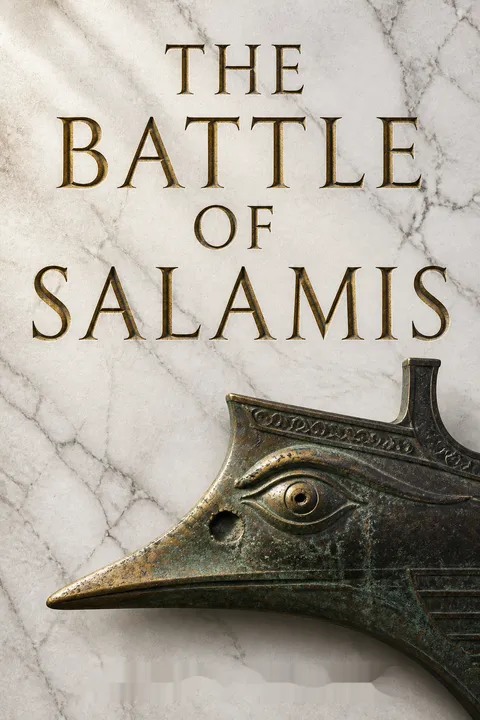

Key Takeaways
1. Themistocles' Cunning and Vision Orchestrated Greek Survival
Themistocles was brilliant, farsighted, creative, tireless, magnanimous, courageous, and eloquent.
Athenian Architect. Themistocles, a veteran Athenian, transformed Athens into a formidable naval power in three years, foreseeing the Persian invasion. He meticulously planned a strategy to save his city, despite his non-aristocratic background. His pragmatism was clear: "I may not know how to tune the lyre or to handle the harp but I know how to take a small and unknown city and make it famous and great."
Political Acumen. In a nascent democracy, he navigated politics with shrewdness and "deinotes"—a blend of quick remarks and shock tactics. He spoke hard truths but also manipulated, often using indirect methods to achieve his goals. This blend of vision and ruthlessness was crucial for Greek survival.
Unconventional Leader. Though accused of lying, cheating, and taking bribes, ultimately dying in exile, his unconventional methods were vital. He was the "subtle serpent of the Greeks," a master tactician who understood that conventional heroism alone could not save Greece.
2. Athenian Democracy Unleashed Unconventional Naval Power
When the Athenians lived under a tyranny they were no better at war than any of their neighbors, but after they got rid of the tyrants they were the first by far.
Mobilizing Power. Athenian democracy, a new political experiment, proved a powerful force, enabling the city to staff and utilize a fleet of two hundred triremes. This system energized Athenians, transforming them from reluctant subjects into eager citizens fighting for their own sake. The forty thousand men required for such a navy showcased democracy's unique mobilizing power.
Radical Sacrifice. The assembly's decision to evacuate Athens and commit to naval defense at Salamis was a radical, daring strategic retreat. Families left homes and ancestral lands, unsure of return, demonstrating unwavering commitment to freedom. This "people's war" was a profound, collective sacrifice.
Independent Spirit. Athenian individualism, though challenging for commanders, fostered quick, intelligent, and independent decision-making, especially among pilots. This democratic ethos, combined with fierce patriotism, allowed Athens to take unprecedented risks, becoming the "salvation of Greece."
3. Persia's Colossal Force Was Undermined by Strategic Flaws
Xerxes ruled what was, without exaggeration, the greatest empire in the history of the world to that date.
Colossal Power. Xerxes commanded an empire from Pakistan to Egypt, with an estimated 200,000 soldiers and over 1,300 triremes. This unprecedented force aimed to overwhelm Greece through sheer numbers and intimidation. His name, Khsha-yar-shan, meant "ruler of heroes."
Inherent Weaknesses. Despite vast resources, Persia's strategy was flawed, relying on numbers over cunning. The multinational army and navy, a "floating tower of Babel," faced communication and loyalty issues. Many allied contingents, like the Ionians, were of dubious loyalty.
Overconfidence. Grand engineering projects, such as the Mount Athos canal and Hellespont bridges, served more for prestige than function. Xerxes' land-power mentality led him to underestimate Greek resolve and naval prowess, ultimately blundering into a trap at Salamis. His initial "gigantic picnic" of conquest became a costly war.
4. Geography and Weather Were Decisive Greek Allies
Fighting a naval battle in the narrows is good for us, and in the open sea it is good for them.
Narrows Advantage. Themistocles' genius exploited geography, insisting on the narrow Salamis straits. This confined space negated Persia's numerical superiority, crowding their larger, faster ships and causing collisions. It turned Persia's strength into a fatal weakness.
Divine Weather. Weather played a critical, often "divine," role. A "monster storm" decimated 400 Persian ships before Artemisium. At Salamis, Themistocles waited for the "aura," a brisk sea breeze, which would destabilize Persia's high-sterned, bulwarked ships, exposing their vulnerable sides to Greek rams.
Choke Points. Rugged Greek terrain, like Thermopylae and the narrow straits, consistently favored smaller, agile Greek forces. These geographical choke points funneled massive Persian forces into engagements where Greek training and local knowledge were maximized, transforming defensive positions into strategic advantages.
5. Themistocles' Masterful Deception Forced Battle on Greek Terms
Themistocles’ trick, however brilliant, was not enough to bring about that result. Themistocles was many things, but a unifier was not one of them.
False Message. Facing a Greek fleet poised to abandon Salamis, Themistocles sent his trusted slave, Sicinnus, to Xerxes with a false message. It claimed the Greeks were terrified, planning to flee, and that Themistocles himself was ready to defect. This played into Persia's reliance on Greek traitors.
Perfect Timing. Sicinnus's nighttime mission convinced Xerxes to immediately launch his fleet into the narrow Salamis straits. This forced battle on Themistocles' terms, in the desired narrows, and against Persian crews exhausted from all-night rowing. The "guile of the Greek man" was perfectly timed.
Exploiting Beliefs. The deception worked because it confirmed Xerxes' preconceived notions: the Greek council was in disarray, and Peloponnesians did want to retreat. By offering the tantalizing prospect of Athenian treachery, Themistocles ensured Persia's fleet would commit fully to a disastrous engagement.
6. Ancient Naval Warfare Was a Brutal, Chaotic Melee
The clamors, shouting, and cheers of a naval engagement were commonplaces of classical literature.
Sensory Overload. Salamis was a cacophony of sound and violence. The Greek paean and trumpets gave way to bronze rams crashing into wooden hulls, magnified by the surrounding hills. This "thorubos"—a chaotic melee—overwhelmed combatants and observers.
Grueling Conditions. Below deck, rowers endured cramped, stifling conditions, their world reduced to synchronized effort. On deck, marines fought hand-to-hand. The "law of hands" was merciless; many Persians, unable to swim, drowned amidst wreckage and "sea-dyed, much-driven bodies."
Merciless Aftermath. The shores became an "ethnically diverse graveyard." Wounded faced primitive medical care, many succumbing to infection. Greeks, fueled by revenge for Athens' desecration, showed little mercy to enemy survivors, using pitchforks, stones, and arrows against those in the water.
7. Temporary Greek Unity and Individual Heroism Secured Victory
For a brief moment, just before dawn on September 25, 480 B.C., the Greeks achieved a unity that had always eluded them.
United Front. Despite deep rivalries, the existential Persian threat forged a temporary, powerful unity among diverse Greek city-states. Commanders like Themistocles and Aristides, bitter enemies, set aside their feud, presenting a united front. This fragile alliance was crucial for survival.
Acts of Valor. Individual heroism punctuated the chaos. Athenian captain Aminias initiated the first ramming, breaking the standoff. Polycritus of Aegina ambushed fleeing Persian ships, despite his city's rivalry with Athens. Democritus of Naxos, defying his island's pro-Persian stance, captured six enemy vessels.
Strategic Contributions. Aristides, leading Athenian infantry, secured the islet of Psyttaleia by massacring the Persian garrison. These acts, from commanders to anonymous rowers, demonstrated fierce determination to defend their homeland and avenge its desecration. This collective and individual resolve was critical to Greek victory.
8. Salamis: A Strategic Turning Point, Not the War's End
Salamis was a decisive battle because it broke the Persian navy, but it did not drive the Persians out of Greece.
Naval Decimation. Salamis was a resounding tactical victory, breaking the Persian navy's spirit and devastating its best squadrons, particularly the Phoenicians. However, the majority of Xerxes' fleet escaped, and his massive land army remained intact in Attica.
Xerxes' New Strategy. Xerxes, though defeated at sea, quickly adapted. He withdrew his navy and part of his army, leaving Mardonius with a substantial force in Greece, while he relocated to Sardis. His new plan aimed to divide Greeks through bribery and conquer the Peloponnese by land, avoiding further naval engagements.
Persian Missteps. This strategy failed due to Mardonius's diplomatic ineptitude and his disastrous decision to fight on unfavorable terrain at Plataea in 479 B.C., leading to his army's destruction. Persia's failure to rebuild its fleet allowed the Greeks to launch a naval offensive, culminating in the Battle of Mycale and the liberation of Ionia.
9. Victory Forged the Paradox of Athenian Imperial Democracy
Democracy was saved and the Athenian empire was born.
Seeds of Empire. Salamis, a triumph of Athenian democracy, paradoxically initiated its imperial ambitions. Athens established the Delian League, ostensibly for defense, but it quickly became an Athenian empire. Member states, many former Persian subjects, now paid tribute to Athens.
Contradictory Ideals. This shift revealed democracy's inherent contradiction: freedom at home, but coercion abroad. Athenian generals, once fighting for liberty, now suppressed revolts among "allies," executing or enslaving rebels. This expansionist policy, fueled by Salamis, led to new conflicts within Greece.
Themistocles' Fate. Themistocles, Athens' naval architect, symbolized this paradox. Ostracized and accused of treason, he found refuge and power in the Persian Empire, serving as a governor. His life underscored the fluid loyalties and ruthless pragmatism of the post-Salamis Greek world, blurring lines between hero, traitor, freedom, and empire.
10. Salamis's Enduring Legacy: The Debate Over Democracy
That tradition, the debate over democracy and its discontents, is the true legacy of Salamis, and the final reason it might just have been the greatest battle of the ancient world—and certainly its greatest naval battle.
Catalyst for Glory. Salamis secured Greece's freedom, but its profound legacy was the birth of Athenian imperial democracy and the philosophical debate it sparked. The victory enabled Athens' Golden Age, funding the rebuilding of the Acropolis and the Parthenon.
Critical Self-Reflection. This new Athenian power generated internal and external critics, including historians Herodotus and Thucydides, and philosophers Socrates, Plato, and Aristotle. Their critiques of democracy's excesses and imperial ambitions formed the bedrock of Western political philosophy.
Beyond Survival. Even if Greece had lost, its civilization might have survived in exile. However, Salamis ensured the unique, complex, and self-critical model of imperial democracy. It was not just a military triumph, but the catalyst for a profound intellectual and political legacy that continues to shape Western thought.
Review Summary
The Battle of Salamis receives praise for Barry Strauss's accessible, narrative style bringing the 480 B.C. naval battle to life with vivid detail and dramatic flair. Readers appreciate the extensive use of Herodotus, maps, and technical descriptions of triremes, though some find the speculative elements and novelistic character introductions forced or excessive. Critics note the subtitle's grandiose claim about saving Western civilization feels overstated. While the background and aftermath are well-covered, several reviewers found the actual battle description surprisingly brief or unclear. Most consider it an engaging introduction to the topic, though opinions vary on whether it adds significantly beyond Herodotus's original account.
People Also Read


About the Author
Download PDF
Download EPUB
.epub digital book format is ideal for reading ebooks on phones, tablets, and e-readers.








































