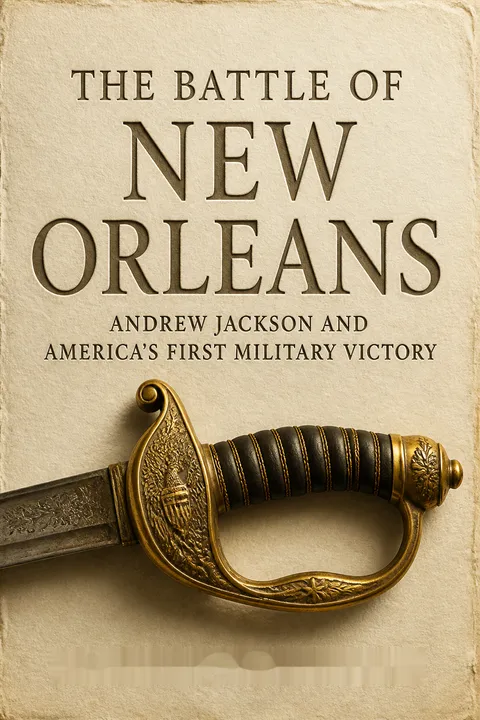

Key Takeaways
1. The War of 1812: A Fight for National Respect
Only a great military victory over the English could convince the world that our independence had been fairly won and that it was permanent.
Proving independence. The War of 1812, often called the "forgotten war," was initiated by American "Warhawks" like Henry Clay and John C. Calhoun to challenge British provocations. These included impressing American seamen, seizing ships, and inciting Native American attacks. More profoundly, the young United States sought to assert its sovereignty and prove its republican experiment was a permanent fixture among nations, countering British disdain for its independence.
Early disasters. The initial years of the war were marked by American military failures.
- General William Hull's invasion of Canada failed, leading to the surrender of Detroit.
- Invasions from Niagara and Lake Champlain collapsed due to constitutional objections from American troops refusing to cross the border.
- The USS Chesapeake was captured, and the British blockaded the American coastline, hoping to encourage New England's secession.
British grand strategy. With Napoleon's abdication, Britain focused its full military might on America, planning a three-pronged invasion:
- Chesapeake Bay (Washington, Baltimore)
- Lake Champlain (New York State)
- Gulf of Mexico (New Orleans, Mississippi Valley)
The first two prongs saw initial British success, including the burning of Washington D.C., but were ultimately repulsed at Baltimore and Plattsburg.
2. Andrew Jackson's Rise: Forging a Commander in the Creek War
The call by Governor Blount to avenge the Fort Mims massacre set Andrew Jackson on the course to national fame.
Frontier justice. Andrew Jackson, a formidable figure with a deep-seated hatred for the British stemming from his Revolutionary War experiences, rose to prominence during the Creek War. The brutal Fort Mims massacre in August 1813, where Red Stick Creeks slaughtered hundreds of settlers and allied Indians, ignited a furious demand for revenge across the American frontier. Governor Willie Blount of Tennessee swiftly ordered Major General Jackson to lead troops against the Creeks.
Old Hickory's campaign. Despite suffering from a bullet wound, Jackson, affectionately known as "Old Hickory" for his toughness, led his Tennessee militia deep into Creek territory. He established Fort Deposit and Fort Strother, then systematically defeated the Red Sticks.
- At Tallushatchee (November 1813), his troops "shot them like dogs," burning the town.
- At Talladega, he secured another victory, killing three hundred warriors.
Horseshoe Bend and its impact. The decisive Battle of Horseshoe Bend (March 1814) saw Jackson, with a combined force of infantry, cavalry, and friendly Indians, crush the Red Sticks. This victory was crucial, as it neutralized a potential British ally in the South just as the British were planning their Gulf invasion. Jackson then imposed the Treaty of Fort Jackson, seizing 23 million acres of Creek land, and was appointed major general in the U.S. Army, commanding the Seventh Military District.
3. British Grand Strategy: Overconfidence and Underestimation
We have long been habituated to despise the Americans, as an enemy unworthy of serious regard.
Cochrane's vision. Vice Admiral Sir Alexander Cochrane, commander of the North American station, proposed a Gulf invasion, confident that few British regulars would be needed. He believed they would be joined by Spanish, Indians, and even slaves, who would welcome "liberation" from American rule. London approved his plan, aiming to seize New Orleans, control the Mississippi Valley, and dictate peace terms.
Initial blunders. The British invasion began with a series of miscalculations and underestimations.
- Colonel Edward Nicholls, sent to Pensacola to recruit allies, violated Spanish neutrality and was repulsed by Jackson at Mobile.
- The British underestimated Fort Bowyer's defenses, leading to a costly naval defeat.
- Jackson's capture of Pensacola further disrupted British plans, forcing them to target New Orleans directly, a far more challenging invasion point.
Arrogance and contempt. British officers, veterans of the Napoleonic Wars and "Wellington's heroes," held deep contempt for American military capabilities. They expected an easy victory, believing New Orleans' diverse population would not be loyal to the United States and would welcome them. This arrogance, coupled with poor intelligence and a lack of understanding of the local terrain and American fighting spirit, would prove to be their undoing.
4. New Orleans: A Diverse City United by Impending Invasion
A population of many ethnic and racial backgrounds who frequently quarreled with one another put aside their differences and joined together to save their city and safeguard their liberty.
A melting pot of cultures. New Orleans, a vital port at the mouth of the Mississippi, was a vibrant but fractious city. Its population was a complex mix of French, Spanish, American, German, Portuguese, Italian, Irish, and various free people of color and slaves. This rich cultural tapestry, while unique, also fostered deep-seated rivalries and a general distrust of American rule, making unified defense a significant challenge.
Pirates and politics. The city's unique character included the presence of the Baratarian pirates, led by the Laffite brothers. These privateers, operating out of Lake Barataria, smuggled goods and slaves, providing the city with inexpensive supplies but also creating a legal and political headache for Governor William C. C. Claiborne. The British, unaware of the pirates' true loyalties, attempted to recruit Jean Laffite, offering him a captaincy in the Royal Navy and land, but Laffite, despite his illicit activities, considered himself an American.
Vulnerability and fear. New Orleans was naturally protected by the Mississippi to the west and Fort St. Philip to the south, but vulnerable from the east and north via Lake Borgne and Lake Pontchartrain. The city's inhabitants, aware of the British burning of Washington and atrocities at Hampton, Virginia, lived in fear of what might happen if their city fell. This shared dread, however, would ultimately become a powerful unifying force.
5. Jackson's Decisive Leadership: Martial Law and Pirate Alliance
By the Eternal, they shall not sleep on our soil!
Arrival and assessment. When Andrew Jackson arrived in New Orleans on December 1, 1814, he found a city teeming with diverse, often squabbling, factions and inadequate defenses. Despite his own frail appearance, his reputation for firmness and his commanding presence immediately inspired confidence. He quickly began inspecting defenses and gathering intelligence, recognizing the city's vulnerability and the need for drastic measures.
Uniting the disparate. Jackson's immediate challenge was to forge a cohesive fighting force from the city's heterogeneous population. He enthusiastically welcomed free men of color into military service, promising them equal rights and respect. He also, pragmatically, reversed his initial stance against the Baratarian pirates, accepting Jean Laffite's offer of men, ammunition, and invaluable local knowledge, recognizing their desperate need for skilled gunners and supplies.
Martial law declared. Faced with a divided legislature and the imminent threat of invasion after the British defeated American gunboats on Lake Borgne, Jackson declared martial law on December 16. This bold move, though controversial, imposed order, forced every able-bodied man into service, and galvanized the city for defense. His unwavering determination, encapsulated in his famous declaration, "By the Eternal, they shall not sleep on our soil!", rallied the populace and instilled a fierce resolve.
6. The Night Attack (December 23): A Psychological Blow to the Invaders
The annals of modern warfare... furnish no parallel to what took place.
British landing. After defeating American gunboats, the British ferried troops across Lake Borgne to Bayou Bienvenu, a grueling 30-mile journey. On December 23, Colonel William Thornton's advance brigade, accompanied by General John Keane, landed at Bayou Bienvenu and quickly occupied the Villeré plantation, just nine miles from New Orleans. Keane, however, made a critical error by halting the advance, fearing a larger American force, instead of pressing on to the undefended city.
Jackson's swift counterattack. Informed of the British presence by Major Gabriel Villeré, who dramatically escaped capture, Jackson immediately launched a daring night attack. He positioned General John Coffee's Tennessee frontiersmen to flank the British, while his main force, including regulars, militia, and free men of color, engaged them directly. The USS Carolina, anchored in the Mississippi, opened fire, signaling the start of the engagement.
Chaos and confusion. The battle, fought in darkness and thick fog, was a chaotic, hand-to-hand struggle. American sharpshooters, using their long rifles and hunting knives, inflicted heavy casualties. The British, caught by surprise and disoriented, were convinced they faced a vastly superior force. Though Jackson eventually withdrew, the night attack was a crucial psychological victory.
- It halted the British advance, buying Jackson precious time.
- It demoralized the British, shattering their overconfidence.
- It transformed Jackson's diverse, untested troops into battle-hardened veterans.
7. Fortifying the Line: Jackson's Ingenious Mud Rampart
Here we shall plant our stakes, and not abandon them until we drive these red-coat rascals into the river, or the swamp.
Strategic retreat. Following the night attack, Jackson, a pragmatist despite his aggressive nature, ordered his army to withdraw two miles north to the Rodriguez Canal. This old millrace, running from the Mississippi to an impenetrable cypress swamp, offered the narrowest front for defense and an ideal natural barrier. This decision was pivotal, allowing him to consolidate his forces and build a formidable defensive line.
Building the rampart. For days, American soldiers and impressed slaves toiled tirelessly, widening and deepening the canal. They constructed an earthen rampart along its northern edge, using mud, debris, and cypress logs to reinforce the walls.
- The rampart reached seven to eight feet high in places.
- Cotton bales were initially used for gun platforms but later removed due to fire risk.
- Jackson established multiple backup lines of defense closer to the city.
Constant harassment. While fortifying, Jackson maintained constant pressure on the British.
- The USS Carolina and the newly operational USS Louisiana continuously bombarded the British camp, disrupting their activities and morale.
- Major Latour erected batteries on the west bank of the Mississippi, creating a devastating crossfire potential.
- Tennessee sharpshooters and Choctaw Indians conducted nightly raids, picking off sentinels and keeping the British in a state of constant alarm, much to the British's "improper" annoyance.
8. The Artillery Duel (January 1): British Guns Silenced
Scarce a ball passed over, or fell short of its mark, but all striking full into the midst of our ranks, occasioned terrible havoc.
British counter-plan. After the night attack and the continuous American harassment, the British high command, now under General Edward Pakenham, decided against another direct assault. Instead, they opted to treat Jackson's earthworks as a fortified city, planning to silence his batteries with a massive artillery bombardment. They spent days hauling heavy naval guns across Lake Borgne and through the swamps to erect new batteries.
New Year's Day surprise. On January 1, 1815, under the cover of a thick fog, the British unveiled their batteries, consisting of thirty heavy cannons. At 10:00 A.M., as the fog lifted and American troops were preparing for a celebratory review, the British unleashed a devastating barrage of cannonballs and Congreve rockets. The Macarty house, Jackson's headquarters, was heavily damaged, but miraculously, he and his staff escaped injury.
American resilience and accuracy. Despite the initial shock, American artillerymen, including the skilled Baratarian pirates under Dominique You and Renato Beluché, quickly recovered. They returned fire with astonishing accuracy, their guns "vomiting 224 pounds of metal" with each salvo.
- British sugar barrels, mistakenly used for fortification, proved useless against American cannon fire.
- Many British guns lacked proper flooring, sinking into the mud after a few rounds.
- The British struggled with range, often overshooting the American rampart.
Decisive American victory. After an intense, three-hour artillery duel, the British batteries were shattered, their guns dismounted, and many artillerists killed. The American rampart, made of thick mud, remained largely intact. This humiliating defeat further demoralized the British, who grudgingly admitted the Americans' superior marksmanship and the futility of surpassing them in this mode of fighting.
9. Pakenham's Fatal Impetuosity: The Doomed Main Assault
I will wait my own plans no longer.
Final British plan. Despite two previous failures and the arrival of reinforcements under General John Lambert, Pakenham, stung by the taunts of Admiral Cochrane, decided on a two-pronged assault for January 8.
- Colonel William Thornton would cross the Mississippi to attack General David Morgan's weak position on the west bank, seize American guns, and turn them on Jackson's main line.
- Pakenham would lead the main assault on Jackson's rampart, with General Samuel Gibbs attacking the American left (Carroll's position) and General John Keane attacking the right (near the river).
Critical delays and blunders. The plan was plagued by delays and miscalculations from the start.
- Cochrane's "bungling" method of digging a canal to transport barges to the Mississippi severely delayed Thornton's crossing, meaning the west bank attack would not be synchronized.
- The 44th Regiment, assigned to carry fascines (bundles of sugarcane to fill the ditch) and scaling ladders, inexplicably lagged behind Gibbs's main column.
- The signal rocket, meant to coordinate the attack, was fired prematurely and confused Keane's troops, who "stood there, looking upward... and not advancing."
The slaughter begins. As the morning mist lifted, revealing the massed British forces, Jackson's artillery and sharpshooters unleashed a devastating, continuous fire.
- American cannons, loaded with musket balls, tore gaping holes in the British ranks.
- Carroll's Tennessee and Kentucky riflemen, firing in rotating lines, maintained an unbroken hail of bullets, mowing down hundreds of redcoats.
- The British, lacking their fascines and ladders, found themselves trapped before the ditch, unable to cross or scale the rampart.
10. The January 8th Slaughter: An Unprecedented American Victory
History... records no example, of so glorious a victory, obtained, with so little bloodshed, on the part of the victorious.
High command decimated. The British assault quickly devolved into a catastrophic rout. General Gibbs, leading the main column, was mortally wounded trying to rally his fleeing men. Pakenham, attempting to inspire the lagging 44th Regiment, was struck by grapeshot, his horse killed, and then a second shot to the groin proved fatal. General Keane was also severely wounded. With their leadership wiped out, the British columns disintegrated.
Unbelievable casualties. The open plain became a "killing field." British soldiers fell by the hundreds, their bodies piled upon one another. The magnificent 93rd Highlanders, sent in as a reserve, were decimated, losing 50% of their men.
- British casualties: 291 killed, 1,262 wounded, 484 captured (total 2,037).
- American casualties: 7 killed, 6 wounded (for the main battle).
- This astounding disparity in losses was "a circumstance unparalleled in modern history."
Jackson's restraint. Despite the overwhelming victory, Jackson wisely refused to allow Major Hinds's dragoons to pursue the fleeing British, fearing an engagement in the open field against desperate, battle-hardened troops. He prioritized the safety of his men and the security of the city, recognizing that his objective had been achieved.
A scene of horror. As the smoke cleared, the battlefield revealed an apocalyptic scene of death and suffering. Bodies lay strewn across the plain, many "riddled with rifle balls," their faces contorted in agony. American soldiers, initially celebrating, were sobered by the sheer scale of the carnage, though they showed humanity by tending to the British wounded.
11. The West Bank Fiasco: A Flanking Maneuver's Mixed Fortunes
The Kentucky reinforcement in whom so much reliance had been placed, ingloriously fled—drawing after them, by their example, the remainder of the force; & thus, yielding to the enemy that most fortunate position.
Thornton's delayed attack. While the main battle raged on the east bank, Colonel William Thornton's force, severely reduced and delayed by the treacherous Mississippi current, finally landed on the west bank. They were four miles downstream from General David Morgan's American position and well behind schedule. This lack of synchronization doomed Pakenham's overall plan.
Morgan's weak defense. Morgan's line on the west bank was poorly defended, consisting of exhausted, ill-armed Louisiana militia and Kentucky troops. Their breastwork was too low, offering little protection. Thornton's disciplined British troops quickly overwhelmed the American advance guard and then struck Morgan's main line.
- The Kentuckians, poorly armed and exhausted, fired a few rounds before fleeing in "wild panic."
- Morgan's attempts to rally them were futile, as they continued to run to the rear.
Patterson's sacrifice. Commodore Patterson, commanding the marine battery on the west bank, initially aimed his guns at the east bank to support Jackson. Witnessing Morgan's rout, he furiously ordered his guns turned on the fleeing Kentuckians, but quickly rescinded the order. Realizing his position was untenable, he spiked his guns and abandoned the battery, retreating with his men.
British tactical victory, strategic failure. Thornton successfully captured Patterson's batteries and sent word of his victory to Pakenham. However, with Pakenham dead and the main assault on the east bank a disaster, General Lambert ordered Thornton to withdraw. Despite a tactical success on the west bank, the British flanking maneuver ultimately failed to achieve its strategic objective, further compounding their overall defeat.
12. A Nation Forged: The Battle's Enduring Legacy
Peace is signed in the arms of Victory!
A defining moment. The Battle of New Orleans, though fought after the Treaty of Ghent was signed (but not yet ratified), became a pivotal moment in American history. It was the nation's first truly triumphant military victory, demonstrating its strength and will to defend its freedom against the world's most powerful army. This victory instilled a profound sense of national pride and confidence, forever altering America's self-perception and its standing on the global stage.
Rise of American nationalism. The battle unified a previously disparate nation. The diverse population of New Orleans, along with soldiers from various states, had fought together and discovered a shared American identity. This powerful surge of nationalism resonated across the country, blurring sectional and ethnic divisions and fostering a collective belief in the superiority of American institutions and the military prowess of its free citizens.
Jackson's enduring hero status. Andrew Jackson emerged as an unparalleled national hero, "The Hero of New Orleans." His leadership, determination, and the astounding victory propelled him to unprecedented fame. This triumph paved the way for his political career, culminating in his election as President in 1828, ushering in the era of Jacksonian Democracy and solidifying the belief that ordinary citizens could achieve extraordinary things in a free republic. The battle became a symbol of American resilience and self-determination, a second declaration of independence.
People Also Read


Download PDF
Download EPUB
.epub digital book format is ideal for reading ebooks on phones, tablets, and e-readers.








































