
Plot Summary
Rain, Rage, and Rebellion
On a rain-soaked July day, Zeliha Kazanci storms through Istanbul, cursing the city, the rain, and the men who harass her. Her rebellious spirit is palpable—she wears miniskirts, sports a nose ring, and refuses to bow to societal expectations. The city's chaos mirrors her own inner turmoil as she rushes to a gynecologist's appointment, contemplating an abortion. The Kazanci family, cursed so that its men die young, is a house of women, each with her own eccentricities and wounds. Zeliha's decision at the clinic—whether to end her pregnancy—sets the tone for a story about fate, choice, and the burdens women carry. The rain, both agony and absolution, becomes a symbol of Istanbul's relentless struggle and fleeting moments of peace.
American Beans, Turkish Streets
In Arizona, Rose, a Kentucky-born American, navigates the aisles of a supermarket, haunted by her failed marriage to Barsam, an Armenian-American. She meets Mustafa, a Turkish student, in a chance encounter over garbanzo beans. Both are exiles in their own ways—Rose from her marriage, Mustafa from his homeland and family curse. Their brief connection is tinged with longing and misunderstanding, as Rose contemplates using Mustafa to provoke her Armenian in-laws. Meanwhile, Mustafa's loneliness in America is profound; he is a king in his family but a stranger in the world. Their meeting is a collision of cultures, resentments, and the search for belonging.
Family Feasts and Fears
Back in Istanbul, the Kazanci women gather for dinner, their table laden with food and unspoken grievances. Zeliha returns home, her secret heavy in her heart, to a family that is both fortress and prison. The absence of men—due to the family curse—has shaped the women's lives, making them fierce, superstitious, and sometimes cruel. The dinner table is a battleground of personalities: Banu the clairvoyant, Feride the hypochondriac, Cevriye the rigid teacher, and matriarch Gulsum. The family's history is recounted through stories of men lost to violence, accident, or fate, and the women's attempts to find meaning and control in a world that offers little of either.
Bastards and Birthdays
Asya, Zeliha's daughter—the titular "bastard"—grows up in a house of women, never knowing her father. Each birthday brings new realizations: her illegitimacy, her difference, her inability to fit in. She is a patchwork of her aunts' traits, yet feels fundamentally alone. Her obsession with Johnny Cash and existential philosophy is a shield against the chaos of her family and the city. The Kazanci women's irrationality both infuriates and defines her. Asya's struggle is not just with her family, but with the very idea of belonging—to a lineage, a city, or a story.
Café Kundera's Contradictions
Café Kundera is a haven for Istanbul's disaffected intellectuals, including Asya and her circle: a dipsomaniac cartoonist, a closeted columnist, a scenarist of nationalist movies, and others. The café is a microcosm of Turkey's identity crisis—caught between East and West, tradition and modernity, cynicism and longing. Conversations swirl around politics, art, and the impossibility of change. Asya finds solace in the café's inertia, its refusal to conform or progress. Here, the personal and political blur, and the city's contradictions are both mocked and mourned.
Diaspora Dreams and Doubts
In San Francisco, Armanoush Tchakhmakhchian, Barsam and Rose's daughter, is torn between her Armenian heritage and American upbringing. Her family's trauma—the genocide, exile, and loss—shapes her sense of self. She seeks answers in books, online forums, and eventually, a journey to Istanbul. Her virtual community, Café Constantinopolis, debates history, memory, and the Janissary's Paradox: can one belong to both the oppressor and the oppressed? Armanoush's longing for roots and truth propels her toward the city her grandmother fled, hoping to reconcile past and present.
Secrets in the Silver Bowl
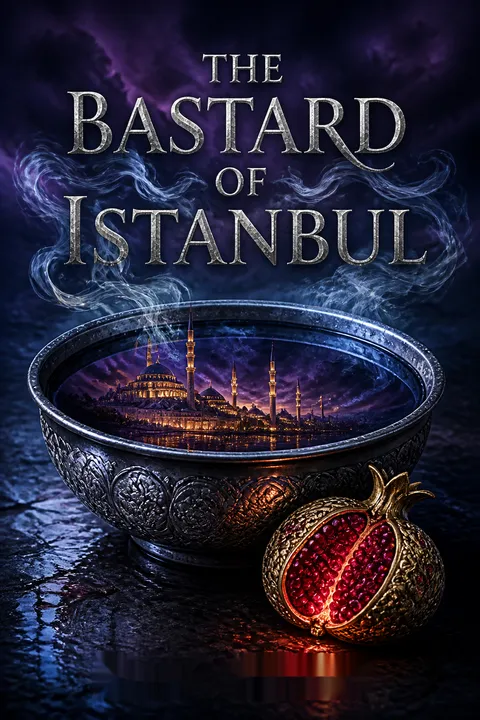
Auntie Banu, the clairvoyant, consults her djinn—Mrs. Sweet and Mr. Bitter—for answers about the past. Through a mystical ritual with a silver bowl, she glimpses the hidden history of Armanoush's family: the deportations, the orphaned Shushan, the pomegranate brooch. The djinn embody the duality of knowledge—its power to heal and to destroy. Banu's burden is the curse of the sage: to know is to suffer. The past, she learns, is never truly past; it lives on in secrets, objects, and the bodies of descendants.
Pomegranate Brooches, Broken Lines
The pomegranate brooch, once belonging to Shushan, becomes a symbol of lost heritage and the possibility of connection. The story of Shushan—her survival, conversion, and eventual emigration—mirrors the fate of countless Armenians. The brooch passes through hands and generations, its rubies darkening with sorrow. The Kazanci and Tchakhmakhchian family trees intertwine in unexpected ways, their histories marked by rupture, silence, and the longing for wholeness.
Sisters, Djinn, and Destiny
The Kazanci sisters—each eccentric in her own way—navigate love, loss, and the supernatural. Banu's relationship with her djinn is both a source of power and torment. The sisters' rituals—pouring lead, reading coffee cups, preparing ashure—are attempts to ward off evil and assert control over fate. Yet destiny, like the family curse, is relentless. The women's alliances are tested by secrets, jealousy, and the return of the prodigal son.
Ashure: A Taste of Survival
The preparation of ashure, a traditional dessert, becomes a metaphor for survival and solidarity. Each ingredient—wheat, beans, dried fruit, nuts—represents a fragment of history, a remnant of what endures after catastrophe. The act of cooking and sharing ashure is both a remembrance of Noah's flood and a ritual of hope. In the Kazanci kitchen, women gather to mourn, gossip, and find comfort in food, even as the past seeps into every gesture.
Return of the Prodigal Son
Mustafa, the only surviving Kazanci son, returns to Istanbul after twenty years in America, bringing his American wife, Rose. His arrival stirs old wounds and anxieties. The family prepares a feast, but the atmosphere is tense—Mustafa is haunted by guilt, and the women by memories of loss. The reunion is both celebration and reckoning, as the boundaries between past and present, victim and perpetrator, begin to blur.
Death, Memory, and Mourning
Mustafa's sudden death—at the cursed age of forty—plunges the family into mourning. The rituals of death, from washing the body to communal wailing, expose the fragility of life and the persistence of memory. Asya learns the truth about her parentage: Mustafa was her father, and her mother's silence was both protection and punishment. The house of women is left to grapple with the consequences of secrets kept too long.
Confessions and Consequences
In the aftermath of Mustafa's death, confessions surface. Auntie Banu reveals her role in his demise—she gave him poisoned ashure, a mercy killing to spare him the burden of the past. The weight of knowledge—of history, of family secrets—proves unbearable. The women must decide what to remember, what to forget, and how to live with the consequences of their choices.
The Weight of the Past
The Armenian genocide, the Kazanci curse, and the personal traumas of each character converge in a meditation on the inescapability of the past. Attempts at reconciliation—between Turks and Armenians, mothers and daughters, memory and forgetting—are fraught with pain and ambiguity. The novel suggests that history is not a closed book, but a living force that shapes every present moment.
Rain Again, Forgiveness Unspoken
As rain falls once more on Istanbul, the Kazanci women gather, changed but not healed. The city, like the family, endures—scarred, beautiful, and unfinished. Objects like the pomegranate brooch and the tea glass survive, bearing witness to stories that cannot be fully told. Forgiveness remains elusive, but the act of telling—of sharing food, memories, and pain—offers a fragile hope. The rain, as always, is both curse and blessing, washing away and revealing what lies beneath.
Analysis
A meditation on memory, identity, and the possibility of reconciliationThe Bastard of Istanbul is a novel about the inescapable grip of the past—personal, familial, and national. Through the interwoven stories of Turkish and Armenian families, Elif Shafak explores how trauma, silence, and denial shape generations. The book interrogates the boundaries between victim and perpetrator, insider and outsider, memory and forgetting. Magical realism and culinary rituals offer both solace and confrontation, suggesting that healing requires both remembrance and the courage to break silence. The novel resists easy resolutions: forgiveness is elusive, and history's wounds remain open. Yet in the acts of storytelling, sharing food, and forging unlikely connections, there is a fragile hope for understanding. Shafak's Istanbul is a city of contradictions—beautiful and brutal, haunted and alive—mirroring the complexities of identity in a world marked by exile and longing. The lesson is clear: to move forward, we must face the past, even when it hurts, and find meaning in the fragments that survive.
Review Summary
The Bastard of Istanbul receives mixed reviews. Many praise its vivid characters, exploration of Turkish-Armenian relations, and depiction of Istanbul. Readers appreciate Shafak's lyrical prose and complex female characters. Some find the plot engaging and thought-provoking, while others criticize it as cluttered or contrived. The novel's treatment of the Armenian genocide is both lauded for its bravery and criticized for lacking depth. Overall, readers find the book compelling, though opinions vary on its execution and impact.
People Also Read
Characters
Asya Kazanci
Asya is the nineteen-year-old daughter of Zeliha, raised in a house of women and never knowing her father's identity until the novel's end. She is fiercely intelligent, cynical, and emotionally volatile, finding solace in Johnny Cash and existential philosophy. Asya's psychological landscape is shaped by her illegitimacy, her mother's distance, and the irrationality of her aunts. She is both insider and outsider—Turkish, yet skeptical of Turkishness; a woman, yet wary of femininity. Her journey is one of self-discovery, as she confronts the burdens of history, family, and the possibility of forgiveness.
Zeliha Kazanci
Zeliha is Asya's mother, a tattoo artist who defies social norms with her dress, language, and irreligion. Her past is marked by trauma—she was raped by her brother Mustafa, a secret she keeps to protect her daughter and herself. Zeliha's relationship with Asya is fraught with tension, love, and unspoken pain. She is both fiercely protective and emotionally distant, embodying the contradictions of modern Turkish womanhood. Her refusal to conform is both her strength and her curse.
Banu Kazanci
Banu, the eldest Kazanci sister, is a clairvoyant who communicates with djinn—Mrs. Sweet and Mr. Bitter. Her mystical abilities are both a source of power and torment, as she becomes the keeper of family secrets and historical traumas. Banu's compassion is matched by her suffering; she ultimately poisons Mustafa to spare him the agony of his past. Her character explores the limits of knowledge, the ethics of intervention, and the cost of bearing witness.
Feride Kazanci
Feride is the most eccentric of the sisters, plagued by imagined illnesses and a fascination with disasters. Her psychological instability is both comic and tragic, reflecting the family's collective anxiety. Feride's obsession with catastrophe is a coping mechanism for loss and uncertainty. She is both marginalized and essential, her madness a mirror of the world's chaos.
Cevriye Kazanci
Cevriye, a history teacher, is the most conventional of the sisters, clinging to discipline, nationalism, and the rituals of the Turkish Republic. Her need for control masks deep grief—she lost her husband and has never recovered. Cevriye's rigidity is both a shield and a prison, preventing her from engaging with the complexities of her family's past and present.
Gulsum Kazanci
Gulsum is the mother of the Kazanci siblings, a stern and superstitious woman who enforces the family's rituals and taboos. Her life is defined by loss—of her husband, her son, and her illusions. Gulsum's authority is both stabilizing and suffocating, as she struggles to maintain order in a world that resists it.
Petite-Ma (Great-Grandmother)
Petite-Ma is the family's oldest member, her mind slipping between clarity and oblivion. She is a repository of stories, rituals, and superstitions, pouring lead to ward off the evil eye and interpreting omens. Her Alzheimer's is both a tragedy and a release, allowing her to forget pain but also to lose herself. Petite-Ma embodies the tension between memory and forgetting, tradition and change.
Armanoush Tchakhmakhchian
Armanoush is the Armenian-American stepdaughter of Mustafa and daughter of Rose and Barsam. Torn between her Armenian heritage and American upbringing, she seeks to understand her identity by traveling to Istanbul. Her journey is both personal and political, as she confronts the legacy of the Armenian genocide and the complexities of Turkish-Armenian relations. Armanoush's empathy and curiosity make her a catalyst for revelation and reconciliation, even as she grapples with loss and disillusionment.
Mustafa Kazanci
Mustafa is the only surviving Kazanci son, sent to America to escape the family curse that kills men young. His life is marked by guilt, alienation, and the burden of secrets—most devastatingly, his rape of Zeliha and fathering of Asya. Mustafa's attempts to escape his past are futile; his return to Istanbul triggers the unraveling of the family's history and his own demise. He is both victim and perpetrator, a tragic figure caught in the web of fate.
Rose
Rose is Armanoush's American mother, a woman shaped by disappointment, resilience, and the longing for acceptance. Her marriages—to Barsam and then Mustafa—are attempts to find belonging in worlds that reject her. Rose's relationship with her daughter is fraught with anxiety and overprotection, yet also deep love. She is both comic and poignant, a symbol of the outsider's perpetual search for home.
Plot Devices
Interwoven Narratives and Dual Timelines
The novel employs a braided narrative, alternating between the Kazanci family in Istanbul and the Armenian-American diaspora in the United States. This structure allows for the exploration of parallel traumas—personal and historical—and the ways in which they echo across generations. The use of flashbacks, stories within stories, and objects (like the pomegranate brooch) creates a tapestry of memory and forgetting, connecting characters across time and space.
Magical Realism and Supernatural Elements
Magical realism permeates the novel, most notably through Auntie Banu's interactions with her djinn and the rituals of fortune-telling, lead pouring, and ashure-making. These elements blur the line between reality and fantasy, suggesting that the supernatural is both a coping mechanism and a means of accessing hidden truths. The djinn serve as both guides and tormentors, embodying the duality of knowledge and ignorance.
Food as Memory and Metaphor
Food is a central motif, symbolizing both continuity and rupture. The preparation and sharing of ashure—a dessert made from disparate ingredients—mirrors the novel's themes of survival, community, and the blending of histories. The pomegranate brooch, with its seeds of ruby, is a tangible link to the past, a vessel for memory and loss. Meals are sites of conflict, reconciliation, and the performance of identity.
Foreshadowing and Symbolism
Recurring symbols—rain, broken tea glasses, the family curse—foreshadow the novel's central tragedies and revelations. Rain is both a source of anger and renewal, marking moments of crisis and catharsis. The breaking of glass is interpreted as the shattering of evil, but also as a sign of fragility and impending loss. The curse that kills Kazanci men is both literal and metaphorical, representing the inescapability of history and the consequences of silence.
Online Forums and Modern Communication
The use of online forums allows characters like Armanoush to engage in debates about history, identity, and reconciliation. These virtual spaces mirror the real-world cafés of Istanbul, serving as arenas for the negotiation of memory and belonging. The anonymity and immediacy of online communication highlight both the possibilities and limitations of dialogue across divides.
About the Author

Download PDF
Download EPUB
.epub digital book format is ideal for reading ebooks on phones, tablets, and e-readers.








































