
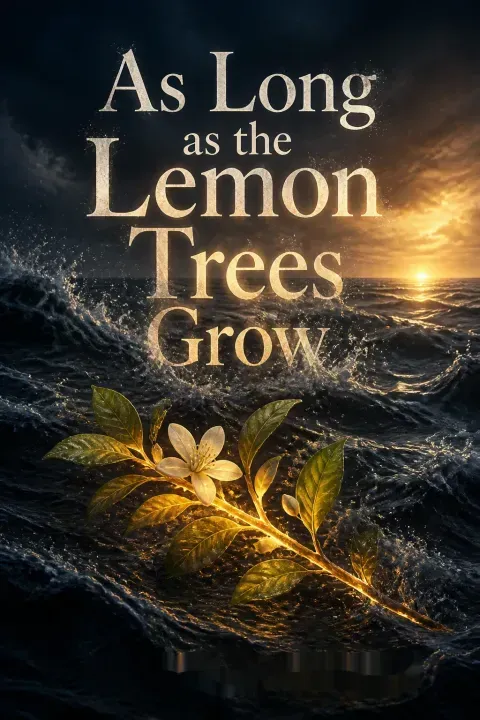


Plot Summary
Fear Wears a Suit
Salama Kassab,1 eighteen, functions as a surgeon in Homs' last hospital, though she completed only one year of pharmacy school. Her mother died when a bomb collapsed their apartment building, leaving a scar at the base of Salama's1 skull.
Her father and brother Hamza9 were arrested by the military; she now guards her pregnant sister-in-law Layla,3 the only family she has left. Each night, a hallucination called Khawf4 visits: a pale man in a black suit with blood-red spots on the shoulders.
He forces her to relive her mother's death and Hamza's9 desperate plea that she protect Layla3 above all else. Khawf4 insists she must ask the smuggler Am6 for a boat to Europe, threatening to shatter her mind if she refuses. Salama1 chants flower names to keep him at bay, but his voice never retreats.
The personification of fear as Khawf externalizes Salama's PTSD and survivor's guilt. Her flower-chanting is a grounding technique, a fragile barrier against mental collapse. The promise to Hamza becomes the central moral axis: staying to help versus fleeing to protect Layla. Khawf represents the paradox of fear as both tormentor and survival instinct, his demands mirroring her own suppressed desire to escape the daily death. This section establishes the psychological battlefield that Salama navigates alongside the physical war.
The Almost-Groom Emerges
A frantic boy named Kenan2 finds Salama1 at the hospital: his nine-year-old sister Lama8 has a fever and screams in pain. Salama1 goes to their shattered apartment and, without anesthesia, cuts into Lama's8 stomach to remove leftover shrapnel. Night falls and sniper fire traps her there.
As they talk, Kenan2 reveals he was the suitor her mother had arranged for her before the revolution; they would have met for coffee and perhaps been engaged by now. Kenan,2 an aspiring animator, secretly records protest videos for YouTube, risking his life to show the world the truth. Salama,1 exhausted, feels an unfamiliar pull toward this green-eyed boy. In the morning, she returns home, her heart unsettled by the might-have-been.
The chance reunion reintroduces a path not taken, a parallel life of love and normalcy that stands in painful contrast to the present. Kenan's activism offers a mirror to Salama's own suppressed anger at the regime. Their meeting catalyzes hope but also complicates her decision to leave, because Kenan adamantly refuses to abandon Syria. The crude surgery without anesthesia underscores the brutal compromises of war medicine and Salama's forced hardening.
A Scalpel's Bargain
Am6 the smuggler wants four thousand dollars, more than Salama1 and Layla3 possess. Then a sniper shoots his daughter Samar through the neck. Salama1 finds herself standing over the child with gauze pressed to the wound. In a moment of cold calculation, she tells Am6 she will remove her hands and let Samar die unless he gives her a boat for half the price plus Layla's3 gold necklace.
He agrees, face cracking. Salama1 sutures the wound and donates her own blood, but the act sickens her. She has violated her oath, held a child's life hostage. From that day, food lodges in her throat like stones; she vomits bile and feels her body hollowing. The guilt becomes a second phantom that follows her into every surgery.
This is Salama's moral nadir, where the imperative to protect Layla overrides her core identity as a healer. The scene dismantles the myth of the noble survivor, showing how desperation can corrupt even the most ethical. Her body's refusal of food becomes a physical manifestation of guilt, a self-punishment that mirrors the starvation of the besieged city. The blood donation creates an unbreakable, haunting bond with Samar.
Camera of the Revolution
With Dr. Ziad's5 permission, Kenan2 begins recording the hospital's victims: children peppered with bullet holes, mothers wailing, amputees singing protest songs. Salama1 watches him work, seeing how his storytelling weaves dignity into suffering. They trade Studio Ghibli references and imagine a children's book they could write together, about a forest made of ocean and fish that fly through air currents.
Salama1 feels her guarded heart opening even as she knows she will soon leave. Quietly, she arranges with Am6 for two extra boat seats for Kenan's2 silent brother Yusuf7 and little Lama,8 hoping Kenan2 will follow. She does not tell him yet; the secret feels like a wager on a future she is still afraid to claim.
Kenan's camera becomes an instrument of witness, transforming passive suffering into active testimony. His art offers a different kind of medicine: the restoration of narrative and meaning. The imagined collaborative book symbolizes a shared future beyond mere survival, a creative partnership that defies the war's erasure. Salama's secret purchase of extra boat seats reveals her growing investment in Kenan's world and her determination to save not just Layla but this emerging new family.
Sunset Over the Rubble
One afternoon Kenan2 leads Salama1 to the roof of his former apartment building, now a hollowed shell. They climb eight flights of broken stairs to a view of Old Homs under a lavishing sunset. He points down to a lemon tree still standing, its branches bearing green leaves, and to children playing in the wreckage.
He tells her about his father's lemon-scented cologne and how he used to climb that tree. Then he asks her to look at the sky: pink, purple, tangerine. Salama,1 who has seen only gray and red for months, feels something crack open in her chest. The colors return. She dangles her legs over the edge, and for the first time since her mother died, she believes beauty might still exist.
This scene is the emotional fulcrum of the novel, a moment of aesthetic resurrection. Kenan's ability to locate beauty amid destruction teaches Salama that survival without perception is merely existence. The lemon tree functions as a multi-generational symbol of rootedness; its sour-bright fruit mirrors the bittersweet resilience of the Syrian people. The elevation of the rooftop provides literal and metaphorical perspective, restoring Salama's capacity to see more than horror.
Sarin Clouds the Sky
Sarin gas mixed with chlorine descends on a neighborhood. Victims flood the hospital: children convulsing, foam at their mouths, pupils fixed. Salama1 injects atropine into vein after vein, but many die in her arms, their faces frozen in terror. The smell of bleach burns her lungs. Afterward, on the hospital steps, Kenan2 finally breaks.
He has researched what happens to unaccompanied refugee children: trafficking, forced labor, abduction. If he stays to fight and dies, Lama8 and Yusuf7 will be devoured by a world that does not care. Salama1 does not gloat; she simply holds his hand. He tells her he will leave. The sarin did what her arguments could not: it made the abstract threat tangible, his siblings' vulnerability undeniable.
The chemical attack represents the regime's will to annihilate; it is a crime beyond the Geneva Convention, an absolute violation. For Kenan, the attack collapses the distance between his idealism and his responsibility as a brother. The decision to leave is not a betrayal of Syria but an acknowledgment that his fight can continue beyond its borders. The scene also marks a deepening of intimacy as Salama becomes the person who receives his grief.
A Ring Under Gunfire
On the first anniversary of the uprising, Salama1 joins the protest in Freedom Square. She wants to sing, to feel her voice merge with the crowd's, to mourn and rage openly. Kenan2 stands beside her, his camera absent for once. Then bombs fall. They flee through alleys, taking shelter in the ruins of Salama's1 old home, the very place her mother died.
In that shattered sanctuary, Salama1 confesses her love for him, fear stripping away all pretense. Kenan,2 trembling, pulls out his mother's ring. He asks her to marry him here, in Syria, before they leave. She says yes. The ring is too large for her wasted fingers, so she threads it onto a chain beside her parents' necklace.
The proposal in the wreckage of her childhood home fuses love, loss, and national identity into a single act of defiance. Marrying in Syria before exile is a refusal to let the regime claim their story. The ring, a maternal inheritance, links generations; it is both ghost and promise. The ill fit of the ring on her malnourished finger speaks to the physical cost of war, while the chain that holds it close to her heart becomes a new kind of talisman.
Layla Was Never There
After surviving a military assault at the hospital, Salama1 arrives home to find Layla3 waiting on the couch. She talks with her, feels her warmth, hears her voice. Kenan2 arrives with his siblings and looks at the empty couch. He cannot see Layla.3 Slowly, with unbearable gentleness, he tells Salama1 that no one is there. The memories unravel: last October, a sniper's bullet killed Layla3 and her unborn child on the doorstep.
Salama's1 mind, unable to bear the loss, fabricated an entire reality. For five months she has been living alone, laughing and arguing with a ghost. The hallucination of Layla,3 so vivid she could smell her daisy scent, was her mind's last gift of mercy. Now it shatters, and Salama1 must face the full scope of her solitude.
This revelation reframes the entire narrative, exposing Salama as an unreliable narrator whose trauma-coping mechanism was a complete delusion. It speaks to the profound loneliness of survival and the human brain's capacity to construct protective fictions. Layla's 'presence' allowed Salama to fulfill her promise symbolically, even while living alone. The scene where Kenan tells her marks the moment Salama's healing truly begins, because she can no longer hide from her grief.
Vows in a Dying Hospital
With the hospital still standing but its future uncertain, Salama1 asks Dr. Ziad5 to officiate. She wears her lab coat, her hijab dusty, her hands calloused. Kenan's2 face is still bruised from the beating he took. Lama8 beams; Yusuf7 even cracks a smile. Dr. Ziad5 speaks of finding joy in the wound, of love as resistance. Salama1 recites her consent, and they are married.
Nour claps; patients watch from their beds. Afterward, in Dr. Ziad's5 office, Kenan2 holds her and whispers that one day he will give her a proper wedding. She tells him she wanted a marriage, not a ceremony. That night, in Layla3 and Hamza's9 old room, Khawf4 reveals that he is not just her hallucination but Fear itself, an ancient presence that will not follow her to Europe.
The hospital wedding transforms a site of death into a site of covenant. Dr. Ziad's role as surrogate father underscores the improvised families war creates. Khawf's revelation universalizes Salama's experience, positioning her private trauma within the collective human history of fear and survival. His impending departure is both loss and liberation, a sign that leaving Syria means leaving behind the constant terror that birthed him.
The Cradle of Hope Crumbles
Salama's1 intuition screams; she urges evacuation just before a military plane drops its payload. The hospital, the last refuge, collapses in a roar of dust and fire. Dr. Ziad5 staggers out carrying two dead infants, weeping that he had to choose which babies to save. Salama1 helps the survivors flee, then finds Dr. Ziad5 on the curb.
He tells her about other cities building underground hospitals, a network of defiance. She confesses she is leaving the next day. He blesses her, his eyes holding no judgment. That evening, Salama1 packs her bag with tuna cans, her passport, and the gold. She kisses Layla's painting goodbye. Kenan's2 siblings sleep in her room. She and Kenan2 sit in candlelight, talking about the knafeh she will one day bake.
The bombing of the hospital is the final severance of Salama's old life. Dr. Ziad's resilience — his immediate pivot to building underground — embodies the Syrian refusal to be erased. The contrast between his commitment to stay and her decision to leave highlights two valid forms of resistance: one of presence, one of survival to bear witness from afar. The packing scene is a ritual of farewell, each item a relic of a life being consciously relinquished.
Checkpoint Gauntlet
Am6 drives them past twenty military checkpoints in a battered Toyota. At the first, a soldier leers at Salama,1 tugs her hijab, and comments she would be prettier without it. Kenan2 tenses, but Salama1 grips his hand. Another soldier threatens to take Lama8 away, calling her pretty.
Am6 distracts him with talk of the economy. They wait for hours, engines idling, hearts pounding. At each stop, money changes hands. Salama1 watches a man being kicked by soldiers and prays that if they are caught, they will be killed quickly.
The scent of the sea finally reaches them. In Tartus, Am6 points to a rusted fishing boat already crammed with bodies. He tells them to go, swearing on his daughter's life the boat will make it. Salama1 looks back at the mountains of Syria, knowing she may never return.
The checkpoint sequence is a gauntlet of degradation, illustrating the corruption and cruelty embedded in the regime's infrastructure. The soldiers' casual harassment and threats distill the power dynamics of oppression: bodies as currency, fear as policy. Am's role complicates him; he is both exploiter and lifeline. The overcrowded boat is a visual indictment of the international community's failure, a floating graveyard waiting to happen. Salama's prayer for a quick death reveals how thoroughly the regime has narrowed the possibilities of hope.
The Mediterranean's Cold Mercy
A storm swells the sea; the overburdened boat groans and tilts. People pray and scream. Kenan,2 with his bruised face and fever, tells Salama1 to stay close. Then the boat goes down. The water is ice. Salama1 surfaces, gasping for her mother. She finds Yusuf7 and Lama,8 but Kenan2 floats unconscious. She slaps his face until he chokes awake.
They form a circle, holding hands, kicking against hypothermia. Khawf4 appears one last time on the vanishing boat's railing, bows, and says goodbye. As the cold numbs her, Salama1 recalls the Syria of her dreams: lemon trees heavy with fruit, jasmine on the breeze, children laughing in ancient ruins. A light appears on the horizon. The Italian coast guard has arrived.
The sea becomes the final crucible: baptism by drowning. The circle of hands is an image of communal survival, the refusal to let each other sink. Khawf's bow is a benediction, acknowledging that fear served its purpose and can now recede. The hallucinated Syria is not a death dream but a life wish; it fuels her to keep kicking. The rescue by European coast guard is both literal salvation and a bitter irony, given how many similar boats are ignored.
Epilogue
September dawn in Toronto. Salama,1 now twenty-two, waters a baby daisy on her balcony. A lemon tree sprouts in a blue ceramic pot. Four years have passed since the Mediterranean. She and Kenan2 live in a one-bedroom apartment, attending university; she studies pharmacy, he animation.
A map of Syria covers one wall, a Nizar Qabbani poem another. They still startle at the sound of planes, still wake from nightmares, but a therapist with kind eyes helps them find words. Lama8 and Yusuf7 live in Germany with Kenan's2 uncle; he calls them every day.
Salama1 searches Facebook daily for news of Hamza,9 still listed among the disappeared. She wears his wife's3 ring on a chain. Kenan2 comes out with tea, and they dance in their pajamas. The lemon tree has pushed its first leaves through the soil.
The epilogue is not a simple happy ending but a portrait of ongoing survival. The lemon tree, grown from seeds of memory, embodies the paradox of exile: rooted in new soil yet forever reaching toward the old. Salama's continued search for Hamza reflects unresolved grief that no geography can mend. The daily rituals—tea, dance, watering the plant—are acts of deliberate living, reclaiming the ordinary after years of the extraordinary. The poem on the wall becomes a manifesto of continuity, asserting that Syria lives wherever its children do.
Analysis
This novel examines the psychological toll of war on young people forced to grow up inside a genocide. Salama's1 hallucinations — Khawf4 and the fabricated Layla3 — are not fantastical embellishments but clinically plausible representations of how trauma fractures and reassembles reality. Her arc from emotional numbness to the re-perception of color mirrors the larger national experience: a people refusing to let their culture and joy be extinguished. The romance between Salama1 and Kenan2 is not escapist but essential; it demonstrates that love, art, and storytelling are acts of resistance against dehumanization. The book also indicts the global order that reduces refugees to statistics while smugglers profit and host nations erect barriers. Faith — both religious trust in fate and the secular faith in lemon trees replanted in foreign soil — provides a framework for accepting catastrophic loss without surrendering hope. The epilogue's quiet domesticity is not a retreat from politics but a deepening of it: to water a plant, to dance in pajamas, to search a database for a brother's9 name — these are the continuous, unglamorous labors of survival. The title's borrowed poem becomes a manifesto: as long as lemon trees grow, the story continues. Syria is not a place left behind but a living inheritance carried in scars, recipes, prayers, and the seeds pressed into new earth.
Review Summary
As Long as the Lemon Trees Grow is a powerful, heartbreaking novel set during the Syrian Revolution. Readers praise its emotional impact, beautiful writing, and compelling characters, particularly Salama and Kenan. The book explores themes of hope, love, and resilience amidst war and trauma. Many reviewers consider it a must-read, emphasizing its importance in raising awareness about the Syrian conflict. While some found the writing style simplistic, most were deeply moved by the story and its messages.
People Also Read










Characters
Salama Kassab
Teenage pharmacist-turned-surgeonAn eighteen-year-old pharmacy student forced by war into performing surgeries. She lost her mother to a bombing and her father and brother Hamza9 to arrest. She lives with her pregnant sister-in-law Layla3, bound by a promise to protect her. Salama suffers PTSD, manifesting as hallucinations of a figure named Khawf4 who torments her with memories and urges her to flee Syria. She uses flower names as grounding mantras. Intensely caring but haunted by guilt over patients she cannot save and a moral compromise she makes to secure escape. Her emotional journey moves from numb self-neglect toward rediscovering love, beauty, and the will to live.
Kenan Aljendi
Aspiring animator turned activistA nineteen-year-old eldest brother to Yusuf7 and Lama8, orphaned by the war. He studied computer science and dreams of working at Studio Ghibli. He secretly records protest videos and hospital scenes for YouTube, believing that showing the world the truth is his duty. Before the revolution, he was the suitor Salama's1 mother had chosen for her. Kenan is romantic, articulate, and stubbornly patriotic, initially refusing to leave Syria. His love for Salama1 is expressed through drawings, stories, and a proposal amid the ruins. His protective devotion to his siblings eventually compels him to choose exile.
Layla
Salama's pregnant sister-in-lawSalama's1 best friend since birth and wife of her brother Hamza9. An artist who painted a haunting sea canvas, she is seven months pregnant with a daughter she plans to name Salama1. Layla embodies optimism, creativity, and the insistence on finding happiness even under siege. Her golden-red hair and ocean-blue eyes are described as autumn incarnate. She is the emotional anchor of Salama's1 world and the reason Salama1 fights to survive.
Khawf
Personification of FearA hallucinatory figure born from Salama's1 head trauma and PTSD. He appears as a pale man in a black suit with blood-red spots on the shoulders, always smoking. He torments Salama1 with visions of her family's deaths and threatens to dismantle her reality if she does not leave Syria. Over time, his role shifts from tormentor to strange guardian; he eventually reveals that he is Fear itself, an ancient presence that has inhabited human consciousness since the beginning of time. He will not follow her to Europe.
Dr. Ziad
Head surgeon and father figureThe head doctor at Homs' last hospital, a man in his fifties who sent his own family to Lebanon for safety. He becomes a surrogate father to Salama1, pushing her to care for herself as much as her patients. He officiates her wedding and, when the hospital is bombed, vows to build an underground replacement. His calm competence and unyielding hope make him a moral compass.
Am
Smuggler of refugee boatsA businessman in his late thirties who profits from desperate Syrians seeking passage to Europe. He is pragmatic, hardened, and often callous, yet his fierce love for his young daughter Samar reveals a vulnerable core. Salama1 coerces him into a deal by threatening Samar's life, creating a tense, transactional relationship that later yields grudging mutual respect.
Yusuf
Kenan's mute younger brotherA thirteen-year-old boy who stopped speaking after witnessing his parents' death. He communicates through gestures, expressions, and occasional notes. Initially jealous of Salama's1 place in Kenan's2 life, he gradually warms to her. His silence is a powerful emblem of trauma that cannot yet be articulated. He fiercely protects his little sister Lama8.
Lama
Kenan's injured little sisterA nine-year-old girl whose shrapnel wound brings Salama1 into their lives. She is bright, talkative, and endearingly blunt, once questioning why Salama1 married Kenan2 since he is always on his laptop. Her vulnerability and resilience are catalysts for Kenan's2 decision to leave Syria. She represents the childhood innocence the war threatens to erase.
Hamza
Salama's imprisoned brotherSalama's1 older brother, a newly graduated doctor who was arrested with their father during the protests. He made Salama1 promise to protect his wife Layla3 above all else. His unknown fate in Sednaya Prison haunts the narrative; Salama1 often hopes he has died rather than endure continued torture.
Plot Devices
Khawf
Hallucination driving survivalA psychological construct that externalizes Salama's1 PTSD and guilt. He appears as a man in a suit, tormenting her with visions of her family's deaths and threatening to break her reality if she does not leave Syria. He is both a product of her head injury and a universal presence, eventually revealing himself as Fear incarnate. His function is to act as Salama's1 internal survival drive, pushing her toward self-preservation even at great moral cost.
Lemon Trees
Symbol of Syrian resilienceA recurring motif drawn from a Nizar Qabbani poem: 'Every lemon will bring forth a child, and the lemons will never die out.' Kenan's2 father wore lemon-scented cologne; a lemon tree survived outside his childhood home; Salama1 uses lemons to combat seasickness; she eventually grows a lemon tree in her Canadian apartment. The trees represent the continuity of life, memory, and national identity beyond displacement and death.
The Refugee Boat
Perilous passage to EuropeAn overcrowded, rusted fishing vessel arranged by Am6 to smuggle Syrians across the Mediterranean to Italy. It is grossly overloaded and unseaworthy. During a storm, the boat sinks, forcing passengers into freezing water where many drown. It symbolizes the desperate gamble of exile, the exploitation of refugees, and the international community's fatal indifference to their plight.
Layla's Sea Painting
Touchstone of beauty and memoryA canvas depicting a storm-dark sea with a hidden shade of blue that Layla3 painted before the war. She once dreamed of painting Norway's skies. The painting hangs in the living room of their shared home and becomes a portal to the past for Salama1. It inspires a story idea she and Kenan2 develop together and serves as a reminder that creativity and dreams can outlast destruction.
The Gold and Wedding Ring
Sacrifice and generational loveLayla's3 dowry gold necklace is sold to Am6 to help pay for the boat passage, trading heritage for survival. Kenan's2 mother's ring becomes his proposal gift to Salama1. The ring is too large for her starved fingers, so she wears it on a chain alongside her own parents' necklace. The jewelry symbolizes the transfer of family legacy, the cost of displacement, and a love that binds the living to the dead.
FAQ
Synopsis & Basic Details
What is As Long as the Lemon Trees Grow about?
- A young woman's struggle: The story follows Salama Kassab, a pharmacy student in war-torn Syria, as she grapples with the decision to flee her home while working as a volunteer at a hospital.
- Hope amidst devastation: It explores themes of loss, trauma, and the enduring power of hope through Salama's experiences and relationships with her pregnant best friend, Layla, and a manifestation of her fears, Khawf.
- A journey for survival: The narrative centers on Salama's internal conflict and her desperate attempt to secure passage to safety, highlighting the human cost of war and the resilience of the human spirit.
Why should I read As Long as the Lemon Trees Grow?
- Emotional depth and realism: The novel offers a raw and honest portrayal of the psychological impact of war, exploring themes of grief, guilt, and the struggle to maintain hope in the face of unimaginable loss.
- Unique perspective on conflict: It provides a fresh perspective on the Syrian Civil War through the eyes of a young woman, challenging stereotypes and highlighting the human stories behind the headlines.
- Compelling characters and relationships: The story features complex and relatable characters, whose bonds of friendship and love are tested by the harsh realities of their world, creating a powerful and moving narrative.
What is the background of As Long as the Lemon Trees Grow?
- Syrian Civil War context: The novel is set against the backdrop of the Syrian Civil War, specifically in the city of Homs, depicting the devastation, violence, and displacement caused by the conflict.
- Cultural and historical elements: It incorporates elements of Syrian culture, including Arabic phrases, traditions, and the significance of family and community, providing a rich and authentic context.
- Political and social commentary: The story subtly critiques the oppressive regime and the international community's response to the conflict, highlighting the human rights abuses and the plight of refugees.
What are the most memorable quotes in As Long as the Lemon Trees Grow?
- "Every lemon will bring forth a child and the lemons will never die out.": This quote, from Nizar Qabbani, serves as a powerful motif of hope and resilience, symbolizing the enduring spirit of the Syrian people and their determination to survive and rebuild.
- "We fight while we're still here, Salama, because this is our country. This is the land of your father, and his father before him. Your history is embedded in this soil. No country in the world will love you as yours does.": Layla's words emphasize the deep connection to homeland and the importance of fighting for one's country, even in the face of overwhelming odds.
- "You're not doing anything wrong by leaving.": This quote, repeated by Layla, highlights the internal conflict Salama faces and the need for self-preservation, acknowledging the difficult choices people make in times of crisis.
What writing style, narrative choices, and literary techniques does Zoulfa Katouh use?
- First-person perspective: The story is told from Salama's point of view, allowing readers to intimately experience her thoughts, emotions, and internal struggles, creating a deeply personal and immersive narrative.
- Symbolism and motifs: Katouh uses recurring symbols, such as lemons, daisies, and the color blue, to represent hope, healing, and the longing for a better future, adding layers of meaning to the story.
- Blending of reality and hallucination: The narrative blurs the lines between reality and hallucination, particularly through Khawf's presence, reflecting the psychological impact of trauma and the characters' struggle to cope with their experiences.
Hidden Details & Subtle Connections
What are some minor details that add significant meaning?
- The recurring mention of flowers: Specific flowers like daisies, feverfew, and jasmine are mentioned throughout the book, often in moments of stress or pain, symbolizing Salama's coping mechanisms and her connection to her past life as a pharmacy student.
- The description of Layla's home: The initial vibrant descriptions of Layla's home, filled with art and color, contrast sharply with its later state, reflecting the fading hope and the emotional toll of the war on her and Salama.
- The use of specific Arabic phrases: The use of phrases like "Insha'Allah" and "Alhamdulillah" adds cultural depth and highlights the characters' reliance on faith and tradition in the face of adversity.
What are some subtle foreshadowing and callbacks?
- Hamza's promise: Hamza's repeated request for Salama to promise to take care of Layla foreshadows the immense responsibility she feels and the lengths she goes to in order to fulfill that promise.
- Layla's painting: Layla's painting of the sea and sky foreshadows the journey they will eventually take and the longing for a better future, while also hinting at the tragic reality of her death.
- The mention of specific locations: The mention of places like Tartus and Germany early in the story foreshadows the journey they will eventually take, creating a sense of anticipation and dread.
What are some unexpected character connections?
- Kenan as the intended suitor: The revelation that Kenan was the intended suitor for Salama in a pre-arranged marriage adds a layer of complexity to their relationship, highlighting the cultural context and the unexpected ways in which love and connection can form.
- Am's daughter: The fact that Am's daughter is a victim of the violence adds a layer of complexity to his character, revealing a vulnerability and a shared humanity that contrasts with his exploitative actions.
- Dr. Ziad's family: Dr. Ziad's decision to send his family away while he stays behind mirrors Salama's internal conflict, highlighting the difficult choices people make in times of war and the sacrifices they endure.
Who are the most significant supporting characters?
- Dr. Ziad: He serves as a father figure to Salama, providing guidance and support while also representing the moral dilemmas faced by those who choose to stay and help their community.
- Nour: As a former custodial staff member turned nurse, she embodies the resilience and adaptability of the Syrian people, highlighting the ways in which ordinary individuals step up to extraordinary circumstances.
- Am: He represents the complex moral landscape of the war, highlighting the ways in which people are forced to make difficult choices for survival, even if it means exploiting others.
Psychological, Emotional, & Relational Analysis
What are some unspoken motivations of the characters?
- Salama's guilt: Salama's unspoken motivation is her deep-seated guilt over her inability to save her family and her patients, which drives her to work tirelessly and to make difficult decisions, even at her own expense.
- Kenan's patriotism: Kenan's unspoken motivation is his deep love for his country and his desire to document the truth of the revolution, even at the risk of his own life, highlighting his commitment to his people and their struggle.
- Layla's selflessness: Layla's unspoken motivation is her desire to protect Salama and her unborn child, which drives her to push Salama to leave Syria, even though she herself is reluctant to abandon her husband and her home.
What psychological complexities do the characters exhibit?
- Salama's PTSD: Salama exhibits symptoms of post-traumatic stress disorder, including flashbacks, nightmares, and a constant state of anxiety, highlighting the psychological toll of war and the challenges of coping with trauma.
- Kenan's survivor's guilt: Kenan grapples with survivor's guilt, feeling responsible for his siblings' safety and torn between his desire to fight for his country and his need to protect his family.
- Layla's denial: Layla's initial optimism and her later acceptance of her fate reveal a complex psychological response to trauma, highlighting the ways in which people cope with loss and the need to find meaning in suffering.
What are the major emotional turning points?
- The revelation of Layla's death: This moment shatters Salama's world, forcing her to confront her grief and the reality of her situation, marking a significant shift in her emotional journey.
- Salama's decision to leave: This decision is a major emotional turning point, as she grapples with her duty to her people and her desire to protect Layla and her unborn child, highlighting the internal conflict she faces.
- Kenan's decision to leave: Kenan's decision to leave Syria is a major emotional turning point, as he grapples with his love for his country and his responsibility to his siblings, highlighting the difficult choices people make in times of war.
How do relationship dynamics evolve?
- Salama and Layla's friendship: Their friendship evolves from a bond of shared history and love to a relationship marked by sacrifice and the need to protect each other, highlighting the strength of female friendships in times of crisis.
- Salama and Kenan's romance: Their relationship evolves from a shared past and a mutual understanding to a deep love and commitment, highlighting the power of human connection in the face of adversity.
- Salama and Khawf's dynamic: Their dynamic evolves from a source of torment and fear to a complex relationship marked by understanding and acceptance, highlighting the ways in which people cope with trauma and the need to confront their inner demons.
Interpretation & Debate
Which parts of the story remain ambiguous or open-ended?
- The nature of Khawf: The true nature of Khawf remains ambiguous, leaving readers to question whether he is a hallucination, a manifestation of Salama's subconscious, or something more.
- The fate of Hamza: The fate of Hamza remains open-ended, leaving readers to wonder whether he survived his imprisonment and what his life might be like.
- The future in Germany: The future in Germany is left open-ended, leaving readers to imagine what life will be like for Salama, Kenan, and his siblings, and whether they will find the peace and happiness they seek.
What are some debatable, controversial scenes or moments in As Long as the Lemon Trees Grow?
- Salama's bargain with Am: Salama's decision to use a little girl's life as collateral to secure passage on a boat is a controversial moment, raising questions about the morality of her actions and the lengths people will go to for survival.
- Kenan's decision to stay: Kenan's decision to stay in Syria despite the danger to himself and his siblings is a debatable moment, highlighting the conflict between personal safety and the desire to fight for one's country.
- The ending: The ending, while hopeful, leaves some readers questioning whether Salama and Kenan will ever truly find peace and whether their trauma will continue to haunt them.
As Long as the Lemon Trees Grow Ending Explained: How It Ends & What It Means
- A bittersweet departure: The ending sees Salama, Kenan, and his siblings finally leaving Syria, but it is a bittersweet departure, marked by the loss of Layla and the uncertainty of their future.
- The power of hope and resilience: Despite the trauma and loss, the ending emphasizes the enduring power of hope and the human spirit's ability to find strength and love in the face of adversity.
- A new beginning: The ending suggests that while the characters are leaving their home, they are also embarking on a new beginning, carrying with them the memories of their past and the promise of a better future.
Download PDF
Download EPUB
.epub digital book format is ideal for reading ebooks on phones, tablets, and e-readers.








































