

Key Takeaways
Offense is Satan's most insidious trap — most victims are oblivious
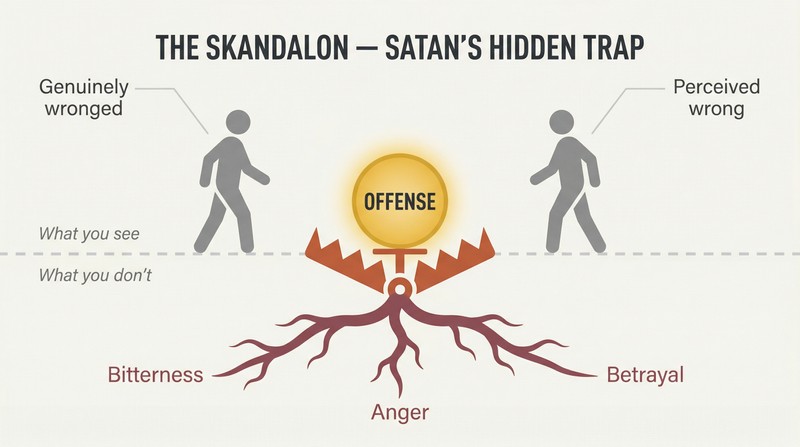
The trap has a name. The Greek word for "offend" in Luke 17:1 derives from skandalon — the part of an animal trap where bait is attached. Bevere uses this as the book's central metaphor: offense is Satan's bait, hidden inside a deadly trap. It only destroys when you pick it up, consume it, and let it take root in your heart. The resulting harvest includes bitterness, anger, betrayal, and broken relationships.
Two groups take the bait. Offended people fall into two categories: those genuinely mistreated, and those who believe they were mistreated based on inaccurate information or distorted conclusions. Both are equally trapped. The most dangerous element is that offended people usually don't realize they're captive — pride masks the true condition of the heart.
The walls you build against hurt become the prison of offense
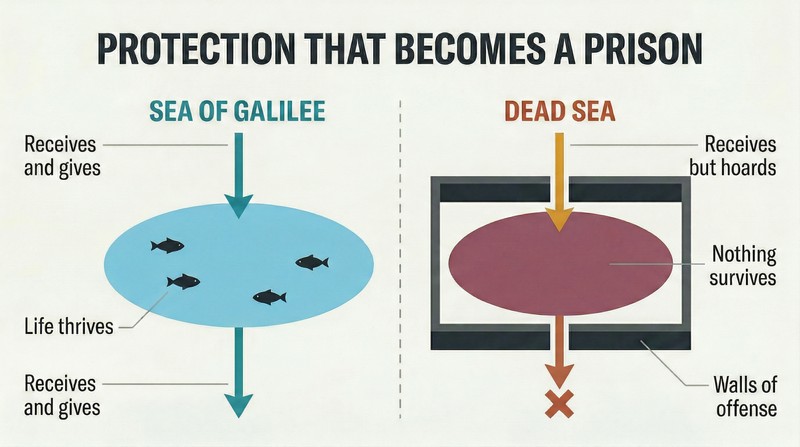
Fortified city, dead waters. Proverbs 18:19 warns that an offended brother is harder to win than a fortified city. Bevere explains the mechanism: when hurt, we construct emotional walls to prevent future wounds. We screen everyone who approaches, denying entry to anyone who might hurt us. Gradually, these walls of protection become a prison — we can't venture out, and fresh life can't get in.
The Dead Sea illustrates this. The Sea of Galilee receives and gives water freely, sustaining abundant life. The Dead Sea only receives — nothing flows out, and nothing survives in it. An offended person takes in life but, paralyzed by fear, cannot release it. The living water they receive stagnates behind their walls, becoming as dead as the sea that hoards it.
No person can steal your destiny — only your own bitterness can
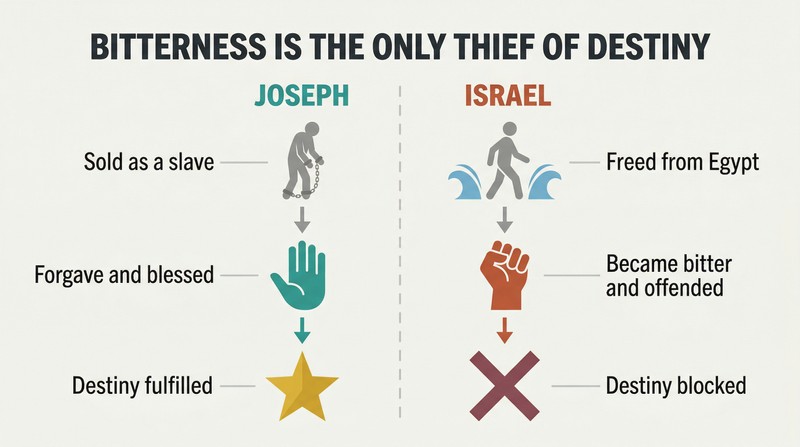
Joseph's brothers sold him as a slave, stripped his identity, and left his father believing he was dead. He spent years as a servant, was falsely accused of rape, and rotted in Pharaoh's dungeon. Every natural hope was extinguished. Yet Joseph refused to become bitter. When he rose to second in command of Egypt and his brothers came begging for grain, he blessed them instead of punishing them, declaring, "It was not you who sent me here, but God."
Israel is the counterexample. God delivered them from Egypt, but when spies reported giants in the Promised Land, the people became offended with Moses and with God. That offended generation never entered the land. No outside force blocked them — their own bitterness did.
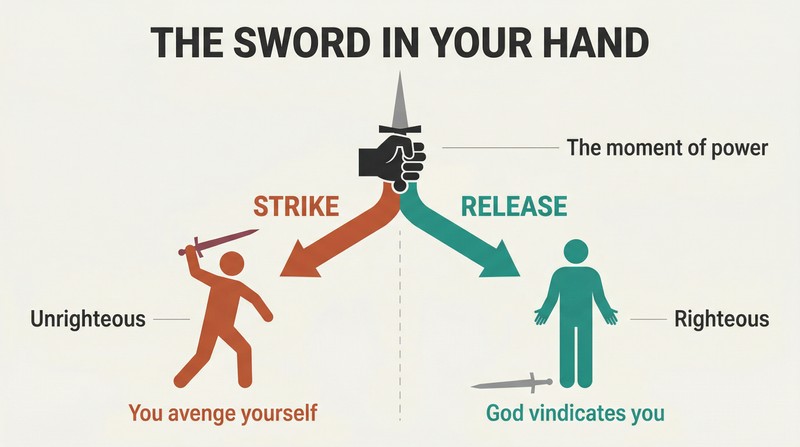
Refuse to strike even when the sword is in your hand
David had the sword — twice. Saul hunted David with 3,000 soldiers, murdered 85 innocent priests, and gave David's wife to another man. Twice God delivered Saul into David's hands. David's companion Abishai presented airtight reasons to kill Saul: he was a murderer, David was already anointed king, and God had put the entire army to sleep for this moment. David refused both times, saying he would not touch the Lord's anointed.
Bevere lived this principle. A leader plotted to have him fired. Bevere obtained documented evidence of the man's misconduct. After 45 minutes of prayerful wrestling, he threw the evidence away. Six months later, the man's wrongdoing was exposed without Bevere's involvement — and when it happened, Bevere grieved for him rather than celebrating.
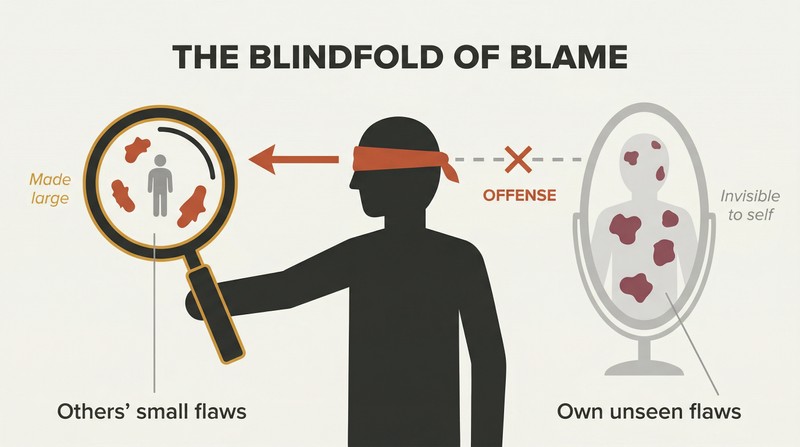
Offense blinds you to your own flaws by shifting blame outward
Blame is the blindfold. When offended, we cast ourselves as the victim and the other person as the villain. This shields us from examining our own role, our immaturity, or our sin. God's attempt to develop character through opposition is abandoned because we never look inward — we're too busy cataloging someone else's failures.
This produces spiritual vagabonds — Bevere's term for believers who wander from church to church carrying unresolved offense. Like Cain after murdering Abel, they become fugitives with a persecution complex, convinced everyone is out to get them. They isolate themselves, surround themselves with people who validate their grievance, and become unteachable. The irony is devastating: the rejection they fear is exactly what their bitterness invites.
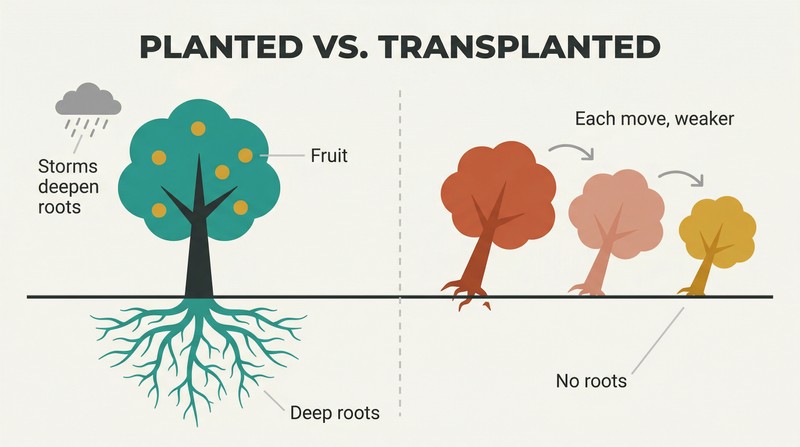
Stay planted through conflict — spiritual vagabonds never bear fruit
Trees die when transplanted repeatedly. Bevere compares believers to planted trees: storms force roots deeper, adversity produces stability, and in Florida citrus groves, the colder the winter, the sweeter the oranges. A person who flees every time conflict arises never develops roots. Each departure makes the next one easier until they're a rootless wanderer.
A parable drives the point home. Settlers heading west ask a wise man what the new town is like. His answer is always the same: "This town is the same as the one you left." Those who left bitterly found bitterness; those who left in peace found peace. Statistics reinforce this — 60 to 65 percent of divorced people who remarry end up divorcing again. The offense they carried corrupted the next relationship too.
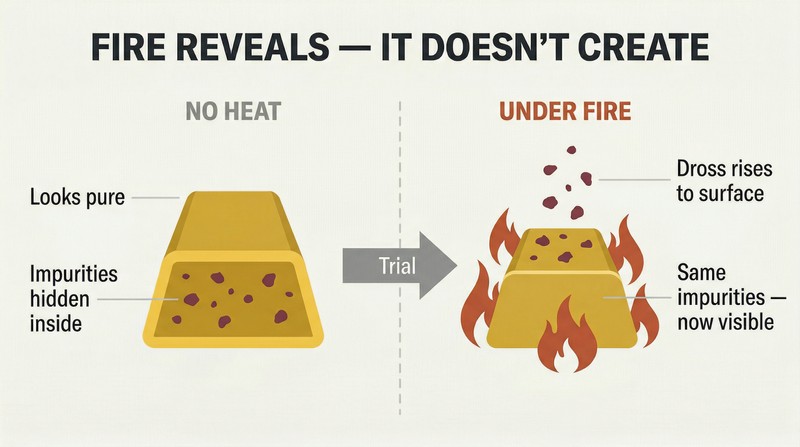
Trials don't create your impurities — they reveal what was always there
Gold and fire. During an intense trial, Bevere grew harsh with everyone around him. He cried out to God, asking where the anger came from. God responded: "Can you see the impurities in gold before it is put in the fire?" The impurities were always present — the heat simply exposed them. Bevere faced a choice: blame everyone or repent and let God remove the dross.
Peter's sifting follows the same pattern. Satan asked permission to shake Peter to the verge of overthrow. Jesus didn't pray for Peter to escape the trial but for his faith to survive it. Bevere identifies five purposes of shaking:
1. Bring you closer to your foundation
2. Remove what is dead
3. Harvest what is ripe
4. Awaken you
5. Unify what has been separated
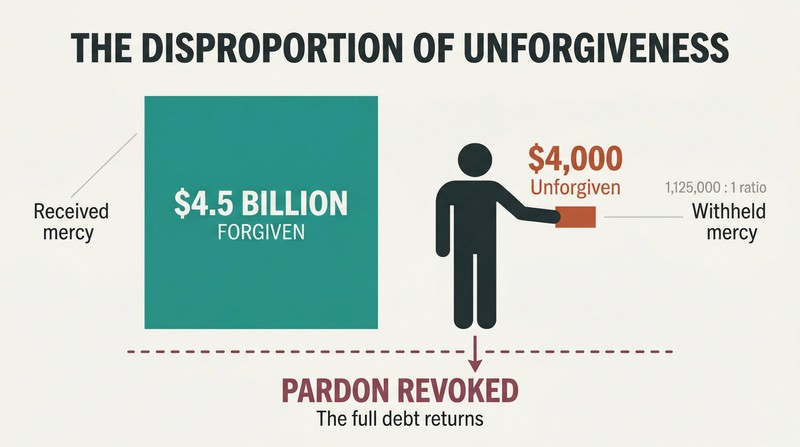
Refusing to forgive a $4,000 debt forfeits your $4.5 billion pardon
The math of the parable. In Jesus' story of the unforgiving servant, a man owes his king 10,000 talents — approximately 375 tons of gold, worth roughly $4.5 billion. The king forgives the entire unpayable debt. That same servant then finds a fellow servant who owes him 100 denarii — about $4,000 — and has him thrown in prison for nonpayment.
Three devastating consequences follow:
1. The unforgiving servant is handed over to torturers — demonic forces permitted to inflict agony of body and mind
2. He must repay the original $4.5 billion debt — an impossible task representing the loss of salvation
3. Jesus explicitly states that God the Father will do the same to any believer who refuses to forgive from the heart
Speak truth that offends, but never offend to assert your rights
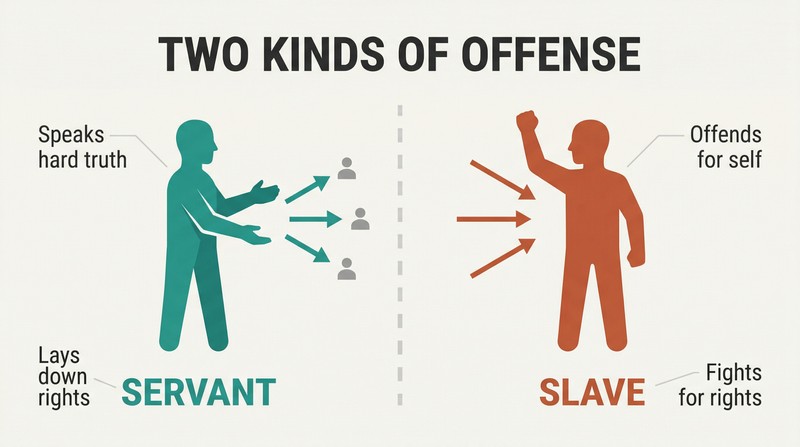
Jesus offended nearly everyone. He called the Pharisees a "brood of vipers," drove moneychangers from the temple, preached a sermon so hard that "many of His disciples went back and walked with Him no more." His own family tried to seize Him, thinking He was out of His mind. He never softened the message to keep the crowd.
Yet He paid a tax He didn't owe. When confronted about the temple tax, Jesus proved to Peter that as the Son of God, He was exempt. Then He said, "Lest we offend them, go pay it." The distinction is razor-sharp: Jesus offended by obeying His Father and serving others, but He never caused offense to assert His own rights or privileges. A slave fights for rights; a servant lays them down.
Pursue reconciliation for their sake, not to prove yourself right
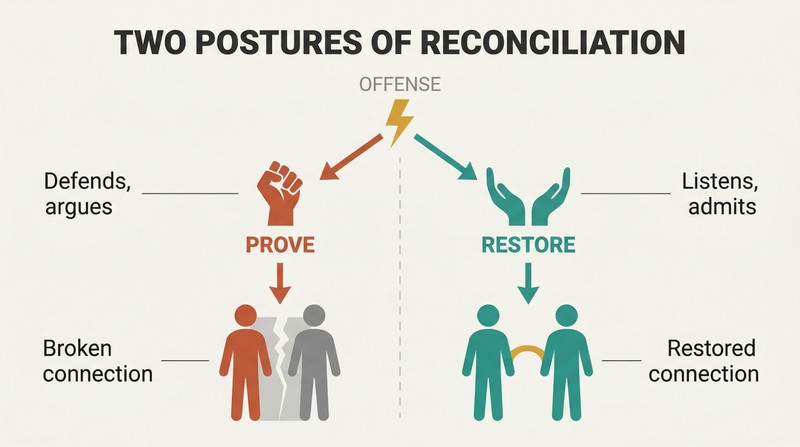
Reconciliation, not condemnation. Jesus instructs believers to go to the person who offended them — not to score points, but to restore the relationship. The goal mirrors how God reconciles with humanity: He reached out first, while we were still sinners, not to condemn but to save. Bevere distinguishes between peacekeepers, who avoid confrontation to maintain fragile calm, and peacemakers, who confront in love and build something that lasts.
Bevere's practical counsel: Don't approach someone until you've genuinely forgiven them regardless of their response. Listen without defending yourself. If they lash out, receive it. If they're right about your flaws, admit it. Pride defends; humility agrees and says, "You're right. Please forgive me." That posture disarms offense more effectively than any argument.
Analysis
Bevere's The Bait of Satan operates at the intersection of pastoral theology, narrative exegesis, and spiritual psychology. The book's enduring power comes from its central metaphor — skandalon, the trap mechanism — which reframes offense not as an emotion to manage but as a spiritual weapon designed to capture. This shift moves the reader from passive victim ('I was hurt') to active agent ('I'm choosing whether to pick up the bait').
The book's most sophisticated contribution is its taxonomy of offense. Bevere doesn't simply say 'forgive and move on.' He maps the entire progression — wound to wall to stronghold to spiritual death — with biblical case studies that function almost like clinical examples. Joseph demonstrates offense from siblings, David from authority figures, Peter from God Himself, and Absalom shows what happens when the whole process goes unchecked. Each isolates a different variable while reinforcing the same thesis.
The tension readers should sit with is Bevere's stance on spiritual authority. His counsel — don't expose your leader, stay planted, let God judge — contains genuine wisdom about patience and maturity. But it carries risk in contexts of genuine abuse. The Saul-David framework presupposes the leader is flawed but God-appointed, not predatory. Bevere partially addresses this but not comprehensively; modern readers should hold this insight alongside discernment about when leaving is survival, not offense.
What elevates the book beyond its genre is the unforgiving servant parable, recast in modern dollar amounts. The $4.5 billion-to-$4,000 ratio doesn't just illustrate a point — it demolishes the sense of righteous entitlement fueling every grudge. The psychological mechanism Bevere describes — offense leading to self-protection, isolation, then spiritual decay — maps remarkably well onto what attachment theorists call avoidant patterns. Where Bevere goes further than secular psychology is in arguing that the antidote isn't self-awareness alone but radical, unilateral forgiveness — even when the offender never acknowledges wrongdoing.
Review Summary
The Bait of Satan receives mixed reviews. Many readers find it life-changing, praising its insights on forgiveness and overcoming offense. They appreciate Bevere's biblical approach and personal anecdotes. However, some criticize his interpretation of scripture and handling of sensitive topics. The book's message on avoiding offense and practicing forgiveness resonates with many, but others find the tone preachy or oversimplified. Despite criticisms, many readers recommend it as a powerful tool for spiritual growth and improving relationships.
People Also Read






Glossary
Skandalon
Trap's bait-attachment mechanismThe Greek word from which 'offense' derives in the New Testament. Originally it referred to the part of an animal trap where bait was attached—the trigger mechanism that lures prey into the trap's jaws. Bevere uses it as the book's foundational metaphor: Satan baits traps with offense, and consuming the bait by harboring resentment activates the trap that holds believers captive.
The Bait of Satan
Offense as spiritual trapBevere's central metaphor for how offense operates as a spiritual weapon. Just as a physical trap uses bait to lure an animal into captivity, Satan uses offense—hurt, resentment, and perceived injustice—to entice believers into bitterness. The bait is not deadly if left alone; it only becomes lethal when a person 'picks it up' by choosing to nurture and feed on the offense in their heart.
Spiritual vagabond
Rootless, church-hopping offended believerBevere's term for believers who wander from church to church or relationship to relationship, carrying unresolved offense. Drawing from Cain's curse as a 'fugitive and vagabond,' Bevere describes people who never plant roots deep enough to bear spiritual fruit, typically developing a persecution complex and becoming unteachable because they blame others rather than examining their own character flaws.
Teknon
Immature child by birth aloneOne of two Greek words translated 'son' or 'child' in the New Testament. Teknon refers to a child who is a son merely by fact of birth—recognizable only by a name tag, not by character or resemblance. In Bevere's framework, teknon describes spiritually immature believers who react emotionally to circumstances rather than being led by the Spirit of God.
Huios
Mature son displaying father's characterA Greek word for 'son' in the New Testament, used to describe one who can be identified as a son because they display the character and characteristics of their parent. Bevere uses it to describe spiritually mature believers who are led by the Spirit of God, as in Romans 8:14. Spiritual growth from teknon to huios comes through obedience in suffering, not through time or accumulated knowledge.
Root of bitterness
Unfulfilled revenge growing in heartA biblical term from Hebrews 12:15 that Bevere defines using Francis Frangipane's phrase: 'Bitterness is unfulfilled revenge.' When forgiveness is withheld and the desired repayment never comes, bitterness takes root in the heart. If nursed and protected, it grows deeper and harder to uproot, eventually producing a harvest of anger, resentment, hatred, and strife that defiles many people beyond just the offended individual.
FAQ
What's "The Bait of Satan" about?
- Core Theme: "The Bait of Satan" by John Bevere addresses the issue of offense, which the author describes as a trap set by Satan to ensnare believers.
- Purpose: The book aims to help readers recognize and overcome the destructive power of offense in their lives, leading to spiritual freedom and growth.
- Structure: It includes personal anecdotes, biblical stories, and practical advice to guide readers in identifying and dealing with offenses.
- Outcome: By understanding and applying the principles in the book, readers can live free from the bondage of offense and experience deeper relationships with God and others.
Why should I read "The Bait of Satan"?
- Spiritual Growth: The book provides insights into overcoming one of the most common and destructive spiritual traps—offense.
- Practical Guidance: It offers practical steps and biblical wisdom to help readers navigate and resolve conflicts in their lives.
- Personal Testimonies: The author shares personal stories and testimonies from others who have experienced transformation by applying the book's teachings.
- Universal Relevance: Offense is a universal issue, and the book's teachings are applicable to anyone seeking to improve their relationships and spiritual well-being.
What are the key takeaways of "The Bait of Satan"?
- Offense is a Trap: Offense is likened to a trap set by Satan to ensnare believers and hinder their spiritual growth.
- Forgiveness is Essential: Forgiving others is crucial for personal freedom and spiritual health, as unforgiveness can lead to bitterness and separation from God.
- Reconciliation is a Priority: The book emphasizes the importance of seeking reconciliation with those who have offended us, as well as those we have offended.
- Spiritual Maturity: Overcoming offense is a sign of spiritual maturity and leads to a deeper relationship with God and others.
How does John Bevere define offense in "The Bait of Satan"?
- Offense as Bait: Bevere describes offense as a bait used by Satan to trap believers, leading to spiritual stagnation and division.
- Emotional Response: Offense is an emotional response to a perceived wrong or injustice, which can lead to bitterness if not addressed.
- Barrier to Growth: Holding onto offense creates a barrier to spiritual growth and can damage relationships with God and others.
- Choice to Forgive: The book emphasizes that overcoming offense is a choice, requiring intentional forgiveness and reconciliation.
What are the consequences of holding onto offense according to "The Bait of Satan"?
- Spiritual Bondage: Holding onto offense leads to spiritual bondage, preventing believers from experiencing true freedom in Christ.
- Bitterness and Resentment: Unforgiveness can result in bitterness and resentment, which can poison relationships and hinder spiritual growth.
- Separation from God: Unforgiveness can create a barrier between the believer and God, affecting their relationship and spiritual health.
- Missed Opportunities for Growth: By holding onto offense, believers miss opportunities for personal and spiritual growth that come from overcoming challenges.
What practical steps does "The Bait of Satan" suggest for overcoming offense?
- Acknowledge the Hurt: Recognize and admit that you have been hurt or offended, which is the first step toward healing.
- Choose to Forgive: Make a conscious decision to forgive the offender, releasing them from any debt they owe you.
- Pray for the Offender: Pray for those who have hurt you, asking God to bless them and help you see them through His eyes.
- Seek Reconciliation: If possible, seek reconciliation with the person who offended you, aiming to restore the relationship.
How does "The Bait of Satan" address the role of forgiveness in spiritual growth?
- Essential for Freedom: Forgiveness is essential for spiritual freedom and growth, as it releases the believer from the bondage of offense.
- Reflects God's Forgiveness: Forgiving others reflects the forgiveness God has extended to us, aligning us with His character.
- Prevents Bitterness: Forgiveness prevents bitterness from taking root in our hearts, which can hinder our relationship with God.
- Promotes Healing: Forgiveness promotes healing and reconciliation, allowing for restored relationships and spiritual maturity.
What does "The Bait of Satan" say about the importance of reconciliation?
- Priority in Relationships: Reconciliation is a priority in relationships, as it restores unity and peace between individuals.
- Act of Humility: Seeking reconciliation requires humility and a willingness to admit wrongs and seek forgiveness.
- Reflects God's Heart: Reconciliation reflects God's heart for His people, as He desires unity and harmony among believers.
- Leads to Healing: Reconciliation leads to healing and restoration, both personally and within the community of believers.
What are some of the best quotes from "The Bait of Satan" and what do they mean?
- "Offense is a trap": This quote highlights the deceptive nature of offense, which can ensnare believers and hinder their spiritual growth.
- "Forgiveness is a choice": Emphasizes that forgiveness is an intentional decision, not based on feelings but on obedience to God's command.
- "Reconciliation is the goal": Points to the ultimate aim of resolving offenses, which is to restore relationships and promote unity.
- "Love covers a multitude of sins": Reflects the power of love to overcome offenses and maintain healthy, forgiving relationships.
How does "The Bait of Satan" explain the relationship between offense and spiritual warfare?
- Offense as a Weapon: Offense is used by Satan as a weapon in spiritual warfare to divide and weaken believers.
- Creates Division: Offense creates division within the body of Christ, hindering the church's effectiveness and unity.
- Weakens Believers: Holding onto offense weakens believers, making them more susceptible to further attacks from the enemy.
- Victory through Forgiveness: Overcoming offense through forgiveness is a victory in spiritual warfare, strengthening the believer's relationship with God.
What biblical stories does "The Bait of Satan" use to illustrate its teachings?
- Joseph's Story: Joseph's journey from betrayal to forgiveness illustrates the power of releasing offense and trusting God's plan.
- David and Saul: David's refusal to take offense at Saul's actions demonstrates humility and reliance on God's justice.
- Jesus' Teachings: Jesus' teachings on forgiveness and reconciliation provide a foundation for the book's principles.
- Parable of the Unforgiving Servant: This parable highlights the importance of forgiving others as we have been forgiven by God.
How can "The Bait of Satan" help improve personal relationships?
- Promotes Understanding: The book encourages understanding and empathy, helping individuals see situations from others' perspectives.
- Encourages Communication: It emphasizes the importance of open communication and addressing offenses directly and lovingly.
- Fosters Forgiveness: By promoting forgiveness, the book helps individuals let go of past hurts and move forward in relationships.
- Builds Stronger Bonds: Applying the book's teachings can lead to stronger, healthier relationships built on love, trust, and mutual respect.
About the Author
Other books by John Bevere







Download PDF
Download EPUB
.epub digital book format is ideal for reading ebooks on phones, tablets, and e-readers.








































