
Key Takeaways
1. Late-Identified Autistics Often Mask for Survival, Leading to Impostor Syndrome
Yes, I faked the whole damn thing.
Lifelong deception. Many autistic adults, especially those diagnosed later in life, spend decades "playacting" to navigate a neurotypical world. This constant performance, driven by a need to fit in and avoid mistreatment, leads to a profound sense of being a "fake" or "impostor," even amidst academic or professional success. The internal feeling is that achievements are undeserved, as if one has "faked" their way through life.
Unique perspective. This feeling of difference is often articulated as being fundamentally distinct from others, not better or worse, but operating on a parallel purpose. The author describes feeling like a "boat" in a world full of "cars," unable to compare or integrate in a conventional sense. This inherent difference necessitates smothering parts of oneself daily to conform.
Pandemic catalyst. The COVID-19 pandemic provided a unique opportunity for many to step away from societal pressures and reflect on their true selves. The stark contrast between the author's desire for systemic change and others' longing to "go back to normal" highlighted deep-seated neurodivergent thinking patterns, ultimately leading to self-discovery and diagnosis.
2. Autism is an Identity, Not an Affliction, Requiring Identity-First Language
It’s important to me that I say, “I’m autistic,” and not “I have autism,” because I don’t even know what that would mean.
Identity affirmation. The author advocates for identity-first language ("I'm autistic") over person-first language ("I have autism") to emphasize that autism is an intrinsic part of who a person is, not an illness or condition they possess. This mirrors the Pride movement's stance, asserting that neurotype is an aspect of identity to be embraced, not tolerated or cured.
Validating self-diagnosis. Viewing autism as an affliction to be "cured" is likened to "brain damage and/or eugenics," highlighting the harmful implications of such perspectives. The book stresses that autism is a description of being, not a temporary state, and that self-diagnosis, backed by research and personal experience, is valid and often the first step to understanding.
Spectrum's true meaning. The common phrase "we're all on the spectrum" is dismissed as a "cognitive roadblock" that trivializes the unique challenges faced by autistic individuals. The spectrum refers to the diverse manifestations of a neurodevelopmental disorder, not a sliding scale where everyone falls. Autistic individuals diverge significantly from neurotypical development, making their experiences distinct.
3. Autistic Brains Exhibit Profound Diversity, Challenging Neurotypical Stereotypes
There is more diversity across autistic brains than neurotypical brains.
Diverse neurotypes. Autistic experiences are incredibly diverse, defying simple categorization or stereotypes often portrayed in media. While common traits exist, no single autistic person embodies all of them, making identification complex and personal. This internal diversity means two autistic individuals can differ more from each other than from a neurotypical person.
Sensory processing. Autistic brains process stimuli differently, often struggling to filter out "unimportant" inputs, leading to sensory overload. This can manifest as extreme aversions to:
- Sounds (e.g., silverware scraping)
- Textures (e.g., water on skin, clothing tags)
- Lights
What is background noise for neurotypicals can be overwhelming for autistics, profoundly impacting daily life.
Distinct thinking. Stimming (self-stimulatory behaviors) serves as a crucial regulatory mechanism for autistics, aiding focus and emotional well-being, often suppressed due to social pressure. Autistic thinking is characterized by "bottom-up" processing, starting with granular details rather than umbrella concepts, which can lead to innovative insights but also communication challenges and difficulty with conventional tests.
4. Masking is a Deeply Ingrained Survival Strategy with Significant Personal Costs
Your mask is a tool you don’t need anymore.
Survival mechanism. Masking, or camouflaging, is a survival mechanism developed early in life to fit into a neurotypical world, covering discomfort and perceived "otherness." This constant self-editing, often involving rehearsing interactions and people-pleasing, consumes immense cognitive energy and prevents authentic self-expression. The mask, though a tool for survival, ultimately hinders self-discovery.
Relational impact. High-masking autistics often become chronic people-pleasers, merging their self-worth with making others happy, especially teachers or "favorite persons" who provide validation. This can lead to codependency, where one's personality adapts so closely to another's that independent selfhood diminishes, causing crises when that support system shifts.
Unveiling identity. The mask can conceal more than just autistic traits, often suppressing aspects of one's gender or sexual identity. Autistics are significantly more likely to be LGBTQIA+, as neurodivergent brains may resist rigid social conditioning around gender roles and sexuality. Unmasking can lead to profound self-discoveries in these areas, though it often entails significant personal upheaval and challenges existing relationships.
5. Unmasking is a Necessary, Transformative Journey, Often Preceded by Burnout and Crisis
Unmasking can be like that — things get soupy.
Mental health toll. Masking contributes to alarmingly high rates of mental illness among autistics (80-94%), including chronic anxiety and depression. The constant state of "fight, flight, or freeze" from masking depletes energy and damages well-being, making unmasking a crucial step towards mental recovery, even if it feels chaotic initially.
Burnout's grip. Prolonged masking leads to autistic burnout, characterized by severe energy depletion, heightened sensory sensitivities, irritability, and skill loss (e.g., memory, concentration). This state can last months or years, often accompanied by feelings of worthlessness and increased suicidal ideation, making it a dangerous period requiring self-compassion and support.
Rejection's shadow. Many autistics experience intense rejection sensitivity, often perceiving rejection where none exists, leading to social withdrawal and self-sabotage. Unmasking requires confronting this ingrained fear, understanding that past rejections were often due to neurotype differences, not personal failings, and choosing to move beyond a mindset of unworthiness.
6. Mindful Self-Maintenance and Strategic Recovery are Crucial for Beating Burnout
The best way to approach the Herculean task of beating burnout is threefold: maintain, recover, and reload.
Essential maintenance. Self-maintenance, rather than "self-care," is presented as a non-negotiable foundation for overcoming burnout, akin to car maintenance preventing breakdowns. This involves consistent, reasonable efforts in three key areas:
- Exercise (e.g., walking, running, balance activities)
- Healthy eating (e.g., cooking at home, fiber-rich foods)
- Sufficient sleep (6-8 hours consistently)
These efforts should be approached without moralistic judgment or aiming for perfection.
Strategic recovery. Recovery involves intentionally taking breaks from guilt-driven productivity and offloading duties. Strategies include:
- Scheduling relaxation time
- Creating clear boundaries between work and personal life (e.g., separate devices)
- Delegating tasks to supportive individuals
Asking for help is reframed as a strength, providing dopamine rewards for those who assist.
Dopamine reload. To combat dopamine deficiency and restore motivation, autistics need to re-engage with their special interests. This could involve pursuing new hobbies, resurrecting old passions, or integrating interests into daily life (e.g., researching woodworking during work breaks). Spending time with neuroaffirming people who share interests also helps refuel social batteries.
7. Mindfulness and Journaling are Powerful Tools to Manage Autistic Rumination and Anxiety
Mindfulness teaches us that our thoughts and feelings are pliable.
Pliable mind. Mindfulness, a practice valued across cultures, helps autistics manage their "noisy" default mode network and incessant rumination. By "watching the watcher" – observing thoughts and feelings without judgment and gently returning focus to breath – individuals can create a crucial "gap" between themselves and their thoughts, reducing their tyranny.
Ending rumination. Autistics often intellectualize feelings, endlessly replaying painful memories to "solve" them, which only amplifies anxiety. The book introduces a four-step process to end rumination:
- Ruminate: Recognize the pattern.
- Label: Assign a single, dominant emotion to the complex memory, flattening its nuance.
- Assess: View the labeled moment in isolation, affirming the need to discard its hold.
- Reassign: Give it an ending by acknowledging human fallibility and identifying one positive outcome, however small, that followed.
Journaling's power. Journaling, especially longhand, serves as a powerful tool to externalize and solidify fleeting thoughts, preventing them from endlessly cycling. This practice helps autistics, particularly those without an internal monologue, to clarify their thinking and complete the "circuit" of rumination by committing it to paper, thereby disempowering its hold.
8. Embracing Authenticity Means Inventing Yourself, Setting Boundaries, and Finding Neuroaffirming Connections
It’s about inventing yourself.
Self-invention. Unmasking is not merely "finding" a pre-existing self, but actively "inventing" who you want to be, free from societal expectations. This involves deep self-inquiry into personal desires and passions, even those previously deemed "off-limits" or childish. Overcoming the fear of starting new interests later in life is crucial for this self-creation.
Boundary setting. As one unmasks, setting clear, consistent boundaries becomes essential, even if it feels uncomfortable or "dictatorial" initially. These boundaries protect one's evolving self and communicate needs to others. If loved ones refuse to respect these boundaries, it may necessitate reducing or cutting contact, prioritizing one's well-being and right to self-expression.
Authentic connections. Autistic friendships often form around shared interests rather than prolonged, superficial small talk. Seeking out neurodivergent communities or groups focused on niche hobbies provides spaces where authenticity is embraced, and social anxiety can lessen. While not exclusive, these connections offer vital understanding and support for the unmasking journey.
9. The Autistic Community Offers Vital Support in a World Still Lacking Understanding
The most helpful thing, by far, was the online autistic community.
Community strength. Despite societal derision and skepticism towards the #ActuallyAutistic movement, the online autistic community has emerged as the single most impactful resource for late-diagnosed individuals. This collective support provides validation, shared experiences, and practical advice that traditional systems often fail to offer.
Challenging narratives. The ongoing increase in autism diagnoses is not a "trend" or "excuse," but a result of improved vocabulary, understanding from autistic perspectives, and the unique conditions of recent global events (like the pandemic). External skepticism often stems from a lack of education and an ableist insistence on conformity, rather than genuine critical thinking.
Empowered advocacy. By embracing and sharing their authentic selves, autistics contribute to a broader neuroaffirming awareness. This involves challenging the notion that autistic traits are "defects" and advocating for environments that accommodate diverse neurotypes. The ultimate goal is to live a life of calm and contentment, free from shame, and to empower others to do the same.
Review Summary
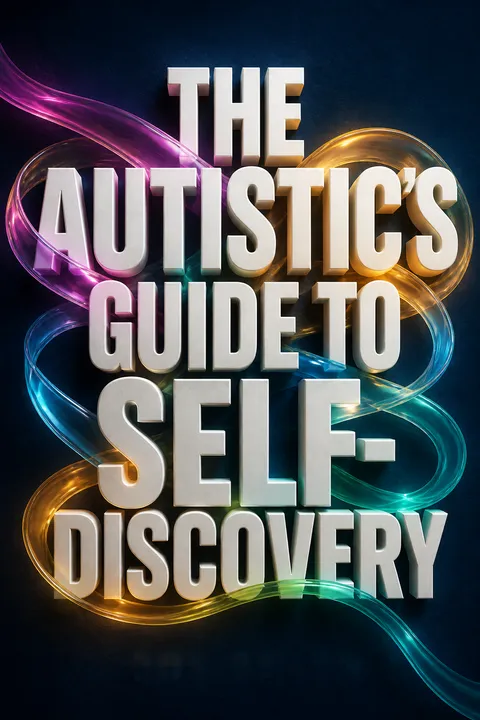
The Autistic's Guide to Self-Discovery receives generally positive reviews, averaging 4.24/5, with many late-diagnosed autistic readers finding it validating and insightful. Fans praise its accessible writing, practical unmasking strategies, and relatable personal anecdotes. Critics note it lacks scientific depth, intersectional analysis, and broader inclusivity beyond high-masking, level-one autistics. Some readers took issue with the author's perceived political bias, while others felt the book was underdeveloped or too anecdotal. The practical final chapters on burnout recovery and mindfulness were widely appreciated, even among less enthusiastic reviewers.
People Also Read

Download PDF
Download EPUB
.epub digital book format is ideal for reading ebooks on phones, tablets, and e-readers.








































