
Key Takeaways
1. AuDHD: A Dynamic Interplay Beyond Simple Co-occurrence
Many individuals with AuDHD describe their experience as akin to having split personalities, reminiscent of Dr Jekyll and Mr Hyde.
A unique blend. AuDHD, a colloquial term for co-occurring Autism and ADHD, represents more than just two conditions existing side-by-side; it's a complex interplay where traits from both conditions dynamically influence and often contradict each other. This creates a unique neurodevelopmental profile that can feel like a constant internal seesaw, with one set of traits sometimes overshadowing the other. The author's personal experience, describing himself as "consistently inconsistent," perfectly encapsulates this duality.
High co-occurrence. Recent research indicates a significant overlap, with estimates suggesting that 50–70% of individuals with Autism also have ADHD, and a substantial percentage of those with ADHD exhibit autistic traits. This high rate challenges traditional views of these conditions as entirely separate entities, highlighting a deeper, intertwined relationship. The shift in the Diagnostic and Statistical Manual of Mental Disorders (DSM-5) in 2013 to allow for co-diagnosis was a pivotal moment, finally acknowledging this clinical reality.
Beyond individual symptoms. Understanding AuDHD requires looking beyond the individual symptoms of Autism (social communication difficulties, restricted interests, sensory sensitivities) and ADHD (inattention, hyperactivity, impulsivity). It's about recognizing how these symptoms interact, amplify, or mask each other, creating a distinct experience that demands a nuanced approach to diagnosis and support. This complex interaction is what makes AuDHD a unique challenge for individuals and clinicians alike.
2. Autism: A Spectrum Defined by Structure, Sensory Needs, and Social Nuance
All of these traits can be summed up with the phrase ‘the fear of not knowing the unknown’ and everything that stems from it.
A need for predictability. Autism is a neurodevelopmental condition characterized by impairments in social interactions and communication, alongside restricted, repetitive behaviors and sensory sensitivities. Individuals often prefer structure, routine, and predictability, finding comfort in familiar environments and activities. This deep-seated need for order stems from an anxiety about the unknown, making changes or unexpected situations particularly distressing.
Unique social and communication styles. Autistic individuals may struggle with interpreting social cues, body language, and sarcasm, often communicating in a literal and factual manner. They might find small talk pointless and prefer deep conversations based on shared interests, often appearing reserved or indifferent in social settings. This isn't a lack of desire for connection, but rather a different way of perceiving and engaging with the social world, sometimes leading to a "double empathy problem" where both autistic and non-autistic individuals struggle to understand each other.
Sensory and interest intensity. Sensory sensitivities are common, where ordinary sounds, lights, or textures can be overwhelming, leading to sensory overload. Conversely, autistic individuals often develop intense, focused interests, dedicating significant time to researching and mastering specific topics. This "preoccupation" is ego-syntonic, aligning with their inner self and providing immense satisfaction, unlike the fleeting hyperfocus seen in ADHD.
3. ADHD: A Relentless Pursuit of Stimulation and Novelty
In simpler terms, ADHD can be thought of as a constant need for stimulation.
A drive for dopamine. Attention Deficit Hyperactivity Disorder (ADHD) is a neurodevelopmental condition characterized by patterns of inattention, hyperactivity, and impulsivity, driven by an imbalance in brain neurotransmitters like dopamine and norepinephrine. This imbalance creates an insatiable quest for constant stimulation, leading individuals to seek novelty and excitement to keep their brains engaged and balanced. This often manifests as rapid boredom and a trail of unfinished projects.
Challenges in executive functions. ADHDers frequently struggle with executive functions, impacting their ability to:
- Maintain sustained focus on monotonous tasks.
- Organize tasks and manage time effectively.
- Control impulses, leading to interruptions or hasty decisions.
- Filter out irrelevant stimuli, causing easy distractibility.
This can result in chronic disorganization, forgetfulness, and procrastination, often leading to last-minute efforts under pressure.
Restlessness and impulsivity. Physical restlessness, an inability to remain still, and over-talkativeness are common, reflecting a perpetual motion that extends to thoughts and speech. Impulsivity can lead to risk-taking behaviors, from spontaneous purchases to substance use, as individuals chase immediate rewards and dopamine bursts. While hyperfocus can occur, it's often triggered by external pressure or intense interest, unlike the consistent, ego-syntonic preoccupations of Autism.
4. The Masking Effect: How AuDHD Symptoms Obscure Each Other
This insight suggests that ADHD can frequently overshadow or ‘mask’ the traits of Autism, leading to underdiagnosis or misdiagnosis of ASD in individuals initially identified with ADHD.
ADHD masking Autism. The overt symptoms of ADHD—hyperactivity, impulsivity, and inattention—can often dominate the clinical picture, making it challenging to discern the more subtle social communication difficulties, restricted interests, and sensory sensitivities characteristic of Autism. For example, a child's fidgeting might be attributed solely to ADHD, while underlying sensory discomfort from Autism goes unnoticed. This masking leads to a significant underdiagnosis of Autism in individuals primarily identified with ADHD, despite high co-occurrence rates.
Autism masking ADHD. Conversely, autistic traits can also mask ADHD symptoms. An autistic individual's intense focus on a special interest might be misinterpreted as "hyperfocus," a trait commonly linked to ADHD, rather than an autistic trait of restricted, repetitive behavior. Similarly, coping strategies developed to manage social interactions or adhere to routines in Autism can inadvertently conceal symptoms of inattention or disorganization typically associated with ADHD. This complex interplay requires meticulous evaluation to disentangle symptoms.
Diagnostic complexity. The masking effect underscores why AuDHD is often missed or misdiagnosed. Clinicians, often trained to look for distinct presentations, may focus on the most prominent condition and overlook the nuances of the other. This leads to incomplete diagnoses and inadequate support, as interventions tailored for one condition may not address the full spectrum of an individual's needs when both are present.
5. Contrasting Traits: Unpacking the Paradoxes of AuDHD
In individuals with AuDHD, the coexistence of structure and chaos manifests in intriguing and often paradoxical ways.
A seesaw of opposing forces. AuDHD creates a unique internal dynamic where seemingly contradictory traits from Autism and ADHD constantly interact. This "seesaw" effect means individuals might exhibit a profound need for structure and routine (Autism) while simultaneously being driven by impulsivity and a craving for novelty (ADHD). This duality is not merely a combination of symptoms but a complex interplay that shapes their daily experiences.
Key paradoxical interactions:
- Inattention vs. Indifference: ADHD causes inattention due to distractibility and a need for stimulation, while Autism can manifest as indifference to tasks lacking personal interest, often mistaken for inattention.
- Distraction vs. Sensory Overload: ADHD-driven distraction seeks novelty, whereas autistic sensory overload is an overwhelming response to stimuli, leading to avoidance.
- No Filter vs. Factual Discourse: ADHD impulsivity leads to unfiltered speech without considering consequences, while autistic "no filter" stems from a literal thought process and difficulty with social nuance.
- Hyperfocus vs. Preoccupation: ADHD hyperfocus is intense but often short-lived, driven by interest or urgency, while autistic preoccupation is a deep, sustained, ego-syntonic passion for specific topics.
- Rigidity vs. Change: Autistic rigidity prefers routine and resists change, while ADHD craves novelty and adapts spontaneously, creating a constant tension.
Navigating internal conflict. These contrasting traits mean individuals with AuDHD often feel a constant push-pull, struggling to reconcile their inherent needs. For example, they might meticulously organize one area of their life (Autism) while another remains in disarray (ADHD), or crave social interaction but quickly become overwhelmed and need solitude. Understanding these paradoxes is crucial for effective support.
6. Neurodiversity: Embracing Brain Differences as Evolutionary Strengths
The Neurodiversity Paradigm recognises the genetic biodiversity and variations among humans, highlighting the unique strengths and perspectives these differences bring.
Beyond the medical model. The Neurodiversity Paradigm offers a transformative framework that moves beyond viewing neurodevelopmental conditions solely as deficits or disorders. It acknowledges their evolutionary basis, recognizing that conditions like Autism and ADHD are natural variations in human cognition and behavior, each bringing unique strengths and perspectives to society. This paradigm shift encourages celebrating diversity rather than pathologizing differences.
Historical and evolutionary roots. From an evolutionary standpoint, traits associated with Autism and ADHD are thought to be ancient skill sets that aided early human survival. For instance:
- Autistic traits like intense focus and attention to detail could have been vital for tracking animals or crafting tools.
- ADHD traits like high energy and exploratory behavior might have driven curiosity and adaptability in new environments.
The "Hunter-Farmer Hypothesis" suggests that modern societal structures, which favor routine and sedentary lifestyles, create a mismatch with these once-adaptive traits, leading to their perception as challenges today.
A catalyst for innovation. Neurodiversity is increasingly recognized as an asset, particularly in fields like the tech industry, where companies like Microsoft and SAP actively champion neurodiversity hiring programs. The unique analytical precision, problem-solving abilities, and creative thinking often found in neurodivergent individuals can drive innovation and enhance productivity. This shift promotes acceptance and challenges the stigma, fostering environments where differences are valued.
7. The Rise of AuDHD: From Diagnostic Oversight to Growing Recognition
The formal recognition in 2013 that ASD and ADHD can co-occur has significant implications.
A historical shift. Prior to 2013, diagnostic criteria did not permit a dual diagnosis of Autism and ADHD, leading to a substantial backlog of undiagnosed or misdiagnosed individuals. The update to the DSM-5 in 2013, allowing for co-occurrence, was a pivotal moment that finally acknowledged this clinical reality and paved the way for increased identification of AuDHD. This change revealed that what was once considered an informal observation among experts was a widespread phenomenon.
Factors contributing to increased diagnoses:
- DSM-5 update: Formal allowance for co-diagnosis.
- Increased awareness: Social media platforms (TikTok, Instagram) have played a significant role in raising public awareness, reducing stigma, and encouraging self-reflection and professional evaluation.
- Pandemic as a catalyst: The COVID-19 pandemic dismantled existing support structures, exacerbating struggles for undiagnosed individuals and leading to a surge in referrals.
- Improved professional understanding: Growing recognition among clinicians of the complex interplay between Autism and ADHD.
Beyond "TikTok diagnoses." While social media has democratized access to information, leading to both increased awareness and instances of self-diagnosis, dismissing AuDHD as merely a "TikTok diagnosis" trivializes genuine medical conditions. It's crucial to critically evaluate online content and advocate for proper education and professional assessment, recognizing that each generation learns and engages with information through different media. The rise reflects a long-overdue acknowledgment of a complex neurodevelopmental reality.
8. Debunking Myths: Challenging Misconceptions About AuDHD
For many years Autism was mistakenly thought to be a type of learning disability.
Challenging outdated beliefs. Both Autism and ADHD have been historically plagued by numerous myths and misconceptions that hinder accurate understanding and diagnosis. These pervasive stereotypes often lead to misdiagnosis, inadequate support, and profound isolation for affected individuals. It's crucial to actively debunk these myths to foster a more informed and compassionate society.
Common myths about Autism:
- Autism is a learning disability: While some autistic individuals may have learning challenges, Autism itself is a neurodevelopmental condition, not a learning disability. Many autistic people have average or above-average intelligence.
- Caused by "refrigerator mothers": This discredited theory from the 1950s blamed emotionally distant mothers; research now confirms Autism has genetic and neurological bases.
- Only affects males: Autism is significantly underdiagnosed in females, who often mask symptoms or present differently than males, leading to a skewed male-to-female ratio.
- Caused by MMR vaccine: This claim, based on a fraudulent 1998 study, has been extensively debunked by robust scientific research.
- Lack of empathy: Autistic individuals experience empathy differently; some have hyper-empathy, and the "double empathy problem" highlights mutual misunderstandings.
- Can be cured: Autism is a lifelong neurodevelopmental condition with a genetic basis, not a disease to be cured.
Common myths about ADHD:
- Academic/professional success negates diagnosis: High intelligence or strong support systems can mask ADHD symptoms; it affects individuals regardless of achievement.
- Only occurs in males/children: ADHD affects males and females almost equally and persists into adulthood, often presenting differently in girls and women.
- Overdiagnosed: ADHD is significantly underdiagnosed, with substantial backlogs for adult diagnoses, exacerbated by historical lack of awareness and insufficient services.
- Just a "TikTok diagnosis": Trivializes a genuine medical condition; social media raises awareness but requires critical discernment.
Impact of misinformation. These myths perpetuate stigma and prevent individuals from seeking or receiving appropriate diagnosis and support. Accurate information is vital for fostering acceptance and ensuring effective interventions for AuDHD.
9. The Diagnostic Dilemma: Why AuDHD is Frequently Missed
Identifying AuDHD can be challenging due to overlapping symptoms, making it difficult to distinguish behaviours attributed to Autism from those of ADHD.
Complex symptom overlap. The co-occurrence of Autism and ADHD presents a significant diagnostic challenge because both conditions share overlapping symptoms, such as difficulties with attention, executive functioning, and social interaction. This overlap makes it incredibly difficult for clinicians to accurately attribute each symptom to its correct source, often leading to one condition masking the other. For example, a child's difficulty with change might be misinterpreted as ADHD impulsivity, when it could stem from autistic rigidity.
Inadequate training and tools. Many healthcare professionals lack comprehensive training in recognizing the nuanced interplay of Autism and ADHD, leading to a narrow diagnostic focus. Traditional diagnostic tools are often designed to assess either Autism or ADHD, but not both simultaneously, resulting in partial assessments that miss the full picture. This gap in expertise and resources contributes significantly to missed or misdiagnosed cases of AuDHD.
Factors contributing to missed diagnoses:
- Historical diagnostic criteria: Until 2013, dual diagnosis was not permitted, creating a legacy of incomplete assessments.
- Focus on primary symptoms: Clinicians may prioritize the most obvious or disruptive symptoms, often those of ADHD, overlooking subtler autistic traits.
- Masking effects: Individuals, especially girls and women, develop sophisticated coping mechanisms to camouflage their difficulties, making their conditions less visible.
- Cultural and gender biases: Cultural norms and gender stereotypes can influence how symptoms are perceived and reported, leading to underdiagnosis in certain populations or genders.
- Misdiagnosis with other conditions: AuDHD can be mistaken for social anxiety, complex trauma, personality disorders, or bipolar affective disorder, further delaying accurate diagnosis.
The need for a holistic approach. Accurately diagnosing AuDHD requires a multidisciplinary, 360-degree evaluation that considers an individual's entire developmental history, behavior patterns across various settings, and the unique interaction of both conditions. Clinicians must be observant, enthusiastic listeners, and possess in-depth knowledge of both Autism and ADHD, including their cultural sensitivities and varied manifestations.
10. AuDHD: A Call for Integrated, Lifespan Support and Understanding
Whether we view AuDHD as a distinct entity or as part of a broader neurodevelopmental spectrum, what matters most is that we recognise the unique challenges faced by individuals with both Autism and ADHD.
Embracing complexity for better outcomes. The co-occurrence of Autism and ADHD creates unique challenges that demand integrated, personalized care across the lifespan. Managing both conditions is rarely straightforward, as their symptoms can amplify or conflict with each other. This complexity necessitates a holistic approach that moves beyond treating each condition in isolation, ensuring that interventions address the full scope of an individual's neurodevelopmental profile.
Tailored treatment and support. Effective management of AuDHD requires a multi-layered approach, combining elements from both Autism and ADHD therapies. This might include:
- Personalized medication regimens: Non-stimulants or slow-release stimulants may be preferred to mitigate sensory sensitivities.
- Behavioral therapies: Social skills training, sensory integration, and communication strategies for Autism.
- Cognitive Behavioral Therapy (CBT) and coaching: Targeting executive functioning skills like organization, time management, and impulse control for ADHD.
- Multidisciplinary support: Involving neurologists, psychiatrists, psychologists, occupational therapists, and social workers.
Transforming societal approaches. Recognizing AuDHD has profound implications for schools, workplaces, and broader societal views on neurodiversity. It calls for:
- Inclusive education: Individualized Education Plans (IEPs) that address both social communication challenges and executive functioning difficulties.
- Flexible workplace accommodations: Policies that support neurodiverse employees, allowing them to thrive without compromising mental health.
- Reduced stigma: Fostering greater acceptance and compassion for the diverse ways people navigate the world.
A future of understanding and empowerment. The journey of understanding AuDHD is ongoing, with future research promising deeper insights into its genetic and neurobiological underpinnings. Ultimately, the goal is to ensure that individuals with AuDHD receive the validation, clarity, and comprehensive support they need to lead fulfilling, empowered lives, where their unique strengths are celebrated and their challenges are met with compassion and care.
Review Summary
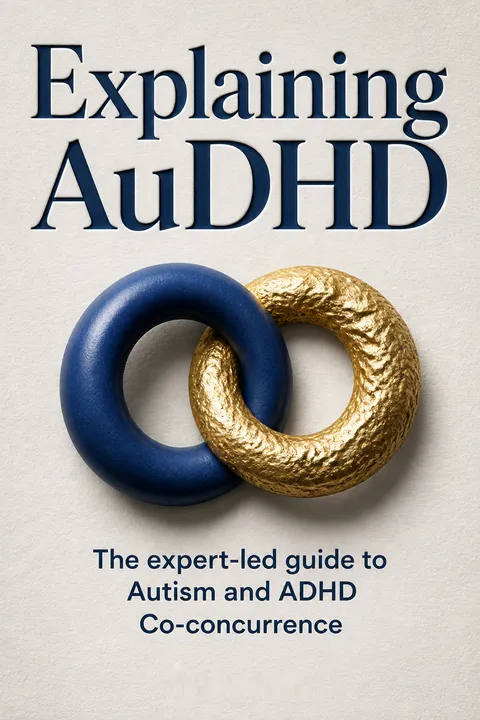
Reviews for Explaining AuDHD are mixed, averaging 3.43/5. Many readers appreciate the book's clinical insights into how autism and ADHD co-occur and interact, and praise its advocacy for better diagnostic frameworks. However, common criticisms include significant repetition, outdated or inaccurate neurodiversity terminology, deficit-based language, and a lack of practical strategies for those living with AuDHD. Several reviewers felt the book speaks about the AuDHD community rather than to it, suggesting it suits professionals and curious newcomers more than those already familiar with the conditions.
People Also Read




Download PDF
Download EPUB
.epub digital book format is ideal for reading ebooks on phones, tablets, and e-readers.








































