
Key Takeaways
1. Rose Valland: The Unsung Art Spy of World War II
"I truly believe that only my initiative allowed us to choose [our fate]—before it was too late."
A determined spirit. Rose Valland, a French art historian, defied expectations from her humble beginnings in a small countryside village to become one of France's most educated art experts. Despite facing sexism in the art world and being initially relegated to an unpaid secretarial role at the Jeu de Paume museum, her "iron-willed" determination and "unflappability" proved invaluable during wartime. Her deep love for art and culture fueled her resolve to protect France's heritage at all costs.
A life of secrets. Rose harbored a dangerous secret: her decade-long relationship with Joyce Heer, a British citizen working for the US embassy. Homosexuality was criminalized under Vichy French law, and Joyce was considered an "enemy alien" by the Nazis, making their shared life a constant risk. This need for discretion, honed over years, inadvertently prepared Rose for her perilous role as a spy.
The call to duty. When the Nazis seized the Jeu de Paume as their art looting headquarters, Rose's boss, Jacques Jaujard, ordered her to "remain at all costs" and covertly spy on the Germans. This mission transformed her into an "art spy," risking imprisonment, deportation, or worse. Her commitment to this dangerous task was unwavering, driven by a profound sense of responsibility for the museum's fate and France's cultural soul.
2. The Systematic Nazi Plunder of French Art
"The Führer, following the report of the Minister of Foreign Affairs, gave orders to safeguard—in addition to objects of art belonging to the French State—artwork and historical documents, notably those belonging to Jews."
Hitler's artistic vendetta. Adolf Hitler, a failed artist, harbored a deep hatred for avant-garde art, labeling it "degenerate" and associating it with "non-German" influences like Jews and Bolsheviks. This personal disdain evolved into a state-sanctioned policy to purge German museums of modern art, culminating in the infamous "Degenerate Art" exhibition and the burning of thousands of artworks. His vision for a "Führermuseum" in Linz, Austria, became a driving force behind the systematic looting of Europe's art.
A legal facade for theft. The German occupation of France brought a new wave of plunder, initially disguised under euphemistic directives to "safeguard" art, particularly from Jewish owners. This "camouflage of intentions," as Rose described it, allowed the Nazis to systematically confiscate vast collections, claiming they were "ownerless" if the Jewish proprietors had fled. This legalistic approach provided a thin veneer of legitimacy for what was, in essence, wholesale theft.
The scramble for spoils. The immense wealth of French art ignited a fierce competition among high-ranking Nazis like Hermann Göring, Alfred Rosenberg, and Hans Posse. Each sought to enrich their personal collections or fulfill Hitler's vision for the Führermuseum. This internal rivalry, often leading to chaotic and overlapping seizures, inadvertently created opportunities for Rose to gather intelligence on the stolen artworks and their destinations.
3. Jeu de Paume: Epicenter of Art Theft and Resistance
"The Germans were taking over the museum—her museum."
A museum transformed. The Jeu de Paume, once a respected museum for international and modern art, was seized by the Nazis and converted into the headquarters for the Einsatzstab Reichsleiter Rosenberg (ERR), their primary art looting force. Rose witnessed her beloved institution become a "confiscation factory," a hub of "chaotic disorder" where truckloads of stolen art arrived daily from Jewish-owned collections across France.
A dangerous workplace. Rose's daily routine involved navigating a museum teeming with SS soldiers, Gestapo, and ERR staff, all engaged in the systematic processing of looted art. She observed the "unbridled appetites" of the Germans, who treated the museum as their personal gallery, selecting masterpieces for Hitler and Göring. The contrast between the museum's original purpose and its wartime function was a constant source of distress for Rose.
A silent battleground. Despite the constant threat, Rose remained at her post, meticulously documenting every detail of the looting. The museum, with its "colossal arched windows" and strategic location near German headquarters, became a silent battleground where Rose waged her covert war. Her presence, initially tolerated out of convenience by the Germans, became a critical asset for the Resistance, turning the Jeu de Paume into an unlikely center of intelligence gathering.
4. Rose's Covert Intelligence Network and Methods
"Everything had to be surveilled and remembered because you never know in the moment the detail that will matter later."
A photographic memory. Rose Valland possessed an "almost photographic memory," a crucial asset in her espionage. When forbidden to take notes, she committed details to memory, later transcribing them into her "scribbled" reports for Jacques Jaujard. This mental archive allowed her to track the vast quantities of stolen art, including artist names, original owners, and destinations, even when official records were denied or falsified.
Ingenious spycraft. Rose employed a variety of "nuanced" spycraft techniques to gather intelligence. She duplicated building and safe keys, made secret copies of German inventory lists, and smuggled out photographic negatives of stolen artwork to be developed overnight. Her position in the Jeu de Paume's telephone room allowed her to "listen to the German conversations" and "fish carbon copies of documents out of the trashcans."
A network of informants. Rose cultivated a network of trusted French collaborators, including museum guards, packers, and truck drivers, who provided crucial information. Brigadier Paul Moïse, her "trusted informant," would call her at home to warn of suspicious activities. This network, combined with her "dogged research and cross-checking," enabled her to decipher cryptic German labels and track the complex movements of looted art across Europe.
5. The Fate of "Degenerate Art" and Jewish Collections
"In them was a poison to be destroyed."
The "Salle des Martyrs." The Jeu de Paume housed a notorious "Salle des Martyrs," a room filled with "degenerate" modern paintings by artists like Picasso, Matisse, and Chagall, deemed unacceptable by Nazi ideology. Rose initially hoped these artworks would be left behind due to German aversion, but their fate proved far more brutal.
Destruction and exchange. The "degenerate art" became a commodity for the Nazis. While some pieces were sold or exchanged for Old Masters coveted by Göring, hundreds were subjected to a "ghastly fate." Rose witnessed German art historians "slash a painting," "knife and kick the canvases with unbridled satisfaction," and then pile the "painting scraps" onto military trucks to be burned in the Jeu de Paume's garden. This "fiery sacrifice" to Hitler's artistic creeds horrified her.
The Schloss collection. The hunt for the Schloss collection, the "last massive holdings of a Jewish collector," exemplified the Nazis' relentless pursuit of art. Despite being hidden in the Unoccupied Zone, it became a prize in a dangerous race between French collaborators and German factions. Rose meticulously documented its apportionment, noting how "almost everyone got something out of the entire affair except—of course—for the Schloss family."
6. Personal Sacrifices Amidst Global Conflict
"No matter how much you run away from defeat, no matter how much you don’t want to believe it, there always comes a time when it catches up to you."
A harrowing escape. As Paris faced imminent German invasion in June 1940, Rose was ordered to evacuate the last Louvre guards and their families by barge down the Seine. This "catastrophic disorder" turned into a perilous journey, with Rose and a colleague eventually forced to walk over a hundred miles, dodging German planes and witnessing scenes of "terror and despair." This experience solidified her resolve to fight the enemy.
Joyce's internment. Rose's partner, Joyce Heer, a British citizen, was arrested and interned at Besançon, a prison camp with "appalling" conditions. For months, Rose endured agonizing uncertainty about Joyce's fate, unable to record her fears publicly. Joyce's release, secured through the efforts of the US embassy, brought her back to a Paris grappling with severe food shortages and a "frigid winter."
The Rosenberg family's ordeal. Paul Rosenberg, a prominent art dealer, and his family fled France, only to have their citizenship revoked and their vast art collection systematically looted. His son, Alexandre, enlisted with Charles de Gaulle's Free France, enduring "painful losses" and the trauma of combat. The family's separation and the loss of their heritage underscored the profound personal cost of the war.
7. The Dramatic Rescue of the Art Train
"It was with great satisfaction that I learned that the convoy was headed to a train station."
The final maelstrom. As Allied forces advanced on Paris, the Germans frantically packed nearly a thousand modern paintings and fifty sculptures into 148 crates at the Jeu de Paume. Rose, ever vigilant, obtained von Behr's dispatch sheets, revealing the art was destined for Germany by train. This was a "lucky turn of events," as the French Resistance within the SNCF could intervene.
Resistance on the rails. Rose immediately contacted her Resistance operative, Pierre-Louis Duchartre, who relayed the intelligence to the Résistance-Fer, a network of railway workers. They employed ingenious tactics to stall the train, from sabotaging the engine to derailing locomotives, keeping the art "circling at a snail's pace" around Paris. This critical delay bought precious time for the Allies to arrive.
Alexandre's providential role. On August 27, 1944, Lieutenant Alexandre Rosenberg, fighting with Leclerc's 2nd DB, received an urgent order to secure a train at Aulnay-sous-Bois. He discovered crates stenciled with "MODERNES PICASSO," "MODERNES BRAQUES," and "MODERNES MATISSE," including paintings from his own family's looted collection. Rose called it "marvelously providential" that Alexandre, whose family's art was on board, was the one to secure the train, saving a "notable part of the cultural legacy of France and Europe."
8. Post-War Restitution: Rose's Enduring Fight
"I became worried as I imagined the immensity of the problems that an army on campaign had to solve. Was the issue of conserving our works of art going to disappear among so many others of primordial importance?"
A new mission. After the liberation of Paris, Rose's role shifted from spy to restitution agent. She personally accompanied the repatriated paintings back to the Jeu de Paume and immediately set about the "next important task: returning the artworks to their rightful owners." Her meticulous wartime documentation became the primary evidence for locating and recovering looted art.
Collaboration with Monuments Men. Rose initially harbored doubts about sharing her intelligence with the Americans, fearing bureaucracy and a lack of priority for art restitution. However, she developed a "warm trust" with Lieutenant James Rorimer, an American Monuments Man, after he demonstrated genuine interest and respect for her expertise. She eventually shared her "rogue's gallery" of ERR staff and detailed information on art depositories across Germany and Austria.
Fighting for justice. Rose spent eight years in Germany, "doggedly fighting" for restitution. She interrogated former ERR employees, located thousands of artworks hidden in salt mines and castles, and confronted Russian officers to reclaim French heritage. Her efforts were instrumental in recovering over sixty-one thousand works of art, laying the legal and moral groundwork for modern art restitution.
9. A Legacy of Courage and Unwavering Dedication
"The State is too often deaf and blind. It is true that Rose Valland did not serve the state, but an idea that goes beyond it."
Unwavering commitment. Rose Valland's dedication to her mission was absolute, never allowing "any concern for her own safety override her commitment." She endured degrading searches, expulsions, and death threats, yet always returned to her post. Her "preternaturally calm" demeanor and refusal to succumb to fear enabled her to operate effectively under the constant scrutiny of the Nazis.
Post-war challenges. Despite her heroic contributions, Rose faced significant challenges upon her return to France. She was denied promotions, accused of being a Russian agent or collaborator, and her memoir, "Le Front de l’Art," was met with skepticism and attempts to discredit her account of the burning of "degenerate art." These attacks often stemmed from jealousy or a desire to whitewash wartime collaborations.
A lasting impact. Rose's "dogged determination" in art restitution had a profound and lasting impact. Her meticulously documented intelligence proved that Nazi art looting was systematic and racially motivated. Today, her work continues to be vital in the ongoing effort to recover over one hundred thousand pieces of Nazi-confiscated artwork still missing. Rose Valland, who "risked her life to protect the world’s cultural heritage," is finally receiving the recognition she deserves.
Review Summary
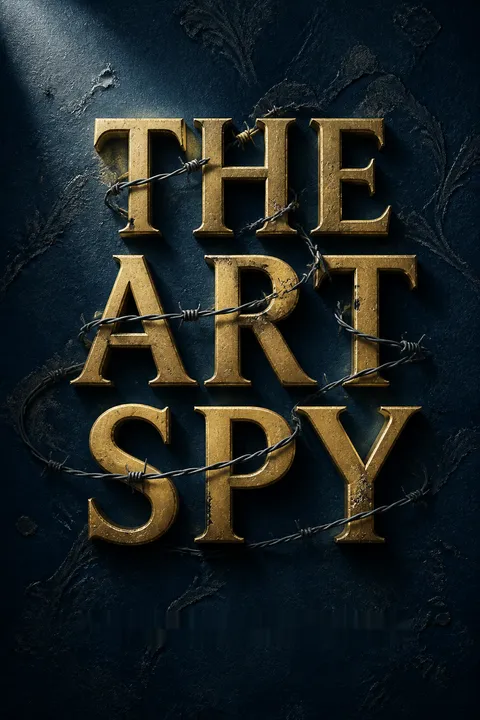
The Art Spy receives an overall rating of 4.1 out of 5 stars from 1,787 Goodreads reviews. Readers praise Michelle Young's well-researched account of Rose Valland, an unassuming art curator at Paris's Jeu de Paume museum who documented Nazi art looting during WWII. Reviewers appreciate the book's fast-paced, cinematic narrative and extensive detail, though some found the writing dry or textbook-like. Many note Valland's heroic, little-known story deserves recognition. Some critique that Rose isn't always front-and-center, with substantial focus on the Rosenberg family. The book is recommended for WWII history buffs and art enthusiasts.
People Also Read





Download PDF
Download EPUB
.epub digital book format is ideal for reading ebooks on phones, tablets, and e-readers.








































