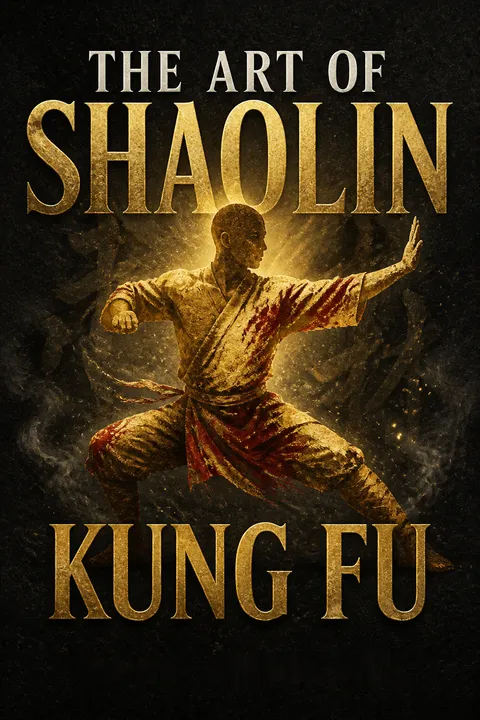

Key Takeaways
1. Kung Fu is a Holistic Path: Beyond Physical Combat
True Kung Fu transcends mere physical prowess, encompassing a profound journey of mind expansion and spiritual development.
A comprehensive discipline. Kung Fu is far more than just a fighting style; it is a holistic system that integrates four fundamental aspects: visible form, rigorous force training, practical combat application, and a deep philosophical understanding. This comprehensive approach ensures that practitioners develop not only physical capabilities but also mental and spiritual depth. The ultimate benefits extend beyond self-defense to include significant mind expansion and spiritual development.
Integration of body and mind. The practice of Kung Fu fosters a profound connection between the physical body and the inner self. Through disciplined training, individuals cultivate mental fortitude, emotional balance, and an enhanced awareness of their own capabilities and limitations. This integration transforms the practitioner, making Kung Fu a way of life that promotes overall well-being and personal growth.
Path to inner mastery. Integral to this holistic path are practices like Chi Kung and Zen. Chi Kung focuses on cultivating and directing internal energy, vital for both health and martial power, while Zen provides the philosophical framework for mental clarity, discipline, and wisdom. Together, these elements guide the practitioner towards a focused mind and a deeper understanding of themselves and the world.
2. A Rich Tapestry: The Historical Evolution of Chinese Martial Arts
The legacy of Chinese martial arts is a vibrant chronicle, shaped by millennia of cultural exchange, innovation, and the wisdom of countless masters.
Ancient roots and dynastic growth. Chinese martial arts boast a rich and extensive history, tracing their origins from prehistoric and ancient times through the glorious Han and Tang dynasties, and continuing to evolve through the Song, Yuan, and Ming periods into the modern era. This long lineage reflects a continuous process of refinement and adaptation, influenced by various cultural and societal shifts. The term "Kung Fu" itself signifies skill achieved through hard work, distinguishing it from "Quanshu," which specifically refers to "fist art."
Shaolin's foundational role. Shaolin Kung Fu stands as a pivotal force in this historical development, widely recognized as a wellspring for many subsequent styles. Its rigorous training methods and philosophical underpinnings laid the groundwork for numerous martial traditions. Over centuries, diverse styles emerged, each with unique characteristics and applications, contributing to the vast tapestry of Chinese martial arts.
Diversity of styles and philosophies. The martial landscape is characterized by a fascinating contrast between "soft" and "hard," and "internal" and "external" styles. Internal arts like Taijiquan, Bagua Kung Fu, and Xingyi Kung Fu emphasize internal energy cultivation and subtle movements, while external arts like Shaolin Kung Fu focus on dynamic, powerful techniques. This diversity, exemplified by styles such as Wuzuquan (Five Ancestors) and Tanglangquan (Praying Mantis), reflects varied philosophical approaches and combat strategies.
3. Mastering the Fundamentals: Forms, Stances, and Basic Patterns
The foundation of all mastery in Shaolin Kung Fu lies in the diligent practice of fundamental forms, for they are the alphabet of combat.
Inheritance of wisdom. The journey into Shaolin Kung Fu begins with a deep respect for the inheritance from past masters, whose accumulated knowledge forms the bedrock of the art. The significance of "form" – pre-arranged sequences of movements – cannot be overstated, as it serves as the primary method for transmitting techniques, principles, and body mechanics. While form is crucial, the ultimate goal is to transcend rigid adherence, moving towards "formlessness" where movements flow naturally and adaptively.
Building blocks of technique. Fundamental training focuses on mastering the essential components of Shaolin Kung Fu. This includes learning various Shaolin hand forms, such as different types of fists, palms, and hooks, each designed for specific applications. Equally important are the foundational stances, like the powerful Horseriding Stance, which develop leg strength, balance, and stability.
Developing core competencies. These basic patterns and movements are not merely aesthetic displays; they are critical for developing core physical attributes. Consistent practice builds muscle memory, improves coordination, enhances flexibility, and strengthens the entire body. By diligently mastering these fundamentals, practitioners establish a solid physical and mental base, preparing them for the more complex techniques and combat applications that lie ahead.
4. From Practice to Purpose: Applying Form for Effective Combat
The true test of any form is its practical application in combat, where theoretical movements transform into decisive action.
Bridging theory and practice. The transition from practicing static forms to applying them in dynamic combat is a crucial stage in Kung Fu training. To facilitate this, practitioners engage in skill training against an "imaginary opponent," visualizing attacks and defenses to internalize combat principles. This mental rehearsal helps to translate learned patterns into instinctive, effective responses under pressure.
Principles of engagement. Effective combat relies on understanding and applying core principles. This includes recognizing the four directions of attack, which helps in anticipating and countering an opponent's movements. Crucially, mastering spacing and timing in combat allows a practitioner to control the distance and rhythm of an engagement, creating opportunities for attack and defense.
Specific combat techniques. Training progresses to specific techniques designed for real-world application. This involves learning effective counters against various kicks, mastering felling techniques to unbalance and take down an opponent, and employing holding techniques (Qin-Na) for control and submission. Practitioners also learn to link individual patterns into fluid combat sequences and ultimately compose their own Kung Fu sets, enhancing their adaptability and creativity in a fight.
5. Unlocking Internal Power: The Essence of Shaolin Force Training
Beyond muscular strength, the true power of Shaolin Kung Fu emanates from the cultivation of internal force, a vital energy that permeates every technique.
Technique meets internal energy. In Shaolin Kung Fu, the relationship between external technique and internal force (often referred to as Chi) is paramount. While precise movements are essential, it is the cultivation and projection of internal force that truly amplifies their effectiveness, transforming ordinary strikes into devastating blows. This internal power is not brute strength but a focused, concentrated energy.
Methods of force development. Shaolin masters developed specific methods to cultivate this internal force. Techniques like "One-Finger Shooting Zen" demonstrate the ability to channel immense power through a single point, showcasing incredible focus and penetration. Similarly, specialized training regimens are employed to develop forceful punches, ensuring that every strike carries significant impact and internal vibration.
Specialized internal applications. The development of internal force extends to specialized combat applications. "The Compassionate Art of Qin-Na" utilizes internal energy to execute joint locks, grappling, and pressure point attacks with minimal physical effort but maximum effect. The "Internal Force of Tiger Claw" exemplifies how internal power can be channeled to grip and tear, demonstrating the versatility and destructive potential of cultivated Chi.
6. The Mind of a Warrior: Tactics, Strategy, and Adaptability
Victory in combat is often decided not by brute strength, but by the superior application of tactics and strategies, a legacy passed down through generations.
Beyond physical prowess. While physical techniques are fundamental, true mastery in Kung Fu extends to the mental domain, where tactics and strategies dictate the outcome of an encounter. Techniques are the individual tools, tactics are the short-term plans for using those tools, and strategies are the overarching long-term approaches that guide the entire engagement. This intellectual aspect is a crucial legacy from past masters.
Strategic principles in action. Effective combat involves more than just reacting; it requires proactive thinking. Learning to use continuous attack effectively can overwhelm an opponent, while employing a tactic to distract your opponent can create openings for decisive strikes. These principles are not rigid rules but flexible guidelines to be adapted to the flow of combat.
Adaptability is key. The ability to select strategies to suit particular situations is a hallmark of a skilled practitioner. No two combat scenarios are identical, and a warrior must be able to analyze the opponent, the environment, and their own strengths and weaknesses to formulate an optimal plan. This mental agility and strategic foresight are as vital as any physical technique.
7. The Arsenal of Tradition: Classical Weapons in Kung Fu
Classical Kung Fu weapons are not relics of the past, but extensions of the body, demanding the same discipline and mastery as empty-hand forms.
Enduring relevance of weaponry. Despite modern advancements, classical Kung Fu weapons continue to be an integral part of training. They are not merely historical artifacts but serve as powerful tools for developing advanced coordination, strength, precision, and a deeper understanding of martial principles. Weapon training enhances body mechanics and extends the practitioner's reach and power.
Diverse categories of weapons. The arsenal of classical Kung Fu weapons is vast and varied, categorized by their length, weight, and primary function. This includes long weapons like staffs and spears, which teach distance management and sweeping power. Shorter weapons such as whips and various knives demand agility, close-quarters precision, and rapid strikes.
Versatility and adaptation. Beyond specialized martial weapons, the art also explores the use of common implements as weapons, demonstrating the practical and adaptable nature of Kung Fu. This training emphasizes that the weapon itself is secondary to the skill and intent of the wielder. Whether light or heavy, each weapon type requires dedicated practice to become a natural extension of the practitioner's body.
8. The Shaolin Way: Cultivating Mind, Body, and Spirit for Enlightenment
The ultimate aim of the Shaolin path is not merely combat proficiency, but the cultivation of heart, the nourishing of nature, and the attainment of enlightenment.
Beyond combat efficiency. The journey of Shaolin Kung Fu ultimately transcends the pursuit of combat efficiency, evolving into a profound path of spiritual development. It is a holistic discipline that seeks to integrate physical prowess with inner wisdom, guiding the practitioner towards a higher state of being. The physical training serves as a vehicle for cultivating the mind and spirit.
Zen and inner wisdom. Central to the Shaolin way is the philosophy of Zen, which emphasizes discipline, wisdom, and the direct investigation of ultimate reality. Influenced by figures like Bodhidharma and integrated with Taoist concepts, Zen teaches practitioners to look inward, understand their true nature, and cultivate a compassionate heart. This spiritual dimension provides the moral and ethical framework for martial arts practice.
The path to enlightenment. The ultimate goal is enlightenment, achieved through dedicated practices that foster a focused mind and heightened awareness. Meditation is a key tool, training the mind to observe, concentrate, and transcend ordinary thought patterns. By investigating cosmic reality and one's place within it, the Shaolin practitioner seeks to attain profound insight and spiritual liberation, completing the transformative journey of Kung Fu.
Review Summary
The Art of Shaolin Kung Fu receives mostly positive reviews, averaging 3.93 out of 5. Experienced martial artists and beginners alike appreciate its accessible explanations, historical context, and insights into patterns, Zen, and Qigong. Many readers from other disciplines, including Karate and Japanese arts, find the material broadly applicable. Common criticisms include over-reliance on anecdotal evidence, unverifiable historical claims, and a contradictory stance where the author repeatedly insists that kung fu cannot be learned from a book alone.
People Also Read





About the Author
Other books by Wong Kiew Kit
Download PDF
Download EPUB
.epub digital book format is ideal for reading ebooks on phones, tablets, and e-readers.








































