
Plot Summary
Blood on Snow
The story opens in a wintry Buffalo, New York, where Alina, a human Host, methodically drains a Vipera man of his blood in her apothecary's back room. The scene is clinical, almost ritualistic, and sets the tone for the gothic horror and moral ambiguity that permeates the novel. Alina's world is one of snow-muted streets, hidden violence, and a household of women—Hosts and Vipera—bound together for survival. The blood she collects is both a commodity and a weapon, used for medicine and poison alike. This opening establishes the central tension: the necessity of violence for survival, the blurred lines between predator and prey, and the cold comfort of found family in a world that would otherwise consume them.
The Birth of the Nest
Alina and Phoebe, her closest companion and a Vipera, have built a communal home outside Buffalo—a Nest—where women, both human Hosts and Vipera, live by three rules: autonomy, sustainability, and utilitarianism. Their household is a patchwork of survivors, each with their own traumas and skills, pooling resources and labor to create a fragile haven. The Nest is both a literal and metaphorical shelter from the predations of Vipera men and the dangers of the outside world. Through shared meals, chores, and the ritual of feeding, the women forge bonds of trust and interdependence. Yet, beneath the surface, tensions simmer: jealousy, unspoken desires, and the ever-present threat of discovery or betrayal.
Poisoned Banquet
Two years earlier, in England, a banquet at a powerful Vipera Nest turns into a bloodbath. Silas, the estranged son of the Sire, and Luka, a scarred Vipera, orchestrate the poisoning of their kin, using Alina's experimental venom. The scene is gruesome and chaotic, with bodies piling up and the old order collapsing in minutes. This act of kin-killing marks Silas and Luka as pariahs, forever hunted by their own kind. The massacre is both a personal vendetta and a radical act of social engineering: Silas dreams of a new Nest, one built on merit rather than bloodline, and sees Alina as both weapon and prize. The trauma of this night haunts all three, shaping their relationships and ambitions.
Kin Killer's Bargain
In the aftermath of the massacre, Luka is left alive by Silas, who brands him with the "mark of Cain" and binds him to a pact: help Silas build a new Nest in America, or be hunted as a traitor. The two men are uneasy allies, united by ambition and mutual distrust. Luka's survival depends on his usefulness, while Silas's vision of a new order requires the skills and knowledge of outcasts. Their partnership is fraught with power struggles, old wounds, and the looming specter of Alina, whose venom has changed the rules of the Vipera world. The bargain sets in motion a transatlantic migration, the founding of new Nests, and the collision of past and present.
The Art of Extraction
Back in Buffalo, Alina and her Nest have turned the extraction of Vipera fluids—blood, venom, saliva—into both a science and a business. The process is brutal but necessary, providing medicine for the sick and income for the household. The women hunt, capture, and process Vipera men with chilling efficiency, repurposing their bodies for survival. The extraction scenes are laced with dark humor, camaraderie, and a sense of grim purpose. Yet, the violence takes a toll: on the bodies of the men, on the consciences of the women, and on the fragile peace of the Nest. The line between justice and cruelty blurs, and the specter of retribution grows ever closer.
Nightmares and Needles
Alina is plagued by nightmares—visions of pursuit, blood, and teeth. Her only respite comes from the venom she injects, a dangerous addiction that numbs both physical and emotional pain. The Nest's routines—feeding, chores, foraging—offer structure but not solace. Relationships within the house are strained: Phoebe's jealousy, Edith's neediness, Rebecca's stoicism. The outside world encroaches in the form of corrupted Vipera, feral and starving, threatening the safety of the household. Alina's attempts to maintain control—over herself, her addiction, and her found family—are increasingly desperate, and the cracks in the Nest's foundation begin to show.
The Creature's Return
Silas, now the head of a powerful New York City Nest, learns of Alina's whereabouts and sets out to reclaim her. His obsession is both romantic and predatory, fueled by guilt, longing, and a need for control. Luka, still scarred and resentful, accompanies him, their alliance as brittle as ever. Silas's arrival in Buffalo is a catalyst: he stalks Alina, manipulates Edith, and sows discord within the Nest. The reunion between Silas and Alina is electric—charged with violence, desire, and unresolved betrayal. Their encounters oscillate between seduction and assault, love and hate, each trying to assert dominance over the other.
Corrupted in the Woods
The Nest faces a growing crisis: corrupted Vipera, once-human men turned feral by starvation or failed turnings, are encroaching on their territory. The women must hunt and dispose of these threats, even as they fear becoming like them. The corrupted are both a metaphor for unchecked violence and a literal danger, forcing the Nest to confront the limits of their autonomy and the consequences of their actions. The outside world is not the only threat; internal divisions—over leadership, loyalty, and the ethics of their survival—begin to fracture the unity of the household.
The Price of Autonomy
As the dangers mount, the women of the Nest debate whether to accept Silas's offer of protection and resources in exchange for Alina's hand in marriage. The proposal is both a lifeline and a trap, promising safety at the cost of autonomy. The household is divided: some see it as a necessary sacrifice, others as a betrayal of everything they've built. Alina is torn between her duty to the Nest and her hatred for Silas, whose love is indistinguishable from possession. The tension culminates in a vote, and Alina is forced to negotiate the terms of her own captivity.
The Spider and the Web
At a masquerade hosted by a rival Nest, Alina and her companions must navigate a world of politics, seduction, and hidden dangers. The event is a test of their ability to perform, to charm, and to kill if necessary. Alina's perfected poison is unleashed, turning a powerful Vipera to ash and sending shockwaves through the community. The masquerade is both a literal and figurative web, with Alina at its center—predator and prey, admired and feared. The aftermath cements her reputation as the Arachnid, a force to be reckoned with, but also isolates her further from those she seeks to protect.
The Proposal
Silas's proposal is both a threat and a plea: join him, or be destroyed by the forces gathering against them. Alina negotiates fiercely, demanding terms that preserve her Nest's autonomy and her own dignity. The marriage is a performance, a contract, and a battlefield. Their relationship is a dance of dominance and submission, love and violence, each testing the other's limits. The wedding is both a celebration and a funeral, marking the end of one era and the beginning of another. The union is uneasy, built on mutual need and mutual destruction.
Venom and Velvet
The new alliance brings material comfort—luxury, safety, and resources—but at a cost. Alina's addiction to venom deepens, her sense of self eroding as she becomes both provider and prisoner. The household adjusts to their new circumstances, but old wounds fester: Phoebe's jealousy, Luka's resentment, Edith's instability. The rituals of feeding and extraction become more elaborate, more dangerous. The boundaries between love and violence, pleasure and pain, are blurred beyond recognition. Alina and Silas's intimacy is both a refuge and a battleground, each seeking solace in the other's arms and finding only more hunger.
The Masquerade's End
The fragile peace of the Nest is shattered by a series of betrayals: Luka's hunger, Edith's fanaticism, and the ever-present threat of the corrupted. The masquerade of civility collapses, and the true nature of each character is revealed. Alina's leadership is challenged, her authority undermined by those she trusted most. The household fractures along lines of loyalty and ideology, and the specter of violence looms ever larger. The masquerade ends not with a waltz, but with blood and ashes.
The Union Fractures
A corrupted attack claims the life of Adeline, shattering the Nest's sense of safety and unity. Rebecca's grief is raw and uncontainable, and the household is plunged into mourning. The women debate whether to accept Silas's protection, weighing the cost of autonomy against the need for survival. Alina is forced to confront her own limitations, her inability to protect those she loves, and the consequences of her choices. The union that once sustained them is now a source of pain, and the future is uncertain.
Edith's Folly
Edith, driven by a twisted sense of mercy and utilitarian logic, turns patients at the hospital into corrupted, believing she is saving them from pain. Her actions unleash a wave of violence and death, culminating in a massacre at the hospital. Edith's fanaticism is both a product of her trauma and a reflection of the dangers of unchecked idealism. Her betrayal is the final blow to the Nest's unity, forcing Alina and her companions to confront the limits of forgiveness and the necessity of hard choices.
The Last Kindness
In the aftermath of Edith's actions, Luka is forced to kill her, granting her the mercy she cannot give herself. The scene is both brutal and tender, a final act of kindness in a world that has little use for it. Alina, wounded and bleeding, is surrounded by those who know her best—her found family, her enemies, her lovers. The cycle of violence is complete, and the cost of survival is laid bare. The last kindness is both a release and a condemnation, a reminder that even monsters can show mercy.
The Red-Hot Moon
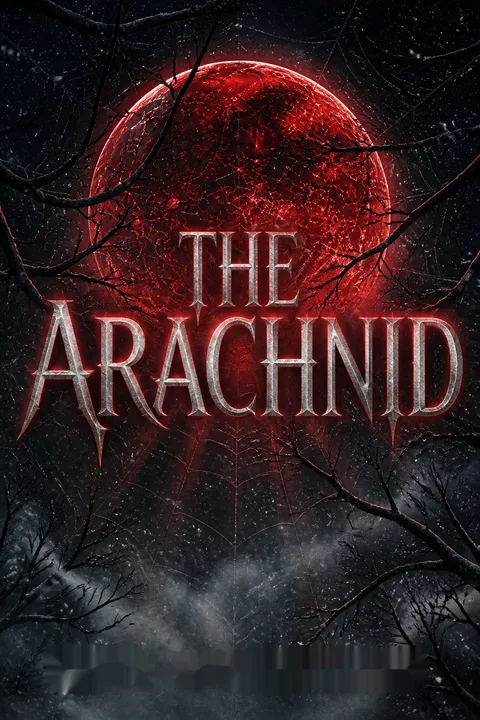
As Alina's blood runs black, she is haunted by visions of the red-hot moon—a symbol of death, transformation, and the inescapable pull of violence. The story ends as it began: with blood, with loss, and with the promise of something new rising from the ashes. The Nest is forever changed, its members scattered or dead, its leader transformed by pain and power. The cycle of predator and prey continues, but the rules have changed. The Arachnid has claimed her place at the center of the web, and the world will never be the same.
Analysis
A gothic meditation on power, autonomy, and the cost of survivalThe Arachnid is a masterful blend of gothic horror, dark romance, and social allegory. At its core, the novel interrogates the ethics of survival in a world where power is always predatory and safety is never guaranteed. Through its complex, deeply flawed characters, it explores the tension between autonomy and dependence, love and violence, community and isolation. The Nest is both sanctuary and prison, a microcosm of the larger world's dangers and possibilities. The novel refuses easy answers: every act of mercy is tinged with violence, every assertion of autonomy comes at a cost, and every bond is both lifeline and shackle. The use of poison and venom as central motifs underscores the ambiguity of agency—what saves can also destroy, and the line between healer and killer is razor-thin. Ultimately, The Arachnid is a story about the price of power, the necessity of compromise, and the enduring hunger for connection in a world that would devour us whole. Its lessons are as timely as they are timeless: survival is never innocent, and the webs we weave to protect ourselves may also be our undoing.
Review Summary
The Arachnid receives mostly positive reviews, averaging 4.17/5. Readers praise Alina's character growth, her stronger dynamic with Silas, and the immersive gothic atmosphere. The audiobook narration receives particular acclaim. Common criticisms include middle-book pacing issues, an underdeveloped secondary cast, and Luka's jarring recharacterization. Many appreciated the feminist themes, found-family dynamics, and witty banter. The cliffhanger ending left readers eagerly anticipating the third installment, The Cannibal, despite mixed feelings about plot cohesion throughout.
Characters
Alina Lis
Alina is the human Host at the heart of the Nest, a woman marked by trauma, intellect, and a fierce sense of responsibility. She is both scientist and executioner, using her knowledge of Vipera biology to create medicines and poisons that sustain her household. Alina's relationships are complex: she is fiercely loyal to her found family, yet struggles with intimacy, addiction, and the burden of leadership. Her dynamic with Silas is a constant push and pull—love and hate, dominance and submission, each seeking to control the other. Alina's arc is one of transformation: from victim to predator, from caretaker to tyrant, from human to something more. Her greatest strength is her ability to adapt, to survive at any cost, but this comes at the price of her own humanity.
Silas Forbes
Silas is a Vipera of ancient lineage, haunted by the massacre of his kin and driven by a vision of a new order. He is both charming and monstrous, capable of tenderness and unspeakable violence. His obsession with Alina is both romantic and possessive, a need to dominate and be dominated. Silas's relationship with Luka is fraught with rivalry and mutual dependence, each using the other to achieve their own ends. As the head of a powerful New York Nest, Silas is both protector and threat, offering safety at the cost of autonomy. His arc is one of reckoning: with his past, with his capacity for empathy, and with the consequences of his ambition.
Phoebe Forbes
Phoebe is Silas's sister and Alina's closest confidante, a Vipera whose warmth and sociability mask deep insecurities. She is the glue that holds the Nest together, managing the household and smoothing over conflicts. Yet, her jealousy—especially regarding Alina's other relationships—often leads to pettiness and sabotage. Phoebe's loyalty is unwavering, but her need for validation and fear of abandonment drive her to destructive behavior. Her arc is one of painful growth, as she learns to accept her own limitations and the autonomy of those she loves.
Luka Novikov
Luka is a Vipera marked—literally and figuratively—by the massacre in England. Branded as a kin-killer, he is both victim and perpetrator, haunted by guilt and driven by survival. His relationship with Silas is one of uneasy alliance, bound by necessity and mutual distrust. Luka's dynamic with Alina is complex: once a friend and mentor, now a rival and supplicant. His hunger, both literal and metaphorical, drives much of the plot, and his eventual act of mercy toward Edith is both a redemption and a resignation. Luka embodies the dangers of pragmatism without principle, and the cost of survival in a world without trust.
Edith
Edith is a young Vipera, once timid and eager to please, whose need for purpose and belonging leads her down a path of fanaticism. Her desire to help—rooted in religious guilt and utilitarian logic—becomes twisted, culminating in the mass turning of patients at the hospital. Edith's arc is a cautionary tale about the dangers of unchecked idealism and the seductive power of being needed. Her betrayal is both personal and ideological, forcing the Nest to confront the limits of forgiveness and the necessity of hard choices.
Rebecca
Rebecca is a Vipera of few words and great strength, the household's butcher and enforcer. Her relationship with Adeline is one of quiet devotion, and her grief at Adeline's death is raw and uncontainable. Rebecca embodies the cost of violence and the limits of stoicism; her loyalty to the Nest is unwavering, but her ability to process loss is limited. She is both shield and sword, willing to do what must be done, but not immune to the consequences.
Adeline
Adeline is a Host whose optimism and warmth provide a counterpoint to the darkness of the Nest. Her relationship with Rebecca is tender and grounding, and her death at the hands of the corrupted is a turning point for the household. Adeline represents the possibility of innocence and joy in a world defined by violence, and her loss is a reminder of what is at stake.
Mary
Mary is Adeline's twin, a seamstress and the household's voice of reason. She is less expressive than her sister, but her insights and quiet leadership are invaluable. Mary's grief is internalized, manifesting as a determination to prevent further loss. She is a stabilizing force, advocating for transparency and preparation in the face of danger.
John
John is the blacksmith and handyman who serves as a surrogate father to Alina and the Nest. His warmth, wisdom, and practical skills provide comfort and stability. John's presence is a reminder of the possibility of kindness and decency, even in a world defined by predation. He is a touchstone for Alina, grounding her in moments of doubt and grief.
Cormac McCallister
Cormac is the head of a Vipera colony outside Buffalo, a man whose community offers a glimpse of what the Nest could become. His interactions with Alina and Silas are marked by mutual respect and wariness. Cormac's refusal to take responsibility for the corrupted highlights the limits of solidarity and the dangers of isolation. He serves as both a mirror and a warning, embodying the choices that lie ahead for the Nest.
Plot Devices
Nonlinear Narrative and Dual Timelines
The novel employs a nonlinear structure, alternating between present-day Buffalo and flashbacks to England. This device allows the gradual revelation of character backstories, traumas, and the origins of the central conflicts. The massacre at the English Nest is a recurring touchstone, its consequences rippling through every relationship and decision. The dual timelines create suspense, deepen character motivations, and underscore the cyclical nature of violence and survival.
Ritual and Routine
The daily rituals of the Nest—feeding, extraction, chores—serve as both a source of comfort and a means of control. These routines structure the lives of the characters, providing stability in a chaotic world. At the same time, they are sites of tension, where power dynamics, jealousy, and trauma play out. The rituals are both necessary for survival and reminders of the violence that underpins their existence.
Poison and Venom as Metaphor
Poison and venom are central motifs, functioning as both literal tools and metaphors for power, agency, and transformation. Alina's mastery of poison is both her weapon and her curse, enabling her to protect her Nest but also isolating her from others. The act of poisoning—whether for mercy, revenge, or survival—raises questions about the ethics of violence and the cost of agency. Venom is also a metaphor for addiction, trauma, and the seductive allure of power.
The Web and the Arachnid
The recurring imagery of webs and spiders underscores the themes of predation, entrapment, and the illusion of control. Alina is both spider and fly, predator and prey, weaving a web to protect her found family but also ensnaring herself in cycles of violence and dependency. The web is a metaphor for the interconnectedness of the characters' fates, the impossibility of escape, and the cost of survival in a world where every choice is a trap.
Foreshadowing and Symbolism
The novel is rich in foreshadowing and symbolism: the red-hot moon as a harbinger of death and transformation; blood as both life and poison; the recurring motif of hearts—eaten, broken, or offered. These symbols create a sense of inevitability, a world governed by cycles of violence, loss, and rebirth. The ending, with Alina's blood running black and the promise of something new rising from the ashes, is both a conclusion and a beginning.
Download PDF
Download EPUB
.epub digital book format is ideal for reading ebooks on phones, tablets, and e-readers.








































