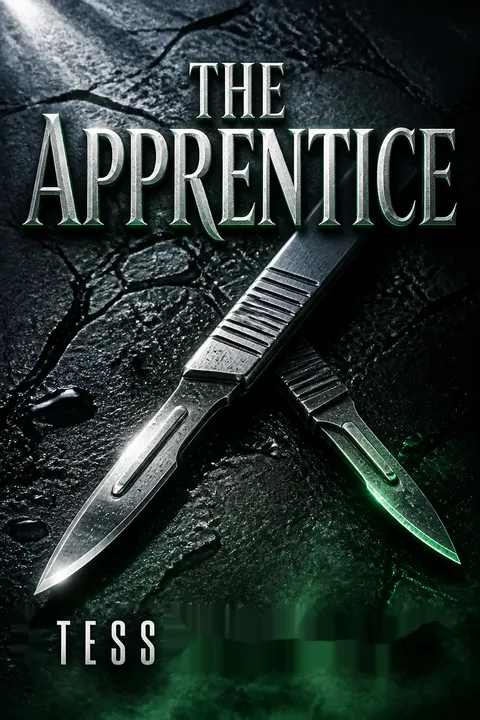

Plot Summary
Prisoner's Blood Oath
In the prologue, we enter the mind of Warren Hoyt, a notorious serial killer known as the Surgeon, as he witnesses a prison murder. Hoyt's fascination with blood and death is palpable, and he reveals his sense of kinship with another killer outside the prison walls. This opening sets the tone for the novel's exploration of evil, obsession, and the dark connections that bind predators. Hoyt's chilling detachment and his anticipation of a "blood brother" foreshadow the emergence of a new threat, promising a story where violence and ritual intertwine, and where the boundaries between hunter and hunted blur.
Death in the Suburbs
Detective Jane Rizzoli, the only female homicide detective in Boston, is called to a brutal crime scene in an affluent suburb. A respected surgeon is found murdered, his wife missing, and the scene bears disturbing similarities to the infamous Surgeon killings. Rizzoli's professionalism is tested as she navigates the expectations of her male colleagues and the emotional toll of confronting such horror. The meticulous staging of the crime, the use of duct tape, and the presence of a broken teacup hint at a killer obsessed with ritual and control. The missing wife's fate hangs in the balance, propelling Rizzoli into a race against time.
Rituals of Control
Rizzoli's investigation is haunted by memories of her own near-fatal encounter with Warren Hoyt. The killer's methods—binding, abduction, and the careful folding of the victim's nightclothes—mirror Hoyt's signature, yet with unsettling differences. As Rizzoli and her team search for forensic clues, the emotional scars of her past resurface, threatening her composure. The killer's need for dominance is evident in every detail, and Rizzoli's empathy for the missing woman deepens her resolve. The chapter explores the psychological cost of hunting monsters and the thin line between survivor and victim.
The Copycat's Signature
Forensic evidence reveals the killer's chilling precision and hints at necrophilic tendencies. The discovery of postmortem hairs and unique fibers links the crime to someone with access to corpses—perhaps a mortuary worker or funeral home assistant. Rizzoli's investigation leads her to Joey Valentine, a socially awkward mortuary assistant with a troubled past, but the evidence remains circumstantial. Meanwhile, the killer's ability to mimic Hoyt's rituals while introducing his own variations suggests a dangerous evolution—a copycat who is not merely imitating, but learning and perfecting the art of murder.
The Hunter's Audience
Criminal psychologist Dr. Zucker helps Rizzoli profile the new killer, dubbed the Dominator. Unlike Hoyt, the Dominator targets couples, forcing husbands to witness their wives' violation and murder. The killer's actions are not just about sexual gratification, but about power, humiliation, and masculine conquest. The investigation uncovers a pattern: the killer stages his crimes to maximize psychological torment, both for his victims and for those who pursue him. Rizzoli's own trauma becomes a lens through which she understands the unsub's need for an audience, and the stakes become deeply personal.
The Queen of the Dead
Dr. Maura Isles, the enigmatic medical examiner known as the Queen of the Dead, conducts autopsies that reveal the killer's use of a stun gun and a hunting knife. The forensic details—Taser marks, precise incisions, and the presence of fresh semen in decomposing bodies—point to a killer who is both methodical and deeply disturbed. The investigation is further complicated by the discovery of another set of remains in the woods, suggesting the Dominator has killed before. Rizzoli's partnership with Isles provides both scientific insight and a rare sense of camaraderie in a world dominated by violence.
The Corpse's Silent Testimony
Forensic analysis of hair and fibers leads to the revelation that the killer has been in contact with corpses, possibly through work in the funeral industry. The discovery of a postmortem hair from a previous victim, and unique carpet fibers from a hearse or limousine, expands the investigation's scope. The team realizes the killer is not only skilled at covering his tracks but is also intimately familiar with death and decomposition. The silent testimony of the dead—through trace evidence and the careful staging of bodies—becomes the key to understanding the killer's methods and motivations.
The Apprentice Emerges
As the investigation deepens, it becomes clear that the Dominator is not acting alone. The escape of Warren Hoyt from prison unleashes a new wave of terror, and evidence mounts that the two killers have formed an alliance. The Dominator, once a copycat, is now an apprentice learning from the master. Together, they combine their skills—Hoyt's surgical precision and the Dominator's psychological cruelty—to create a partnership more deadly than either alone. Rizzoli, now the focus of their twisted game, must confront her deepest fears as the hunters close in.
The Harem in the Woods
The discovery of multiple female remains in a secluded park reveals the Dominator's "harem"—a collection of victims he returns to visit, touch, and violate even after death. The necrophilic aspect of the crimes horrifies the investigators and underscores the killer's obsession with possession and control. The woods become a sacred ground for the killer, a place where he can relive his triumphs. The team's efforts to stake out the site and catch the killer are thwarted by his cunning, and the psychological toll on Rizzoli intensifies as she realizes the killer's rituals are escalating.
The FBI's Shadow
The FBI, represented by the enigmatic Agent Gabriel Dean, inserts itself into the investigation, demanding access to all evidence while revealing little in return. Dean's true motives are unclear, and his presence creates tension within the team. As Rizzoli struggles to assert her authority, she uncovers connections between the Dominator's crimes and unsolved cases in other states—and even overseas. The possibility that the killer has military or intelligence training, and may have operated in war zones, raises the stakes. Rizzoli's trust is tested as she navigates a web of secrecy, politics, and personal vulnerability.
The Surgeon Escapes
Warren Hoyt's escape from a maximum-security prison is orchestrated with chilling ingenuity, using his medical knowledge to fake illness and exploit weaknesses in the system. His first act is a brutal hospital massacre, signaling his return to the world of the living—and the world of killing. Hoyt's obsession with Rizzoli becomes explicit, as he leaves messages and taunts designed to terrorize her. The partnership between Hoyt and the Dominator is now fully realized, and their combined skills make them nearly unstoppable. Rizzoli must confront not only the killers but also her own trauma and the doubts of her colleagues.
The Dominator's Game
The killers escalate their attacks, targeting another couple and abducting the wife. The investigation becomes a race against time, with Rizzoli and her team struggling to anticipate the killers' next move. The Dominator's use of a limousine service to select and stalk victims is uncovered, revealing his ability to blend into everyday life. The killers' rituals become more elaborate, and their need for control more pronounced. Rizzoli's personal and professional worlds collide as she becomes both hunter and hunted, forced to rely on her instincts and the uneasy alliance with Dean.
The Graveyard Trap
The killers set a trap for Rizzoli, luring her into a cemetery with a staged homicide call. The ensuing chaos leads to the death of a security guard and a heart attack for her partner, Korsak. Rizzoli's sense of failure and vulnerability is overwhelming, but she refuses to give in. The killers' psychological warfare intensifies, with messages left at crime scenes and direct threats to Rizzoli's safety. The graveyard becomes a symbol of both death and survival, as Rizzoli narrowly escapes becoming the next victim in the killers' harem.
The Monster's Message
The killers' attacks become explicitly targeted at Rizzoli, with crime scenes staged to taunt her and messages left in her own home. The psychological toll is immense, as Rizzoli grapples with fear, anger, and the sense of being hunted. Her relationship with Dean deepens, providing both comfort and complication. The investigation uncovers the killers' military backgrounds and possible connections to covert operations, adding layers of complexity and danger. Rizzoli's determination to fight back is fueled by her refusal to be defined by her trauma.
The Unraveling Alliance
As the Dominator and Hoyt pursue their twisted rituals, cracks begin to appear in their alliance. The apprentice's need for validation and the master's insatiable hunger for control create tension and mistrust. Rizzoli and Dean piece together the killers' methods, uncovering the use of parachute fabric as a shroud and the limousine service as a hunting ground. The investigation leads to a final confrontation, as Rizzoli is abducted and must rely on her wits and resilience to survive. The killers' partnership, built on mutual need, ultimately becomes their undoing.
The Woman as Prey
Rizzoli is kidnapped by the Dominator, drugged, bound, and transported to a remote location where Hoyt awaits. The killers' plan is to enact their ultimate fantasy—Rizzoli as the helpless victim, the culmination of their rituals of control. But Rizzoli's resourcefulness and determination turn the tables. Using a hidden weapon, she kills the Dominator and wounds Hoyt, refusing to become their prey. The scene is a testament to her strength and the power of survival, as she chooses not to kill Hoyt but to let him live with the consequences of his defeat.
The Final Confrontation
The killers' reign of terror ends in violence and humiliation. Hoyt is left paralyzed, his body as powerless as the victims he once dominated. The Dominator's true identity remains shrouded in secrecy, protected by government agencies unwilling to expose their own. Rizzoli's victory is hard-won, marked by physical and emotional scars. The investigation's conclusion brings little closure, as the cost of survival is measured in trauma and loss. Yet Rizzoli's refusal to be defined by victimhood signals a new beginning—a commitment to life, justice, and the ongoing fight against darkness.
Aftermath and Awakening
In the aftermath, Rizzoli confronts the personal and professional consequences of her ordeal. She visits her wounded partner, Korsak, and acknowledges the importance of connection and vulnerability. Her relationship with Dean offers the possibility of love and renewal, even as the scars of the past remain. The novel ends with a meditation on the nature of evil, the allure of violence, and the resilience of those who choose to fight back. Rizzoli's journey is one of transformation—from hunted to hunter, from victim to survivor, and from isolation to the hope of healing.
Analysis
Tess Gerritsen's The Apprentice is a masterful exploration of the psychology of evil, the rituals of control, and the resilience of those who confront darkness. By pairing a notorious serial killer with a cunning apprentice, Gerritsen amplifies the threat and examines the seductive allure of violence—not just for the killers, but for those who pursue them. The novel interrogates the boundaries between hunter and hunted, victim and survivor, and the ways in which trauma can both wound and empower. Through Jane Rizzoli, Gerritsen crafts a protagonist who is deeply human—scarred, vulnerable, but unyielding in her pursuit of justice. The forensic detail grounds the narrative in realism, while the psychological depth elevates it beyond mere procedural. The story's engagement with themes of gender, power, and institutional complicity resonates in a modern context, challenging readers to consider the costs of both action and inaction. Ultimately, The Apprentice is a testament to the enduring struggle between light and darkness, and the courage required to face the monsters—both without and within.
Review Summary
The Apprentice is the second installment in the Rizzoli & Isles series, receiving an overall rating of 4.14/5. Readers praise its dark, gripping tone, noting it surpasses the lighter TV adaptation. Detective Jane Rizzoli's character development earns particular acclaim, with reviewers appreciating her growth from the first book. The introduction of Dr. Maura Isles and FBI Agent Gabriel Dean adds intrigue. Some readers felt disappointed by limited focus on The Dominator and an abrupt ending, but most found it a compelling, tension-filled thriller.
Characters
Jane Rizzoli
Jane Rizzoli is the novel's protagonist, a fiercely determined Boston homicide detective whose career and psyche are shaped by her survival of a near-fatal attack by Warren Hoyt. As the only woman in her unit, she battles both external sexism and internalized doubts, striving to prove her worth in a male-dominated world. Rizzoli's trauma is both her vulnerability and her strength, fueling her empathy for victims and her relentless pursuit of justice. Her relationships—with colleagues, with the enigmatic Gabriel Dean, and with her own family—are marked by guardedness and flashes of longing. Over the course of the story, Rizzoli evolves from a woman defined by her scars to one who reclaims agency, refusing to be preyed upon by monsters or her own fears.
Warren Hoyt (The Surgeon)
Warren Hoyt is the chilling embodiment of organized, intelligent evil. A former medical technician, he is obsessed with blood, ritual, and the surgical violation of women. Hoyt's psychological profile reveals a man who craves control, is sexually aroused by fear and pain, and is drawn to "damaged" women. His escape from prison reignites his obsession with Rizzoli, whom he views as both adversary and ultimate prize. Hoyt's partnership with the Dominator is rooted in mutual recognition of darkness, but his need for dominance and his manipulative cunning ultimately lead to his downfall. Paralyzed in the end, Hoyt is left to contemplate his impotence—a fitting punishment for a man who lived to dominate.
The Dominator (John Stark)
The Dominator is a new breed of killer—methodical, intelligent, and obsessed with power over both men and women. Initially a copycat of Hoyt, he evolves into a partner and apprentice, learning and perfecting the rituals of control, humiliation, and postmortem violation. His background in the funeral industry and possible military or intelligence connections give him access to both corpses and covert skills. The Dominator's need for an audience, his collection of a "harem" of victims, and his use of everyday roles (like limousine driver) make him a chillingly plausible predator. His alliance with Hoyt is both symbiotic and unstable, ending in betrayal and death.
Gabriel Dean
Gabriel Dean is an FBI agent (with possible intelligence ties) whose involvement in the case is shrouded in secrecy and political intrigue. Initially an outsider and rival to Rizzoli, Dean's true motives and loyalties are ambiguous. His military background, psychological insight, and access to classified information make him both a valuable resource and a source of tension. As he and Rizzoli grow closer—professionally and personally—Dean's own emotional detachment is challenged. Their relationship becomes a space for vulnerability and healing, even as the demands of the case threaten to pull them apart. Dean's arc is one of learning to trust, to feel, and to fight for justice beyond bureaucratic constraints.
Maura Isles (Queen of the Dead)
Dr. Maura Isles is the brilliant and enigmatic medical examiner whose scientific rigor and emotional detachment provide clarity amid chaos. Nicknamed the Queen of the Dead, Isles is both respected and feared for her ability to read the silent testimony of corpses. Her partnership with Rizzoli is marked by mutual respect and a rare sense of female solidarity in a world of violence. Isles's insights into the killers' methods and her meticulous autopsies are crucial to the investigation. Beneath her cool exterior lies a woman who, like Rizzoli, is shaped by her proximity to death and her search for meaning in the face of horror.
Vince Korsak
Detective Korsak is Rizzoli's colleague and, at times, reluctant partner. A veteran cop with a rough exterior, Korsak struggles with personal demons—an unhappy marriage, declining health, and a sense of obsolescence. His relationship with Rizzoli is complex, marked by moments of camaraderie, resentment, and mutual rescue. Korsak's heart attack during the investigation serves as a reminder of mortality and the cost of the job. His vulnerability and eventual recovery parallel Rizzoli's own journey from isolation to connection.
Dr. Lawrence Zucker
Dr. Zucker is the team's consulting psychologist, specializing in the minds of serial killers. His clinical detachment and probing questions make him both an asset and a discomforting presence. Zucker's insights into the Dominator's need for an audience, the dynamics of power and humiliation, and the psychology of necrophilia help shape the investigation's direction. He also serves as a mirror for Rizzoli, challenging her to confront her own trauma and the ways in which hunters and hunted are psychologically entwined.
Joey Valentine
Joey is a socially awkward young man working in a funeral home, whose access to corpses and troubled past make him a suspect in the investigation. His interactions with Rizzoli and Korsak reveal the dangers of jumping to conclusions based on circumstantial evidence and the ways in which the marginalized can become scapegoats. Joey's character serves as a reminder of the thin line between the ordinary and the monstrous, and the importance of rigorous investigation.
Dr. Joyce O'Donnell
Dr. O'Donnell is a controversial expert witness and researcher who becomes entangled with Hoyt through correspondence and interviews. Her intellectual curiosity and willingness to engage with evil make her both a resource and a potential victim. O'Donnell's sessions with Hoyt reveal the seductive power of the killer's narrative and the dangers of seeking understanding without boundaries. Her character explores the ethical complexities of studying violence and the risks of becoming too close to the darkness one seeks to illuminate.
Barry Frost
Detective Frost is Rizzoli's partner and a stabilizing presence amid chaos. His empathy, reliability, and diplomatic skills provide balance to Rizzoli's intensity. Frost's personal life and his efforts to support Rizzoli through trauma highlight the importance of friendship and teamwork in the face of overwhelming evil. He represents the possibility of normalcy and hope, even as the world around them is consumed by violence.
Plot Devices
Dual Killers and Copycat Motif
The novel's central device is the partnership between two killers—one a notorious master (Hoyt), the other an evolving apprentice (the Dominator). The copycat motif allows for both homage and innovation, as the apprentice mimics and then surpasses the master's rituals. This duality creates narrative tension, as the investigators must unravel not just one mind, but the dynamic between two predators. The device also explores themes of mentorship, imitation, and the seductive power of evil.
Ritual and Staging
The killers' use of ritual—binding, staging, the folding of nightclothes, the placement of teacups—serves both practical and symbolic purposes. These acts are designed to assert control, humiliate victims, and communicate with pursuers. The meticulous staging of crime scenes becomes a form of psychological warfare, targeting both the victims and the investigators. The rituals also serve as a narrative breadcrumb trail, guiding Rizzoli and her team toward the killers' identities and motivations.
Forensic Science and Trace Evidence
The novel relies heavily on forensic detail—hair and fiber analysis, autopsy findings, DNA profiling—to advance the plot and reveal hidden connections. The use of unique fibers (parachute fabric, carpet), postmortem hair, and semen in decomposing bodies provides both clues and red herrings. Forensic science becomes a character in its own right, offering objective testimony amid the chaos of violence and emotion.
Psychological Profiling and Power Dynamics
The interplay between hunter and hunted, watcher and performer, is central to the novel's structure. The killers' need for an audience, their obsession with dominance, and their manipulation of both victims and investigators create a web of psychological tension. The use of criminal profiling, therapy sessions, and personal trauma as investigative tools blurs the line between professional detachment and personal involvement.
Foreshadowing and Parallelism
The narrative is rich with foreshadowing—Hoyt's anticipation of a "blood brother," the recurrence of rituals, the mirroring of past and present crimes. Parallel storylines (Rizzoli's trauma, the killers' partnership, the investigation's setbacks) reinforce themes of repetition, escalation, and the difficulty of breaking free from cycles of violence. The use of alternating perspectives (killer, victim, investigator) deepens the sense of inevitability and dread.
Government Secrecy and Conspiracy
The involvement of the FBI, military, and intelligence agencies introduces layers of secrecy and political intrigue. The concept of "sheep-dipping" and the protection of covert operatives complicate the pursuit of justice, raising questions about accountability, sacrifice, and the cost of truth. The device underscores the novel's exploration of power—who wields it, who is protected by it, and who pays the price.
Rizzoli & Isles Series

About the Author
Other books by Tess Gerritsen


Download PDF
Download EPUB
.epub digital book format is ideal for reading ebooks on phones, tablets, and e-readers.








































