


Plot Summary
Prologue
A boy collapses on his knees in the trees, having fled his pursuers. Above him on a fence perches a slightly older youth in commoner clothes, eating an apple with a flash of white teeth. The older boy teases him about making the serving women cry. The younger boy seethes with humiliation: he was told to accept an arranged match with a woman older than his own mother.
The older boy jumps down, musses his hair, and offers the half-eaten apple. As the younger boy bites into the fruit, sweet and sour flooding his mouth, he makes a sudden declaration. He points at the faux commoner and announces that this grinning youth will be his partner for tonight. The older boy's sardonic smile flickers into embarrassment.
This prologue distills the novel's central tensions into a childhood vignette. Two boys of unequal power negotiate desire, obligation, and identity beneath the guise of play. The act of choosing a partner, treated lightly here, becomes the gravitational center of the entire book: Jinshi's marriage politics, Lishu's parentage, Maomao's unexpected candidacy. The older boy's commoner disguise and the younger's rebellion against an unsuitable match prefigure the masks and defiance woven throughout the story. The shared apple, half-eaten and half-offered, embodies the uneasy intimacy between those bound by blood and circumstance. What is given freely versus what is demanded: the prologue poses questions the narrative will complicate beyond either child's imagining.
The Hollow Locusts
Maomao1 sits at the Verdigris House breakfast table facing a mountain of fried locusts, an unwanted gift from the hapless Mr. Owner. Chou-u,6 the Shi clan survivor living in her shack, bites into one and announces it tastes crunchy and hollow, not like proper locusts.
Maomao1 tastes one herself and registers the emptiness. At the market later, Chou-u6 spots simmered insects for sale and remarks that when bugs are crunchy, the harvest will be bad. He cannot explain how he knows this, his fragmented memories surfacing without context.
Maomao1 connects his observation to the ratio of grasshoppers to locusts in the dish. Grasshoppers, nearly identical but hollow inside, proliferate in certain conditions. The detail nags at her: a famine year could destabilize the Emperor's already fragile rule following the Shi clan's destruction.
The locust becomes an unlikely oracle. Maomao's scientific mind transforms a bad breakfast into epidemiological data, discerning pattern from palate. Chou-u's partial amnesia makes him an unreliable vessel for crucial knowledge, his body a fragmented archive of the Shi clan's agricultural wisdom. The scene establishes the volume's method: political catastrophe announces itself not in court proclamations but in the crunch of an insect between a child's teeth. The grasshopper-locust distinction mirrors the book's concern with deceptive surfaces. Two nearly identical creatures yield radically different consequences, just as what looks like an immortal may be an albino performer, and what looks like a eunuch may be the Emperor's brother.
The Fortress Thief
Maomao1 enlists the soldier Lihaku to watch the market for stolen goods from the Shi fortress. He catches an emaciated man trying to sell an encyclopedia volume. The thief recognizes Maomao1 as the girl who ate snake meat in her prison chamber.
He was the guard who helped her escape, and he looted the books from her room before fleeing the burning stronghold. Under questioning in Maomao1's shop, with the manservant Ukyou as witness, the man distinguishes between the breakfast insects: eight of every ten were grasshoppers, not locusts.
Farmers know that when grasshoppers outnumber locusts, famine often follows. The former guard, now calling himself Sazen,9 also reveals that the physician imprisoned at the fortress before Maomao1 was researching exactly this: how to predict and prevent insect plagues.
Sazen occupies an ambiguous moral position, thief and informant, coward and key witness. His knowledge transforms him from criminal to collaborator, a pattern the book replicates: characters repeatedly become useful through their transgressions. The distinction between grasshopper and locust, invisible to urban palates, represents the embodied knowledge of rural life that court politics routinely ignores. Sazen's claim that he never wanted to sell the books, only to survive until he could buy them back, introduces the central tension between necessity and integrity. He stole, but he also preserved. The scene also quietly underlines Maomao's ruthlessness: she threatens to expose him as a fortress runaway to extract cooperation, a reminder that her curiosity often overrides compassion.
The Reluctant Sleeper
Three days later, Jinshi2 visits the apothecary shop masked and exhausted, his beauty now marred by a healing scar. Maomao1 shows him the encyclopedia and warns of the coming insect plague, watching fresh worry carve lines into his face. Seeing his fatigue, she arranges a room at the Verdigris House.
The madam13 prepares the finest chamber in thirty minutes, sensing profit. Maomao1 offers Jinshi2 a medicinal bath staffed by professionals, a nutrient drink to boost male stamina, and five virginal courtesans selected by age and chastity.
Jinshi2 recoils from each offering, finally pleading that he literally just wants to sleep. He clings to Maomao1's arm and asks for a lullaby. She sings an old courtesan's song, tapping the covers, until his breathing steadies into sleep. When he wakes, he eats three bowls of congee and departs renewed.
This scene operates as intimate comedy built on mutual misunderstanding. Maomao applies the logic of the pleasure quarter, where rest equals sex, to a man who craves only presence. Her clinical approach to his exhaustion, complete with aphrodisiacs and professional women, demonstrates both her pragmatism and her emotional blind spot. Jinshi's refusal of every offered body except hers, his grip on her arm as he falls asleep, reveals the specificity of his need. The lullaby from her childhood, sung in a brothel's best room, collapses the distance between courtesan culture and genuine care. The scar on his cheek, which Maomao studies with professional rather than aesthetic interest, marks him as damaged goods in a marriage market that values his beauty above all.
The Fire-Rat Cloak
At a used-clothing shop, Maomao1 finds a white robe with strange vine-pattern embroidery. The shopkeeper tells a story: a village helped a lost girl with white skin and golden hair, who wove robes from mysterious thread. When her family came searching, the villagers hid her and forced a wedding.
At the ceremony, the girl doused herself in oil, set herself ablaze, and vanished into a spring, leaving only her veil. The robe, the shopkeeper claims, is the celestial nymph's garment.
Maomao1 recognizes the embroidery as characters from her adoptive father's homeland and the fabric as rock fiber. She drops a hot coal on the robe; it does not burn. She deduces the girl was likely a spy who wore water-soaked undergarments beneath fireproof cloth, using the flames as diversion to escape.
Maomao's demystification of the nymph legend enacts the novel's core epistemology: every miracle has a material explanation. The robe's fireproof quality comes not from divinity but from spun stone, and the girl's ascension was a calculated escape. Yet Maomao withholds her full reasoning from the shopkeeper, preserving the romance that makes the garment valuable. This selective truth-telling mirrors her broader social strategy: she sees through illusions but rarely destroys them for others. The spy hypothesis, left unexplored, plants a narrative seed about western intelligence operations that will surface later in the emissary's asylum request. The scene also reinforces Maomao's relationship to Luomen's knowledge: the characters on the robe connect her to his foreign education and to a world larger than the capital.
The Beggar's Cakes
A desperate man pounds on Maomao1's door at dawn, demanding treatment for his dying daughter. Maomao1 refuses until he signs an IOU in blood. She and Ukyou follow him to a filthy hovel where a girl Chou-u6's age lies paralyzed, her fingers blackening with necrosis. The older sister says their mother died similarly after a miscarriage.
Hidden in a cupboard, Maomao1 finds sweet cakes the younger girl received from a stranger a month ago. She tastes a crumb and identifies the toxin: ergot from bad grain, which constricts blood flow. She takes the child to her shack. The older sister later arrives bruised, unable to pay. When Maomao1 threatens to sell the younger girl, the older one volunteers to become a courtesan in her place.
The poisoned cakes function as a miniature of the novel's political economy: sweetness distributed by an anonymous hand, death hidden in charity, the poor serving as unwitting test subjects. Maomao's insistence on the IOU, her performative coldness, masks a pattern of intervention she refuses to acknowledge as compassion. Her threat to sell the younger sister is a test the older girl passes by choosing agency over victimhood. The scene also introduces a shadow network: someone, a woman, is distributing toxin-laced cakes to the destitute. This thread connects later to the White Lady and the opium trade, suggesting a coordinated campaign rather than random malice. The body again tells the truth that words conceal: necrosis, miscarriage, paralysis are the language of systemic poisoning.
Shisui's Final Message
Basen4 delivers the remaining encyclopedia volumes from the fortress, but the insect book contains nothing about locusts. Sazen9 insists a fifteenth volume is missing. Maomao1 visits Suirei8 at Ah-Duo3's villa.
Suirei8 confirms her mentor survived the resurrection drug but lives amnesiac in a hot-springs town; his locust research was destroyed when the Shi clan forced him to pursue immortality. Ah-Duo3 suggests Shisui would have left something behind. Memory strikes: just before her kidnapping, Maomao1 saw an insect encyclopedia at the rear palace clinic.
Jinshi2 retrieves the confiscated book. Inside, Shisui's notes detail how grasshoppers morph across generations and how to prevent plagues through insecticides, controlled burns, and sparrow protection.
Shisui's posthumous intervention transforms her from tragic antagonist to secret collaborator. The scene restores her agency: even as she orchestrated her escape and apparent death, she ensured the knowledge to save the nation would reach Maomao. The book hidden in plain sight at the clinic demonstrates the intelligence operation running beneath the rear palace's surface. Suirei's admission that she hates bugs while her half-sister loved them underscores how the sisters complemented each other, each carrying fragments of their mentor's legacy. Ah-Duo's casual insight, the remark that prompts Maomao's memory, reveals her as a quiet orchestrator, someone who sees connections others miss. The locust research models a political philosophy: crisis is averted not by last-minute miracles but by patient observation of incremental change.
The White Lady Unmasked
The pleasure quarter's income drops as wealthy patrons flock to see the White Lady,15 an albino performer claiming immortal powers. Lahan7 invites Maomao1 to the show. On stage, the White Lady15 correctly guesses Maomao1's written number and identifies which of a hundred tubes contains her paper.
She also transforms bronze into silver and gold, conjures burning butterflies, and drinks quicksilver. Maomao1 deduces the tricks: salt mixed in the ink revealed the number on the writing pad; the tubes functioned like a flute, each closed hole producing a distinct high-pitched sound the nearly blind Lady15 detected by hearing; metal plating accounted for the color changes; the doctored wine impaired the audience's judgment. Maomao1 warns Lahan7 that quicksilver is a deadly poison. Days later, the White Lady15 vanishes, leaving poisoned merchants in her wake.
The White Lady episode functions as a thesis statement for the volume's method: every apparent miracle is a system waiting to be reverse-engineered. Maomao's explanation does not diminish wonder but relocates it from the supernatural to the ingenious. The Lady's near-blindness, which seems a handicap, becomes her advantage: she hears what others cannot, reading the world through sound rather than sight. This sensory inversion mirrors Maomao herself, who perceives poison where others taste only food. The poisoned merchants introduce the volume's shadow antagonist: a network distributing toxins and narcotics under the guise of entertainment and charity. The White Lady's disappearance, like the celestial nymph's escape, leaves behind questions about who she worked for and what larger design her performances served.
The Accidental Apprentice
Chou-u6 and the mute girl Zulin return from herb-gathering with wolfsbane instead of mugwort. Before Maomao1 can scold them, Sazen9 arrives carrying the correct mugwort and a pouch of wolfsbane root he dug up, explaining the poisonous plant must have been transplanted from the mountains.
Maomao1 tests his knowledge: he identifies half the ingredients in her shop and can read because the fortress physician taught him. Recognizing an unexpected asset, Maomao1 piles books before him and announces he will train as an apothecary.
The shop needs someone to run it when she is called away, and Sazen9 has proved useless as a bouncer anyway. He hesitates, claiming he is only a simple farmer. Maomao1 dismisses his doubts, pointing out that some doctors know less than he already does.
Sazen's transformation from thief to apothecary embodies the volume's pragmatic approach to redemption. Maomao does not forgive him; she uses him. His knowledge, acquired in service to the Shi clan's dark experiments, finds new purpose in a pleasure-quarter shop. The scene quietly critiques credentialism: Sazen's informal education from a disgraced physician exceeds the training of many licensed doctors. His self-doubt reflects the internalized class hierarchy Maomao consistently refuses to honor. The wolfsbane root, simultaneously poison and medicine, serves as the emblem of his new vocation. Maomao's insistence on speed, driven by the letter summoning her westward, reveals her growing awareness that her life now pulls her away from the shop with increasing frequency.
A Village Worth Drinking For
The party arrives at the quack doctor's papermaking village, where the landlord's son demands immediate payment of the remaining debt or eviction. At the meeting, Maomao1 notices the farmers drink distilled spirits while a barrel of cloudy local wine sits untouched.
She challenges the landlord to a drinking contest, wagering herself at three hundred silver. Jinshi2 puts down a purse. Maomao1 defeats four farmers, then tricks the landlord into adding her sterilizing alcohol to his own cup. He collapses immediately. She reveals the farmers are making rice wine from hidden surplus crops, evading alcohol taxes.
The surplus exists because the papermakers' water enriches the downstream soil. The landlord's daughter bursts in, begging forgiveness. The quack's older nephew helps her up: they are lovers, and the landlord's hatred stems from this forbidden romance.
The drinking contest crystallizes Maomao's method: turn an opponent's confidence into a weapon, use appetite as camouflage, and let the body's limits tell the truth. She bets herself because she knows her own value in a market she understands intimately. The scene's comedic surface conceals a devastating economic critique: the papermakers are being punished for enriching the very farmers who seek to displace them. The tax evasion discovery transforms the power dynamic instantly, from threatened tenants to blackmailers. The romantic subplot between the landlord's daughter and the quack's nephew introduces the volume's recurring motif of love across class and clan lines, a transgression that both humanizes and complicates political conflicts.
Bandits with White Bands
The guide warns of thieves who take half a merchant's goods. But when Ah-Duo3's carriage is attacked ahead, the bandits prove far worse. They refuse Ah-Duo3's bribe and threaten to sell the women. A guard loses his arm.
Basen4 rides ahead with a handful of men and returns with the bandits hog-tied, their limbs bent at unnatural angles. The attackers wear grimy white bands depicting copulating snakes and bear snake tattoos. Multiple bandits are frothing at the mouth: opium addicts.
Their guide later brings opium as a painkiller for the wounded, explaining he received it from a merchant caravan traveling with entertainers. Among them, he glimpsed a girl with white hair: the White Lady,15 or someone like her, passing through a full year before she appeared in the capital.
The bandit encounter transforms Basen from comic relief to genuine threat. His capacity for violence, previously obscured by social awkwardness, emerges as Jinshi's true reason for keeping him close. The white bands and snake tattoos invoke the volume's recurring serpentine imagery: the white snake worship in the hemp town, the White Lady's albino appearance, and now a bandit cult. Opium's presence bridges the criminal underground and the world of entertainers, suggesting the White Lady's show was never merely spectacle but a distribution network. The guide's delayed revelation about seeing her a year earlier recontextualizes the timeline: whatever conspiracy is unfolding has been in motion far longer than anyone in the capital realized.
Whose Daughter Am I?
At the inn, Consort Lishu5 slips into Maomao1's room, veiled and trembling. She asks whether it is possible to determine if a parent and child are truly related. She explains her father Uryuu10 married into her mother's family, then took a concubine and favored those children over her.
He tried to marry her to a lecherous old governor, but the Emperor and Ah-Duo3 intervened by placing her in the rear palace. Consort Lishu5 suspects her mother may have been unfaithful, and worse, she fears the Emperor himself might be her real father.
If so, marrying Jinshi,2 the Emperor's younger brother, would be incest. Maomao,1 fighting her own curiosity, agrees to investigate, though she has no obvious method. The question lingers as they continue toward the western capital.
Lishu's question transforms her from passive victim to active investigator of her own origins. Her fear of incest is not merely personal anxiety but a political bomb: if the Emperor fathered a daughter with his childhood friend's mother, the entire marriage calculus around Jinshi shifts. Maomao's agreement to help, despite knowing the potential danger, reveals the limits of her professed detachment. The scene also exposes the structural cruelty of Lishu's position: her father's coldness has made her doubt her very legitimacy, while her half-sister's cruelty is enabled by Uryuu's clear favoritism. The veil Lishu wears, ostensibly for modesty before men, becomes a metaphor for the identity she cannot confirm: a consort who may not be who she was raised to be.
Arrival at the Oasis
The party reaches the western capital, an oasis city of milky walls and red roof tiles. Gyokuen, Empress Gyokuyou's father, greets them with his daughter's characteristic warmth, offering baths and rest before any business. Maomao1 is given a luxurious room with a carpet of silk and fur, a canopied bed, and a marble bathtub.
That evening, through the thin walls, she overhears Consort Lishu5 being confronted by her half-sister.14 The older woman slaps Consort Lishu,5 accusing her of always being in the way.
After the half-sister14 leaves, Maomao1 visits Consort Lishu,5 checking her swollen cheek and the inside of her mouth. She notices something unusual about the consort5's teeth but says nothing yet. Maomao1 arranges dinner with Ah-Duo3 in the mansion's glass-domed room, taking the opportunity to check Consort Lishu5's food for poison.
The western capital represents a different kind of political theater, one where Gyokuen's warmth operates as strategic hospitality. His resemblance to Gyokuyou, not in looks but in manner, suggests the Empress's political instincts are inherited. The half-sister's slap, overheard through deliberately thin walls with windows left open, exposes the violence beneath the courtesies of aristocratic womanhood. Maomao's inspection of Lishu's mouth, framed as medical concern, is actually the beginning of forensic investigation: teeth, she will later realize, carry the evidence of bloodline that faces alone cannot prove. The glass-domed room, originally a western place of worship, becomes the setting for a trinity of women whose relationships to power range from the abdicated to the precarious to the reluctant.
The Asylum Request
At the first banquet, Maomao1 observes Uryuu10 knock a fish platter from a serving woman's hands, reacting with disproportionate fury. Later, a tall emissary with golden hair and sky-blue eyes, one of the two who visited the capital the previous year, approaches Lahan7 and Maomao.1
In a private room, she proposes purchasing grain from Li, explaining that insects will soon bring catastrophe to her country, Shaoh. Rising grain prices signal famine. Then she makes a shocking second request: if the situation deteriorates, will Li grant her political asylum?
Meanwhile, at the standing banquet, Rikuson11 pulls Maomao1 into a western-style dance. He warns her she is not a disinterested third party and to remember the significance of what she wears on her head, the silver hair stick Jinshi2 gave her.
The asylum request transforms the insect plague from domestic crisis to regional catastrophe. Shaoh's emissary, who previously supplied firearms to the Shi clan, now seeks salvation from the same nation she once undermined. The grain negotiation and the plea for refuge are separated by a thin membrane: the first is business, the second is survival. Rikuson's warning during the dance operates on multiple levels. He tells Maomao that her presence, her connection to the La clan, and the hair stick Jinshi gave her all mark her as a bride candidate, whether she accepts the role or not. The dance itself, an intimate western custom foreign to Li's court, becomes a medium for political intelligence, each turn and touch conveying information the music covers.
The Lion's Charge
At the grand standing banquet, a caged lion is brought for entertainment. Consort Lishu5 sits against the wall, immobilized after someone spilled pungent animal musk perfume on her dress. The lion, agitated by the scent, slams against its cage until the poorly cast iron bars shatter.
It charges directly at Consort Lishu,5 ignoring Maomao1 entirely. Maomao1 throws medicine at it uselessly as Consort Lishu,5 paralyzed with fear, clings to her. Both tumble under a table. Basen4 grabs a broken iron bar and attacks the lion without hesitation, smashing its nose, then striking its skull until the bar shatters.
He stands over the downed beast, his right hand swollen and red. The lion is rechained. Crouching under the table, Basen4 and Consort Lishu5 lock eyes, both blushing scarlet, completely forgetting Maomao1 exists between them.
The lion attack operates as the volume's action climax, but its real work is relational. Basen's violence, previously demonstrated against bandits, now appears as heroism. His lack of hesitation, the single-minded targeting of vulnerable points, reveals a man trained for exactly this kind of intervention. The perfume dousing, if deliberate, represents an assassination attempt disguised as accident, using the lion's instincts to kill without leaving fingerprints. The broken cage bars, almost like someone wanted them to break, suggest sabotage. But the scene's lasting image is Basen and Lishu staring at each other under the table, a tableau of mutual recognition that renders Maomao invisible. The novel has been arranging marriages; here, it suggests a different pairing, one based not on political calculation but on the body's involuntary response to rescue.
The Missing Tooth
After the lion is subdued, Uryuu10's half-sister wails that Basen4 injured her father with flying metal. Uryuu10 has a mere scratch on his cheek, but the half-sister14 demands punishment. Jinshi2 intervenes, pointing out Basen4 saved Consort Lishu5's life. Then Maomao1 acts.
She seizes Uryuu10's chin, inspects his mouth, and notes he is missing a lower front tooth. She does the same to the half-sister:14 same missing tooth, plus advanced decay from overindulgence. Finally she opens Consort Lishu5's mouth, revealing the same congenital absence, though her teeth are clean.
One in ten people lack an adult tooth, but three relatives missing the identical tooth defies coincidence. Maomao1 adds that Uryuu10's violent rejection of the fish platter matches Consort Lishu5's allergy to white fish. She tells Uryuu10 to show his daughter5 some parental affection.
The dental evidence functions as the volume's most elegant forensic deduction, transforming a biological quirk into irrefutable proof of paternity. Teeth, unlike faces, cannot lie or dissemble; they are the body's unalterable record. Maomao's method is characteristically invasive and theatrical: she forcibly opens mouths in public, turning private anatomy into courtroom evidence. The half-sister's tooth decay, meanwhile, functions as moral marking in a novel that consistently reads the body as ethical text. Her rotten teeth, product of overindulgence, contrast with Lishu's clean ones, product of disciplined care. The scene also quietly rescues Uryuu from the narrative's suspicion: his cruelty was not the cruelty of a cuckold punishing another man's child, but the ordinary cruelty of a father who simply preferred his other daughter.
The Starving Dog
Maomao1 escapes the banquet chaos to sit outside in the cold. Jinshi2 finds her on the bench and shows her the broken iron bar, noting it was poorly cast, perhaps deliberately. The lion targeted Consort Lishu,5 drawn by the musk perfume someone spilled on her dress. When Maomao1 says Consort Lishu5 would be the safe choice for his bride, Jinshi2's face contorts.
He grabs her throat, his long fingers closing until she cannot breathe, while twisting her arm. Then he releases her, kisses her, and pins her to the bench, his eyes wild as a starving dog. He tells her she cannot pretend she did not know she was a candidate. Maomao,1 drawing on Pairin12's training, instinctively uses courtesan techniques. Jinshi2's body spasms, his grip loosening.
This scene is the volume's emotional detonation, the moment romantic subtext becomes explicit violence. Jinshi's chokehold literalizes the suffocation of marriage politics: he cannot choose freely, and neither can she. His wildness reveals the cost of perpetual performance, the hunger beneath the celestial facade. Maomao's invocation of Pairin's training is devastating in its ambivalence: she responds with professional technique, her body educated to neutralize male aggression even when her mind refuses engagement. The scene leaves unresolved whether this is self-defense, capitulation, or something Maomao cannot name. Jinshi's spasms, the involuntary surrender to her skill, reverse the power dynamic. The starving dog metaphor captures exactly what he has become: a creature who possesses everything yet hungers for the one thing he cannot simply take.
Epilogue
Ah-Duo3 sits alone in the cold garden, drinking and remembering. Decades ago, she bore a child at the cost of her womb but could not produce enough milk. She visited Anshi, the Emperor's mother, who had given birth at nearly the same time.
Ah-Duo3 proposed, half-joking, that they switch the infants. Anshi agreed without hesitation, handing over her own healthy child and taking Ah-Duo3's frail one. They exchanged diapers and never spoke of it again.
The child Ah-Duo3 raised died, but her biological son, raised as the Emperor's brother, survived: that son is Jinshi.2 Now Ah-Duo3 watches him navigate marriage politics and a childhood promise from the Emperor, that he would make her mother of the nation. She resolves to discover which flower he chooses.
The epilogue reframes the entire series. Jinshi is not the Emperor's brother but his son, and Ah-Duo is his biological mother. The revelation transforms every previous interaction: Jinshi's ambiguous status, his placement in the rear palace as a eunuch, the Emperor's treatment of him. The baby switch was not a theft but a mutual exchange between two traumatized mothers, each unable to love the child society demanded they raise. Anshi's willingness to surrender her own infant, born of a husband she despised, speaks to the novel's darkest theme: the violence dynastic politics inflicts on maternal bonds. Ah-Duo's final resolve to discover which flower he chooses reframes the entire marriage plot as a mother watching her son repeat the choices she and his father once faced, with no guarantee of a happier outcome.
Analysis
Volume 5 of The Apothecary Diaries orchestrates a convergence of its series-long concerns: the relationship between knowledge and power, the body as an archive of truth, and the unbearable weight of political desire masquerading as personal choice. The insect plague that drives the plot is both literal agricultural threat and metaphor for the slow, almost invisible accumulation of crises that topple nations. Maomao1's method, forensic and materialist, consistently locates catastrophe in the mundane: a hollow locust, a missing tooth, poorly cast iron bars, salt in ink. The volume argues that power is sustained or destroyed not by grand gestures but by incremental failures of attention. The White Lady15's tricks can be explained by acoustics and chemistry, but the network she represents cannot be dispelled by a single debunking. The lion does not attack randomly; it is drawn by perfume, its cage weakened by cost-cutting. Every disaster has a chain of causation that someone, somewhere, chose to ignore. The romance plot, culminating in Jinshi2's violent kiss and Maomao1's instinctive courtesan response, complicates the forensic worldview. Some things cannot be reduced to mechanism. Jinshi2's hunger is not a system to be reverse-engineered but a need that defies her analytical framework. Maomao1 can identify poison in a cake but cannot name what she feels when he chokes her and then releases her. The epilogue's revelation reconfigures everything: Jinshi2 is not the Emperor's brother but his son, switched at birth by two mothers broken by dynastic obligation. The marriage politics that seem so abstract, so external to Maomao1's world, are the direct consequence of choices made by women who loved and lost and made impossible bargains. Ah-Duo,3 watching from the cold garden, is not a passive observer but the architect of the very situation she now merely witnesses. The volume's deepest insight is that the line between medicine and poison, between cure and harm, is not merely a matter of dosage but of context. The resurrection drug saves Chou-u6 but steals his memories. The quicksilver the White Lady15 drinks may be a performance or a suicide. Jinshi2's love for Maomao,1 expressed through choking and confession, hovers somewhere between devotion and destruction. In a world where every remedy carries a risk, the only ethical stance is the one Maomao1 embodies: pay attention, test everything, and when the evidence is clear, act, even if the action is merely to open someone's mouth and count their teeth.
Review Summary
The Apothecary Diaries receives mixed reviews, with an overall rating of 4.38/5. Many readers praise the series' intriguing mysteries, unique characters, and representation of aromantic/asexual themes. However, the epilogue of volume 5 sparked controversy due to Jinshi's actions towards Maomao. Some readers found it disturbing and out of character, while others viewed it as character development. The political intrigue and medical aspects continue to captivate audiences, though some feel the pacing has slowed. Despite divided opinions on character development, many fans remain eager for future installments.
Characters
Maomao
Apothecary and reluctant investigatorAn apothecary raised in the pleasure district, the daughter of a courtesan and the eccentric military strategist Lakan. Trained by her adoptive father Luomen, she possesses extraordinary knowledge of medicines, poisons, and forensic deduction. Emotionally reserved, she struggles to recognize or express feelings beyond curiosity and irritation. Her scientific mind sees through every illusion, from fake immortals to political theater, but she cannot see the romantic feelings others develop for her. She currently runs an apothecary shop at the Verdigris House while caring for Chou-u6, a Shi clan survivor. Her unwillingness to acknowledge her La clan heritage makes her an outsider in aristocratic circles, yet her skills make her indispensable to Jinshi2 and the court.
Jinshi
The beautiful Imperial younger brotherFormerly posed as a eunuch in the rear palace, now revealed as the Emperor's younger brother. His supernatural beauty is both his greatest asset and deepest burden, attracting marriage candidates while obscuring his true nature. A scar on his cheek, inflicted during the Shi clan rebellion, has made him paradoxically more approachable yet more melancholy. He works himself to exhaustion managing the nation's crises, from insect plagues to diplomatic negotiations. Beneath his celestial exterior lurks a feral intensity, a hunger for something authentic in a life defined by political performance. His feelings for Maomao1, which she consistently fails to recognize or reciprocate, drive him to increasingly desperate actions.
Ah-Duo
Former high consort, hidden motherThe Emperor's milk sibling and former high consort, now living in a villa outside the palace. She dresses in men's clothing and possesses a warm, perceptive nature reminiscent of Empress Gyokuyou. She serves as protector and advisor to Consort Lishu5 and Suirei8. Her casual remarks often reveal deep insight into the connections between people and events. The epilogue reveals she switched her infant son with the Emperor's mother's baby, meaning the child she raised died while her biological son, Jinshi2, survived. She carries the weight of this secret with remarkable composure, watching her son navigate the same marriage politics she once observed from inside the rear palace.
Basen
Jinshi's attendant, hidden warriorGaoshun's son, serving as Jinshi2's attendant. A terrible liar and deeply awkward around women, he initially appears ill-suited to his role. However, his physical strength proves extraordinary: he breaks bandits' limbs with his bare hands and fights a lion with a broken iron bar. His virginity and discomfort with the pleasure quarter are a running source of comedy, particularly in his encounters with the courtesan Pairin12. Beneath his gruff exterior, he harbors genuine concern for those he protects. His silent reaction to Consort Lishu5 after saving her from the lion suggests an emerging attachment that complicates the marriage politics surrounding Jinshi2.
Consort Lishu
The timid youngest consortThe youngest of the Emperor's high consorts, barely sixteen and chronically anxious. Bullied by her half-sister14 and neglected by her father Uryuu10, she exists in a state of constant uncertainty about her own worth and identity. Her suspicion that she might be the Emperor's illegitimate daughter, not Uryuu10's child, drives her to seek Maomao1's help. She has food allergies to white fish and honey, traits she shares with Uryuu10. Despite her timidity, she possesses a quiet resilience, having survived the brutal politics of the rear palace and a near-fatal lion attack. Her developing connection with Basen4 offers the possibility of a future defined by genuine affection rather than political calculation.
Chou-u
Shi clan survivor, child artistA child survivor of the exterminated Shi clan, now living with Maomao1 in her shack. The resurrection drug left him partially paralyzed on one side and stripped him of his memories. Despite his aristocratic origins, he has adapted remarkably well to life in the pleasure district. He possesses an extraordinary talent for drawing detailed portraits, which he monetizes to the irritation of the madam13. His fragmented memories occasionally surface, providing crucial information about agricultural patterns and insect behavior. His true identity as a Shi clan member must be kept secret to protect him.
Lahan
Maomao's eccentric cousinMaomao1's cousin and adopted son of Lakan. An eccentric obsessed with numbers and mathematical beauty, he perceives the world through calculations invisible to others. His fixation on Jinshi2's physical perfection leads him to make disturbing proposals about breeding heirs. Despite his oddness, he is genuinely capable at business and political negotiations, accompanying the western expedition for trade purposes. He serves as an uncomfortable bridge between Maomao1 and her La clan heritage, constantly reminding her of the family connections she prefers to ignore.
Suirei
Shi clan survivor, fellow apothecaryGranddaughter of the former emperor and half-sister to Shisui, the insect-loving consort who vanished. A skilled apothecary trained by the same physician who created the resurrection drug. She now lives under Ah-Duo3's protection, dressing in men's clothing. She has a phobia of snakes and insects, a result of the torture she endured as a child. Her relationship with her half-sister Shisui was complicated but genuine; Shisui's actions were partly motivated by the desire to free Suirei from their mother's control. She provides medical assistance during the western journey.
Sazen
Former fortress guard, new apothecaryThe guard who helped Maomao1 escape from the Shi fortress and later stole the encyclopedia volumes to survive. Originally a farmer, he learned to read and identify herbs from the fortress physician. After Maomao1 captures him, she recognizes his botanical knowledge and conscripts him as an apothecary apprentice to help run her shop. He knows Chou-u6's true identity but keeps the secret. His transformation from thief to healer mirrors the novel's theme that knowledge can redeem even those who have acted shamefully.
Uryuu
Lishu's cold, doubting fatherA high official and Consort Lishu5's father, who married into her mother's family. He mistreated Consort Lishu5 for years, suspecting her mother of infidelity, and tried to marry her off to a lecherous old governor before the Emperor intervened. The dental evidence Maomao1 discovers proves he is indeed Consort Lishu5's biological father, revealing his cruelty as ordinary parental neglect rather than the revenge of a cuckold. He shares Consort Lishu5's allergy to white fish and the congenital absence of a lower front tooth.
Rikuson
Lakan's perceptive subordinateA subordinate of the strategist Lakan, possessing an exceptional memory for faces. Polite, perceptive, and strikingly decent compared to his eccentric employer. He accompanies the western expedition and serves as a quiet observer of the political machinations. His warning to Maomao1 during the dance, that she is not a disinterested party and should remember the significance of the hair stick she wears, reveals his understanding of the marriage politics unfolding around her.
Pairin
The Verdigris House's most sensual princessOne of the Three Princesses of the Verdigris House and Maomao1's older sister figure. Renowned for her dancing and her voracious appetite for well-muscled men. She once trained Maomao1 in courtesan techniques against the younger woman's will, skills that prove unexpectedly relevant during Maomao1's encounter with Jinshi2. Her pursuit of Basen4, a virgin, provides comic relief throughout the early chapters.
The Madam
The Verdigris House's stingy rulerThe elderly woman who runs the Verdigris House with iron discipline and legendary miserliness. She cracks knuckles on heads with uncanny speed and reads minds with unsettling accuracy. Despite her greed, she provides Maomao1 with protection, resources, and occasional moments of gruff care. Her business instincts are sharp, as demonstrated by her rapid preparation of the best room for Jinshi2.
Lishu's Half-Sister
Cruel, status-obsessed rivalUryuu10's favored daughter from his concubine. She slaps Consort Lishu5, mocks Maomao1's appearance, and pursues Jinshi2 with transparent ambition. Her rotten teeth, product of overindulgence in sweets, mark her as morally and physically corrupt in a novel that reads the body as ethical text. She shares the family's missing tooth trait and represents the casual cruelty of those who enjoy power without earning it.
The White Lady
Albino performer and poisonerAn albino woman with white hair and red eyes who poses as an immortal, performing mind-reading and alchemy tricks for wealthy audiences. Her nearly blind eyes compensate with extraordinary hearing. Her performances serve as cover for a broader network distributing opium and possibly toxins. She vanishes after her run in the capital, leaving poisoned merchants and unanswered questions about her affiliations and objectives.
Plot Devices
The Encyclopedia Volumes
Repository of lost locust researchA fifteen-volume set of reference books from the Shi clan fortress, containing detailed scientific observations of animals and plants. The insect volumes, annotated by Shisui and the fortress physician, include crucial research on how grasshoppers change coloration and wing length across generations, enabling prediction of insect plagues. The missing volume, hidden by Shisui at the rear palace clinic before she vanished, contains formulas for insecticides and instructions for controlled burns and sparrow protection. The books' journey from fortress to thief to Maomao1 to Jinshi2 traces the path of forbidden knowledge from persecuted scholars to those who can use it to save the nation.
The Silver Hair Stick
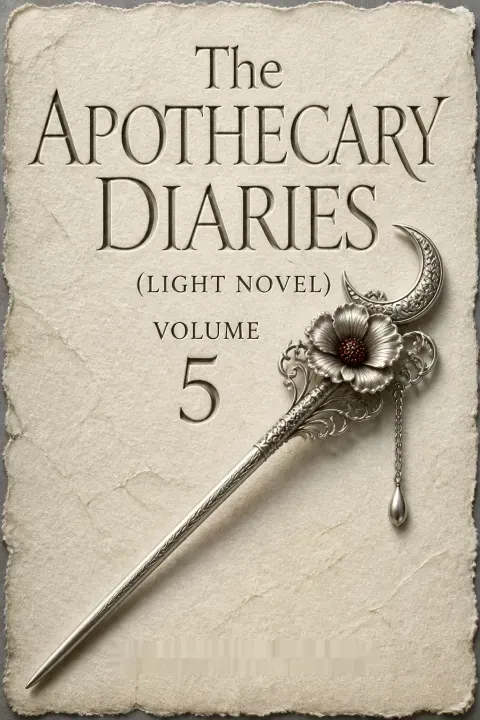
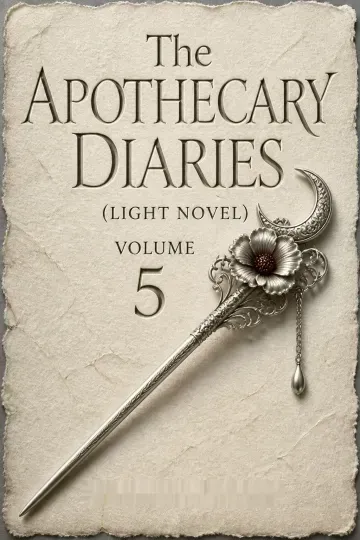
Marker of bride candidacyA silver hair ornament carved with the moon, flowers, and opium poppies, given to Maomao1 by Jinshi2 to replace a previous hair stick. Those who understand its significance, including Rikuson11 and the half-sister14, recognize it as a signal that Maomao1 is being considered as a potential bride for Jinshi2. Maomao1 herself remains oblivious to its meaning, wearing it simply because it is beautiful and useful. The poppy motif connects it to the opium plot and the White Lady15, while the moon references Jinshi2's nickname, Yue. It represents Maomao1's unwilling elevation into a political arena she would prefer to observe from the outside.
Dental Genetics
Proof of biological parentageThe hereditary absence of a lower front tooth, occurring in roughly one in ten people, runs in Uryuu10's bloodline. Maomao1 discovers this trait by inspecting the mouths of Uryuu10, his favored daughter, and Consort Lishu5, finding the identical congenital absence in all three. Combined with their shared allergy to white fish, the dental evidence proves Uryuu10 is Consort Lishu5's biological father, resolving her fear that she was the Emperor's illegitimate daughter. The revelation transforms Consort Lishu5's eligibility as a bride for Jinshi2 and forces Uryuu10 to publicly acknowledge his long-neglected daughter. The method exemplifies Maomao1's approach: the body's unalterable physical traits tell truths that faces and stories cannot.
Opium and the White Lady's Network
Shadow conspiracy connecting threatsOpium appears in multiple contexts: as a painkiller brought by the guide, as the addiction afflicting the bandits who attack Ah-Duo3's carriage, and as the probable product of the White Lady15's traveling entertainment troupe. The network distributes both narcotics and toxins under the guise of performance and charity, linking the poisoned cakes in the capital slums to the bandits on the western highway. The White Lady15's alchemical tricks and quicksilver drinking are both entertainment and advertisement for substances that promise transcendence but deliver addiction and death. This shadow conspiracy operates across national borders, connecting Shaoh's political instability to Li's domestic threats.
FAQ
Synopsis & Basic Details
What is The Apothecary Diaries (Light Novel): Volume 5 about?
- Maomao Navigates Capital's Underbelly & Elite: The story follows Maomao, an apothecary from the pleasure district, as she is drawn back into the affairs of the imperial court and nobility, investigating a mysterious illness linked to poisoned cakes and the enigmatic performances of a supposed immortal known as the White Lady.
- Journey West Reveals Societal Strife: Maomao accompanies Jinshi (in disguise) and others on a journey westward, encountering a paper-making village facing eviction due to a greedy landlord and rising taxes, highlighting economic tensions and the impact of government policies on commoners.
- Western Capital Diplomacy & Danger: The journey culminates in the western capital, where political banquets and diplomatic meetings are held, leading to a chaotic incident involving an escaped lion, revelations about a consort's parentage, and increasing awareness of external threats and internal political maneuvering.
- Unspoken Connections & Future Uncertainty: Amidst the political intrigue and personal dramas, Maomao's unique perspective and skills are repeatedly called upon, deepening her complex relationship with Jinshi and leaving the future of their connection and the stability of the realm uncertain.
Why should I read The Apothecary Diaries (Light Novel): Volume 5?
- Deepens Character Backstories: This volume offers significant insights into the pasts and motivations of key characters like Jinshi, the quack doctor, Consort Lishu, and even introduces Maomao's notorious father, Lakan, and his family, adding rich layers to the established cast.
- Expands Worldbuilding & Political Landscape: The narrative moves beyond the rear palace and pleasure district, exploring the western regions, their unique culture, industries (paper, hemp), and the complex political dynamics between different parts of the empire and neighboring countries.
- Intricate Mysteries & Deductions: Readers are treated to several self-contained mysteries, from the source of a strange illness to the mechanics of seemingly magical illusions and the truth behind a family conflict, all solved through Maomao's sharp observation and scientific reasoning.
What is the background of The Apothecary Diaries (Light Novel): Volume 5?
- Post-Rebellion Political Climate: The story takes place after the Shi clan rebellion (detailed in previous volumes), with the empire still dealing with the fallout, including the fate of surviving clan members (like Chou-u and Suirei) and the redistribution of power and resources from the northern regions.
- Economic & Agricultural Concerns: Underlying the plot are significant concerns about agricultural output, particularly in the north, due to insect damage, leading to increased taxes on grain in other regions and influencing political decisions and local conflicts like the one in the paper village.
- Western Region's Strategic Importance: The journey to the western capital highlights the region's distinct culture, resources, and strategic position bordering other nations, emphasizing its importance for trade, diplomacy, and defense, particularly in light of potential external threats.
What are the most memorable quotes in The Apothecary Diaries (Light Novel): Volume 5?
- "If you can't pay, then stay away. It's because the likes of you come rooting around that I have to live in this shack.": This quote, delivered by Maomao to a desperate father, starkly encapsulates her pragmatic, survival-driven mindset shaped by the harsh realities of the pleasure district, contrasting with her underlying compassion.
- "To think—even with that scar on his cheek, still no one excels him in beauty.": Lahan's observation about Jinshi, despite his eccentricity, highlights the profound and almost disruptive nature of Jinshi's beauty, a recurring motif that impacts how others perceive and interact with him.
- "Perhaps you'd be so kind as to let go of me, sir?" / "But if I let go, won't you run away?": This exchange between Maomao and Jinshi in the epilogue captures the core tension and dynamic of their relationship – her desire for independence and his persistent, almost possessive, pursuit, hinting at deeper emotional stakes.
What writing style, narrative choices, and literary techniques does Natsu Hyuuga use?
- First-Person, Observational POV: The story is primarily told from Maomao's perspective, characterized by her detached, analytical, and often cynical observations, providing a unique lens through which to view the world and its inhabitants.
- Integration of Scientific & Medical Detail: Hyuuga seamlessly weaves in detailed explanations of medicinal properties, poisons, biological phenomena (like albinism, dental traits, insect behavior), and chemical reactions, grounding the fantasy setting in scientific realism and showcasing Maomao's expertise.
- Subtle Foreshadowing & Interconnected Plots: The narrative employs subtle hints and recurring motifs (like insects, specific plants, family names) that connect seemingly disparate events and characters across the volume, rewarding attentive readers and building a complex, interconnected world.
Hidden Details & Subtle Connections
What are some minor details that add significant meaning?
- Locust vs. Grasshopper Distinction: Chou-u and Sazen's knowledge about the difference between locusts (edible, normal) and grasshoppers (terrible taste, indicator of future plague) is a crucial detail that elevates the insect problem from a simple nuisance to a potential national crisis, linking folk knowledge to scientific observation.
- The White Lady's Opium Connection: The guide's story about receiving opium from a merchant traveling with entertainers, combined with the bandits' opium addiction and the White Lady's association with a traveling troupe, subtly links the mystic's performance to the drug trade and the banditry problem.
- Shared Missing Tooth Trait: The specific detail that Uryuu, his older daughter, and Consort Lishu all naturally lack a lower front tooth serves as a concrete, observable genetic marker, providing Maomao with "proof" of Lishu's lineage beyond mere resemblance or rumor, a clever use of biological detail in the plot.
What are some subtle foreshadowing and callbacks?
- Chou-u's Locust Knowledge: Chou-u's seemingly random memory fragment about crunchy locusts predicting bad harvests in Chapter 1 directly foreshadows the later revelation about grasshoppers and the impending plague discussed in Chapter 2 and Chapter 6.
- Maomao's Fire-Rat Cloak Deduction: Maomao's explanation of the "celestial nymph's" robe as fire-resistant rock fiber (huohuanbu) and her deduction of the escape method (wet undergarments, symbolic embroidery) callbacks to her own experiences and foreshadows the later use of scientific explanation to debunk seemingly magical phenomena like the White Lady's tricks.
- The Quack Doctor's Paper Village Connection: The quack doctor's seemingly minor role as a former palace physician with a paper-making family becomes crucial when Jinshi investigates anomalies in rice shipments, revealing a hidden connection between the paper village's tax issues and the larger agricultural concerns of the empire.
What are some unexpected character connections?
- Sazen's Mentorship Under the Banished Physician: The revelation that Sazen, the runaway guard, was taught medicine and reading by the same banished physician who was Maomao's predecessor at the Shi clan fortress creates an unexpected link between Maomao's past investigations and her new apprentice, explaining his surprising knowledge.
- Ah-Duo's Relationship with Suirei: The former consort Ah-Duo's decision to house and care for Suirei, a surviving member of the exterminated Shi clan and granddaughter of the former emperor, is an unexpected act of compassion and political maneuvering, highlighting Ah-Duo's complex character and influence.
- Basen's Hidden Strength & Heroism: Basen, often portrayed as awkward and easily flustered, unexpectedly reveals immense physical strength and courage by single-handedly subduing the escaped lion with a broken iron bar, showcasing a hidden depth beneath his nervous exterior.
Who are the most significant supporting characters?
- Sazen: Beyond being an apprentice, Sazen's connection to the banished physician and his knowledge of the locust research are vital to Maomao's investigation into the potential plague, making him a key source of information and a practical asset for the apothecary shop.
- Suirei: As a surviving Shi clan member, former assistant to the banished physician, and talented apothecary, Suirei provides crucial context about the physician's research and the resurrection drug, and her presence with Ah-Duo and Lishu on the western trip adds layers to the political dynamics.
- Basen: Jinshi's attendant serves as more than just a bodyguard; his awkwardness provides comedic relief, his loyalty is unwavering, and his unexpected heroism against the lion, coupled with his subtle interest in Lishu, makes him a significant player in the personal and political drama.
- Ah-Duo: The former consort's role as caretaker for Shi clan survivors and Consort Lishu, her political acumen, and her deep connection to the Emperor and Jinshi make her a powerful, behind-the-scenes figure whose actions significantly influence the plot and character movements.
Psychological, Emotional, & Relational Analysis
What are some unspoken motivations of the characters?
- Jinshi's Need for Genuine Connection: Despite his celestial beauty and high status, Jinshi often seems lonely and burdened by expectations, suggesting an unspoken motivation to find genuine connection and respite from his public role, which draws him repeatedly to the unpretentious Maomao.
- Lishu's Search for Acceptance: Consort Lishu's timidity and anxiety, particularly around her father and half-sister, stem from a deep-seated insecurity about her place and lineage, driving her unspoken desire for acceptance and validation, especially from her father.
- Uryuu's Prioritization of Political Gain: Uryuu's harsh treatment and neglect of Consort Lishu, contrasted with his favoritism towards her half-sister, implies an unspoken motivation to prioritize political and social advancement through strategic alliances, even at the expense of familial bonds.
What psychological complexities do the characters exhibit?
- Maomao's Emotional Detachment & Compassion: Maomao displays a complex psychological profile, characterized by a pragmatic, almost clinical detachment towards human emotion and suffering (especially her own), yet she is repeatedly moved to compassion and action by the plight of others, particularly children and vulnerable women.
- Jinshi's Burden of Beauty & Duty: Jinshi grapples with the psychological burden of his extraordinary beauty, which often prevents others from seeing him as a person, and the immense pressure of his imperial duties, leading to moments of exhaustion and a desire to escape his gilded cage.
- Lishu's Trauma and Timidity: Consort Lishu's extreme timidity and skittishness are likely rooted in past trauma, including her placement in the rear palace at a young age and her father's neglect, resulting in a fragile psychological state that makes her vulnerable to manipulation and fear.
What are the major emotional turning points?
- Maomao's Decision to Help the Poor Child: Despite her initial cynical refusal, Maomao's decision to take in and care for the poisoned child marks an emotional turning point, demonstrating that her pragmatic exterior hides a deep well of empathy and a refusal to abandon those in desperate need.
- The Quack Doctor's Return Home: The quack doctor's emotional reunion with his family after years of separation, coupled with the immediate revelation of their struggles, is a significant emotional beat, highlighting the personal sacrifices he made and the enduring strength of familial bonds despite distance and circumstance.
- Lishu's Confrontation with Her Parentage: Consort Lishu's tearful questioning of her lineage and the subsequent "proof" provided by Maomao's observation of the shared dental trait represent a major emotional turning point, forcing her and her father to confront uncomfortable truths about their relationship.
How do relationship dynamics evolve?
- Maomao and Jinshi's Deepening Connection: Their relationship evolves through shared experiences (the journey, investigations, moments of vulnerability), moving beyond a simple master-servant dynamic to one of mutual reliance, unspoken understanding, and increasing emotional complexity, culminating in a moment of unexpected intimacy.
- Maomao and Sazen's Mentor-Apprentice Bond: Maomao's initial brusqueness towards Sazen softens as she recognizes his potential and knowledge, developing into a functional mentor-apprentice relationship based on shared interest in medicine and mutual respect for their respective skills.
- Lishu and Uryuu's Strained Reconciliation: The revelation of their shared dental trait forces a shift in the dynamic between Consort Lishu and her father, Uryuu; while not a complete reconciliation, it compels Uryuu to acknowledge their biological connection and hints at the possibility of a more genuine father-daughter relationship in the future.
- Basen's Role as Jinshi's Protector and Confidante: Basen's relationship with Jinshi is highlighted by his unwavering loyalty and protective instincts (especially during the lion attack), while his awkward attempts to understand Jinshi's potential romantic prospects reveal his role as a concerned confidante, albeit one still learning the nuances of courtly life.
Interpretation & Debate
Which parts of the story remain ambiguous or open-ended?
- The White Lady's True Identity and Fate: Despite Maomao's deductions about her illusions and connection to opium, the White Lady's ultimate identity, her specific motives for the performances and subsequent disappearance, and whether she survived consuming the quicksilver remain largely ambiguous.
- The Extent of Lishu's Parentage: While the shared dental trait strongly suggests Uryuu is Consort Lishu's biological father, the possibility that the Emperor might be her father (as Lishu herself suspects) is raised but not definitively disproven, leaving a lingering question about her true lineage and its political implications.
- The Future of Jinshi and Maomao's Relationship: The final scene leaves the nature and future of their connection open to interpretation; it's unclear whether this moment signifies a shift towards a romantic relationship, remains within the bounds of their unique dynamic, or foreshadows future complications due to their differing statuses and desires.
What are some debatable, controversial scenes or moments in The Apothecary Diaries (Light Novel): Volume 5?
- Maomao's Offer to Sell the Poor Girl: Maomao's cold, calculated offer to the older sister to sell her younger sibling into the pleasure district to cover the medical debt is a morally ambiguous moment that sparks debate about her methods, even if intended to shock the sister into action or highlight the harsh realities they face.
- The Final Scene Between Jinshi and Maomao: The intimate encounter in the epilogue, particularly Jinshi's forceful actions (choking, pinning) and Maomao's complex, almost instinctual response drawing on courtesan techniques, is highly debatable regarding consent, power dynamics, and the nature of their evolving relationship.
- Lahan's Proposition to Maomao: Lahan's bizarre and unsettling proposal that Maomao bear Jinshi's child for him to raise is a controversial moment that highlights his extreme eccentricity and objectification of both Maomao and the potential child, sparking debate about his character and motivations.
The Apothecary Diaries (Light Novel): Volume 5 Ending Explained: How It Ends & What It Means
- Ending Summary: Volume 5 concludes with Jinshi and Maomao sharing a private, intense moment after the western capital banquet. Jinshi expresses his frustration with his predetermined path and the women vying for his hand, revealing that Maomao herself was considered a candidate. He physically restrains her, questioning her value and motivations, leading to a complex interaction where Maomao instinctively responds using techniques learned from the pleasure quarter.
- Meaning of the Ending: The ending signifies a critical turning point in Jinshi and Maomao's relationship, moving beyond intellectual sparring and shared investigations into a realm of raw emotion and physical tension. Jinshi's actions reveal his deep-seated frustration and desire for something genuine amidst the political performance of his life, while Maomao's reaction highlights her complex identity, shaped by both her scientific mind and her upbringing in the pleasure district.
- Interpretations & Implications: This ambiguous conclusion sparks debate: Does Jinshi genuinely care for Maomao, or is she simply another object of his frustration/curiosity? Does Maomao's response indicate burgeoning feelings, or is it a survival mechanism/learned behavior? The scene underscores the central themes of identity, control, and the tension between societal roles and personal desires, leaving their future relationship and the potential consequences of their connection uncertain as they return to the capital.
薬屋のひとりごと [Kusuriya no Hitorigoto] (Light Novel) Series Series
About the Author
Other books by Natsu Hyuuga

Download PDF
Download EPUB
.epub digital book format is ideal for reading ebooks on phones, tablets, and e-readers.








































