
Plot Summary
Shifting Foundations, Shifting Lives
The novel opens in Galway, where Olwen Flattery, a geologist and university lecturer, uses tectonic collisions and shifting landscapes to teach her students about the slow, unstoppable forces that shape the earth—and, by extension, human lives. Her lectures are laced with dark humor and warnings about environmental collapse, mirroring her own internal exhaustion and the sense that her family, like Ireland's landmass, is a site of ancient trauma and ongoing upheaval. The classroom becomes a microcosm for the larger world: students are anxious, distracted, and searching for meaning, while Olwen herself is barely holding together the boundaries between teaching, caretaking, and her own unraveling. The earth's eons and epochs become a lens for understanding the slow-motion crises of family, climate, and self.
Sisters in Collision
The Flattery sisters—Olwen, Rhona, Maeve, and Nell—are scattered by circumstance and temperament. Orphaned young, they were forced into premature adulthood, with Olwen as reluctant guardian. Each has carved a distinct path: Olwen in academia, Rhona in political science and motherhood, Maeve as a celebrity chef, and Nell as a philosopher in America. Their relationships are marked by love, rivalry, and the scars of shared loss. The narrative moves between their perspectives, revealing how each sister's choices are shaped by the gravitational pull of family history, personal ambition, and the desire for escape or connection. Their lives, like tectonic plates, grind against each other, sometimes creating new landscapes, sometimes leaving only fault lines.
The Science of Survival
Olwen's teaching is both literal and symbolic: she demonstrates how landscapes are formed by slow, relentless pressures, and how human actions—climate change, resource extraction—can accelerate destruction. Her field trip with students and stepchildren becomes a meditation on the Anthropocene, the epoch defined by human impact. The students' discomfort mirrors Olwen's own: she is haunted by the knowledge that the world is changing too fast for natural processes to keep up, and that her own efforts—whether in science or family—may be futile. The lesson is clear: survival requires adaptation, but also the humility to accept what cannot be controlled or repaired.
Field Trips and Fault Lines
Olwen leads her students on a field trip to a drumlin—a glacial landform—using it to illustrate both the deep history of the earth and the rapid changes wrought by humans. The outing is both educational and existential, as Olwen confronts her own sense of powerlessness and the students' anxiety about the future. The landscape becomes a palimpsest of past epochs and present crises, and Olwen's reflections on geological time serve as a counterpoint to the fleeting, fragile nature of human life. The field trip also foreshadows Olwen's own impending departure from her established life.
Departures and Disappearances
Without warning, Olwen leaves her job, partner, and stepchildren, sending only a cryptic message to her sisters: "Had to take off. Sorry. I'm as safe as I ever was. Don't come looking for me." Her disappearance triggers a cascade of responses: Maeve and Nell begin a search, Rhona mobilizes her resources, and each sister is forced to confront what Olwen's absence means for their own sense of stability and identity. The act of leaving is both a rupture and a release, echoing the geological processes Olwen so often describes—sudden, irreversible, and ultimately inscrutable.
Maeve's Culinary Crossroads
Maeve, the second-youngest, has built a career as a chef and food writer, her success rooted in the rituals of feeding her sisters after their parents' death. Now, she faces professional and personal crossroads: her latest book is rejected by her publisher for being too political, and she is pressured to compromise her vision. Catering a high-profile dinner in London, Maeve navigates class, identity, and the expectations of others, all while longing for the authenticity and messiness of family. Food becomes both a means of survival and a battleground for meaning, as Maeve struggles to reconcile her public persona with her private doubts.
Nell's American Exile
Nell, the youngest, is a philosopher teaching in Connecticut, grappling with precarious employment, chronic illness, and the loneliness of exile. Her lectures on happiness and ethics are interwoven with reflections on her own life and the Flattery family's history. Nell's physical decline—numbness in her feet, mounting medical bills—mirrors her emotional distance from her sisters and homeland. Yet she remains intellectually vibrant, using stories and analogies to reach her students and, ultimately, to understand herself. Her longing for connection is tempered by a fierce need for autonomy and the fear of being a burden.
Rhona's Calculations
Rhona, the pragmatic and ambitious sister, is a political scientist and single mother living in Dublin. Her life is meticulously managed, from her career in citizens' assemblies to her soundproofed home and carefully scheduled childcare. Rhona's approach to family is transactional and strategic, yet she is haunted by the limits of control—over her son's future, her sisters' choices, and the tides of political change. Her relationships are marked by both generosity and distance, as she struggles to balance care with self-preservation. The construction of a seawall outside her home becomes a metaphor for her attempts to hold back chaos and loss.
Reunion in the Rain
The search for Olwen brings the sisters together in rural Leitrim, where Olwen has retreated to an isolated farmhouse. Their reunion is fraught with tension, misunderstanding, and the weight of unspoken grievances. The rain-soaked landscape mirrors their emotional turbulence, as old patterns of caretaking, rivalry, and avoidance resurface. Each sister brings her own agenda and wounds, and the challenge is not only to find Olwen, but to find a way to be together without repeating the past. The reunion is both a confrontation and a fragile truce.
Faulty Connections
As the sisters settle into uneasy proximity, they struggle to communicate across the distances—emotional, ideological, and literal—that separate them. Conversations are fraught with missteps and missed signals: Maeve tries to cook her way back into Olwen's good graces; Nell offers philosophical frameworks; Rhona pushes for practical solutions. Olwen, meanwhile, resists being "rescued" or explained. The sisters' efforts to help often backfire, revealing the limits of care and the dangers of imposing one's own narrative on another's life. The house becomes a crucible for testing the strength and flexibility of their bonds.
The Weight of Care
The theme of care—who gives it, who receives it, and at what cost—runs through the sisters' interactions. Olwen's years as guardian have left her depleted and wary of further demands. Maeve's nurturing is both a gift and a compulsion. Nell's illness exposes the vulnerabilities of even the most independent. Rhona's efficiency masks her own need for support. The sisters debate the ethics of intervention, the right to solitude, and the meaning of family. Their conversations circle around the question: How much can we save each other, and when must we let go?
The Limits of Rescue
As the days pass, it becomes clear that Olwen's retreat is not a cry for help, but a deliberate act of self-preservation. The sisters must reckon with the reality that not all wounds can be healed, not all absences filled. Attempts to "fix" Olwen or bring her back into the fold are met with resistance or quiet refusal. The sisters are forced to confront their own motives: is their search for Olwen about her needs, or their own? The process of letting go is painful but necessary, allowing for the possibility of new forms of connection.
New Beginnings, Old Wounds
Each sister faces a turning point: Maeve decides to pursue her own creative vision, even at financial risk; Nell prepares to return to America, accepting both her limitations and her desires; Rhona contemplates a new professional opportunity in Northern Ireland, weighing ambition against belonging. Olwen, meanwhile, begins to build—literally and figuratively—a new foundation for herself, even as she remains haunted by the past. The sisters' choices are shaped by the legacies of loss and love, and by the recognition that survival requires both memory and reinvention.
The Politics of Belonging
The narrative expands to consider questions of national and personal belonging: Rhona's work in citizens' assemblies, Maeve's navigation of British and Irish identities, Nell's status as an immigrant, Olwen's retreat from society. The sisters' stories intersect with broader debates about democracy, representation, and the meaning of home. The search for a place to belong—whether in a family, a nation, or a landscape—is complicated by history, politics, and the realities of change. The alternatives to isolation are imperfect, but necessary.
Building and Unbuilding
Olwen's project to build a new structure on her land becomes a metaphor for the ongoing work of making a life: excavating the past, laying new foundations, risking collapse. The process is messy, uncertain, and sometimes dangerous—Olwen is nearly buried in a landslide of her own making. Yet the act of building, like the act of caring, is an assertion of hope in the face of entropy. The sisters, too, are engaged in the work of unbuilding old patterns and constructing new possibilities, even as they acknowledge the inevitability of loss.
The Depths Below
The novel's climax finds Olwen trapped beneath a cascade of stone, forced to confront her own mortality and the limits of her agency. The experience is both terrifying and clarifying: she is reminded of the forces—geological, familial, existential—that shape and constrain her life. The rescue that follows is not a triumph, but a recognition of interdependence and vulnerability. The sisters, each in their own way, come to terms with the fact that survival is a collective endeavor, and that meaning is found not in mastery, but in acceptance.
The Shape of Hope
In the aftermath of crisis, the sisters begin to imagine new futures: Maeve collaborates on a documentary about food and nationalism; Nell returns to teaching, her illness undiagnosed but her sense of purpose renewed; Rhona considers a move to Northern Ireland, drawn by the possibility of making a difference. Olwen, released from both literal and metaphorical entrapment, recommits to living on her own terms, open to connection but no longer defined by obligation. The alternatives are imperfect, provisional, and hard-won—but they are chosen.
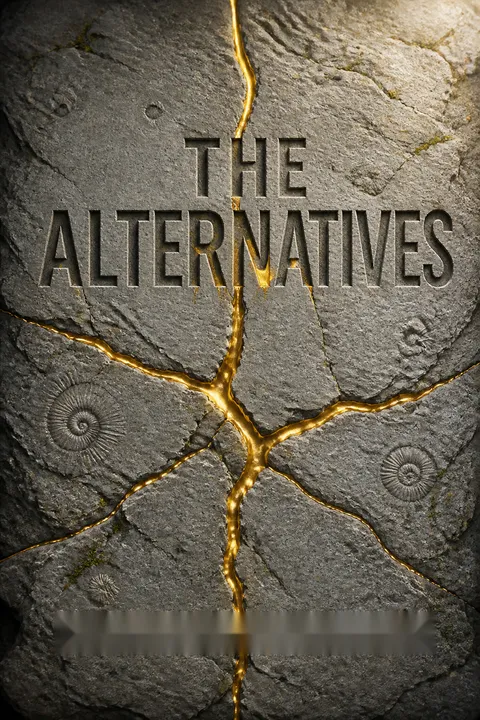
The Alternatives
The novel closes with the sisters dispersed but connected, each having chosen a path that balances autonomy and attachment, memory and possibility. The alternatives to despair are not simple or guaranteed: they require ongoing negotiation, humility, and the willingness to live with uncertainty. The Flattery sisters, like the landscapes they inhabit, are shaped by forces beyond their control, but also by their own acts of care, courage, and imagination. The story ends not with resolution, but with the open-ended promise of change.
Analysis
A modern meditation on care, autonomy, and survivalThe Alternatives is a profound exploration of what it means to live—and to care—in a world marked by loss, uncertainty, and rapid change. Through the intertwined stories of four sisters, Caoilinn Hughes examines the slow, often invisible forces that shape both landscapes and lives: trauma, duty, ambition, and love. The novel resists easy answers, instead embracing the complexity and ambiguity of human experience. It asks: How do we care for each other without losing ourselves? How do we build new foundations when the old ones have crumbled? What alternatives exist to despair, isolation, and resignation? The sisters' journeys—marked by departures, reunions, and the ongoing work of repair—offer a nuanced portrait of resilience, vulnerability, and the necessity of both connection and solitude. Hughes's narrative structure, rich in metaphor and polyphony, invites readers to consider their own place in the shifting terrain of family, society, and the planet. The ultimate lesson is one of humility and hope: survival is not about mastery or certainty, but about the willingness to adapt, to accept help, and to imagine new possibilities—even, and especially, when the ground beneath us is moving.
Review Summary
The Alternatives receives polarizing reviews with a 3.36 average rating. Admirers praise Hughes' experimental prose, complex characterization of four brilliant Irish sisters, and innovative structure including embedded play format. Readers appreciate the intellectual depth, philosophical themes, climate change commentary, and distinctive Irish voice. Critics find it pretentious, dense, and exhausting, complaining about excessive philosophical monologues, confusing character distinctions, and demanding style. Many struggle with the unconventional format, lack of quotation marks, and heavy academic content. Most agree the writing is accomplished but divisive—some calling it 2024's best, others abandoning it mid-read.
People Also Read






Characters
Olwen Flattery
Olwen is the eldest Flattery sister, shaped by the trauma of early orphanhood and the burden of raising her siblings. Her identity as a geologist infuses her worldview: she sees life as a series of slow, powerful shifts, and is both awed and exhausted by the forces—natural and human—that shape existence. Olwen is fiercely intelligent, darkly humorous, and deeply private, often retreating into solitude when overwhelmed. Her disappearance is both an act of self-preservation and a challenge to her sisters' assumptions about care and responsibility. Psychoanalytically, Olwen embodies the tension between duty and autonomy, resilience and vulnerability. Her development is marked by a gradual acceptance of her own needs and limits, and a willingness to let others care for her, even as she insists on her right to self-determination.
Rhona Flattery
Rhona is the second-eldest, defined by her pragmatism, ambition, and need for control. As a single mother and academic, she manages her life with precision, building walls—literal and metaphorical—to protect herself and her son from chaos. Rhona's relationships are transactional but not unfeeling; she is generous with resources but guarded with emotion. Her psychoanalytic profile reveals a fear of vulnerability and a tendency to equate love with responsibility. Over the course of the novel, Rhona is forced to confront the limits of her control and the costs of emotional distance. Her journey is one of learning to balance care for others with care for herself, and to accept that not all problems can be solved by calculation.
Maeve Flattery
Maeve, the second-youngest, is the family's emotional center, using food and hospitality to create connection and meaning. Her career as a chef and food writer is rooted in the rituals of caring for her sisters after their parents' death. Maeve is impulsive, passionate, and sometimes self-sacrificing, struggling to reconcile her desire for authenticity with the demands of public life. She is haunted by the fear of abandonment and the need to be needed, often taking on more than she can bear. Psychoanalytically, Maeve represents the archetype of the caregiver who must learn to set boundaries and pursue her own desires. Her development involves embracing risk, accepting imperfection, and redefining success on her own terms.
Nell Flattery
Nell, the youngest, is an intellectual and a wanderer, living in America and teaching philosophy while grappling with chronic illness and existential uncertainty. She is introspective, analytical, and fiercely independent, yet deeply affected by the loss and fragmentation of her family. Nell's lectures and stories serve as both a means of connection and a shield against vulnerability. Her psychoanalytic profile is marked by a tension between autonomy and longing, as she seeks meaning in both solitude and relationship. Over time, Nell learns to accept help, to articulate her needs, and to find value in imperfection and ambiguity.
Jasper
Jasper is Olwen's partner and the father of two boys, Cian and Tommy. He is gentle, patient, and quietly grieving the loss of his first wife. Jasper's relationship with Olwen is marked by mutual respect and a shared sense of survival, but also by the recognition that neither can fully heal the other's wounds. He represents the possibility of new beginnings, but also the limits of what love can repair. Jasper's development is subtle: he learns to let go, to trust Olwen's choices, and to support his sons as they navigate their own grief and growth.
Cian and Tommy
Jasper's sons, Cian and Tommy, are shaped by the early death of their mother and the arrival of Olwen as a surrogate parent. They are resilient, curious, and sometimes mischievous, embodying both the vulnerability and adaptability of youth. Their presence in the story highlights the intergenerational transmission of trauma and the possibilities for healing. The boys' development is marked by a gradual acceptance of change and the forging of new bonds, even as they carry the memory of loss.
Dan
Dan is the bartender in Leitrim who becomes a friend and possible romantic interest for Nell. He is grounded, humorous, and attuned to the rhythms of rural life. Dan represents the possibility of community and connection outside the family, and his interactions with the sisters—especially Nell—highlight the challenges and rewards of vulnerability. Psychoanalytically, Dan is a stabilizing presence, offering acceptance without judgment and embodying the value of ordinary kindness.
Beatriz
Beatriz is Rhona's research assistant, a Peruvian scholar navigating the complexities of academia, immigration, and personal ambition. She is diligent, anxious, and eager to prove herself, but also wary of exploitation and burnout. Beatriz's relationship with Rhona is both professional and personal, revealing the dynamics of power, mentorship, and solidarity among women in academia. Her development involves learning to assert boundaries, seek support, and define success on her own terms.
Sheila and Feidhlim
Sheila and Feidhlim are a married couple in Leitrim who befriend Olwen and her sisters. They are practical, generous, and deeply rooted in the land and community. Their presence offers a counterpoint to the sisters' restlessness, embodying the value of acceptance, routine, and quiet support. Psychoanalytically, they represent the possibility of healing through belonging and the wisdom of ordinary life.
Halim
Halim is Maeve's houseboat tenant and friend, a Bosnian refugee who communicates primarily through gesture and presence. He is enigmatic, gentle, and self-effacing, embodying the theme of invisibility and the desire to leave no trace. Halim's relationship with Maeve is marked by mutual respect and the recognition of difference. He represents the possibility of connection beyond words and the importance of bearing witness to each other's lives.
Plot Devices
Geology as Narrative Structure
The novel uses geological metaphors—tectonic shifts, erosion, sedimentation—to structure both the plot and the characters' emotional journeys. The slow, often invisible forces that shape the earth become a lens for understanding trauma, resilience, and change within the family. The narrative moves through epochs and eons, using field trips, lectures, and landscape descriptions to anchor the sisters' stories in deep time. This device allows for both a sense of continuity and the recognition of rupture, highlighting the interplay between stability and upheaval.
Multiperspectivity and Shifting Voices
The story unfolds through the alternating perspectives of the four sisters, interspersed with letters, lectures, and dialogues. This polyphonic structure allows for a rich exploration of character, theme, and conflict, as each sister's voice reveals different facets of the family's history and present. The use of different narrative forms—emails, WhatsApp messages, seminar transcripts—reflects the fragmentation and multiplicity of modern life, while also offering moments of intimacy and revelation.
Symbolic Objects and Recurring Motifs
Throughout the novel, objects—mood rings, chopping boards, telescopes, food, bicycles—serve as symbols of connection, memory, and aspiration. These motifs recur across chapters, linking the sisters' experiences and highlighting the ways in which material culture shapes identity and relationship. The recurring image of the drumlin, for example, becomes a metaphor for both the weight of history and the possibility of renewal.
Foreshadowing and Circularity
The narrative is structured to allow for echoes and returns: Olwen's disappearance mirrors the parents' death; the sisters' reunion recalls earlier moments of crisis and care. Foreshadowing is used to build tension and to suggest the inevitability of certain outcomes, while circularity—returning to places, conversations, and themes—emphasizes the ongoing nature of healing and change. The story resists neat resolution, instead embracing the messiness and unpredictability of life.
Thematic Juxtaposition
The novel juxtaposes themes of science and art, autonomy and dependence, tradition and innovation, belonging and exile. These contrasts are embodied in the sisters' differing careers and worldviews, and in the settings—urban and rural, Ireland and America, past and present. The interplay of opposites creates a dynamic tension that drives the narrative and deepens the exploration of its central questions.
Download PDF
Download EPUB
.epub digital book format is ideal for reading ebooks on phones, tablets, and e-readers.








































