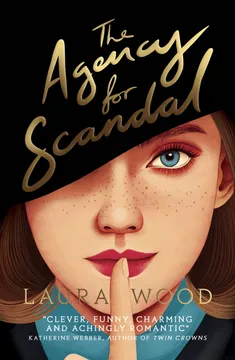

Plot Summary
Secrets Among London Shadows
London, summer 1897. Isobel Stanhope is keenly attuned to the shadows that drip through her city, a world where the desperate and privileged alike barter secrets. Daughter of a gentle but financially ruined baron, "Izzy" has drifted to society's periphery. Her invisibility, however, proves an asset; beneath her quiet exterior, Izzy leads a double life. While the city flocks to the opera, to masked balls and rumor-filled drawing rooms, Izzy works for the Finch's "Aviary" — a clandestine women's agency set on solving society's dirtiest scandals and righting wrongs that men look the other way on. Only a trio of loyal friends and her shrewd mentor, Mrs Finch, know her true worth. The curtain rises on a story of secrets, disguises, and the blurred boundaries between victim and agent, danger and desire.
The Night the Duke Fell
Eighteen months before her life changes, Izzy stumbles upon Maximillian Vane, Duke of Roxton, in an unguarded moment. She watches him for a heart-stirring instant as he chivalrously tries to rescue a dog from a stream, only to fall — muddy and laughing — a scene that undoes her entirely. In that moonlit glade, the impossibility of loving a duke and the irreparable fissure left by her father's death spark a wonder that soon edges into hopeful infatuation. The world of the privileged feels distant and small; Izzy's family, especially her mother and young brother Henry, are increasingly fragile. From that night, Max transforms in her imagination from society's stony paragon to a painfully real man marked by kindness. But he will have no idea she even exists — not yet.
The Finch's Hidden Agency
The Aviary, presided over by Mrs Finch and staffed by brilliant outsiders like Sylla, Maud, Winnie, and now Izzy, is London's best-kept secret. Here, the city's overlooked become its most dangerous actors; the agency's agents gather blackmail material, break locks, and orchestrate escapes for vulnerable women crushed by patriarchal structures. Mrs Finch approaches Izzy to join the group: her lockpicking expertise and noble connections are exactly what the work demands. Izzy, desperate to save her family from ruin, accepts. Her code name, Kes, is a disguise that allows her to move at night, passing as a boy among thieves when needed. Each assignment is a delicate blend of social performance and criminal cunning, and the group's loyalty is deep — but secrets still abound, especially where society's highest castes are involved.
Ghosts on the Family Ledger
As the sole steward of the family's meager fortunes, Izzy hides the truth from her ailing mother and young brother. She manages a crumbling estate, juggling poverty and the need to keep her mother's spirits protected. Only Button, her mother's fiercely capable maid, shares her confidence. Her best friend Teresa — vibrant, romantic, eager to meddle — remains oblivious. Izzy's nightly sorties as Kes allow her a taste of freedom, the freedom she mourns having lost as a girl. She feels the strain of secrets, the danger of exposure, and the constant threat of being forced to choose between self-sacrifice and survival for those she loves.
Wallflowers in Disguise
Izzy's social invisibility is paradoxically her greatest asset: polite society sees only a mousy, well-educated, unremarkable wallflower. But within the Aviary, she is indispensable — trusted to gather intelligence, pick pockets, and blend in anywhere. Teresa's shining presence provides cover while Izzy works, and though she is in love with the Duke, she realizes her station in life can only ever render her forgettable in his eyes. Still, each new assignment kindles excitement, camaraderie, and hope — for herself, for the agency's unseen clients, and for a city where women might, for once, control the narrative.
The First Blackmail Case
One of the Aviary's most satisfying cases involves exposing an unfaithful lord and securing financial independence for his mistreated wife. Working with her "charm" (the Finch's team), Izzy employs both her genteel manners and criminal slyness to boost their client's standing. Success breeds confidence: for a brief, heady moment, Izzy relishes a world where sharp minds and braver hearts can triumph, even if their deeds must remain hidden. The sting of justice — and the thrill of risk — sets the tone for the more complex dangers to come.
Kes: Thief by Night
As "Kes," Izzy prowls the streets, moving through Whitechapel's bars and alleyways, her gender and class effaced by the ruse. In the company of criminals, she is both protected and endangered; Mrs Finch's cunning has created a network reaching from the slums to the salons. Here, the lines between good and bad blur yet another shade: the work is only justifiable because it serves justice denied elsewhere. Danger is perpetual, but agency is intoxicating — this is where Izzy feels most alive, even as she courts scandal and risks everything for every new job.
The Duke's Unexpected Mission
Max Vane's path collides once more with Izzy's as both find themselves drawn, independently, to the same dangerous plot. Max is revealed to be an intelligence agent, working for Lord Morland, the rising star of British politics. Under cover and out of his depth in the criminal underbelly, Max becomes a target. Izzy, as Kes, finds herself saving his life — unknowingly saving her own heart's object. Their connection intensifies, though their secrets persist. Each is drawn into the orbit of a murky plot: Lord Morland's schemes are not just political but personal, involving a mysterious brooch and a network of blackmail, spies, and betrayals.
The Brooch and Betrayal
Lord Morland and his innocent-seeming wife Kitten are at the center of mounting conspiracies. A bejeweled ruby brooch, given away in error by Kitten, becomes the object of a desperate criminal enterprise. Morland's rage is ferocious; his campaign to gaslight and break his wife's spirit escalates. The brooch, it turns out, contains a hidden key — the literal and figurative key to a safe filled with blackmail and evidence that could unravel an empire. Izzy, her charm, and Max—now exiled by his own employer—work to uncover the brooch's significance and protect the agency's work from collapse.
Scandal at Devonshire House
The Devonshire House Ball is the social event of the season, a swirl of masks, costumes, and concealed agendas. Izzy is both herself and a thief: as a guest, she's Medusa in green silk, as Kes, she's a rogue among criminals hired to steal the jewels. Teresa falls for James St Clair, Max's agent friend. The heist spirals out of control, culminating in betrayal, violence, and a dramatic rooftop escape. The stakes become personal as Max is wounded, the brooch is nabbed, and the lines between affection and survival merge. The costs of secrecy — and the opening of surprised hearts — mount.
A Stolen Kiss, A Stolen Key
With trust shattered and the agency under threat, Izzy and Max go on the run. Forced into hiding together, pretending to be newlyweds, they share poverty, peril, and yearning on a journey north to unmask the brooch's secret. A desperate escape, a destroyed carriage, and a night in a shepherd's hut lay bare hearts as much as secrets. For the first time, Max sees the courage and cost of Izzy's double life. She, in turn, beholds the loneliness of his own self-imposed isolation. Together they unlock more than any safe — forging a partnership as equals staked on kindness and shared risk.
Flight, Fractures, and Falsehoods
Returning to London, Max is a man without a country: Lord Morland frames him for high treason and murder, orchestrating a citywide manhunt. The Aviary is under siege; Izzy's secrets threaten to unravel her family's fragile peace. As alliances solidify — Sylla's grudging respect for Izzy, Teresa's delight in betrayal by flowers and fortunes, James St Clair's loyalty to Max, and Kitten's steely resolve to fight her husband — victory depends on outmaneuvering a master manipulator. Shadows stalk every step: exposure would mean ruination. But friendship and courage begin to tip the scales.
Allies and Near-Enemies
The surface glitter of parties gives way to labyrinthine burglaries, safe-cracking, and psychological warfare. Kitten Morland's gaslit sanity and the fates of countless victims hang on the Finch's ability to outwit Lord Morland. Love swells but so too does risk: Max and Izzy must decide whether to put faith in each other, even if it means risking everything. As evidence mounts of Morland's collusion with the criminal Sharpe and his appetite for blackmail, the race to expose him becomes desperate. The women of the Aviary, long kept in society's shadows, take aim at the throne of the nation's future.
Unmasking the Uncrackable Safe
Everything converges at Kitten Morland's triumph of a masquerade ball. Under a thousand candles, every mask hides intent—friend and enemy alike. Izzy, Sylla, and the Aviary orchestrate a "heist" within the heart of the lion's den, intent on extracting the key to Morland's blackmail safe. But Morland anticipates every move, setting the scene for betrayal. Blood is spilled, confessions are wrung from wounded lips, and Izzy's famed calm finally breaks. In an act of impossible daring, she cracks the "uncrackable" safe under Sylla's faith, retrieving everything needed to bring the villain down—but at the cost of her own blood.
The Final Ball Confrontation
Violence and retribution slam through the house: Mrs Finch herself arrives, gun in hand, to end Morland's reign of terror. The evidence is irrefutable—the blackmail, the murders, and the purchase of power at the cost of innocent lives—and London's kingmaker falls. The women of the Aviary, bruised but victorious, see firsthand the price exacted by men convinced of their own rightness. Max and Izzy's wounds are tended in the aftermath, and new choices must be made about what freedom truly means after secrecy and fear.
Lives Healed, Futures Forged
The dust settles. Teresa and James's engagement promises a softer happy ending. Max's name is cleared, but he refuses to return unchanged to privilege: with Izzy, he hopes to reshape a system that might finally recognize women as its brightest minds. Izzy is offered leadership within the Aviary, her talents no longer a shadow trade but a recognized triumph. Love, after so much risk, can feel like a new kind of freedom rather than a trap. In the last, light-filled scenes, partners meet as equals, hearts open even as scars fade—a testament to the future, built on the courage of those the world tried to silence.
Analysis
Laura Wood's The Agency for Scandal deftly merges adventure, romance, and social commentary, channeling the high-stakes sentimentality of Bridgerton with the investigative feminism of Enola Holmes. At its core, the book interrogates the cost of secrecy for women, the double-edged nature of disguise, and the necessity of solidarity in patriarchal societies. Through Izzy's journey from invisible "wallflower" to indispensable agent, Wood critiques the structures that reward duplicity in men (Morland) but punish resourcefulness in women. The plot's emphasis on collaborative intelligence and the personal cost of courage echoes through every character. Love and friendship are not escapes from danger, but the means by which characters survive and subvert it — chosen family is always built, never given. The novel's blend of emotional intimacy and intricate plotting renders it both a comfort read and a call to action. Its lesson: in a world content with seeing women as "peripheral," safety and transformation are found not in silence, but in being truly seen and believed — first by others, then by oneself.
Review Summary
Characters
Isobel "Izzy" Stanhope
Izzy is the unassuming daughter of a minor, bankrupt baron, rendered nearly invisible by station, circumstance, and her plain attire. The death of her father and her mother's invalidism catapult her into clandestine work for the Aviary, a secret agency run by women to help other women in need. Her psychological acuity, keen sense for people's motives, and extraordinary talent for lockpicking render her invaluable. Izzy's dual life as Kes, a streetwise "boy" thief, brings her agency and danger in equal measure. The emotional cost of secrecy and self-denial is high — she craves a future defined by her own choices, yet fears hurting her family or exposing her friends. Her longing for Max is at first childish infatuation; through shared risks and trust, it matures into a brave, transformative love. Izzy's journey is one of becoming seen — by others, by herself, and by a world long intent on dimming her light.
Maximillian Vane (Duke of Roxton)
Max is an emblem of privilege and restraint — a duke raised to uphold duty, a model of stoic morality, and, hidden beneath, a lonely and playfully tender man. His work as a covert intelligence agent leaves him doubting the price of loyalty and the rightness of the systems he serves; betrayal by his mentor (Morland) shakes his foundations. Max yearns for connection yet fears using his power irresponsibly. At first blind to Izzy's presence, he is eventually undone by her courage, wit, and talent; she draws out his warmth and humor, unveiling the loneliness beneath his burden. His risk-taking grows — for justice, for love — as he learns to trust in partnership rather than solitary heroism. Max's development is a slow shedding of pride for humility, control for vulnerability, and self-sacrifice for true reciprocity.
Mrs Finch
Mrs Finch, enigmatic mastermind of the Aviary, is a former healer and a skilled manipulator, organizing a web of agents from her secret rooms above a haberdashery. Maternal and tough, she shields her "charm" of operatives with wisdom and unwavering support, all while trusting them to lead. Her past is veiled but her motivations burn: she is committed to shielding women from cruelty where the law will not. She recognizes and cultivates talent in young women like Izzy, and her soft moments are reserved for those she loves. She is decisive, sometimes ruthless, but never loses sight of the ethical heart — always aware of the high cost her agents pay in a world designed against them.
Sylla Banaji
Sylla is both outsider and socialite—a striking biracial woman aware of her status and the limitations society will always ascribe to her. Within the Aviary, she is razor sharp, perpetually prepared, and unsentimental. She holds herself to fierce standards, rarely offering praise but forging loyalty through faith in her team's abilities. Her trust in Izzy and her belief that women like them must be twice as talented to be noticed, fuels the agency's success. Sylla's complexity lies in the brittle armor she wears; her moments of vulnerability are few, but powerful—a leader wrapped in her own battles, but tender in the ways she matters.
Teresa Wynter
Teresa is everything Izzy is not — outspoken, stylish, and immediately seen. Their lifelong friendship is a ballast, providing both comic relief and emotional stakes. Teresa is impetuous but deeply loyal, always yearning for love and the "scandalous" adventures she craves from novels. Her emotional intelligence, when its focus settles, is acute; what starts as superficial infatuation with James matures as she witnesses (and participates in) true risk, bonding closer to Izzy than ever before. Her comic bluster hides real fear for those she loves, and her insistence on loyalty is the glue that keeps old secrets safe.
Maud
Orphaned and self-reliant, Maud brings hard-won knowledge of the city's lower depths and fierce protective instincts to the Aviary. Blunt and physically capable, she does not tolerate fools — yet is deeply affectionate to those she trusts, especially Winnie. Maud embodies the working-class women the agency was built to serve; she is both brawler and gentle champion, her grit guaranteeing that no plan is too dangerous if victory means helping the powerless.
Winnie Phillips
A shy, dreamy scientist with a gift for chemistry and invention, Winnie is vital for the Aviary's operations. Her inventions — fans that conceal secrets, clever hairpins, solvency mixtures — provide both edge and escape. Her memory is almost photographic, helping the charm parse clues; she is romantically linked to Maud, adding soft counterpoint to the operation's grit. Underestimated by society, Winnie's contribution is a testament to hidden female talent, and her unwavering loyalty is central to the charm's unity.
Kitten Morland (Lady Morland)
Kitten embodies the vulnerable "woman in peril" — but beneath her socialite exterior lies a mind sharp with survival. Initially manipulated by her husband, she is gaslit, threatened, deprived of agency, yet finds a core of courage and cleverness. When offered trust, Kitten aligns with the Finch's cause, helping to orchestrate Morland's downfall. Her journey proves that even the "pretty and helpless" may choose to fight, provided they are offered help and respect.
Lord Samuel Morland
Morland is the archetype of the sociopath in power: charming, unremarkable in appearance, yet ruthless in pursuit of influence. His ambition is matched only by his cruelty — manipulating, blackmailing, and, when necessary, killing to achieve his political vision. He embodies the toxic underbelly of patriarchal order, cloaking evil in patriots' rhetoric and "for the greater good" pretense. Morland's unraveling reveals the emptiness at the heart of such men's hearts, and the devastation of his fall is both justice and warning.
James St Clair
James is Max's oldest friend and Teresa's unlikely soulmate — a competent spy with a softer, more mischievous side. His charm is accessible, his loyalty deep, and his navigation of conflicting allegiances proves both comic and poignant. James's love for Teresa helps anchor the wider themes, demonstrating that strength may come in gentler forms than bravado and that affection can survive even the deepest betrayal.
Plot Devices
Dual Identities and Disguise
Izzy's double life — quiet "wallflower" by day, daring "Kes" by night — drives much of the plot. Repeated scenes of disguise, deception, and "passing" (as boy, as servant, as criminal, then as wife, then as noble) reinforce the story's theme: women's agency has always required hidden, performative skills. The motif of the mask — from hidden agencies to literal masquerades — plays off social conventions. Disguise enables power, but at the cost of intimacy. The unraveling of these masks (and the gradual seeing and being seen) arc upward in both romance and the central mystery.
Blackmail and the Mystery of the Brooch
The ruby brooch is both physical and symbolic pivot: a jewel, a key, an object of desire and threat. As a literal key to the villain's crimes, it motivates nearly every major character. Symbolically, it represents both the restrictive order of society (the "lock" of gender, class, reputation) and the liberating effect of knowledge, alliance, and courage. Its journey — stolen, lost, recovered, then opened — structures the book's investigation-mystery plot.
Secrets Within Secrets
The narrative relies on secrets at all levels: Izzy's work, her family's conditions, Max's true work, Morland's plots, the Aviary's very existence. Gradually, layers are unwound, not only to the reader but between the characters — a slow build of trust, risk, and pain that makes revelations as costly as victories. The plot's momentum comes from both what is known (and by whom) and the psychological effects of carrying, exposing, and sharing secrets.
Found Family and Chosen Sisterhood
Though romance is central, the book's engine is the found-family dynamic: Izzy's "charm," Teresa's friendship, Mrs Finch's mentoring. The friction, loyalty, and sometimes exasperating care between these women is what grants them the power to defeat impossible odds. This creates stakes that are both personal (intimate betrayals and reconciliations) and political (upending systems built for their exclusion).
Intertwined Love and Power
Beneath the plot's outward dangers — heists, fights, betrayals — lies a story of emerging mutual trust, especially between Izzy and Max. The tension between romance and independence, between loving and being owned, forms a thematic counterpoint to ideas of agency and suffocation. Love is not a "reward" but a forge — until it's earned by equality and recognition of capacity, it remains as dangerous as any antagonist.


Download PDF
Download EPUB
.epub digital book format is ideal for reading ebooks on phones, tablets, and e-readers.








































