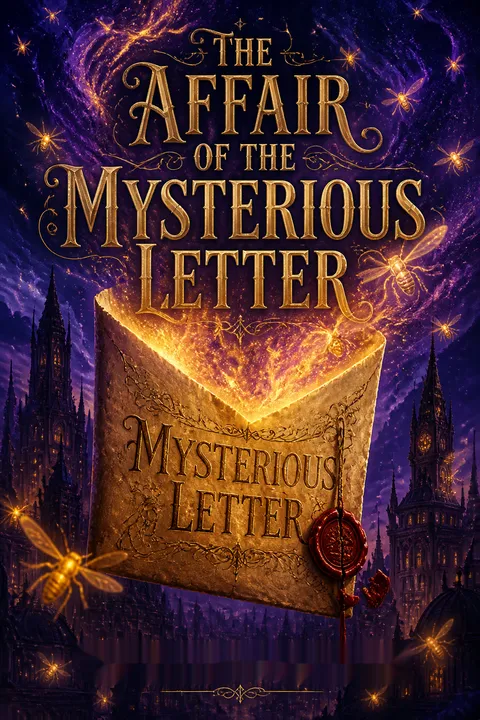

Plot Summary
Exile and Arrival
Captain John Wyndham, a principled and quietly melancholic veteran, returns to the cosmopolitan city of Khelathra-Ven after being invalided out of a war against cosmic horrors. Alienated from his homeland and family, Wyndham is adrift, seeking meaning and a place to belong. The city, a nexus of realities and cultures, is both dazzling and overwhelming, offering him anonymity but little comfort. His search for affordable lodgings and a sense of community sets the stage for a fateful encounter that will upend his life and challenge his rigid sense of self.
The Sorceress of Martyrs Walk
Wyndham answers a peculiar advertisement and meets Shaharazad Haas, a brilliant, erratic, and deeply unconventional consulting sorceress. Their first meeting is a collision of worldviews: Haas, drug-addled and armed, is as intimidating as she is magnetic. She quickly deduces Wyndham's history and character, offering him a room and, more importantly, a place in her strange, rule-breaking world. Despite his reservations, Wyndham is drawn in by her intellect and the promise of adventure, setting the foundation for a partnership that will test and transform them both.
Unlikely Housemates
Life at 221b Martyrs Walk is a whirlwind of magical experiments, eccentric rituals, and unpredictable visitors. Haas's disregard for social norms and the laws of nature is both exhilarating and exhausting for Wyndham, who finds himself responsible for the mundane aspects of their shared life. Their landlady, Mrs. Hive, is a literal hive-mind of wasps inhabiting corpses, adding to the house's surreal atmosphere. Despite the chaos, a bond of mutual respect and reluctant affection grows between the sorceress and the soldier, each finding in the other a kind of acceptance they have long been denied.
A Blackmailer's Threat
The arrival of Eirene Viola, a beautiful and troubled woman from Haas's past, shatters the uneasy calm. Viola is being blackmailed: an anonymous letter threatens to expose a deadly secret from her youth unless she breaks off her engagement to Cora Beck, a respectable member of the Ubiquitous Company of Fishers. The letter's knowledge is intimate and its threat precise, implicating both Viola and Haas in a long-ago pact with otherworldly powers. Viola's vulnerability and the specter of scandal draw Haas and Wyndham into the mystery, compelling them to investigate for the sake of love, loyalty, and perhaps redemption.
Five Suspects, Many Secrets
Haas's formidable intellect narrows the field to five suspects: a theatrical impresario, a criminal information broker, a vengeful poetess, a possessive vampire, and a Carcosan prince. Each has reason to resent Viola, and each is entangled in the city's web of secrets and betrayals. The investigation is as much about navigating the labyrinth of Viola's past as it is about solving a crime. Wyndham, both outsider and confidant, is forced to confront the moral ambiguities of his companions and the city itself, as the line between victim and perpetrator blurs.
Theatre of Shadows
The trail leads to Mise en Abyme, a theatre straddling reality and nightmare, run by the sinister du Maurier. Haas and Wyndham brave a performance that is also a magical trap, each forced to navigate a maze of mirrors and memories. Wyndham is lured into the Mocking Realm, a dimension of psychological torment shaped by his own fears and regrets. Haas's intervention saves him, but not before both are marked by the experience. The encounter eliminates du Maurier as a suspect but reveals the true stakes: the blackmailer is not only after Viola's happiness but her very sense of self.
The Mocking Realm Beckons
The investigation deepens as Haas and Wyndham confront the supernatural forces that haunt Viola's past. The Mocking Realm, a place where memory and identity are weaponized, becomes both a metaphor and a battleground. The pair's journey through haunted theatres, necromantic banks, and underwater ruins exposes the city's hidden power struggles and the lengths to which its denizens will go for love, revenge, or survival. Each clue brings them closer to the truth, but also to the realization that the blackmailer's motives are more personal—and more tragic—than they imagined.
The Ubiquitous Ball
A grand ball hosted by the Ubiquitous Companies offers both opportunity and peril. Haas and Wyndham infiltrate the event, seeking to observe Viola and Beck, and to test the theory that the threat may come from Beck's world rather than Viola's. The evening devolves into chaos as magical duels erupt, ghosts are unleashed, and the city's lawkeepers—the Myrmidons—intervene. Haas's reckless brilliance and Wyndham's steadfast decency are both tested, as alliances shift and the investigation takes on new urgency.
Ghosts, Necromancers, and Myrmidons
The aftermath of the ball is a tangle of legal and magical complications. Haas's feud with a necromancer from the Ossuary Bank escalates, resulting in a supernatural brawl and the intervention of the Myrmidons. Both Haas and Wyndham are arrested, their fates hanging on the whims of the city's fractious authorities. The experience exposes the limits of law and the necessity of personal loyalty. Haas's resourcefulness secures their release, but not without cost. The case grows colder, the suspects fewer, and the emotional stakes higher.
Underwater Intrigues
The search for answers takes Haas and Wyndham beneath the waves to Ven, the sunken heart of the city. There, amidst ancient ruins and criminal strongholds, they seek out Enoch Reef, the information broker. The journey is perilous, involving mind-altering symbiotes, underworld politics, and a murder that is both a clue and a warning. The encounter with Reef and his sister Asenath reveals that the blackmailer is not motivated by money or simple revenge, but by a desire to control the narrative of Viola's life. The investigation circles back to the beginning, as the impossible becomes the only explanation.
The Vampire's Lair
The next suspect is the Contessa Ilona, a vampire and former lover of Viola. Haas and Wyndham infiltrate her decaying manor, braving supernatural guardians and the seductive dangers of the undead. The encounter is both farcical and terrifying, culminating in a violent confrontation that exposes the Contessa's obsession and eliminates her as the blackmailer. Yet the experience leaves both investigators shaken, and the case more mysterious than ever. The past, it seems, cannot be so easily laid to rest.
The Sky Pirates' Storm
The pursuit of the truth leads Haas and Wyndham onto the Clouded Skipper, a magical airship piloted by an exiled Steel Magus. Their journey is interrupted by sky pirates, whose attack forces Haas to unleash dangerous magic and Wyndham to fight for their lives. The crash landing and subsequent escape are both harrowing and exhilarating, underscoring the lengths to which both will go for their client—and for each other. The adventure is a crucible, forging their partnership in adversity and setting the stage for the final confrontation.
Witch's Bargain, Lovers' Flight
Injured and desperate, Haas and Wyndham seek aid from Granny Liesl, a witch from Haas's past. The encounter is a blend of menace and nostalgia, as bargains are struck and old wounds reopened. Liesl's magic restores Haas's strength and outfits the pair for the final act. Meanwhile, Viola and Beck, now aware of the danger, attempt to flee by train, pursued by both the blackmailer and the supernatural forces that have haunted them from the start. The stage is set for a showdown that will test the limits of love, loyalty, and self-knowledge.
The Train to Vedunia
Haas and Wyndham board the train in place of Viola and Beck, laying a trap for the blackmailer and the vampire. The journey is tense, a microcosm of the city's social and magical tensions. The Contessa attacks, leading to a violent and surreal confrontation in which Haas's life hangs by a thread. The intervention of a mysterious masked figure saves them, but raises new questions. The train, a symbol of progress and escape, becomes the crucible in which the mystery's final elements are forged.
The Vampire's Confrontation
The aftermath of the train battle brings revelations and reckonings. The Contessa, defeated but not destroyed, is forced to confront the futility of her obsession. Haas and Wyndham, battered but alive, return to Khelathra-Ven, where the investigation reaches its emotional climax. The suspects are eliminated, the clues exhausted, and only the impossible remains. The answer, when it comes, is both devastating and redemptive: the blackmailer is none other than Viola herself, or rather, a future version of her, seeking to save her younger self from a doomed love.
Carcosa's Masks
The final act takes Haas and Wyndham to Carcosa, a city of shifting realities and political paranoia. There, Wyndham is imprisoned and interrogated, his sense of self and reality eroded by the city's dream logic and the machinations of the Repairers of Reputations. Haas's rescue is as much an act of magic as of will, and the experience leaves both changed. The journey through Carcosa is a meditation on identity, trauma, and the impossibility of escaping one's own story.
The Impossible Solution
The case is solved not by deduction but by elimination: when all suspects are gone, only the impossible remains. The blackmailer is revealed to be an older Viola, who, after losing Cora in one timeline, bargains with an Eternal Lord to travel back and prevent her own marriage. Her actions, born of love and regret, are both selfish and selfless, a paradox that only magic can resolve. The confrontation at the Lake of Stars is cathartic, forcing all involved to confront their own desires, fears, and capacity for change.
The Final Piece
The story ends not with triumph but with understanding. Viola and Beck, given a second chance, must choose whether to repeat the mistakes of the past or forge a new path. Haas and Wyndham, their partnership tested and deepened, return to their chaotic home, changed but not tamed. The mystery, like life, resists easy answers, and the emotional cost of magic and love is left unresolved. Yet in the end, there is hope: for forgiveness, for growth, and for the possibility of happiness, however fleeting.
Analysis
The Affair of the Mysterious Letter is a dazzling, genre-bending homage to the detective story, queered and exploded by the possibilities of fantasy. At its heart, it is a meditation on the limits of reason, the costs of love, and the necessity of embracing ambiguity. Alexis Hall uses the familiar structure of Holmesian mystery to lure readers into a world where nothing is stable—not identity, not memory, not even reality itself. The novel's central lesson is that the past cannot be undone, only understood; that happiness is always provisional; and that the only way forward is through honesty, forgiveness, and the acceptance of imperfection. The story's queerness is not just a matter of representation but of ethos: it celebrates the messy, the marginal, and the magical, insisting that true belonging is found not in conformity but in chosen family and self-acceptance. In a world of infinite possibilities and impossible choices, the greatest mystery is not who did it, but how to live with what we have done—and how to love, despite it all.
Review Summary
The Affair of the Mysterious Letter is a queer Sherlock Holmes retelling set in a fantastical Lovecraftian world. Readers praised its imaginative worldbuilding, witty Victorian-style prose, and diverse representation featuring pansexual sorceress Shaharazad Haas and trans narrator John Wyndham. Many found it brilliantly funny, inventively bizarre, and thoroughly entertaining. However, some criticized repetitive jokes, excessive exposition, and slow pacing that made it difficult to maintain interest. The discursive narrative style and meta-commentary divided readers—some found it charming while others thought it dragged. Overall, reviews appreciated the creativity and humor despite mixed feelings about execution.
People Also Read
Characters
Captain John Wyndham
Wyndham is the narrator and emotional anchor of the story, a former soldier whose rigid morality and quiet loneliness make him both an outsider and a keen observer. His relationship with Haas is transformative: she challenges his assumptions, exposes him to chaos and wonder, and forces him to confront the limits of his own virtue. Psychologically, Wyndham is marked by trauma, guilt, and a yearning for connection. His development is a journey from isolation to acceptance, as he learns to embrace ambiguity, risk, and the messy realities of love and friendship.
Shaharazad Haas
Haas is a consulting sorceress, equal parts Sherlock Holmes and cosmic trickster. Her intellect is matched only by her disregard for convention, law, and her own well-being. She is fiercely loyal to those she chooses, but her affections are unpredictable and often destructive. Haas's relationship with Wyndham is both a source of stability and a catalyst for self-destruction. Psychologically, she is driven by boredom, trauma, and a deep-seated fear of vulnerability. Her arc is one of reluctant intimacy, as she learns—imperfectly—to care for others without losing herself.
Eirene Viola
Viola is the client and, ultimately, the architect of her own predicament. Beautiful, passionate, and self-destructive, she is both victim and perpetrator, caught between her past and her desire for happiness. Her relationships—with Haas, with Beck, with her own future self—are fraught with longing, regret, and the fear of repeating old mistakes. Psychologically, Viola is marked by a deep ambivalence: she craves love but fears its cost, seeks freedom but is trapped by her own history. Her development is a tragic loop, as she tries to save herself from herself.
Cora Beck
Beck is Viola's fiancée, a practical and principled member of the Ubiquitous Company of Fishers. She is both the object of the blackmailer's threat and the emotional center of Viola's world. Beck's love is unwavering, but her patience is tested by Viola's secrets and the dangers that surround them. Psychologically, Beck is grounded, resilient, and quietly ambitious. Her arc is one of acceptance: she must decide whether to embrace Viola's chaos or protect herself from it, knowing that love is both a risk and a reward.
Mrs. Hive
Mrs. Hive is the literal hive-mind of wasps that inhabits corpses and serves as the landlady of 221b Martyrs Walk. She is both comic relief and a symbol of the city's strangeness, enforcing her own brand of order amidst the chaos. Her relationship with Haas and Wyndham is transactional but oddly familial. Psychologically, Mrs. Hive represents the persistence of the past and the inevitability of change, her shifting forms a reminder that nothing in Khelathra-Ven is ever quite what it seems.
Granny Liesl
Granny Liesl is Haas's former mentor and occasional adversary, a figure of both menace and nostalgia. Her magic is as much about bargains and consequences as it is about power. Liesl's relationship with Haas is fraught with unresolved tension, affection, and rivalry. Psychologically, she embodies the dangers of unchecked ambition and the costs of survival. Her interventions are both gifts and curses, forcing Haas and Wyndham to confront the limits of their own agency.
Contessa Ilona of Mircalla
The Contessa is both a suspect and a symbol of the past's power to haunt the present. Her love for Viola is possessive, destructive, and ultimately futile. As a vampire, she is both predator and victim, trapped by her own immortality and the changing world around her. Psychologically, the Contessa is marked by nostalgia, entitlement, and a refusal to let go. Her arc is one of tragic irrelevance: she cannot adapt, and so she is left behind.
Enoch Reef
Reef is a denizen of Ven, a master of secrets and survival. His relationship with Viola is transactional but not without a certain respect. Reef's motivations are pragmatic: he values information, influence, and the preservation of his own interests. Psychologically, he is adaptable, amoral, and deeply aware of the city's dangers. His development is a study in the limits of power: even the best-informed cannot control every outcome.
Second Augur Gabriel Lawson
Lawson is a Myrmidon officer, tasked with maintaining order in a city that resists it. His interactions with Haas and Wyndham are marked by frustration, respect, and a grudging affection. Psychologically, Lawson is pragmatic, cynical, and quietly compassionate. He represents the possibility of justice in a world where law is often a matter of negotiation. His arc is one of reluctant involvement: he cannot save everyone, but he tries to do what good he can.
Walking Upwards Unmaking
Walking Upwards Unmaking is a being of immense power and inscrutable motives, a survivor of Ven's fall and a gatekeeper to other realities. Her interactions with mortals are transactional, her perspective alien. Psychologically, she represents the limits of human understanding and the dangers of seeking power without wisdom. Her role in the story is both catalyst and cautionary tale: she grants wishes, but always at a price.
Plot Devices
Holmesian Structure and Metafiction
The novel is structured as a pastiche of Sherlock Holmes, with Wyndham as the Watson-like narrator and Haas as the consulting sorceress. This familiar framework is subverted by the city's surreal logic, the intrusion of magic, and the queering of traditional roles. The narrative is self-aware, often breaking the fourth wall and commenting on its own artifice. This metafictional approach allows the story to explore the nature of storytelling, memory, and identity, as well as the limitations of deduction in a world where the impossible is possible.
Unreliable Reality and Dream Logic
The story frequently blurs the line between reality and dream, especially in the sequences set in the Mocking Realm and Carcosa. Characters' perceptions are shaped by trauma, magic, and the city's own shifting nature. This instability is both a source of tension and a metaphor for the characters' psychological states. The use of unreliable narration, recursive timelines, and alternate realities underscores the theme that truth is always provisional, and that the past can never be fully escaped.
Queerness and Chosen Family
The novel foregrounds queer relationships, not only in its romantic pairings but in its depiction of friendship, loyalty, and self-invention. The found family of Haas, Wyndham, and their circle is contrasted with the rigid expectations of society, both in Ey and Khelathra-Ven. The story interrogates the costs and rewards of living authentically, the dangers of secrecy, and the possibility of forgiveness. Queerness is not just a matter of sexuality but of refusing to be defined by others' expectations.
Time Travel and Alternate Futures
The central mystery hinges on the use of time travel to rewrite personal history, with all the paradoxes and unintended consequences that entails. The device is both literal and symbolic: characters are haunted by their own choices, and the desire to undo regret is both understandable and dangerous. The story uses time travel to explore themes of fate, agency, and the impossibility of perfect happiness. The ultimate solution is not to erase the past, but to accept its lessons and choose differently in the present.
Satire and Social Commentary
Khelathra-Ven is a microcosm of diversity, decadence, and dysfunction, its institutions both familiar and fantastical. The novel satirizes bureaucracy, academia, commerce, and the law, using the city's absurdities to comment on real-world issues of power, privilege, and marginalization. The story's humor is both affectionate and biting, inviting readers to laugh at the characters' foibles while recognizing their own.
About the Author


Download PDF
Download EPUB
.epub digital book format is ideal for reading ebooks on phones, tablets, and e-readers.








































