
Key Takeaways
1. Greatness is a Team Sport: The Myth of the Lone Achiever
One is too small a number to achieve greatness.
No solo acts. The idea of the "lone ranger" achieving significant feats single-handedly is a myth. From historical figures like Daniel Boone and Charles Lindbergh to scientific giants like Albert Einstein, every seemingly individual accomplishment is, upon closer inspection, a result of collective effort and support from a team. This fundamental truth underscores that human history is built on collaboration, not isolation.
Teamwork's inherent value. Teams inherently offer more resources, ideas, and energy than any individual could muster alone. They maximize a leader's potential by minimizing weaknesses, providing multiple perspectives for problem-solving, and fostering humility by sharing both credit and blame. Ultimately, teams simply accomplish more, making them indispensable for reaching any meaningful goal.
Overcoming barriers. Despite the undeniable power of teamwork, individuals often resist it due to ego, insecurity, naiveté about complex challenges, or even temperament. Overcoming these personal barriers is crucial; letting go of the need for sole credit, trusting others, acknowledging the scale of one's dreams, and embracing collaboration are vital steps toward unlocking collective potential.
2. The Compounding Impact of Good Teamwork
There are some things only a team can accomplish.
Multiply the effect. Teamwork divides the effort required while exponentially multiplying the overall effect, leading to better results with less individual strain. While initially demanding leadership and cooperation, the long-term dividends of a cohesive team far outweigh the upfront investment, creating a powerful compounding effect on talent and output.
Championships, not just games. Talent alone might win individual games, but consistent victories and championships are always the fruit of exceptional teamwork. Legendary teams like the Boston Celtics, who dominated the NBA for decades without a single league-leading scorer, exemplify how collective synergy and a shared objective triumph over individual brilliance. True leadership lies in inspiring people to work hard together.
Community and trust. Effective teams foster a strong sense of community built on mutual trust, where members are connected and committed to one another. This environment allows for open communication, constructive conflict resolution, and a shared belief that teammates will act with consistency and support. When individuals prioritize adding value to others, the entire team thrives, embodying the principle that "what you can do for your teammates" is paramount.
3. Elevate Your Team to Match Your Dream
As the challenge escalates, the need for teamwork elevates.
The Law of Mount Everest. Just as climbing the world's highest peak requires an immense, coordinated effort from hundreds of individuals, any significant dream demands a team of commensurate size and capability. The story of Tenzing Norgay and Edmund Hillary's Everest ascent highlights that success isn't about individual heroics, but about unselfish teamwork at every stage.
Dream-team alignment. To achieve your "Everest," you must first clearly define your dream, then honestly assess your current team's capabilities. A great dream with a weak team is a recipe for a nightmare; your team's strength must match the scale of your ambition. Focusing on building the right team ensures the dream will naturally follow.
Growing your team. When your current team falls short of your dream team, you have two choices: abandon the dream or grow the team. This involves developing existing members through direction, coaching, and support, adding key talent where necessary, and being willing to change leadership or remove ineffective members for the greater good. The right team for a new, controversial, or long-term challenge will look very different.
4. Cultivate a Leadership-Friendly Environment
Create an environment that unleashes new leaders.
Shift in focus. For leaders at the top, developing a lasting team means shifting from merely leading people to actively empowering and serving other leaders within the organization. This transformative approach creates a positive leadership culture where potential leaders can flourish, gain experience, and ultimately drive the organization's success.
The Leader's Daily Dozen. To foster this environment, leaders must commit to twelve power-unleashing activities daily. These include placing high value on people and leadership, committing resources for development, actively seeking potential leaders, and knowing and respecting their team members. Such practices ensure that leadership is not just recognized but actively nurtured.
Empowerment and growth. Crucially, leaders must provide genuine leadership experiences by delegating authority, rewarding initiative, and creating a safe space for questions, ideas, and risks. Growing alongside their people, drawing high-potential individuals into their inner circle, and committing to developing leadership teams are essential. Ultimately, the goal is to "unleash" leaders, removing barriers so they can rise to their full potential and become "lid lifters" for the organization.
5. Essential Characteristics of a Cohesive Team
Great teams have everyone on the same page.
Foundational qualities. All successful teams are built on a foundation of mutual care, where members genuinely look out for one another, fostering deep bonds and preventing cliques. Equally vital is a shared understanding of what truly matters—the team's common goal and purpose—ensuring everyone knows how their individual duties contribute to the collective "score."
Open communication and growth. Effective teams thrive on open and positive communication, preventing duplication of effort and fostering an environment where suggestions and criticisms are safely exchanged. This communicative atmosphere, combined with a commitment to shared learning and growth—both personally and professionally—strengthens relational bonds and collective capability.
Fit, sacrifice, and roles. As trust deepens, teams develop a unique "fit" where members appreciate each other's strengths and compensate for weaknesses, relying on one another without shame. This enables individuals to willingly place their rights beneath the team's best interest, making personal sacrifices for collective success. Each member then gladly assumes a special role, often based on strengths, but with the flexibility to adapt for the team's needs, supported by a strong "bench" that provides depth, sets the tone, and allows for rest.
6. Selflessness: The Core of a True Team Player
The best players put the team first.
Unselfish commitment. True team players, like WWII officer Philip Toosey who risked his life for his men, consistently prioritize the team's welfare over personal gain. This selflessness is not merely an ideal but a necessary ingredient for any team's success, fostering unity and ensuring that collective objectives are met even in the direst circumstances.
Cultivating generosity. Selflessness is cultivated through generosity, which unites team members and propels the team forward. It means actively avoiding internal politics that posture for individual benefit and instead displaying unwavering loyalty to teammates. This commitment to others, as Albert Einstein noted, allows a person to truly begin living outside of themselves.
Interdependence over independence. While independence is valued, excessive individualism can hinder a team. Selfless players value interdependence, recognizing that collective strength surpasses individual effort. Practicing selflessness involves promoting others, willingly taking subordinate roles, and giving secretly, reinforcing the belief that contributing to someone who can never repay you is a mark of true success.
7. Strategic Investment Builds a Winning Team
A leader’s investment in the team pays dividends.
Commitment to development. Building a winning team begins with the conscious decision to invest in its members, recognizing their worth and committing to their development. This commitment requires paying a price in time, energy, and resources, but it ensures the team's continuous growth and elevates its overall potential by attracting and nurturing the best possible talent.
Community and empowerment. Fostering community is crucial, achieved by encouraging teammates to spend time together in both professional and social settings, creating shared experiences that build lasting bonds. Simultaneously, leaders must empower team members by delegating genuine responsibility and authority, which is essential for raising new leaders and allowing individuals to grow through practical experience.
Accountability and opportunity. To ensure the investment pays off, leaders must monitor progress and hold members accountable, stopping investment in those unwilling or unable to grow. Critically, creating new opportunities for the team to stretch and face fresh challenges is vital for collective and individual development. By clearing obstacles and giving the team the best chance to succeed, leaders guarantee a high return on their investment, as a unified team can achieve far more than individuals.
8. Address Weak Links to Preserve Team Potential
A weak link harms the leader’s credibility and the team’s chances for success.
Not for everyone. Leaders must accept that not everyone is meant to be on every journey. Some individuals simply don't want to go, others have different agendas, and some genuinely lack the ability to keep pace or contribute effectively. Recognizing these "weak links" is crucial for the team's health and success.
Identifying and addressing. Weak links are identifiable by their inability to keep pace, grow, see the big picture, or work with the team. While the first step is always to "train them" through resources, challenges, and mentorship, if a team member consistently fails to meet expectations, the leader must consider "trading them" for the good of the team.
Compromised performance. Allowing a weak link to remain on the team has severe consequences: stronger members identify, help, and eventually resent the underperformer, leading to decreased effectiveness and questioning of the leader's judgment. In a synergistic team, a weak link can reduce overall potential by 50% or more, robbing the team of momentum and forcing the stronger members to constantly compensate, ultimately controlling the team's pace and potential.
9. Channel Competition for Collective Success
Put completing teammates ahead of competing with them.
Healthy vs. unhealthy competition. While a natural instinct, competition within a team must be channeled constructively. The goal is to "complete" teammates, not merely "compete" against them. This means fostering an abundance mindset, prioritizing the organization's success, building trust, and thinking "win-win" through shared ideas, rather than a scarcity mindset that destroys trust and excludes others.
Embrace positive rivalry. Healthy competition is a powerful motivator, pushing individuals to perform at their best, promoting honest self-assessment against peers, and fostering camaraderie. It's about raising the bar for everyone, not tearing others down. When competition remains friendly and focused on collective improvement, it strengthens the team's bonds and overall capability.
Strategic placement. The ultimate purpose of internal competition is to leverage it for the team's corporate win, preparing members to collectively outperform external rivals. Leaders must know where to draw the line: competition is healthy when it elevates performance and morale, but detrimental when it becomes personal, lowers team spirit, or alienates teammates. The best teams use internal drive to sharpen each other, always prioritizing the team's victory.
10. Prioritize the Best Idea, Not Your Own
Make sure the best idea always wins.
Ideas are lifeblood. Ideas are the most critical asset for any organization, driving progress and innovation. Leaders must resist the natural inclination to fight for their own ideas, especially after significant intellectual, physical, and emotional investment. Instead, the focus must be on creating an environment where the best idea, regardless of its origin, always prevails.
Cultivating creativity. To harness a team's creativity, leaders must first listen to all ideas with an open mind, recognizing that truly new concepts often initially appear foolish. They should never settle for just one idea, understanding that a multitude of perspectives leads to stronger, more innovative solutions, fostering a collaborative environment where thoughts are shared, shaped, and elevated.
Synergy and influence. Leaders who facilitate the surfacing of good ideas and promote synergy among peers become invaluable. By creating an environment where people contribute, shape, and take ideas to the next level, they make the entire team better. This approach builds influence and ensures that the organization continuously innovates and progresses, driven by collective intelligence rather than individual ego.
Review Summary
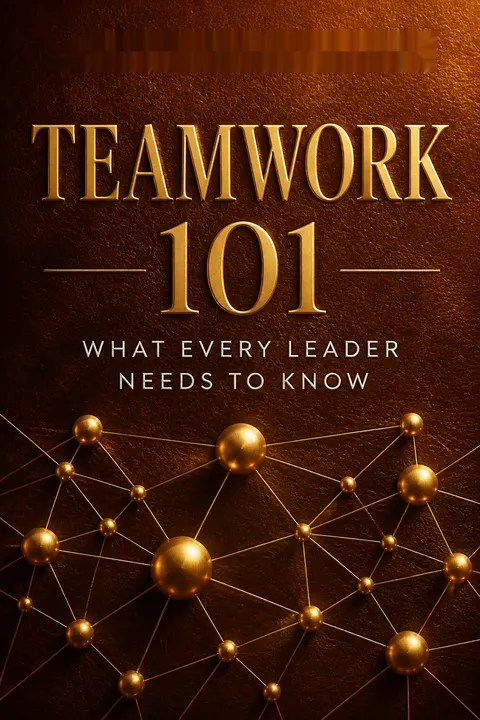
Teamwork 101 receives an overall rating of 4.04 out of 5 stars from 791 reviews. Readers appreciate Maxwell's concise, practical approach to teamwork fundamentals, noting the book's accessibility and straightforward advice on building effective teams. Common themes include the importance of selflessness, communication, and strong leadership in fostering successful collaboration. While many find it helpful for implementing team strategies, several reviewers mention repetitiveness and lack of depth, suggesting it works best as an introductory guide or quick refresher rather than comprehensive reading.
People Also Read








About the Author
Other books by John C. Maxwell









Download PDF
Download EPUB
.epub digital book format is ideal for reading ebooks on phones, tablets, and e-readers.








































