
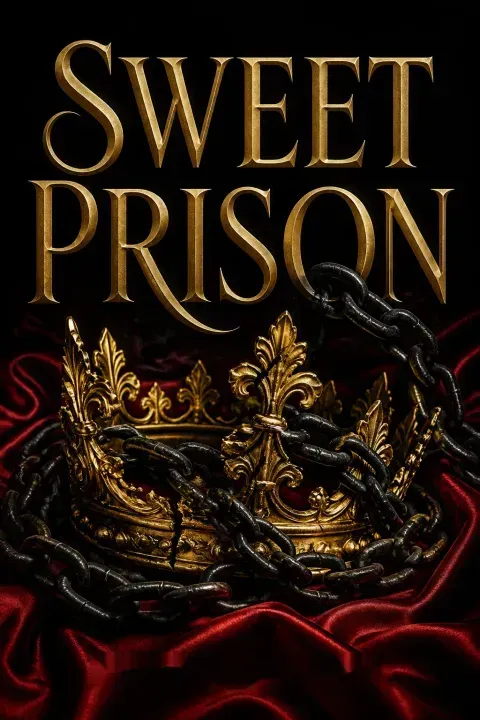


Plot Summary
Prologue
At her father Nuncio's6 funeral, eighteen-year-old Zahara Veronese2 stands beside her sister Nera4 when Massimo Spada1 appears in a prison uniform, wrists cuffed, guards flanking him. For years she has written him letters, fallen in love with the cunning mind revealed in his coded replies.
Seeing him in the flesh, her heart pounds with joy. He approaches through the crowd of mourners, touches her cheek with his knuckles, whispers her name. Then he addresses Nera:4 they must speak tomorrow. But only Nera.4
The three words detonate inside Zahara's2 chest. She flees to the parking lot, tears blurring the gravel path, understanding at last that she was never more than a convenient tool, now discarded. Her heart, which he claimed without knowing, he has just crushed.
The prologue weaponizes dramatic irony. Zahara's epistolary intimacy with Massimo makes his public rejection incomprehensible to her, yet his knuckle-touch betrays a tenderness his words deny. He pushes her away precisely because she matters, though she cannot know this. The funeral setting externalizes her emotional death: she mourns not just her father but the fantasy of being truly seen by the man who knew her only through words. His prison uniform codes him as someone whose freedom to love is as constrained as his body. This scene establishes the central wound the entire novel must heal: the chasm between what Massimo feels and what he dares to show.
Eighteen Years Stolen
At a New Year's Eve party at the Veronese mansion, Massimo's1 gentle stepbrother Elmo11 is shot by a drunk brawler. Massimo,1 who loved Elmo11 like a true brother, draws his Glock and kills the man on the spot, not caring that three hundred witnesses watch, including a judge and the chief of police. He takes a plea deal expecting three to four years.
Instead, Judge Collins, in an act of unexplained betrayal, sentences him to eighteen years in maximum security. Massimo1 roars in disbelief as guards drag him away. The sentence steals half his life, forcing him to rule the Boston Cosa Nostra from a prison cell, using his stepfather Nuncio6 as a puppet don while he pulls the strings from the shadows.
The eighteen-year sentence is the foundational injustice that warps Massimo's entire adult life. Disproportionate and corrupt, it becomes the crucible that forges his ruthless pragmatism and paranoia. His act of vengeance was rooted in love and loyalty, yet the punishment transforms him into someone who views all relationships as transactional. Collins's betrayal plants the seed of Massimo's lifelong suspicion: someone powerful wanted him buried. This early trauma explains why, decades later, he struggles to trust anyone's motives, including his own feelings for Zahara. The sentence creates the novel's central dramatic tension: a man who should be king, ruling from a cage.
Letters to a Stranger
Zahara,2 fourteen, endures relentless bullying at her elite private school because of the pale patches on her skin caused by vitiligo. A boy named Kenneth Harris calls her a leper, rips her handmade lace sleeve, and humiliates her in front of classmates.
Desperate for an outlet, she writes a letter to Massimo,1 the stepbrother she barely remembers, as a school assignment about writing to family abroad. He never responds. Yet she keeps writing, treating the letters like a diary, confessing frustrations about math, sewing projects, and social cruelties.
Then one day, an envelope arrives from the correctional facility. Inside: two pages of handwritten explanations of linear equations, the exact topic she had despaired over in her last letter. He has been reading them all along.
The epistolary genesis of their relationship is psychologically significant. Zahara writes to a void, which makes the eventual reply feel like being heard by the universe itself. Her letters are a coping mechanism for profound social isolation; his reply transforms an imaginary confidant into a real one. Massimo's choice to respond with math help rather than emotional comfort reveals his character: he solves problems instead of soothing feelings. The letters establish an intimacy paradox: they know each other's minds intimately while remaining physical strangers. This disembodied connection allows Zahara to fall in love with his intellect and spirit long before she ever sees his face.
The Safe Behind Monet
Massimo's1 letters evolve from casual replies into carefully coded instructions. He references movies, books, and historical events, forcing Zahara2 to decode his true meaning. Through this cryptographic education, he steers her toward specific information about Nuncio's6 business dealings and conversations with capos.
When Massimo1 mentions a bearded man in a beret who frequents the study, Zahara2 realizes he means the Monet self-portrait hanging on the wall. She presses a hidden button, the painting swings open, and she enters the code Massimo1 embedded in his letter.
Inside the safe, she finds financial records, casino renovation invoices, and the Family's secret bookkeeping. She feels powerful, no longer the invisible girl who hid in corners at parties.
This turning point transforms Zahara from passive confidant to active agent. Massimo's coded language is simultaneously a grooming technique and an intellectual courtship: he is teaching her to think like him. The safe behind the Monet becomes a metaphor for Zahara herself: behind a beautiful exterior hides access to things others cannot reach. Discovering that the don's power is an illusion, that Massimo really rules, reshapes her understanding of authority and competence. The experience gives her self-worth she has never possessed. She is no longer just the girl with vitiligo who avoids eye contact, but someone whose intelligence makes her indispensable to the most dangerous man in Boston.
Blood on Her Dress
At Nuncio's6 birthday party, Zahara2 gathers intelligence as usual but leaves early, frustrated by limited access. She returns to the empty mansion to crack Nuncio's safe. The code has changed; she guesses it is the date he became don, which happens to be her first birthday. The safe opens, but she barely begins searching before tires screech outside.
She rushes to the foyer where Nera4 stands in the doorway, her dress soaked in blood. Nera's4 voice is hollow as she delivers the news: their father6 has been shot dead. A hitman killed him at the party. Zahara2 collapses into her sister,4 clutching the bloody fabric, while the foundation of their world crumbles. The don is gone, and Massimo1 is still imprisoned with years left on his sentence.
The assassination is the midpoint crisis that shatters the entire status quo. Nuncio's death while Zahara was literally cracking his safe creates a haunting guilt-by-proximity: her secret actions and his murder feel cosmically linked. The imagery of Nera's blood-soaked dress transforms her from sister to omen of violence. This moment concretizes the stakes: the conspiracy Massimo has suspected is real and now threatens everyone Zahara loves. The structural irony is that she was inside the study gathering information for Massimo when her father was shot; her loyalty to her stepbrother exists in tension with her grief for the father who never truly saw her.
Eyes Across the Grave
Massimo1 arrives at the cemetery in chains, surrounded by three hundred mourners who stare at his prison uniform. Beside Nera4 stands a young woman whose beauty stops his breath. It is Zahara,2 no longer the pigtailed toddler he remembers. Their eyes lock across the casket, and in her gaze he finds not curiosity but recognition: she knows him.
This girl he manipulated through letters for years is suddenly flesh and devastatingly real. For the first time in fifteen years, Massimo1 feels peace. He touches her cheek with his knuckles, whispers her name. Then fear for her safety overrides everything. He tells Nera4 to visit alone tomorrow. Just you, Nera.4 Zahara's2 face crumbles, and Massimo1 walks away with his heart in shreds.
This scene is the novel's emotional epicenter. Massimo experiences a spiritual recognition: Zahara has held his soul in her hands through letters, and now her physical presence completes a circuit years in the making. His rejection is a protective act disguised as cruelty: he fears that anyone who knows his attachment to Zahara will target her. But the damage is done; she interprets his words as proof she was merely a tool. The scene dramatizes the core conflict: Massimo's love for Zahara is inextricable from his awareness that loving him could destroy her in the vicious Cosa Nostra world. He chooses to wound her rather than endanger her.
The Prison Bargain
Instead of Nera,4 Zahara2 appears in the prison visitation room. Massimo's1 fury at her recklessness is undercut by raw terror for her safety. She has come to ensure he will keep his promise to free Nera4 once he takes power. She knows him too well to trust his word. Standing before him, her honey-brown eyes unyielding, she offers a deal: she will continue being his spy inside the new don's household, and in exchange, he guarantees Nera4 and her child will walk free.
If he refuses, she and her sister4 will run. Massimo's1 chest tightens with fear, but her resolve is absolute. He agrees, extracting her promise to be careful. Before she leaves, he catches her hand, and they exchange whispered warnings that are really confessions of care.
This scene reverses the power dynamic that dominated their epistolary relationship. Zahara is no longer the passive recipient of Massimo's coded instructions but an equal negotiating terms. Her willingness to enter the wolf's den, to spy on the man who ordered her father's murder, demonstrates that his training has succeeded too well: she has internalized his ruthlessness. Massimo's capitulation is the first crack in his emotional armor; he cannot refuse her because losing her would be worse than any strategic cost. Their whispered exchange at the threshold is a love confession disguised as tactical advice, establishing the pattern that will define them: tenderness expressed through the language of survival.
Platinum Over Gold
During the years Zahara2 lives in Batista Leone's7 household, her letters continue as Nera4 bears a daughter, Lucia, and Leone's7 health deteriorates. Massimo's1 replies grow more personal, more vulnerable.
He admits he blames himself for Elmo's11 death, that he would not change his actions even knowing the consequences. When Zahara2 mentions her father6 always bought her gold jewelry she could never wear due to skin sensitivity, Massimo1 secretly has her old pieces replicated in platinum.
He throws the gold originals into the Seine, then ships the new collection from a Parisian jeweler. His accompanying letter tells her to remember only the good moments with her father.6 She wears the necklace every day, a secret talisman of a love neither has named aloud.
The platinum jewelry gift is Massimo's first overt act of devotion that cannot be rationalized as strategic. Removing the gold originals, symbols of her father's failure to truly know her, and replacing them with something her body can accept is an act of profound intimacy. He has paid meticulous attention to the smallest details of her letters. The gesture reveals his moral framework: he cannot undo Nuncio's failures as a father, but he can literally and symbolically replace the evidence of those failures with proof that she has been seen and understood. Zahara wearing the necklace daily is her silent reciprocation, a physical commitment worn against her skin that no one else can interpret.
The Cage Opens
Released six months early through the intervention of New York don Salvatore Ajello, Massimo1 arrives at Leone7 Villa in a tailored gray suit. He tells Nera4 she is finally free from her obligations, then finds Zahara2 packing. You are coming with me, he tells her.
He takes her to his derelict childhood mansion, a decaying monument to his lost decades. Inside, he nearly strangles a housekeeping manager for standing too close. He threatens a designer who cannot meet impossible renovation deadlines.
He sleeps on the floor outside Zahara's2 door because it is the only place rest comes. She watches him struggle with volatile rage at strangers, and she does not flinch. Instead, she begins managing the renovation, hiring mafia-savvy staff, becoming the steady hand he never knew he needed.
Massimo's release paradoxically imprisons him in a world he no longer knows how to navigate. The mansion, neglected like his own psyche, externalizes his internal decay. His explosive rage at civilians reveals how prison conditioned him for perpetual threat response; peace itself now feels dangerous. Sleeping outside Zahara's door literalizes his psychological truth: she is the threshold between his traumatized self and the possibility of healing. Her refusal to be frightened by his volatility is her first demonstration of the strength he has consistently underestimated. She is not fragile china. She is the only person who can manage him without trying to control him, grounding him through presence rather than correction.
Watching in the Dark
One night, Massimo1 slips into Zahara's2 room while she sleeps. He sits in the armchair, watching her, and his body betrays him. He begins stroking himself, tormented by wanting what he believes he cannot have. Zahara2 wakes and catches him. Instead of recoiling, she rises, crosses to him, and tells him not to stop.
She sinks to her knees, takes him in her mouth, and tastes the proof of his long-denied desire. He carries her to the desk, buries his face between her thighs, and learns she is a virgin as he brings her to climax with his tongue. Then guilt floods him. Horrified by what he has done to his stepsister,2 the girl he manipulated for years, he tells her it can never happen again. He will leave the house.
This scene dramatizes the central moral conflict: Massimo's desire for Zahara is both the most authentic feeling he has ever experienced and a potential repetition of his original exploitation. His self-condemnation reveals an ethical framework she does not share. For Zahara, the encounter is empowerment: she has made the untouchable man come undone. The revelation of her virginity triggers Massimo's protective instincts reshaped as self-loathing. He cannot reconcile being her protector with having taken her innocence. His retreat the next morning is an attempt to protect her from himself, but the gesture denies her agency. She has chosen him, and her refusal to accept his self-imposed exile is its own form of strength.
The Don Claims His Queen
At the Council meeting where capos and investors vote on Massimo1 becoming don, his temper nearly destroys everything. He is seconds from shooting Brio for insolence when Zahara,2 who has interrupted the meeting on a pretense, squeezes his thigh under the table, grounding him. He invites her to sit at the table, an unprecedented act that declares her his equal.
After he is unanimously confirmed as don, he returns to her room that night. She refuses to let him retreat again. He confesses he loves her, that she is the air in his lungs. They make love, and Massimo,1 for the first time in nearly twenty years, feels not like a prisoner but a free man. She is his salvation, and he finally stops fighting it.
Massimo's near-catastrophic loss of control during the Council meeting demonstrates how fragile his composure remains without Zahara's steadying influence. Her physical intervention, a simple squeeze of his thigh, is more effective than any argument. His invitation for her to sit at the table is a public declaration that rewrites Cosa Nostra protocol: she is not a silent woman on the sidelines but a partner in power. Their consummation that night completes the emotional journey begun years earlier through letters. Massimo's admission of love is not just romantic but existential: she is the force that reconnects him to the person prison nearly destroyed. He stops treating her as something fragile to protect and starts treating her as his equal.
Red Silk Rebellion
At Capo Brio's retirement party, Zahara2 arrives in a crimson silk dress with plunging neckline and thigh-high slits, her hair swept up, her vitiligo fully visible. She has never worn red in public. She has never shown so much skin. Every guest stares as she strides through the hall, head high. Massimo1 is thunderstruck.
He crosses the room, grabs her, and kisses her deeply in front of two hundred people. Then, with his hand on her backside and every Cosa Nostra member gawking, he drops to one knee and asks her to marry him. She says yes. He carries her to Brio's study, rips the front panel off her dress, and takes her on the desk while the party continues, scandal erupting in their wake.
Zahara's red dress is a declaration of war against her own invisibility. Red, her favorite color but one she never dared wear, becomes the uniform of her reclaimed identity. The plunging neckline and exposed skin are not merely sexual but political: she refuses to hide the vitiligo that made her a target. Massimo's public proposal, with his hand possessively on her, is equally transgressive in a world where stepsibling relationships are taboo. Together they force the Family to witness their truth, daring anyone to object. The sex in Brio's study is the physical consummation of their public claiming: they have fucked convention itself, and they want everyone to know it.
The Best Friend's Blade
Salvo Canali,3 Massimo's1 childhood friend and trusted underboss, lures Zahara2 out of the house under the pretense of a dress fitting for his mother. In the car, his mask drops. He spews venom about Massimo,1 calls Zahara2 a slut for sleeping with her stepbrother.1 When she demands to be let out, he stops in a desolate industrial area.
As she runs toward Peppe's5 following vehicle, gunshots crack the air. Peppe5 takes three bullets to the chest and slumps over the wheel. Salvo3 drags Zahara2 back to his Porsche at gunpoint and drives her to the Canali family mausoleum. He binds her hands and leaves her huddled between stone sarcophagi, waiting for Massimo1 to arrive and face the man who destroyed his life.
Salvo's betrayal recontextualizes the entire narrative. Every unexplained obstacle Massimo faced, every parole denial, every prison attack, every assassination attempt on Nera, traces back to a single source: his closest friend. Salvo's resentment is class-based and pathological. He believes the Canali family's noble lineage entitled them to rule, and Massimo, the son of a warehouse worker, stole his birthright. The kidnapping of Zahara is his final attempt to take everything Massimo values. Peppe's shooting raises the stakes to life and death, transforming what was a conspiracy thriller into an intimate hostage crisis. The mausoleum setting externalizes Salvo's fixation on legacy and bloodlines: he has brought them to a tomb to decide whose lineage survives.
Scissors in the Neck
Massimo1 arrives at the mausoleum alone. Salvo,3 armed and unhinged, confesses everything: his father orchestrated the harsh sentence, he himself blocked every parole, he ordered Nuncio's6 assassination, he engineered the attempts on Nera's4 life, all because he could not bear a commoner ruling what should have been his.
He forces Massimo1 to kneel and beg for Zahara's2 life. Massimo1 drops to his knees. Please. I beg you. Then Salvo3 raises his gun. A struggle erupts. A stone angel statue topples onto Massimo,1 pinning him.
Salvo3 lifts a broken wing fragment to crush Massimo's1 skull. Zahara,2 who has sliced her bonds with hidden fabric scissors, plunges the blades deep into Salvo's3 neck. Blood sprays. He collapses, gurgling. She stomps the scissors deeper and spits on his body.
The mausoleum climax inverts every expectation. Massimo, who swore he would never kneel before any man, kneels willingly for Zahara. His pride, the armor that sustained him through eighteen years of incarceration, he surrenders without hesitation when her life is the price of keeping it. But the narrative's true subversion is Zahara as the agent of salvation. The scissors, symbol of her creative passion and her perceived softness, become the instrument of death. She does not need rescuing. She rescues him. The stomp that drives the blades deeper is not just a kill but a rejection of everything Salvo represents: the idea that she is a passive object to be fought over rather than a woman with lethal agency.
Zahara Spada
Two weeks after Salvo's3 death, Massimo1 blindfolds Zahara2 and drives her to a charming brick building in Boston's Back Bay. Inside, industrial fans battle the scent of fresh paint. He removes the blindfold. Enormous ornate frames line the walls, each displaying an enlarged print of a dress sketch she sent him over the years.
Below every sketch stands a mannequin wearing the actual dress, produced by seamstresses he hired. On the far wall, a white satin sheet covers something. He pulls it away to reveal a plaque: Zahara Spada. Then he kneels again, properly this time, and slides a platinum ring onto her finger. The diamonds are arranged like a crown, he tells her, for his queen. She says yes, sobbing.
The boutique is Massimo's ultimate love letter, converting years of epistolary intimacy into tangible proof of his devotion. Every sketch she mailed him, every rambling paragraph about bias binding and lantern sleeves, he preserved and now displays as art. The brand Zahara Spada is not merely a gift but an identity he offers her: she is not just his wife but her own creative force with a legacy entirely separate from his mafia empire. The crown-shaped ring formalizes what he declared at the Council meeting: she is his equal, his partner, his queen. After years of hiding, of feeling invisible, of being told her sewing was an inappropriate hobby for a don's daughter, Zahara is publicly, permanently, gloriously seen.
Epilogue
Two months after their wedding, Zahara2 attends a Council meeting in the grand dining room. She sits on Massimo's1 lap while he reviews investment plans with his capos, her hips shifting as he adjusts her position for deeper access. The capos scramble to leave, avoiding eye contact as always. Peppe,5 now the new underboss after surviving Salvo's3 bullets, calmly leads discussions whenever Massimo's1 attention wanders.
Tiziano pauses at the door to ask if his wife can book an appointment at Zahara's2 boutique. Business, pleasure, and power have merged into a single, scandalous tableau. Massimo1 kisses her neck and whispers about an upcoming wedding in New York. The Family has accepted their queen, or at least learned to avert their eyes.
The epilogue presents their relationship as a successful, ongoing transgression. The Council meetings, once a space of rigid patriarchal protocol, now accommodate Zahara's physical presence on the don's lap, a visual rejection of every norm she was raised to obey. Peppe's promotion to underboss closes the loyalty arc: the man who served Massimo since adolescence and nearly died protecting Zahara now occupies the role Salvo corrupted. The casual mention of external business reminds readers that their domestic bliss exists within an ongoing mafia narrative, but the emotional arc is complete. Massimo and Zahara have built a life that refuses to choose between power and passion, visibility and safety, family and desire.
Analysis
Sweet Prison operates on a central paradox: the cage Massimo1 inhabits for eighteen years is also the space where his deepest freedom is forged. Prison strips him of everything, his youth, his future, his capacity to trust, but it cannot touch the letters that arrive in violet envelopes, carrying the voice of a girl who sees him without ever seeing his face. The novel insists that intimacy is not a function of physical proximity but of sustained, vulnerable attention. Zahara2 falls in love with Massimo's1 mind before she knows his body; he recognizes her soul across a grave before he understands her beauty. Their relationship inverts the typical romance trajectory. The emotional consummation happens in writing, across years, and the physical consummation is merely its confirmation.
The stepsibling taboo functions less as a genuine moral obstacle than as a proxy for the novel's deeper concern: the tension between public performance and private truth. Cosa Nostra is a world governed by rigid codes of honor, blood, and reputation. Massimo1 and Zahara's2 love violates those codes not because they share a parent, they are not blood relatives, but because their relationship makes visible what the Family prefers to hide. Namely, that women have agency, that power can be shared, and that the patriarchal obsession with lineage and propriety is a hollow shell maintained by men like Salvo3 who have nothing else to justify their entitlement.
Zahara's2 arc from invisible girl to public queen is the novel's political heart. Her vitiligo operates as a metaphor for anything that makes a woman inconvenient to patriarchal systems: visible, unpretty, demanding accommodation. The bullies at school, the capos who overlooked her at parties, her father6 who kept buying gold she could not wear, all participate in the same erasure. Massimo's1 love is radical not because it transgresses a stepsibling taboo but because it insists she is perfect exactly as she is. He does not want her to cover her skin or lower her eyes. He wants her on his lap during Council meetings, visible and powerful and shameless.
The mausoleum climax completes the thematic architecture. Salvo,3 who believes blood entitles him to rule, brings his enemies to a tomb filled with his ancestors, as if lineage itself will enforce his victory. Instead, he is killed by a woman wielding sewing scissors, the tool of her creative domestic labor. The message is unsubtle but satisfying: inherited power is worthless against earned competence. Massimo1 kneeling, an act that would have been unthinkable to the prideful young man of the novel's opening, becomes his greatest strength. He surrenders his ego for love and is saved by the very person he once manipulated as a tool. The novel ends not with a wedding but with a boutique, a plaque reading Zahara Spada,2 and a crown-shaped ring. Love, in this world, is not an escape from power but its redefinition.
Review Summary
Sweet Prison received mixed reviews, with many praising the chemistry between Massimo and Zahara, the emotional depth, and the mafia romance elements. Readers enjoyed the slow-burn relationship development through letters and the characters' growth. However, some criticized the pacing, predictable plot twists, and controversial exhibitionism scenes. The age gap and step-sibling relationship were contentious points for some readers. Overall, fans of the series found it engaging, while others felt it didn't meet their expectations or struggled with certain aspects of the story.
Characters
Massimo Spada
Imprisoned don, stepbrother loverSon of a former Boston Cosa Nostra don who rose from warehouse worker to kingpin. Trained since childhood to lead, Massimo is brilliant at business and brutal at violence. At twenty, he avenges his stepbrother Elmo's11 murder and receives an inexplicably harsh eighteen-year sentence. For two decades, he rules the Family from prison through proxies, his single-minded focus the only thing keeping him sane in a system designed to break him. Prison warps him into a paranoid insomniac with uncontrollable rage and a voice in his head that argues with him constantly. His letters with Zahara2 begin as manipulation but become his lifeline. Upon release at thirty-seven, he struggles to exist in a world that moved on without him. Only Zahara2 calms his demons. He is brutally possessive, strategically ruthless, and unexpectedly tender only with her.
Zahara Veronese
Stepsister spy, fashion designerYounger daughter of Don Nuncio Veronese6. Born with vitiligo, the pale patches on her skin made her a target for bullies throughout childhood. She learned to hide, to keep her eyes down, to remain invisible at mafia social events. Her letters to Massimo1 begin as a school assignment but become her secret outlet, the only place she can be honest. Through his coded replies, she discovers she is clever, capable, and valuable. Spying for him gives her purpose and transforms her from a timid girl into a confident woman. She is an exceptional seamstress and dreams of her own fashion label. Her love for Massimo1 develops through years of letters before she ever sees his adult face. Uncompromisingly loyal, fiercely protective of her sister Nera4, and quietly lethal when necessary.
Salvo Canali
Massimo's best friend and underbossScion of an old Cosa Nostra family that believes its noble lineage entitles it to rule. Salvo befriended Massimo1 in prep school at his father's command, positioning himself close to the don's heir. He helped Massimo1 run the Family from prison for years, but his loyalty was always a mask for resentment. Polished, charming, and deeply envious, Salvo believes Massimo1, the son of a warehouse worker, stole the life that rightfully belongs to the Canali name. He develops an obsessive fixation on Zahara2, viewing her as another thing Massimo1 possesses that should be his. His polished exterior conceals a pathology of entitlement that has festered for decades.
Nera Veronese
Zahara's protective older sisterOlder daughter of Nuncio6, fiercely protective of Zahara2. After their father's6 assassination, she is forced to lead the Family as Massimo's1 proxy, a role she never wanted. She endures a coerced marriage to Batista Leone7, the man who ordered her father's6 death, to protect her unborn child. Her secret relationship with Kai8, a mysterious man she met while he was wounded, becomes her emotional anchor. She resents Massimo1 for years of manipulation but ultimately accepts Zahara's2 love for him. Her character arc moves from reluctant leader to a woman who finally claims her freedom.
Peppe
Loyal soldier turned underbossFirst-generation Cosa Nostra soldier who served Massimo1 since adolescence. He worked as Nuncio's6 driver while secretly reporting to Massimo1, and later became Zahara's2 protector and confidant. Solid, perceptive, and unfailingly loyal, he is one of the few people Massimo1 trusts completely. He survives being shot three times in the chest by Salvo3 and eventually becomes Massimo's1 underboss. His quiet observation often provides the emotional insight other characters miss, including his early recognition of the true nature of Massimo1 and Zahara's2 relationship.
Nuncio Veronese
The puppet don, Zahara's fatherBoston Cosa Nostra's figurehead don, chosen after Massimo's1 father died because his charisma made him popular with the Family's elite. In truth, he was incapable of making hard decisions and relied entirely on Massimo's1 guidance from prison. He loved his daughters but loved the Family's image more, never truly understanding either Nera4 or Zahara2. His habit of buying Zahara2 gold jewelry she could not wear, despite being told repeatedly, symbolizes his failure to truly see her. His assassination, orchestrated by Leone7 under Salvo's3 direction, triggers the novel's central crisis.
Batista Leone
Ambitious underboss, forced husbandThe underboss who ordered Nuncio's6 assassination, hoping to seize power. Massimo1 forces him into marriage with Nera4 as a means of controlling him, using dirt on his past crimes as leverage. His health deteriorates over the years, and he eventually dies, freeing Nera4 from the coerced union. He is a grasping, unprincipled man whose ambition exceeded his competence.
Kai Mazur
Nera's lethal stalker husbandA long-haired, ruthlessly violent man who fell in love with Nera4 after she treated his gunshot wound at a veterinary clinic. He disappeared for years, leaving her pregnant, but returned to protect her from assassins. Massimo1 distrusts him, calling him a wacko. He kills without hesitation and loves Nera4 with equal intensity, eventually becoming her husband and Lucia's father.
Adriano Ruffo
Wealthy investor with secretsA multi-billionaire logistics magnate and the Family's largest investor. He is impeccably composed, never raises his voice, and has repeatedly declined the rank of capo despite being offered it. His calm exterior masks a capacity for cold violence, demonstrated when he shoots his unfaithful wife Filippa in the head at Brio's party and discusses her disposal with chilling detachment.
Iris
Zahara's maid and secret allyA young woman who worked as a maid in Nuncio's6 household and became Zahara's2 trusted friend. She helped intercept Massimo's1 letters from the mail and mail Zahara's2 replies in secret for years. Her mother is chronically ill, and Zahara's2 quiet generosity in helping with medical costs cemented their bond. She later follows Zahara2 to Massimo's1 household.
Elmo Veronese
Massimo's beloved stepbrotherNuncio's6 son from his first marriage, killed at eighteen during a New Year's Eve party when a drunk guest shot him. Massimo1 adored Elmo's goodness and innocence, seeing in him everything the mafia world would never allow Massimo1 to be. His death is the wound that drives Massimo's1 entire trajectory: the vengeance killing that led to imprisonment, and the guilt that still haunts him decades later.
Plot Devices
The Coded Letters
Epistolary intimacy and espionage toolOver nearly a decade, Massimo1 and Zahara2 exchange approximately three hundred letters. His contain coded instructions hidden within movie references, book passages, and seemingly casual observations, training Zahara2 to think cryptographically. Her replies relay information about Nuncio's6 business, capo meetings, and Family politics disguised as girlish chatter about sewing and school. The letters function simultaneously as Massimo's1 intelligence network and the foundation of their emotional bond. Neither can risk explicit declarations, so love develops between the lines, in details remembered and questions asked. The letters are Massimo's1 lifeline in prison and Zahara's2 escape from invisibility, creating an intimacy that transcends physical separation and transforms both characters before they ever touch.
Zahara's Vitiligo
Source of social isolation and self-discoveryThe pale patches on Zahara's2 skin, particularly around her eyes and on her hands, make her a target for bullies from elementary school onward. Classmates call her a leper, refuse to touch her, and destroy her handmade clothes. The condition drives her to hide in corners, wear long sleeves, and avoid eye contact at mafia social events. Her father6 never remembers she cannot wear gold jewelry without irritation, a failure that symbolizes his broader inability to see her. Massimo1 is the first person who looks at her vitiligo without pity or disgust. His insistence that she is beautiful, backed by actions like ordering platinum jewelry tested for skin sensitivity, becomes crucial to her journey from self-loathing to self-acceptance.
The Monet Painting Safe
Hidden access point for espionageIn Nuncio's6 study hangs a reproduction of Claude Monet's self-portrait, recognizable by the artist's beret. Massimo1 encodes its location and the safe's combination in his letters. Zahara2 discovers the painting swings open on a hidden hinge when she presses a concealed button on the frame. Inside the safe, she finds the Family's financial records, contracts, and deal documents that allow Massimo1 to verify Nuncio6 is following his orders. When Nuncio6 changes the combination after becoming suspicious, Zahara2 guesses the new code is his don inauguration date, which happens to be her first birthday. The safe represents the gap between public power and private truth: Nuncio6 appears to rule, but the real authority lies with the man whose instructions Zahara2 follows.
Platinum Jewelry Collection
Symbol of being truly seen and lovedNuncio6 habitually gifts Zahara2 gold jewelry despite knowing her skin reacts poorly to it, prioritizing extravagance over her comfort. Massimo1, remembering her casual complaint from a letter, secretly commissions a Parisian jeweler to replicate every piece in platinum, a metal her skin tolerates. He has the originals thrown into the Seine. The replacement collection arrives with a note telling her to remember only the good moments with her father6. The gift signifies that Massimo1 has paid attention to the smallest details of her life, seeing and accommodating a need her own father6 ignored. Zahara2 wears a necklace from the collection daily, making it a private emblem of their connection during years when they cannot acknowledge their love openly.
Zahara's Fabric Scissors
Creative tool turned lethal weaponZahara's2 favorite sewing scissors accompany her everywhere in a travel pouch. When Salvo3 kidnaps her and binds her hands in the mausoleum, she remembers the scissors are in the pouch he tossed aside. She wiggles them free and saws through the ropes. During the climax, when a stone angel statue pins Massimo1 and Salvo3 prepares to crush his skull, Zahara2 drives the scissors deep into Salvo's3 neck, striking an artery. When he gurgles and begs for help, she stomps the blades deeper with her foot. The scissors, an emblem of her creative passion and the domestic sphere she was told to confine herself to, become the instrument of her lethal agency and Massimo's1 salvation.
FAQ
Synopsis & Basic Details
What is Sweet Prison about?
- A Mafia heiress's awakening: Sweet Prison follows Zahara Veronese, a young woman with vitiligo, who feels invisible and overlooked within her powerful Mafia family. Her life takes an unexpected turn when she begins a secret correspondence with her incarcerated stepbrother, Massimo Spada, the true, hidden power behind the Boston Cosa Nostra.
- Forbidden Romance and Age Gap: Their letters evolve from a means of espionage into a deep, forbidden emotional and physical connection, challenging societal taboos and Mafia traditions. As Massimo orchestrates his return to power from prison, Zahara becomes his indispensable eyes and ears, navigating a world of betrayal and violence.
- Reclaiming identity and power: The narrative explores Zahara's transformation from a timid girl into a formidable woman who embraces her true self and desires. It culminates in Massimo's public reclamation of his rightful place as Don and their defiant declaration of love, reshaping the Cosa Nostra's future.
Why should I read Sweet Prison?
- Intricate psychological depth: The novel offers a compelling exploration of trauma, control, and healing through Massimo's complex character, revealing how his prison experience shaped his ruthless exterior and hidden vulnerabilities. Readers gain insight into his internal battles and the surprising source of his peace.
- Empowering heroine's journey: Zahara's transformation from a self-conscious, overlooked girl to a confident, powerful woman is deeply resonant. Her journey of self-acceptance, agency, and defiance against societal and familial expectations provides a powerful narrative of empowerment.
- Unique Mafia romance: Beyond the typical dark romance tropes, Sweet Prison delves into a forbidden step-sibling relationship with a significant age gap, adding layers of taboo and emotional intensity. The epistolary element and coded communication create a unique intimacy, making their connection feel earned and profound.
What is the background of Sweet Prison?
- Interconnected Mafia universe: Sweet Prison is Book 10 in Neva Altaj's "Perfectly Imperfect" series, an interconnected standalone collection set within a broader Mafia world. While it can be read independently, the author strongly recommends reading Darkest Sins (Book 9) first, as events and character motivations are deeply intertwined with Kai and Nera's story.
- Boston Cosa Nostra setting: The story is set within the Boston Cosa Nostra, portraying a traditional Italian-American Mafia family. It delves into the internal politics, power struggles, and strict social codes of this organized crime syndicate, highlighting the contrast between old-world traditions and modern challenges.
- Themes of societal judgment and appearance: A significant background element is Zahara's vitiligo, a skin condition that has subjected her to bullying and societal judgment since childhood. This personal struggle forms a crucial backdrop to her journey of self-acceptance and defiance against external perceptions.
What are the most memorable quotes in Sweet Prison?
- "Just you, Nera.": This seemingly dismissive line from Massimo in the prologue, directed at Zahara's sister, becomes a pivotal moment of perceived rejection for Zahara. It encapsulates her initial feeling of being overlooked and fuels her internal struggle, only to be recontextualized later as Massimo's desperate attempt to protect her from his dangerous world.
- "You, you are my salvation. And this, this has finally set me free.": Uttered by Massimo during a moment of profound intimacy with Zahara (Chapter 18), this quote reveals the depth of his emotional dependence on her. It highlights the central theme of liberation through love, showing that his true freedom wasn't from prison walls, but from his internal torment, found only in Zahara's presence.
- "I won't let you be my dirty little secret, Zahara. You deserve better than that.": Massimo's declaration (Chapter 17) underscores his internal conflict between his desire for Zahara and his fear of ruining her reputation within their conservative world. It speaks to his protective instincts and the high stakes of their forbidden romance, emphasizing his belief that their love, if public, must be without shame.
What writing style, narrative choices, and literary techniques does Neva Altaj use?
- Dual POV and Epistolary Elements: Altaj employs a dual point-of-view, alternating between Zahara and Massimo, providing intimate access to their thoughts and motivations. The extensive use of letters between them (epistolary style) is a core narrative choice, building suspense, intimacy, and revealing character depth through their written exchanges.
- Subtle Foreshadowing and Coded Language: The author masterfully uses subtle foreshadowing, particularly through Massimo's coded letters and Zahara's interpretations, which serve as both plot drivers and a unique form of character development. This technique creates an intellectual puzzle for the reader, mirroring Zahara's journey of deciphering Massimo's true intentions.
- Contrast and Juxtaposition: Altaj frequently juxtaposes elements to highlight themes: Massimo's brutal prison life versus Zahara's sheltered upbringing, his ruthless public persona versus his tender private self, and the Mafia's rigid traditions versus the unconventional love story. This contrast emphasizes the "sweet prison" motif, where love offers freedom within confinement.
Hidden Details & Subtle Connections
What are some minor details that add significant meaning?
- Massimo's Inner Voice: The recurring "asshole" voice in Massimo's head (e.g., Chapter 4, 6, 16) is more than a quirk; it's a manifestation of his fractured psyche and a coping mechanism developed in prison. This internal monologue represents his self-awareness, his struggle with his violent nature, and the constant battle between his ruthless instincts and his emerging humanity, especially concerning Zahara.
- The Monet Painting and Safe Code: The hidden safe behind the Monet painting (Chapter 4) and Massimo's coded clue ("Monet... Harrison Avenue, number 4195") is a subtle nod to his intellectual prowess and artistic appreciation, contrasting with his brutal reputation. The fact that the code is Zahara's first birthday (the day Nuncio became Don) subtly links her existence to the Family's power structure and Massimo's long-term plans, even before he consciously acknowledged her.
- Zahara's Hair Color Description: Massimo's detailed observation of Zahara's hair as "liquid honey" with "golden strands" and "whiskey-colored locks" (Chapter 22) is significant. It contrasts with her self-perception of being "bland" and "unnoticeable" due to her vitiligo, highlighting his unique perception of her beauty and his ability to see beyond her insecurities, a detail she never shared with him.
What are some subtle foreshadowing and callbacks?
- The "Two Hundred and One" Rule: Massimo's seemingly random comment about renovation costs exceeding "two hundred and one" (Chapter 4) subtly foreshadows his meticulous control and the precise limits he sets for the Family's operations. It's a callback to his earlier frustration with Nuncio's financial mismanagement, emphasizing his long-standing, hidden leadership.
- Massimo's "Just One" Remark: When Zahara asks Massimo if he cares about anyone (Chapter 10), he replies, "Just one." This is a powerful callback to his earlier internal monologue where he states he doesn't "give a fuck about anyone or anything beyond the successful execution of my plan." The ambiguity initially suggests self-interest, but later, it's revealed to be Zahara, highlighting his deep, hidden affection.
- The "Sweet Prison" Metaphor: The title itself is a constant, subtle callback to Massimo's experience. While literally imprisoned, his true "sweet prison" becomes his emotional confinement and his struggle with his feelings for Zahara. His eventual release from this internal "prison" is achieved through her love, making the title a profound metaphor for his journey.
What are some unexpected character connections?
- Peppe's Role as Confidant and Observer: Peppe, initially presented as Massimo's loyal driver and enforcer, evolves into a keen observer and subtle confidant for both Massimo and Zahara. His insights into Massimo's character ("He knows it's very unlikely that someone would want to poison you... Because it's the perfect excuse... To make you breakfast," Chapter 18) and his quiet support for Zahara reveal a deeper connection beyond mere servitude, acting as a bridge between their worlds.
- Adriano's Hidden Brutality: Adriano, the "cold investor" and "shrewd businessman," is unexpectedly revealed as a cold-blooded killer (Chapter 23) when he murders his wife. This subverts his initial portrayal as merely composed and highlights the pervasive, hidden violence within the Mafia elite, connecting him to Massimo's own capacity for ruthlessness, albeit for different motives.
- Judge Collins's Unwitting Role in the Conspiracy: The judge who sentenced Massimo (Chapter 1) is later revealed to have been blackmailed (Chapter 19) into giving him a harsh sentence. This connects him to the larger, long-term conspiracy against Massimo, showing how seemingly unrelated figures were manipulated by Salvo and his father, deepening the sense of pervasive betrayal.
Who are the most significant supporting characters?
- Peppe: Beyond his role as a loyal soldier, Peppe serves as Massimo's moral compass and a quiet guardian for Zahara. His unwavering loyalty, observational skills, and willingness to offer blunt truths (e.g., comparing Massimo and Zahara to "vinegar and oil in mayonnaise," Chapter 21) make him indispensable. He embodies the theme of chosen family and provides crucial emotional and practical support.
- Iris: Zahara's maid and confidante, Iris is instrumental in facilitating the secret letter exchange between Zahara and Massimo. Her quiet support, understanding of Zahara's struggles, and willingness to defy Nuncio's unspoken rules highlight the importance of female solidarity and hidden alliances within the restrictive Mafia world.
- Nera: Zahara's sister, Nera, is a significant supporting character due to her parallel journey of forced sacrifice and her eventual understanding and acceptance of Zahara's unconventional love. Her initial skepticism and later embrace of Zahara's relationship with Massimo underscore the theme of familial bonds evolving beyond traditional expectations.
Psychological, Emotional, & Relational Analysis
What are some unspoken motivations of the characters?
- Massimo's Need for Control: Beyond reclaiming his rightful place as Don, Massimo's relentless pursuit of power is deeply rooted in his trauma of betrayal and imprisonment. His need for absolute control (e.g., over the Family, over Zahara's safety) is an unspoken motivation to prevent ever being vulnerable or powerless again, a direct consequence of his past.
- Zahara's Desire for Validation: Zahara's initial motivation to write to Massimo, and later to spy for him, stems from an unspoken desire for validation and purpose. Overlooked and bullied due to her vitiligo, her clandestine role gives her a sense of worth and power she lacked, transforming her from "invisible" to indispensable.
- Salvo's Deep-Seated Envy: Salvo's betrayal is driven by an unspoken, lifelong envy of Massimo. His seemingly loyal friendship masked a festering resentment over Massimo's natural talent, charisma, and the respect he commanded, which Salvo felt was rightfully his due to his "pedigree." This envy culminates in a desperate need to destroy everything Massimo holds dear, including Zahara.
What psychological complexities do the characters exhibit?
- Massimo's Dual Persona and PTSD: Massimo exhibits a profound psychological complexity, marked by a dual persona: the ruthless, controlled Don and the vulnerable, deeply emotional man only Zahara sees. His explosive temper, hypervigilance, and difficulty sleeping (Chapter 14, 17) are clear signs of post-traumatic stress from his years in maximum security prison, making his tenderness with Zahara a stark and compelling contrast.
- Zahara's Internalized Shame and Empowerment: Zahara's vitiligo leads to internalized shame and a desire for invisibility, causing her to avoid social interaction and hide her body (Chapter 3, 5). Her psychological journey involves overcoming this shame, gradually embracing her uniqueness, and finding empowerment through her actions and Massimo's unconditional acceptance, culminating in her defiant appearance in the red dress (Chapter 23).
- Nuncio's Performative Leadership: Nuncio's psychological complexity lies in his performative leadership. He is a "weak Don" (Chapter 2) who excels at the superficial aspects of power (parties, public appearances) but lacks the stomach for its brutal realities. His reliance on Massimo and his inability to genuinely connect with his daughters (e.g., forgetting Zahara's jewelry preferences, Chapter 5) reveal a man more concerned with image than substance, leading to his ultimate downfall.
What are the major emotional turning points?
- Massimo's First Letter to Zahara: The moment Massimo sends Zahara the linear equations explanation (Chapter 3) is a major emotional turning point. It signifies his shift from indifference to engagement, recognizing her intelligence and initiating their unique bond. This act, though seemingly small, becomes the foundation of their entire relationship and Zahara's subsequent transformation.
- Zahara's Confrontation in Prison: Zahara's visit to Massimo in prison (Chapter 10), where she confronts him about Nera's forced marriage and demands he keep his promise, is a critical emotional turning point. It marks her transition from a passive informant to an active agent, willing to challenge Massimo directly. For Massimo, it's the moment he fully realizes his deep feelings for her, leading to his desperate attempts to protect her.
- The Public Garden Incident: Massimo's furious outburst and subsequent tender apology in the Public Garden (Chapter 22) is a significant emotional turning point. It publicly reveals the depth of his concern for Zahara's safety and his struggle with his own volatile nature. For Zahara, it's a moment of profound realization that his "craziness" is intertwined with his love, and she accepts him fully, flaws and all.
How do relationship dynamics evolve?
- Massimo and Zahara: From Utility to Unconditional Love: Their relationship evolves from a transactional arrangement (Massimo using Zahara as an informant) to a deep, unconditional love. Initially, Massimo views Zahara as an "asset" (Chapter 4), but through their letters, he rediscovers his humanity and falls in love with her mind. Their physical intimacy and public declaration of love transform their dynamic into one of equal partnership and mutual salvation.
- Nuncio and Massimo: From Figurehead to Puppet Master: The dynamic between Nuncio and Massimo is one of hidden power reversal. Nuncio, the official Don, is revealed to be Massimo's unwitting puppet, making decisions based on Massimo's guidance from prison (Chapter 4). This dynamic highlights Massimo's strategic genius and Nuncio's inadequacy, ultimately leading to Nuncio's assassination and Massimo's direct takeover.
- Massimo and Salvo: From Best Friends to Mortal Enemies: The relationship between Massimo and Salvo undergoes a devastating transformation from childhood best friends and trusted allies to mortal enemies. Salvo's deep-seated envy and sense of entitlement fester over years, culminating in his elaborate plot to destroy Massimo and claim his life, power, and even Zahara. This evolution underscores the theme of betrayal from within and the destructive nature of unchecked resentment.
Interpretation & Debate
Which parts of the story remain ambiguous or open-ended?
- The Full Extent of Massimo's Psychological Healing: While Zahara's presence clearly grounds Massimo and brings him peace, the story leaves some ambiguity about the long-term impact of his prison trauma. His inner voice, his hair-trigger temper, and his constant hypervigilance (Chapter 14, 17) suggest that while he finds solace in Zahara, the psychological scars of his past may never fully disappear, leaving readers to ponder the ongoing nature of his healing.
- The Mafia's True Acceptance of Zahara and Massimo's Relationship: While Massimo's public declaration of love and Zahara's defiance at Brio's party (Chapter 23) shock the Family into silence, the long-term acceptance of their unconventional relationship remains somewhat open. The "disdainful and disapproving stares" and "merciless gossip" (Chapter 19) Massimo fears suggest that while they may be feared, true social acceptance within the conservative Cosa Nostra might be a continuous battle.
- The Future of the Cosa Nostra Under Massimo's Rule: Massimo's vision for the Cosa Nostra is one of renewed fear and respect, but also strategic alliances (e.g., with Ajello, Popov). The story ends with him firmly in power, but the long-term implications of his ruthless methods and unconventional leadership on the Family's internal dynamics and external relations are left for the reader to consider.
What are some debatable, controversial scenes or moments in Sweet Prison?
- Massimo's Initial "Exploitation" of Zahara: A controversial aspect is Massimo's initial decision to use Zahara as an "asset" and "exploit" her innocence for his own gain (Chapter 4, 6). While the narrative later frames it as a catalyst for her empowerment and his own salvation, some readers might debate the morality of his actions, especially given her young age when their correspondence began.
- The Public Display of Affection at the Council Meeting: Zahara straddling Massimo and riding him during a Council meeting (Chapter 24) is highly controversial within the context of Mafia tradition. While it serves as a powerful act of defiance and a declaration of their bond, it challenges deeply ingrained patriarchal norms and could be debated as either empowering or unnecessarily provocative, risking Zahara's standing.
- Zahara's Killing of Salvo: Zahara's brutal killing of Salvo
Perfectly Imperfect Series





About the Author
Other books by Neva Altaj






Download PDF
Download EPUB
.epub digital book format is ideal for reading ebooks on phones, tablets, and e-readers.








































