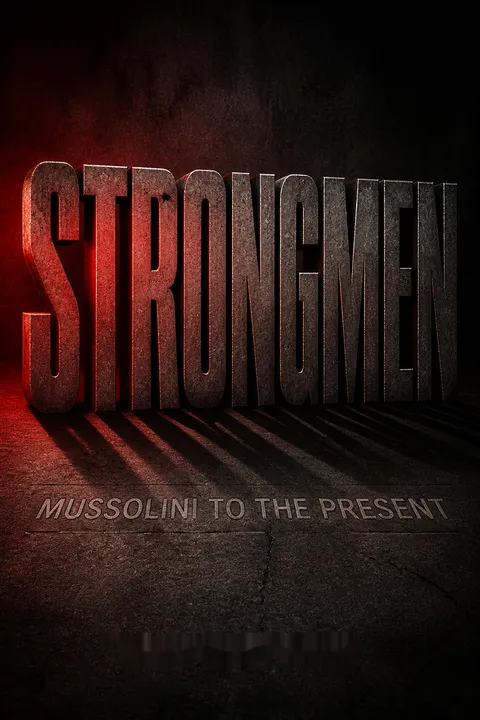

Key Takeaways
1. The Strongman's Ascent: Exploiting Crisis and Cultivating Charisma
For one hundred years, charismatic leaders have found favor at moments of uncertainty and transition.
Seizing the moment. Strongmen rise to power by capitalizing on societal polarization and crises, presenting themselves as saviors who can restore order and national pride. They often emerge from outside traditional political systems, creating new movements and alliances that promise radical change. This pattern was evident after:
- World War I: Mussolini and Hitler exploited the systemic shock and widespread disaffection with conventional politics.
- Decolonization: Mobutu and Gaddafi leveraged anger against Western colonizers to rally followers.
- Post-Communism: Berlusconi and Putin filled the void left by collapsing ideologies, appealing to hypernationalist sentiments.
Cultivating appeal. These leaders skillfully use populist rhetoric, defining their nations by faith, race, or ethnicity rather than legal rights, and positioning themselves as the sole embodiment of "the people." They appeal to negative emotions like resentment and humiliation, promising payback for perceived exploitation by internal or external enemies. Their personal capacity for violence, often proclaimed during campaigns, signals their willingness to act decisively.
Elite enablement. Crucially, strongmen are often brought into the political mainstream by conservative elites who believe they can be controlled to solve specific problems, such as suppressing leftist movements. This alliance provides the insurgent with legitimacy and resources, allowing them to consolidate power. However, these elites often realize too late that the strongman's true agenda is personal power, not shared governance.
2. Crafting a "Greater Nation": Utopia, Nostalgia, and Racial Purity
The strongman’s ideal nation often exceeds his country’s current borders, with its members defined less by their physical location than by bloodline.
Vision of greatness. The strongman's project of national greatness is the ideological glue of his regime, justifying absolute power and narratives of saving the nation from crisis and humiliation. This vision typically blends three temporal frames:
- Utopia: A pristine, perfect future that redeems a bleak present, promising modernity and international prestige.
- Nostalgia: A return to a mythical past of secure male authority, traditional values, and lost imperial grandeur (e.g., Roman Empire for Mussolini, Ottoman Empire for Erdoğan).
- Crisis: A perpetual state of emergency that justifies repression and scapegoating of internal and external enemies, often with a geopolitical dimension.
Controlling bodies. This national project extends to controlling populations, with virility playing a central role in plans for national transformation. Policies target women and LGBTQ+ individuals, seen as threats to demographic goals and traditional gender roles. Leaders promote population growth among "desirable" groups while persecuting "undesirable" ones. Examples include:
- Mussolini's "Battle for Babies": Encouraging White births and persecuting "degenerates."
- Hitler's racial hygiene: Forced sterilizations of "enemies of the Volk" and the systematic extermination of Jews and other minorities.
- Putin's "traditional values": Anti-Western sentiment, pronatalism, and anti-LGBTQ+ legislation.
Expansionist ambitions. Strongmen often view their nation's borders as fluid, seeking to expand territory and reclaim "nationals" through imperialist maneuvers. This can involve military action, as seen in Hitler's annexation of the Sudetenland or Putin's annexation of Crimea. Exiles, both those who leave voluntarily and those forced out, become valuable resources or targets in this broader national vision.
3. The Art of Mass Persuasion: Propaganda and the Personality Cult
In propaganda as in love, anything is permissible which is successful.
Shaping reality. Propaganda is a core tool for strongmen, designed to sow confusion, discourage critical thinking, and persuade people that the leader's version of reality is the only truth. It relies on modern technologies of mass communication and surveillance to create an illusion of the leader's omnipresence and infallibility. Key strategies include:
- Direct communication: Using radio, newsreels, television, and social media to bypass traditional gatekeepers and present the leader as an authentic interpreter of the popular will.
- Aesthetic experience: Transforming politics into a spectacle, with rallies and media appearances designed to elicit raw emotion and adulation.
- Repetition: Disseminating the same message through multiple channels to synchronize society around the leader's person and ideological priorities.
Cultivating the image. Personality cults are central to this effort, presenting the leader as an ideal blend of everyman and superman, accessible yet untouchable. Examples include:
- Mussolini's shirtless displays: Projecting sturdy masculinity and modern leadership.
- Hitler's theatrical oratory: Building from calm to "fanatic-hysterical energy" to captivate crowds.
- Putin's macho poses: Advertising fitness and potency as a defender of Russia's pride.
Silencing dissent. Propaganda also involves discrediting the press, labeling critical coverage as "criminal" or "fake news" to insulate the public from inconvenient truths. This encourages self-censorship and makes it easier to construct an alternate reality. Foreign propaganda efforts, often aided by PR firms, aim to rebrand authoritarian states as stable and productive, countering negative reports from exiles and human rights organizations.
4. Virility as Power: Sexual Control and Misogynist Rule
As a masculine egotist he sees women solely as beauties made for pleasure.
Controlling bodies, satisfying desires. The strongman's personal sex life is often intertwined with his exercise of power, revealing how corruption, propaganda, and violence work together to fulfill his desires. Far from being private, his sexual exploits can become state-assisted operations, consuming significant time and resources. This includes:
- State-assisted procurement: Mussolini's secret police and fixers arranged encounters with numerous women, managing abortions, payoffs, and threats.
- Harem systems: Gaddafi established a "Department of Protocol" to kidnap and confine women for his sexual abuse, using state resources and female enablers.
- Business networks: Berlusconi leveraged his media empire and beauty pageants to create a supply of women for gratification, with some even gaining political positions.
Machismo as legitimacy. Strongmen boast of their virile powers through bare-chested photographs (Mussolini, Putin) or by surrounding themselves with desirable women (Gaddafi, Berlusconi, Trump). This machismo is not mere posturing but a strategy of political legitimation, reinforcing patriarchal norms and making ordinary men feel better about their own transgressions. It also translates into state policies that target women and LGBTQ+ populations, who are seen as adversaries.
Humiliation and control. The strongman's sexual behavior often involves humiliating and violating women, asserting his dominance and power. This extends to controlling the men around him, as seen in Mobutu's practice of taking officials' wives. The ultimate aim is total possession and the breaking of individual will, reducing people to instruments of the leader's desires.
5. Kleptocracy: Corruption as a System of Control
What Putin and Erdogan could get away with at the beginning of their terms in office is nothing compared to what they can get away with now.
Abuse of public power. Corruption is a defining feature of strongman rule, involving the systematic abuse of public power for private gain. This includes:
- Bribery and kickbacks: Mobutu's regime was a "kleptocracy" fueled by kickbacks from private businesses and siphoning international aid.
- Plunder of state resources: Putin and Erdoğan seize profitable businesses and national assets, often under the guise of cleansing the state of "enemy influences."
- Tax and licensing extortion: Using regulations to force bankruptcies or extort payments from businesses.
Co-opting elites. Strongmen use corruption as a tool of co-optation, binding individuals and groups to them through ethical compromises and material rewards. This creates a climate of complicity and dependency, where loyalty to the leader outweighs professional ethics. Purges of the judiciary and smear campaigns against journalists who expose thievery further enable this system.
Divide and rule. To protect themselves from rivals, strongmen employ a "divide and rule" strategy, frequently reshuffling cabinets and keeping elites in competition. This prevents any single official from gaining too much power or conspiring against the leader. Family members and trusted cronies are often placed in key positions to manage official and unofficial financial interests, minimizing the risk of exposure.
6. Institutionalized Violence: Terror as a Tool of Governance
Torture in Chile is not isolated sadism but state policy.
Systematic brutality. Strongman states institutionalize violence as a central means of political control, creating new hierarchies and power structures. This violence is presented as a national and civic duty, a necessary price for making the country "great." Key aspects include:
- Psychological damage: A pervasive culture of surveillance and threat fosters subjection and self-policing, where even a casual remark can lead to imprisonment.
- Public persecution: Acts of public humiliation and punishment normalize the targeting of specific groups, reinforcing anxiety and demonstrating state power.
- Confinement: Penal colonies, prisons, and concentration camps are used to incarcerate enemies, often under brutal conditions designed to break the prisoner's sense of self.
Methods of terror. Strongmen employ a range of violent tactics, often drawing on historical precedents and international expertise:
- Torture: Practices like electric shock, waterboarding ("submarino"), and sexual violence are systematically used to extract information and instill fear.
- Mass killing: From Mussolini's genocide of Bedouins in Libya to Hitler's gas chambers and Franco's mass graves, the goal is to eliminate large numbers of perceived enemies.
- Targeted assassinations: Putin's use of poisonings and Gaddafi's elimination of exiles demonstrate the strongman's reach beyond national borders.
Legitimizing harm. Authoritarian regimes transform cultural and moral norms to legitimate harming others, promoting individuals who thrive in situations where inhibitions are freed. Collaborators are incentivized with material rewards and the thrill of transgression. This creates a destructive cycle where violence becomes an end in itself, often turning against the perpetrators when their usefulness ends.
7. The Unseen Force: Resistance in the Face of Tyranny
What kept us going during those years was a very deep conviction that dictatorship was an evil too great for our people . . . that we had to resist, that each one had his or her work to do.
Challenging the narrative. Resistance to strongmen takes many forms, from individual acts of defiance to mass movements, often fueled by a profound belief in human dignity and freedom. These actions aim to break through the state's propaganda and reclaim public space. Examples include:
- Assassination attempts: Georg Elser's bomb plot against Hitler or the FPMR's attack on Pinochet.
- Non-violent protest: The White Rose Society's anti-Nazi leaflets, Chile's "NO+" campaign, or Russia's "honest elections" rallies.
- Public art and messaging: Caricatures, graffiti, and slogans that mock the leader and expose state abuses.
Acts of defiance. Resistance often involves refusing to comply with state demands, even in small ways, sending powerful messages in societies predicated on obedience. This can range from not performing the "Heil Hitler" salute to women risking prison for birth control. Private acts of memory, like hiding photographs of fallen leaders or documenting state crimes, defy the strongman's politics of oblivion.
Mobilizing for change. Mass non-violent protests are particularly effective, especially when fueled by economic hardship, fraudulent elections, or war. These movements can unite diverse groups, from students and labor activists to religious organizations, and gain international attention. New media technologies, like social media, play a crucial role in organizing, communicating, and building solidarity, allowing dissidents to expose state repression in real-time.
8. The Inevitable Fall: Decline, Betrayal, and Reckoning
It’s not surprising that people destroy the idols of their own creation. Perhaps it is the only way to bring them [the idols] down to human proportions.
The downward arc. Strongmen are ill-equipped to handle the decline of their power, often clinging to hubris, aggression, and greed even when these traits become self-defeating. Their belief in their own infallibility leads them to ignore experts and rely on flatterers, making them vulnerable to misjudgment. Most authoritarians leave office involuntarily, often toppled by elites rather than popular revolutions.
Signs of weakness. As their authority erodes due to war, economic distress, or widespread corruption, strongmen face increasing dissent. Their propaganda loses impact, and their charismatic hold weakens. Examples include:
- Mussolini's decline: Exhausted by war, facing air raids and hunger, his popularity plummeted, leading to his ouster by the Grand Council.
- Hitler's isolation: His lack of empathy and military blunders led to declining confidence and record prosecutions for anti-Hitler remarks.
- Gaddafi's betrayal: His people, including former tribal allies, turned against him during the Arab Spring, leading to his violent death.
The aftermath. The fall of a strongman often brings a period of reckoning, where their memory is repudiated, and their crimes are exposed. Institutions they used for power may become irrelevant or discredited. However, the psychological and societal damage wrought by their rule can linger for years, requiring sustained efforts to restore dignity, empathy, and solidarity.
9. America's Complicity: Enabling Authoritarianism Globally
America has played an outsized role in the success of authoritarianism around the world, starting with the US banks and media outlets that supported Mussolini’s dictatorship in the 1920s.
Historical patterns. The United States has a long history of supporting strongmen globally, often prioritizing geopolitical interests or economic gain over democratic values. This pattern was particularly visible during the Cold War, where anti-Communist dictators like Mobutu and Pinochet received substantial American backing. This support has taken various forms:
- Financial aid: Loans from US banks and institutions, even when aware of corruption, propped up regimes.
- Lobbying and PR: American firms have worked to whitewash the reputations of despots, presenting their countries as stable and attractive for business.
- Military training: The US Army's School of the Americas taught torture techniques to right-wing militants from around the world.
Modern entanglements. In the new authoritarian age, American lawyers and wealth managers continue to help strongmen hide looted money in offshore accounts. US-based lobbying and public relations firms actively promote the interests of autocratic leaders like Erdoğan and Orbán, even as these leaders undermine democracy in their own countries. This assistance allows despots to destroy democratic institutions abroad while enjoying the benefits of democracy at home.
The Trump era. Trump's presidency brought this complicity into sharp focus, with his administration's actions often mirroring the authoritarian playbook. His ties to Russian investors, his praise for strongmen like Putin, and his administration's efforts to undermine democratic norms at home reflect a dangerous continuity in America's relationship with authoritarianism. The "naïveté" of many Americans who believed Trump would be "elevated by the office" highlights a lack of understanding of these historical patterns.
10. The Enduring Legacy: Why Understanding Strongmen Matters Today
The strongman’s trick is to seem exceptional and yet to embody the national everyman, with all of his endearing flaws.
Beyond the individual. Strongmen do not simply vanish with their departure; their influence lingers in the "muscle memory" of a population accustomed to obedience and in the physical remnants of their rule. Their stadiums, highways, and monuments, while admired by some, cannot obscure the catastrophic human and economic costs of their regimes. Understanding this enduring legacy is crucial for preventing future authoritarian ascents.
The cost of control. Strongmen impoverish societies by prioritizing personal gain over public good, exacerbating inequality, plundering state assets, and replacing expertise with loyalty. Their insatiable drive to accumulate bodies, territory, and wealth stems from a secret dread of losing everything, fueling a cycle of repression and self-defeating behavior. This inherent instability makes them dangerous leaders, especially during crises.
Lessons for democracy. To counter authoritarianism effectively, societies must prioritize accountability and transparency, recognizing that elections alone are no longer a sufficient measure of democracy. This requires:
- Challenging misinformation: Actively combating the "corrosive effects" of lies and the blurring of fact and fiction.
- Supporting civil society: Empowering organizations that promote justice, human rights, and critical thinking.
- Cultivating empathy: Reclaiming patriotism and love for country from those who use it to divide, and fostering compassion and solidarity as fundamental democratic values.
The path forward. History shows that resistance, even in its quietest forms, can be a path to recovering self-dignity and reaffirming humanity. The victories of figures like Ekrem Imamoğlu, who campaigned on "radical love" against a strongman's politics of fear, offer hope. By learning from the past century of democracy's destruction and resurrection, we can better support those who struggle for freedom and build societies founded on trust, empathy, and mutual aid.
Review Summary
Strongmen by Ruth Ben-Ghiat examines authoritarian leaders from Mussolini to Trump, analyzing their common tactics: propaganda, corruption, violence, and toxic masculinity. The book divides strongmen into three eras: post-WWI fascists, Cold War coup leaders, and modern authoritarians. Readers appreciate Ben-Ghiat's scholarly yet accessible approach and her emphasis on resistance and downfall. Critics note the book's comparative breadth helps contextualize Trump within historical patterns of authoritarianism. Some reviewers wanted more structural analysis and criticized the omission of leftist dictators like Stalin and Mao, while others found it disorganized or rushed, though most consider it timely and essential reading.
People Also Read
Download PDF
Download EPUB
.epub digital book format is ideal for reading ebooks on phones, tablets, and e-readers.








































