
Key Takeaways
1. Spiritual Leadership Requires Soul-Care to Avoid Losing Oneself.
“And what do you benefit if you gain the whole world but lose your own soul? Is anything worth more than your soul?”
The soul's essence. The soul is the most real part of you, your very essence, existing beyond roles, jobs, or achievements. It's the part that longs for God and can feel "missing" amidst ministry challenges. Jesus warned that one could gain the world of ministry success but lose their soul in the process, impacting not just the leader but also the churches and organizations they lead.
Signs of slippage. Leaders often experience moments where their leadership feels disconnected from their inner spiritual reality. This "slippage" can manifest as:
- Exhorting others in values not personally lived.
- Manufacturing emotion in worship.
- Lacking genuine compassion in pastoral care.
- Feeling competitive or dissatisfied with one's own ministry.
Such signs indicate a soul losing its way, demanding courageous self-reflection.
The best offering. The most valuable thing a leader brings is their own transforming self, continually seeking God. This journey of spiritual transformation, where Christ is formed within us, is not a self-help project but a mysterious, organic process initiated and guided by God. It moves us from fear to trust, selfishness to authentic giving, and egoic control to divine will, making us true spiritual seekers for others.
2. True Leadership Begins by Facing One's Unexamined Inner Life.
A leader is a person who must take special responsibility for what’s going on inside him- or herself, inside his or her consciousness, lest the act of leadership create more harm than good.
Unconscious patterns. Moses, raised between two worlds, developed coping mechanisms like repressed anger, which violently erupted when he killed an Egyptian. This reactive behavior was a snapshot of his leadership before solitude. All leaders have a "dark side"—inner urges and dysfunctions, often formed unconsciously in childhood, that can sabotage their efforts if unexamined.
Fleeing into solitude. When Moses saw the destructive power of his unrefined leadership, he fled into solitude, recognizing that this part of him "will be no good for anyone." This desperate act of withdrawal is often necessary for leaders to confront their shadow side. It's a grace to face these issues early, before the stakes are higher and more people are affected.
The purgative way. Solitude allows the chaos of the soul to settle, leading to self-knowledge and conversion. Moses, by naming his son Gershom ("alien residing in a foreign land"), acknowledged his deepest pain and identity struggle. This "purgative way" involves:
- Admitting our dysfunctions, competitiveness, jealousies, and fears.
- Surrendering to our limitations and powerlessness to change ourselves.
- Letting go of the false self and adaptive behaviors.
This painful but liberating process prepares leaders to lead others into true freedom.
3. Cultivating Attentiveness Reveals God's Presence in the Ordinary.
When the LORD saw that he had turned aside to see, God called to him out of the bush.
Stopping to notice. Moses, while tending flocks, encountered a burning bush—an ordinary object afire with divine activity. His willingness to "turn aside and look" was crucial; God spoke only when Moses paused and noticed. Many leaders, caught in a relentless pace, miss these "burning bushes" in their own lives, longing for God's word but too busy to hear it.
The discipline of attention. Learning what to pay attention to is vital for leaders. Visionary leadership can sometimes fixate on the future, blinding us to God's present activity. Solitude creates space to:
- Let chaos settle.
- Notice God's work in big and subtle ways.
- Understand what these divine communications mean.
This practice propels us into a journey full of surprises and messages from God, transforming the mundane into the miraculous.
Burning hearts and discernment. Paying attention also involves recognizing inner stirrings, like the disciples' "burning hearts" on the Emmaus road. This cultivates discernment, the ability to distinguish between the real and the phony, and to recognize God's will. St. Ignatius's concepts of consolation (life-giving connection with God) and desolation (loss of God's presence) guide us to choose life-affirming paths, even in leadership decisions.
4. Authentic Calling is Deeply Interwoven with One's Unique Life Story.
Vocation does not come from willfulness. It comes from listening. I must listen to my life and try to understand what it is truly about—quite apart from what I would like it to be about—or my life will never represent anything real in the world, no matter how earnest my intentions.
God's personal address. God's call to Moses from the burning bush was deeply personal, connecting his identity as a Hebrew, his experience of displacement, and his passion for justice. Calling is not just about what we do, but about who we are and who God is calling us to become. It's an essentially spiritual experience where God's presence intersects with a human life, making sense of our entire history.
Beyond career development. Calling is more than a career choice or a pious euphemism for personal desires. It's a relational dynamic initiated by God, demanding our attention and response. It encompasses:
- Our genetics and innate capacities.
- Our personality and life-shaping experiences.
- The specific time and place of our birth.
Glimpses of our true self, often seen in unguarded childhood moments, reveal the essential self God called into being before external pressures or expectations.
Arguing it out with God. Moses initially resisted his calling, raising objections about his identity and inadequacy. God answered with variations on a single theme: the promise of His presence. This "fighting it out with God" in solitude is crucial for leaders to resolve ambivalence and ensure their leadership flows from conviction, not unresolved inner conflict. Jesus' wrestling in Gethsemane exemplifies this necessary process of aligning with God's will.
5. Effective Spiritual Guides Must First Navigate Their Own Journey of Freedom.
The great illusion of leadership is to think that man can be led out of the desert by someone who has never been there.
Journeying through stages. Moses' forty years in the wilderness prepared him to guide the Israelites, as he knew the terrain of spiritual bondage and freedom. The Exodus serves as a metaphor for the spiritual journey, moving through stages from preawareness to awareness, turning points, roundabout ways, and times of testing. Leaders must understand these stages from their own experience to guide others with gentleness and skill.
Preawareness to turning point. The journey begins in preawareness, where we are unaware of our bondage, followed by awareness, where increasing oppression or longing makes us realize something is wrong. This leads to a turning point, often marked by things getting worse before they get better, pushing us to make a decisive move. Leaders help people name reality and envision new possibilities, even when hope is dim.
The roundabout way and testing. God often leads us by a "roundabout way" to protect us from challenges we're not ready for, strengthening our reliance on Him. Times of testing, like the Red Sea, inevitably come, causing ambivalence and fear. Here, Moses' transformed leadership shone: instead of reacting impulsively, he called the people to "keep still" and trust God. This ability to lead others in waiting comes from a leader's own deep training in solitude and reliance on God's deliverance.
6. Embracing Human Limits is Essential for Sustainable Leadership.
When you reach the limits of your resources or abilities, you have no margin left. Yet because we don’t even know what margin is, we don’t realize it is gone.
The burden of indispensability. Moses initially carried too much of the burden alone, believing he was indispensable, leading to exhaustion for himself and the people. His father-in-law, Jethro, confronted him, stating, "What you are doing is not good." This humbling realization of human limits is crucial for leaders, challenging grandiosity and the "Superman mentality."
Symptoms of depletion. Pushing beyond limits manifests in various ways:
- Irritability or hypersensitivity.
- Restlessness and broken sleep.
- Compulsive overworking or "workaholism."
- Emotional numbness and escapist behaviors.
- Disconnection from identity and calling.
- Neglecting basic human needs and important relationships.
- Hoarding energy and slippage in spiritual practices.
Recognizing these signs is vital for recalibrating and preventing burnout.
The grace of limits. Moses learned to delegate, sharing the load with other spiritual, trustworthy leaders. Paul also emphasized living within the "limits" God assigned, seeing his "thorn in the flesh" as a gift to curb grandiosity. Embracing our finiteness—physical, relational, and spiritual—is deeply spiritual. It fosters humility, substance, and allows God's power to be seen most clearly, enabling us to work lovingly within the field God has given us.
7. Life-Giving Rhythms of Work and Rest Sustain the Leader's Soul.
Sadly, the need for recovery is often viewed as evidence of weakness rather than an integral aspect of sustained performance.
Sabbath as foundation. Moses established daily rhythms of receiving manna and weekly rhythms of Sabbath rest, shaping Israel's identity and teaching trust. In contrast, contemporary Christian leaders often fall into "the bondage of busyness," confusing activity with spiritual life. This leads to exhaustion and a "sloppy desperation" that hinders true discernment and effectiveness.
Jesus' example. Jesus himself prioritized rhythms of work and rest, instructing his disciples to "Come away to a deserted place all by yourselves and rest a while." He understood that continuous pushing without replenishment leads to a frenetic quality of work, lacking true presence and insight. Rested leaders bring steady, alert attention and discernment, unlike depleted ones who rely on external voices or react to symptoms.
Rhythms for well-being. Establishing rhythms like Sabbath, engagement/retreat, silence/word, and self-knowledge/examination is crucial for a leader's staying power. These rhythms:
- Honor our human limits as creatures, not the Creator.
- Create space for God's activity in our lives.
- Refine our speech and actions, making them more grounded in love and wisdom.
- Foster self-awareness, moving us beyond performance to authentic leadership.
These practices, both private and communal, are foundational for a life well-lived in God's presence.
8. Intercessory Prayer is the Core Work of a Spiritual Leader.
I look at God, I look at you, and I keep looking at God.
Beyond blame. Moses faced constant complaints and sabotage from the Israelites, who often projected their fears and dissatisfaction onto him. Instead of taking it personally or getting drawn into arguments, Moses consistently clarified that their complaints were against God, not him. This discipline freed him from undue burden and allowed him to engage in the essential work of intercession.
Moses' consistent intercession. Throughout the Exodus narrative, Moses repeatedly "cried out to the LORD" on behalf of the people, whether for bitter water, hunger, sin (golden calf), or rebellion. His intercession saved them from God's anger, healed Miriam, and provided guidance. The battle with Amalek vividly illustrates this: Moses stood on a hill, staff in hand, interceding, with Aaron and Hur supporting his weary arms, demonstrating that victory was won through prayer.
The power of not knowing. Intercessory prayer is not about telling God what to do, but about being present to God on another's behalf, listening for the Holy Spirit's prayer. It's an attitude of willingness to enter God's caring love, becoming sensitized to His invitations. This practice, less burdensome than human striving, allows God to guide our prayers, fostering peace and confidence that we are aligning with His will.
9. Transforming Loneliness into Fruitful Solitude Deepens Reliance on God.
I am told God loves me—and yet the reality of darkness and coldness and emptiness is so great that nothing touches my soul. . . . What tortures of loneliness . . . I wonder how long will my heart suffer like this?
The peculiar loneliness. Leadership brings a unique loneliness: seeing a vision others don't, staying faithful amidst criticism, and knowing "the buck stops here." Moses experienced this profoundly after the golden calf incident, feeling abandoned by God and overwhelmed by the people's waywardness. This existential loneliness, a "deepest kind of loneliness," is a pivotal moment for leaders.
A leader's greatest need. When earthly achievements and future visions pale, and a great emptiness opens up, a leader's greatest need becomes the palpable presence of God. Moses, at his breaking point, refused to go on without God's presence, asking God to "show me your ways" and "your glory." God responded by revealing His goodness and mercy, inviting Moses into a cleft of the rock for an intimate encounter.
Inward journey to freedom. Facing this profound loneliness compels an "inward journey" to meet God's infinite love. This transforms loneliness into fruitful solitude, filling emptiness and freeing leaders from being driven by external validation. Martin Luther King Jr. similarly found inner calm and new strength after taking his overwhelming fears to God, realizing God provides the interior resources to face life's storms.
10. Overcoming Isolation Requires Cultivating Authentic Leadership Community.
I am not able to carry all this people alone, for they are too heavy for me.
The burden of isolation. Moses, despite his intimacy with God, reached a point of utter despair, feeling unable to carry the people alone. This isolation, a paradox of leadership, often increases with success as leaders feel they must be in control or fear showing weakness. This can lead to "spiritual death" if not addressed.
God's solution: shared spirit. God responded to Moses' crisis by instructing him to gather seventy elders, promising to take some of Moses' spirit and put it on them so they could "bear the burden of the people along with you." This was more than organizational restructuring; it was a spiritual empowerment of a leadership community, alleviating Moses' inner, psychic aloneness.
Beyond teamwork. Spiritual community, unlike a task-oriented team, gathers around Christ and is a reality created by God's Spirit. Leaders are invited to participate in this reality by embracing values and practices that foster unity and transformation. Key values for leadership community include:
- Commitment to Christ-centered community.
- Personal and communal spiritual transformation.
- Teaching from lived experience.
- Discernment in decision-making.
- Truth-telling in love.
- Celebration and gratitude.
- Kindness and gentleness.
- Acknowledging brokenness.
- Listening to fear and resistance.
- Conflict transformation.
These values, lived out through practices like daily prayer and regular retreats, create a robust context for spiritual leadership.
11. Collective Discernment is Paramount for Finding and Doing God's Will Together.
At the command of the LORD the Israelites would set out, and at the command of the LORD they would camp.
The heart of spiritual leadership. Discernment—the capacity to recognize and respond to God's presence and activity—is central to spiritual leadership. Moses' leadership was defined by his ability to listen to God and guide the Israelites according to His commands, whether setting out or camping. This ongoing discernment was crucial for their survival and identity as a nation.
A culture of discernment. In contemporary culture, discernment requires moving beyond intellectual reliance to deep listening to the Holy Spirit. It's a spiritual practice and a habit, grounded in the belief that God is good and His will is always best. A leadership group committed to discernment must:
- Clarify the question, listening for deeper underlying issues.
- Involve the right people, including those with gifts of wisdom and diverse perspectives.
- Establish guiding values and principles, like commitment to trustworthy relationships and truth-telling.
This preparation ensures the process is grounded in spiritual integrity, not just human strategy.
Process and practice. Discernment involves continuous prayer, including prayers for quiet trust and indifference to personal agendas. It requires deep listening to experiences, inner promptings, Scripture, and each other, honoring all voices, especially those of reservation. Silence is vital for self-awareness and hearing God's wisdom. Finally, the group selects an option, seeking inner confirmation and unity, trusting that God's direction will emerge, leading to confident action.
12. The Ultimate Promised Land is God's Presence, Not Earthly Achievement.
I have let you see it with your eyes, but you shall not cross over there.
The season of letting go. As leaders near the end of their journey, they may realize not all dreams will come true. Moses, after leading for decades, was shown the Promised Land but not permitted to enter. This seemingly harsh consequence for his sin at Meribah also represents a final, profound letting go. It's a moment where earthly visions pale, and the presence of God becomes paramount.
Beyond grandiosity. This "mountaintop" experience is the ultimate antidote to grandiosity, putting our role in kingdom work into perspective. Moses' peace in this moment stemmed from a lifetime of encounters with God, culminating in a deep transformation where God's presence became his ultimate Promised Land. He was freed from needing roles or tasks to define him, content simply to be a soul in God's presence.
Freedom in surrender. Like Paul, who desired to "depart and be with Christ," or Martin Luther King Jr., who declared, "I've been to the mountaintop... I've seen the Promised Land. I may not get there with you," true leaders reach a point where intimacy with God surpasses all earthly achievements. This profound surrender brings an inner freedom, allowing them to lead with abandonment and strength of soul, knowing that God's will is the best thing that can happen, and His presence is their ultimate good.
Review Summary
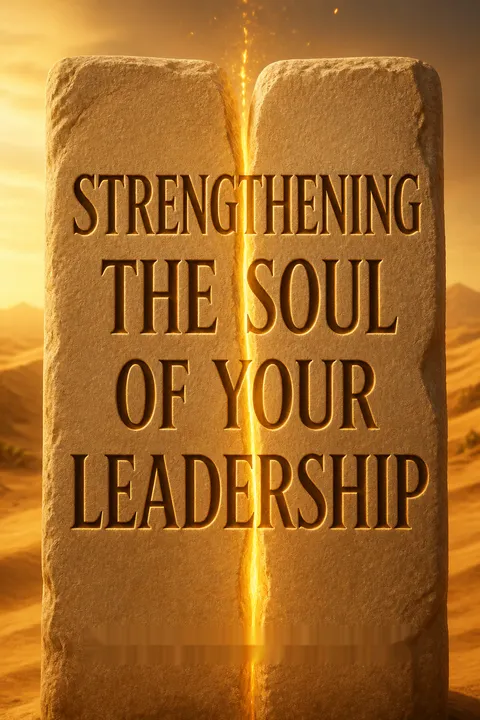
Strengthening the Soul of Your Leadership receives high praise for its integration of Moses' life with practical spiritual formation principles for Christian leaders. Readers appreciate Barton's honest, relatable writing style, practical chapter-ending exercises, and emphasis on solitude, silence, and seeking God amid ministry's demands. Common criticisms include perceived over-stretching of Moses' narrative to fit leadership principles, occasional eisegesis, and insufficient focus on Jesus. Despite these concerns, most readers found the book deeply impactful, particularly those experiencing ministry burnout or entering significant leadership roles.
People Also Read








About the Author
Other books by Ruth Haley Barton




Download PDF
Download EPUB
.epub digital book format is ideal for reading ebooks on phones, tablets, and e-readers.








































