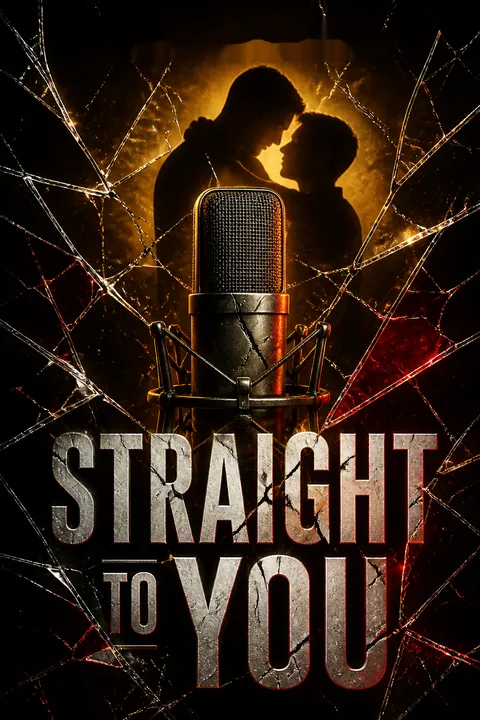

Plot Summary
Voices in the Dark
Ryder, a charismatic audiobook narrator, spends his days giving voice to romance novels—mostly queer stories, despite identifying as straight. His best friend, Logan, is his anchor: their friendship is built on years of banter, comfort, and unspoken understanding. One night, after a recording session, Ryder heads to their usual bar, Pine Bar, to meet Logan. The night feels off, especially when Ryder notices a stranger's intense stare from across the room. The man's gaze lingers, unsettling Ryder in a way he can't explain. Logan, ever protective, notices Ryder's distraction and tries to draw him back in, but the stranger's presence casts a shadow over their ritual. The night ends with Ryder feeling watched, and a sense of unease follows him home, setting the stage for a story where the line between fiction and reality blurs.
Friday Night Rituals
Friday nights are sacred for Ryder and Logan—a time to decompress, share beers, and tease each other about work and life. Their easy camaraderie is a balm against the world's pressures. But this night, the comfort is disrupted. Ryder's mind is elsewhere, haunted by the stranger's stare. Logan senses the shift, his own feelings complicated by a long-buried crush on Ryder. Their banter is tinged with tension, and when Ryder leaves early, Logan is left alone, questioning the boundaries of their friendship and his own desires. The night's strangeness lingers, and both men are forced to confront feelings they've long ignored, as well as the creeping sense that something—or someone—is watching.
The Stranger's Stare
Ryder can't shake the feeling of being watched. The stranger's gaze at the bar becomes a recurring presence in his mind, and soon, odd noises outside his home and strange emails begin to appear. Logan's protectiveness intensifies, insisting Ryder stay over more often. Their friendship, once effortless, is now charged with new energy—both sexual and fearful. The stranger, Kyle, begins to insert himself into their lives, always appearing where Ryder is, always watching. The tension between comfort and threat escalates, and the safe world Ryder and Logan built together starts to fracture under the weight of obsession and fear.
Boundaries Blurred
A moment of accidental intimacy—Ryder walking in on Logan in the shower—becomes a catalyst for change. What should be awkward instead ignites something between them. Ryder, previously certain of his straightness, finds himself aroused by the sight of his best friend. Logan, long aware of his own feelings, is both hopeful and terrified. Their physical boundaries blur as they begin to explore each other, first through mutual masturbation, then through deeper confessions. The emotional stakes rise: what began as friendship is now charged with longing, confusion, and the possibility of something more. But as their relationship evolves, so does the threat from Kyle, whose obsession grows more dangerous.
Unsettling Messages
The emails from Kyle become more frequent and invasive, shifting from admiration to possessiveness and veiled threats. Ryder's sense of safety erodes as he realizes the stalker knows intimate details about his life and routines. Logan insists Ryder move in with him for protection, and their cohabitation deepens their bond. Yet, the constant fear takes its toll—Ryder struggles to work, and both men are haunted by the knowledge that Kyle is always one step ahead. The police are slow to act, and the couple is forced to rely on each other, their vulnerability drawing them closer even as the danger mounts.
Paranoia and Protection
As Kyle's stalking intensifies, Ryder and Logan become increasingly isolated. The police, hindered by bureaucracy and Kyle's connections, offer little help. The couple installs cameras, changes routines, and leans on each other for comfort. Their love becomes a sanctuary, but also a source of guilt—Logan blames himself for not protecting Ryder sooner, while Ryder fears his presence puts Logan at risk. The outside world fades away, replaced by a cocoon of anxiety and intimacy. Their relationship, forged in crisis, is tested by the relentless pressure of being hunted, and the question of whether love can survive under siege looms large.
Bi-Awakening
In the midst of chaos, Ryder's understanding of himself shifts. What began as confusion becomes clarity: he is attracted to Logan, not just emotionally but physically. Their sexual exploration is tender, awkward, and exhilarating—a series of firsts that redefine both men's identities. They move from mutual masturbation to oral sex, to finally making love, each encounter deepening their connection. The joy of discovery is tempered by the ever-present threat, but their intimacy becomes an act of defiance—a way to reclaim agency and pleasure in a world that feels increasingly unsafe. Their love story, once platonic, is now a passionate, queer romance.
Obsession Revealed
The truth about Kyle comes to light: he is not just a random stalker, but a police consultant with access to their case files and the ability to manipulate the investigation. His obsession with Ryder is rooted in delusion, fueled by the belief that Ryder's audiobook performances were secret messages meant for him. The couple's attempts to seek help are thwarted by Kyle's connections, and the police's reluctance to act. The sense of betrayal is profound—those meant to protect them are complicit in their endangerment. As Kyle's behavior escalates from digital harassment to physical intrusion, Ryder and Logan realize they are truly on their own.
Stalker in the Shadows
Kyle's obsession reaches its peak when he breaks into Logan's apartment, kidnaps Ryder, and leaves Logan for dead. The violence is sudden and brutal—Logan is stabbed and left bleeding in a parking garage, while Ryder is drugged, bound, and taken to a hidden location. The narrative shifts to survival: Ryder endures psychological torment, forced to perform for Kyle and stripped of autonomy. Logan, recovering in the hospital, is frantic with guilt and desperation, determined to find Ryder before it's too late. The story becomes a race against time, with love and survival hanging in the balance.
Escalation and Escape
Ryder's captivity is a nightmare of manipulation and control. Kyle alternates between tenderness and violence, convinced that Ryder will eventually love him. Ryder, drawing on memories of Logan and their love, resists Kyle's attempts to break him. He feigns compliance, waiting for an opportunity to escape. Meanwhile, Logan, aided by his father and a trusted friend, pieces together clues to locate Ryder. The tension is excruciating—every moment in captivity is a test of will, and every delay in rescue increases the risk. The chapter culminates in a dramatic confrontation, as Logan and his father storm Kyle's hideout, risking everything to save Ryder.
Kidnapped and Confined
The rescue is violent and cathartic. Logan, driven by love and rage, confronts Kyle, who is moments away from killing Ryder. In a split-second decision, Logan shoots Kyle, saving Ryder's life. The aftermath is a blur of police intervention, medical care, and emotional collapse. Ryder and Logan, battered but alive, cling to each other, their bond forged in trauma and survival. The experience leaves scars—physical and psychological—but also a renewed sense of agency. They are no longer victims, but survivors, determined to reclaim their lives and their love from the shadow of violence.
Rescue and Reckoning
The days following the rescue are a whirlwind of hospitals, therapy, and family support. Ryder and Logan struggle with nightmares, guilt, and the challenge of feeling safe again. Therapy becomes a lifeline, helping them process trauma and rebuild trust in themselves and each other. Their relationship, tested by crisis, emerges stronger—rooted in honesty, vulnerability, and mutual care. They confront the realities of healing: progress is slow, setbacks are inevitable, but together they find hope. The chapter ends with a sense of cautious optimism, as they begin to imagine a future beyond survival.
Healing Together
Returning to their routines, Ryder and Logan are embraced by family and friends. Their relationship, once private, is now public—met with support, teasing, and celebration. The small-town community, initially a source of anxiety, becomes a backdrop for queer joy and acceptance. The couple navigates the complexities of coming out, dealing with whispers and curiosity, but ultimately finds that love is met with love. Their bond, once forged in secrecy and fear, is now a source of pride. The chapter is a celebration of found family, resilience, and the power of community to heal.
Coming Home
Determined to leave the past behind, Ryder and Logan decide to buy a new home together—a space free from the memories of trauma. The process is both daunting and exhilarating, symbolizing a fresh start. They fill their new home with laughter, love, and the rituals that have always defined their relationship. The act of building a life together becomes an act of healing, a way to reclaim agency and joy. Their home is a sanctuary, a testament to survival and the possibility of happiness after darkness.
Love Without Labels
Ryder's journey from presumed straightness to embracing his bisexuality is central to the story's emotional arc. Through love, sex, and self-reflection, he learns that identity is fluid and that love transcends labels. Logan's patience and acceptance create a safe space for Ryder to explore and claim his queerness. Together, they challenge traditional notions of masculinity and intimacy, modeling a relationship built on equality, vulnerability, and mutual desire. Their story becomes a celebration of queer love in all its messy, beautiful complexity.
Facing the Past
Kyle's arrest and conviction bring a measure of closure, but the scars remain. The couple attends the sentencing, confronts the reality of what they survived, and begins to let go of fear. Therapy, family, and each other provide the support needed to move forward. The chapter is about facing the past without being defined by it—acknowledging pain, but choosing hope. Ryder and Logan emerge not as victims, but as authors of their own story, determined to write a future filled with love and possibility.
New Beginnings
With the past behind them, Ryder and Logan embrace new beginnings. They settle into their new home, adopt a dog, and create rituals that celebrate their love. Their sex life, once fraught with anxiety, becomes a source of joy and exploration. They support each other's careers, nurture friendships, and dream of the future. The chapter is a portrait of queer domesticity—messy, imperfect, but deeply fulfilling. Their love, once forged in crisis, is now a source of everyday happiness.
Happily Ever After
The story culminates in a joyful proposal—Ryder asking Logan to marry him during a trip to Mexico. Their journey, marked by fear and violence, ends with a celebration of love and commitment. Surrounded by beauty and possibility, they look to the future with hope. Their happily ever after is not the absence of struggle, but the choice to love fiercely in spite of it. The final image is one of laughter, intimacy, and the promise of forever—two men who survived the worst and built the best, together.
Analysis
A modern queer romance that confronts trauma, obsession, and the transformative power of love
Straight to You is a gripping blend of romance and psychological thriller, distinguished by its authentic portrayal of queer love, trauma, and recovery. At its core, the novel is about the ways love can both save and endanger us—how intimacy, when threatened, becomes both a refuge and a battleground. The story's strength lies in its dual focus: the slow-burn romance between Ryder and Logan, and the escalating threat posed by Kyle's obsession. The narrative refuses to shy away from the darkness of stalking, violence, and institutional betrayal, but it also insists on the possibility of healing, joy, and queer domesticity. Ryder's bi-awakening is handled with nuance, challenging stereotypes and celebrating the fluidity of identity. The novel's ultimate message is one of resilience: that even in the face of unimaginable fear, love—chosen, fought for, and reclaimed—can be a force for survival and transformation. In a world where queer stories are too often defined by tragedy, Straight to You offers a vision of hope, agency, and the hard-won right to a happily ever after.
Review Summary
Straight to You by Bec Benson is a best friends-to-lovers romance featuring Ryder, an audiobook narrator, and Logan, his bisexual best friend. When Ryder receives threatening emails from an obsessed stalker, he turns to Logan for protection, sparking a relationship evolution. Readers praised the sweet, codependent dynamic, low-angst romance, and suspenseful stalker subplot. Common criticisms included repetitive writing, slow pacing in the final sections, and predictability. Most reviewers were impressed this was a debut novel, highlighting strong chemistry, open communication, and spicy scenes.
Characters
Ryder
Ryder is a talented audiobook narrator whose voice is both his livelihood and, ironically, the source of his greatest danger. Outgoing, witty, and deeply empathetic, Ryder is the emotional center of the novel. His journey is one of self-discovery: from identifying as straight to embracing his bisexuality, from confident performer to vulnerable survivor. His relationship with Logan is the anchor in his life—what begins as friendship evolves into passionate love. Ryder's resilience is tested by Kyle's obsession, but his refusal to be defined by trauma is inspiring. He is both victim and hero, learning to reclaim agency, pleasure, and joy after violence. His arc is about finding safety, love, and self-acceptance in the arms of his best friend.
Logan
Logan is Ryder's best friend, eventual lover, and the story's emotional rock. A graphic designer with a dry sense of humor and a fiercely protective streak, Logan is openly bisexual and has long harbored feelings for Ryder. His journey is one of patience, vulnerability, and courage—waiting for Ryder to catch up emotionally, then risking everything to save him. Logan's guilt over not preventing Ryder's trauma is palpable, but his love is unwavering. He is both caretaker and equal partner, modeling healthy masculinity and queer intimacy. Logan's arc is about learning to forgive himself, embrace joy, and build a life rooted in love rather than fear.
Kyle
Kyle is the novel's villain—a man whose obsession with Ryder blurs the line between admiration and violence. Initially a stranger at the bar, Kyle's fixation escalates from unsettling stares to invasive emails, home invasion, and ultimately kidnapping. His background as a police consultant gives him access and power, making him a formidable threat. Kyle's delusions are rooted in loneliness and a warped sense of entitlement; he believes Ryder's audiobook performances are secret messages meant for him. His violence is both physical and psychological, seeking to possess Ryder at any cost. Kyle is a chilling portrait of toxic obsession and the dangers of unchecked power.
Mia
Mia is the queen of Pine Bar—a sharp-tongued, big-hearted bartender who anchors the community. She provides comic relief, practical advice, and unwavering support to Ryder and Logan. Mia's presence is a reminder of the importance of chosen family and queer community. She is the first to celebrate their relationship, the first to notice when something is wrong, and the first to offer help. Mia's role, though secondary, is vital—she represents the safety and acceptance that Ryder and Logan crave.
Logan's Parents (Anne and Jim)
Anne and Jim are models of supportive parenting. Their home is a sanctuary for both Logan and Ryder, offering warmth, food, and acceptance. Jim's military background becomes crucial during the rescue, while Anne's nurturing presence helps both men heal. Their acceptance of Ryder and Logan's relationship is immediate and joyful, providing a counterpoint to the trauma inflicted by Kyle. They embody the best of family—steadfast, loving, and always present.
Ryder's Mom (Emma)
Emma, though living hours away, is a constant presence in Ryder's life through care packages and emotional support. Her acceptance of Ryder's sexuality and relationship with Logan is unconditional. Emma's warmth and humor provide a sense of home and belonging, especially after the trauma of Kyle's stalking. She represents the importance of maternal love and the healing power of family.
Pete
Pete is a fixture at Pine Bar, always ready for a game of darts and a bit of friendly competition. His presence is a reminder of the ordinary joys of small-town life. Pete's interactions with Ryder and Logan provide levity and a sense of continuity, even as their world is upended by danger. He is a symbol of the life they are fighting to reclaim.
Matt
Matt is Logan's coworker and the story's unofficial investigator. His skills in IT and true crime obsession become crucial in tracking Kyle's digital footprint and providing leads when the police fail. Matt's willingness to help, even at personal risk, underscores the importance of friendship and community in times of crisis.
Detective Santos
Detective Santos is one of the few police officers who takes Ryder and Logan's case seriously. He navigates the bureaucracy and internal politics of the department, risking his career to pursue justice. Santos's persistence and empathy provide a glimmer of hope in an otherwise indifferent system. He represents the possibility of institutional change and the importance of allies within flawed systems.
Kyle's Uncle
Kyle's uncle, the police chief, is a shadowy figure whose loyalty to family overrides his duty to justice. His obstruction of the investigation allows Kyle's crimes to escalate, highlighting the dangers of nepotism and institutional corruption. His eventual downfall is a necessary step toward accountability and closure.
Plot Devices
Dual POV and Alternating Narration
The novel employs a dual point-of-view structure, alternating between Ryder and Logan. This device allows readers to experience the story's emotional arc from both sides—Ryder's vulnerability and confusion, Logan's longing and protectiveness. The alternating narration deepens the intimacy of their relationship, revealing secrets, fears, and desires that might otherwise remain hidden. It also heightens suspense, as each character's knowledge and perspective are limited, creating dramatic irony and tension.
Foreshadowing and Suspense
From the opening chapters, the narrative is laced with foreshadowing: the stranger's stare, unexplained noises, and unsettling emails all hint at the danger to come. The gradual escalation of Kyle's obsession—from digital harassment to physical violence—creates a sense of mounting dread. The use of suspenseful pacing, cliffhangers, and red herrings keeps readers on edge, blurring the line between romance and thriller.
Queer Romance Tropes
The story draws on classic queer romance tropes: the slow-burn friends-to-lovers arc, the bi-awakening of a presumed-straight protagonist, and the importance of found family. These devices ground the narrative in familiar emotional territory, even as the plot veers into darker themes. The romance is both a source of comfort and a site of transformation, allowing the characters to grow, heal, and redefine themselves.
Symbolism of Voice and Silence
Ryder's profession as a narrator is central to the story's symbolism. His voice is both his gift and his vulnerability—the thing that draws Kyle's obsession and the means by which he connects with Logan. The motif of voice recurs throughout: in whispered confessions, shouted warnings, and the silence of trauma. The act of reclaiming his voice—both literally and metaphorically—is key to Ryder's healing and agency.
Home as Sanctuary and Prison
The settings of the novel—Ryder's house, Logan's apartment, Pine Bar, the new home—are more than backdrops; they are symbols of safety, danger, and transformation. Home is at first a sanctuary, then a site of violation, and finally a space to be reclaimed. The act of moving, buying a new house, and building a life together is both practical and symbolic—a way to assert control and create a future free from fear.
Trauma and Recovery
The novel does not shy away from the realities of trauma—panic attacks, nightmares, guilt, and the slow, nonlinear process of recovery. Therapy is depicted as essential, and the characters' healing is shown as ongoing rather than complete. The story resists easy resolutions, acknowledging that survival is only the first step toward wholeness.
Download PDF
Download EPUB
.epub digital book format is ideal for reading ebooks on phones, tablets, and e-readers.








































