
Plot Summary
Shadows in the Mountains
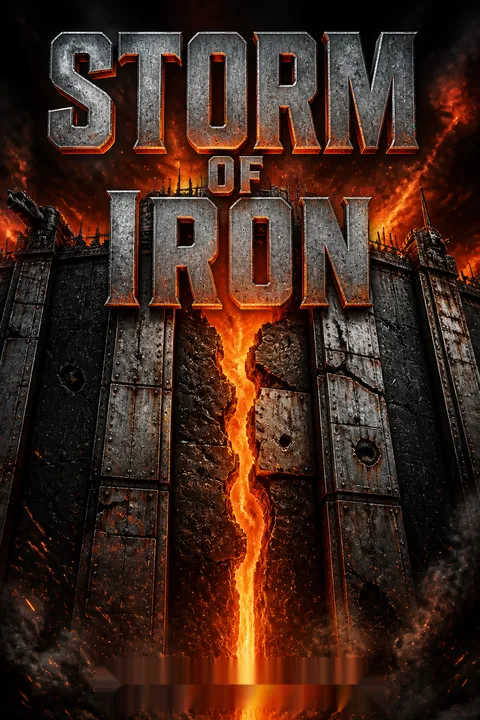
On the desolate world of Hydra Cordatus, Guardsman Hawke and his fellow soldiers endure the monotony and isolation of mountain listening posts, their only companions the biting wind and the ever-present threat of disciplinary action. But the tedium is violently broken when the Iron Warriors, ancient traitor Space Marines, infiltrate and annihilate the outposts with ruthless efficiency. Hawke survives by luck and cunning, but his world is upended as he witnesses the first signs of a full-scale invasion. The sense of dread and futility is palpable, as the defenders realize they are mere pawns in a much larger, merciless game.
The Iron Warriors Unleashed
The Iron Warriors, led by the enigmatic and terrifying Warsmith, launch their meticulously planned assault. Their infiltration teams, led by Honsou, create blind spots in the Imperial defenses, allowing for a devastating orbital bombardment. The defenders are caught off guard, their routines and complacency shattered by the sudden, overwhelming violence. The Iron Warriors' cold, methodical approach to war is contrasted with the confusion and panic of the Imperial Guard, setting the tone for the brutal siege to come. The emotional weight of betrayal and the horror of Chaos are felt in every moment.
Jericho Falls Burns
Jericho Falls, the planet's vital spaceport, becomes the first major casualty. The Iron Warriors' drop-pods rain death, and the defenders are slaughtered in a storm of iron and fire. The command center is breached, and the last pockets of resistance are crushed by the relentless advance of Chaos. The Warsmith's lieutenants—Forrix, Kroeger, and Honsou—vie for glory and recognition, their rivalries simmering beneath the surface. The defenders' hope is extinguished as the Iron Warriors consolidate their hold, preparing for the true prize: the impregnable citadel of Hydra Cordatus.
The Siege Begins
Within the citadel, Castellan Vauban and his officers scramble to organize a defense. The fortress is a marvel of military engineering, but the sheer scale of the enemy and the loss of the spaceport weigh heavily on morale. The defenders cling to discipline and tradition, but the Iron Warriors' siegecraft is relentless. The Warsmith's true goal remains hidden, but his obsession with the citadel is clear. The psychological toll mounts as the defenders realize reinforcements are months away, and the enemy is both patient and inexorable.
Prisoners and Pawns
The Iron Warriors use prisoners and slaves as expendable assets, driving them into minefields and artillery zones to map the defenders' fire patterns. Lieutenant Larana Utorian's defiance earns her a twisted respect from Kroeger, sparing her for a darker fate. Hawke, presumed dead, survives in the mountains, becoming an unlikely witness and eventual agent of resistance. The dehumanization and cruelty of Chaos are laid bare, as the defenders are forced to kill their own, and the Iron Warriors' contempt for humanity is absolute.
The First Parallel
The Iron Warriors begin the methodical construction of siege works, digging trenches and parallels with brutal efficiency. Honsou and Forrix lead reconnaissance missions, uncovering hidden defenses and laying the groundwork for the coming assault. The defenders, led by Vauban and his officers, struggle to adapt, their resources stretched thin. The psychological warfare intensifies, as the Iron Warriors' discipline and experience contrast with the defenders' desperation. The sense of inevitability grows, as both sides prepare for the storm to come.
Titans Clash in Fury
The arrival of Chaos Titans, led by the infamous Dies Irae, marks a new phase of terror. The defenders muster their own Titans, and the battlefield becomes a hellscape of walking gods. Princeps Fierach's duel with the Dies Irae is a clash of ancient enmities, ending in mutual destruction and devastation. The loss of the Titans is a crippling blow to morale, and the defenders are forced to retreat behind their walls. The scale of the conflict is overwhelming, and the emotional cost is measured in shattered hopes and broken bodies.
The Citadel's Last Stand
With the outer defenses breached and the enemy at the gates, the defenders of Hydra Cordatus prepare for a final, desperate stand. Vauban's leadership is tested as he balances duty, sacrifice, and the lives of his men. The Adeptus Mechanicus, led by the enigmatic Amaethon and the treacherous Naicin, reveal hidden agendas and secrets. The defenders' unity is strained, but moments of heroism and camaraderie shine through the darkness. The emotional arc is one of grim determination, as the defenders refuse to yield, even as hope fades.
The Warsmith's Ambition
The Warsmith's true goal is revealed: the gene-seed vaults hidden beneath the citadel, containing the future of the Space Marines. His obsession is both personal and cosmic, driven by promises of daemonhood and the favor of the Dark Gods. The rivalry between Honsou, Forrix, and Kroeger intensifies, each seeking the Warsmith's approval and their own path to glory. The psychological complexity of Chaos is explored, as ambition, resentment, and the lure of immortality drive the Iron Warriors to ever greater acts of brutality.
The Battery of Daemons
A daring counterattack by the defenders, aided by a newly arrived company of Imperial Fists, targets the Iron Warriors' daemonic artillery. The battle is a maelstrom of sorcery, psychic duels, and the unleashing of bound daemons. The defenders achieve a pyrrhic victory, destroying the enemy's batteries but at great cost. The emotional high of hope is quickly tempered by the realization that the enemy's will is unbroken, and the Warsmith's plans continue unabated. The arrival of the Imperial Fists brings both relief and a reminder of ancient grudges.
The Torpedo's Wrath
Hawke, guided by the defenders and the Adeptus Mechanicus, infiltrates a hidden torpedo silo and, in a desperate act, launches an orbital weapon at the Iron Warriors' siege works. The resulting explosion devastates the attackers, leveling Tor Christo and buying the defenders precious time. Hawke's transformation from outcast to hero is complete, but the cost is immense. The psychological impact of one man's actions ripples through both armies, and the balance of power shifts, if only briefly. The emotional resonance is one of sacrifice, hope, and the fleeting nature of victory.
The Breach and the Blood
The Iron Warriors recover from their losses and redouble their efforts, undermining the citadel's walls and unleashing a storm of iron and blood. The defenders are forced into a brutal, close-quarters battle, their numbers dwindling with each assault. The psychological toll is immense, as exhaustion, fear, and the inevitability of defeat weigh on every soul. The Iron Warriors' mastery of siegecraft is undeniable, and the defenders' courage is tested to its limits. The emotional arc is one of heroism in the face of annihilation.
The Avatar of Hate
Larana Utorian, broken by captivity and hate, becomes the vessel for a daemonic entity, the Avatar of Khorne. Her transformation is both tragic and horrifying, as she is consumed by vengeance and becomes an instrument of slaughter. The Avatar's rampage devastates both friend and foe, and the boundaries between heroism and monstrosity blur. The psychological horror of Chaos is made manifest, and the emotional impact is one of loss, regret, and the seductive power of hate.
The Final Assault
With the walls breached and the defenders in retreat, the Iron Warriors launch their final, unstoppable assault. The Warsmith, now on the brink of daemonhood, leads his warriors in a storm of destruction. The defenders, led by Leonid and the Imperial Fists, make a last stand, buying time to destroy the gene-seed vaults and deny Chaos its ultimate prize. The emotional climax is one of sacrifice, defiance, and the tragic nobility of those who fight against impossible odds.
The Daemon Ascends
Having consumed the gene-seed and slaughtered the last defenders, the Warsmith undergoes a horrific transformation, ascending to daemonhood in a spectacle of power and corruption. Honsou, now the Warsmith's chosen successor, witnesses the culmination of ambition and the price of serving Chaos. The psychological themes of power, identity, and the cost of immortality are explored, as the boundaries between man and monster dissolve. The emotional resonance is one of awe, horror, and the emptiness of victory.
The Price of Victory
The Iron Warriors claim the ruins of Hydra Cordatus, but their victory is hollow. The gene-seed is harvested, the survivors enslaved, and the world is left a lifeless wasteland. The Adeptus Mechanicus arrives too late, erasing all evidence of the catastrophe with orbital fire. Honsou, now Warsmith, contemplates the cost of ambition and the legacy of destruction. The emotional arc is one of loss, regret, and the futility of war, as the cycle of violence continues.
The Last Guardsman
Hawke, battered and alone, survives the apocalypse, wandering the mountains in search of rescue. His journey is one of endurance, resilience, and the refusal to surrender. When Imperial Fists finally find him, he is a symbol of the indomitable human spirit, a lone survivor in a world of ashes. The emotional impact is bittersweet, as hope is rekindled even in the darkest of times.
Ashes and Aftermath
In the aftermath, the true cost of the siege is revealed. The world is scoured clean, the dead are forgotten, and the victors are left with nothing but the memory of what they have destroyed. The psychological scars linger, and the lessons of Hydra Cordatus are etched in blood and iron. The emotional resonance is one of mourning, reflection, and the enduring question of whether any victory is worth the price paid.
Analysis
Storm of Iron is a masterclass in the depiction of siege warfare, psychological complexity, and the corrosive influence of Chaos. At its core, the novel is a meditation on the futility and horror of war, the seductive power of ambition, and the resilience of the human spirit. The Iron Warriors' relentless, methodical destruction of Hydra Cordatus serves as both a literal and symbolic representation of the cycle of violence that defines the Warhammer 40,000 universe. The defenders' courage and sacrifice are rendered all the more poignant by the inevitability of their defeat, and the novel's emotional arc is one of hope, despair, and the search for meaning in the face of annihilation. The transformation of key characters—Honsou's rise, Larana's fall, the Warsmith's apotheosis—explores the psychological cost of power and the dangers of surrendering to hate. The novel's use of foreshadowing, rivalry, and transformation creates a sense of fatalism, even as moments of heroism and defiance shine through the darkness. Ultimately, Storm of Iron is a cautionary tale about the price of victory, the emptiness of ambition, and the enduring question of whether any cause is worth the cost in blood and soul.
Review Summary
Storm of Iron by Graham McNeill is a widely acclaimed Warhammer 40K classic featuring the brutal siege of Hydra Cordatus by Iron Warriors Chaos Space Marines. Readers praise its unique perspective from the villains' viewpoint, particularly Honsou, and masterful depiction of siege warfare with intense action sequences. The book excels in character development across both Imperial and Chaos forces, making readers sympathize with both sides. While some criticize repetitive combat scenes and dated writing, most celebrate its visceral battle descriptions, detailed military tactics, and groundbreaking portrayal of Chaos Space Marines as complex characters rather than simple antagonists.
People Also Read
Characters
Warsmith
The Warsmith is the iron-willed, enigmatic leader of the Iron Warriors, embodying the cold logic and relentless ambition of Chaos. His relationship with his lieutenants—Forrix, Kroeger, and Honsou—is one of manipulation, rivalry, and calculated cruelty. Psychologically, he is driven by a need for validation, power, and ultimately, transcendence through daemonhood. His obsession with the citadel and its gene-seed vaults is both personal and symbolic, representing the eternal struggle between creation and destruction. As the siege progresses, the Warsmith's humanity is eroded, replaced by the monstrous vitality of Chaos, culminating in his apotheosis and the hollow triumph of victory at any cost.
Honsou
Honsou is a complex figure, marked by his mixed gene-seed heritage—part Iron Warrior, part Imperial Fist. This taint makes him both an object of scorn and a vessel of potential. His rivalry with Kroeger and Forrix is fueled by resentment and a desperate need to prove himself. Psychologically, Honsou is driven by ambition, bitterness, and a yearning for acceptance. His journey is one of transformation, as he evolves from a despised half-breed to the Warsmith's chosen successor. The touch of Chaos both empowers and scars him, and his ultimate rise to leadership is tinged with the knowledge that power in the service of Chaos is both a gift and a curse.
Forrix
Forrix is the ancient, battle-scarred captain of the Iron Warriors' First Grand Company. His relationship with the Warsmith is one of mutual respect and shared history, but also of growing distance as the Warsmith's ambitions outpace Forrix's fading idealism. Psychologically, Forrix is marked by exhaustion, cynicism, and a longing for meaning in endless war. He is both mentor and rival to Honsou, and his eventual death is a testament to the futility of seeking glory in the service of Chaos. Forrix's arc is one of decline, as the fires of ambition are replaced by the cold ashes of regret.
Kroeger
Kroeger is the embodiment of the Iron Warriors' most violent and destructive tendencies. His hatred for Honsou is visceral, rooted in both personal rivalry and ideological purity. Psychologically, Kroeger is consumed by rage, bloodlust, and a need for validation through violence. His descent into madness and eventual replacement by the Avatar of Khorne is both tragic and inevitable, a warning of the dangers of surrendering to hate. Kroeger's arc is one of self-destruction, as his identity is subsumed by the very forces he serves.
Castellan Vauban
Vauban is the disciplined, principled commander of Hydra Cordatus' defenders. His relationship with his officers and men is marked by duty, sacrifice, and a deep sense of responsibility. Psychologically, Vauban is driven by honor, guilt, and the weight of command. His arc is one of gradual erosion, as the realities of war force him to make impossible choices and bear the consequences. Vauban's death is both heroic and tragic, a symbol of the nobility and futility of resistance in the face of overwhelming odds.
Guardsman Hawke
Hawke begins as a disillusioned, undisciplined soldier, but the crucible of war forges him into an unlikely hero. His journey is one of endurance, resourcefulness, and the refusal to surrender. Psychologically, Hawke is marked by self-doubt, humor, and a deep-seated need to prove himself. His actions—culminating in the launch of the torpedo—change the course of the siege, and his survival is a testament to the resilience of the human spirit. Hawke's arc is one of redemption, as he transforms from outcast to symbol of hope.
Larana Utorian / Avatar of Khorne
Larana Utorian is a symbol of the human cost of war, her defiance and suffering twisted by Chaos into the Avatar of Khorne. Her relationship with Kroeger is one of torment and perverse respect, and her transformation is both tragic and horrifying. Psychologically, Larana is consumed by hate, vengeance, and the seductive power of violence. As the Avatar, she becomes a force of nature, her identity subsumed by the will of the Blood God. Her arc is a warning of the dangers of surrendering to hate, and the loss of self that comes with becoming a weapon.
Magos Naicin
Naicin is the duplicitous representative of the Adeptus Mechanicus, his true allegiance hidden beneath layers of ritual and dogma. His relationship with the defenders is one of manipulation and exploitation, and his ultimate betrayal is a devastating blow. Psychologically, Naicin is driven by ambition, secrecy, and a cold, inhuman logic. His actions reveal the dangers of blind trust in institutions, and the ease with which power can be abused. Naicin's arc is one of treachery, as he sacrifices everything for the sake of hidden agendas.
Jharek Kelmaur
Kelmaur is the Warsmith's cabal sorcerer, a master of warp manipulation and prophecy. His relationship with the Warsmith is one of mutual dependence and suspicion, as he both enables and fears his master's ambitions. Psychologically, Kelmaur is marked by paranoia, cunning, and a deep-seated fear of irrelevance. His visions and machinations drive much of the plot, but his ultimate fate is to be consumed by the very forces he seeks to control. Kelmaur's arc is one of hubris and downfall, a reminder of the dangers of seeking power without understanding its cost.
Brother-Captain Eshara
Eshara is the embodiment of the Space Marine ideal: disciplined, honorable, and unyielding. His arrival brings hope to the defenders, and his rivalry with the Iron Warriors is both personal and symbolic. Psychologically, Eshara is driven by duty, faith, and a deep sense of responsibility to his brothers and the Imperium. His final stand is a testament to the power of sacrifice and the enduring legacy of heroism. Eshara's arc is one of nobility, as he faces death with courage and inspires those around him to do the same.
Plot Devices
Siege Warfare and Military Engineering
The novel's structure is built around the mechanics of siege warfare, with each phase—parallels, saps, batteries, and escalades—serving as both literal and metaphorical barriers to survival. The Iron Warriors' mastery of siegecraft is contrasted with the defenders' ingenuity and desperation, creating a dynamic of escalating tension and attrition. The use of prisoners as human shields, the construction of elaborate trench systems, and the deployment of Titans and daemonic engines all serve to heighten the sense of inevitability and doom. The narrative's pacing mirrors the grinding, remorseless advance of the Iron Warriors, with each setback for the defenders foreshadowing the next, more devastating assault.
Rivalry and Ambition
The relationships between the Warsmith, Honsou, Forrix, and Kroeger are defined by rivalry, ambition, and the constant struggle for approval and power. These dynamics drive much of the plot, as each character seeks to outdo the others and win the favor of the Dark Gods. The psychological complexity of these relationships adds depth to the narrative, as personal vendettas and insecurities shape the course of the siege. The use of foreshadowing—visions, prophecies, and the Warsmith's glimpses of possible futures—creates a sense of fatalism and predestination, even as the characters struggle to assert their will.
Corruption and Transformation
The pervasive influence of Chaos is manifested in the physical and psychological transformations of key characters: the Warsmith's apotheosis, Honsou's empowerment, Larana's possession, and the mutation of Adept Cycerin. These changes serve as both plot devices and symbols of the seductive, destructive power of Chaos. The narrative structure uses these transformations to escalate the stakes, as each act of corruption brings the characters closer to their ultimate fate. The use of body horror, psychic phenomena, and daemonic possession creates an atmosphere of dread and inevitability, reinforcing the theme that nothing remains untouched by war.
Heroism and Sacrifice
The defenders' resistance is marked by moments of heroism, sacrifice, and camaraderie, providing emotional counterpoints to the relentless advance of Chaos. The use of secondary characters—Hawke, Vauban, Eshara, and others—serves to humanize the conflict and explore the psychological cost of war. The narrative structure alternates between large-scale battles and intimate moments of reflection, allowing the reader to experience both the epic and the personal dimensions of the siege. The use of foreshadowing—through dreams, omens, and the Warsmith's visions—underscores the tragic inevitability of sacrifice, even as the characters refuse to yield.
Download PDF
Download EPUB
.epub digital book format is ideal for reading ebooks on phones, tablets, and e-readers.








































