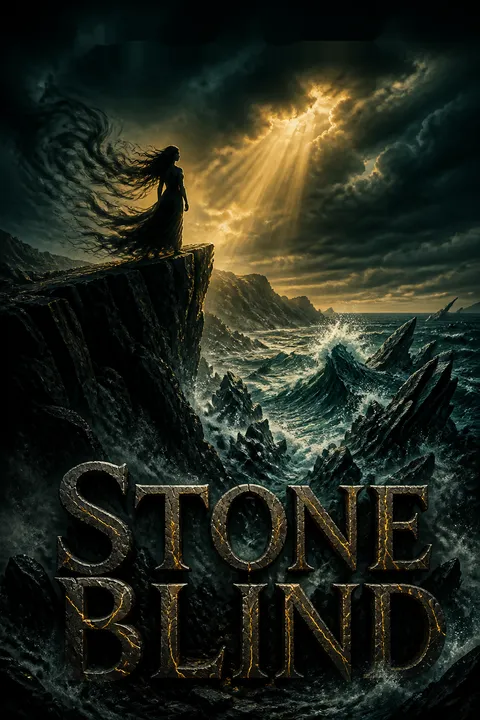

Plot Summary
Gorgon Sisters' Solitude
On the wild Libyan coast, the immortal Gorgon sisters—Sthenno, Euryale, and Medusa—live apart from mortals, shunned as monsters. Sthenno and Euryale, fierce and ancient, are joined by Medusa, a mortal child left on their shore by their sea-god father. The sisters, unused to vulnerability, learn to nurture and protect Medusa, whose fragility awakens in them a new, anxious love. Their home is a place of sun, stone, and sea, where the sisters adapt to Medusa's needs, teaching her to live and survive in a world that will never accept her. Their bond is deep, but always shadowed by the knowledge that Medusa, unlike them, can be hurt.
Birth of a Mortal Gorgon
Medusa's arrival is a mystery—she is mortal, unlike her immortal sisters, and her presence changes the Gorgons' existence. Sthenno and Euryale, unused to caring for the weak, become her protectors and, in a sense, her mothers. Medusa grows quickly, always changing, always asking questions about her origins and the world. Her sisters struggle to answer, feeling both love and fear for her. Medusa's mortality is a constant source of anxiety, and her curiosity about her absent parents and her place in the world sets her apart. The sisters' love for her is fierce, but they cannot shield her from the fate that awaits.
Gods, Betrayal, and Curses
On Olympus, the gods' rivalries and betrayals ripple through the world below. Zeus's violence against Metis and his subsequent swallowing of her sets the stage for Athene's birth. Hera's jealousy and Poseidon's restlessness create a climate of divine interference. Amphitrite, Poseidon's wife, watches as her husband's attention turns to Medusa. The gods' actions are capricious and self-serving, their punishments and favors arbitrary. Medusa, a pawn in their games, is watched by Poseidon, who is drawn to her innocence and beauty. The stage is set for tragedy, as the gods' desires and resentments converge on the mortal Gorgon.
Medusa's Innocence Shattered
Medusa, curious and kind, is lured to a temple by Poseidon, who assaults her, shattering her innocence. The violation is not just physical but existential—her trust in the world and in the gods is destroyed. She retreats into herself, unable to face her sisters or the sea. Euryale and Sthenno, sensing her pain but unable to fully understand it, try to comfort her. Euryale, in a rage, splits the land to protect Medusa from the sea, raising their shore above Poseidon's reach. The sisters' love is fierce, but Medusa's trauma isolates her, and the world's cruelty is laid bare.
Divine Wrath Unleashed
Athene, enraged by Poseidon's desecration of her temple and unable to punish her uncle, turns her wrath on Medusa. In a moment of divine fury, she transforms Medusa's beautiful hair into writhing snakes and curses her gaze to turn living things to stone. Medusa's pain is excruciating, her sense of self destroyed. Her sisters try to comfort her, but Medusa is now dangerous even to those she loves. She binds her eyes, terrified of harming anyone. The curse is both punishment and protection, isolating Medusa further and marking her as a true monster in the eyes of the world.
Perseus: A Hero's Bargain
Far away, Danaë and her son Perseus live in exile, having escaped death at the hands of Danaë's father. Perseus grows up on Seriphos, raised by the kindly fisherman Dictys. When King Polydectes demands Danaë as his bride, Perseus rashly promises to fetch the head of a Gorgon to save her. The king seizes on this boast, sending Perseus on an impossible quest. Perseus, untested and naïve, sets out with little knowledge of what awaits him, driven by love for his mother and a desire to prove himself. The stage is set for a collision of mortal and divine destinies.
The Impossible Quest Begins
Perseus, desperate and ill-prepared, wanders in search of guidance. The gods—Athene and Hermes—take pity on him, mocking his ignorance but offering help. They direct him to the Graiai, ancient sisters who share one eye and one tooth, and who alone know the way to the Gorgons. Perseus, with divine assistance, tricks the Graiai into revealing the secret. He is sent to the Hesperides, nymphs who guard magical items: a curved sword, a bag to contain the Gorgon's head, and winged sandals. Armed with these gifts, Perseus is transformed from a hapless youth into a hero, but the cost of his quest is yet to be revealed.
Gifts of the Gods
The Hesperides, amused and capricious, provide Perseus with the tools he needs: the sword of Zeus, a magical bag, and Hermes's winged sandals. Athene and Hermes instruct him on how to approach the Gorgons, warning him of their power and the mortal danger he faces. Perseus learns that only Medusa is mortal, and that her gaze is now deadly. He must use cunning, not strength, to succeed. The gods' gifts are both blessing and burden, tying Perseus's fate ever more tightly to their will. The hero is now equipped, but the true test—of courage, morality, and consequence—awaits.
The Graiai's Bargain
Perseus's encounter with the Graiai is a battle of wits. He seizes their shared eye and tooth, bargaining for the information he needs. The Graiai, desperate and pitiful, are left blind and helpless as Perseus departs. This act of trickery marks a turning point—Perseus is no longer merely a victim of circumstance, but an agent willing to exploit the vulnerable for his own ends. The quest for heroism is revealed as a path paved with the suffering of others, and the line between hero and monster begins to blur.
Medusa's Transformation
Alone in her cave, Medusa adapts to her new existence. Her snakes become her eyes, allowing her to navigate the world even as she remains blindfolded to protect others. Her sisters grieve for her, torn between pride in her new power and sorrow for her isolation. Medusa's curse is both a weapon and a prison—she can defend herself, but at the cost of all connection. The world's fear of her is now justified, but the true horror is the loneliness and loss that define her existence.
The Fatal Encounter
Guided by Athene, Perseus finds the Gorgons' lair. Athene lures Sthenno and Euryale away, leaving Medusa vulnerable. Perseus, invisible and armed with divine tools, approaches the sleeping Medusa and beheads her. The act is not heroic but cowardly—Medusa is defenseless, and Perseus is aided at every turn by the gods. The sisters return to find their beloved Medusa dead, and their grief is boundless. Perseus flees, pursued by the enraged Gorgons, but escapes with the help of his magical gifts. Medusa's head, now the Gorgoneion, retains its deadly power.
Sisters' Grief and Fury
Sthenno and Euryale are devastated by Medusa's death. Their grief is a force of nature, shaking the earth and terrifying the gods. They mourn not just a sister, but the last fragile link to their own lost innocence. The world is changed by their loss—Athene, inspired by their wailing, invents the flute to capture their sorrow. The Gorgons' rage is impotent against the gods, and their mourning becomes legend. Medusa's head, meanwhile, is carried away, its power undiminished, its story only beginning.
The Head's Journey
Perseus, carrying Medusa's head, discovers its power as he turns enemies to stone—first a shepherd, then the Titan Atlas, who becomes a mountain. The head is both weapon and curse, a tool of survival and a symbol of the violence that has marked Perseus's journey. The Gorgoneion's perspective is bitter and unflinching—it is aware, vengeful, and conscious of the injustice done to Medusa. The line between hero and monster is further blurred, as Perseus's actions leave a trail of petrified victims in his wake.
Monsters and Mortals Collide
On his journey home, Perseus encounters Andromeda, chained as a sacrifice to a sea monster sent by Poseidon. The monster, revealed to be Medusa's own mother Ceto, is turned to stone by the Gorgoneion's gaze. Perseus rescues Andromeda, and the two are drawn together by trauma and gratitude. The episode is a collision of mythic forces—divine punishment, monstrous vengeance, and mortal love. The cost of heroism is paid not just by monsters, but by the innocent and the beloved.
Andromeda's Ordeal
Andromeda, condemned for her mother's hubris, faces death at the hands of a sea monster. Her ordeal is both personal and symbolic—a testament to the suffering inflicted by gods and mortals alike. Perseus's intervention saves her, but the rescue is fraught with ambiguity. The monster is her own grandmother, and the victory is achieved through the same violence that claimed Medusa. Andromeda's gratitude and love for Perseus are genuine, but their union is born of blood and loss.
The Gorgoneion's Power
Perseus wields the Gorgoneion to devastating effect—turning foes to stone, winning battles, and securing his place as a hero. The head's power is absolute, but its use is indiscriminate and often cruel. Perseus's triumphs are stained by the suffering of others, and the Gorgoneion's voice is a constant reminder of the cost. The gods, uneasy with the chaos unleashed, eventually demand that Perseus relinquish the head. Athene claims it, affixing it to her shield as a symbol of divine terror.
Return and Reckoning
Perseus returns to Seriphos, where he uses the Gorgoneion to defeat King Polydectes and free his mother. The act is both justice and massacre, as the king and his men are turned to stone. Perseus's journey ends in blood and stone, his heroism forever linked to the violence he has wrought. The gods debate the consequences of his actions, and Athene takes possession of the Gorgoneion, using its power for her own ends. The cycle of violence and retribution is complete, but the wounds remain.
Legacy of Stone
The story ends with the Gorgoneion's final fate—affixed to Athene's shield, then lost beneath the sea. Statues and legends remain, but the true story is one of suffering, loss, and transformation. Medusa, once innocent and beloved, is remembered as a monster, her humanity erased by the violence of gods and men. The legacy of stone is both literal and metaphorical—a world shaped by fear, power, and the silencing of the vulnerable. The myth endures, but its meaning is forever changed.
Analysis
**Stone Blind is a radical reimagining of the Medusa myth, transforming a tale of monstrousness and heroism into a meditation on trauma, power, and the silencing of women. Natalie Haynes dismantles the traditional narrative, centering the voices of the marginalized and the monstrous, and exposing the violence at the heart of myth. The novel interrogates the nature of heroism, revealing its roots in pride, desperation, and divine manipulation, and blurs the line between savior and destroyer. Through its chorus of voices and shifting perspectives, Stone Blind gives agency and humanity to those rendered voiceless by history—Medusa, her sisters, Danaë, Andromeda—while holding the gods and heroes to account for their actions. The motif of stone becomes a powerful metaphor for the ways in which trauma petrifies and isolates, and the legacy of violence endures. Ultimately, the novel is a call to empathy and understanding, urging readers to look beyond the surface of myth and see the suffering, resilience, and complexity of those cast as monsters. Stone Blind is both a lament for the silenced and a reclamation of their stories, offering a new lens through which to view the ancient world—and our own.
Review Summary
Stone Blind receives mixed reviews averaging 3.78/5 stars. Many readers praise Natalie Haynes's wit, humor, and feminist retelling that challenges traditional hero narratives, particularly her unflattering portrayal of Perseus and sympathetic treatment of Medusa. However, a significant criticism is that despite being marketed as "Medusa's story," she appears in only 30% of the novel. Multiple perspectives—including gods, mortals, and even objects like olive trees and snakes—dilute her presence. Reviewers appreciate Haynes's comedic background shining through dialogue and the examination of who truly deserves the "monster" label, though some find the humor tonally inappropriate given themes of sexual assault.
People Also Read


Characters
Medusa
Medusa is the only mortal Gorgon, raised by her immortal sisters Sthenno and Euryale. Her childhood is marked by curiosity, kindness, and a longing for belonging. Her violation by Poseidon and subsequent curse by Athene transform her into a monster, her gaze turning all living things to stone. Medusa's tragedy is her isolation—her power is both protection and prison, severing her from love and connection. Even in death, as the Gorgoneion, she remains conscious, bitter, and aware of the injustice done to her. Medusa's journey is one from innocence to victimhood to monstrous legend, her humanity lost but never forgotten.
Sthenno
Sthenno is the eldest Gorgon, strong and unyielding. She becomes a mother figure to Medusa, learning to care for the vulnerable and to feel fear for the first time. Sthenno's love is practical and steadfast, but she struggles with the pain of being unable to protect Medusa from the world's cruelty. After Medusa's death, Sthenno's grief is profound, her rage shaking the earth. She represents the cost of love in a world that punishes difference, and her character arc is one of transformation—from invulnerable monster to grieving, loving sister.
Euryale
Euryale, the middle Gorgon, is both gentle and formidable. She tends to Medusa with tenderness, learning the ways of mortals and embracing vulnerability. Euryale's love for her sisters is boundless, and her grief at Medusa's death is expressed in a wail so powerful it inspires Athene to invent the flute. Euryale's character embodies the paradox of strength and sorrow—she is both a monster and a mourner, her rage and love inseparable. Her actions reshape the world, but her heart is forever marked by loss.
Athene
Athene, born from Zeus's head, is the goddess of wisdom and war. She is sharp, impatient, and often cruel, her actions driven by pride and a desire for justice—often at the expense of compassion. Athene's curse on Medusa is both a punishment and a projection of her own wounded pride. She aids Perseus, but her help is self-serving, and she ultimately claims the Gorgoneion for herself. Athene's character is a study in the dangers of unchecked power and the blindness of the righteous.
Perseus
Perseus is the son of Danaë and Zeus, raised in exile and driven by love for his mother. His quest to slay Medusa is born of desperation and pride, and he is aided at every turn by the gods. Perseus's actions are often thoughtless and self-serving—he exploits the vulnerable, kills without remorse, and claims heroism through violence. His journey is a deconstruction of heroism, revealing the cost of glory and the ease with which heroes become monsters.
Danaë
Danaë is the daughter of a paranoid king, imprisoned and exiled for a prophecy she cannot control. She survives through resilience and the kindness of others, raising Perseus in humble circumstances. Danaë's love for her son is unwavering, and her suffering is a testament to the collateral damage of divine and mortal ambition. She is a figure of quiet strength, her story a counterpoint to the violence and pride of the gods and heroes.
Poseidon
Poseidon, god of the sea, is driven by desire, pride, and a sense of grievance. His assault on Medusa sets the tragedy in motion, and his subsequent actions—flooding Ethiopia, sending monsters—are acts of petty vengeance. Poseidon is both powerful and insecure, his need for respect and revenge leading to the suffering of mortals and monsters alike. He is a force of nature, indifferent to the consequences of his actions.
Hera
Hera, wife of Zeus, is defined by her anger at her husband's infidelities and her need to maintain control. She punishes the innocent for the crimes of the gods, her actions often cruel and vindictive. Hera's role is that of the enforcer, ensuring that divine order is maintained—even at the cost of justice or compassion. She is both victim and perpetrator, her power circumscribed by her husband's whims.
Dictys
Dictys rescues Danaë and Perseus, offering them shelter and love. He is humble, generous, and steadfast, providing a model of goodness in a world marked by violence and betrayal. Dictys's role is that of the quiet hero, his actions motivated by empathy rather than ambition. He is a reminder that true heroism lies in kindness and care.
Andromeda
Andromeda is condemned for her mother's pride, chained as a sacrifice to a sea monster. Her rescue by Perseus is both salvation and a new form of captivity—her fate determined by the actions of others. Andromeda's character is defined by endurance and adaptability, her love for Perseus genuine but complicated by the violence that surrounds her. She is a figure of both agency and victimhood, her story a reflection of the costs of heroism.
Plot Devices
Multiple Perspectives and Narrative Voice
The novel employs a chorus of voices—gods, mortals, monsters, even inanimate objects like the Gorgoneion—to tell the story. This multiplicity of perspectives challenges the traditional heroic narrative, exposing the biases and blind spots of each character. The use of first-person narration for the Gorgoneion, in particular, subverts the myth, giving voice to the silenced and the monstrous. The narrative structure is non-linear, weaving together past and present, myth and memory, to create a tapestry of interconnected fates.
Deconstruction of Heroism
The story systematically dismantles the idea of the hero as a noble savior. Perseus's quest is shown to be driven by pride, desperation, and divine manipulation. His victories are achieved through trickery, violence, and the suffering of others. The line between hero and monster is blurred, and the true cost of heroism is laid bare. The novel uses irony, foreshadowing, and direct address to the reader to question the values of the mythic tradition.
Feminist Reinterpretation
The novel reclaims the stories of Medusa, Danaë, Andromeda, and other women, highlighting their suffering, resilience, and agency. The gods' violence against women is exposed as systemic and normalized, and the consequences for the victims are explored in depth. The narrative challenges the traditional vilification of Medusa, presenting her as a victim of injustice rather than a monster to be slain. The use of interiority, empathy, and psychological realism deepens the portrayal of female characters.
Symbolism of Stone and Transformation
The motif of turning to stone recurs throughout the novel, symbolizing the ways in which trauma, violence, and power render individuals voiceless and isolated. Medusa's curse is both literal and figurative—a weapon that protects her but also ensures her loneliness. The transformation of living beings into stone is a metaphor for the erasure of humanity, the cost of survival, and the legacy of violence. The novel uses this symbolism to explore themes of memory, loss, and the persistence of myth.
Interplay of Fate and Agency
The story is shaped by prophecies, curses, and the whims of the gods, but the characters' choices—however constrained—still matter. Medusa's decision to protect others by binding her eyes, Perseus's bargains and betrayals, Andromeda's endurance—all are acts of agency within a world governed by fate. The tension between destiny and free will is a central theme, explored through the characters' struggles to assert control over their own stories.
Download PDF
Download EPUB
.epub digital book format is ideal for reading ebooks on phones, tablets, and e-readers.








































