
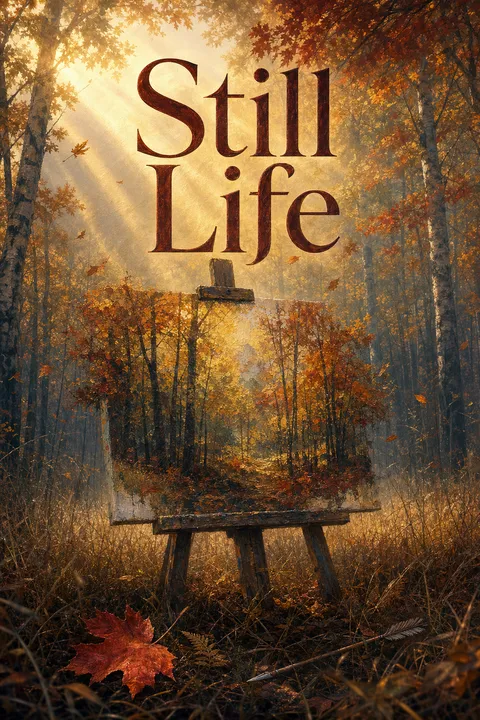


Plot Summary
A Village Without Crime
In Three Pines, a hamlet so peaceful its doors lock only against neighbors bearing zucchini, three masked teenagers pelt Olivier and Gabri14's bistro with duck manure and homophobic slurs. Jane Neal,5 a plump seventy-six-year-old retired schoolteacher, shouts their names and scatters them. Days later she finally lets her friend Clara3 persuade her to enter a painting, Fair Day, in the county art show.
Its childish stick figures baffle the jury, yet it is accepted. Jane5 weeps with joy and, astonishingly, invites her friends to drinks in her living room, a room no one has ever been permitted to enter. Over a Thanksgiving dinner, the friends joke about who among them could commit murder and simply get away with it.
Penny establishes an Edenic community precisely so she can violate it. The manure attack punctures the myth of rural innocence, revealing cruelty hidden beneath bucolic calm. Jane's decision to expose her art and open her forbidden room signals a woman finally choosing visibility after a lifetime of concealment, a psychological turning that the narrative will render tragically ironic. The dinner-table game about undetectable murder functions as Chekhov's philosophy: it names the book's true subject, that evil is unspectacular and domestic. The comedy of canned peas and gentle bickering disguises foreshadowing, teaching readers that in this world tenderness and menace share the same table.
Arrow Through the Heart
On Thanksgiving Sunday, Ben Hadley6 finds Jane5 sprawled in the maple woods, a tiny circular wound marring her cardigan. Chief Inspector Armand Gamache1 of the Sûreté du Québec kneels beside her, quietly startled, as he always is, by violent death. The puzzle mounts fast: no weapon lies nearby, and there is an exit wound where none should exist.
Jane5's beloved dog Lucy was left home, something she never did. Gamache1 interviews Ben,6 who reveals that Jane5 never let anyone past her kitchen door. Watching the mourning village from a bench, Gamache1 notices Peter Morrow,4 Jane5's neighbor, betraying anxiety but no grief. With everyone claiming to have loved Jane,5 the investigation opens with no motive and an impossible method.
Gamache's persistent surprise at death, unusual for a homicide chief, defines him as a humanist rather than a cynic, someone whose empathy is a professional instrument. The absent dog and the sealed living room plant two mysteries that structure the whole novel: what Jane hid and why. The exit wound quietly signals a projectile that passed through, foreshadowing the arrow's flight. Peter's anxiety without sorrow introduces the theme of masks, of interior lives contradicting outward performance. Penny frames detection as reading people's choices, positioning Gamache as an observer who trusts behavior over statement, a lens that will prove decisive against a village practiced in comfortable lies.
The Grasping Niece
The coroner confirms Jane5 died instantly, struck cleanly through the heart by an expert shot, with slivers of real feathers embedded in the wound. That detail is baffling: modern arrows use plastic, so this was an old wooden one. Gamache1 visits Jane5's only relative, Yolande Fontaine,10 a real estate agent lacquered in makeup who greets news of her aunt's murder chiefly by asking when she can get into the house.
Yolande10's lawyer swiftly secures an injunction blocking the police search, and a ten-year-old will names her sole heir. Her husband André18 is a convicted brawler who, for the first time this year, obtained a bow-hunting permit. Motive, means, and menace all seem to gather around one unpleasant family.
The feathered wound is the case's central riddle, an anachronism that insists the killing was chosen with strange deliberation rather than committed with convenience. Yolande embodies the novel's study of denial: a woman so absorbed in performing success that reality no longer reaches her. Her hunger for the house before the body is cold exposes inheritance as the oldest of motives, while the injunction dramatizes how bureaucracy can obstruct justice. Penny sets an obvious suspect early, a classic misdirection that lets the reader feel clever while the true darkness hides in plainer, kinder-seeming company. Greed here is loud, and loudness, the book suggests, rarely conceals the deepest guilt.
Lesson in the Church
Gamache1 assembles the village in St. Thomas's church and turns the meeting into a public tutorial. Villagers explain the difference between modern compound bows, with pulleys and triggers, and the ancient wooden recurve favored by boys playing Robin Hood.
Matthew Croft,11 a road-maintenance foreman and former pupil of Jane5 's, clarifies that a hunting tip carries four razor blades, exactly matching the cross-shaped wound Beauvoir2 sketched. Because real feathers were found, the murder weapon must be a wooden recurve firing a wooden hunting arrow, deliberately old-fashioned equipment.
When asked what he would choose to kill someone, Croft11 says he would never pick an antique when a modern bow or gun would do. The absurd, archaic choice deepens rather than solves the mystery.
The communal interrogation reflects Gamache's collaborative method, transforming suspects into investigators and coaxing the village into owning its own tragedy. Technically, the scene performs elegant deduction, converting vague grief into forensic precision. Thematically, the antique weapon becomes a moral emblem: someone stepped out of the past to kill, choosing intimacy and difficulty over ease. That someone had to stand close enough to see clearly, which quietly demolishes the comforting theory of a stranger's stray shot. Penny uses the crowd's laughter and folklore to disarm dread, then lets the impossibility linger, insisting that method reveals character. The killer's peculiar taste, like all taste, is a signature.
The Croft Boy's Accusation
At the Croft farmhouse, Suzanne Croft13 is visibly sick with terror. A search of the basement uncovers a wooden recurve bow smeared with Jane5's blood, an axe set to destroy it, and, in the furnace ashes, a charred arrowhead. Blood stains mark fourteen-year-old Philippe12's clothes and bicycle. Suzanne13 had tried to burn the evidence.
Confronted, the sullen, headphone-wearing Philippe12 coldly denies everything and instead accuses his father, Matthew,11 of beating him and of killing Jane,5 claiming he only helped hide the equipment out of fear. He shows a purple bruise on his arm. Stunned and desperate to win back his son's regard, Matthew11 abruptly confesses to a murder the physical evidence never actually pins on him.
This sequence weaponizes the family, the likeliest crucible of hidden violence. Philippe's icy triumph rather than fear unsettles the expected profile of an abused child, hinting that his rage points inward and elsewhere. Matthew's self-immolating confession is a devastating study of parental love as martyrdom: a strong man, wounded past reason by his son's contempt, chooses false guilt to prove devotion. Penny dramatizes how trauma distorts truth, how a household can manufacture a monster from misread signals. The bruise, echoing Beauvoir's own from the bowstring, plants a clue that expertise, not abuse, marked the boy. Confession, the book warns, can be its own form of suicide.
Refusing the Order
The prosecutor, persuaded by Beauvoir2's careful case, orders Matthew Croft11 arrested for manslaughter. Gamache1 refuses. There is no physical evidence Croft11 killed Jane,5 only the accusation of an unstable son and a broken father's confession, and Gamache1 will not brand a man for a crime he believes he did not commit.
He telephones his superior and friend, Superintendent Brébeuf,16 knowing the consequence. Brébeuf,16 bound by procedure, suspends Gamache1 for a week without pay and instructs Beauvoir2 to collect his chief's badge and gun.
Handing them over stings more than Gamache1 expected, resurrecting an old, insecure young man inside him. Beauvoir,2 grief-stricken at performing the task, reveals the depth of his loyalty. The investigation stalls while Croft11's family unravels.
Here the novel's ethical spine shows. Gamache distinguishes between what a system permits and what conscience demands, arguing that arrest itself inflicts a permanent wound regardless of eventual acquittal. His defiance costs him the very symbols of approval he once craved, and Penny uses this to expose the fear beneath his calm authority, the persistent ghost of the boy who needed to be worthy. The exchange with Beauvoir converts a bureaucratic humiliation into a revelation of love, the mentor discovering he is cherished in return. Institutional loyalty collides with moral courage, and the book sides firmly with the individual who refuses to be provoked into cruelty.
The Arrow in the Tree
A week after the death, the women of Three Pines gather at the spot where Jane5 fell for a cleansing ritual led by Myrna,8 tying mementos to a prayer stick. As Clara3's freed gaze follows the fluttering ribbons upward, she spots an arrow lodged twenty-five feet high in a maple, revealed only because the leaves have fallen.
Fetched to the jail, Matthew Croft11 confirms it as his father's. This changes everything: Philippe12 fired that arrow and overshot into the tree, so the bloody arrow he carried home was a different one entirely. Philippe12 shot at what he thought was a deer, found Jane5 dead, grabbed the wrong arrow in panic, and fled. He did not kill her. Someone else did, on purpose.
Penny stages revelation through ceremony, letting communal mourning literally lift Clara's eyes from the ground where investigators fruitlessly searched. The imagery is pointed: the blind, a hunter's perch, becomes a symbol of not-seeing, while the ritual restores sight. Grief, freed from fear, becomes perception. The tree-borne arrow exonerates a tormented boy and simultaneously confirms murder, converting a tragic accident narrative into a hunt for a deliberate killer who stood close enough to know his target. Structurally this is the midpoint pivot, dissolving the accident theory. Thematically it argues that healing and clarity are intertwined, and that attention is itself a moral and investigative act.
The Painted House
Reinstated to lead a murder investigation, Gamache1 finally enters Jane5's forbidden living room and recoils: psychedelic Happy Faces and glossy pink floors assault a home otherwise full of priceless antiques. The contradiction nags him until Beauvoir2 recalls Yolande10 boasting she had been decorating.
Yolande10 papered over something. Peeling back a corner, Clara3 discovers not wallpaper beneath but Jane5's own drawings. Every wall, ceiling, and floor of the cottage is covered in a vast, luminous mural depicting the entire history and people of Three Pines, cave art rendered in brilliant strokes.
This was Jane5's lifelong secret shame, work her family had convinced her was worthless and forbidden her to show. Gamache1 senses the answer to her murder lives somewhere on those walls.
The reveal reframes Jane entirely, transforming an eccentric spinster into a suppressed genius whose whole home was an unseen confession. Penny literalizes the novel's long-house metaphor: a dwelling containing every person, event, and emotion of a life. Yolande's ugly overlay dramatizes how philistine cruelty buries beauty, and how shame is inherited, taught in childhood by those who claim to protect us. The mural's discovery is both aesthetic rapture and forensic clue, marrying art and detection. It also indicts the whole village for never suspecting Jane's gift, echoing Gamache's theme that we routinely fail to see the people we love. Concealment, here, was self-erasure enforced from outside.
The Newer Will
Clara3 remembers Jane5 once mentioned a different notary, Solange Frenette, not the Williamsburg lawyer who held the outdated will. Frenette confirms a newer will, signed in May, leaving the cottage and a quarter-million dollars to Clara, the book collection to Myrna, and the car and a private letter to Ruth Zardo.
Meanwhile Myrna8 finally shares Timmer Hadley15's deathbed confidence: sixty years ago, young Ruth7 secretly told Jane5's parents about her engagement to a lumberjack named Andreas Selinsky, destroying the romance.
Ruth7 admits it, calling it a misguided mistake. Timmer,15 Ben6's mother, had known Ruth7's secret and died, of morphine, just weeks before Jane,5 her passing suddenly worth a second look. Old wounds and quiet deaths start to knit together.
The competing wills sharpen motive while overturning the frame around Yolande, since Jane never left her the house. Ruth's ancient betrayal deepens the book's portrait of guilt carried across decades, and Penny's poet is revealed as a woman who collects suffering, perhaps even authors it. The revelation that Timmer's death and Jane's cluster suspiciously introduces the possibility that one crime seeded another, that murder begins long before the fatal act. Myrna's psychology lends thematic weight: some people cling to their wounds as identity. The section reframes the whole community as a lattice of secrets, where kindness and cruelty coexist and the past never fully lies down.
The Face That Lies
At the gallery opening and the party held in Jane5's mural-covered home, Agent Nichol9 snidely insists a blonde woman in Fair Day is Yolande.10 Stung, Clara3 compares that figure to Jane5's mural portrait of Yolande10 and realizes they look nothing alike. Then the artist in her sees the truth: Jane5 never invented a face, every person on her walls was real, yet this stands blonde woman feels dead and wrong.
The brushstrokes go up and down where Jane5 never worked that way, the paints are the wrong whites and yellows, and faint smudges betray erasure by rag and mineral spirits. Fair Day changed between the Friday judging and Jane5's Sunday death. Someone removed a face, painted over it, and killed Jane5 before she noticed.
Penny converts art criticism into forensics, making connoisseurship the tool that cracks the case. Clara's expertise, previously played for comedy, becomes indispensable, a vindication of the intuitive artist over the smug technician Nichol. The altered painting embodies the theme of the mask: a false face literally imposed to hide a guilty one. Crucially, the killer's fatal error was arrogance about Jane's method, not knowing her code. The moment also rehabilitates the earlier card-trick motif of the Queen of Hearts, art that changes yet stays the same. Detection here is an act of loving attention to a dead woman's craft, the ultimate reading of choices left in paint.
Who Is Missing
Studying the mural alongside Fair Day, Clara3 understands the painting is Jane5's tribute to Timmer Hadley,15 crowded with everyone meaningful to the dying woman, from grandparents to dogs. Gamache,1 staring at it in his room, finally grasps the clue hidden not in what the picture contains but in what it lacks. One person belonging to Timmer15's life is absent from Fair Day: her son, Ben.6
The erased and repainted face was Ben Hadley6 's. Jane5 had placed him at the closing parade, the very event Ben6 claimed to have missed while at an auction in Ottawa. Seeing himself painted where he insisted he had not been, Ben6 panicked, believing Jane5's art announced his presence and therefore his guilt. Gamache1 races into the storm.
The absence-as-clue is Penny's most elegant stroke, rewarding the reader who trusts pattern over noise. Ben, the gentle, befuddled everyman, is unmasked through the gap he created, his cover-up the very thing that exposed him. The theme crystallizes: evil wears the most ordinary face and shares our table. Jane's innocent witness, rendered in childlike paint, becomes a death sentence because a murderer read guilt into it. Gamache's realization that Ben is missing mirrors the community's larger blindness toward him, a man everyone pitied and no one suspected. The book's insistence that we fail to truly see those closest to us reaches its chilling payoff.
The Snake Basement
Having pieced it together, Clara3 slips away to confront Ben,6 who calmly admits killing both Jane5 and his mother,15 then knocks her out. She wakes bound on a dirt floor in Timmer15's dreaded basement, the one Ben6 always claimed was full of snakes, planning to stage her fatal fall and frame Peter4 with fibers from his coat.
In pitch darkness Clara3 works her wrists free, dodging mousetraps and imagined serpents while Ben6 gropes blindly for her. Gamache,1 Beauvoir,2 and Peter4 storm the house through the hurricane; the rotten stairs collapse beneath them, snapping Gamache1's leg and cracking Beauvoir2's ribs as Ben6 knocks himself senseless against a wall. Backup arrives just in time. Everyone survives, battered but alive.
The climax literalizes the book's descent into buried truth, the basement as psyche where fabricated fears (Ben's lifelong snake lies) mingle with real danger. Clara's survival is earned through the same clear sight the novel prizes, distinguishing invented monsters from actual threats. Penny stages farce inside terror, the men tumbling down broken stairs, refusing heroic cleanliness and insisting on human fallibility. Ben's plan to frame Peter completes his pattern of parasitism, sacrificing others to preserve his image. The storm outside mirrors the moral tempest within. That the rescuers arrive injured and imperfect underscores the theme that goodness is clumsy and vulnerable, yet still, barely, sufficient.
Evil at the Table
Recovering together in Jane5's home, the friends learn Ben6's full story. He murdered Timmer15 with morphine during the fair because she planned to trim his inheritance and force him to work, then killed Jane5 fearing Fair Day exposed his secret return.
His lifelong lies, the imaginary snakes, the cruel tales about his generous mother, had slowly assassinated her reputation long before he took her life. Ben6 believed himself entirely justified. Gamache1 admits his own error, having read love rather than fear in Ben6's furtive glances at Clara.3
Separately, Philippe12's rage is traced to Bernard Malenfant19's blackmail and the boy's self-loathing, not to any abuse. Jane5's headstone is engraved not with a verse about foes in one's household, but Surprised by Joy.
The resolution delivers Penny's thesis: evil is unspectacular, human, and domestic, nurtured by entitlement and self-pity in a man everyone found harmless. Ben's stillness, his refusal to grow or labor, echoes Myrna's diagnosis of people who wait to be saved and rot instead. Gamache's confessed mistake keeps him humane rather than infallible, a detective who learns. The choice of epitaph transforms the ending from indictment to grace, honoring Jane's late-life joy over the betrayal that defined her fate. Philippe's parallel arc reframes adolescent cruelty as displaced shame, extending compassion even to the unlovable. The book closes insisting that kindness, freely given, remains the truest legacy.
Analysis
Still Life reinvents the cozy village mystery as a meditation on perception and moral courage. Penny's Three Pines looks like refuge, yet the murder of the kindest woman in it5 insists, through W. H. Auden's borrowed line, that evil is unspectacular and human, sharing our bed and eating at our table. The novel's engine is not gore but seeing: Gamache1 detects by watching choices, Clara3 solves by reading brushstrokes, and the recurring image of the hunter's blind indicts a community's willful blindness to the darkness in a man everyone pities.6 Guilt runs on long fuses here. A betrayal sixty years old, a boy's inherited shame, a mother's misplaced sense of debt, all detonate decades later, dramatizing Gamache1's belief that murder is planted long before it acts. Against this, Penny sets a radical ethic of grace. Gamache1 surrenders his badge rather than brand an innocent man, arguing that a just system must be better than the cruelty it opposes, and that being provoked never requires acting. Myrna8's psychology supplies the thematic spine: life is loss, many prefer their wounds to their freedom, and only the self can save the self, a philosophy that both explains the killer's arrested, entitled stillness and offers the survivors a path out of grief. Art becomes salvation and evidence at once, Jane5's hidden murals a long house of a life finally seen, her forged painting a mask that betrays its maker. The book prizes the intuitive over the smug, the collaborative over the competitive, the unlovable given love anyway. Its final gesture, replacing a verse about household foes with the phrase surprised by joy on Jane5's headstone, refuses cynicism, choosing to honor a woman's late-blooming happiness over the treachery that ended her. Kindness, freely given, is the only legacy that endures.
Review Summary
Still Life receives mostly positive reviews as the first book in Louise Penny's Inspector Gamache series. Readers praise the well-crafted mystery, vivid setting of Three Pines, and compelling characters, especially Gamache. Many find it a cozy yet intriguing read with depth. Some criticize the pacing or certain character portrayals, but overall, reviewers express eagerness to continue the series. The book is noted for its blend of traditional mystery elements with rich character development and atmospheric Canadian setting.
People Also Read







Characters
Armand Gamache
Compassionate homicide chiefChief Inspector of homicide for the Sûreté du Québec, in his mid-fifties, a courtly man with a trimmed moustache, Burberry coat, and British-accented French. Gamache is defined by a quality rare in his cynical profession: he is still surprised by violent death, and treats everyone, guilty or grieving, with unhurried courtesy. He watches and listens where others accuse, believing that life is a matter of choices and that four humble sentences (I don't know, I need help, I'm sorry, I was wrong) lead to wisdom. A mentor by instinct, he collaborates rather than competes, which has capped his career yet enriched his life. Beneath the calm lives an insecure younger self, easily reawakened, and a bruised history involving a case that nearly ended him.
Jean Guy Beauvoir
Loyal second-in-commandGamache1's inspector for over a decade, thirty-five, lean and studiedly casual yet tightly wound. Beauvoir is reason and appetite in one man, favoring hard evidence and the safe conclusion, often playing devil's advocate against his chief's intuition. He loves the hunt, delights in dramatic reveals, and hides deep affection for Gamache1 beneath professional deference. His distrust of feelings makes his moments of loyalty and tenderness all the more striking.
Clara Morrow
Intuitive struggling artistA warm, chaotic painter in her late forties, wild-haired and forever wearing crumbs, whose surreal work has found no market while her husband4 thrives. Jane5's dearest friend, Clara feels things deeply and forgives too easily, a trait her husband warns against. She wrestles with a lifelong sense of being the mocked, unlovable child, a vulnerability the odious Yolande10 can always reopen. Her art is intuitive, guided by images and objects she waits to hear speak to her. Clara's greatest gift is attention: she sees people and paintings truly, and her refusal to look away, even when frightened, drives the story toward its resolution. Her marriage to Peter4, tender yet strained by things unsaid, forms a quiet emotional undercurrent.
Peter Morrow
Meticulous, guarded husbandClara3's husband, a tall, classically handsome painter from a wealthy Montreal family that considers him a disappointment. His hyper-realist canvases take months of painstaking precision and sell for thousands. Peter is Clara3's anchor and adores her, yet retreats to an emotional island of coldness when hurt, hiding feelings he finds too dangerous to expose. His boyhood friendship with Ben6 and his controlled nature shadow the marriage.
Jane Neal
Beloved murdered teacherA seventy-six-year-old retired schoolteacher whose death launches the investigation. Plump, kindly, short-sighted, and endlessly generous, Jane ran church sales, tended roses, and taught generations of local children. She carried two lifelong secrets: a suppressed gift for painting, shamed out of her by a cruel family, and a room in her home no friend was ever allowed to enter. In her final week she chose, at last, to show her art and open her door, an act of joyous liberation. A near-marriage in youth to a lumberjack, thwarted by her parents, marked her early life. Even the grasping niece who despised her10 could not diminish the affection the whole village bore her. Jane's essential nature was uncorrupted kindness, the quality her killer6 mistook for threat.
Ben Hadley
Peter's gentle best friendPeter4's oldest friend, a tall, ambling, slightly befuddled man in his late forties who found Jane5's body. Heir to the local Hadley mill fortune and the imposing Victorian house on the hill, Ben presents as kind, tolerant, and perpetually one step behind his own body, forever lost in thought. He speaks of his late mother, Timmer15, with wounded resentment, recounting a childhood of being sent away and belittled, and keeps a menagerie of named spiders, refusing to kill anything. Skilled with a bow from boyhood games of Robin Hood and a capable painter, he seems the harmless, pitied figure everyone calls poor Ben. His stillness, his waiting, and his lifelong stories about his mother invite closer attention.
Ruth Zardo
Cantankerous celebrated poetAn elderly, cane-wielding local woman who turns out to be a Governor-General award-winning poet writing under her maiden name, Kemp. Ferociously rude, hard-drinking, and self-described as obnoxious, Ruth masks profound feeling and old guilt beneath insult. As volunteer fire chief and village fixture, she is feared and oddly beloved. Her poetry gives voice to the wound at the book's heart: anger, betrayal, and the longing to be trusted with love.
Myrna Landers
Wise bookshop psychologistA large, ebullient Black woman who fled a Montreal psychology practice to sell new and used books in Three Pines. Grounded, perceptive, and generous, Myrna reads people through their bookshelves and offers the novel's central wisdom: that life is loss, that many cling to their problems, and that only we can save ourselves. Her friendship with the dying Timmer15 and her deathbed confidences prove crucial to unraveling the past.
Yvette Nichol
Insecure arrogant traineeA young Sûreté agent assigned to shadow Gamache1, driven by a father's dream and a fabricated family legend about a disgraced Uncle Saul. Nichol arrives promising, then unravels into smugness, refusing to listen, lying to cover ignorance, and mistaking kindness for weakness. She hears advice as criticism and criticism as catastrophe. Her defensiveness makes her a foil for Gamache1's teaching, and, unexpectedly, her rudeness helps crack the case.
Yolande Fontaine
Jane's grasping nieceJane5's only living relative, a St. Rémy real estate agent buried under lacquered makeup and false gentility. Estranged from her aunt5 after a dispute over the family home, Yolande greets murder chiefly as an inheritance opportunity, wielding lawyers and injunctions. She lives entirely in a manufactured world of denial, existing only before an audience, her every surface a mask over something bitter and hollow.
Matthew Croft
Devoted, tormented fatherHead of the township road department and a former pupil of Jane5's, a thoughtful, reasonable man who recites memorized poetry to ward off the horrors of the roadside deaths he attends. A skilled bow hunter who gave up the sport out of respect for Jane5, he is bewildered by his son12's transformation into a sullen stranger, and his love drives him to a self-destructive extreme.
Philippe Croft
Angry troubled teenagerMatthew11's fourteen-year-old son, once a happy, kind boy who has curdled into a headphone-sealed, contemptuous adolescent. His plummeting grades and rage, seemingly aimed at his father, mask a deeper self-loathing and a secret torment. Involved in the manure attack, he becomes central to the case through fear, accusation, and a panicked act in the woods.
Suzanne Croft
Frightened protective motherMatthew11's wife of fifteen years, who works part-time at a copy shop. Sick with terror through the investigation, she tries to destroy evidence to shield her son, torn between maternal instinct and dawning doubts about the child she loves but may no longer like.
Olivier and Gabri
Warm-hearted village hostsThe gay couple at the heart of Three Pines: Olivier, a fastidious, blond antiques-loving bistro owner, and Gabri, his large, theatrical partner who runs the bed and breakfast and directs the choir. Targets of the opening manure attack, they respond with defiant tenderness. Generous and observant, they anchor the community's kindness and its gossip alike.
Timmer Hadley
Ben's deceased motherBen6's late mother, a smart, elegant woman who died of cancer weeks before Jane5, tended in her final days by rotating village volunteers. Remembered by her son as cold and belittling, she is recalled by others, notably Myrna8, as tolerant and generous, a discrepancy that quietly matters. She carried a sixty-year-old secret about Ruth7.
Superintendent Brébeuf
Gamache's conflicted superiorMichel Brébeuf, Gamache1's old classmate and friend, promoted above him into a shared ambition without damaging their bond. Bound by procedure and pressured from above, he must discipline Gamache1 for insubordination, torn between institutional duty and respect for a colleague he knows to be principled and, maddeningly, often right.
Isabelle Lacoste
Diligent respectful agentA capable Sûreté agent on Gamache1's team, a young mother who drives in early from Montreal and privately promises the dead she will find their killer. Fearless and thorough, she handles searches and confrontations, including standing up to a menacing teenager, with cool professionalism.
André Malenfant
Yolande's criminal husbandYolande10's slovenly, sneering husband, a convicted brawler and burglar with a putrid, cruel laugh. Unemployed and contemptuous, he hunts with a bow, holds a new permit, and yearns for the mud and disorder his wife's antiseptic home forbids. A prime early suspect.
Bernard Malenfant
Cruel village bullyAndré18 and Yolande10's fourteen-year-old son, a slack-jawed, malevolent bully feared by the local children. His cruelty ripples outward, and his blackmail of another boy proves quietly consequential to understanding the village's hidden pain.
Plot Devices
Fair Day painting
Altered clue naming the killerJane5's naive canvas of the closing parade, accepted into the art show days before her death, becomes the case's smoking gun. Its childish stick figures baffle viewers, yet it holds a hidden meaning as a tribute to a dying woman. Between the Friday judging and the Sunday murder, one face was chemically erased and repainted by someone ignorant of Jane5's technique, using wrong brushstrokes and wrong pigments. Clara3, an artist, detects the forgery, and Gamache1 realizes the decisive evidence lies not in what the picture shows but in who is absent from it. The painting drives the plot from acceptance to invitation to murder, functioning as both motive trigger and ultimate solution.
Wooden recurve arrow
Anachronistic weapon that puzzlesThe murder weapon is deliberately old-fashioned: a wooden recurve bow firing a wooden hunting arrow tipped with four razor blades and fletched with real feathers. Feather slivers in the wound and a clean exit reveal the antique technology, since modern arrows use plastic and alloy. The choice makes no sense for anyone seeking an easy, accurate kill, deepening the mystery and implying intimacy and intent, because such a bow demands the shooter stand close enough to see the target clearly. A second wooden arrow, later found lodged high in a maple, untangles an accidental shooting from the true murder, turning the forensic riddle into the case's central pivot.
Jane's hidden murals
Concealed life, buried truthBehind a sealed living-room door and beneath Yolande10's garish Happy Face wallpaper lies Jane5's lifelong secret: every wall, ceiling, and floor of her cottage painted with a luminous mural chronicling the people and history of Three Pines. Shamed out of showing her art by a cruel family, Jane5 hid her masterpiece as her private disgrace. Gamache1 invokes the image of a long house, a single room holding everyone and everything of a life, and recognizes the murals as exactly that. The home becomes both an aesthetic revelation that redefines Jane5 and a forensic map, since the killer6's fear grew from being depicted where he claimed never to have been.
The two wills
Inheritance motive and misdirectionJane5's estate is governed by competing documents. An outdated will held by a Williamsburg notary names the grasping niece Yolande10 as sole heir, focusing early suspicion and prompting an injunction that blocks the search of the home. Clara3's memory of a different notary uncovers a newer will, signed in May, leaving the cottage and a fortune to Clara3, books to Myrna8, and the car and a private letter to Ruth7. The wills steer motive analysis toward money and family, generate red herrings around Yolande10 and André18, and, by their timing and beneficiaries, force the investigators to look past the obvious toward less visible, deadlier grievances.
The deer blind and trail
Sight, blindness, local knowledgeA hunter's platform, a blind, sits high in a maple above a nearly invisible deer trail behind the schoolhouse, a spot only a local would know. Gamache1 climbs it despite his vertigo and grasps that the killer needed intimate local knowledge and had to stand close, ruling out a stranger's stray shot. The blind doubles as the book's controlling metaphor: those who use it fail to see the cruelty and beauty of what they kill, and the villagers likewise fail to see the darkness among them. Clara3's freed, upward gaze at the same site, during the ritual, finally lets her see clearly, both the arrow and the truth.
FAQ
Synopsis & Basic Details
What is Still Life about?
- Idyllic village faces tragedy: Still Life introduces Chief Inspector Armand Gamache of the Sûreté du Quebec to the seemingly perfect, hidden village of Three Pines, where the beloved retired schoolteacher Jane Neal is found dead in the woods on Thanksgiving Sunday.
- Investigation uncovers hidden lives: What initially appears to be a hunting accident quickly becomes a suspicious death, forcing Gamache and his team to delve beneath the village's tranquil surface, revealing long-held secrets, complex relationships, and unspoken tensions among the close-knit residents.
- Art, perception, and human nature: The mystery intertwines with Jane Neal's secret life as an artist and her decision to finally exhibit her work, exploring themes of perception, judgment, the nature of good and evil, and how appearances can mask profound truths about individuals and community.
Why should I read Still Life?
- Rich character development: The novel offers deeply human and complex characters, particularly Chief Inspector Gamache, whose wisdom, empathy, and unique investigative approach make him a compelling protagonist, and the eccentric villagers whose quirks hide surprising depths.
- Atmospheric and immersive setting: Three Pines itself becomes a character, a picturesque and seemingly idyllic location that provides a stark contrast to the dark crime, drawing the reader into its unique atmosphere and community dynamics.
- Intelligent and layered mystery: Beyond the central whodunit, the story weaves together subtle clues, psychological insights, and thematic explorations, rewarding readers who appreciate mysteries that delve into the complexities of human nature and the impact of hidden lives.
What is the background of Still Life?
- Setting in Quebec's Eastern Townships: The story is set in the fictional village of Three Pines, located in the Eastern Townships of Quebec, Canada, an area known for its picturesque landscapes, blend of French and English cultures, and historical Loyalist settlements, which plays into the village's unique, hidden nature.
- Cultural and linguistic context: The narrative subtly incorporates the bilingual reality of Quebec, with characters often switching between French and English, and touches upon the historical tensions and cultural differences between anglophone and francophone Quebecers, particularly through characters like Ben Hadley and Chief Inspector Gamache.
- Exploration of community dynamics: The novel delves into the social structure and dynamics of a small, isolated village, highlighting the interconnectedness of its residents, the weight of shared history, and the ways in which secrets and past events continue to influence the present.
What are the most memorable quotes in Still Life?
- "Evil is unspectacular and always human, and shares our bed and eats at our own table.": Quoted by Jane Neal from W.H. Auden, this line encapsulates a central theme of the book – that darkness and the capacity for harm exist within seemingly ordinary people and familiar settings, not just in distant, monstrous forms.
- "Life is choice. All day, everyday. Who we talk to, where we sit, what we say, how we say it. And our lives become defined by our choices.": Chief Inspector Gamache imparts this philosophy to Agent Nichol, highlighting his belief in personal agency and responsibility, a core tenet of his character and investigative approach.
- "When thou hast done, thou hast not done, for I have more.": Gamache quotes John Donne, reflecting the layered nature of the investigation and human experience; just when you think you've uncovered everything, there are always deeper truths and complexities to reveal.
What writing style, narrative choices, and literary techniques does Louise Penny use?
- Evocative and sensory descriptions: Penny employs rich descriptions of the setting, weather, food, and sensory details (like the smell of woodsmoke or coffee) to create a strong sense of place and immerse the reader in the atmosphere of Three Pines.
- Multiple perspectives and subtle shifts: While primarily following Gamache, the narrative occasionally dips into the perspectives and internal thoughts of other characters, offering glimpses into their emotional states and motivations, often through subtle shifts in focus or dialogue.
- Symbolism and thematic resonance: Penny weaves in recurring symbols (like the three pines, art, weather, animals) and literary allusions (poetry, biblical quotes) to add layers of meaning and connect individual plot points to broader themes of perception, hidden lives, judgment, and the human condition.
Hidden Details & Subtle Connections
What are some minor details that add significant meaning?
- The specific type of hunting arrow: The discovery that Jane was killed by an old-fashioned wooden arrow with real feathers, rather than a modern alloy one with plastic fletching, becomes a crucial detail, narrowing the pool of potential weapons and pointing away from typical city hunters towards someone using older equipment, likely a local.
- The mouse traps in Jane's basement: The presence of both humane mouse traps (set by Jane) and kill traps (set by Yolande and André) in the basement highlights the contrasting natures of Jane and her niece/husband, subtly reinforcing Jane's kindness even in death and hinting at the Malenfant's disregard and potential destructiveness.
- The price tags in Olivier's Bistro: The detail that everything in the bistro, including the furniture patrons are using, is for sale, initially seems like a quirky background detail but later symbolizes the transactional nature some characters bring to relationships and even life itself, contrasting with the genuine connections valued by others like Jane and Clara.
What are some subtle foreshadowing and callbacks?
- Jane's comment about evil: Jane's early quote from Auden, "Evil is unspectacular and always human, and shares our bed and eats at our own table," subtly foreshadows that the killer is not a monstrous outsider but someone known and seemingly ordinary within the village community.
- The discussion about conscience and cowardice: Clara's mention of Oscar Wilde's quote, "conscience and cowardice are the same thing," and the subsequent debate among the friends about what they would do if they could get away with anything, foreshadows the killer's actions and their subsequent failure to come forward, linking their crime to fear rather than inherent monstrosity.
- The recurring mention of Timmer Hadley's death: The repeated references to Ben Hadley's mother's recent death, initially presented as a natural passing, subtly links her fate to Jane's and foreshadows Ben's involvement, suggesting a pattern of behavior or a hidden motive connected to both women.
What are some unexpected character connections?
- Ruth Zardo's past with Jane and Andreas: The revelation of Ruth's sixty-year-old betrayal of Jane by informing her parents about her plan to elope with Andreas Selinsky adds a layer of unexpected history and potential motive, showing that even deep friendships can harbor painful secrets and past actions with long-lasting consequences.
- Ben Hadley's connection to the hunting blind: The detail that the hunting blind near the crime scene was built by Ben Hadley's father, and that Ben himself was familiar with it, provides a crucial link between Ben and the murder site, highlighting his local knowledge and opportunity, which outsiders would lack.
- Philippe Croft's relationship with Bernard Malenfant: The suggestion that Philippe's sudden change in behavior and anger might be linked to being bullied by Bernard Malenfant, Yolande's son, creates an unexpected connection between the Croft and Malenfant families beyond the manure incident, hinting at deeper, hidden power dynamics among the village youth.
Who are the most significant supporting characters?
- Ruth Zardo: Beyond her acerbic wit, Ruth's deep connection to Jane, her past actions, and her insightful observations about human nature and the village provide crucial context and thematic depth, making her far more than just comic relief.
- Myrna Landers: As a former psychologist, Myrna offers valuable insights into the characters' motivations and the psychological underpinnings of the crime, while her own journey of finding home in Three Pines provides a counterpoint to the darkness, embodying themes of healing and acceptance.
- Ben Hadley: Initially presented as a gentle, slightly bumbling friend, Ben's hidden depths and eventual reveal as the killer make him a pivotal supporting character whose seemingly innocuous presence masks a chilling capacity for deception and violence.
Psychological, Emotional, & Relational Analysis
What are some unspoken motivations of the characters?
- Yolande Fontaine's need for validation: Yolande's desperate attempts to appear successful and her focus on material gain and inheritance seem driven by a deep-seated insecurity and a need for validation, perhaps stemming from her difficult relationship with her aunt and grandparents, masking a fear of being seen as worthless.
- Matthew Croft's desire for paternal approval: Matthew's willingness to confess to Jane's murder, even when evidence pointed to Philippe, appears motivated by a desperate, unspoken need to protect his son and perhaps regain some form of respect or connection with him, even if it meant sacrificing himself.
- Peter Morrow's struggle with artistic identity and family approval: Peter's reaction to Jane's art and his later withdrawal seem tied to his own internal struggles with his artistic success (or perceived lack thereof compared to his family's expectations) and his need for Clara's validation, revealing an unspoken vulnerability beneath his composed exterior.
What psychological complexities do the characters exhibit?
- Ben Hadley's passive-aggression and denial: Ben exhibits complex psychological traits, including passive-aggression (telling lies about his mother, subtly injuring Beauvoir) and profound denial about his own actions and their consequences, viewing himself as a victim even when committing horrific acts.
- Ruth Zardo's use of cynicism as a shield: Ruth's sharp tongue and cynical demeanor function as a psychological defense mechanism, a shield to protect a deeply sensitive and vulnerable core, revealed through her poetry and her emotional reaction to Jane's artwork depicting their shared past.
- Clara Morrow's struggle with confrontation and self-worth: Clara's difficulty confronting Yolande and her tendency to internalize hurt reveal a struggle with self-worth and assertiveness, a psychological complexity that she grapples with throughout the novel, eventually finding strength through Jane's final "gift."
What are the major emotional turning points?
- Clara's breakthrough with Peter after Jane's death: Clara's intense, paralyzing grief after Jane's death reaches a turning point when Peter confronts her about her faith and encourages her to find a place for her sorrow, leading to a moment of shared vulnerability and deeper emotional connection between them.
- Ruth Zardo's reaction to Jane's murals: Ruth's initial dismissal of Jane's art transforms into a profound emotional turning point upon seeing the murals covering Jane's home, particularly the depiction of their first meeting, leading to a moment of deep regret and a realization of Jane's hidden pain and her own past actions.
- Matthew Croft's reaction to Philippe's accusation: Philippe's false accusation of abuse and murder serves as a devastating emotional turning point for Matthew, shattering his perception of his relationship with his son and driving him to a desperate, self-sacrificing confession.
How do relationship dynamics evolve?
- Clara and Peter's relationship under strain: Jane's death and the subsequent investigation put a strain on Clara and Peter's relationship, highlighting moments of miscommunication, unspoken hurt, and Peter's tendency to withdraw, but also moments of profound support and reconnection, showing the resilience and complexity of their bond.
- The village community's shifting trust: The murder forces the villagers to look at each other with suspicion, eroding the easy trust they once shared. The investigation reveals hidden tensions and past grievances, changing the dynamics between neighbors as they grapple with the possibility that the killer is one of their own.
- Gamache's relationship with Agent Nichol: Gamache's attempt to mentor Agent Nichol evolves from initial hope and patience to frustration and disappointment as her arrogance and insecurity lead her to make critical errors and ultimately lie, illustrating the challenges of leadership and the impact of individual choices on team dynamics.
Interpretation & Debate
Which parts of the story remain ambiguous or open-ended?
- The full extent of Ben Hadley's psychological issues: While revealed as the killer, the novel leaves some ambiguity about the precise nature and depth of Ben's psychological issues, particularly the origins of his passive-aggression, denial, and capacity for violence, suggesting a complexity beyond simple greed.
- The future of the Croft family: The resolution leaves the future of the Croft family uncertain. While Matthew is cleared of murder, the damage from Philippe's false accusation and the revealed family tensions remain, leaving it open to interpretation whether they can heal or if their relationships are permanently fractured.
- The impact of Jane's art on the village's future: While Jane's murals reveal the village's history and bring moments of recognition and emotional release, the long-term impact of this revelation on the community dynamics and how they integrate this hidden history remains open-ended.
What are some debatable, controversial scenes or moments in Still Life?
- Agent Nichol's treatment by Gamache: Some readers might find Gamache's direct and seemingly harsh confrontation with Agent Nichol controversial, debating whether his approach, while ultimately revealing her flaws, was overly critical or necessary for her development (or lack thereof).
- The portrayal of Yolande Fontaine: Yolande's character, particularly her exaggerated negative traits and lack of apparent grief, could be seen as a controversial or overly simplistic portrayal of a complex human reaction to loss and family dynamics.
- The ease with which Ben Hadley commits murder: The contrast between Ben's gentle facade and his capacity for cold-blooded murder (of both his mother and Jane) might be debated as a realistic portrayal of hidden darkness or a jarring character inconsistency.
Still Life Ending Explained: How It Ends & What It Means
- Ben Hadley is revealed as the killer: The ending reveals that Ben Hadley murdered both his mother, Timmer, and Jane Neal. His motive for killing his mother was greed, as she planned to change her will to force him to become independent. He killed Jane because he believed her painting "Fair Day", which depicted the county fair parade on the day his mother died, would expose his presence in Three Pines and link him to Timmer's death.
- The significance of "Fair Day" and Jane's murals: The painting "Fair Day" was initially a tribute to Timmer Hadley, but Ben altered it by erasing his own face and painting in a generic blonde woman's face to hide his presence at the fair. Jane's extensive murals covering her home are revealed as her life's work and a hidden history of the village, which she was finally ready to share, a decision that inadvertently led to her death.
- Themes of hidden lives, perception, and judgment: The ending underscores the novel's central themes: appearances are deceiving (Ben's gentle facade hides a killer), hidden lives have consequences (Jane's secret art, Ben's secret murders), and perception is subjective (the villagers' view of Ben, the interpretation of Jane's art). The resolution brings a form of justice and forces the community to confront the darkness that existed among them, highlighting the fragility of their idyllic world and the importance of truly seeing and understanding others.
Chief Inspector Armand Gamache Series


About the Author
Other books by Louise Penny




Download PDF
Download EPUB
.epub digital book format is ideal for reading ebooks on phones, tablets, and e-readers.








































